

You're standing in the kitchen with a spray bottle in one hand and a paper towel roll in the other, staring at a west-facing window that looks fine until the afternoon sun hits it. Then every streak, dust line, and dried drip from last week's sprinkler overspray shows up like it's under a spotlight. That's the moment most Phoenix homeowners realize the glass isn't dirty because they cleaned it wrong once, it's dirty because paper towels and cheap cleaner can't keep up with Arizona dust, hard water, and baked-on glare.
Why Squeegeeing Beats Paper Towels in Phoenix
A homeowner in Phoenix can wipe a window twice, step back, and still see the haze the moment the sun shifts. That is usually the point where paper towels stop helping. They leave lint, drag fine dust across the pane, and smear cleaner around on glass that heats up fast, while a proper squeegee pulls the liquid off instead of chasing it around.
Why the blade matters
A squeegee works because the rubber edge stays in contact with the glass and moves water off the pane in a controlled sheet. For professional handling, the professional window cleaning guide explains the basic blade angle and overlap approach that keeps wet bands from drying into lines, and the same idea holds up in Phoenix heat. On hot glass, the main advantage is speed. The quicker the water leaves the pane, the less time dust and dissolved minerals have to dry in place.
On a west-facing living room window in Phoenix, that difference shows up fast. Paper towels can make the glass look better for a minute, then the afternoon sun brings every smear back into view. A squeegee leaves a cleaner finish that holds up better when the glass is already hot to the touch.
The other trade-off is simple. Paper towels are convenient, but they turn small particles into streaks. A squeegee takes a little more control, yet it avoids the repeated wiping that usually makes Arizona glass look cloudy.
What clean glass looks like here
Clean glass in Arizona is more than just no visible dirt. It means no drag marks, no foggy edges, and no dried mineral halos around the corners where sprinklers hit. On pool deck sliders and storefront windows near arterial roads, dust grabs quickly, and a quick towel wipe usually spreads the fine grit instead of removing it.
The target is a pane that still looks clear when the light changes. If the window turns cloudy again as the sun moves across it, the surface still has residue on it, and Phoenix weather will expose it right away. The better approach is to use the right cleaner, and if you need a place to find streak-free glass cleaner, choose one that does not leave a film behind when the glass heats up.
That is why a squeegee beats a stack of paper towels here. It removes the water instead of spreading it around, which matters a lot when the pane is dealing with dust, hard water, and full desert sun. South Mountain Window Cleaning uses the same basic principle on homes across the valley, and their window-cleaning tool checklist follows the same logic, match the tools to the glass and keep the finish clean on the first pass.
Tools and Solution for Arizona Glass
Before the first pass, the kit has to match the job. On a basic residential window, you want a quality squeegee, a strip washer or applicator, a bucket, microfiber detailing cloths, and a cleaner that does not leave residue behind when the glass heats up. If you are dealing with construction debris or a sanded patch from an old remodel, add a scraper for stubborn spots, but use it only where the glass can handle it.
Pick tools that fit the pane
The wrong size squeegee makes clean work harder than it needs to be. Smaller panes are often easier with a 6 to 8 inch squeegee for control, while larger panes let you move faster with a wider channel. That is one reason a single oversized tool is not the answer for every window in the house, especially on mixed-size Arizona homes where a bath window and a patio slider need different handling (Unger's window-cleaning guide).
Here is a simple field-tested way to think about size:
| Window Type | Recommended Squeegee Size | Best For |
|---|---|---|
| Small bathroom or casement panes | 6 to 8 inches | Tight control and corners |
| Standard double-hung windows | Medium size | Everyday residential glass |
| Wide sliders and patio doors | Larger channel | Faster passes on broad glass |
A decent rubber blade should look straight, feel supple, and not have nicks along the edge. Once the rubber gets hard or gouged, it starts skipping instead of gliding. In Phoenix heat, that shows up fast as chatter and thin dry lines near the edge.
Solution choices for Phoenix glass
For most residential jobs, warm water with a little dish soap does the job. It gives the blade slip without loading the glass with residue. Off-the-shelf ammonia cleaners can be handy on some jobs, but on Phoenix glass they can dry fast and leave you chasing haze in hot weather. A cleaner designed to leave less residue is worth considering, and if you want a closer look at non-ammoniated options, find streak-free glass cleaner.
A second clean bucket matters more than people think when the dust is heavy. One bucket can hold your wash solution, and another can stay cleaner for rinsing the blade so you are not dragging grit back across the pane. That small step saves time on homes with dusty tracks or windows that catch road grime every day.
If you prefer a professional setup, South Mountain Window Cleaning, LLC uses pure-water systems and pro tools on residential and commercial glass, which is a different workflow than a homeowner bucket-and-blade routine. For a factual look at the gear pros tend to carry, see what professional window cleaners use.
What to skip at the store
Avoid anything that leaves a waxy film, especially in heat. In Phoenix, residue shows up fast once the sun hits the pane. Skip scratchy pads on finished glass, and do not assume a stronger-smelling cleaner means a better result.
A cleaner that looks impressive on the shelf can still leave you with a cloudy window by lunchtime.
Prepping the Glass Before the First Stroke
Most bad squeegee jobs start before the blade ever touches the glass. The window may look dirty, but the issue is usually around it, on the frame, the sill, or the screen. Dust, spider webs, and sprinkler minerals move back onto the glass the second you start wetting things down if you don't clear the edges first.

Clear the surface around the glass
Start by removing the screen if it comes out easily, then dust the frame and sill. A soft microfiber cloth or a dry brush is enough for most desert debris, and it keeps loose grit from turning into muddy streaks once water hits the pane. On a north-facing window with mildew after monsoon humidity, that dry wipe matters just as much as the wet scrub.
If you're dealing with sprinkler stains, hard-water rings, or bird droppings, spot-treat those areas first. The squeegee is a finishing tool, not a scraper for every mess on the window. For newer Phoenix homes with tinted glass or filmed low-E panes, be careful with razor scrapers. They can help on the right surface, but they're not something to use casually.
Flood the glass before you pull
The glass should be fully wet before the first stroke. That gives the blade a smooth path instead of a dry skip. A kitchen window with cooking film, or a pool bathroom slider with sunscreen smears, usually needs a little extra soak time so the grime lifts before the pull begins.
Best habit: Wet the whole pane evenly, then let the solution do the work for a moment before you start squeegeeing.
In practice, the goal is simple. You want the glass slick enough that the blade glides, but not so overloaded that dirty water keeps running into the corners. If the pane is hot, work smaller sections so the solution doesn't flash-dry before you clear it.
The prep stage does most of the heavy lifting. Once the glass is clean, the squeegee just finishes it.
The Grip Angle and Stroke Pattern
A steady squeegee stroke looks unhurried because the blade does most of the work. The hand stays controlled, the rubber stays flat against the glass, and the water comes off in a clean line instead of scattering back across the pane. On Phoenix glass, that matters more than fancy technique, because dust, hard-water residue, and hot surfaces punish sloppy movement fast.
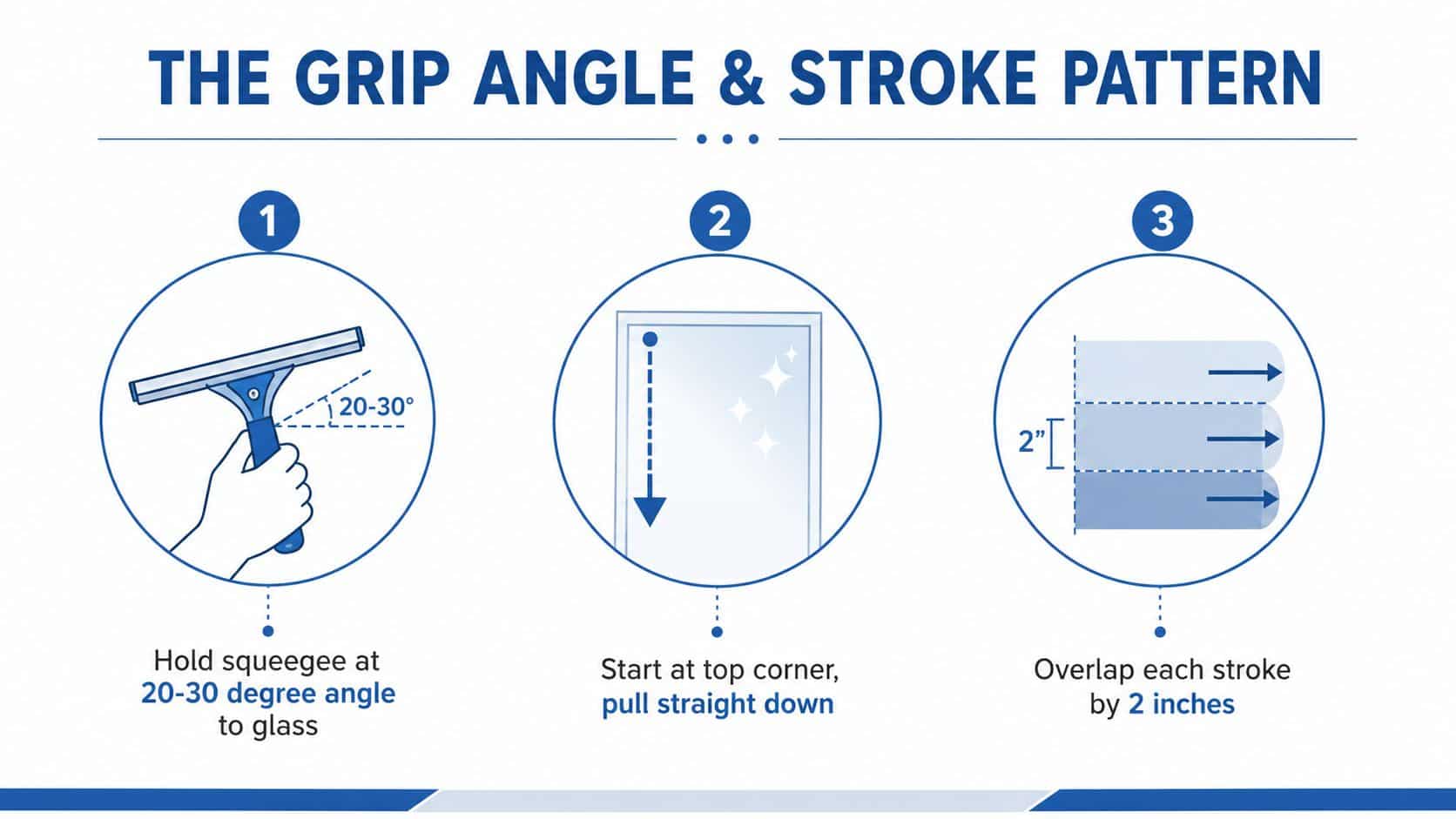
Hold the blade at a working angle
The blade should sit at a light working angle, not pressed hard into the glass and not held so flat that it skates. Field work in Arizona usually lands in a narrow range, and a comfortable angle keeps the rubber in contact without digging into the gasket or skipping over dry spots. The exact feel changes a little with the window, the temperature, and how much solution is on the pane.
Tall panes usually respond well to straight vertical pulls. Sliders often feel cleaner with horizontal movement because the shape of the glass gives you a longer, simpler pass. The motion matters less than consistency, the blade has to stay planted, and the overlap has to stay even. If you want a full prep and finish walkthrough, South Mountain Window Cleaning's window washing guide covers the pieces that make the stroke behave.
Start at the top corner and move cleanly
Start at the top corner of the pane and pull in one controlled pass. Wipe the blade between strokes so dirty water does not ride back into the next line. On wider windows, some techs fan the blade across the glass, but most homeowners do better with straight pulls until the motion feels natural.
Direct sun changes the pace. Hot glass can dry solution before the blade clears the section, and that leaves spots or faint drag marks. Shade helps, but if the pane is hot and you cannot avoid it, work smaller sections so the glass stays wet long enough for the blade to finish the job.
Keep the stroke sequence simple
For most homeowners, the cleanest pattern is simple.
- Top corner start: Set the blade cleanly at the top edge.
- Single controlled pull: Draw it down without stopping halfway.
- Slight overlap on the next pass: Cover the thin wet line left behind.
- Edge dry immediately: Detail the side and bottom with microfiber.
That sequence keeps the pane under control and avoids the thin wet bands that show up after a rushed pass. It also keeps the finish predictable, which matters on Arizona glass because hard light makes every missed line stand out. Once the rhythm is right, the window dries smooth enough to look clean without extra touch-ups.
Common Mistakes and Quick Fixes
Most streaks come from a small handful of habits that seem harmless at the time. Too much pressure, a dirty blade, or a towel that already picked up grit can undo an otherwise good wash. Phoenix heat just makes those mistakes show up faster.
The usual trouble spots
A worn rubber edge is one of the biggest culprits. If the blade is nicked, it will leave broken lines behind, no matter how careful your pull is. Dirty solution does the same thing by moving grit back onto the glass instead of off it.
Another common mistake is pressing too hard. People think extra force will improve contact, but it usually causes the blade to chatter and leave a jagged trail. Not enough pressure is also a problem, because the rubber won't seal to the pane and water sneaks past the edge.
Quick fix: If the stroke starts sounding rough or leaving thin lines, stop and inspect the blade before you chase the problem across the whole window.
What ruins the finish at the end
A dirty towel used between strokes is a streak factory. So is paper-towel detailing after the final pull, because paper breaks down, sheds lint, and drags residue back onto the clean glass. A clean microfiber cloth used right after the final stroke is the move that saves the finish.
Direct afternoon sun adds its own trouble. On a hot pane, solution dries before you can finish the section, and that leaves spots that look like the cleaner failed. The fix is simple enough, work smaller areas, keep the blade wiped clean, and move to the shaded side of the house first if you can.
If you want a deeper breakdown of the most common streak sources, there's a useful companion guide on how to clean windows without streaks.
A clean squeegee job should look quiet. No haze, no drag marks, no new dust lines from a dirty cloth, and no water running back down from the sill after you walk away.
Edges Corners Tracks and Maintenance Schedule
A pane can be clean and still look unfinished if the corners are wet or the frame is dirty. The last step is always detailing, because water clings where the squeegee can't reach, especially in the bottom corners and along the sill. If you leave that moisture behind, it can wick back onto the glass and undo the clean finish.
Dry the edges that hold water
Use a dry microfiber cloth to touch the corners and pull moisture out of the edge line. Wipe the sill and frame dry too, because water sitting there can track back onto the glass a few minutes later. That small cleanup step matters a lot on slider doors and windows above deep sills.
Tracks deserve the same attention. Valley dust settles there, and once the slider moves, that dirt can smear onto the clean glass or drip from the frame. For a straightforward approach to that job, see how to clean window tracks.
Think in seasons, not just chores
Phoenix homes usually need lighter wipe-downs during monsoon and construction season, then a more complete squeegee clean on a regular cycle. Homes near the South Mountain preserve, the Loop 202, or active construction zones often collect dust faster and need attention more often. The point isn't to chase a perfect calendar, it's to stay ahead of the buildup before it bonds to the glass.
Screens need checking too. If they drip dirty water after washing, they can undo the whole job. Frames, tracks, and screen edges all matter because each one touches the glass in some way.
Keep the tools ready
Inspect the rubber blade for nicks before each job. Dust clinging to the edge is enough to leave tiny marks on the next window. Store the squeegee and microfiber cloths where they stay clean, because a dusty tool drags you right back into streaks.
A clean blade in a dusty garage won't stay clean for long.
That's why maintenance is part of the cleaning process, not separate from it. The fewer contaminants that get back on the tool, the better the next window turns out.
Safety Tips and When to Call South Mountain Window Cleaning
Ground-level windows are a good DIY win. The glass is reachable, the ladder risk is low, and you can take your time without trying to manage a fall hazard at the same time. Once a window sits over a sloped yard, above a pool, or on a multi-story building, the job changes fast.

Know the DIY limit
A short ladder-safety check is enough for most homeowners. Set the feet on stable ground, keep the rungs clean, and don't reach farther than you can control. If the ladder has to sit awkwardly to reach a second-story pane, stop there and don't push it.
Post-construction glass is another job that often belongs to a pro. The risk isn't just height, it's the possibility of scratching coated glass or dealing with debris that shouldn't be handled casually. Solar panel arrays have their own concerns too, because the wrong cleaning method can damage coatings or create more problems than it solves.
What a professional visit usually covers
South Mountain Window Cleaning works across Phoenix, Scottsdale, Paradise Valley, Chandler, Tempe, and Gilbert on residential, commercial, and high-rise glass. The team is licensed, bonded, and insured, and the company uses pure-water systems and pro squeegees on jobs where that setup makes sense. Online scheduling and free quotes keep the process simple, which matters when the issue isn't just dirty glass, it's a building that needs regular maintenance.
Routine reachable windows are still a satisfying homeowner task. The glass looks better, the tools are simple, and the result is obvious as soon as the sun hits it. For everything higher, heavier, or more technical, calling a local crew is the smarter move.
If you want your Phoenix windows cleaned by a local team that handles residential, commercial, and high-rise glass, contact South Mountain Window Cleaning, LLC for a free quote and easy scheduling.