
Cleaning your house exterior in Phoenix isn't like cleaning anywhere else. We're constantly fighting a battle with stubborn monsoon dust and chalky hard water stains that bake onto our homes in the Arizona sun. The secret to winning this fight is a gentle but thorough approach. That's where soft washing comes in—it uses low pressure paired with biodegradable detergents to safely clean delicate surfaces like stucco, tile roofs, and vinyl siding without causing damage.
Here at South Mountain Window Cleaning, our professional teams serve homeowners and businesses across Phoenix, Scottsdale, Paradise Valley, Chandler, Tempe, and Gilbert. We’ve seen it all, and our local expertise and pure-water systems are dialed in to deliver spotless, streak-free results every time.
Keeping Your Arizona Home Looking Its Best
The intense Arizona sun and our infamous dust storms demand a cleaning routine that’s both tough on grime and easy on your home's surfaces. You can't just blast everything with a high-powered pressure washer and call it a day. Knowing how to clean your house exterior here means matching the right method to each material to avoid costly damage.
This guide is about more than just boosting curb appeal; it's about protecting your biggest investment from premature wear and tear caused by our harsh desert climate.
Inside, we'll walk through everything you need to know:
- Proper prep work to protect your landscaping, outlets, and light fixtures.
- Choosing the right tools, from pure-water systems for windows to the correct pressure washing nozzles.
- The critical difference between soft washing and pressure washing (and when to use each).
- Essential safety gear, like non-slip boots and safety glasses.
- A practical maintenance schedule to keep your Arizona home looking great between deep cleans.
You'll get real, actionable advice to keep your stucco looking vibrant, your roof free of ugly stains, and your driveway clear of grime.
Why Cleaning in Arizona Is a Whole Different Ballgame
Let's be honest: our climate is harsh. The sun bleaches surfaces and makes them fade faster, and those dust storms wedge a layer of fine grit into every nook and cranny.
This isn't your average dirt.
- Stucco is notoriously delicate and needs low-pressure cleaning to avoid pitting and chipping.
- Tile roofs can get streaky if you don't use the right detergents to break down dirt without damaging the finish.
- Concrete driveways, on the other hand, can often handle a higher PSI to get rid of stubborn oil stains.
After you've put in the work to get your home sparkling clean, you might want to look into ways to keep it that way longer. For example, some homeowners explore options like advanced ceramic marine coatings for harsh conditions, which can offer an extra layer of defense against our brutal sun and dust.
What You'll Learn in This Guide
We’ve laid out a clear roadmap for tackling every part of your home's exterior. From the roof tiles down to the concrete, you’ll learn the best techniques and solutions for a lasting clean.
You'll master how to:
- Properly prep your property and follow key safety protocols
- Decide between soft washing and pressure washing for different surfaces
- Effectively clean stucco, siding, roofs, windows, and driveways
- Set up a simple maintenance plan to prevent heavy buildup
Getting Started the Safe and Smart Way
Before you even think about turning on the water, take a walk around your property. Do a thorough inspection. Look for any cracks in the stucco, loose window seals, or any other spots where water could get in where it shouldn't. Make a note of any particularly grimy areas that might need a pre-treatment before you start the main wash.
Next, gather your gear. This includes the right hose attachments, any extension wands you might need, and plastic sheeting or tarps to cover up plants and outdoor electrical fixtures. A little bit of planning upfront goes a long way in preventing headaches and helps the whole process go much smoother.
Whether you decide to tackle this yourself or bring in the licensed, bonded, and insured team from South Mountain Window Cleaning, this guide will give you the confidence to know your Arizona home can stand up to the sun, dust, and monsoons.
Up next, we’ll dive into the essential prep steps and personal protective equipment you'll need.
Your Pre-Cleaning Safety and Prep Checklist
A great exterior clean starts way before you ever touch a pressure washer. We've seen it happen time and time again: someone gets eager, rushes into the job, and ends up with damaged property or, worse, an injury. Taking the time to prep properly is the single best thing you can do to make sure the project is safe, effective, and free of expensive mistakes.
First things first, do a full walkthrough of your home's exterior. Get up close and really look for potential trouble spots. Do you see any cracks in the stucco? Is there paint peeling away from the siding? Check the seals around your windows and doors—are they still holding up? These are all weak points where water can get trapped and cause serious issues later.
This isn't just about spotting dirt. It's about getting a clear picture of your home’s condition before you blast it with water. Finding these vulnerabilities now lets you either make repairs or just be extra careful to avoid forcing water where it shouldn’t go.
Safeguarding Your Property Before You Start
Once you’ve done your inspection, it’s time to play defense. You’re about to introduce water and cleaning solutions to the outside of your home, so protecting sensitive areas is a must.
Here’s what you absolutely need to do:
- Cover Electrical Components: This is non-negotiable. Water and electricity are a dangerous combination. Use heavy plastic sheeting and painter's tape to completely seal up every outdoor electrical outlet, light fixture, and your breaker box.
- Protect Your Landscaping: Gently tie back any delicate bushes or plants that are right up against the house. For flower beds or other sensitive greenery, toss a lightweight tarp over them to keep cleaning runoff from causing damage.
- Secure Doors and Windows: You’d be surprised how often this gets missed. Go around and make sure every single window and door is shut tight and locked. Even a slightly ajar window is an invitation for water damage inside.
- Clear the Deck: Move all your patio furniture, potted plants, welcome mats, and anything else away from the house. This prevents them from getting damaged and gives you a clear, safe space to work.
Gearing Up With Personal Protective Equipment
Exterior cleaning is more than just getting a bit wet. You're dealing with cleaning agents, potential debris getting kicked up, and surfaces that are about to get very slippery. The right Personal Protective Equipment (PPE) isn't optional—it's essential.
Think of PPE as your personal insurance policy against accidents. Every piece has a job, from keeping chemical splashes out of your eyes to preventing a nasty fall on a wet patio. A few minutes spent gearing up is the smartest investment you can make in your own safety.
Your must-have PPE kit includes:
- Safety Glasses or Goggles: Protects your eyes from chemical splash-back and any grit that gets knocked loose.
- Waterproof Gloves: Keeps cleaning solutions off your hands, as they can easily irritate your skin.
- Non-Slip Footwear: Boots with a solid grip are crucial. You’ll be walking on wet concrete, decks, and other slick surfaces where traction is everything.
- The Right Clothes: Wear long sleeves and pants. This protects your skin from both the cleaning chemicals and the sun—especially that intense Arizona sun.
Proper preparation is a critical step, whether you're tackling this yourself or bringing in a professional. If you're thinking about the DIY approach, our detailed guide on how to pressure wash a house safely and effectively is a great resource.
This level of detailed prep is standard practice for professional crews, and it’s a big reason why more homeowners are choosing to hire experts. The global exterior building cleaning market shot up from $9.98 billion in 2021 to $12.70 billion by 2025, which shows just how much people value getting the job done right and safely. You can explore more market trends in exterior building cleaning to see just how fast the industry is growing.
Choosing the Right Cleaning Method for Your Home
When you're ready to tackle your home's exterior, it's tempting to think that more power equals a better clean. But grabbing the most powerful tool you can find isn't just a bad idea—it can turn a weekend project into a costly repair nightmare.
You really have to understand the two main ways to clean an exterior: pressure washing and soft washing. Knowing the difference is what protects your biggest investment from accidental damage.
The Great Debate: Soft Wash vs. Pressure Wash
Pressure washing absolutely has its place. It uses a highly pressurized stream of water to blast away years of caked-on grime, oil stains, and stubborn dirt. Think of it as the heavy machinery of cleaning—perfect for tough, durable surfaces that can really take a hit, like your concrete driveway or stone patio.
But that raw power is exactly what makes it so dangerous for most other parts of your house. Materials like stucco, vinyl siding, and painted wood just weren't built to withstand thousands of pounds of pressure per square inch. One wrong move and you can chip paint, gouge your siding, or worse, force water behind the exterior walls where it can lead to mold and rot.
This quick decision tree is a great visual for walking through the prep steps before you even pick up a tool.
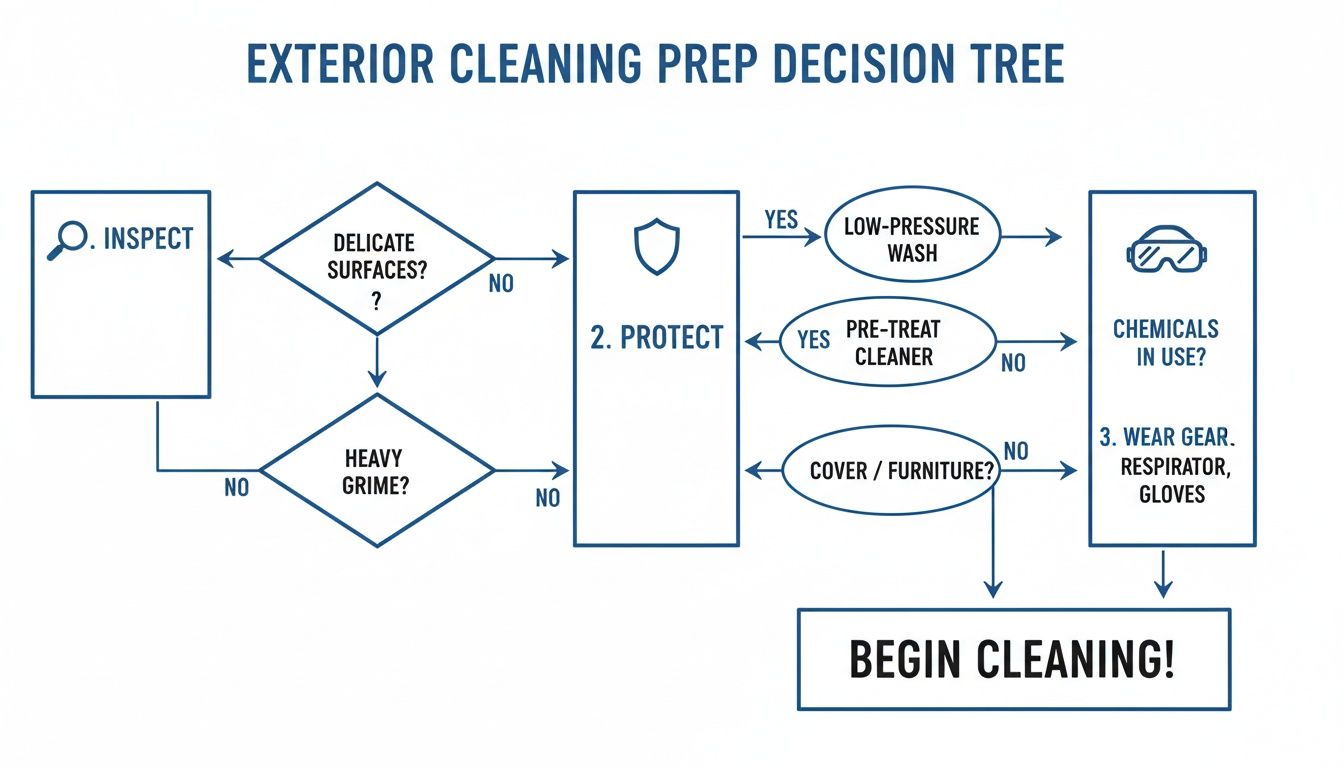
As you can see, a great clean always starts with a good walk-around to inspect your home, protect sensitive areas (like plants and outlets!), and get your safety gear ready.
The Smarter Approach: Soft Washing Delicate Surfaces
This is where soft washing comes in, and frankly, it's a game-changer. Instead of relying on brute force, the soft wash method uses specialized, biodegradable cleaning solutions applied with extremely low pressure. We're talking about a stream that’s often no more powerful than what comes out of your garden hose.
The real magic is in the cleaning agents. They do all the heavy lifting, breaking down dirt, mildew, algae, and grime on a molecular level. After the solution has had a few minutes to work, it’s gently rinsed away, taking all that nasty buildup with it.
It's the industry-preferred method for cleaning the vast majority of a home's exterior, and it's especially critical here in Arizona. With so much stucco around, soft washing is the only way to safely get rid of those layers of desert dust and monsoon grime without risking damage.
The Bottom Line: Pressure washing cleans with force, which is great for concrete but can destroy siding and stucco. Soft washing cleans with chemistry, safely lifting dirt off delicate surfaces without the risk of damage.
That intense Arizona sun makes our home's exterior paint and coatings brittle over time, leaving them even more vulnerable to high-pressure water. Soft washing is the technique that preserves the integrity of these surfaces, helping them last longer and keeping your curb appeal high. If you want to learn more, we've got a whole article that explains the benefits of soft wash house cleaning and why it’s become the professional standard.
Matching the Right Method to the Right Surface
So, how do you decide what to use where? It’s pretty simple: match the technique to the surface you’re cleaning. A good rule of thumb is to save the high-pressure stuff for hard, flat ground you can walk on. Everything else gets a gentler touch.
Here's a quick look at how these two methods stack up for different parts of your home.
Soft Wash vs Pressure Wash At a Glance
| Feature | Soft Washing | Pressure Washing |
|---|---|---|
| Pressure Level | Low (like a garden hose) | Very High (1,500-4,000+ PSI) |
| Primary Cleaning Agent | Specialized cleaning solutions | High-pressure water |
| Best For | Stucco, vinyl/wood siding, roofs, painted surfaces | Concrete, brick, stone patios, driveways |
| Risk of Damage | Extremely low; safe for delicate surfaces | High on siding, wood, and shingles |
Choosing correctly is what separates a successful weekend project from an accidental call to your insurance agent. Let's break it down by specific surfaces.
Concrete Driveways, Patios, & Sidewalks
This is pressure washing territory. That high PSI is exactly what you need to cut through deep-set oil stains, tire marks, and years of ground-in dirt on durable concrete.
Stucco & Vinyl Siding
Always, always use soft washing. Low pressure prevents cracking, chipping, or forcing water behind the panels. The cleaning solutions do the work to remove dirt and algae safely.
Painted Wood & Decks
Go with soft washing. You want to protect that paint from getting stripped or damaged. A pressure washer can peel it right off, forcing you into a costly repainting job.
Brick and Pavers
Pressure washing can work here, but you need to be careful. Use a wider spray nozzle (like a 25 or 40-degree tip) to avoid blasting away the mortar between the bricks.
Roof Tiles & Shingles
Soft washing is the only safe option for roofs. High pressure will dislodge tiles and strip the protective granules off asphalt shingles, drastically shortening the life of your roof. The right cleaning solution will kill the algae and moss without causing any damage.
An Exterior Cleaning Playbook for Arizona Surfaces
Now that you know the difference between a soft wash and a pressure wash, let's put that knowledge to work. Cleaning a house in Arizona brings its own unique set of challenges. Each surface, from sun-beaten stucco to dusty roof tiles, needs a specific approach.
This playbook will walk you through the right way to clean each part of your home's exterior, so you get great results without accidentally causing damage. Think of it this way: you wouldn't use a hammer to wash your dishes. The same idea applies here—matching the right technique and solution to the surface is the key.
Gently Cleaning Stucco and Vinyl Siding
Stucco is a staple in Arizona, but it’s surprisingly delicate. That textured, porous surface is a magnet for the fine dust kicked up during a haboob, which can leave it looking dull and faded. Hitting it with high-pressure water is a huge mistake. You can easily chip the finish or, even worse, force water into tiny cracks that turn into big problems later.
For stucco, soft washing is non-negotiable.
- The Right Approach: Use a low-pressure setting to apply a gentle, property-safe cleaning solution. This gives the cleaner time to soak into the stucco's pores and dissolve the grime without any brute force.
- The Rinse: Let the solution sit for a few minutes—but don't let it dry! Then, rinse it all off from the top down with clean, low-pressure water. This gentle rinse washes away all the loosened dust, revealing the true color underneath.
If you're feeling unsure about the process, it's always better to play it safe. For a deeper dive, check out our guide on whether you can safely pressure wash stucco for more pro tips.
Achieving Streak-Free Windows and Screens
Clean windows can completely change how your home feels, but our hard water and constant dust here in Arizona make a streak-free shine tough to get. Using regular tap water almost always leaves behind stubborn mineral deposits, or "hard water spots," that are a nightmare to scrub off.
Professional window cleaners, like our team at South Mountain Window Cleaning, get around this by using a pure water system. This system filters out all the minerals that cause spots. When we rinse windows with this deionized water, it dries perfectly clear. No squeegee needed, just a flawless finish.
The demand for professional window cleaning isn't just a local thing; it's a huge global market. The exterior window cleaning industry alone generated $6.80 billion in revenue and is expected to reach $10.05 billion by 2030. That growth shows just how much people value a truly professional, spotless result.
Safely Cleaning Tile and Shingle Roofs
Your roof bears the brunt of the Arizona sun and monsoon downpours. Over time, that leads to dirt buildup and sometimes dark streaks of algae. Cleaning your roof isn't just about looks; it's about protecting its lifespan.
But let's be clear: safety is everything here. Getting on a roof is dangerous. The height, the slope, and the fact that it gets incredibly slick when wet make it a job you have to respect.
- Method: A soft wash is the only safe way to clean a roof. High pressure will blast tiles loose or strip the protective granules right off your shingles, causing damage that can't be undone.
- Safety Gear: Always wear non-slip shoes and use a solid, properly secured ladder. If you have a steep roof, a safety harness is a must.
- Process: Apply a cleaning solution made to kill algae and lift dirt. Let it do its job, then rinse gently with a low-pressure stream.
With the risks involved, roof cleaning is one of those jobs often best left to insured pros who have the right safety gear and training.
Restoring Driveways and Patios
Okay, after being gentle with all those other surfaces, it's time to bring out the big guns for your concrete. Driveways, walkways, and patios can take the heat from a pressure washer, which is the best tool for blasting away oil stains, tire marks, and caked-on grime.
For the best results, get yourself a surface cleaner attachment. It's a big, round accessory that hooks onto your pressure washer wand and spreads the water pressure out evenly. This trick prevents those ugly "zebra stripes" you get from using just the narrow nozzle.
- Pre-treat Stains: Hit any oil or rust spots with a concrete degreaser and let it soak for about 10-15 minutes.
- Use a Surface Cleaner: Move in slow, overlapping passes to get a consistent, even clean.
- Rinse Thoroughly: Wash all the loose gunk away so it doesn't dry back onto your nice, clean concrete.
Clearing Gutters Before Monsoon Season
We might not get as much rain as other places, but when the monsoons hit, you need your gutters to work. Clogged gutters will overflow, and that water can damage your roof, siding, and even your home's foundation.
Cleaning them out is a simple but critical piece of maintenance.
- Remove Debris: Grab a trowel or a gutter scoop and clear out all the leaves, twigs, and dirt.
- Flush the System: Once the big stuff is gone, use a garden hose to flush out the gutters and downspouts to make sure water is flowing freely.
Doing this just once or twice a year is one of the smartest things you can do to protect your home from expensive water damage.
Knowing When to Call a Professional Cleaning Service
Doing your own exterior cleaning can be really satisfying, we get it. But there’s a point where a DIY job becomes ineffective, risky, or just plain overwhelming. Knowing your own limits is the most important part of protecting both yourself and your property. Some jobs, from high-rise commercial window washing to cleaning a two-story home, just signal it’s time to step back and let an experienced team take over.
Just think about the scale of your own home. Do you have a two-story house with those hard-to-reach eaves or second-floor windows? Trying to balance on a ladder while wrestling with a pressure washer is a recipe for a serious accident.
When the Job Becomes Too Risky
Some cleaning tasks just come with risks that go way beyond a simple slip and fall. Let's say you have some stubborn stains that just won't budge with the cleaners you bought at the store. The solution might be a commercial-grade chemical, but handling that stuff without proper training and personal protective equipment (PPE) is a bad idea.
Then you have to consider the surfaces themselves. Delicate or historic materials like aged brick or original wood siding can be permanently scarred by using the wrong pressure or cleaning agent. A pro knows how to test a small, hidden spot first and will almost always opt for a soft washing method to get things clean without causing damage.
Here are some clear signs that it’s time to call in the experts:
- Height and Accessibility: Anything that has you working on a steep roof or perched on an extension ladder for a long time is way more dangerous than working from the ground.
- Stubborn Contaminants: That black stuff isn't just dirt. Mold, algae, or rust stains often require very specific treatments you can't just pick up at a hardware store.
- Delicate Surfaces: If you’re looking at older stucco, painted wood, or any surface that seems a bit fragile and you're not 100% sure how to clean it, don't guess. A wrong move could lead to expensive repairs.
- Specialized Tasks: Jobs like gutter cleaning can be deceptively tricky and hazardous. It’s often smarter to call a pro who has the right tools and safety protocols, like the ones covered by these professional gutter cleaning services.
The Benefits of Hiring an Arizona Expert
Bringing in an experienced and insured company like South Mountain Window Cleaning isn't just about saving yourself a weekend. It's about getting a safe, flawless result, guaranteed. Professionals show up with commercial-grade equipment, the right safety training, and a deep understanding of how to handle Arizona-specific problems like baked-on dust and stubborn hard water stains.
A professional service just eliminates the guesswork. They arrive with the right tools, the correct cleaning solutions for every surface, and the expertise to handle unexpected issues. The job gets done right the first time without any damage to your property.
This kind of expertise is exactly why the building exterior cleaners industry has ballooned into a $15.6 billion market in the United States. That consistent growth shows a clear trend: homeowners prefer professional, reliable results.
Our team at South Mountain Window Cleaning serves communities all across Phoenix, Scottsdale, Paradise Valley, Chandler, Tempe, and Gilbert. We are fully licensed, bonded, and insured, which gives you complete peace of mind. For a comprehensive and safe cleaning that brings back your home's curb appeal, check out our professional house exterior cleaning services and get a fast, free quote today.
Common Questions We Hear About Exterior Cleaning
Even with a solid plan, you're bound to have some questions before diving into a big project like cleaning your home's exterior. It's not just about the how—it's about the why and when, especially here in the unique Arizona climate. As experts who've seen it all across Phoenix, Scottsdale, and the Valley, here are the answers to the questions we get asked most often.
How Often Should I Clean My House Exterior in Arizona?
This is a big one, and the honest answer is: it depends. A good rule of thumb is to give your home a thorough exterior cleaning once a year. Think of it as essential preventative maintenance.
However, our Arizona environment can throw a few curveballs. You might need to clean more often if:
- The Monsoons Hit Hard: After a big storm rolls through, that thick layer of dust and dirt it leaves behind is more than just an eyesore. A post-monsoon wash is a must.
- You're Near a Busy Area: Living close to a major road or new construction means a constant barrage of dust and grime.
- Your House is Telling You It's Time: Don't just stick to the calendar. If you see visible dirt streaks running down your stucco, a hazy film on the windows, or dark stains on the roof, your house is asking for a wash.
Waiting too long is a common mistake. Under the intense Arizona sun, that grime literally bakes onto your home's surfaces, making it incredibly difficult to remove later. An annual cleaning protects your home's finish and its value.
Is it Safe to Use Bleach on Siding and Concrete?
We get this question a lot from DIYers, and it's one that requires real caution. Yes, household bleach can kill mildew, but it's a harsh chemical that can cause serious damage if you're not careful. Straight-up, undiluted bleach can easily discolor painted surfaces, damage vinyl siding, and even kill your landscaping.
Professionals almost always use a technique called soft washing, which involves specialized, property-safe cleaning solutions. These are formulated to be tough on grime but gentle on your home and plants. If you're committed to the DIY route, look for a commercial-grade house wash product that is biodegradable and specifically made for exteriors, like Krud Kutter House Wash. And a critical safety tip: Never mix bleach with other cleaners, particularly anything containing ammonia. The combination can create dangerous toxic gas.
Is Pressure Washing a Bad Idea for Stucco and Siding?
Short answer: Yes, it's a very bad idea. A pressure washer is an incredibly powerful tool, and that's precisely the problem. That high-pressure stream can be destructive on more delicate surfaces like stucco and siding. Honestly, it's one of the most common—and expensive—mistakes we see homeowners make.
Here's why it's so risky:
- It Obliterates Stucco: The sheer force can easily chip, crack, or blast away the stucco finish, turning a cleaning job into a costly repair project.
- It Forces Water Behind Siding: High pressure can shoot water up and under vinyl siding panels. That trapped moisture is a perfect recipe for mold, mildew, and rot to grow against your home's structure.
- It Strips Paint: On wood or other painted surfaces, a pressure washer can peel paint right off, creating an even bigger mess to fix.
The professional standard for these surfaces is soft washing. It's all about using the right cleaning agents and low pressure—about the strength of a garden hose—to gently lift away dirt without damaging your home's integrity.
What's the Best Time of Year to Wash My Phoenix Home?
Timing is everything, especially when you're working against the Arizona sun. Scheduling your exterior cleaning can make a huge difference in the final result.
Hands down, Spring (March-May) and Fall (October-November) are the best times to do it. The temperatures are moderate, which keeps your cleaning solutions from evaporating the second they hit a hot surface. When cleaners dry too fast, they leave behind ugly streaks and a soapy film that's a real pain to get off.
Cleaning right after monsoon season is also a great strategy to get rid of all that storm grime. Just try to avoid tackling this project in the dead of summer when temps are pushing past 100°F. The heat makes the work brutal and far less effective.
Hopefully, these answers give you the confidence to approach your exterior cleaning project the right way. Whether you decide to do it yourself or bring in the pros, knowing the proper methods and timing is key. For a flawless finish that protects your biggest investment, the licensed and insured team at South Mountain Window Cleaning is ready to help homes and businesses across Phoenix, Scottsdale, Chandler, Tempe, and Gilbert. Head over to https://www.southmountainwindowcleaning.com for a fast, free quote.