

For most homes in Arizona, the rule of thumb is pretty simple: reseal your driveway every 2 to 3 years. If you're managing a commercial property in a busy area like Phoenix or Scottsdale, you’ll want to cut that time down to every 1 to 2 years to handle all that extra wear and tear. This isn't just a random number; it's the sweet spot for protecting your pavement from the intense Arizona climate.
Your Quick Guide To Driveway Sealing Frequency
Think of driveway sealant like sunscreen for your asphalt or concrete. You wouldn't let your skin bake in the Arizona sun without protection, right? Your driveway needs that same kind of barrier to shield it from relentless UV rays, monsoon downpours, and the daily grind of traffic. Without it, the surface starts to fade, crack, and fall apart, which always leads to expensive repairs down the road.
While that 2-3 year guideline is a great starting point for most homeowners in places like Chandler and Tempe, it’s definitely not set in stone.
The perfect sealing schedule really comes down to a few key things. A driveway in Gilbert that faces south and gets blasted by the sun all day is going to need sealing more often than one tucked away in the shade. The same goes for a driveway that sees heavy work trucks or constant traffic versus one that just has a couple of cars.
Nailing Down Your Sealing Schedule
The first step is figuring out what kind of property you have. A quiet residential driveway has totally different demands than a busy commercial parking lot, and knowing that difference is key to keeping your pavement in good shape.
This quick visual breaks down the general frequency based on your property type.
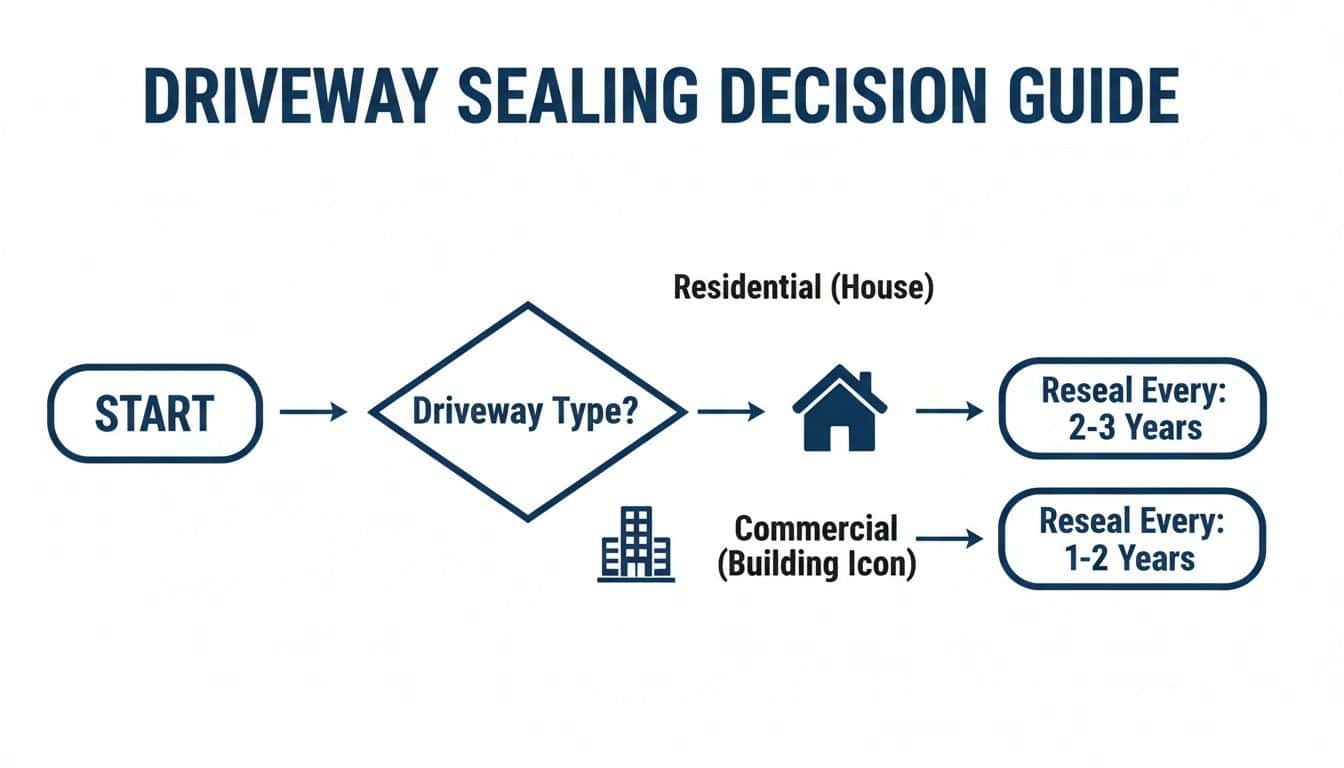
As you can see, commercial properties need sealing almost twice as often. That's just what it takes to stand up to the constant stress and vehicle traffic common in Arizona's business hubs.
To give you a clearer picture, here’s a quick reference table tailored for our unique Arizona climate.
Recommended Driveway Sealing Frequency In Arizona
| Driveway Type | Traffic Level | Recommended Sealing Frequency (Arizona Climate) |
|---|---|---|
| Asphalt | Low (Residential) | Every 2-3 years |
| Asphalt | High (Commercial) | Every 1-2 years |
| Concrete | Low (Residential) | Every 3-5 years |
| Concrete | High (Commercial) | Every 2-3 years |
| Pavers | Low (Residential) | Every 3-5 years |
| Pavers | High (Commercial) | Every 2-3 years |
This table helps you match your driveway's material and daily use to a smart, proactive sealing schedule that will protect your investment long-term.
Why Being Proactive Is A Game-Changer
Staying on top of sealing is a huge part of good property maintenance, right up there with other essential jobs like keeping your windows clean. Actually, sealant sticks best to a perfectly clean surface, which is why a lot of homeowners schedule it alongside other services. If you want to learn more about keeping your exterior surfaces pristine, check out our guide on how often you should power wash your house.
The whole point of sealing your driveway isn’t just about looks—it’s about stopping expensive structural damage before it even starts. Spending a little on sealant every couple of years can help you put off a complete—and much more expensive—replacement for a decade or even longer.
When you stick to a consistent schedule, you’re not just saving money and preventing headaches. You’re making sure your property keeps its curb appeal and value, whether it’s your family home in Chandler or a bustling retail spot in Tempe. A clean driveway complements sparkling windows to create a truly polished look.
Why The Arizona Sun Is Your Driveway's Worst Enemy
Have you ever looked at driveways in Phoenix or Scottsdale and wondered why they seem to age so quickly? The main reason isn't just time itself. It's that relentless Arizona sun beating down on your property, day in and day out. That intense, year-round solar radiation is exactly why understanding how often you should seal your driveway is so important here.
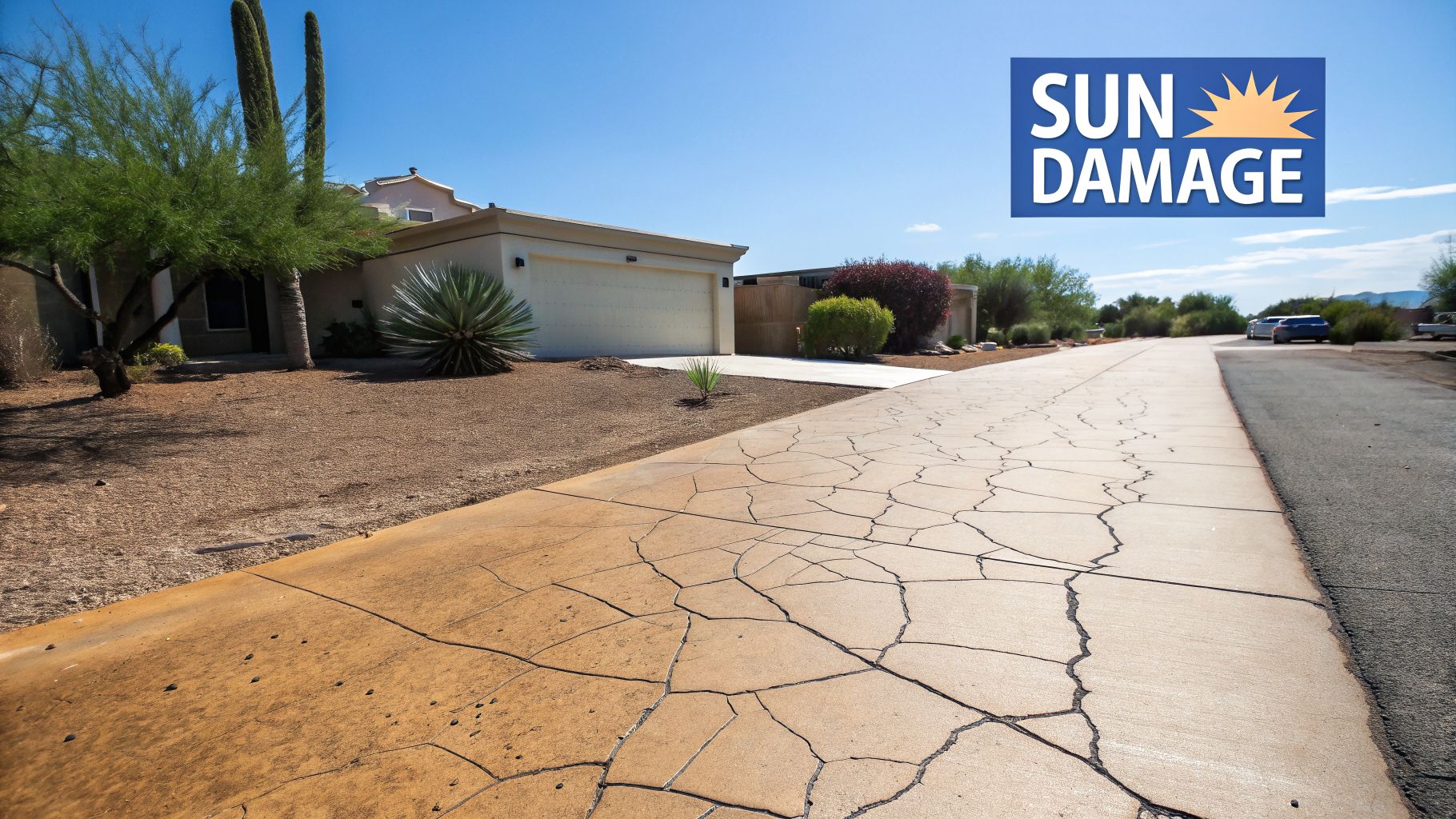
The easiest way to think about a professional-grade sealant is to see it as high-SPF sunscreen for your pavement. Your skin needs protection from UV rays, and your driveway needs a barrier to shield it from the sun's damaging power. Without that shield, a chemical process called oxidation starts to take over.
Oxidation is what happens when the sun's rays break down the binder—the glue holding the asphalt or concrete together. This process slowly turns a rich, flexible black asphalt driveway into a brittle, gray surface that's just waiting to crack and fall apart.
The Invisible Damage From UV Rays
The sun doesn't just fade your driveway; it actually weakens its entire structure from the inside out. This slow-burn assault happens every single day, even when it’s cloudy.
- UV Radiation Breaks Down Binders: The sun’s rays attack the petroleum-based binders in asphalt, making them dry out and lose their flexibility.
- Surface Becomes Brittle: As the binders go, the surface gets hard and fragile. It can no longer flex with temperature changes or handle the weight of traffic.
- Accelerated Aging: A driveway that might last 20 years in a cooler climate can start showing major problems in less than half that time in places like Paradise Valley if it isn't sealed.
A quality sealant acts as a protective shield. It takes the hit from the UV radiation, saving the vital binders underneath and keeping your asphalt flexible and strong.
This protective layer is the single most important factor in fighting premature aging. By blocking UV rays, a proper sealcoat essentially slows down your driveway's aging process, preserving its integrity and appearance for years longer than an unprotected surface.
From Extreme Heat To Damaging Cracks
The Arizona climate delivers a brutal one-two punch. After a day baking in 110°F heat, our nighttime temperatures can drop in a hurry. This daily cycle of extreme temperature swings forces your driveway to constantly expand and contract.
Think of it like stretching and releasing a rubber band over and over. Eventually, it gets weak and snaps. Your driveway's surface is under a similar kind of stress. As it expands in the heat and shrinks in the cool, tiny hairline cracks start to pop up.
Without a protective seal, those small cracks are an open invitation for moisture. When the summer monsoons hit, water seeps right into these weak spots, washing away the foundational layers underneath the surface. This erosion is what sets the stage for much bigger, more serious problems.
The Final Blow: Monsoon Moisture
Once water gets under the surface, the whole structure is compromised. The soil and gravel base that supports your pavement starts to wash away, creating empty pockets.
The weight of a car driving over these weakened spots is often the final straw. This leads to two of the ugliest and most expensive types of damage:
- Potholes: This is what happens when the surface finally collapses into an eroded area below.
- Alligator Cracking: You'll know it when you see it—a web-like pattern of cracks that looks like an alligator's skin. It’s a sure sign of widespread base failure and almost always means you're looking at a complete, costly replacement.
A professional sealcoat acts as a flexible, waterproof membrane. It doesn't just fill the hairline cracks you already have; it also stops new ones from letting water in. This simple maintenance step is your best defense against the cycle of sun damage, cracking, and water erosion that destroys unprotected driveways in our region. It’s an investment that pays for itself by preventing a total failure down the road.
The 2 To 3 Year Rule For Sealing Asphalt Driveways
If you have an asphalt driveway, you’ve probably heard people mention sealing it every few years. The 2 to 3-year mark isn't just a casual suggestion; it's really the gold standard for keeping your driveway in great shape. This timeline comes from decades of professionals figuring out what works best to protect asphalt, making it the sweet spot for maximizing your driveway's life. By sticking to this schedule, you can help your asphalt last well over 20 years, instead of the typical 15.
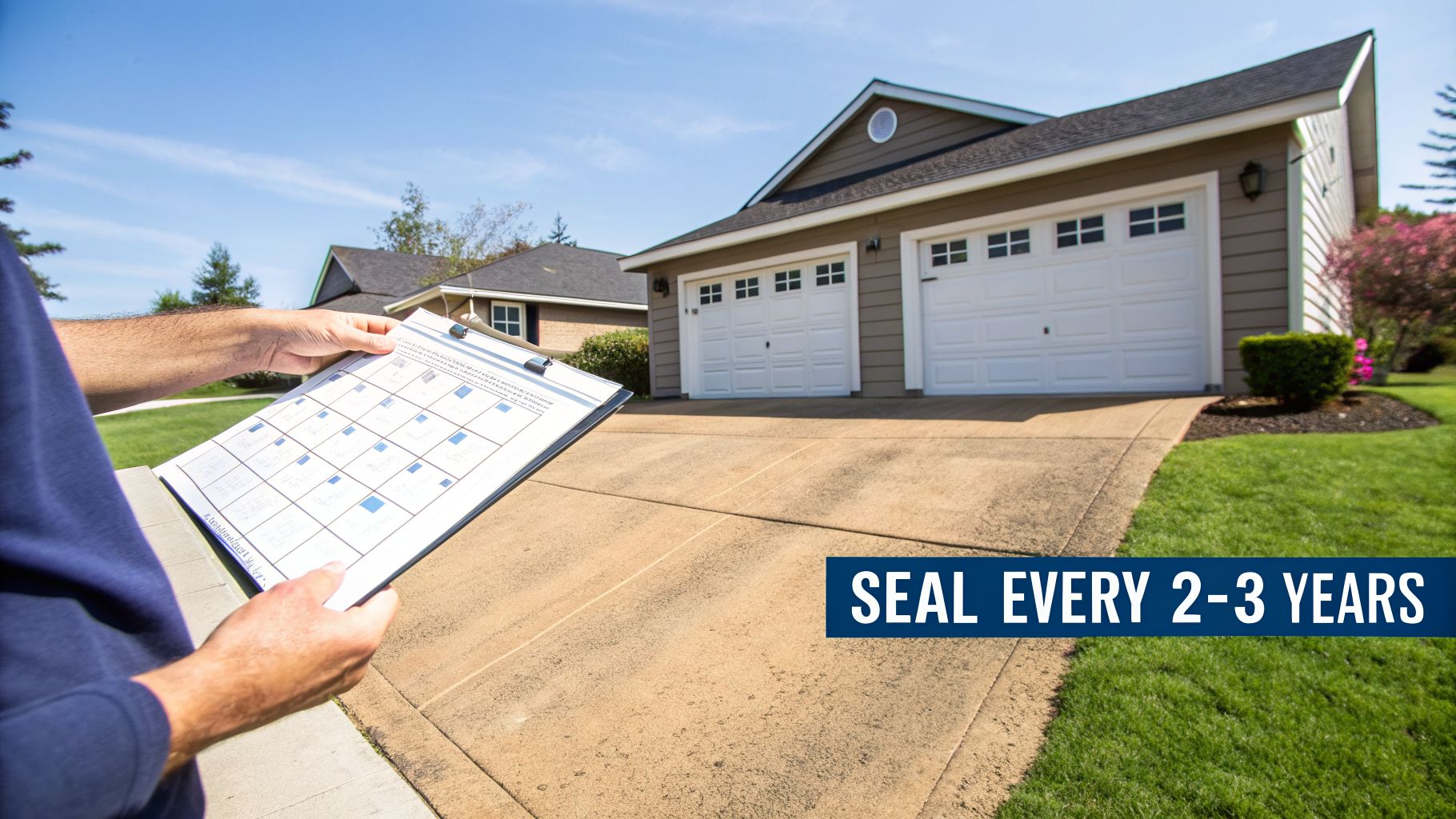
This 2 to 3-year cycle is a widely accepted best practice across the industry. Most professional asphalt contractors have landed on this 24 to 36-month window as the baseline for their maintenance plans. In fact, something like 80% of major paving companies point to this exact timeframe in their own guidelines. Here in the Phoenix area—from Scottsdale to Gilbert—that powerful sun and our temperature swings make following this schedule even more important. You can find more professional takes on industry standards for driveway sealcoating on seal-rite.com.
Why This Timeframe Is The Sweet Spot
It helps to think of sealant as a shield for your driveway. It’s a sacrificial layer, meant to take all the abuse from sun, rain, and cars so the expensive asphalt underneath doesn't have to. After a couple of years of baking in the Arizona sun, that protective shield starts to wear thin and just isn't as effective anymore.
If you wait longer than three years, your asphalt is left vulnerable. The binders that hold it all together begin to fail, the surface gets brittle, and you'll start seeing little cracks pop up. On the flip side, sealing it too often, like every single year, creates its own set of headaches. You can get a buildup of sealant that starts to peel, flake, or crack, which looks bad and doesn't protect anything.
That 2 to 3-year window is the perfect balance. It keeps a tough, protective layer on your driveway without causing a thick, brittle mess from over-applying.
By the end of its second year, an Arizona sealcoat has already faced over 600 days of intense UV rays. Putting on a new coat at the 2 or 3-year mark restores that protection right when it’s needed most, stopping the damage cycle before it even gets a chance to start.
Arizona Factors That Shorten The Sealing Cycle
While 2 to 3 years is a solid rule of thumb, life here in Arizona can definitely push you closer to the 2-year mark. If your property in Chandler or Paradise Valley has any of these going on, you should probably plan on sealing a little more often.
- Heavy Vehicles: Do you park a big truck, an RV, or a boat on your driveway? All that extra weight and the friction from the tires puts a lot of stress on the sealant, wearing it down much quicker than a normal car.
- High Traffic: If your driveway is like a busy street—with multiple cars coming and going all day, delivery trucks, and lots of visitors—all that activity will wear out the sealant faster.
- Full Sun Exposure: A driveway that faces south with no shade gets absolutely blasted by the sun all day. That constant UV exposure is the number one thing that kills sealant in our climate.
- Oil and Chemical Spills: Little drips and leaks from cars can actually dissolve the binders in your asphalt. If you have a car that tends to leave spots, you'll want to seal more often to keep that protective barrier strong.
Knowing about these factors helps you make the right call for your own driveway. You can learn more about how different products hold up under these conditions in our guide to the best asphalt driveway sealer.
The Critical Curing Period For New Asphalt
There’s one big exception to the 2-to-3-year rule: a brand-new driveway. If you just had fresh asphalt put in, you absolutely have to wait before that first sealcoat. It's really important to let the new asphalt cure for at least 6 to 12 months.
During this time, all the excess oils and solvents from the fresh asphalt mix need to evaporate. If you seal it too early, you trap those oils underneath. This prevents the sealant from bonding correctly to the surface, and you’ll end up with a coat that peels right off—a total waste of time and money. Giving it that cure time ensures your first sealcoat sticks tight and sets you up for years of solid protection.
Commercial Properties And The 1 To 2 Year Sealing Schedule
For business owners and property managers across the Valley, the math on asphalt maintenance is just different. A homeowner can get away with sealing their driveway every 2 to 3 years, but the constant pressure on a commercial lot in Phoenix, Scottsdale, or Tempe demands a much more serious approach. For commercial properties, it’s a non-negotiable 1 to 2-year sealing schedule.
This isn't just about keeping up appearances; it's a critical business decision. A commercial parking lot is a high-stress environment, taking a beating that a residential driveway never will. Putting off sealing isn't a small oversight—it's a fast track to expensive failures, safety liabilities, and huge replacement bills that can wreck an operating budget.
The Compounding Factors Of Commercial Wear And Tear
So why the big difference? It really comes down to a few key things that multiply the stress on commercial pavement. Just picture a quiet residential driveway compared to the parking lot of a busy Gilbert retail center. The amount and type of traffic are in completely different leagues.
Several factors work together to break down commercial asphalt much faster:
- Constant Vehicle Flow: A house might see 4-6 car trips a day. A popular restaurant or store can see hundreds, even thousands, of cars, delivery vans, and trucks every single day. All that friction wears down the protective sealant layer incredibly fast.
- Heavy Delivery Trucks: The sheer weight of a semi-truck, garbage truck, or even a box truck dropping off inventory is immense. These heavy loads flex and stress the pavement in ways a passenger car simply can’t.
- Sharp Turning and Maneuvering: In a parking lot, cars are constantly making tight turns, hitting the brakes, and turning their wheels while stationary. This twisting and grinding action eats away at the surface, speeding up the erosion of both the sealant and the asphalt itself.
When you add it all up, a commercial lot can easily take on 3 to 5 times more daily wear than a typical driveway. This intense use is exactly why the answer to "how often should I seal my driveway?" changes so dramatically for a business.
For a commercial property, regular sealcoating isn't a 'nice-to-have'—it's a foundational part of your risk management strategy. It protects your most visible asset, ensures customer safety, and upholds the professional image that attracts patrons in the first place.
The Financial Case For A 1 To 2 Year Sealing Schedule
Trying to save a little money by delaying sealcoating on a commercial lot almost always backfires, leading to much bigger bills down the road. The data from our industry is crystal clear on this. High-traffic lots that stick to a strict 1 to 2-year cycle have far fewer structural problems. On the flip side, we see that when this schedule is ignored, small issues get worse, fast. In fact, for about 60% of property managers who neglect this timeline, small surface cracks can turn into dangerous potholes in as little as 18 months. You can find more details on how traffic impacts sealing frequency by reviewing expert insights on commercial asphalt maintenance.
Think of regular sealing as a smart operational expense that helps you avoid a massive capital one. Here’s how it protects your bottom line:
- Prevents Costly Structural Repairs: A sealcoat and crack fill job costs a tiny fraction of what it takes to mill and repave an entire parking lot.
- Reduces Liability Risks: Faded lines, potholes, and loose asphalt are accidents waiting to happen. A well-maintained lot is a safer lot, which cuts down your exposure to potential lawsuits from trips, falls, or vehicle incidents.
- Maintains Professional Curb Appeal: Your parking lot is the very first thing your customers see. A faded, cracked surface sends a message of neglect, which can turn people away before they even get to the front door. A fresh, dark, clearly-marked lot looks clean, professional, and inviting.
For businesses in competitive areas like Paradise Valley and Scottsdale, that first impression is everything. Just like clean windows show you care, a pristine parking area tells customers you're serious about your property and their experience. It’s a key part of a full property maintenance plan that should also include services like power washing and professional window cleaning to present a polished, welcoming image.
Telltale Signs Your Driveway Needs Sealing Now
While sticking to a maintenance schedule is a good rule of thumb, your driveway is always giving you little hints about its condition. You just have to know what to look for. Learning to read these signs lets you get ahead of problems before they turn into major, expensive repairs. Don't worry, you don't need to be an expert—a quick walk around your property is usually all it takes.
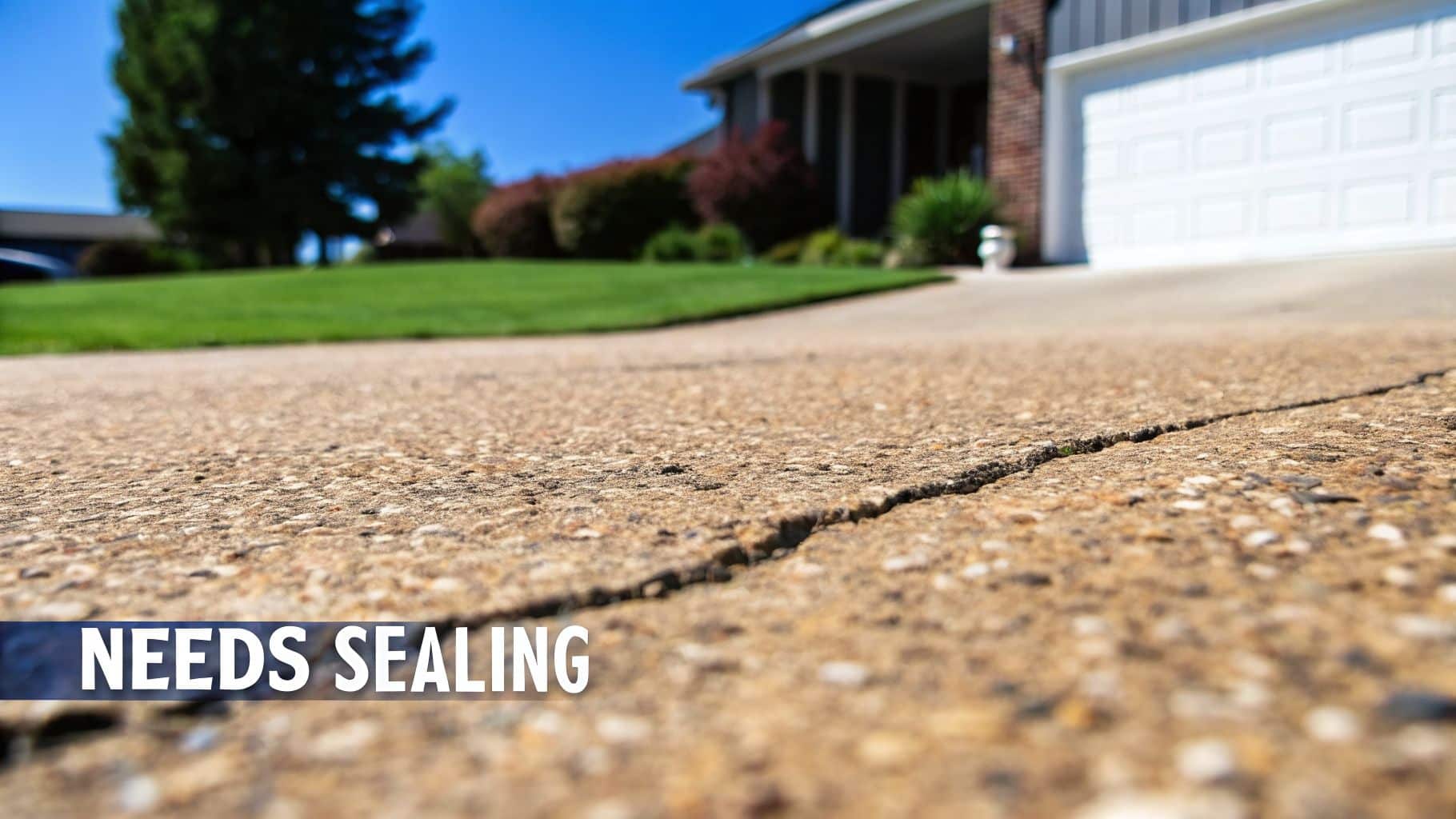
Knowing how to spot these warning signs is the real secret to figuring out how often you should seal your driveway. It's about what your driveway is telling you right now, not just what the calendar says. For homeowners here in Gilbert, Chandler, and Tempe, this hands-on approach is the best way to catch issues early.
The Color Tells The Story
One of the easiest things to spot on an asphalt driveway is a big change in color. When it's freshly sealed, asphalt has that deep, rich black look. But over time, as the sun beats down and the sealant wears off, it starts to fade to a dull, chalky gray.
This isn't just about looks. That gray color is a red flag that the important oils and binders in the asphalt are gone. The surface is becoming brittle and exposed. If your driveway looks more gray than black, it’s lost its main line of defense against the elements and it's time for a fresh coat.
Spotting Cracks Before They Widen
The next thing to watch for is cracking. You really want to pay attention to the little ones, what we call hairline cracks. They might not seem like a big deal, but they're basically an open door for water to get down into your driveway’s foundation.
Think of a hairline crack as a tiny leak in a dam. It may seem insignificant at first, but over time, water will exploit that weakness, eroding the structure from within and leading to a catastrophic failure. Catching and sealing these small cracks is the most cost-effective repair you can make.
If you start to see a web of cracks that looks like a spiderweb or alligator skin, that’s a sign of a much bigger problem. We call it alligator cracking, and it usually means the base layer underneath has failed and will need more serious repairs before you can even think about sealing.
Changes In Surface Texture
Take a moment to run your hand over the driveway's surface, or just get down for a closer look. Does it feel rough? Are you seeing loose bits of sand, grit, or tiny stones on top? This is a classic sign that the binder holding all the aggregate (the stones and sand) together is failing.
The whole point of sealant is to lock those materials in place. When you start seeing loose particles, it's a clear signal that the protective layer is gone and the asphalt itself is starting to come apart.
This happens fast in our Arizona climate. The environment can make a huge difference in how quickly sealcoat wears out. In fact, conditions in Western regions can reduce a sealant's effectiveness by 20-40% compared to places with milder weather. For us here in the Phoenix area, UV damage alone can weaken a sealant by 30% in just a single year, which is why a 2-year sealing schedule makes a lot of sense. You can see more data on how climate affects sealcoat longevity.
Stains And Surface Porosity
Does your driveway soak up spills like a sponge? A well-sealed surface should make water bead right up. If you splash some water on it and it disappears almost immediately, your driveway is porous and has no protection. This also means things like oil, gas, and other chemicals can easily soak in, leaving ugly stains and causing damage.
If you're already dealing with some tough spots, our article on how to remove rust stains from concrete might have some helpful tips.
Your Guide To Professional Driveway Maintenance
A great sealing job all comes down to the prep work. It’s a lesson we’ve learned over and over again from our experience providing professional exterior cleaning services. Even the absolute best sealant on the market is bound to fail if you apply it to a dirty, damaged, or unprepared surface. This is your game plan for getting your driveway ready for a tough, long-lasting finish that actually protects your investment.
You wouldn't slap a coat of paint on a dirty wall and call it a day, right? The same logic applies to your driveway, especially under the intense Arizona sun, where any shortcuts in prep can cause the new sealant to fail in a hurry. A truly lasting finish always starts with a perfectly clean surface.
Start With A Deep Clean
First things first: you have to get every last bit of dirt, grime, and loose debris off the driveway. A quick once-over with a broom and a garden hose might get the surface dust, but for a real, deep clean, a professional power washing is non-negotiable. It’s the only way to effectively blast away that stubborn, ground-in dirt and any old, flaky sealant that will stop the new coat from sticking.
This is where bringing in an exterior cleaning company like South Mountain Window Cleaning really pays off. Our job isn't just about making things look clean; it's about properly preparing surfaces for whatever comes next. You can learn more about how our professional power washing services create the ideal canvas for your driveway sealing project.
Address All Repairs Before Sealing
After the driveway is spotless, it's time to play doctor and fix any damage. Spreading sealant over cracks without filling them first is just covering up the problem, not solving it. It’s a temporary fix that won’t last.
- Treat Stubborn Stains: Oil, grease, and other chemical spills need to be treated and removed. These spots can stop the sealant from bonding to the asphalt or concrete and can even bleed right through the fresh coat.
- Fill All Cracks: Every single crack, from the tiny hairline ones to the bigger gaps, has to be filled with a high-quality crack-filler. This is critical for stopping water from seeping underneath the new sealcoat and causing much bigger problems down the road.
Honestly, skipping the prep work is the number one reason we see DIY sealing jobs go wrong. A pro knows that 90% of a successful sealing project is what happens before you even open the can of sealant—it’s all in the cleaning and repairs.
DIY vs Professional Application
Once your driveway is clean and repaired, you’re at a crossroads: tackle the sealing yourself or call in a professional. While the DIY route might look like it saves a few bucks upfront, it can be a real headache and often leads to hidden costs. Professionals come equipped with commercial-grade tools and use premium materials you just can't find at the local hardware store.
Hiring an expert guarantees an even, durable coat that gives you the best possible protection. They know exactly how to apply the sealant at the right thickness for top performance, so you won't have to deal with the patchy spots and early peeling that plague so many DIY jobs. For homeowners and property managers in Phoenix, Scottsdale, and across the Valley, it’s simply the smartest move for long-term value.
Frequently Asked Driveway Sealing Questions
Even after you’ve got a plan, a few questions usually pop up. We get it. When you’re figuring out how often you should seal your driveway, especially with our tough Arizona climate, you want clear answers. Here are some of the most common questions we hear from homeowners and property managers in Phoenix, Scottsdale, and all across the Valley.
Can You Seal a Driveway in the Arizona Summer?
You can, but the timing has to be perfect. That intense summer sun makes sealant dry incredibly fast, which can cause streaks and a blotchy finish if you don't know what you're doing.
The trick is to work in the very early morning or late evening when the surface of the driveway is much cooler. Our professional crews are used to working in these tight windows to get a flawless application, even during the hottest months in Paradise Valley or Gilbert. Trying to do it yourself in the middle of a July afternoon is asking for trouble.
How Long Before You Can Walk or Drive on a Freshly Sealed Driveway?
This is where a little patience goes a long way. As a general rule, you’ll need to keep all traffic off the driveway for at least 24 to 48 hours.
- Foot Traffic: You can usually walk on the surface after 24 hours. Just try not to twist or drag your feet, which can leave scuff marks on the fresh coat.
- Vehicle Traffic: You absolutely must wait at least 48 hours before driving on it. If it's a bit cooler or more humid than usual, play it safe and give it a full 72 hours so the sealant can fully cure and harden.
Driving on it too soon is the fastest way to leave permanent tire tracks and ruin a perfectly good sealing job.
So many people make the mistake of rushing back onto their driveway. It might feel dry to the touch, but that sealant needs a full 48 hours to properly cure. Curing is what gives the sealant its strength and long-term muscle against traffic and the sun.
Is Sealing Necessary for Concrete Driveways Too?
Absolutely. People think concrete is invincible, but it's still a porous material. If you leave a concrete driveway unsealed, it will soak up water, oil, and whatever else drips on it. This leads to ugly stains, cracking from our version of "freeze-thaw" cycles, and a type of surface breakdown called spalling.
Sealing your concrete driveway every 3 to 5 years is a smart move. It protects it from moisture and stains, makes it way easier to clean, and keeps that bright, fresh look for years to come.
Keeping your entire property looking sharp is a big job, but you don’t have to tackle it alone. From power washing your driveway and walkways to making your windows sparkle, South Mountain Window Cleaning provides the professional exterior cleaning services you need to protect your investment and boost your curb appeal in Phoenix, Scottsdale, Paradise Valley, Chandler, Tempe, and Gilbert. Get your fast, free quote by visiting us at https://www.southmountainwindowcleaning.com today.