

Most commercial properties need window cleaning 2 to 4 times per year, while stores, restaurants, and busy lobbies often need weekly or monthly service, and high-rises commonly follow quarterly or semiannual exterior cycles. The right schedule depends on how quickly each glass zone gets dirty, how visible it is, and how safely technicians can reach it.
A property manager can see the problem immediately on a Monday morning. The storefront is streaked, fingerprints cover the entry glass, and the question is whether to approve service now or push the expense into next quarter. That decision shouldn't come from a single calendar number. It should come from a schedule that separates interior and exterior glass, customer-facing areas and back-of-house zones, appearance work and safety inspections.
For a practical starting point, commercial maintenance guidance places standard properties in the 2-to-4-cleanings-per-year range, with quarterly service common for offices and more frequent work for high-traffic spaces. Commercial window-maintenance guidance also connects frequency to visibility, foot traffic, and environmental exposure.
Why One Cleaning Number Never Fits a Commercial Building
The manager facing that storefront has three choices: clean immediately, wait until the next planned visit, or accept a visibly neglected entrance. For a customer-facing business, waiting can be the wrong budget decision even when the building's general plan allows quarterly service. Storefronts and restaurants collect fingerprints, street dust, grease, and door-contact marks faster than a quiet office facade.
The useful baseline remains 2 to 4 professional cleanings annually for many commercial properties, but that baseline only works when the building has moderate exposure and no unusually demanding glass zones. Commercial scheduling guidance places storefronts and retail properties on weekly-to-biweekly cycles, offices around quarterly service, and industrial properties on longer schedules when their glass serves a mainly utilitarian purpose.
Build the schedule around three layers
A defensible plan answers three questions:
- Which surface needs service? Interior glass and exterior glass face different contaminants and require different labor.
- Who sees the glass? A lobby, reception area, restaurant entrance, and storefront display deserve shorter intervals than a warehouse office or rear loading area.
- What access and inspection work is involved? High-rise cleaning requires equipment planning, qualified contractors, and documented checks beyond ordinary appearance work.
The common mistake is assigning one frequency to the entire building. That approach ignores tenant traffic, glass orientation, landscaping, construction dust, desert conditions, and access complexity. A quarterly contract may be appropriate for office exteriors while still leaving the lobby doors visibly dirty between visits.
Practical rule: Set the frequency by zone, then combine the zones into one service agreement.
For a Phoenix-area property, the manager should give the contractor a marked floor plan or window inventory rather than asking for a vague “whole-building cleaning.” A commercial provider such as South Mountain Window Cleaning's commercial service can then price recurring work according to the actual mix of storefront glass, office windows, entry doors, frames, sills, and difficult exterior elevations.
Interior vs Exterior Windows Need Different Schedules
Separate interior and exterior work before choosing a contract frequency. Interior glass is protected from direct weather, but it still collects fingerprints, hand oils, smudges, food residue, and haze from cleaning products. Exterior glass receives airborne dust, pollution film, sprinkler minerals, bird contamination, and sun exposure, so the cleaning method and timing change.
Most commercial buildings can start with interior cleaning every 1 to 3 months and exterior cleaning every 3 to 6 months, while high-rise exteriors commonly use quarterly or semiannual cycles because access takes more planning and labor. Commercial window scheduling guidance supports treating the surface and access difficulty as separate scheduling variables.
Use separate line items
Put interior and exterior work on separate lines in the proposal. This gives ownership a clear explanation when the lobby needs attention monthly but the upper facade only needs a planned exterior visit. It also prevents a contractor from treating an easy interior pass as equivalent to water-fed pole work, lift work, or suspended access.
High-touch areas deserve spot service between full interior visits. Lobby doors, reception glazing, conference-room partitions, and ground-floor display windows may need weekly or monthly attention even when tenant-suite glass remains on a quarterly cadence.
| Factor | Interior Windows | Exterior Windows |
|---|---|---|
| Main soil | Fingerprints, smudges, food residue, product haze | Dust, pollution film, mineral deposits, bird contamination |
| Starting cadence | Every 1 to 3 months | Every 3 to 6 months |
| Priority zones | Entry doors, lobbies, reception, conference rooms | Street-facing glass, lower elevations, sun-exposed facades |
| Typical access | Floor-level tools, step equipment where permitted | Water-fed poles, lifts, rope access, or suspended platforms |
| Budget logic | More frequent, usually simpler visits | Less frequent, often more labor-intensive visits |
The manager should also specify whether frames, sills, tracks, signage, and awning panels are included. A glass-only quote may leave the areas that show dust and water staining untouched.
Recommended Cleaning Frequency by Property Type
Property use sets the starting schedule more reliably than building size. A small restaurant may need more attention than a large office because customers handle the doors, view the entrance, and judge the business through its glass. Set separate interior and exterior cadences, then adjust for traffic, visibility, access, and safety inspections. That structure gives your contractor a defensible scope and gives you a clearer budget.
Retail and restaurants
Retail storefronts generally need weekly to biweekly service. Restaurants usually fall between weekly and monthly, depending on grease, entry traffic, and how prominently customers see the glass. Retail and commercial frequency guidance places customer-facing properties on shorter cycles because their presentation changes quickly.
Schedule weekly work for busy doors, display glass, and highly visible entrances. Use monthly service only when the storefront stays presentable between visits and staff can handle spot cleaning. Keep exterior display glass on its own line if street dust or weather exposure requires a different cadence.
Office buildings
A standard office can start with quarterly interior cleaning. Exterior work can begin on a biannual or annual plan when exposure is moderate. Set lobby, reception, and entry glass to monthly service when visitors see marks before the next full visit.
This schedule fits a building where appearance matters but customer traffic is limited. Tenant-suite glass can remain on the broader cadence while reception areas receive more frequent service. Confirm the difference in the proposal so a contractor does not price the whole building at the lobby's frequency.
High-rises
High-rise exterior cleaning typically belongs on a quarterly or semiannual cycle. Rope access, suspended platforms, lifts, street closures, and weather coordination make frequent full-facade work costly. Ground-floor entrances and lobbies need their own interior schedule.
Separate appearance work from access and safety requirements. A building may clean the facade semiannually while arranging anchor and equipment inspections more often. Managers comparing contractor capabilities can review high-rise window-cleaning services before requesting bids.
Medical facilities
Medical and dental properties commonly use monthly-to-quarterly interior service, with entrances and patient-facing areas receiving priority. Exterior work often fits a biannual plan when the building has no unusual dust or construction exposure. Set a shorter interior interval when smudges, residue, or visibility issues affect patient areas.
Warehouses and industrial buildings
Warehouses and industrial facilities can often use annual or semiannual exterior cleaning when glass is functional and away from public view. Schedule office sections, employee entrances, skylights, and translucent panels separately when dust reduces daylight or visibility. This approach controls cost without leaving high-use or operational areas on an overly long cycle.
| Property Type | Interior Cadence | Exterior Cadence | Notes |
|---|---|---|---|
| Retail storefront | Weekly to biweekly | Monthly to quarterly | Prioritize displays, doors, and street-facing glass |
| Restaurant | Weekly to monthly | Monthly to quarterly | Grease and entry traffic shorten the cycle |
| Office building | Monthly to quarterly | Biannual to annual | Increase lobby and reception service |
| High-rise | Monthly to quarterly | Quarterly to semiannual | Coordinate access planning and inspections |
| Medical facility | Monthly to quarterly | Biannual | Focus on entrances and patient-facing areas |
| Warehouse or industrial | Quarterly to biannual | Annual to semiannual | Separate office glass and skylight needs |
Location and Environmental Factors That Push Schedules Up or Down
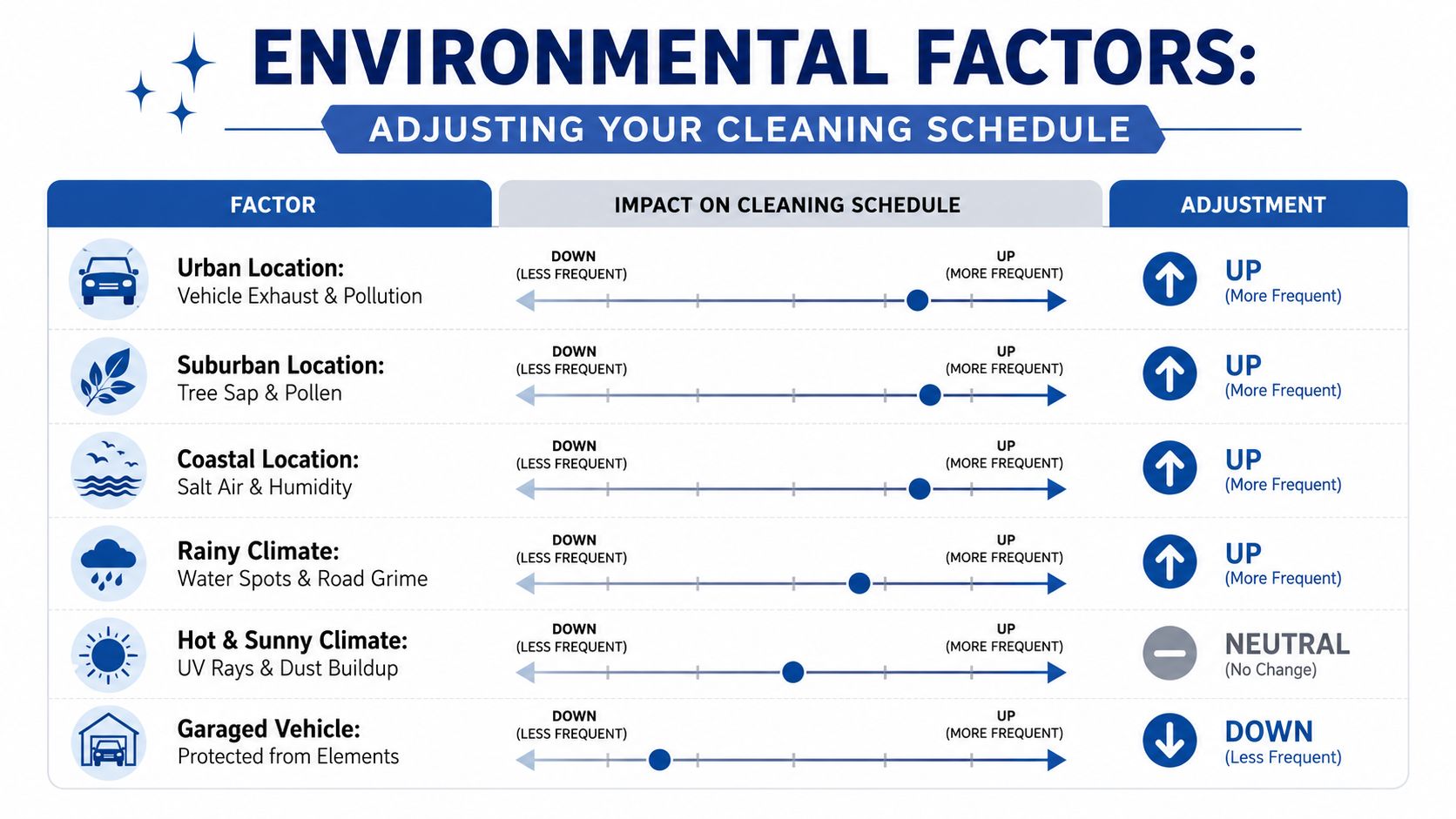
A protected office in a quiet suburban area can keep clean glass longer than a storefront beside a busy road. Vehicle exhaust, construction dust, tree pollen, irrigation overspray, and windblown debris determine how quickly soil reaches each window. Location, weather, landscaping, occupancy, and building purpose should all shape the schedule.
Phoenix-area managers should watch desert dust, intense sun, irrigation minerals, and monsoon-driven debris. Properties near freeways, airports, industrial sites, or active construction need a shorter starting interval than sheltered offices. A Scottsdale retail center surrounded by landscaping may collect pollen, tree residue, and bird contamination faster than rear-facing warehouse glass.
Use triggers instead of guesswork
Raise the service frequency one tier when several risk factors affect the same zone. A quarterly office plan should become monthly for ground-floor glass beside active construction when tenant traffic is heavy and south-facing windows receive irrigation overspray.
South- and west-facing glass can bake contaminants onto the surface during hot Arizona afternoons. Tinted, Low-E, tempered, and mirrored spandrel glazing also require compatible methods. Identify the glass before choosing pads, blades, chemicals, or water temperature.
Put these triggers in the contractor's service specification:
- Freeway or industrial exposure: Move exterior service from semiannual toward quarterly.
- Active construction nearby: Add interim exterior visits while airborne dust continues.
- Restaurant or cafe at grade: Set entry-glass service at weekly or monthly intervals.
- Desert dust and monsoon debris: Include a post-storm inspection and spot-cleaning provision.
- Sheltered back-of-house glass: Keep the longer baseline when inspections show acceptable conditions.
- Hard-water overspray: Correct sprinkler direction and schedule mineral-removal work before deposits etch the glass.
Record the trigger, affected zone, and reason for each interval change. That documentation gives the property manager a defensible budget and lets contractors price the work by exposure instead of applying one building-wide number. It also separates appearance cleaning from access and safety inspections, so low-visibility back-of-house glass does not dictate the schedule for public-facing areas.
A Sample Maintenance Plan You Can Hand to a Contractor
A contractor should receive a zone-based service sheet, not a request to “clean the windows regularly.” The sheet should identify what gets cleaned, how often, which access method is expected, and what constitutes acceptable completion.
Start with daily touch-ups for lobby doors and entrance glass when building staff can handle light marks between professional visits. Schedule weekly interior work for highly visible storefronts, monthly service for office and restaurant glass that needs consistent presentation, and quarterly or semiannual full-exterior work based on height, exposure, and access.
Copy-ready scope
Require the vendor to confirm these items before the first visit:
- Glass: Interior and exterior surfaces by zone.
- Edges and surrounding surfaces: Frames, sills, tracks, mullions, signage, and awning panels.
- Access: Water-fed poles for suitable low-rise areas, lifts where approved, and rope or suspended access for elevations that cannot be reached safely from the ground.
- Inspection record: Visible defects, failed seals, cracked glass, damaged frames, and access concerns.
- Acceptance standard: No avoidable streaks, drips, fingerprints, loose debris, or missed listed zones under normal viewing conditions.
Build two annual deep-cleaning windows around seasonal conditions, such as spring pollen drop and post-monsoon dust. For suspended work, coordinate the cleaning calendar with anchor and safety-equipment inspections instead of treating those checks as an afterthought.
| Zone | Frequency | Scope of Work | Access Method |
|---|---|---|---|
| Lobby doors and entry glass | Daily touch-ups, professional weekly or monthly service | Glass, handles, edges, frames, thresholds | Floor-level tools |
| Storefront and display glass | Weekly or biweekly | Interior and exterior glass, frames, sills, signage | Water-fed pole or approved floor-level equipment |
| Office suites and conference rooms | Monthly to quarterly | Interior glass, partitions, frames, sills | Floor-level tools |
| Restaurant entrance and dining glass | Weekly to monthly | Glass, grease-prone edges, doors, frames | Floor-level tools |
| Full low-rise exterior | Quarterly to semiannual | Exterior glass, frames, sills, awning panels | Water-fed poles or lift |
| High-rise facade | Quarterly or semiannual | Exterior glass, facade-adjacent areas, inspection report | Rope access or suspended platform |
Have the contractor and property representative sign the completed service report. That simple record supports invoice review, tenant communication, and future interval changes.
Cost and ROI of Routine Commercial Window Cleaning
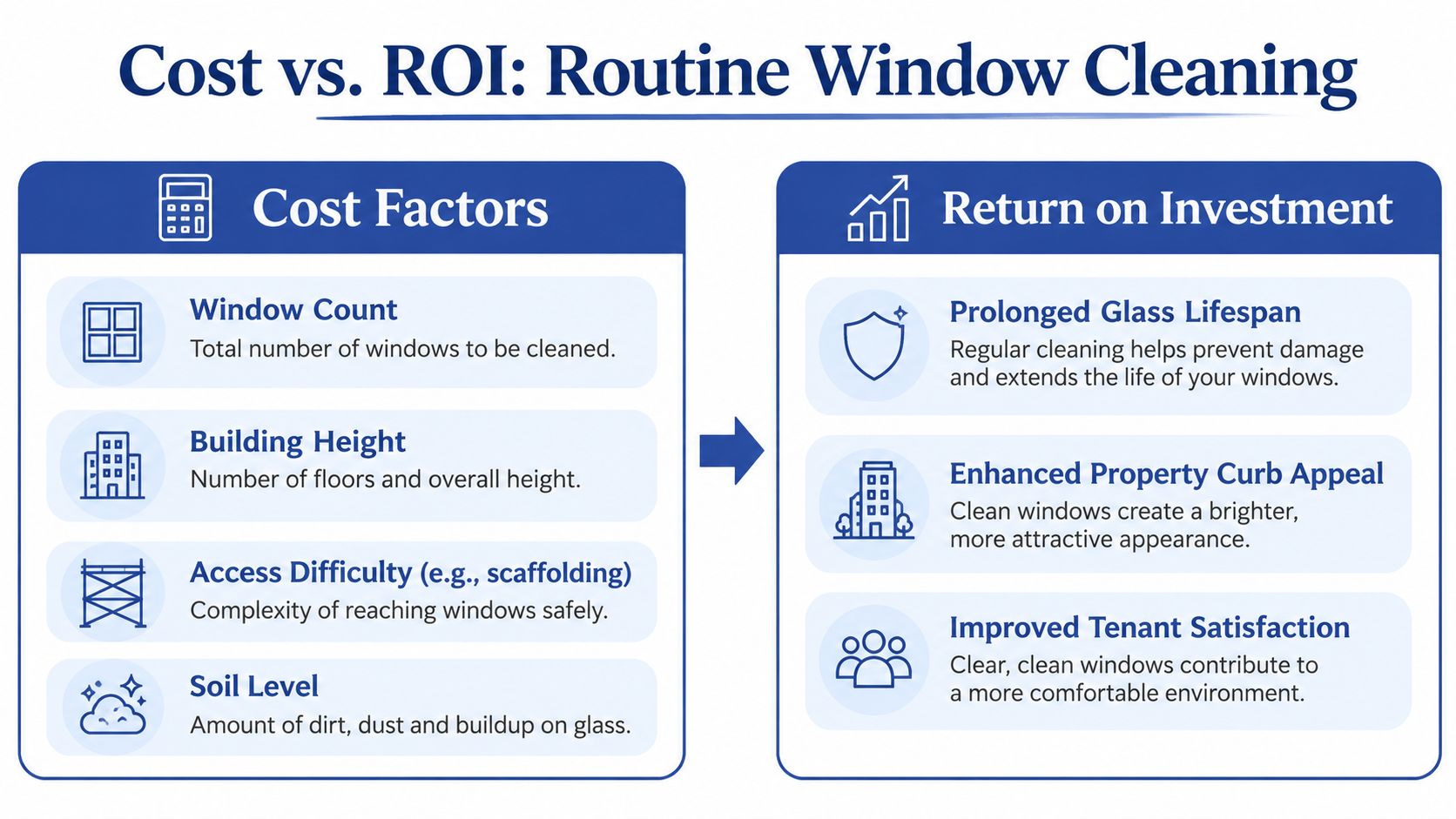
Window-cleaning cost follows the work, not a universal rate. Window count, building height, access difficulty, soil level, glass type, and included detail work all affect the quote. A quarterly exterior visit for a mid-size office may cost from a few hundred to a low-thousand-dollar range per visit, while monthly interior storefront service generally costs less per visit but accumulates across the year. These are planning categories, not guaranteed prices, so managers should request a site-specific proposal.
The budget comparison is straightforward. A weekly restaurant entrance plan creates a recurring presentation expense, while a semiannual warehouse exterior plan keeps the same line item far lower. The manager should compare both against the consequence of neglected glass, including complaints, damaged finishes, missed defects, and the need for specialized restoration.
Measure what the service protects
Routine cleaning supports curb appeal in customer-facing properties and gives tenants a brighter, more maintained environment. It also gives technicians regular opportunities to notice failed seals, cracked glass, damaged gaskets, stained frames, and other conditions that deserve a work order.
Don't judge ROI only by counting clean panes. Track tenant complaints, leasing presentation, renewal conversations, visible glass defects, and energy-bill trends where building operations already monitor them. Commercial window-cleaning pricing information can help a manager frame the questions to ask before comparing proposals.
Budget test: Choose the shortest interval that keeps priority zones presentable and lets technicians inspect the building without forcing unnecessary full-facade work.
Review the plan every two years, or sooner after a tenant change, construction project, landscaping change, or recurring mineral-staining problem. A segmented contract usually gives ownership better control than cutting every zone to the same low frequency.
Hiring a Licensed and Insured Commercial Window Cleaning Pro
Recurring commercial work should not go to the lowest bidder who arrives with a bucket and a ladder. The contractor needs the training, insurance, equipment, and documentation to manage the building's actual exposure and access conditions.
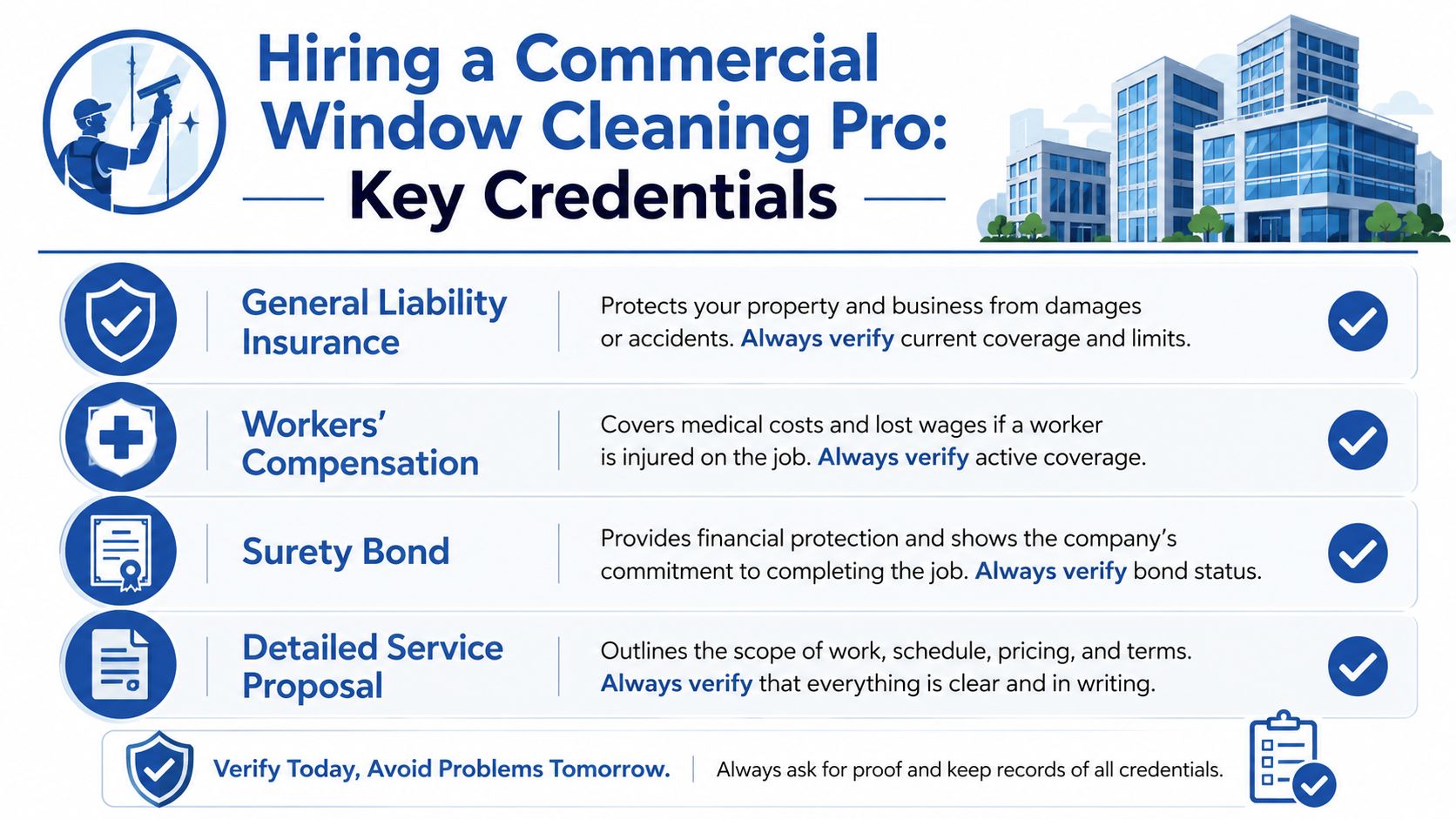
Before signing, verify the business license applicable to the work location and request a current certificate of insurance. Confirm general liability coverage, workers' compensation, and surety bonding, then ask whether the property can be named as an additional insured where appropriate. For technicians working from ropes or suspended platforms, request evidence of applicable fall-protection training and qualification.
Ask for proof, not assurances
A defensible vendor review includes:
- Insurance documents: Check current certificates and policy details before work begins.
- Access qualifications: Ask who operates lifts, water-fed pole systems, rope systems, or suspended platforms.
- Anchor procedures: Confirm how the contractor qualifies anchor points and how often the building inspects them.
- Comparable references: Request references from properties with similar height, tenant use, and access challenges.
- Written scope: Specify glass, frames, sills, tracks, signage, awnings, spot calls, and inspection reports.
- Rescheduling terms: State how weather, wind, heat, or unsafe site conditions affect the appointment.
For low-rise exterior work, pure-water-fed pole systems can reduce ladder exposure around sidewalks and entrances when the building and glass are suitable for that method. If water runoff, roof drainage, or debris could affect the property, coordinate the work with maintenance teams and review resources such as ways to prevent water damage with cleaning before the service date.
Make safety part of the contract
High-rise anchor fittings and suspended access systems are safety equipment. Neutral safety guidance for building owners emphasizes routine inspection of anchor fittings, including inspection at least annually, and the need to follow applicable safety codes for window cleaning. Building-owner safety excerpts provide a useful reference point when defining inspection responsibilities.
South Mountain Window Cleaning, LLC describes its service area across Phoenix, Scottsdale, Paradise Valley, Chandler, Tempe, and Gilbert, and its commercial offering includes scheduled cleaning for business properties. Managers should still verify the current insurance certificate, access plan, and scope in writing. A contractor's insurance discussion can also be reviewed through commercial window-cleaning insurance information.
The Risks of Stretching the Schedule Too Far
Cutting a quarterly plan to twice a year may reduce this line item, but it also reduces the chances to catch problems early. Each scheduled visit can reveal failed seals, cracked mullions, water intrusion, and unsafe access conditions before they become larger maintenance issues. Budgeting should separate appearance cleaning from access and condition inspections, then assign tighter intervals to storefronts and other high-traffic glass.
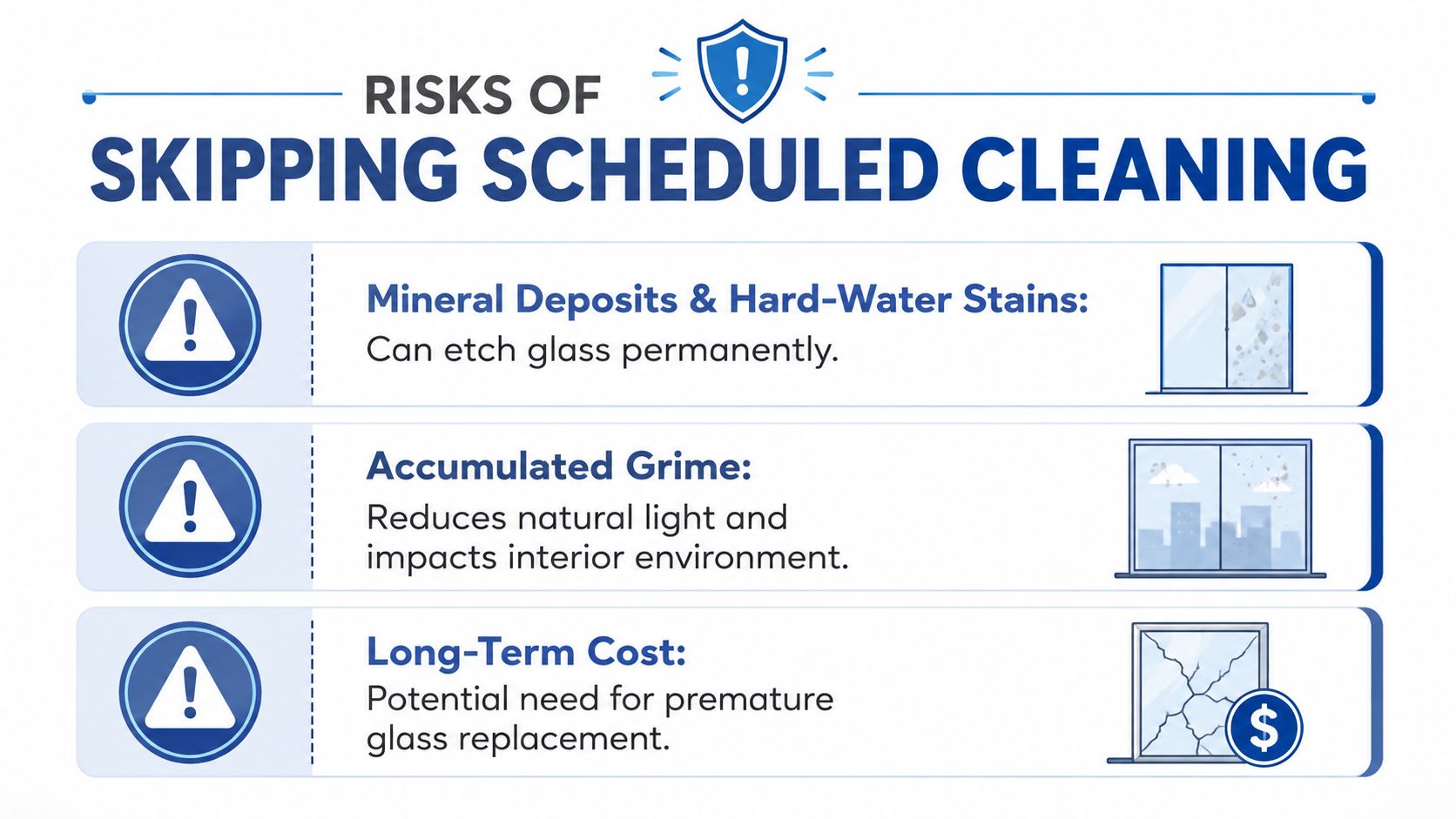
Mineral deposits, hard-water spots, bird contamination, and construction residue become harder to remove when they remain on glass too long. In Arizona, irrigation overspray combined with dust is especially stubborn on sun-exposed windows. A delayed visit can turn routine cleaning into restoration work.
What the reduced schedule leaves behind
A thin service history creates avoidable exposure:
- Missed maintenance signals: Technicians may not identify deteriorating sealants, cracked frames, or damaged gaskets until the condition worsens.
- Access complications: Building owners may discover that anchors, suspended systems, or lift plans need attention only when a cleaning visit is already due.
- Reputational damage: Tenants, patients, diners, and shoppers notice dirty entrance glass quickly, often before they notice other capital projects.
- Replacement exposure: Etched glass and neglected frames may require specialized repair or replacement instead of ordinary cleaning.
- Weak documentation: Incomplete inspection records make it harder to show that facade and access maintenance received regular attention.
The cheapest schedule is the one that prevents routine cleaning from turning into restoration, emergency access work, or a tenant complaint campaign.
Before approving a reduced interval, inspect representative windows from every exposure zone and review the latest service reports. Confirm anchor and access documentation, then require the contractor to identify conditions needing immediate attention. If the property remains acceptable, apply the longer schedule to back-of-house glass, not storefronts, lobbies, or high-rise access systems.
The following video provides a visual reference for commercial window-cleaning considerations. Use it to support, not replace, a written scope and safety review.
South Mountain Window Cleaning, LLC offers scheduled commercial, storefront, and high-rise window washing for properties in Phoenix, Scottsdale, Paradise Valley, Chandler, Tempe, and Gilbert. Visit South Mountain Window Cleaning, LLC to request a fast, free quote and build a zone-based maintenance plan your contractor can execute this week.