

You're standing at a fence supplier's yard with two samples in front of you. One is familiar silver galvanized mesh. The other is black chain link fencing, darker, quieter, and noticeably more finished. Both can define a property, but they won't create the same impression, handle every environment the same way, or carry the same maintenance trade-offs.
The key isn't whether you like black. It's understanding what sits beneath that color, how the coating behaves in sun and moisture, and whether the fence will surround a garden, pool, parking lot, school, or high-use enclosure. This guide walks through those decisions in plain language, from the steel core to cleaning, repairs, specifications, and installation planning.
Why Homeowners and Property Managers Choose Black Chain Link Fencing
The homeowner at the supplier yard turns the silver sample toward the landscaping. It's strong and familiar, but the bright metallic finish catches the eye. When the black sample goes in front of the same shrubs, it seems to retreat. The boundary remains visible, yet the fence no longer competes with the trees, climbing plants, dark-stained deck, or modern exterior.
That visual difference explains much of the demand for black chain link fencing. The dark finish helps the mesh blend with mature trees and garden beds, so a boundary can feel less industrial. Around a pool, it can create a cleaner sight line. Around a parking lot, it can support security without adding another bright silver element to a building's facade.
Homeowners also choose it for the small practical advantages. The coating provides another barrier against moisture, while the dark surface can make light dirt and minor scuffs less noticeable than they are on galvanized steel. Black fittings, posts, and rails can create a coordinated appearance that works especially well with contemporary architecture, dark trim, and commercial branding.
The price difference matters, so buyers should treat the finish as a deliberate upgrade rather than a free color choice. Black vinyl-coated chain link commonly costs 20% to 35% more than galvanized fencing, with an example difference of roughly $400 to $1,200 on a 200-linear-foot residential fence, according to this galvanized versus black chain link cost comparison. That premium may make sense when curb appeal, tenant satisfaction, or property photographs matter.
A well-chosen installation can deliver:
- Cleaner sight lines: The dark mesh recedes around pools, gardens, and planted boundaries.
- A more intentional finish: The fence looks like part of the design instead of an afterthought.
- Useful security: The barrier still encloses people, pets, equipment, and vehicles.
- Better visual coordination: Black hardware can echo windows, signage, gates, and exterior trim.
If the fence is one part of a broader exterior improvement, these curb appeal ideas for property owners can help you evaluate the fence alongside the rest of the frontage.
What Black Chain Link Fencing Is Actually Made Of
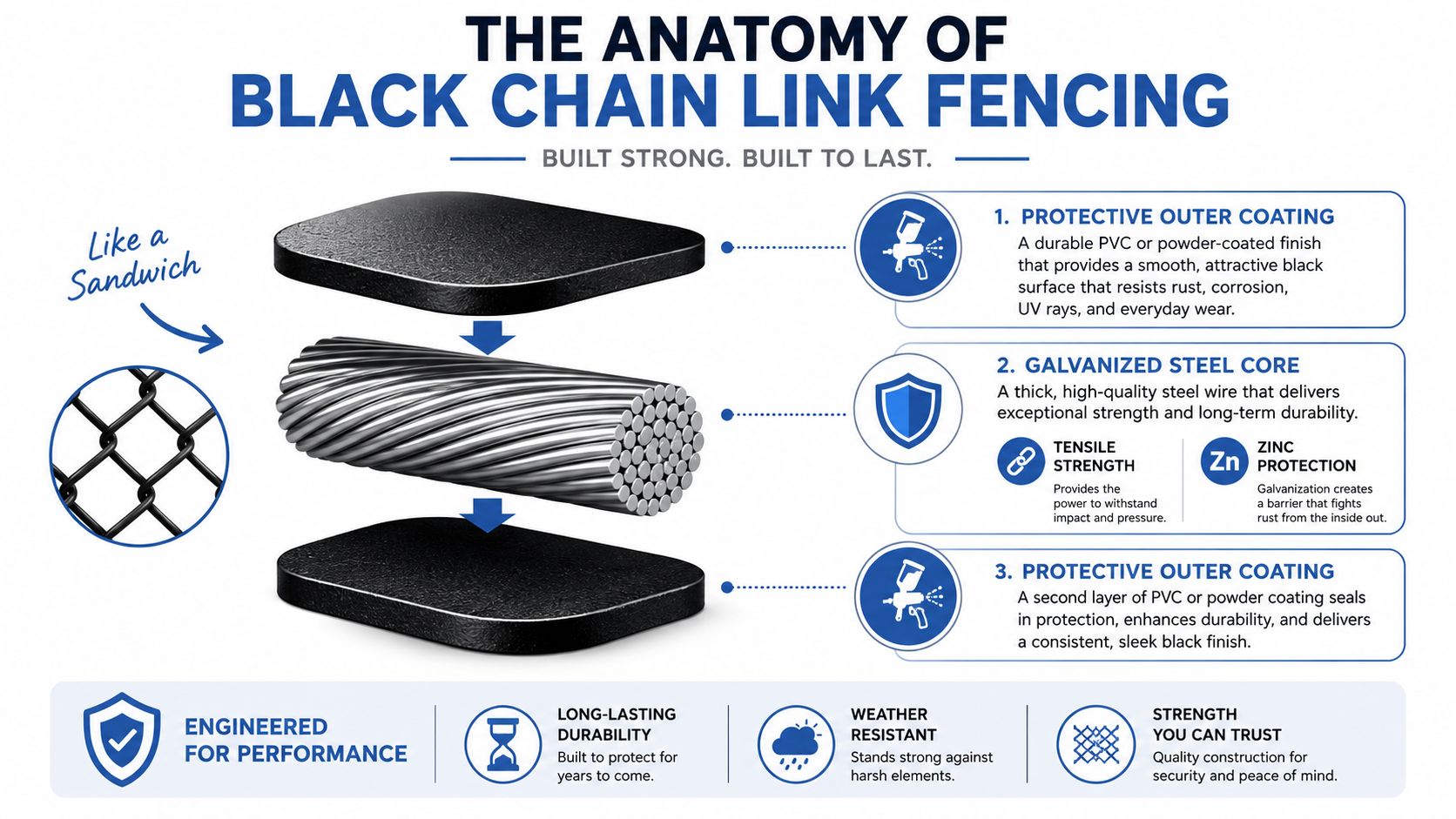
Black chain link fencing is best understood as a sandwich. The middle is the structural filling, and the outside layers provide protection and appearance.
The steel core carries the load
The inner wire is usually steel with a zinc coating. Hot-dip galvanization places zinc around the steel, and that zinc helps protect the underlying metal through sacrificial corrosion protection. If moisture reaches a damaged area, the zinc can corrode before the steel does, depending on the condition and specification of the coating.
That core gives the fabric its tensile strength. Common purchasing conversations may include wire gauges such as 9-gauge, 11-gauge, and 11.5-gauge, although the right choice depends on the height, mesh, use, and required security level. A 2-inch diamond mesh is common in many residential and commercial configurations, while smaller openings can be selected where keeping animals or objects from passing through matters more.
The outside layer supplies color and another barrier
The black exterior is typically PVC or another polymer coating applied over the galvanized wire. It creates the dark visual profile and adds a barrier against moisture, sunlight, and abrasion. The coating is measured in mils, so a written specification should identify its thickness rather than relying on a color sample alone.
Technical procurement documents commonly reference ASTM F668 for PVC or polymer-coated chain link fabric and ASTM F567 for installation. Commercial specifications may also call for Federal Specification RR-F-191K/1D Type IV, while fusion-bonded Class 2b coating is used to improve adhesion and reduce separation around bends, cut ends, and abrasion points. You can review an example of those requirements in this PVC-coated chain link specification document.
Practical rule: Ask whether the coating is fused and bonded, how thick it is, and what standard the fabric meets. “Black” describes the finish, not the full quality level.
Green and brown coatings are also available, but black remains popular because it blends with landscaping and gives commercial properties a consistent accent color. Posts range from lighter residential sections to heavier commercial systems, including Schedule 40 options. Most visible hardware is color-matched or powder-coated black, although the exact finish should be confirmed before ordering.
For related metal care, this guide to rust prevention for metal surfaces provides useful background on keeping exposed components in better condition.
Where Black Chain Link Fencing Works Best
Black chain link fencing earns its place where a property needs a functional boundary without making the boundary the first thing people notice. The dark mesh doesn't disappear, but it creates less visual contrast than silver wire against trees, shrubs, soil, or dark building materials.
A backyard with a pool and garden is a good example. Black mesh can sit behind climbing roses or along a planted edge while preserving the enclosure. The fence still performs its safety and property-boundary role, but the eye stays on the water, planting, and outdoor living space.
Commercial properties use the same principle differently. A retail center may need a parking-lot enclosure or service-yard barrier. Black mesh can keep the security function intact while coordinating with modern signs, storefront trim, and branded exterior colors. The result often feels more deliberate than a bright galvanized perimeter.
Public and recreational spaces
Schools and parks benefit from a softer visual presence around athletic fields, playgrounds, and tree lines. Black chain link also works naturally around tennis courts, batting cages, and pool enclosures. The dark backdrop can make the court, water, or activity area easier to focus on instead of drawing attention to the fence itself.
Garden contractors and nurseries often use it to divide growing areas, display zones, or service sections. Plants remain the visual feature, while the fence provides structure and controlled access.
A good fence should support the property's purpose. Around a garden, that means framing the planting. Around a retail lot, it means protecting the site without making the perimeter look temporary.
Less common applications include rooftop dog runs, HOA common areas, and utility enclosures. In each case, the best result comes when the fence blends into the surroundings and the owner still selects the wire, mesh, posts, gates, and coating for the actual level of use.
For communities with controlled access, readers may also find this explanation of COA board gated community duties useful when determining who manages shared boundaries, gates, and common-area responsibilities.
How Black Chain Link Compares to Standard Galvanized
A black fence can look like a simple color choice, but the coating changes how the fence handles cost, sunlight, and damage. Black vinyl-coated and standard galvanized chain link both begin with a steel core. Black chain link adds a polymer layer over the galvanized wire, which usually raises the upfront price. Verified comparisons commonly place it 20% to 35% above galvanized fencing, according to this cost comparison of galvanized and black chain link.
Service life depends on more than the finish. Zinc protection, polymer quality, climate, installation, and physical abuse all matter. Common expectations range from roughly 15 to 20 years, or about 20 years under some specifications, while properly specified black vinyl-coated chain link may last about 20 to 30 years. These are planning ranges, not guarantees. Salt air, chemicals, strong sun, irrigation overspray, and repeated impacts call for closer attention to the product specification.
| Feature | Black Vinyl-Coated | Standard Galvanized |
|---|---|---|
| Appearance | Dark finish recedes into landscaping and coordinates with modern exteriors | Bright silver finish is functional but more visually prominent |
| Corrosion defense | Galvanized core plus an outer polymer barrier | Zinc protection without the additional black polymer layer |
| Upfront price | Commonly carries a 20% to 35% premium | Usually the lower-cost option |
| Damage response | A deep scratch can expose steel beneath the coating | A damaged area may still have surrounding zinc protection |
| Maintenance visibility | Minor dirt and scuffs may be less noticeable | Rust and surface changes can stand out against silver mesh |
| Best fit | Visible boundaries where appearance and blending matter | Budget-led installations or less prominent utility areas |
The practical choice follows the fence's setting. A standard galvanized fence can suit a back lot or utility boundary where budget matters more than appearance. Black may earn its premium along a front yard, pool, garden, commercial entrance, or wildlife-friendly area because the dark mesh draws less attention.
Sun exposure can change that calculation. A low-quality vinyl coating may crack in about 3 to 5 years under intense sunlight, while premium systems may last 15 to 25 years or more, according to this black versus galvanized fencing durability guide. Ask whether the coating includes UV stabilizers, how thick it is, and whether the frame is vinyl-dipped or powder-coated. A color sample shows appearance, not how the fence will perform in your climate.
Common Maintenance Issues and How to Prevent Them
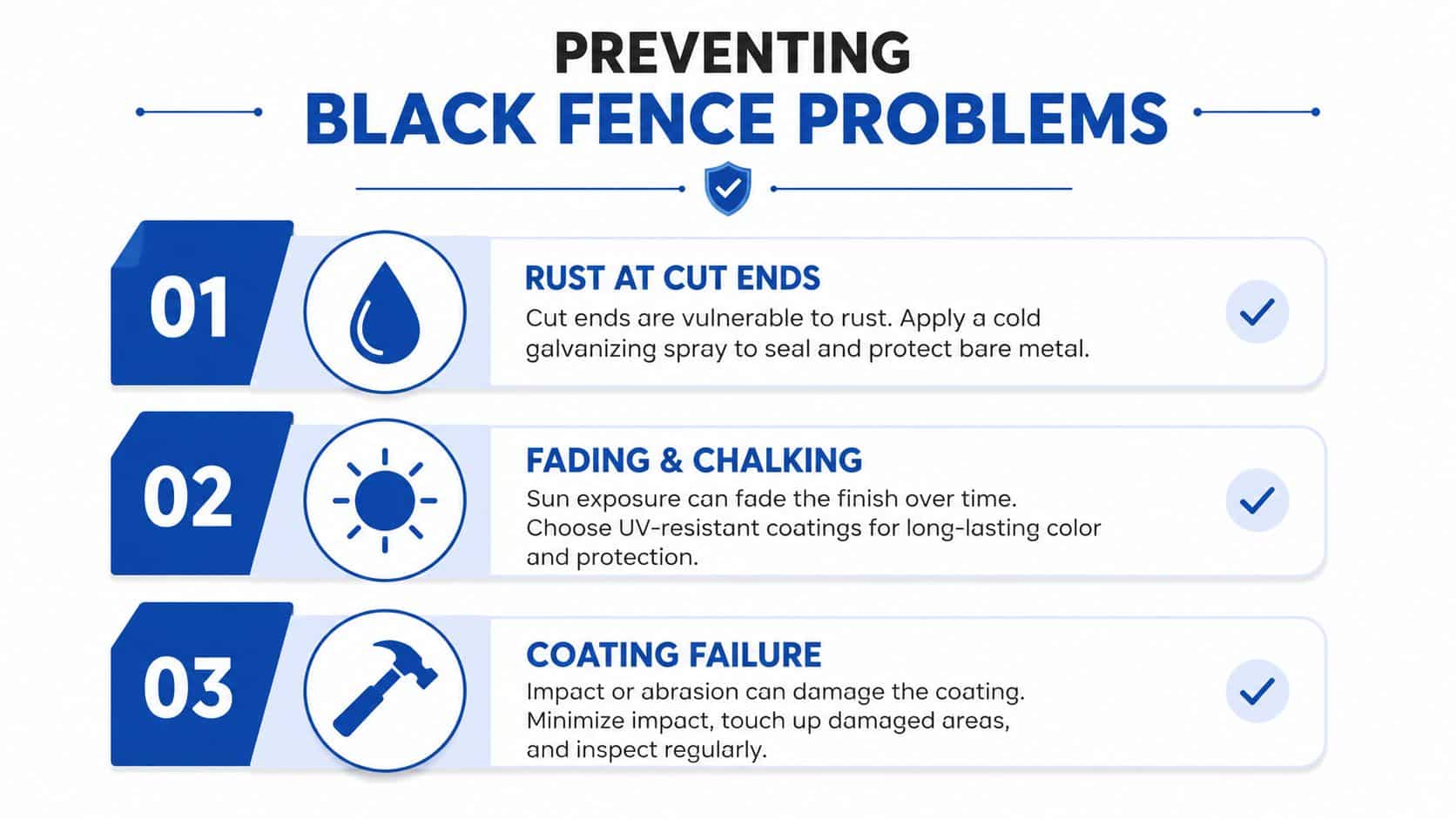
Most black chain link problems begin in predictable places. The first warning signs are usually rust at cut ends, fading or chalking from sunlight, and coating damage caused by impact or abrasion.
Rust at cut ends
Factory-trimmed or field-cut wire can expose raw steel at the edge. That small opening gives moisture a path beneath the protection. Inspect gate corners, tie wires, cut mesh, and areas where installers trimmed fabric around posts.
Clean the spot, let it dry, and apply a compatible color-matched touch-up product or liquid PVC repair material. The repair doesn't need to look dramatic. Its job is to close the exposed area before corrosion spreads into sound wire.
Fading and chalking
South-facing runs receive the hardest sun exposure. Over time, a low-quality coating may develop a gray haze or lose some of its original depth. Gentle washing with mild soap and a soft brush can remove surface dirt and restore the appearance, but cleaning won't reverse coating damage.
Trim vegetation that presses against the mesh. Leaves and vines hold moisture against the fence, block airflow, and make it harder to spot small failures. Keep sprinklers from repeatedly wetting the same section, especially where water carries soil or fertilizer onto the wire.
Impact and abrasion
A lawn mower can throw a stone into the lower rail. A dog can paw at a gate. A shifting branch, moving equipment, or repeated contact can crack or peel the coating. Once you see a damaged patch, clean it, allow it to dry, lightly scuff only as directed by the repair product, and apply a compatible patch.
A spring and fall inspection is enough for most owners to catch trouble early. Walk the entire perimeter and check:
- Cut edges: Look for orange staining or exposed metal.
- Low sections: Check for mower strikes, pet damage, and soil contact.
- Gates and hardware: Confirm that hinges, latches, caps, and tension points remain secure.
- Vegetation: Clear vines, branches, and damp debris from the fabric.
- Finish changes: Note chalking, cracking, peeling, or concentrated wear.
Rust can also stain nearby masonry. If orange marks appear on walkways or concrete, this guide on what causes rust stains on concrete and how to remove them explains why ordinary scrubbing often fails and why the cleaning method matters.
Cleaning and Repair Options for Everyday Upkeep
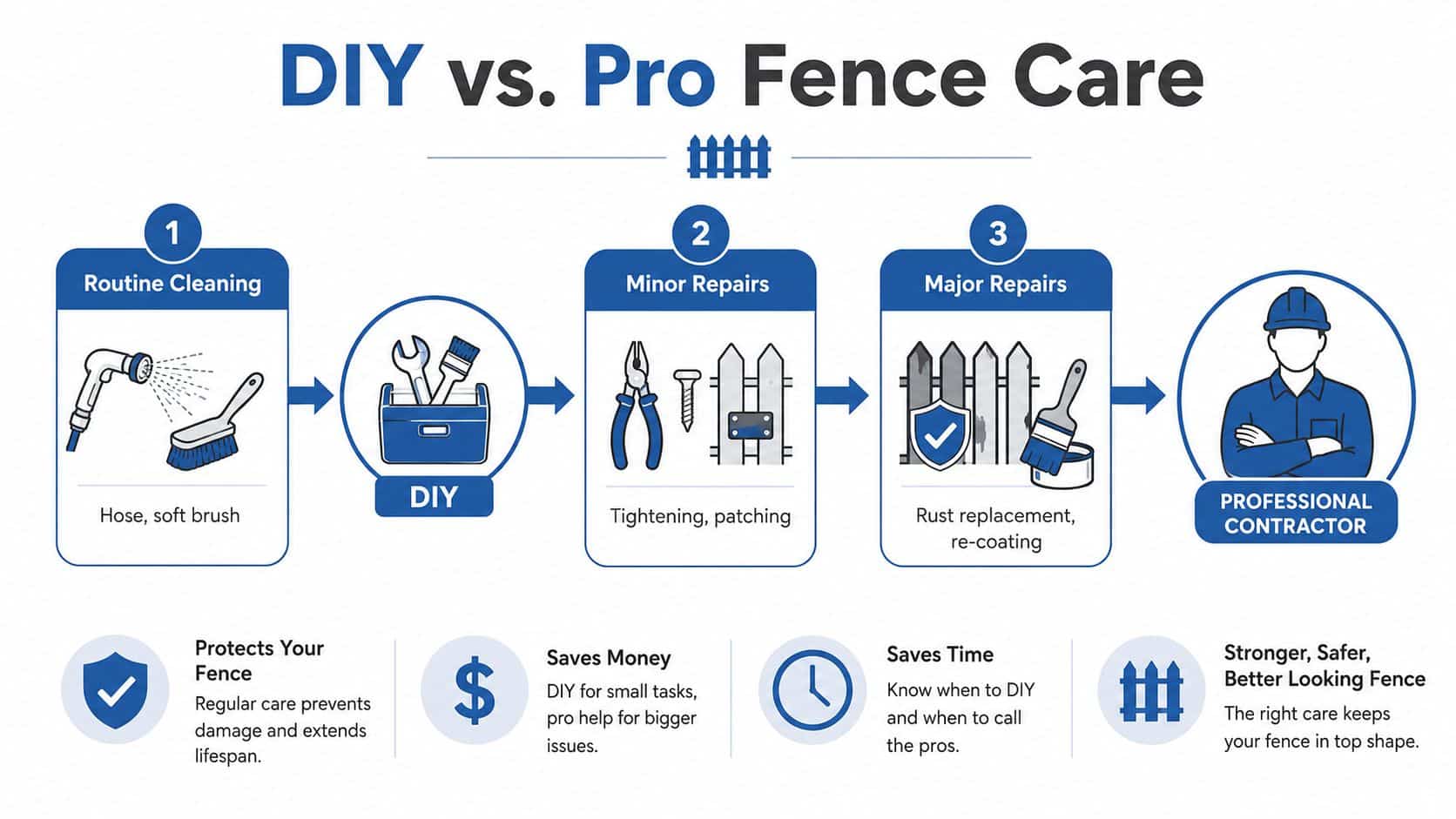
Routine cleaning is usually a manageable weekend task. Start by rinsing the mesh with a garden hose, then work from the top down with a soft-bristle brush, warm water, and a few drops of dish soap. Rinsing downward keeps dirty runoff from streaking areas you already cleaned.
For mildew, a gentle solution of white vinegar and water or a diluted oxygen bleach spray can help remove growth without treating the PVC surface aggressively. Test any cleaner on an inconspicuous area first, avoid harsh abrasives, and don't use a pressure setting that could force water behind a damaged coating.
Small jobs a homeowner can handle
A capable owner can often manage limited repairs without rebuilding the fence. Examples include:
- Loose cap: Reseat or replace a top-rail cap when the rail and post remain straight.
- Bent tension wire: Replace a single damaged wire if the fabric isn't distorted.
- Fresh scratch: Clean and dry the mark, then apply compatible color-matched sealant or coating.
- Surface dirt: Use a hose and soft brush instead of abrasive pads.
The decision changes when the structure itself has moved. Storm-damaged panels, leaning posts, a bent rail, or fabric that has lost its tension may require tools such as a tension bar and come-along. Rust that has eaten through the wire isn't a cleaning problem, and an older fence with widespread coating breakdown may need replacement or professional restoration rather than isolated touch-ups.
This short video can help you visualize the difference between basic care and more involved fence work:
Before choosing DIY or professional service, check the fence height, the age and condition of the coating, whether rust is superficial or structural, and whether local codes or HOA rules restrict modifications. For related masonry cleanup after corrosion, see these options for removing rust stains from exterior surfaces.
Your Buyer Checklist and Next Steps
A good purchase starts before the contractor arrives. Put the important decisions in writing so a low quote doesn't omit posts, gates, hardware, coating details, or site preparation.
Confirm the site requirements
- Measure linear footage: Record the fence runs separately from gate openings.
- Check local rules: Confirm height limits, setbacks, permit requirements, and HOA conditions.
- Select the fabric: Ask about wire gauge, mesh opening, coating thickness, and coating class.
- Review the structure: Match post and rail strength to wind, use, gates, and public access.
- Plan the budget: Set aside 15% to 25% extra for posts and hardware, and confirm how the contractor has calculated that allowance.
- Choose timing: Schedule installation during dry weather so excavation, concrete, and site access aren't complicated by wet conditions.
- Read the warranty: Ask for written terms covering both the PVC coating and the galvanized core.
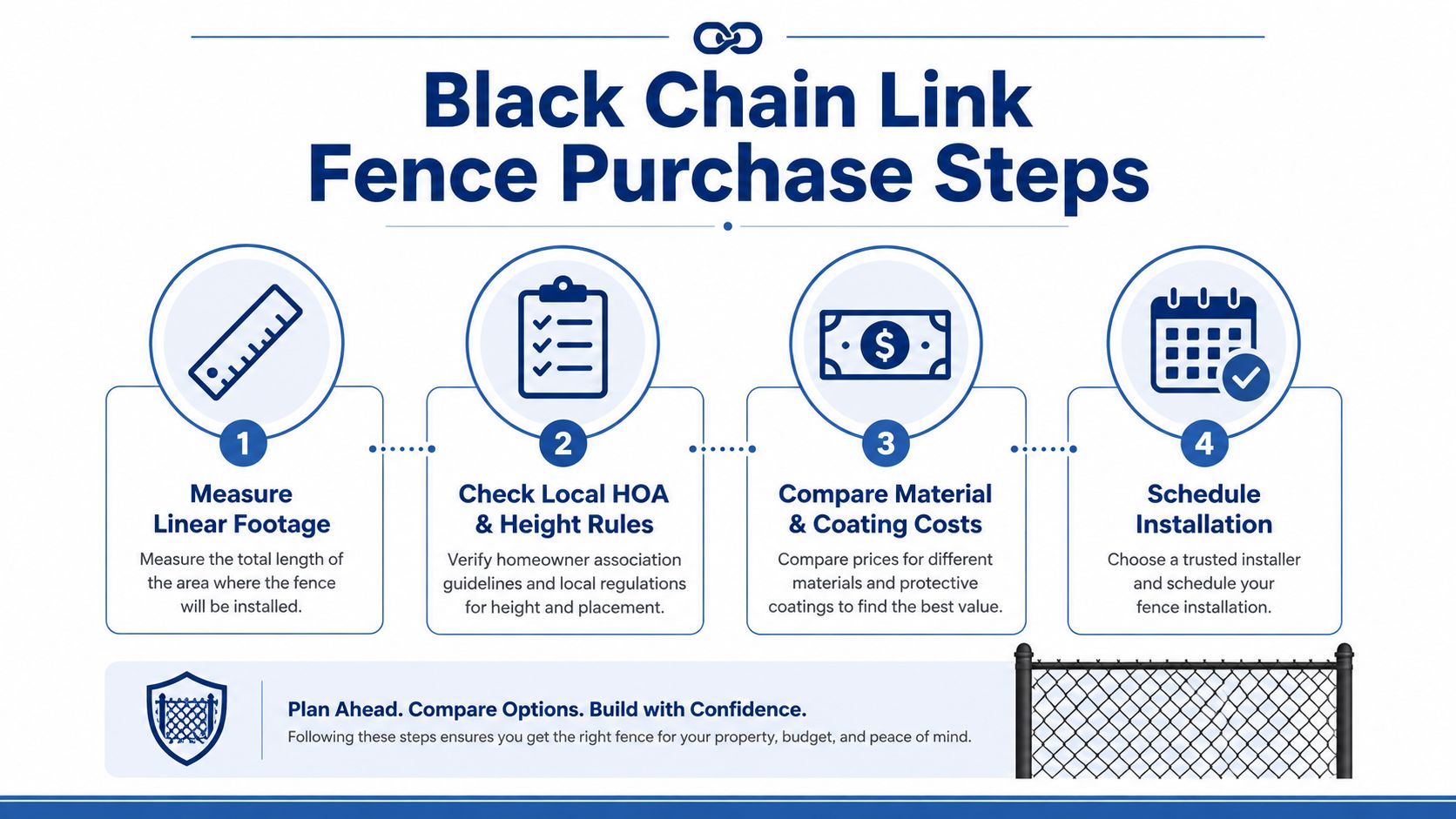
Gather three local quotes, request physical coating samples, verify recent references, and compare the written scope rather than just the final price. The scope should identify materials, dimensions, gates, removal, concrete, cleanup, warranty coverage, and who handles permits or inspections.
A sample lets you test the finish against your home, yard, and sun exposure. A written scope protects both sides because it turns a color preference into a measurable product and installation plan.
Frequently Asked Questions About Black Chain Link Fencing
Does black PVC coating peel or fade faster than green?
Color alone doesn't determine performance. Coating thickness, UV stabilizers, adhesion, zinc protection, and exposure matter more than whether the finish is black or green. Ask for the coating class and written manufacturer warranty.
How long can quality black chain link last near the coast or inland?
There isn't one reliable lifespan for every climate. Coastal salt, humidity, intense sun, chemicals, and physical abuse can shorten service life, while heavier zinc or polymer systems can improve performance. Public-sector specifications may require at least 7 mil PVC or ASTM F668 Class 2b fusion-bonded coating for higher-exposure environments, as described in this chain link fencing specification resource.
Can dogs or children damage the coating?
Normal contact usually isn't the main concern. Repeated scratching, chewing, impacts, and objects pushed against the lower mesh can create local failures. Inspect those areas more often and repair exposed metal promptly.
What gauge and mesh work for pet enclosures?
Choose the opening and wire strength based on the animal, escape risk, gate design, and whether the enclosure needs to resist climbing or impact. A smaller mesh opening can prevent paws or small objects from passing through, but the installer should match it to the posts and tension system.
Can faded fencing be repainted?
Light chalking may improve with cleaning, but widespread fading, cracking, or peeling usually requires a coating-specific restoration plan. Painting over a dirty or unstable surface won't solve adhesion problems.
What warranty terms should buyers expect?
Look for separate written coverage for the coating, galvanized core, fabric, posts, gates, and installation. Confirm exclusions for coastal exposure, chemical contact, impact, improper cleaning, and unauthorized alterations.
For Phoenix, Scottsdale, Paradise Valley, Chandler, Tempe, and Gilbert properties, South Mountain Window Cleaning, LLC offers residential, commercial, and high-rise window washing along with solar panel cleaning, power washing, house washing, gutter cleaning, and rust removal. Visit South Mountain Window Cleaning, LLC to request a fast, free quote and keep the windows, panels, and exterior surfaces around your new fence looking their best.