
You step outside, look at a clean stucco wall or a driveway you just had washed, and there it is. A streak of orange running under a hose bib, a rusty ring under a patio chair, or a stain below a window frame that seems to get louder every time the sun hits it. In Phoenix, Scottsdale, Paradise Valley, Chandler, Tempe, and Gilbert, that's a common headache.
Arizona gives rust stains a few advantages. Sprinklers hit metal fencing and posts every day. AC lines drip in the same spot for months. Patio furniture sits through monsoon moisture and then bakes in intense sun. Add mineral-heavy local water, and a simple stain can turn into a recurring problem if you clean it the wrong way.
South Mountain Window Cleaning provides residential, commercial, and high rise window washing services in Phoenix, Scottsdale, Paradise Valley, Chandler, Tempe, Gilbert, Arizona. That exterior cleaning perspective matters with rust because removal isn't just about scrubbing harder. It's about knowing what caused the stain, what surface you're working on, and which cleaner solves the problem without creating a new one.
That Ugly Orange Stain on Your Beautiful Property
Nothing throws off curb appeal faster than a rust streak on a light-colored surface. On Arizona homes, the usual culprits are metal patio furniture, exposed fasteners, leaky irrigation, old utility fixtures, and water that repeatedly contacts iron. On commercial buildings, you also see it around metal posts, drain points, and lower wall sections where runoff collects.
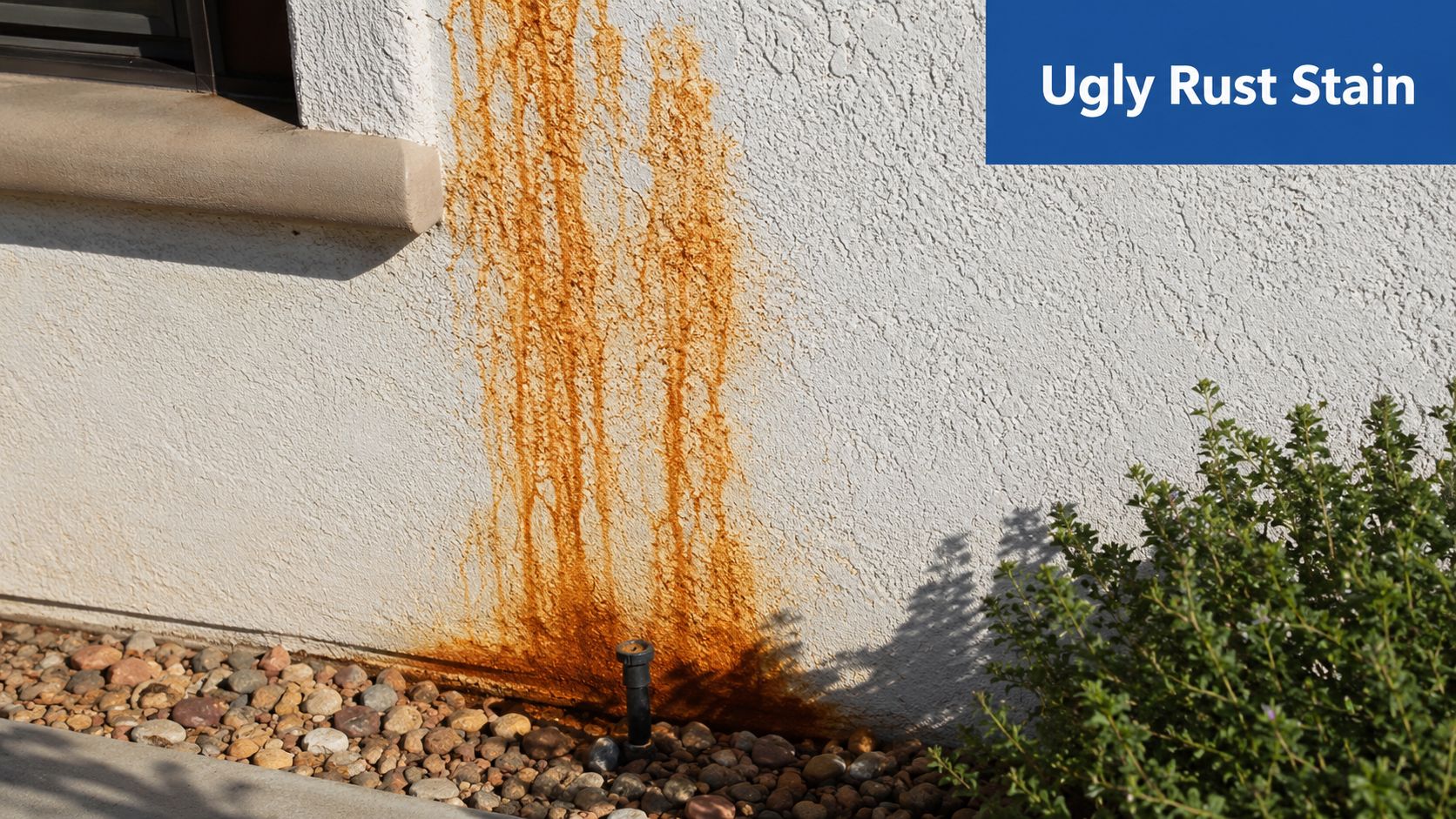
Rust is iron oxide (Fe₂O₃). That's why it's stubborn. It isn't dirt sitting on top of the surface waiting to be blasted away. It's a chemical stain, and that means the right removal method has to address the chemistry first. If you want a deeper look at common causes on hardscapes, this guide on what causes rust stains on concrete is a useful starting point.
Where rust starts on Arizona properties
A few patterns show up again and again:
- Sprinkler overspray: Water hits iron or steel, carries rust onto stucco, block, concrete, or painted trim.
- Outdoor furniture contact: Chair legs and table bases leave orange rings on cool deck, pavers, and patios.
- HVAC and utility drips: Condensation and runoff create a repeating stain line on walls and slabs.
- Window and fixture runoff: Corroding hardware can leave trails below frames, sconces, and gutters.
Practical rule: Rust stains don't respond well to “stronger soap.” They usually need an acid-based approach, patient dwell time, and the right rinse.
What works and what usually fails
The most common mistake is treating rust like grease, mildew, or dust. Pressure alone often won't solve it. Harsh household chemicals can also make things worse, especially on delicate finishes or metals that don't tolerate acid well.
A better way to think about how to remove rust stains is simple. First identify the surface. Then use a remover that matches that surface. Then rinse in a way that won't leave residue behind. That last part matters more in Arizona than most homeowners realize.
Tackling Rust on Fabrics and Clothing
You find a rust mark on a white shirt, an outdoor cushion, or a set of patio towels, and the instinct is to grab bleach. Don't. On fabric, that's the fastest way to turn a removable stain into a permanent one.
The chemistry matters here. Rust is iron oxide, and effective fabric treatment depends on an acid-based reaction rather than oxidation. The professional rule is simple: never use bleach, because bleach further oxidizes the iron and sets the stain. A reliable textile method is outlined by Speed Queen's rust stain guidance, which specifies a 5–8% w/v aqueous solution of food-grade citric acid, applied for 15 minutes on fresh stains or 30 minutes on older ones, followed by a thorough cold water rinse.
The fabric method that actually makes sense
If the item is washable, use this sequence:
Mix the solution carefully
Use a food-grade citric acid solution in the 5–8% w/v range. Keep it simple and make only what you need for the item you're treating.Apply directly to the stain
Wet the rust spot thoroughly without soaking the entire item unless the stain covers a large area.Wait the correct amount of time
Fresh stain: 15 minutes.
Older stain: 30 minutes.Rinse with cold water
Rinse thoroughly with cold water. Don't switch to hot water at this stage.Check before drying
If the stain is still there, repeat the treatment before machine drying or placing the item in the sun.
Why this works better than bleach
Citric acid helps convert insoluble iron oxide into soluble iron salts that can rinse away. Bleach does the opposite kind of chemistry for this problem. It pushes oxidation further, and once that rust binds more firmly into the fibers, your odds drop fast.
If there's any rust left after rinsing, don't dry the item. Heat makes second attempts harder.
A few fabric trade-offs to keep in mind
Not every textile should be treated aggressively. Outdoor cushions, umbrellas, and decorative fabrics can have dyes or coatings that need a gentler touch. Before treating a visible section, test a hidden seam or underside.
For larger fabric stains, such as laundry affected by rusty line contact, full soaking can make more sense than spot treatment. The same source notes that larger stained items may require soaking the garment or repeating the application if the first round doesn't fade the stain enough. Patience beats overworking the fabric.
Here's the practical takeaway. For shirts, towels, cushion covers, and other textiles, the winning move is usually citric acid, correct dwell time, and a cold rinse. Scrubbing hard, improvising with bleach, or drying too soon is what ruins the result.
Cleaning Rust from Concrete and Masonry
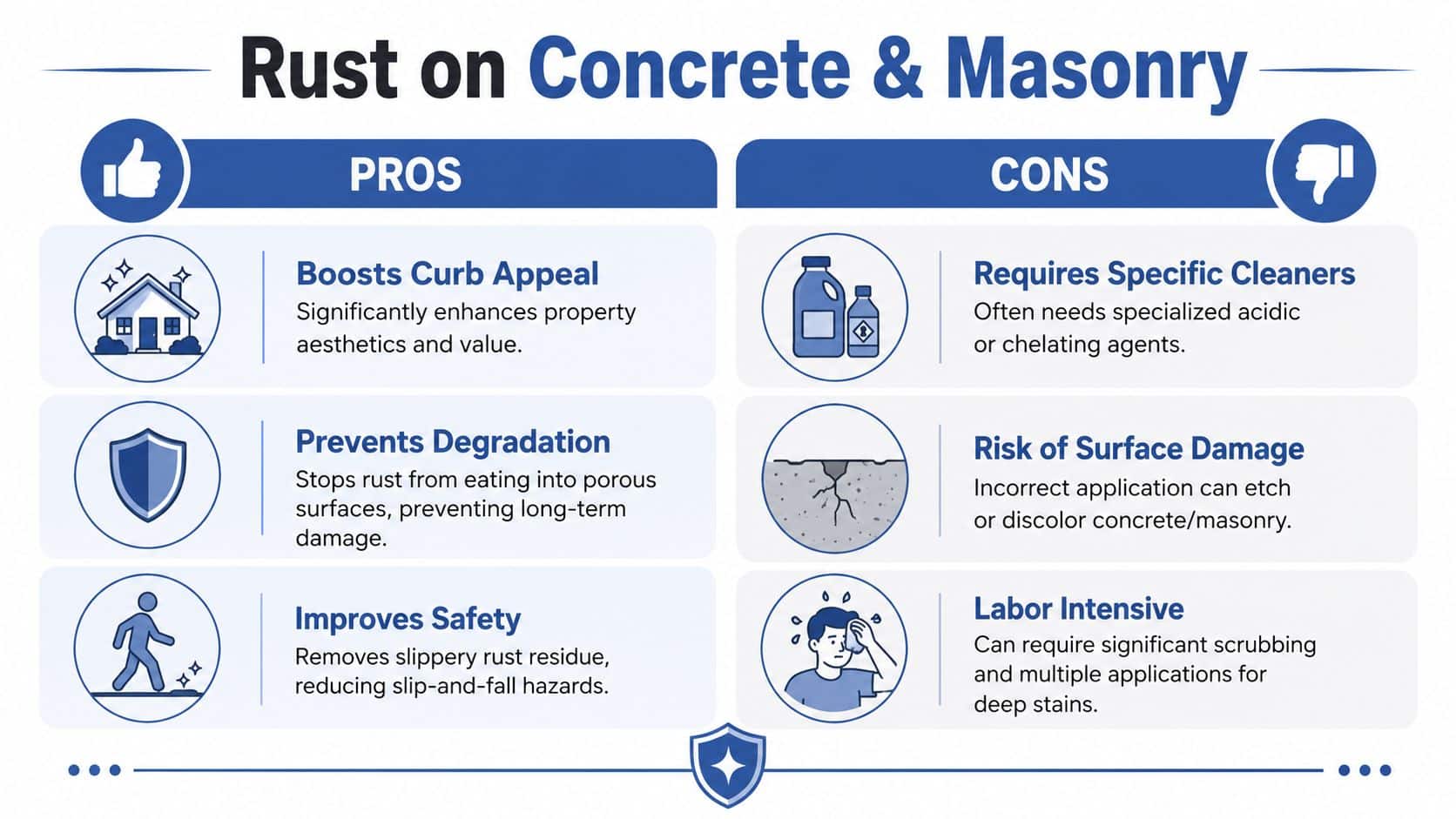
Concrete, pavers, block, and masonry are where rust becomes a curb appeal issue fast. A small stain on a shirt is annoying. A long rust trail across a driveway or entry walk changes how the whole property looks.
Homeowners usually start with vinegar, and that isn't a bad instinct. Mild acids can loosen rust from hard surfaces, but the details matter. On embedded stains, the difference between success and frustration often comes down to dwell time, not elbow grease.
The vinegar and salt method
A proven hard-surface approach uses a mixture of 1/4 cup salt to 1 liter white vinegar. According to this demonstration of the salt and vinegar rust-removal process, heavy corrosion may need a 1–3 day dwell time before agitation. The same source notes that rushing the scrubbing step leaves a lot of stain behind, and heavy corrosion has a less than 20% success rate for complete removal if you don't give the solution enough time.
That surprises a lot of people because most DIY articles make it sound like a 10-minute project. It usually isn't.
What that means in the field
On porous surfaces, rust sinks in. If you scrub too early, you remove surface discoloration and leave the deeper iron oxide behind. Then it flashes back into view once the concrete dries.
A practical workflow looks like this:
- Apply generously: Keep the stained area fully wet with the vinegar and salt mixture.
- Let chemistry do the first part: For deeper stains, dwell time matters more than aggressive brushing.
- Agitate after softening: Once the rust has visibly loosened, use mechanical action.
- Repeat if needed: Stains that have been baking into masonry for months may need another cycle.
For bigger problem areas, homeowners often do better with a full treatment plan rather than random spot cleaning. If you're dealing with repeated staining on a slab or walkway, this page on removing rust stains from concrete gives more concrete-specific context.
The Arizona mistake most guides miss
Phoenix-area water changes the game. In desert climates like ours, 89% of rust stain reappearances after DIY treatment are caused by rinsing with hard tap water, and those mineral deposits can re-oxidize within 48 hours, according to this rust stain discussion focused on desert markets. The fix is a two-step protocol using an acid cleaner followed by a distilled water rinse.
Tap water can undo a good rust treatment on concrete. In Phoenix, the rinse step is part of the job, not an afterthought.
That's one of those local trade-offs people learn the hard way. Vinegar may dissolve the rust, but local hard water can leave behind white mineral residue that looks like a new stain or helps the discoloration return. On masonry, the best result often comes from doing less scrubbing and more controlled rinsing.
Safely Removing Rust from Window Frames and Fixtures
Rust on metal trim, frames, gutters, fasteners, and fixtures isn't just cosmetic. It's also where DIY cleaning gets risky because not all metals react the same way. Treat steel one way, and you may get a decent result. Treat aluminum with the same chemistry, and you can create permanent damage.
That matters on homes, but it matters even more on storefronts, office buildings, condominiums, and high-rise properties where aluminum framing is common.
Steel and aluminum are not the same job
A key safety issue for commercial properties is aluminum window frames. Common acid-based rust removers that are usable on steel can damage aluminum. According to Architectural Digest's rust removal article, a 2025 industry report found that 34% of commercial window cleaning lawsuits stemmed from improper rust treatment on aluminum frames. That same discussion warns that aluminum can be irreversibly damaged by the wrong chemical approach.
For property managers, that's the whole ballgame. If a stain is on or below aluminum, the question isn't just “How do I remove it?” It's “What caused it, and what cleaner can touch this surface safely?”
What experienced cleaners check first
Before anyone applies a rust remover near frames or fixtures, these are the checks that matter:
| Surface question | Why it matters |
|---|---|
| Is it steel, iron, or aluminum? | The wrong chemistry on aluminum can pit the surface |
| Is the stain on the metal or below it? | You may be treating runoff, not the frame itself |
| Is there a coating or finish? | Painted and anodized surfaces need extra caution |
| Is the area elevated or hard to reach? | Height changes the safety plan completely |
That same surface awareness helps indoors too. Homeowners who care about glass, trim, and nearby finishes often benefit from basic frameless shower door care because the same principle applies. Match the cleaner to the material instead of assuming one acid product belongs everywhere.
Why height changes the decision
A rust streak under a second-story frame is already a different project. On a high rise, it's not a DIY project at all. Access, chemical control, runoff management, and surface identification all become more serious.
For a closer look at exterior metal maintenance, this resource on rust prevention for metal is useful because prevention is easier than restoring pitted metal after the fact.
After the surface is identified and the treatment plan is chosen, controlled execution matters just as much as product choice. This short video gives a sense of professional exterior cleaning workflow around windows and surrounding surfaces.
Essential Tools and Products for Rust Removal
Rust removal goes smoother when you stop thinking in terms of “strongest cleaner” and start thinking in terms of surface match. The right product for a concrete pad may be the wrong one for a window frame. The right fabric treatment may be useless on masonry.
Pantry basics versus store-bought removers
For minor hard-surface stains, pantry options are the usual starting point. White vinegar is the most common. Salt can support it on some surfaces. Lemon-based acids can help in lighter situations. These are simple, accessible, and often worth trying first on a small area.
Commercial removers step in when the stain is older, deeper, or spread across a larger area. You'll see products built around acid or chelation chemistry. Those can be effective, but they also raise the stakes. On masonry, they can etch. On paint, they can discolor. On the wrong metal, they can leave permanent marks.
A practical selection checklist
Use this quick filter before you buy anything:
- For fabrics: Choose a product that follows the acid-based fabric logic covered earlier, not bleach-based stain removal.
- For concrete and block: Start with a mild acid approach, then plan the rinse step carefully.
- For metal fixtures: Identify the metal first. If you can't confirm the substrate, slow down.
- For painted or finished surfaces: Test in a hidden spot and watch for color change.
- For large or overhead stains: Consider whether access and runoff control are bigger problems than the stain itself.
Wear gloves and eye protection when working with rust removers. Even mild acids deserve respect.
What pros notice that homeowners sometimes miss
A lot of failed rust removal jobs aren't caused by a weak cleaner. They're caused by using the wrong process. Too little dwell time. Too much brushing too soon. Poor rinsing. No test patch. Or a product that's borrowed from another kind of cleaning entirely.
That's why it helps to compare product categories, not just labels:
| Option | Best use | Main trade-off |
|---|---|---|
| Vinegar-based solution | Light to moderate hard-surface staining | Slow on deep stains |
| Citric acid approach | Fabric and some controlled spot treatments | Needs careful timing |
| Hardware-store rust remover | Stubborn stains on appropriate surfaces | Higher risk if misapplied |
| Non-acid alternative methods | Sensitive finishes and situations where acid is risky | May require more passes |
If you're sorting through gentler options around sensitive finishes, SwiftJet's acid wash alternatives is a helpful example of how people think through non-acid approaches when surface protection matters.
For homeowners who don't want to experiment, South Mountain Window Cleaning, LLC is one local option for rust removal on exterior surfaces as part of a broader exterior cleaning service mix.
When DIY Is Not Enough Calling a Professional
Some rust stains are manageable with patience and the right chemistry. Some aren't. The difference usually comes down to scale, material risk, and access.
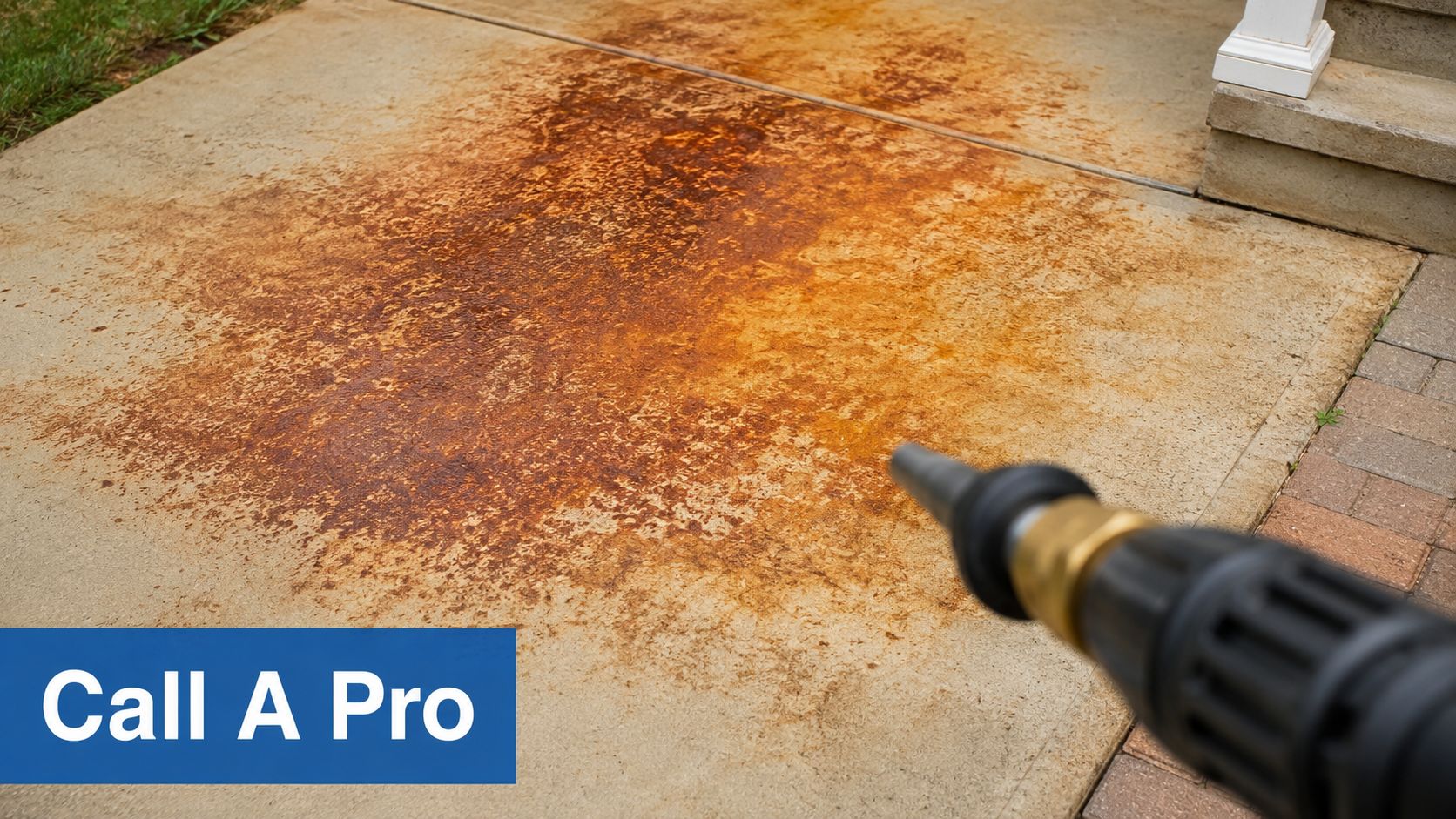
If a rust stain covers a broad concrete area, runs down multiple stories of exterior wall, sits near delicate finishes, or keeps coming back after your best effort, DIY usually stops being the cheaper option. It turns into a cycle of partial cleaning, repeat staining, and avoidable surface damage.
Jobs that should trigger a professional call
These situations usually justify bringing in trained help:
- Large concrete or masonry staining: Wide rust blooms often need more than one pass and better rinse control.
- Upper-story or high-rise work: The safety plan matters as much as the cleaning plan.
- Unknown metal surfaces: If aluminum might be involved, guessing is expensive.
- Historic, decorative, or specialty finishes: Some surfaces won't forgive a failed test patch.
- Stains that survived DIY attempts: Repeated home treatments can drive the problem deeper or spread residue.
Why this is about more than convenience
Professionals bring a few advantages homeowners usually don't have. Better access equipment. Surface-specific products. A process for containment and rinsing. And, just as important, the judgment to stop before a stain-removal attempt becomes a restoration issue.
That same principle shows up in other hazardous or surface-sensitive work. A strong example is this lead paint removal guide, which shows why some projects stop being weekend tasks once health, liability, and substrate damage enter the picture.
For Arizona property owners, there's also the local factor. Rust removal here isn't just chemistry. It's chemistry plus hard water, heat, repeated sun exposure, and materials that age differently in desert conditions. A clean result has to hold up after the job, not just while the surface is wet.
If you're evaluating service options nearby, rust removal services near me is a practical place to start for understanding what a dedicated service typically handles.
If rust stains are dragging down the look of your home or commercial property, South Mountain Window Cleaning, LLC can help with professional exterior cleaning solutions for properties across Phoenix, Scottsdale, Paradise Valley, Chandler, Tempe, and Gilbert. Reach out for a free quote if you want an experienced team to identify the source, protect the surface, and handle the job safely.