

The grill is hot, the patio lights are on, and the desert evening finally feels comfortable. Then the mosquitoes show up. In a few minutes, a backyard that looked ready for dinner, tenant entertaining, or resident use becomes a place nobody wants to sit.
That's a familiar Arizona problem, especially once storm water starts collecting in the wrong places. For property managers and owners, mosquito control isn't just a pest issue. It affects outdoor enjoyment, tenant satisfaction, first impressions, and the overall sense that a property is being maintained the right way. A clean entry, clear glass, trimmed landscaping, and usable outdoor space all work together.
Timing matters more than commonly understood. The best time to spray for mosquitoes isn't a generic answer. It depends on the hour, the season, the weather, the species you're targeting, and how much you want to protect pollinators while still getting results.
Enjoying Your Arizona Property Starts with Mosquito Control
A lot of mosquito frustration starts the same way. A homeowner in Phoenix or a manager of a small multifamily property gets through most of the day without a problem. Then sunset hits, people head outside, and the biting starts around seating areas, entry walks, pool fences, and landscaping beds.
That's why mosquito control has to be treated as part of exterior maintenance, not as an occasional reaction. If outdoor space is part of the value of the property, then keeping it usable matters. Nobody enjoys a beautiful patio, courtyard, or pool deck for long if they're swatting the whole time.
A screened transition space can also reduce pressure on the home or common area itself. On properties where residents want more usable outdoor time without constant exposure, a screened-in patio approach can complement broader mosquito management.
Why this matters for curb appeal
Mosquitoes don't leave obvious stains on concrete or dust on windows, but they still damage the experience of the property. Residents avoid courtyards. Guests cut visits short. Staff hear complaints. Outdoor amenities stop feeling like amenities.
A property can look sharp from the street and still feel poorly maintained if people can't comfortably use the outside space.
The most effective properties take a broader view. They don't separate pest pressure from drainage, irrigation, foliage density, or how people move through the site at night. They treat mosquito control as one piece of making the entire exterior perform better.
What smart timing changes
Random spraying rarely delivers dependable control. Strategic spraying does. The right timing improves contact with active mosquitoes, reduces wasted product, and helps avoid avoidable safety problems.
That's the difference between checking a box and making the property more enjoyable.
The Daily Clock Targeting Mosquitoes When They Are Active
A common Arizona complaint goes like this: the courtyard looks excellent at 2:00 in the afternoon, then residents head outside after dinner and the biting starts. That pattern matters because mosquito control works best when the treatment window matches real activity on the property, not just when the site is easiest to access.
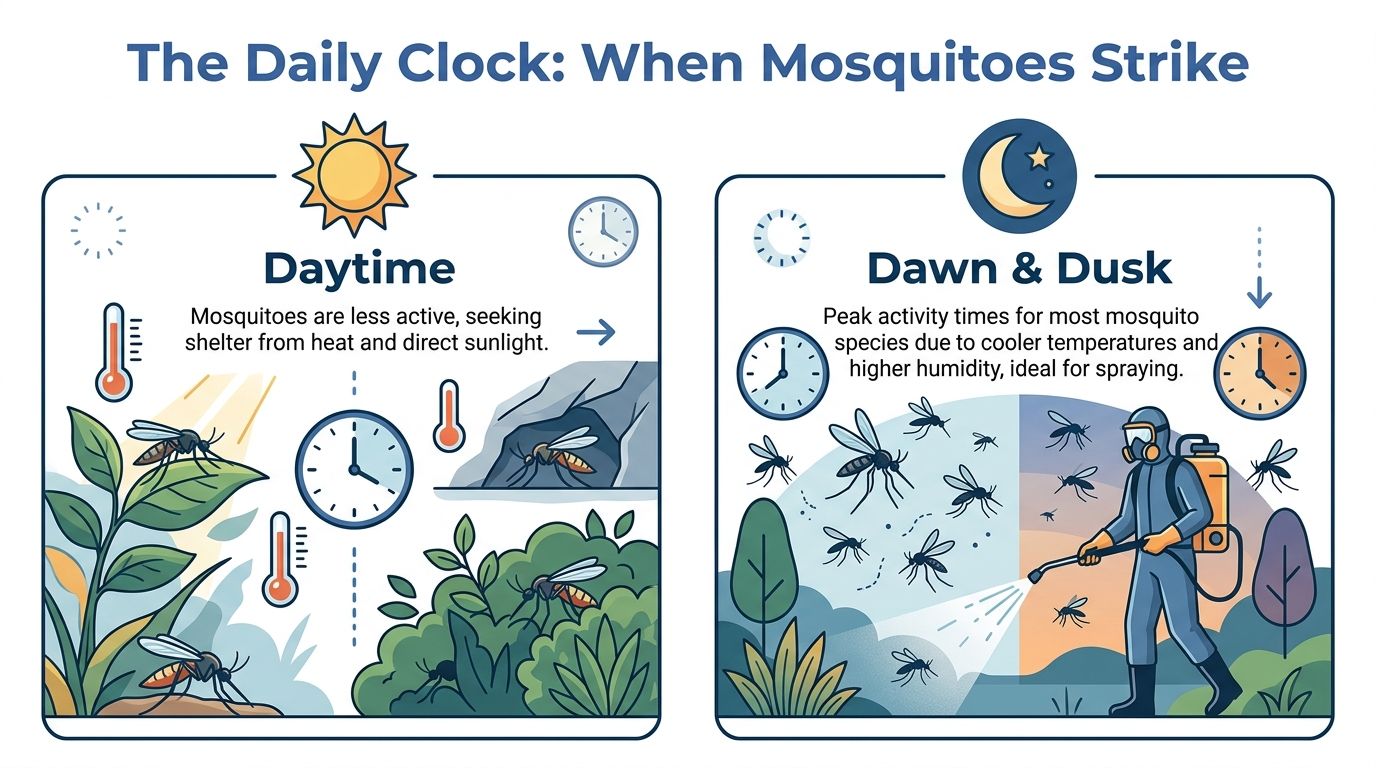
For adult mosquitoes, the strongest spray windows are usually early morning and evening. Cooler air, lower sun exposure, and higher humidity keep adults moving and improve the odds of contact on foliage, shaded walls, and other resting surfaces. Midday usually gives you the opposite. Mosquitoes tuck into protected areas, and the heat shortens how long many products stay where you need them.
Why midday usually underperforms
On Arizona properties, bright sun can make a treatment run feel efficient. Visibility is good. Walkways are clear. Crews can move fast. Adult mosquito control still tends to suffer.
By late morning and through the hottest part of the day, mosquitoes are more likely to be buried in cooler hiding spots. That includes dense shrubs, irrigated planting beds, under-deck shade, covered entries, and the damp edges around drains or hose bibs. If the target insect is inactive and sheltered, broadcast spraying into open air does not do much for you.
The trade-off is simple. Midday may be easier for scheduling, but it is often weaker for results.
Property managers already deal with this kind of timing decision in other exterior work. Surface conditions, heat, and drying time all affect performance, which is also true when choosing the best season and time of day to pressure wash a house. Mosquito treatment responds to the same practical rule. Match the work to the conditions.
Arizona timing is not just "dawn and dusk"
Generic advice leaves out an important local point. Arizona properties often deal with different mosquito behavior during monsoon season than they do in a dry stretch earlier in the summer. Standing water shows up fast in low spots, drains, neglected containers, and overwatered landscaping. Humid evenings can increase visible activity around patios, pool areas, dog runs, and breezeways.
Species also matter. Aedes aegypti, a common concern in Arizona neighborhoods, often bites during the day but is especially active in the early morning and late afternoon. Culex mosquitoes are more active after sunset and at night, which changes the best treatment window if complaints are coming from evening amenity use rather than daytime foot traffic.
That is why the right question is not "What time do people usually spray?" The right question is "When are mosquitoes active on this property?"
A shaded apartment entry with morning complaints points to one schedule. A pool deck that gets rough after sunset points to another.
Good timing also protects pollinators and residents
Eco-conscious owners are right to care about more than knockdown. Bees and other beneficial insects are less active during certain low-light periods, so carefully timed applications can reduce unnecessary exposure. That does not remove the need to follow the label, avoid blooming plants when possible, and use targeted methods around high-value outdoor areas. It does mean timing can improve control while reducing collateral impact.
Resident and pet exposure also has to stay part of the plan. The safest schedule is one that targets active mosquitoes while people are out of the treatment zone and before outdoor spaces fill up again.
Good mosquito work is precise. On Arizona properties, that usually means early morning or evening service, targeted to shade, moisture, and the species driving complaints.
Beyond the Clock Seasonal and Weather-Based Timing
A property can feel under control in June and become a complaint magnet two storms later. In Arizona, seasonal timing is not just about heat. It is about how heat, irrigation, and monsoon moisture stack up on a specific site.
Daily spray timing helps with contact. Seasonal timing determines whether you stay ahead of breeding pressure at all.
Start before monsoon complaints start
On Arizona properties, the window to prepare usually opens before residents connect mosquito activity to the weather. Crews should be checking shaded irrigation overspray, planter drainage, scuppers, roof runoff, and low spots well before the first stretch of humid storm conditions. Once repeated breeding starts, service gets more expensive because the plan shifts from prevention to repeated knockdown.
That is why mosquito control belongs on the same operations calendar as irrigation review, drainage corrections, and spring exterior cleaning planning. A clean-looking property can still hold enough water in the wrong places to drive complaints, especially around dense landscaping, pool equipment pads, dumpster enclosures, and shaded breezeways.
Properties with chronic pooling often need more than spray timing. They need an effective drainage system setup so stormwater and irrigation do not keep creating breeding pockets after every rain.
Arizona weather changes the schedule
Generic advice about summer mosquito season misses how uneven Arizona conditions can be. A dry stretch in the Valley does not behave like a week of monsoon rain, and a property in irrigated desert landscaping will not behave like one with heavy turf and dense shade. The treatment calendar has to reflect that.
A practical seasonal plan usually includes:
- Pre-monsoon inspections to find hidden water sources before humidity and rain increase activity
- Closer service intervals during storm periods when standing water keeps reappearing
- Post-rain site checks around drains, planters, tarps, playground equipment, and drainage swales
- Species-aware adjustments if daytime Aedes pressure is driving complaints instead of nighttime Culex activity
Forecast matters too. If foliage and resting surfaces are likely to be soaked soon after treatment, results can drop and callbacks go up. For resident events or outdoor leasing tours, scheduling service a day or two in advance usually gives better site readiness than spraying right before people arrive.
| Seasonal issue | Why it matters on Arizona properties | Better move |
|---|---|---|
| First monsoon storms hit an unprepared site | Eggs hatch, water collects fast, and complaints spike | Inspect and treat before the storm cycle builds |
| Heavy irrigation masks breeding pockets | Moist shade stays active even without recent rain | Audit runoff and adjust watering with treatment |
| Repeated rain washes or shortens residual performance | Foliage and harborage do not hold product as well | Watch the forecast and reschedule for a drier window |
| Event-driven service requests come in late | Guests notice mosquitoes or fresh application activity | Plan treatment ahead of high-use dates |
Owners who want results and want to protect pollinators need this kind of timing discipline. Target the periods when mosquito pressure is building, reduce broad exposure where possible, and keep the property dry enough that each application has a fair chance to hold.
A Property Owners Guide to Prevention and Safety
A property can show well at 10 a.m. and still draw mosquito complaints by sunset. In Arizona, that usually means the site has a water problem, a harborage problem, or both.
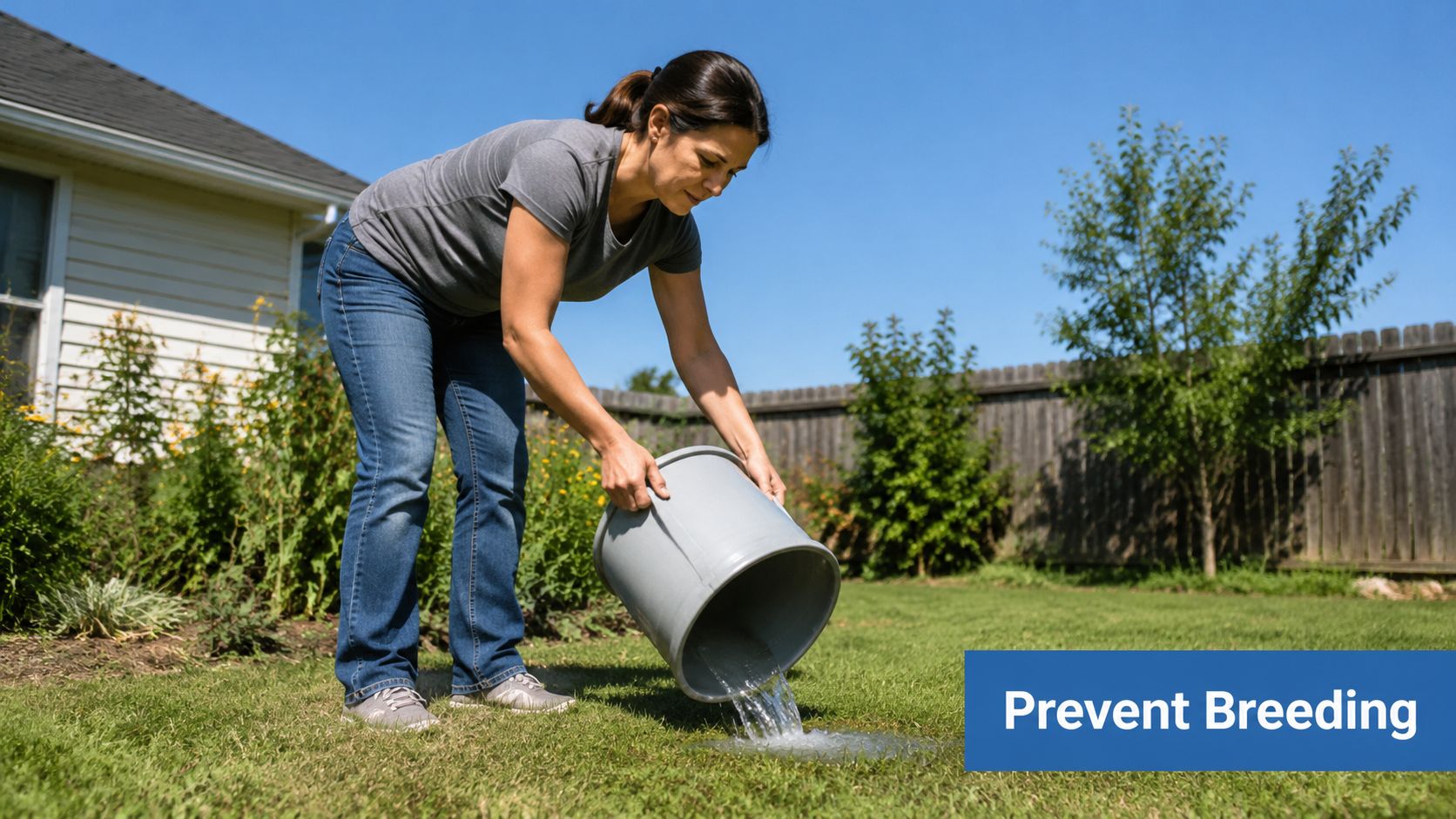
Spray has a role, but property conditions decide whether results hold. On Arizona sites, I look first at irrigation runoff, shaded plant mass, neglected containers, and any feature that keeps water around after storms or overwatering. Small breeding pockets are enough to keep activity going, especially during monsoon season and on properties where daytime-biting Aedes mosquitoes are part of the complaint.
Remove the habitat first
Owners and managers get better results when maintenance crews and mosquito service work from the same checklist. If the site keeps producing water-holding spots, repeat applications turn into a recurring expense instead of a controlled program.
Common trouble areas include:
- Clogged gutters and roof discharge points that hold water after storms
- Plant saucers and decorative containers in shaded entries, patios, or pool areas
- Children's toys, storage lids, and utility bins left along walls or under eaves
- Birdbaths and water features that are not cleaned, circulated, or treated correctly
- Low spots in turf, gravel, or planter beds where irrigation sits longer than it should
Long-term relief often comes from fixing drainage instead of adding more product. If water repeatedly pools near foundations, fence lines, breezeways, or garden beds, guidance on effective drainage system setup can help address the site condition that keeps feeding mosquito pressure.
Protect pollinators while controlling mosquitoes
Arizona owners do not need to choose between a usable yard and a dead pollinator zone. They do need tighter application discipline.
The National Wildlife Federation warns that many residential mosquito products can harm beneficial insects, including bees and butterflies, if they are applied broadly or carelessly, especially around flowering plants and active foraging areas, according to pollinator safety guidance from the National Wildlife Federation.
On a well-managed property, that changes how treatment is planned:
- Use Bti-based larvicides where standing water cannot be eliminated and larval control fits the site
- Treat resting areas selectively instead of coating every hedge, shrub, and bed
- Keep product off blooming plants that attract bees, butterflies, and other beneficial insects
- Schedule applications for lower pollinator activity periods and avoid unnecessary drift
That approach protects curb appeal too. Healthy flowering beds, active outdoor spaces, and reduced mosquito pressure all support how the property looks, rents, and gets used.
The goal is controlled, targeted suppression that makes the site more comfortable without creating avoidable collateral damage.
Here's a useful visual refresher on why prevention has to support treatment:
Safety habits that separate careful work from sloppy work
Treatment plans should match how the property is used. A gated community with dog runs and playgrounds needs a different level of communication and placement discipline than a single backyard.
Property managers should expect crews to account for:
- Occupied areas such as patios, pool decks, dog zones, mail kiosks, and walkways
- Sensitive surfaces including outdoor furniture, grills, play equipment, and dining areas
- Notice and coordination so residents, staff, or vendors know when service is taking place
- Reasonable return-to-use conditions so the property does not feel freshly saturated or poorly managed
The best mosquito programs protect more than comfort. They help preserve outdoor enjoyment, reduce complaint volume, and keep the grounds looking like a place people want to spend time in.
Arizona Mosquito Control A Local Timetable
Arizona needs its own schedule. Generic national advice misses the biggest local trigger, which is the monsoon cycle and the standing water that follows it.
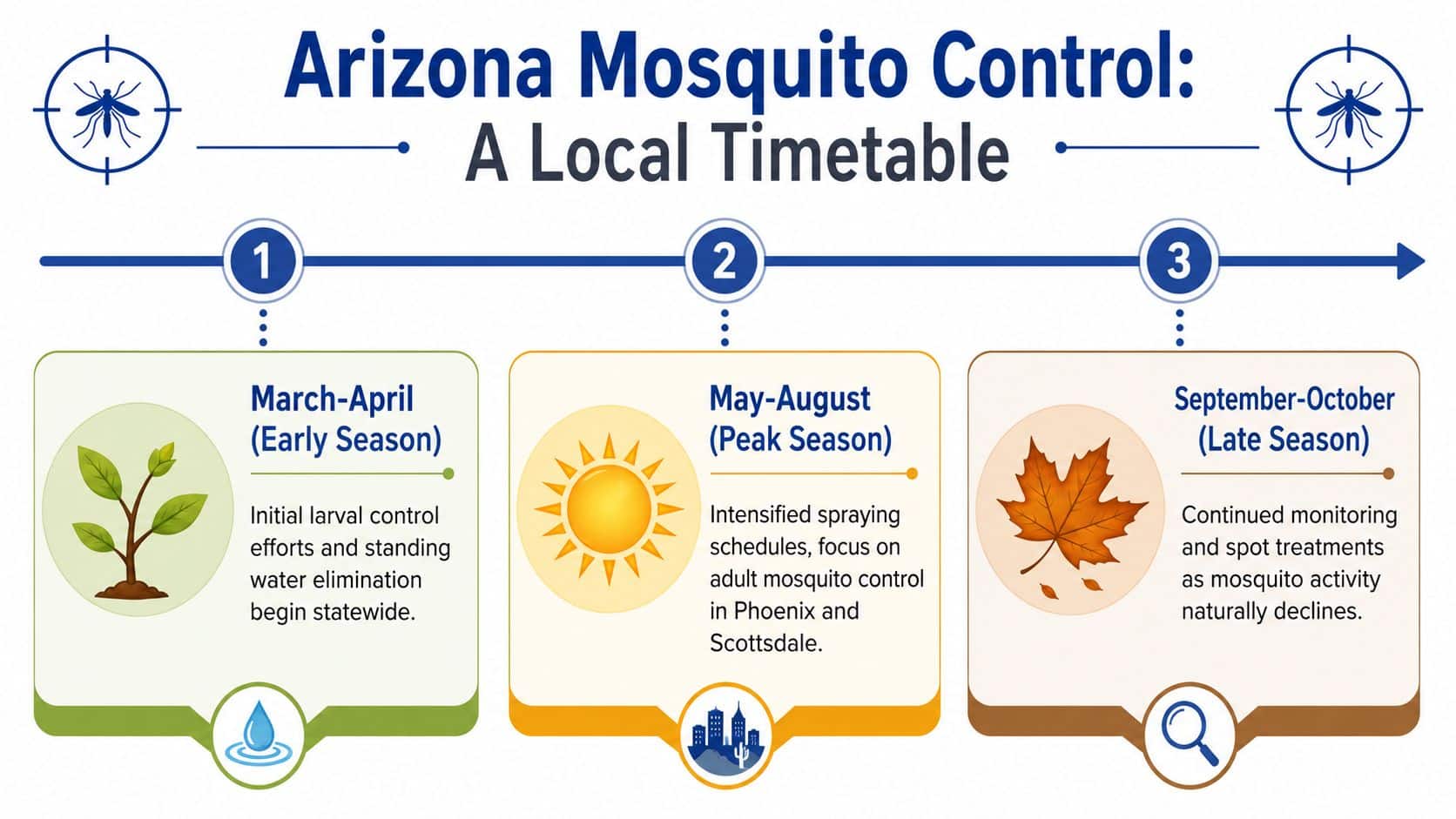
In Maricopa County, Phoenix's monsoon season runs from July through October, and those storms create widespread standing water that drives mosquito spikes after each system. During that peak period, regular treatments every 3–4 weeks are essential, based on local North Phoenix mosquito season guidance.
What a workable Valley schedule looks like
For Phoenix, Scottsdale, Paradise Valley, Chandler, Tempe, and Gilbert, the most practical approach is to treat mosquito control as a living schedule, not a one-time service.
Early spring is for inspection and prevention. Walk the property, correct small water-holding issues, and identify the shaded plant material where adults are likely to rest.
Pre-monsoon is for tightening operations. Check irrigation overspray, roof drainage, gutter flow, storage areas, and any containers left near walls or fences.
Monsoon season is the period where discipline matters most. After storms, standing water appears in places owners don't expect. Gravel depressions, low planters, utility pads, roof drains, and even equipment covers can hold enough water to restart the problem.
Why reactive scheduling matters in the desert
Arizona owners sometimes under-budget for mosquitoes because they assume dry climate means low pressure. That logic fails every monsoon season. The desert doesn't prevent mosquito issues when storm water and irrigation create temporary habitat.
A local schedule works best when it includes:
- Routine inspections after storms
- Repeat treatments during the high-pressure window
- Fast correction of drainage and irrigation problems
- Spot treatment where activity keeps returning
A Phoenix property can be dry for weeks, then produce mosquito complaints right after one storm because the breeding habitat arrived overnight.
Property type changes the timetable too
A single-family backyard, a retail center with planted islands, and a multifamily property with pet areas won't all carry the same risk. More irrigation, denser plant material, and more evening foot traffic usually mean tighter monitoring.
That's why the best time to spray for mosquitoes in Arizona is rarely a fixed date on a calendar. It's a seasonally adjusted schedule tied to local rainfall, property layout, and how people use the site.
DIY vs Professional Mosquito Control Making the Right Choice
DIY mosquito control can work on small properties with attentive owners. It usually struggles when the site is larger, the landscaping is dense, or the problem keeps returning after weather changes.
That's not because store-bought products never help. It's because mosquito control is less forgiving than people think. You need the timing right, the target areas right, the weather right, and the safety practices right.
Where DIY makes sense
If you have a modest yard, limited vegetation, and a visible list of water sources you can control quickly, DIY can reduce pressure. It's especially useful for owners who are willing to inspect the property often and apply products carefully.
DIY usually performs best when the owner also handles the non-spray basics:
- Dump small water collections before they become repeat breeding sites
- Wear light-colored clothing in active periods to reduce attraction
- Pay attention to people patterns because female mosquitoes are drawn to human carbon dioxide, as noted in local mosquito behavior guidance from Fox 10 Phoenix
Where professional service earns its keep
Professional service becomes the better option when consistency matters more than trial and error. That includes commercial properties, HOA-managed communities, high-use residences, and any site where complaints affect tenant satisfaction or customer experience.
A capable provider should bring:
| Decision factor | DIY approach | Professional approach |
|---|---|---|
| Timing | Often based on convenience | Scheduled around activity and conditions |
| Coverage | Can miss hiding zones | More systematic treatment of harborage areas |
| Safety | Depends on owner judgment | Stronger process around occupied areas |
| Follow-up | Easy to forget | Built into service routines |
On managed properties, predictability offers significant value. Staff already have enough to track. They shouldn't also be guessing whether the mosquito issue is coming from a planter, a roof drain, a dog bowl station, or an irrigation leak.
What to look for before hiring anyone
Don't hire on price alone. Mosquito treatment affects residents, staff, guests, pets, and the outdoor areas.
Check for:
- Clear proof of coverage and accountability. If you're comparing vendors, it helps to understand the difference between bonded and insured service providers.
- A site-specific plan instead of a generic promise to fog the yard
- Attention to prevention rather than chemical-only recommendations
- Awareness of pollinator risk and more selective treatment practices
A reliable mosquito program should make the property more usable, not just more treated. That's the standard worth paying for.
If you're already thinking about mosquito pressure, there's a good chance you're also looking at the bigger picture of exterior upkeep. South Mountain Window Cleaning, LLC provides residential, commercial, and high rise window washing services in Phoenix, Scottsdale, Paradise Valley, Chandler, Tempe, Gilbert, Arizona. For property owners and managers who want cleaner, safer, better-looking exteriors that people enjoy using, their team is worth a call.