
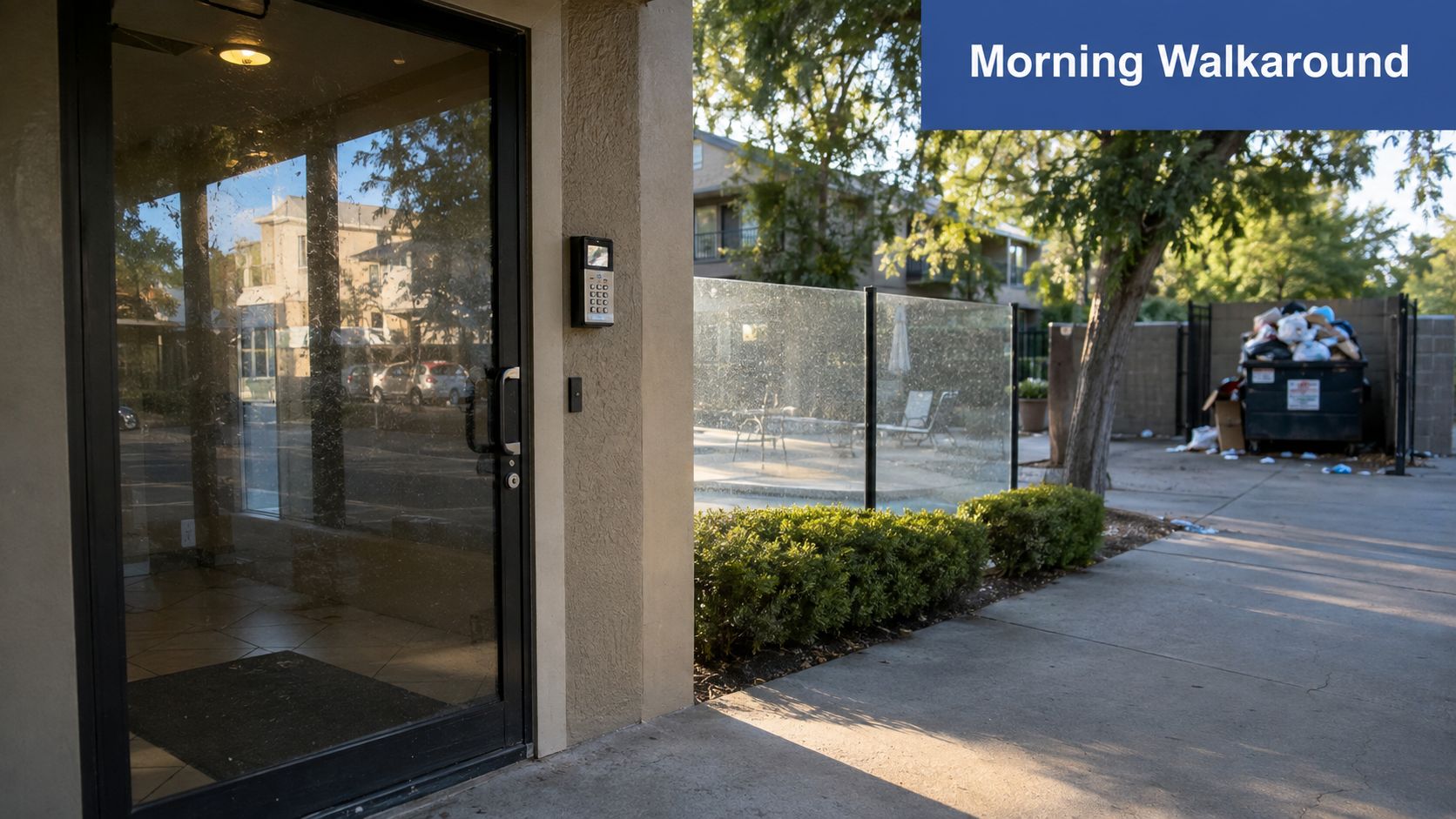
At 7 a.m., an apartment community can tell you exactly where its cleaning program is failing. The lobby glass carries fingerprints from the first residents leaving for work. Dust has settled along the pool-deck windows. The dumpster pad smells worse as the Phoenix heat builds, and the gutters still hold debris from the last storm. None of those problems belongs to a single “janitorial” line item, yet residents experience them as one property.
A workable apartment complex cleaning program connects interior common areas, exterior surfaces, waste zones, drainage, solar equipment, and indoor air quality. That approach gives commercial property managers, HOA and condominium boards, and small-portfolio building owners a clearer way to plan service across garden-style communities, mid-rise buildings, and high-rise towers.
What Apartment Complex Cleaning Really Covers
The first walkaround should be operational, not ceremonial. Look at what residents touch, what visitors see, and what the building's weather exposure deposits on every surface. A lobby porter may handle fingerprints and litter, but that person usually isn't responsible for rope-access glass, gutter debris, solar-panel buildup, or pressure-washing chemical selection.
A complete scope typically includes seven connected categories:
- Interior common-area janitorial: Vacuuming, mopping, restroom care, trash removal, and surface wiping in lobbies, hallways, elevators, stairwells, laundry rooms, and amenity spaces. It doesn't automatically include apartment turnover cleaning unless the contract says so.
- Exterior window cleaning: Removal of dust, fingerprints, mineral spotting, and other deposits from accessible glass, frames, screens, and tracks. It doesn't cover failed seals or damaged glass.
- Power washing: Cleaning concrete walkways, pool decks, building exteriors, drive-thrus, and similar hard surfaces. It requires surface-appropriate pressure and detergents, not one aggressive setting everywhere.
- Gutter cleaning: Removing leaves, roof grit, and blockages from drainage channels and downspouts. It isn't a substitute for roof repair or drainage redesign.
- Dumpster pad sanitation: Removing residue, odors, and loose waste from the pad and surrounding enclosure. Grease-trap service and hazardous waste handling need separate scope language.
- Solar panel cleaning: Clearing dust and mineral deposits from panels with methods that protect the equipment. Electrical repairs and panel replacement belong to qualified solar contractors.
- Seasonal services: Storm response, pollen and dust cleanup, holiday lighting, and other work tied to Arizona conditions or resident expectations.
For product selection, a practical 2026 buying guide for cleaning products can help managers compare commercial supplies without treating every surface as if it needs the same chemistry. Exterior work deserves its own inspection and scheduling process, especially for properties that need commercial building exterior cleaning.
Field rule: If two vendors assume different boundaries around glass, gutters, dumpster pads, or turnover work, their bids aren't comparable.
Recommended Frequencies and Cleaning Checklists
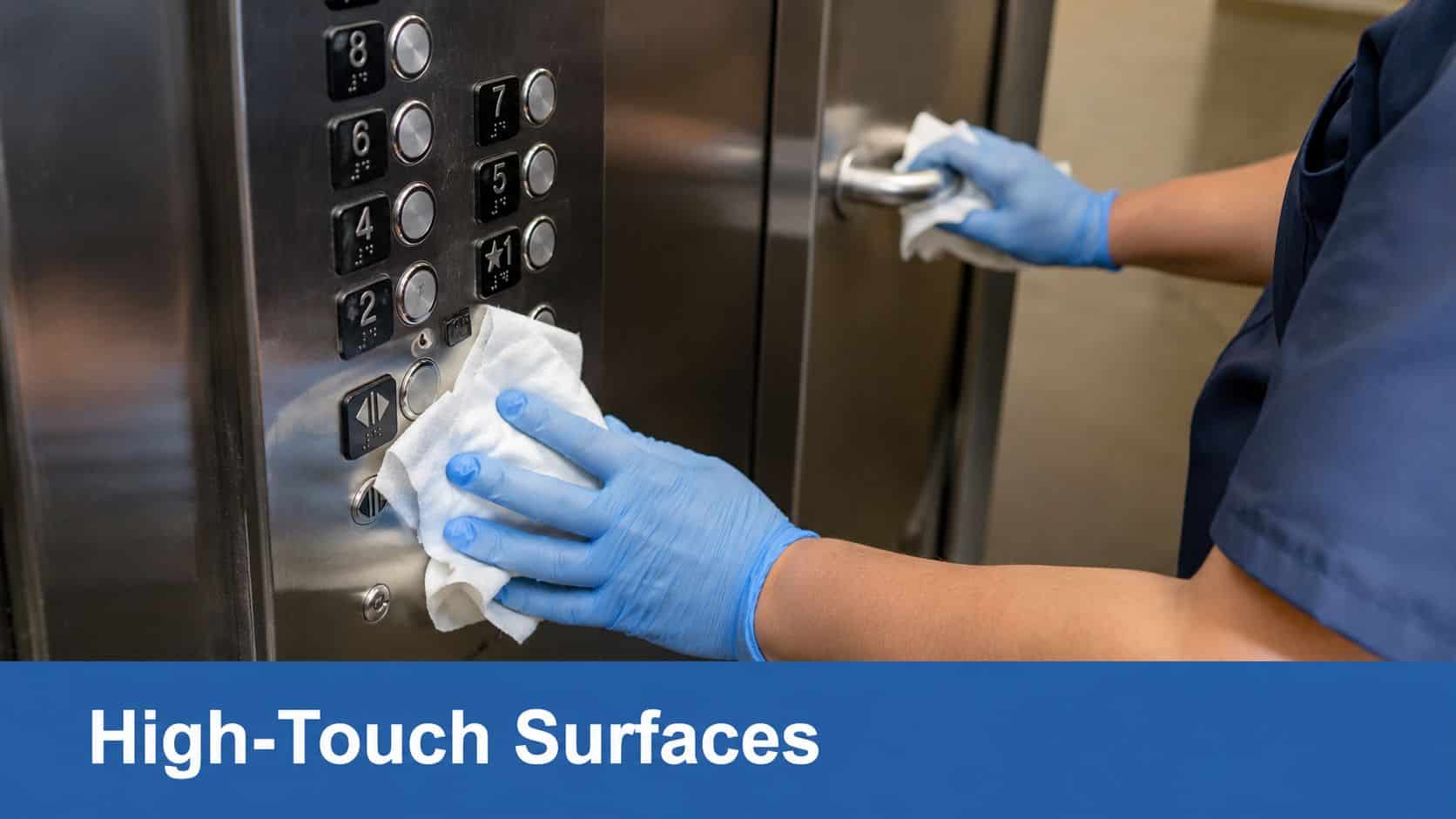
A fixed weekly schedule is easy to administer, but it can waste labor in low-use areas while under-serving the entrance, elevator, mail area, and laundry room. High-touch surfaces such as elevator buttons, mailboxes, door handles, handrails, and laundry controls need attention based on traffic and touch density. Public-health guidance for multi-unit residential buildings describes cleaning from once to several times per day depending on use, with twice-daily cleaning cited for busy public settings (multi-unit residential building precautions).
Use a tiered checklist rather than asking one crew to perform every task at the same cadence.
Daily work
A porter or day cleaner should remove visible debris from entrances, lobbies, corridors, elevators, stair landings, and amenity areas. The same shift can spot-clean glass, empty common-area trash, inspect restrooms, and disinfect high-touch points where residents handle the same surfaces repeatedly.
Weekly and deeper interior work
Weekly service can include detailed floor care, baseboards, corners, stair rails, laundry-room equipment exteriors, interior glass, and hard-to-reach ledges. Smaller or lightly used properties may need a longer interval, but consistency matters more than occasional heavy resets.
Monthly and specialty work
Use monthly inspections to identify mineral spotting on exterior glass, buildup around dumpster enclosures, clogged drains, neglected gutters, and solar-panel dust. The cleaning crew should document conditions even when a specialty vendor performs the work.
Quarterly and seasonal work
Quarterly service is a sensible starting point for exterior glass, power washing, gutters, and solar arrays, then adjust it for dust, shade, storm exposure, and resident complaints. Window timing should reflect local conditions rather than an arbitrary recurring date. For more detail on setting a glass schedule, use this guide to how often windows should be cleaned.
Cleaning also supports pest prevention. A PubMed-indexed study of 344 apartments for low-income senior residents found German cockroaches in 30% of apartments, and units with poor kitchen-and-bathroom sanitation were 2.7 times more likely to have cockroaches than cleaner apartments (study record). Managers can pair sanitation controls with practical Crown Point pest control tips, especially around food waste, leaks, and dumpster areas.
Building a Year-Round Maintenance Schedule
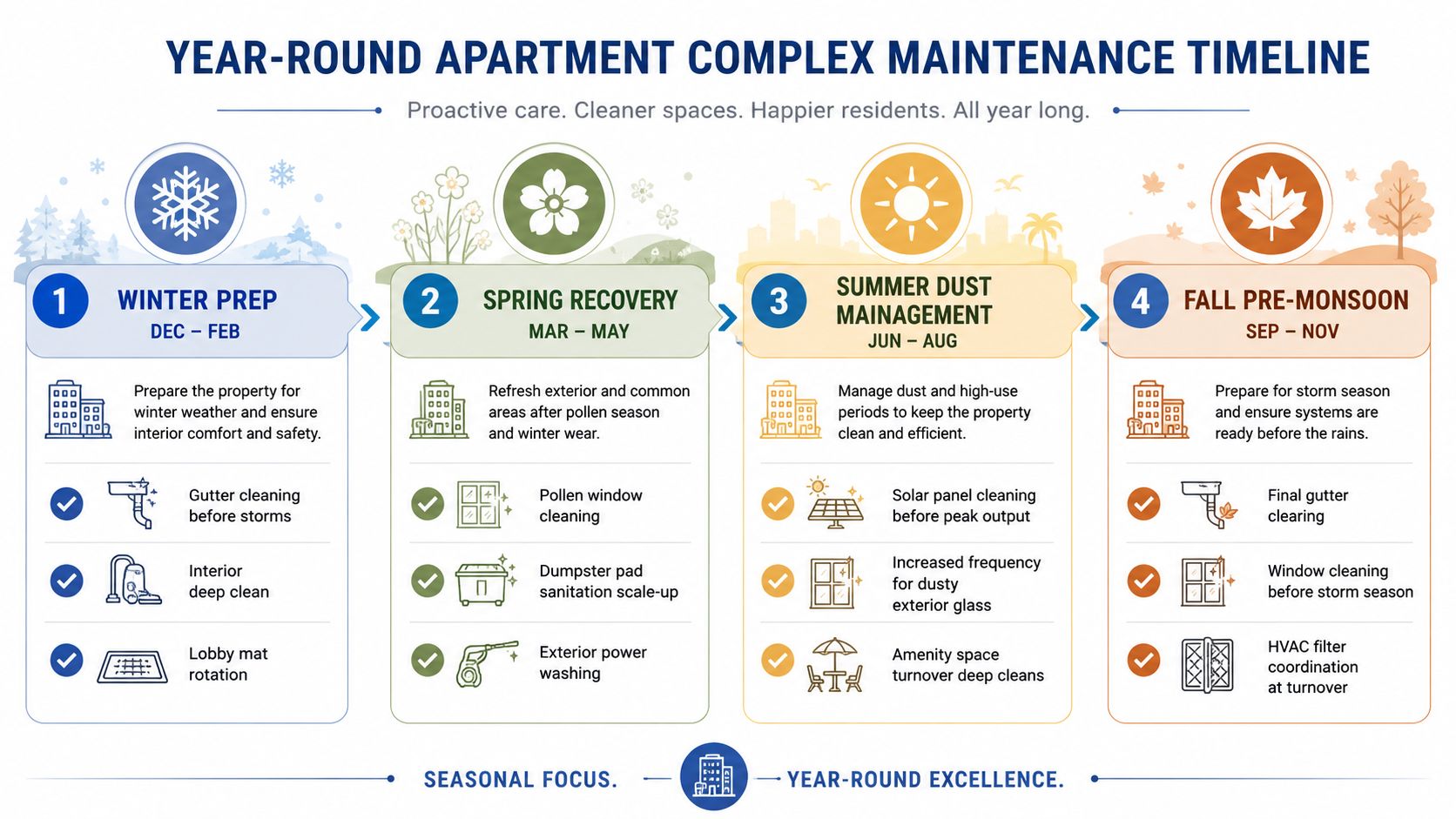
A calendar works best when it reflects exposure and building use. Start with four operating blocks, then place vendor visits around resident activity, leasing events, pool use, and weather.
Winter prep, December through February, is the time to clear gutters before storms, rotate or deep-clean lobby mats, and complete interior detail work while outdoor amenity demand is lower. Schedule access-heavy work early enough that a weather delay won't push it into a more difficult operating period.
Spring recovery, March through May, should address pollen, tracked-in dirt, exterior power washing, and dumpster-pad conditions as outdoor activity increases. Schedule window cleaning around pollen and dust peaks, then inspect screens and tracks for debris that routine janitorial service won't remove.
Summer dust management, June through August, requires closer observation of exterior glass, pool areas, amenity turnover, and solar panels. Heat makes dumpster odors more noticeable, so sanitation frequency may need to increase before complaints become the main performance signal.
Fall pre-monsoon, September through November, is the final opportunity for gutter clearing, storm-season window cleaning, and HVAC filter coordination during unit turnover. Keep exterior crews clear of resident move-in windows and communicate any suspended-access or power-washing work in advance.
For a typical 200-unit garden-style property, a practical monthly worksheet might look like this:
| Timing | Porter and janitorial work | Vendor or inspection work |
|---|---|---|
| Every service day | Entrances, high-touch points, trash, visible floors, restrooms | Log exceptions with photos |
| Weekly | Detailed interior floors, corners, rails, and amenity checks | Review recurring complaints |
| Monthly | Interior glass and neglected surfaces | Inspect exterior glass, gutters, pads, and panels |
| Quarterly | Deep amenity and common-area detail | Schedule specialty exterior service |
| Seasonal | Storm, pollen, heat, and dust response | Coordinate filters, access, and resident notices |
Digital logs and proof-of-service photos make completion easier to verify. Independent industry coverage describes occupancy analytics, digital logs, predictive maintenance, and autonomous floor cleaning as part of the 2026 shift toward more data-driven property cleaning (2026 property-management cleaning guidance). Use the technology to adjust service, not to replace a manager's physical inspection.
Cost Factors and Budgeting for Property Managers
Labor usually drives the budget, but a flat per-square-foot figure hides the variables that matter most. The U.S. Bureau of Labor Statistics reported 2,172,500 janitors and cleaners employed in 2023, with a mean hourly wage of $17.43 and a median hourly wage of $16.84 (BLS-based multifamily janitorial budget analysis). The reported wage range runs from $12.39 at the 10th percentile to $23.18 at the 90th percentile, so local labor competition and service complexity can move the same scope substantially.
Separate the recurring base from the modifiers
Build the base budget around porter coverage, common-area janitorial work, supplies, supervision, inspections, and reporting. Add exterior and specialty services as separate recurring or seasonal lines so a manager can see what changes when access, weather, or surface conditions change.
Access is a major modifier. Ground-floor glass may be handled with traditional tools or water-fed poles, while mid-rise and high-rise work can require suspended access, additional planning, trained crews, rescue procedures, and equipment control. A single-story gutter run is not priced like a multi-story run, and a standard residential dumpster pad isn't the same scope as a grease-heavy commercial waste area.
Water conditions also affect glass maintenance. Phoenix water is listed at about 16 grains per gallon, or 274 parts per million, in one Arizona dataset, while another utility-based dataset places it at 13.9 grains per gallon, or 237.0 milligrams per liter. Both exceed the 10.5 grains-per-gallon threshold commonly used for very hard water (Arizona water-hardness data). Scottsdale conditions can vary by neighborhood, including 22 to 25 grains per gallon south of Indian School Road and 16 to 18 grains per gallon north of Chaparral Road, according to the city's hard-water fact sheet referenced in that dataset.
That mineral load can leave spots on exterior glass across Phoenix, Scottsdale, Chandler, Gilbert, Tempe, and Paradise Valley. Ask vendors whether they use purified water, appropriate mineral-removal methods, and a defined escalation process for deposits that ordinary washing won't remove.
Don't create a false sense of precision with a universal per-unit annual range. A defensible budget has separate lines for recurring interior work, quarterly exterior service, specialty equipment access, storm response, pest-related sanitation, and post-turnover deep cleaning. Compare bids by labor hours, included tasks, access assumptions, supplies, exclusions, and response terms.
Safety, Insurance, and Compliance Requirements
Exterior and high-rise work requires more than a verbal promise that a crew is careful. OSHA's rope-descent-system rule adopts the 300-foot height limit from the ANSI/IWCA I-14.1 consensus standard. OSHA states that rope-descent-system use above 300 feet is allowed only when the employer demonstrates that no other access method is feasible or that another method would create a greater hazard (OSHA rope-descent requirements).
That rule changes the vendor conversation. Before work begins, the property file should contain a written safety program covering hazard identification, fall-protection procedures, equipment inspections, employee training, and a rescue plan for every suspended worker. A high-rise safety guide also describes daily pre-use checks, periodic competent-person inspections, and annual or retirement-related equipment review (high-rise window-cleaning safety guidance).
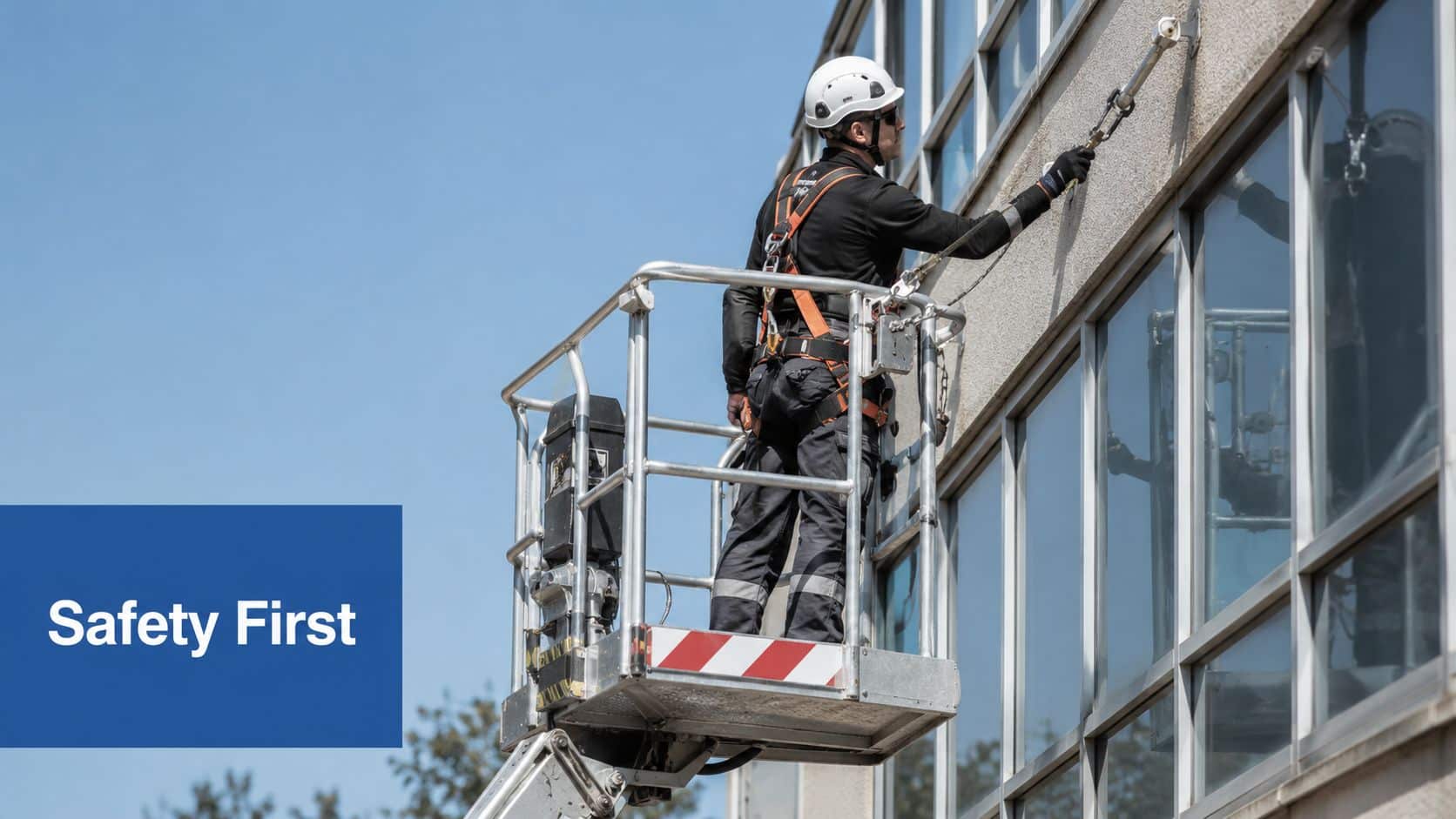
Documents to request before mobilization
- Insurance certificates: Verify general liability, workers' compensation, and umbrella coverage. The policy must match the contractor entity named in the agreement.
- Access records: Request anchor certifications, equipment inspection records, and the proposed access method for each elevation.
- Training evidence: Keep documentation showing that workers assigned to suspended or elevated tasks received relevant training.
- Incident documentation: Ask for the contractor's safety record and required OSHA records where applicable.
- Site controls: Confirm barricades, resident notifications, drop-zone management, weather holds, and emergency communication.
A $2 million policy baseline is commonly required by Phoenix Valley commercial properties, but don't treat the number alone as proof of adequate protection. Verify coverage dates, exclusions, additional-insured wording, and whether the policy applies to the actual work being contracted. A general overview of contractor coverage, including considerations relevant to liability insurance for lawn pros, can help boards understand why trade-specific risks matter. For window work, review the contractor's window-cleaning insurance information before approving access.
Safety standard: If a vendor can't produce the safety paperwork before arriving, the property isn't ready for the crew.
Choosing the Right Vendor and Writing the RFP
A credible vendor makes comparison straightforward. Request licensing details, bonding, insurance limits, safety records, training documentation, equipment information, references from similar properties, and proof that the company can document completed work. A fixed business address and responsive project contact matter when a crew misses an area, weather delays service, or a resident files a complaint.
Write the RFP so every bidder prices the same scope. Use five sections:
- Scope of work: Identify each common area, glass elevation, dumpster pad, gutter run, solar array, power-washing surface, and seasonal task.
- Frequency and schedule: State service windows, blackout periods, resident-notice requirements, and weather-delay procedures.
- Safety and insurance: Include access methods, training records, rescue planning, certificates, endorsements, and document-retention requirements.
- Reporting and quality control: Require completion logs, inspection notes, useful before-and-after photos, complaint response, and correction timelines.
- Pricing format: Separate recurring janitorial labor from exterior, specialty, emergency, access, water-treatment, and turnover charges.
Use the walkthrough to test whether the vendor understands Arizona conditions. Ask how the crew will handle hard-water spotting in Valley weather, what equipment will reach glass that cannot be accessed from grade, and who approves a change in access method. Confirm the supervisor's response time for dumpster overflow or storm cleanup. Ask how residents will receive notices about noise, barricades, or suspended work.
A missing written safety program, expired insurance, no fixed address, refusal to provide comparable references, vague exclusions, or unclear completion records should remove a bidder from consideration.
Score every proposal with the same matrix. Compare scope completeness, schedule fit, safety documentation, insurance, reporting, equipment, references, responsiveness, and total price. A low bid may exclude glass restoration, access planning, or storm response, leaving the property to arrange those services later.
For a focused exterior-glass scope, managers can review what a window cleaning company should provide before adding that work to the broader property contract. Ensure documentation shows that workers assigned to suspended or working-at-height tasks received relevant training.
A Practical Decision Framework for Property Managers
Start with an audit, not a bid. Walk the property with the current contract in hand and mark each item against the seven service categories. Note what residents see, what employees touch, what weather reaches, and what the contract excludes.
Four decisions that produce a workable program
First, map the actual scope. List interior common areas, exterior glass, power-washed surfaces, gutters, dumpster pads, solar panels, and seasonal work. Photograph recurring trouble spots and distinguish maintenance cleaning from repair, restoration, pest treatment, or hazardous-waste work.
Second, assign frequency by exposure. A busy elevator lobby and a rarely used stairwell shouldn't receive identical attention. High-touch surfaces need a traffic-based plan, while exterior glass, gutters, panels, and concrete need frequencies tied to dust, mineral deposits, storm debris, shade, and visual standards.
Third, build the calendar around operations. Put daily porter work, weekly interior detail, monthly inspections, quarterly specialty visits, and seasonal projects into one schedule. Coordinate access with leasing, resident events, pool use, move-ins, and HVAC turnover so vendors don't create avoidable disruption.
Fourth, separate the budget. Keep recurring interior labor visible. Place exterior glass, power washing, gutters, dumpster sanitation, solar cleaning, storm response, and turnover work in distinct lines. That structure lets you reduce or expand one service without losing control of the entire contract.
A layered program usually works better than one fixed-schedule agreement because each crew has a defined purpose. The porter protects daily appearance and touchpoint hygiene. The detail team handles accumulated interior soil. Specialty contractors address high glass, drainage, concrete, waste areas, and solar equipment. A single low-frequency vendor may look simpler, but it often leaves visible problems between visits and assigns specialized work to people who aren't equipped for it.
Indoor air quality belongs in the same maintenance conversation. EPA guidance says pollutants can move from unit to unit and recommends HVAC filter replacement at turnover and at least semi-annually, or more often when the manufacturer requires it (EPA multifamily indoor-air-quality guidance). Coordinate filter changes, air sealing, ventilation checks, corridor odor complaints, and cleaning so surface work isn't undermined by particulate or odor transfer.
Questions after the contract is signed
What happens when weather delays work? Define the notification process, rescheduling window, resident communication, and priority areas before the first storm or heat-related cancellation.
How should persistent hard-water spotting be escalated? Require photographs, a surface assessment, a proposed treatment, and written approval before aggressive restoration methods are used.
When should the scope be revisited? Review it after meaningful changes in occupancy, amenity use, construction, landscaping, waste volume, access conditions, or resident complaint patterns. Digital logs help identify trends, but the manager's walkaround remains the final check.
South Mountain Window Cleaning, LLC offers residential, commercial, and high-rise window washing across Phoenix, Scottsdale, Paradise Valley, Chandler, Tempe, and Gilbert, along with power washing, gutter cleaning, dumpster pad sanitation, and solar panel cleaning. Visit South Mountain Window Cleaning, LLC to request a fast, free quote for the exterior services in your apartment complex cleaning plan.