
You washed the glass, stepped back, and felt done. Then the sun cleared the roof. Within minutes the streaks, dust lines, and pale rings showed every pass you made. That is a normal Arizona result when the job is treated like a mild-climate chore.
Desert dust, mineral-heavy tap water, and baking sun break the usual advice. Solution flashes dry before the blade finishes the pane. Fine grit sitting in the track rides back onto the glass. Spots from hard water bake on until they look permanent.
The eight window cleaning tips below come from day-to-day work across the Valley. They cover tools, technique, timing, and the point where DIY should stop. Homes and businesses in Phoenix, Scottsdale, Paradise Valley, Chandler, Tempe, and Gilbert run into the same three enemies. The order of work is what changes the result.
If you only remember one thing before the list, match the method to the glass in front of you, not to a national video filmed in soft weather. South Mountain Window Cleaning runs residential, commercial, and high-rise washing on that same sequence. Ground-floor glass is a fair DIY job with shade, a sharp blade, and time. Anything above a safe reach is a different task.
1. Use the Squeegee Technique Correctly
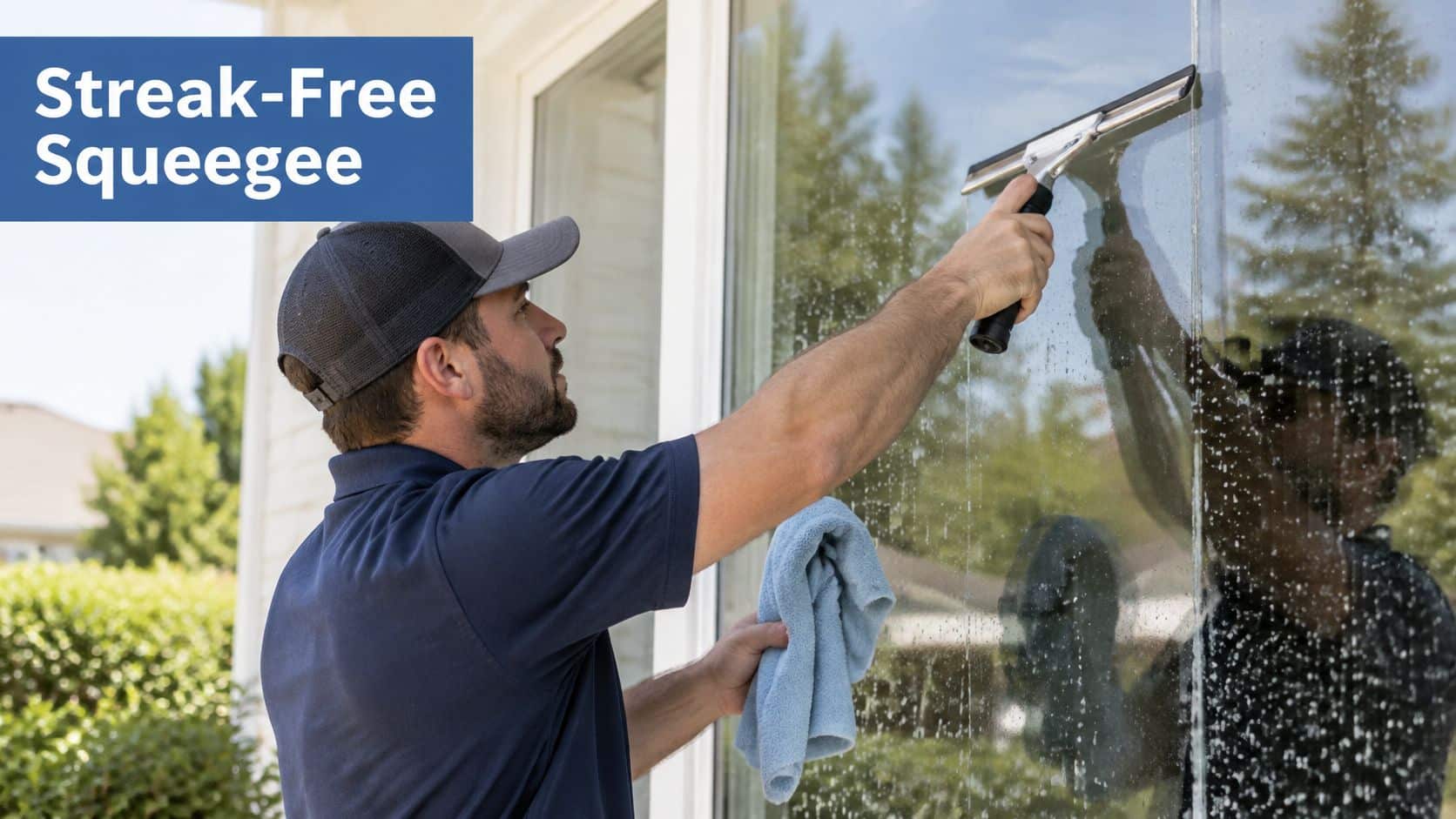
A streak is water and soap that dried on the pane. Wet the glass, pull a sharp squeegee in a straight or slightly overlapping stroke, and wipe the blade after every pass. Paper towels smear film. A flexible rubber blade is what leaves picture windows and storefronts clear between visits.
This is the tool doing the work on a shaded residential pane.
How a clean pass actually runs
Start at the top corner and work down. Overlap each stroke by about an inch so you don't leave a dry ridge. After the pass, cut the water bead along the bottom edge with a clean towel. If the rubber shows nicks or feels stiff, replace the blade before the next pane. A nicked blade draws a line the sun will not hide.
On a commercial storefront, a light scrub comes first, then the squeegee, so the glass stays readable between service visits. On a tall picture window, one controlled top-to-bottom pass per panel beats a pile of short, nervous strokes. The squeegee method walkthrough breaks down angle, overlap, and blade care if you want it in still photos before you try a south-facing slider.
Watch one full pass, then copy the wipe of the blade, not just the pull.
2. Choose a Pure-Water Cleaning System
Pure water is tap water with the minerals taken out. A proper rig runs sediment filtration, carbon, reverse osmosis, then deionization. A commercial filtration specification reports that reverse osmosis can remove approximately 95 to 98 percent of dissolved substances, while deionization removes the remaining dissolved ions. What is left can dry without the salt crust Valley tap water leaves on frames and glass.
Practical rule: Test total dissolved solids at the outlet on every job, and change resin or filters when the number climbs. Skip the meter and you are rinsing with expensive hard water.
A water-fed pole is the usual delivery tool. Technicians scrub and rinse upper glass from the ground, which is why multi-story office fronts get this treatment instead of a ladder lean. Homes on hard-water routes stay clearer longer when the last water on the pane is purified, not toweled dry with minerals still in it.
- Read the meter: Confirm the outlet TDS before you wet the first pane.
- Rinse, don't polish: Let purified water be the final step instead of chasing drops with a towel.
- Ask who maintains the filters: South Mountain Window Cleaning runs maintained pure-water systems for this reason. See how pure-water window cleaning systems are set up before you buy a pole kit that still feeds from the hose bib.
Detergent still has a place on heavy kitchen film and construction dust. Pure water wins on routine exterior glass where spotting, not grease, is the enemy. Untreated mains water is a poor finish rinse wherever limescale is high.
3. Clean in Cool, Shaded Conditions
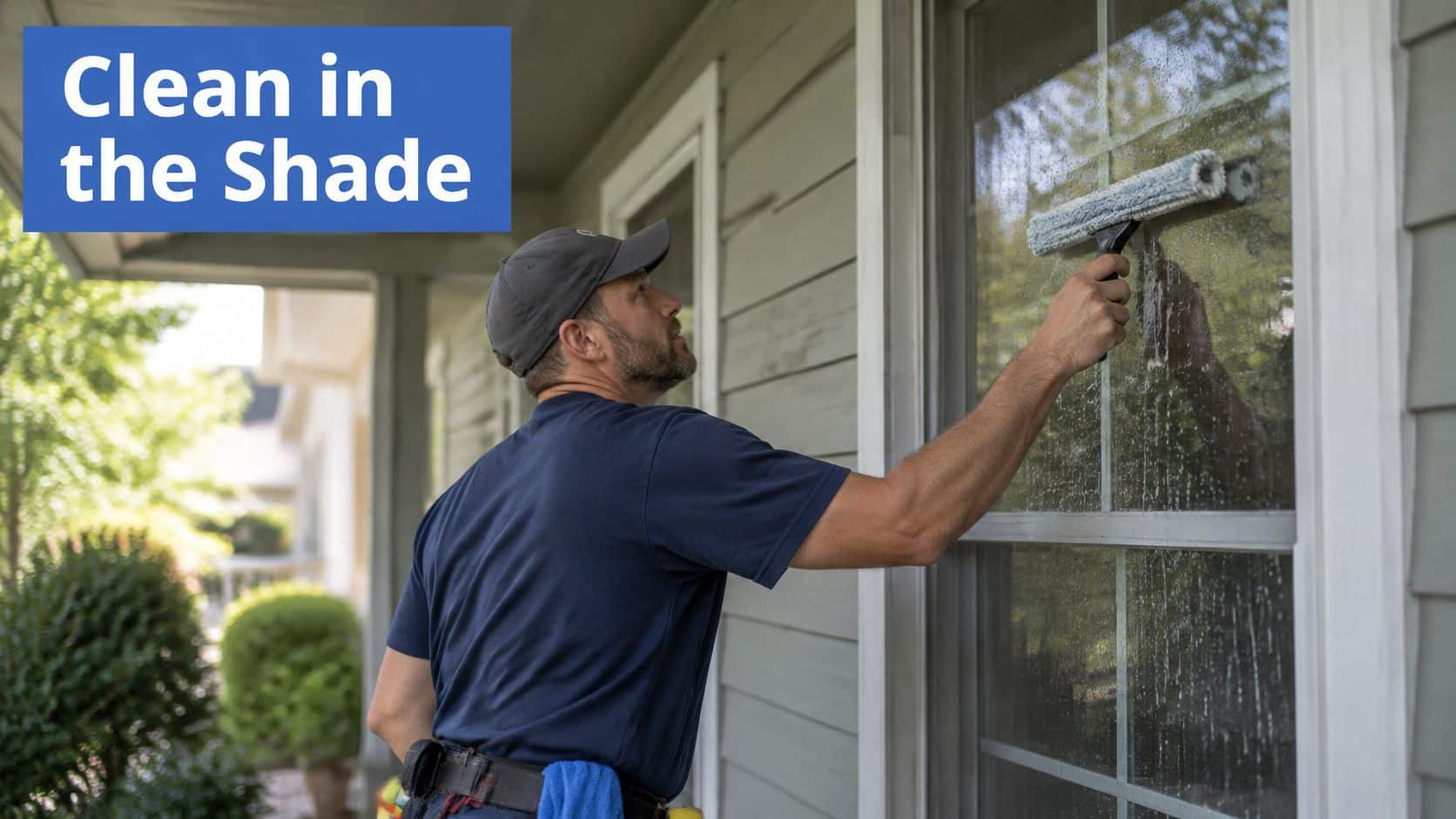
At 11 a.m., a west-facing Phoenix window can already be hot enough to dry cleaning solution before you finish the pass. Minerals concentrate as the water evaporates, leaving a film the squeegee cannot clear. Work in shade to keep the glass wet long enough to clean properly.
Desert dust also settles into mineral deposits over time. A storm may remove larger particles, but fine dust can remain on exterior glass. Waiting too long between washes can make that buildup harder to remove.
Work the shade, then the sun
Start on the shaded side of the house and move toward the sun. If a pane feels hot, leave it until it cools. Early morning is usually the better time for south- and west-facing glass. Scheduling work for cooler parts of the day keeps solution wet long enough to come off.
During Arizona's hottest months, work smaller sections and avoid letting detergent sit on the glass. A pure-water rinse can leave less detergent film behind, which reduces the chance of haze baking onto a sunlit pane.
4. Clean Screens and Tracks Before the Glass
The City of Phoenix air-quality page defines particulate matter, or PM10, as airborne particles with diameters of 10 micrometers or less, and it treats dust as a local pollutant. That dust does not stay on the pane. It packs into screens, tracks, and frames across Phoenix, Scottsdale, Paradise Valley, Chandler, Tempe, and Gilbert.
Wipe the glass first and you grind that grit back across the surface you just cleared. Sliding windows in Gilbert and Chandler show this after every dust storm. The track looks like a sandbox, and the next opening smears it onto the glass.
Take the grit out before you touch the pane.
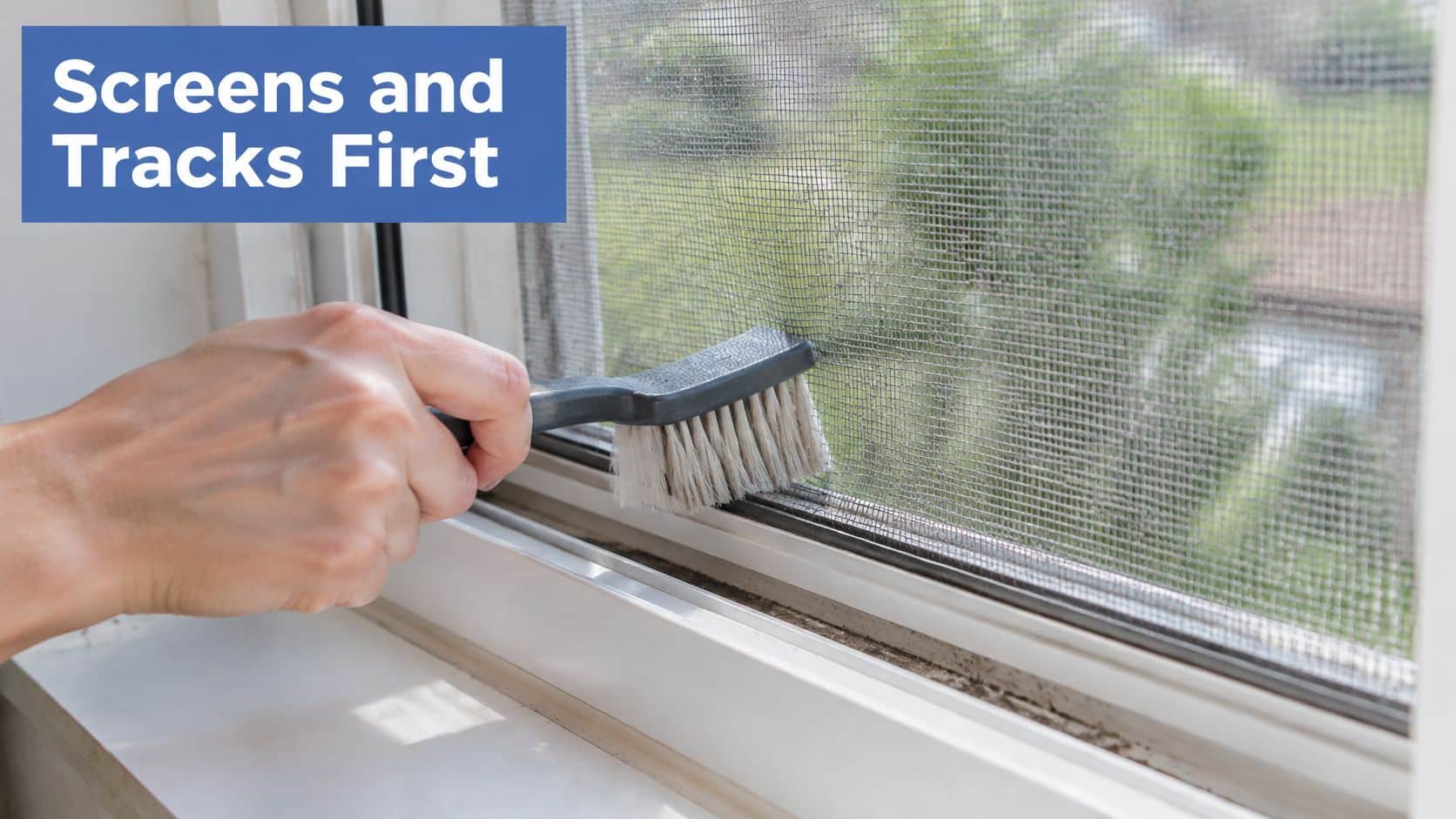
- Vacuum the track: Use a brush attachment and pull loose sand before any wet wipe.
- Rinse the screen gently: A soft brush and low water pressure clean mesh. A pressure washer bows it and drives dirt deeper.
- Then wash the glass: Wait until tracks are dry or wiped so drip-back doesn't reload the bottom rail.
Office screens get the same order. Vacuum, rinse, then the pane. South Mountain Window Cleaning includes screen and track care in the service because a clean lite with a dirty track does not stay clean through the afternoon.
5. Select a Gentle, Effective Cleaning Solution
Desert dust clings to residue left by the wrong cleaner. For ordinary household soil or storefront film, use a mild, pH-neutral soap or a dedicated glass cleaner. Ammonia-heavy sprays, strong solvents, and abrasive powders can haze coatings, loosen tint film, or dry out seals. Residue can also leave the glass tacky, attracting more dust.
Low-E and tinted glass can be damaged by harsh chemicals, so check the glass type before choosing a cleaner. Test a new product on a small corner, follow the label's dilution instructions, and keep household cleaners off tinted or coated glass unless the label says they are safe.
For routine washing, use a microfiber strip washer and separate wash and rinse buckets. That keeps grit from being spread back across the pane. If a film remains after a proper wash, the cause may be mineral scale or construction residue rather than a weak soap.
6. Remove Hard Water Spots and Mineral Deposits Promptly
White rings on a Scottsdale patio door are calcium and magnesium left behind when hard water dries. A glass shower enclosure does the same thing indoors. Routine soap will not lift those spots once they have sat through a few hot weeks. Early treatment with a mild acid-based or specialized mineral remover stops the deposit before it etches the surface.
A storefront that kept rinsing with mineral-heavy mains water grew the film back every visit. Switching the last rinse to deionized water stopped new spots. The old film still needed a targeted treatment first. Restoration and ordinary washing are not the same job.
The gray cloth is for the spot, not for grinding it.
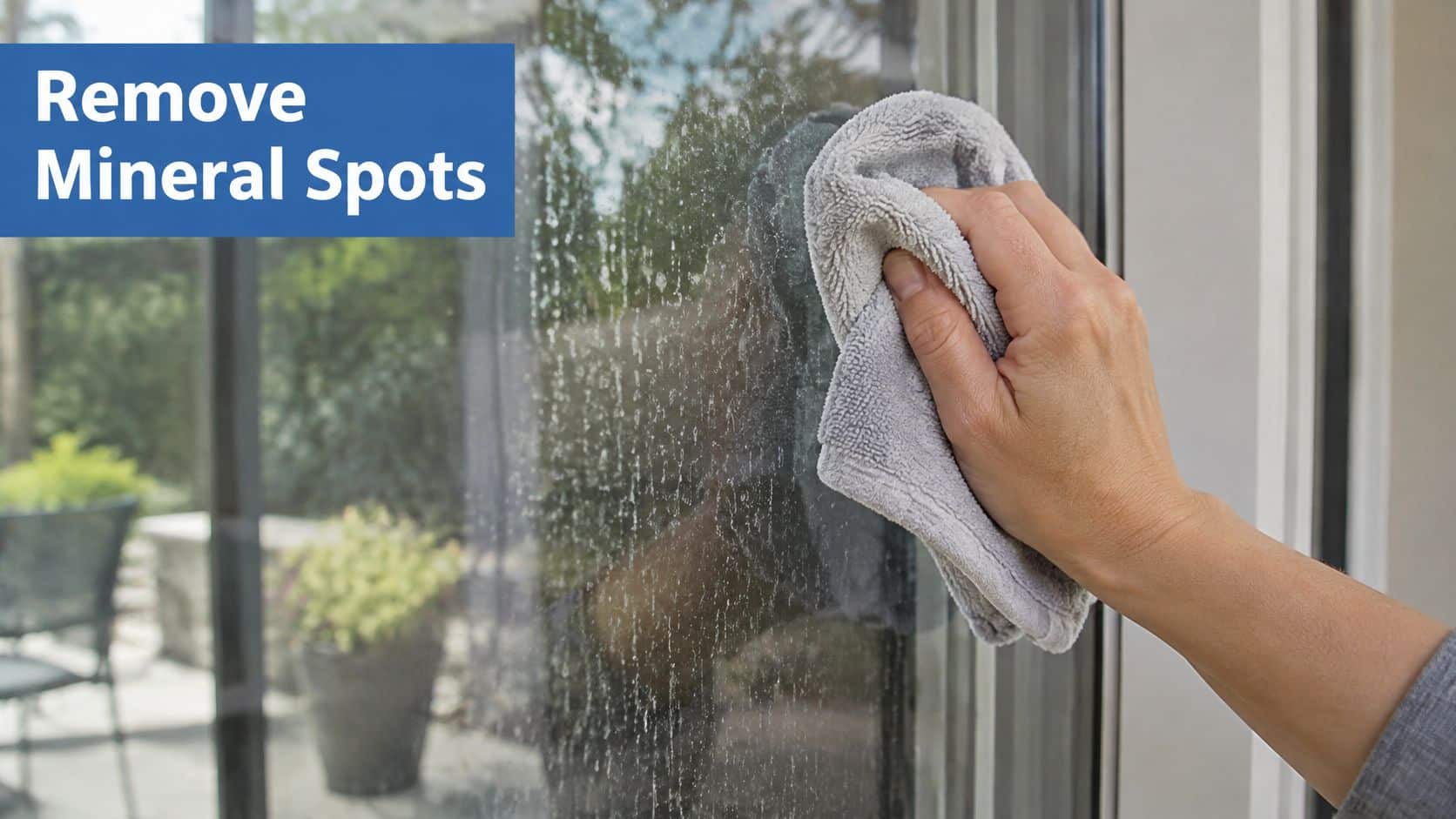
The hard-water stain removal guide walks through what comes off with a wash and what needs a mineral treatment.
- Test a corner: Mineral removers can mark some tints and coatings if you flood the whole door first.
- Rinse the chemistry off: Leave no remover to dry in the sun.
- Finish with deionized water: That last rinse is what keeps the spot from returning next week.
If the glass already feels rough after the deposit is gone, the surface may be etched. More acid will not polish that back. That is a restoration call, not another bottle of vinegar.
7. Follow a Seasonal Cleaning Schedule for Arizona Conditions
A glass door facing a gravel lot can look dusty again soon after a wash, while a sheltered north-facing window may stay clear much longer. In Arizona, set the schedule by exposure: desert dust, construction nearby, and monsoon mud all shorten the gap between visits. Many Valley properties need cleaning every few months, with exposed glass needing more frequent attention.
Commercial properties often schedule window cleaning for low-traffic hours. Give tenants notice and plan access around entrances, loading areas, and pedestrian routes. Entrances and display glass usually need attention sooner than a quiet north elevation.
Set the route around weather, not the brochure
After a dust storm or muddy monsoon, arrange a visit while the dirt is still loose rather than waiting for it to dry onto the glass. If only the exterior is taking the brunt of the weather, schedule that side separately from the interior. Recurring appointments also help keep service on the calendar during busy periods.
South Mountain Window Cleaning schedules recurring routes for homes and commercial sites. For a seasonal guide, see the best time of year to clean windows in Arizona.
- Match the gap to the site: Construction dust and open landscaping call for more frequent visits.
- Add a storm visit: Remove mud and fine silt while they are still loose.
- Hold the recurring time: A standing booking helps avoid waiting until the glass is heavily soiled.
8. Prioritize Safety and Hire Insured Professionals for Height Work
Upper stories, high-rise façades, and awkward roof edges are fall prevention first and glass second. A summary of OSHA rules for 29 CFR 1910.27 requires building owners to identify, test, certify, and maintain rope-descent anchorages capable of supporting at least 5,000 pounds in any direction for each attached worker, with that information given to the employer in writing before use. The same requirements call for a separate personal fall-arrest system, inspection at the start of every shift, removal of damaged gear, and tool lanyards for squeegees and buckets. Rope-descent systems are generally limited to 300 feet above grade, and stabilization is required when the drop exceeds 130 feet.
An OSHA-based review of window-cleaning accidents covering 15 years identified 88 accidents, of which 62 were fatal, about 70.5 percent. Ladder mishaps, including poor placement and contact with overhead lines, are a leading cause. Portable ladders should extend at least 3 feet above a landing and be secured against slipping.
Keep ladders off power lines and soft soil, and don't climb without stable footing and a spotter. Three points of contact still lose to overreach.
Condo associations and office managers should ask for anchor paperwork, training, a rescue plan, and a certificate of insurance before anyone ties off. South Mountain Window Cleaning is licensed, bonded, and insured, with safety-trained technicians and a $2 million insurance policy for business clients. Ground-floor poles are a reasonable DIY choice. A multi-story drop is not.
Window Cleaning Tips at a Glance
| Tip | Main Benefit | Difficulty | Best For | Arizona Relevance |
|---|---|---|---|---|
| Use the Squeegee Technique Correctly | Leaves glass streak-free while saving time | Easy to learn; takes practice on large windows | Residential and commercial glass | Useful for clear results in dry conditions |
| Choose a Pure-Water Cleaning System | Dries spot-free without soap or mineral deposits | Requires specialized equipment and maintenance | Upper-story windows and hard-water areas | Helps prevent spotting from mineral-rich water |
| Clean in Cool, Shaded Conditions | Reduces streaks by slowing solution evaporation | Easy; requires timing and planning | Windows exposed to direct sun | Especially helpful in Arizona's intense heat and sun |
| Clean Screens and Tracks Before the Glass | Prevents grit from scratching or resoiling glass | Moderate; adds time and gentle handling | Dusty windows, screens, and sliding tracks | Important after dust storms and desert wind |
| Select a Gentle, Effective Cleaning Solution | Protects glass, seals, and coatings while minimizing residue | Easy; requires checking product compatibility | Routine cleaning and tinted or coated windows | Helps avoid residue that can bake onto glass in the heat |
| Remove Hard Water Spots and Mineral Deposits Promptly | Restores clarity and helps prevent permanent etching | Moderate; cleaners require careful use | Glass with visible mineral spots | Particularly relevant because Arizona water is mineral-rich |
| Follow a Seasonal Cleaning Schedule for Arizona Conditions | Prevents buildup and supports predictable upkeep | Moderate; requires recurring planning | Homes and businesses exposed to weather | Accounts for dust storms, monsoon rain, pollen, and intense sun |
| Prioritize Safety and Hire Insured Professionals for Height Work | Reduces injury and property-liability risks | Professional expertise required for elevated work | High-rise, upper-story, or hard-to-reach windows | Helps manage risks of working at height in Arizona properties |
Cleaner Windows Start with the Right Plan
Arizona's dust, mineral-heavy water, and intense sun make timing and technique matter. Work in a practical order: clean screens and tracks first, then the glass. Use a squeegee with a clean blade, and finish with purified water where mineral deposits are a concern. Schedule extra cleaning after dusty or monsoon weather rather than relying only on fixed calendar dates.
DIY suits ground-floor glass you can reach safely with a pole or a short, stable ladder. For upper stories, steep access, or work requiring anchors or rope, hire a licensed, bonded, and insured professional. A fall or damaged glass can cost more than the cleaning visit.
South Mountain Window Cleaning, LLC serves homes and businesses across Phoenix, Scottsdale, Paradise Valley, Chandler, Tempe, and Gilbert, including high-rise properties. Its technicians use professional squeegees and pure-water systems, and the service includes screen and track care. Visit South Mountain Window Cleaning, LLC to request a fast, free quote for a cleaning schedule suited to Arizona conditions.