

You open the blinds, and the afternoon sun catches every dusty streak on the patio glass. The screen looks gray, the slider grinds in its track, and the window you wiped last weekend still looks hazy from outside. In the Valley, that's usually a sign that the whole opening needs attention, not another round of spray cleaner.
Good window and screen cleaning starts with Arizona's dust, the condition of the mesh, and safe access to the glass. The right schedule keeps routine maintenance manageable without promising that a washed screen will purify your indoor air.
How Often to Clean Glass and Screens
For a typical single-family home in Phoenix, Scottsdale, Chandler, Gilbert, Tempe, or Paradise Valley, common service guidance is exterior glass every 8 to 12 weeks and operable screens washed 2 to 4 times a year. Treat those intervals as starting points, not deadlines. Move the visit forward when mesh looks gray, glass develops a visible film, or airflow through an open window feels weaker than usual. Screen washing clears dust from the mesh and can improve airflow through the opening; it does not purify indoor air.
Arizona's weather should set the calendar. Thunderstorms and strong surface winds during the June through September monsoon can generate dust storms that coat freshly cleaned openings again. The City of Phoenix's dust and air-quality guidance explains local concerns about airborne particulate matter.
Choose a starting schedule for your property
A shaded backyard opening and a street-facing storefront need different maintenance plans. Use these practical service intervals as a baseline, then adjust for exposure and visible buildup.
Window and screen cleaning cadence in the Valley
| Property | Exterior glass | Screens | Clean sooner when |
|---|---|---|---|
| Typical single-family home | Every 8 to 12 weeks | 2-4 times a year | Dust storm, film, or weak airflow |
| Large custom or Paradise Valley home | Every 6-10 weeks | With each exterior wash | Pool splash, pollen, or construction dust |
| Retail or restaurant storefront | Weekly to monthly | Monthly or with the glass | Grease, fingerprints, or traffic film |
| Office or condo mid-rise | Monthly to quarterly | Quarterly | Complaints or dull daylight |
| High-rise exterior | Monthly or quarterly contract | On the access cycle | Post-monsoon soiling or inspection notes |
| Interior glass only | 1-2 times a year | Not the main task | Smudges or sill mineral spots |
Large custom homes often need an exposure-based plan. Pool-facing glass may need attention before protected courtyard panes, while nearby construction can make the usual interval impractical. Use this guide to how often to clean windows to choose a starting point.
Let conditions move the appointment
Check the glass after a dust storm, especially along the bottom edge where runoff leaves grit. Look for pool splash, sprinkler overspray, and pale mineral outlines near the sill. Cleaning the marks helps, but correcting the water source helps prevent them from returning.
Scheduling rule: Book maintenance around the buildup you can see, not just the date on the last invoice.
Schedule nearby exterior work so it does not undo the glass cleaning. If patio or driveway washing is planned, review the driveway cleaning advice from Premier Gardens and arrange that separate work before the final window detail.
Book the next exterior visit while mineral deposits are still removable, and ask the crew to flag recurring splash patterns.
Benefits Beyond a Streak-Free View
The result you want is simple: glass that stays clear when afternoon sunlight hits it. Gray arcs, edge drips, and cloudy corners shouldn't appear as soon as you change your viewing angle. A clean rubber blade and careful detailing matter more than a stronger fragrance in the cleaning bottle.
The final touch is careful edge and frame detailing.

Clear glass supports the building's intended use
Windows provide daylight, outdoor views, and natural ventilation. The U.S. Department of Energy says windows account for about 10% of building energy use and influence end uses representing 40% of building energy use, but washing them doesn't guarantee a utility-bill reduction.
The defensible benefit is maintaining clear glazing so occupants can use the views and daylight the building was designed to provide. For a storefront, that also means customers can see the display rather than a layer of traffic film. These benefits of window cleaning are useful reasons to maintain glass without attaching an unsupported energy-savings promise.
Clean mesh restores an opening, not indoor air
Screen care is also preservation. Dust-loaded mesh needs gentle cleaning, not a concentrated blast that stretches it or a stiff brush that catches weakened fibers. Clean frames and channels are easier to handle without grinding grit through the assembly.
- Airflow: Removing accumulated debris helps air pass through an obstructed screen.
- Material care: Gentle washing avoids unnecessary stress on mesh, spline, and frame corners.
- Glass preservation: Addressing recurring mineral deposits can prevent removable buildup from becoming permanent surface damage.
Ordinary insect mesh can intercept coarse dust, pollen, and bugs, but it isn't rated to capture PM2.5. The distinction between washing accumulated screen debris and providing actual indoor filtration is important when considering screen-cleaning guidance from Martha Stewart.
A visual demonstration can help clarify the cleaning work involved.
For fine pollution, use appropriate HVAC filtration or a properly selected air cleaner, and keep windows closed when outdoor air is poor. Wash screens when debris shows or airflow drops. Don't treat the service as an indoor-air purification treatment.
What a Professional Visit Does to Glass and Mesh
A professional visit is a soil-removal sequence, not a spray-and-wipe shortcut. The crew should identify what's on the opening before choosing chemistry or putting pressure on the surface. Dust, mineral scale, kitchen grease, and construction residue require different handling.
The process begins with inspection and dry preparation.
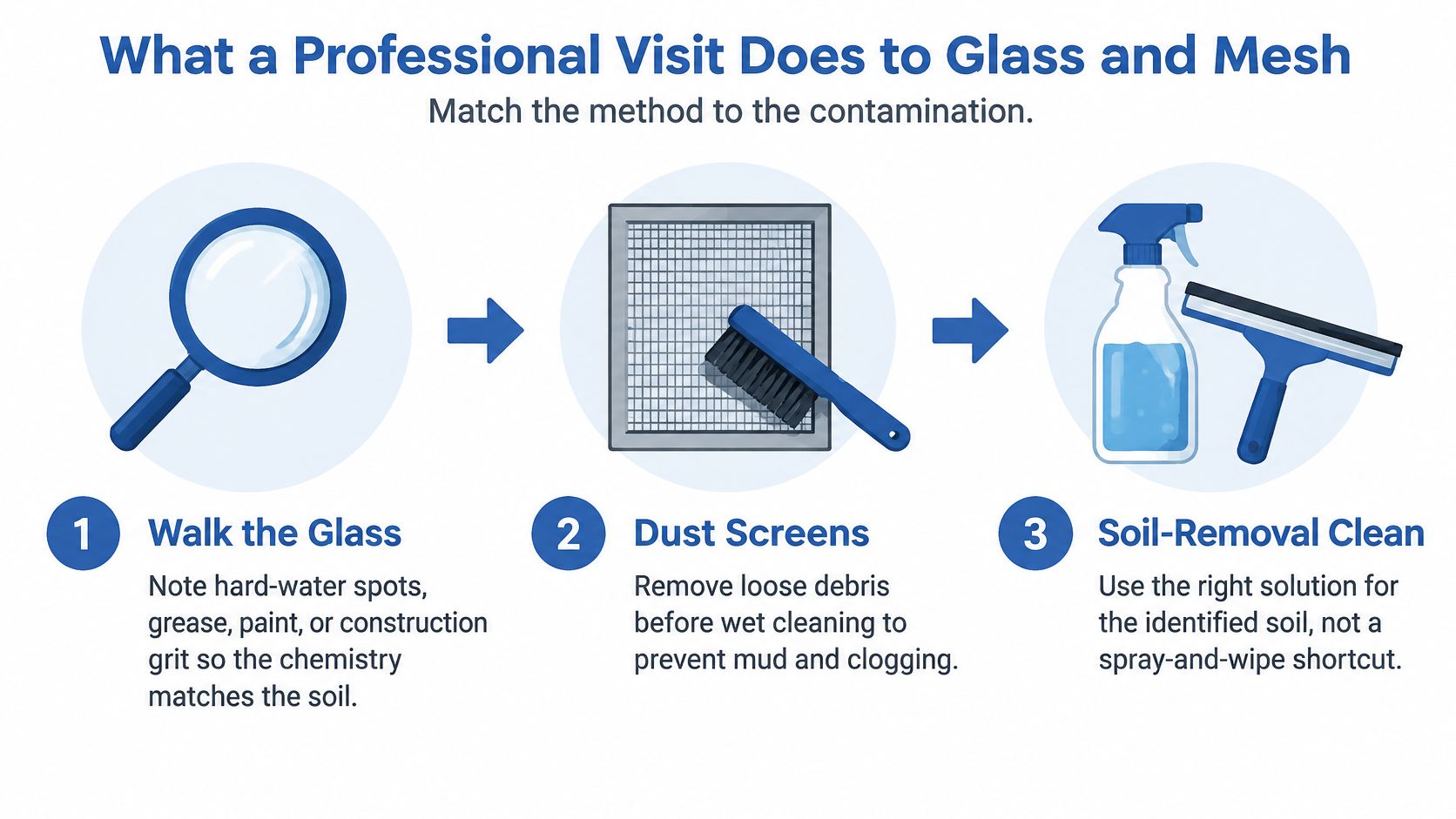
Follow the soil-removal sequence
Walk the glass. Identify hard-water spots, oily film, paint, stucco residue, and damaged seals. Photograph existing scratches or failed glazing so cleaning isn't confused with repair.
Dust screens and frames first. Use a soft brush or low-suction vacuum attachment to collect loose material. Wetting a heavily loaded frame immediately turns dry dust into slurry that runs back across the pane.
Loosen abrasive contamination. Rinse or gently lift grit before making firm squeegee passes. Don't drag a dirty scrubber across construction residue, and don't assume a razor blade is safe for every glass surface.
Wet and squeegee under control. Apply enough solution to lubricate the glass without flooding the frame. Pull a clean professional squeegee channel with steady pressure, keep the rubber flexible and undamaged, and wipe it between panes.
Detail the edges. Use a clean microfiber cloth on corners, perimeter lines, and sills. A wet edge left behind can release a drip after the main pane already looks finished.
Wash the mesh gently. After removing loose dust, support the screen and wash with a soft brush and low-pressure rinse. Don't bow the mesh or force dirt deeper into its openings, and let frames dry before reinstalling them.
Match the solution to the deposit
Vinegar isn't a universal answer. Wirecutter's window-cleaning guidance distinguishes mineral deposits, which respond to acidic chemistry, from greasy messes, where a conventional glass cleaner performed better.
Treat calcium and magnesium spots selectively with a compatible mineral-removal product. Protect surrounding finishes, test an inconspicuous area, and never let acidic solution dry on frames or seals. Restaurant film needs an appropriate degreaser, followed by thorough removal of the cleaning residue.
On suitable exteriors, a pure-water pole system lets the crew agitate and rinse the glass with deionized water. The rinse avoids introducing the dissolved minerals that ordinary hose water can leave behind, but it doesn't replace careful brushing or inspection.
A completed visit should leave glass clear in raking sunlight, dry edges, and mesh free of obstructing debris. Existing etching, damaged coatings, and torn screens should be identified plainly rather than hidden behind a promise that more scrubbing will fix them.
DIY Versus a Professional Crew
DIY makes sense for reachable glass and light soil. A professional crew becomes the practical choice when access, fragile materials, or stubborn contamination changes the job. Start with the task, not the assumption that every window can be handled with the same household kit.
DIY versus professional window and screen cleaning
| Task | Reasonable DIY | Hire a pro |
|---|---|---|
| Interior glass at arm's reach | Yes, with microfiber and a squeegee | Optional for a faster detail |
| First-floor exterior glass | Only after grit is rinsed off | Better for streak-free sunlit glass |
| Window screens | Gentle wash if mesh is sound | Brittle mesh, stuck frames, or heavy dust |
| Window tracks | Light vacuum and wipe if open | Packed mineral debris or many sliders |
| Second story and above | No | Required, with proper access |
| Pure-water pole washing | Rarely practical at home | Standard on many exteriors |
The equipment split is straightforward.
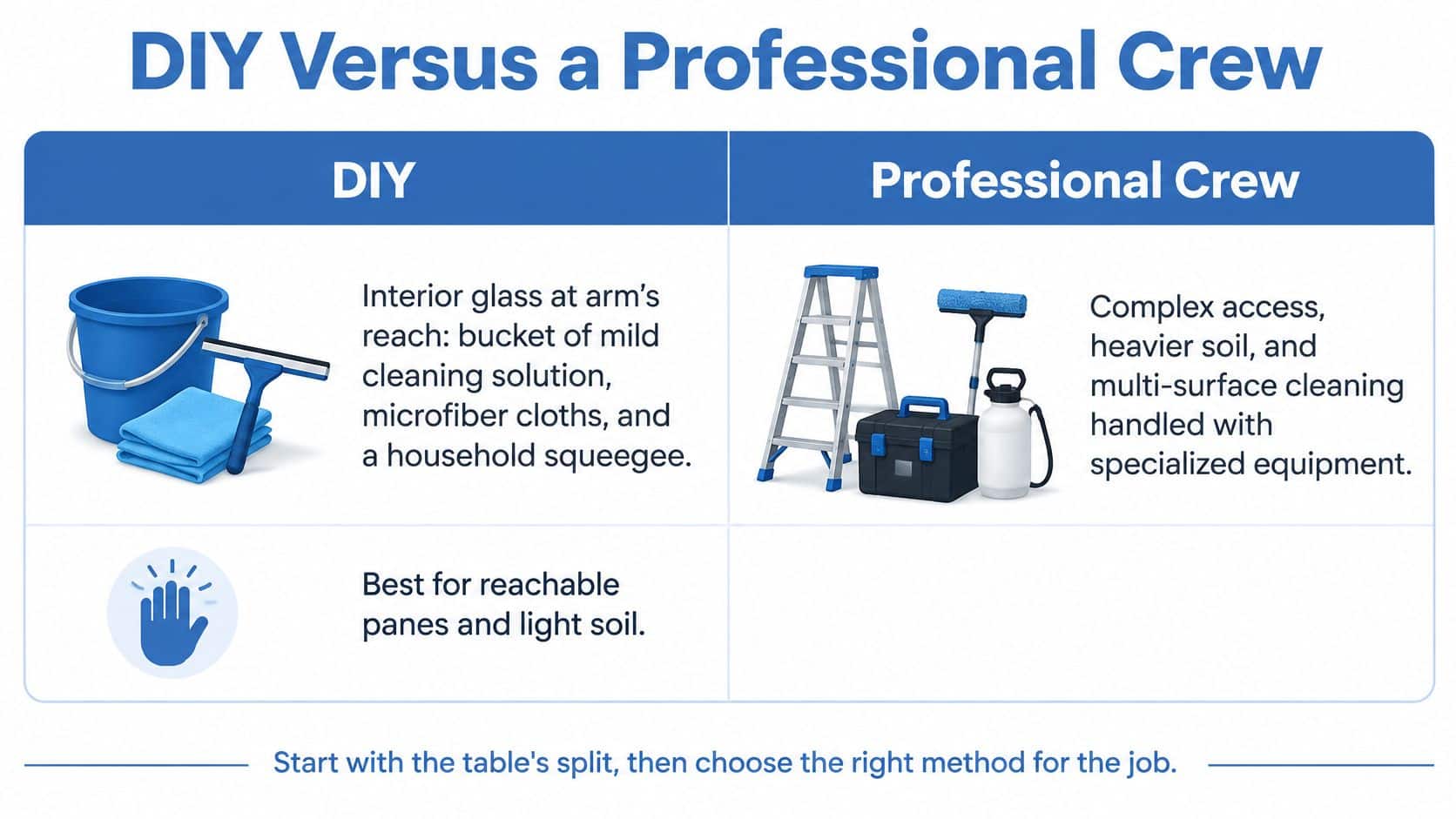
What works for reachable openings
For interior panes at arm's reach, gather a bucket of mild cleaning solution, clean microfiber cloths, and a household squeegee. Protect flooring, wet the pane evenly, and wipe the blade after every pass. Keep a separate dry cloth for the perimeter so you aren't spreading dirty water onto finished glass.
For ground-accessible exterior glass, rinse loose grit away before wiping. Work on the shaded side of the house and finish each pane before moving on. A bright Arizona afternoon can dry solution before you finish the pass, leaving lap marks even when your technique is otherwise reasonable.
Sound screens can be removed carefully, labeled by opening, brushed with mild solution, and rinsed gently. Let them dry before putting them back. For accessible tracks, vacuum first, then wipe the exposed channel without blocking drainage openings.
Where to stop
A stuck screen isn't an invitation to pull harder. Forcing the frame can bend the rail or dislodge the spline, while brittle mesh may tear under an otherwise gentle wash. Packed mineral debris in sliders also needs more care than scraping blindly with a screwdriver.
The homeowner carries the fall and glass-break risk. Saving a service charge doesn't make an unstable setup reasonable.
Don't lean sideways from a ladder, stand on furniture, or climb onto a roof to reach a missed corner. Second-story glass and high-rise panes belong with a trained crew using suitable access equipment. Even first-floor ladder work should stop if the footing, reach, or screen handling isn't secure.
DIY the easy interior panes. Schedule a crew for a thorough exterior, screen, and track service. Never improvise height.
What Changes the Price of a Visit
A window-cleaning quote pays for labor, access, and soil removal, not a standard house-shaped package. Estimators need to know how much glass they're handling, how they'll reach it, and what must come off before they can price the work responsibly.
Pane count and size usually deserve the first look. A broad slider, divided-lite window, and small bathroom pane aren't equivalent tasks. Counting openings is useful for an initial estimate, but photos help reveal the actual amount of glass and detailing.
Read the quote by its labor drivers
Pricing factors for window and screen cleaning
| Factor | What the estimator counts | How it moves the quote |
|---|---|---|
| Pane count and size | Openings, sliders, and divided lites | Main driver of labor hours |
| Height and access | Stories, poles, ladders, lifts, roofs | Adds crew time and insurance needs |
| Screens and tracks | Removal, wash, and track debris | Extra labor beyond glass only |
| Soil type | Dust, hard water, grease, paint, construction film | More passes or a mineral step |
| Inside and outside | One side or both | Both sides add a large share of time |
| Add-on surfaces | Mirrors, fans, solar, gutters | Separate line items on one visit |
| Visit pattern | One-time rescue or recurring route | Repeat stops often cost less each |
Access comes next. Narrow side yards, locked courtyards, delicate landscaping, roof transitions, and lift setup can change the work even when the window count stays the same. Screens and tracks add another labor block because removal, washing, drying, and reinstallation aren't part of pulling a squeegee.
Soil changes the number of operations. Maintenance dust may come off during the standard wash, while hard-water scale, grease, paint, or stucco residue needs selective treatment. Restoration work should be identified separately rather than added to a routine-cleaning expectation.
Compare matching scopes
Use the window-cleaning cost-per-window guide to understand how counting methods affect estimates. Then compare bids with the same inside-or-outside scope, screen service, track detail, and access assumptions.
For household planning, Maid in America's guide to cleaning budgets for busy homeowners offers useful context for separating routine upkeep from deeper catch-up work. Window service needs that same distinction.
Send an estimator the following:
- Location and access: Address, stories, gates, and any restricted areas.
- Glass scope: Rough window count, photos, and inside, outside, or both.
- Detail work: Screens, tracks, mineral deposits, and construction residue.
- Visit preference: A one-time cleanup or recurring maintenance slot.
Safety Gear and the Tools That Prevent Streaks
Safety is a buying test, especially when a quote includes high glass. An analysis of OSHA window-washer accident records identified 88 accidents over 15 years, with 62 fatalities, about 70.5% of the recorded incidents. That isn't a fatality rate for every worker or house call, but it demonstrates the severity of incidents in those records.
Equipment should suit both the access problem and the surface being cleaned.

Elevated work needs an actual access plan
For suspension scaffolds, OSHA's scaffold standard requires support surfaces to carry at least four times the load imposed at rated hoist load, or 1.5 times the load at hoist stall capacity, whichever is greater. Outrigger beams and parapet clamps aren't equipment a crew should place by guesswork.
For permanently installed powered platforms, OSHA's building-maintenance platform standard requires safe access and thorough suspension-wire-rope inspections at least monthly, plus inspection before reuse after inactivity of 30 days or longer. Property managers should coordinate building equipment records with the contractor before scheduling access.
Ground-level work still needs stable ladder placement, suitable footwear, clear hose routes, and separation from customers or pedestrians. If gutter work is also on the maintenance list, Two States Exteriors LLC's practical gutter maintenance safety tips provide useful context for evaluating a separate high-level task.
Better tools protect the finish
A clean squeegee channel with sharp, undamaged rubber leaves a more controlled finish than extra soap. Microfiber cloths handle edge detailing, while soft brushes lift contamination without the aggressive contact of abrasive pads.
Pure-water equipment also needs maintenance. A crew should check water quality and keep brush heads clean rather than assume the system automatically guarantees spotless glass. This explanation of what professional window cleaners use helps distinguish purpose-built equipment from household substitutes.
Before accepting a bid, ask:
- Access: How will the crew reach each raised area?
- Insurance: What current proof of coverage will you provide?
- Inspection: Who checks the access equipment and documents its condition?
A credible answer describes the actual building and equipment, not just a general assurance that everyone is careful.
Book Glass Screens and the Surfaces Around Them
Book the opening as a complete job: glass, screens, and the tracks you want cleaned. Otherwise, you may get clear panes while the slider channel stays packed with dust. Confirm whether the track service means a light wipe or detailed debris removal, because those are different scopes.
Plan surrounding surfaces in the right order. Dust ceiling fans before the glass work so loose material doesn't fall onto finished sills. Add mirrors if you want the same visit to address bathroom splashes, entryway fingerprints, and the streaks that become obvious beside newly cleaned windows.
Build a useful visit list
Choose additions because they solve a maintenance problem, not because every surface needs washing on the same day.
- Screens and tracks: Include the openings you use, and flag stuck frames or sliders that resist movement.
- Mirrors and fans: Identify tall fixtures and furniture that may obstruct access.
- Solar panels: Request an assessment after a major dust event, particularly where bird droppings or construction debris are present.
- Commercial flatwork: Ask about entries, walkways, drive-thrus, or dumpster pads as separately scoped work.
For solar panels, visible dust alone doesn't prove that washing will pay for itself immediately. Compare weather-adjusted production with a clean-period baseline, consider recent rainfall, and weigh the likely recovered production against the cleaning cost. Skip abrasive DIY pads and leave roof access to properly equipped workers.
Retail and restaurant managers can combine scheduled storefront visits with other exterior maintenance without treating them as the same cleaning process. Keep wash water, overspray, customer access, and the final glass detail in the work plan. High-rise and condo managers should confirm building access arrangements and equipment responsibility before signing a recurring contract.
Send enough detail for a useful quote
For residential, commercial, and high-rise window washing in Phoenix, Scottsdale, Paradise Valley, Chandler, Tempe, and Gilbert, Arizona, a useful request starts with photos or a rough window count. State whether you want inside glass, outside glass, or both, then identify screens, tracks, mirrors, ceiling fans, solar panels, and related exterior work.
Ask for a free online quote, confirm the 100% satisfaction guarantee, and request a recurring slot before monsoon season. Include gate instructions, parking restrictions, business opening hours, and any windows that need special access. Those details help turn a vague inquiry into a service plan the crew can carry out efficiently.
South Mountain Window Cleaning, LLC offers residential, commercial, and high-rise window washing, with screen and track care and related cleaning services for Valley properties. Visit South Mountain Window Cleaning, LLC for a free online quote, send photos or a window count, and request a recurring appointment that fits your property's dust exposure.