
You've probably noticed English ivy in one of three places: climbing a mature tree, covering a wall, or spreading across a planting bed faster than you can pull it. The first instinct is usually to grab a pair of gloves and start yanking. That approach can strip tree bark, loosen masonry, scatter rooted fragments, or put you on a ladder beside electrical equipment.
English ivy removal works best when you treat it as a property-protection job, not a simple gardening chore. The right method depends on the surface, the vine's density, the condition of the host tree or wall, and whether you can work from stable ground. Mechanical removal is often effective, but it must be followed by disposal, monitoring, and careful inspection.
Why English Ivy Removal Demands a Safety-First Approach
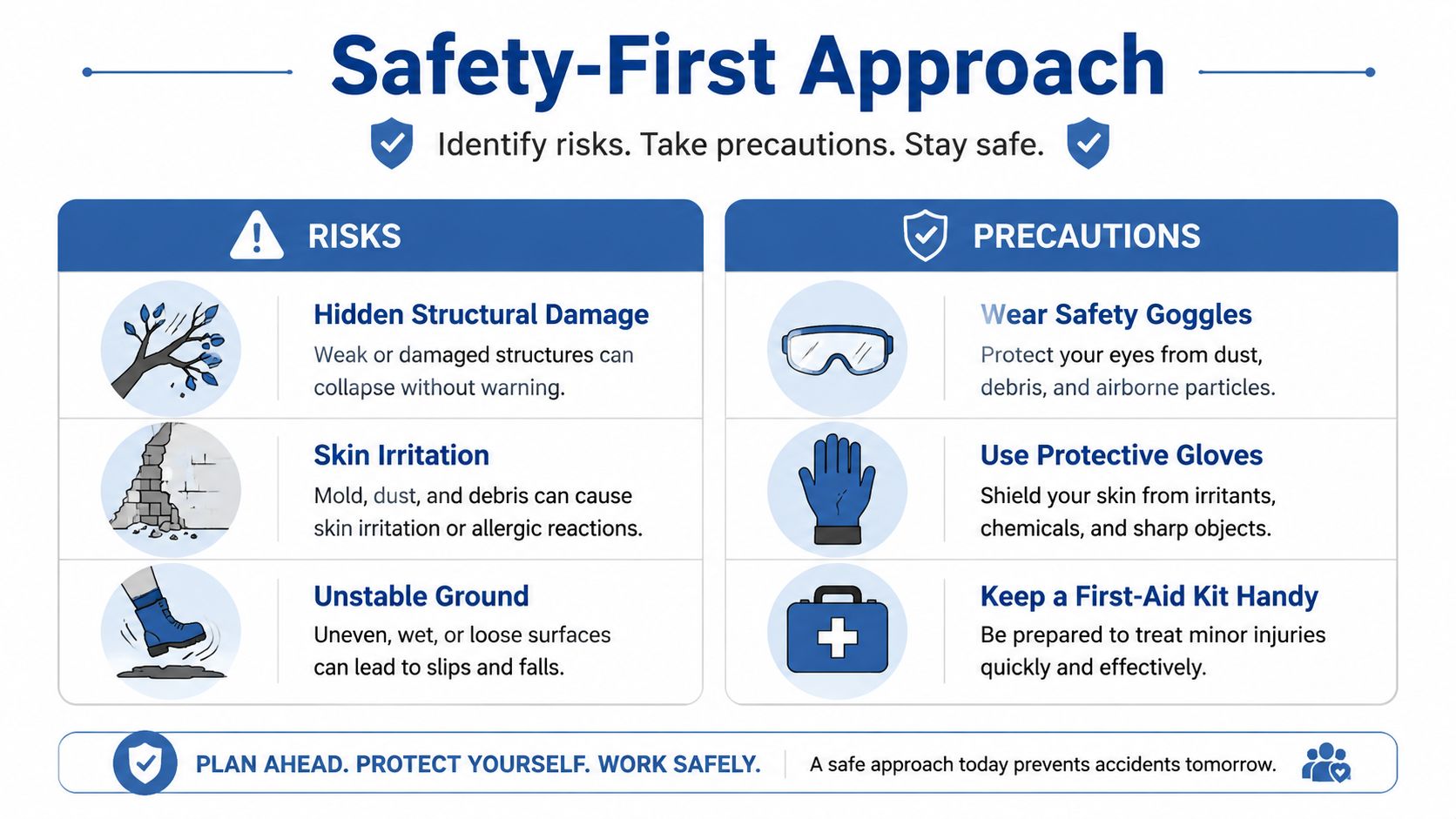
English ivy can hide problems until removal exposes them. A dense mat against a wall may keep surfaces damp and conceal deteriorated mortar, cracked siding, loose trim, or openings around windows. On trees, a heavy climbing mass can add wind resistance and obscure dead limbs, weak unions, bark damage, and decay. Pulling the vine away without first assessing the host can turn concealed damage into falling debris or a larger repair.
Electrical contact creates a separate hazard. Ivy can reach service drops, meters, exterior outlets, light fixtures, and equipment mounted to a wall. Wet leaves and damaged insulation are a poor combination. If the vine is entangled with electrical components, stop work and arrange an assessment by the appropriate qualified professional rather than cutting through the growth blindly.
Falls are another common failure point. A ladder placed on loose soil, a sloped garden bed, or a surface hidden beneath ivy isn't stable just because it looks level. Ladder safety equipment and placement matter, but equipment can't make an unsafe reach safe. If the work requires leaning sideways, stepping onto a roof, reaching above a comfortable height, or handling thick vines overhead, the job has moved beyond a sensible DIY cleanup.
Assess the property before touching the vine
Look for loose masonry, rotten wood, cracked branches, leaning trunks, buried irrigation, and irrigation or utility lines near the root zone. Wear gloves, eye protection, long sleeves, and footwear with dependable traction. Ivy sap can irritate skin, so sensitive workers should avoid direct contact and wash exposed skin promptly.
Practical rule: If you can't identify what the vine is attached to, don't pull it.
| Location | Risk Level | Key Hazards | DIY Feasibility |
|---|---|---|---|
| Groundcover on open soil | Moderate | Root fragments, hidden stones, skin exposure | Often manageable from stable ground |
| Masonry or stucco wall | Moderate to high | Loose mortar, surface damage, concealed cracks | Possible when vines are reachable |
| Wood siding or historic trim | High | Paint loss, rot, pulled boards, trapped moisture | Limited, with careful hand work |
| Mature tree canopy | High | Falling limbs, bark stripping, hidden decay | Usually requires assessment |
| Utility area or elevated structure | Very high | Electrical contact, falls, falling material | Call a qualified professional |
For a second perspective on tree-focused removal planning, Richmond Tree Experts GA ivy solutions offers useful guidance on separating vine control from broader tree-care risks. The key decision is simple: stable ground, reachable growth, and a sound surface may support DIY work. Height, electrical proximity, structural uncertainty, or dense canopy growth should trigger professional help.
Essential Tools and Materials for Safe Removal
The best tool is the one that removes the plant without transferring force into the wall, tree, or your body. Start with heavy-duty gloves that resist punctures and cover the wrist. English ivy stems can be abrasive, and sap may cause dermatitis. Add safety glasses, long sleeves, sturdy trousers, and shoes with a firm sole before you begin.
Use bypass pruning shears for smaller stems. They make controlled cuts instead of crushing the vine, which helps you isolate the rooted section. For thicker woody growth, use loppers or a pruning saw. A utility knife is useful for cutting through surface runners, but keep the blade directed away from your body and never use it while balancing on a ladder.
A digging spade is more useful than a rake for groundcover. Rakes often tear runners into pieces and leave rooted sections behind. Work the spade beneath the crown and follow runners outward, lifting the root system rather than merely stripping leaves. A narrow hand cultivator can help in planting beds, but use it carefully around desirable roots.
Match the equipment to the surface
For reachable wall growth, a plastic scraper can help remove tendrils after the vine has been cut and dried. Avoid aggressive wire brushing on painted siding, soft wood, or fragile mortar. A pressure washer may remove residue from durable masonry, but it can drive water into openings and damage weak surfaces, so it isn't a substitute for controlled hand removal.
A tarp makes cleanup easier, while heavy bags keep live fragments contained. Don't place ivy cuttings in ordinary compost unless the material has been managed in a way that guarantees complete breakdown. A pump sprayer may be appropriate for a targeted herbicide treatment, but only when the product label permits the use and the applicator can protect nearby plants, soil, people, and pets.
| Tool Type | Best For | Professional Preference | Safety Rating |
|---|---|---|---|
| Bypass shears | Small stems and runners | Sharp, clean-cutting models | High |
| Loppers or pruning saw | Woody vines | Loppers for control, saw for thick stems | High |
| Digging spade | Crowns and rooted groundcover | Narrow, strong blade | High |
| Heavy-duty gloves | Skin and hand protection | Thorn-resistant, wrist-covering gloves | High |
| Plastic scraper | Dried wall attachments | Nonmetal edge on delicate surfaces | Moderate |
| Tarp and heavy bags | Containment and transport | Large tarp with sealed bags | High |
| Pressure washer | Durable masonry residue | Low-pressure, controlled use | Moderate |
Good equipment reduces force. It doesn't remove the need to inspect what that force could damage.
Mechanical Removal Techniques by Surface Type
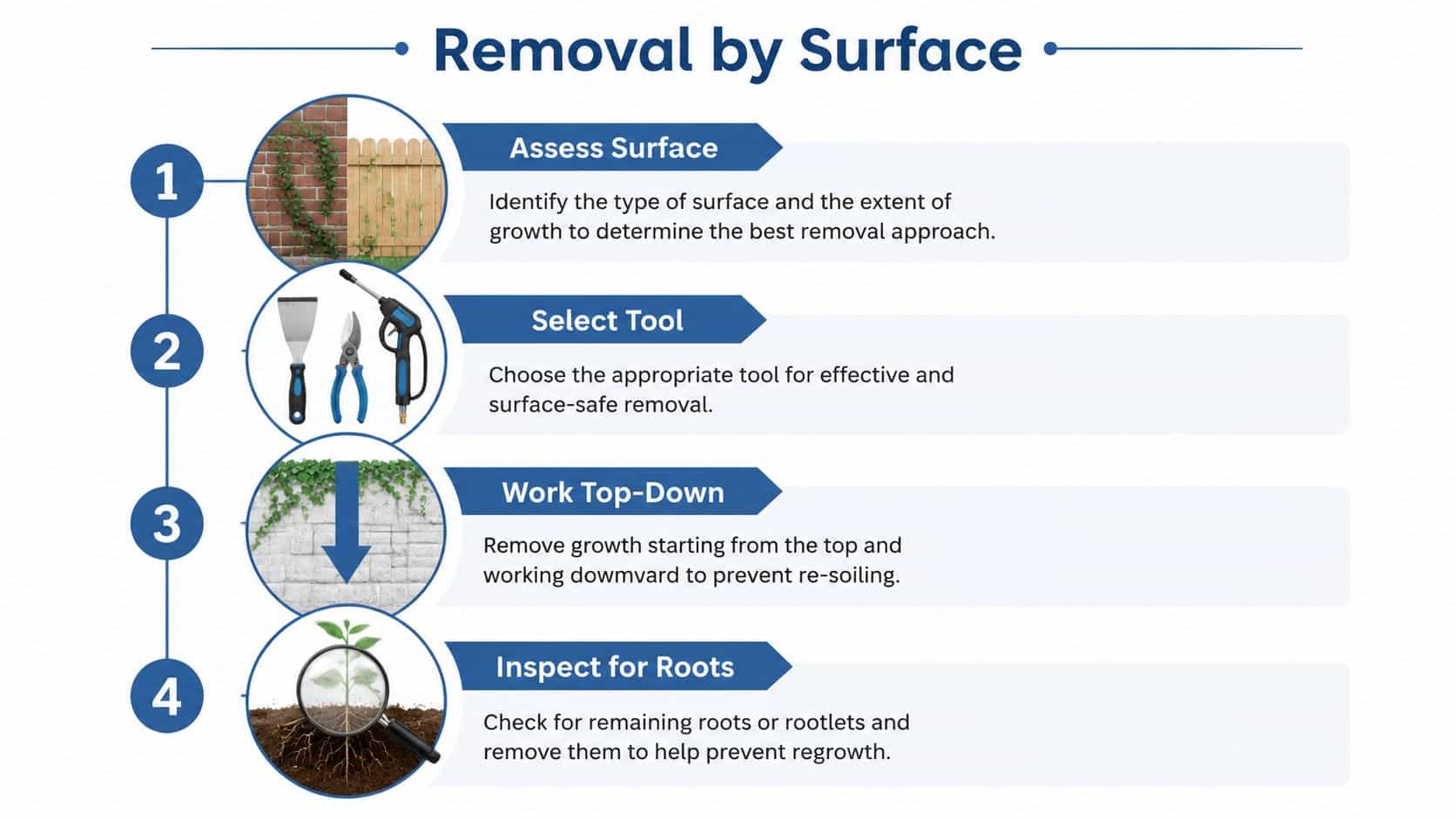
Mechanical removal starts with identification. Trace each climbing stem to its rooted point before you cut. A vine attached to a wall may have a separate root system at the base, while a runner across soil may have rooted at several nodes. If you remove only the visible upper growth, the remaining plant can quickly send out new shoots.
Walls and siding
On brick, stucco, or block, cut the main stems near the ground and again at a comfortable working height. Let the upper growth lose its connection before attempting removal. Pull downward and outward in small sections, keeping the force close to the surface. Never jerk a large sheet away from a wall, because the vine may take loose mortar, paint, or deteriorated stucco with it.
Wood siding requires even more restraint. Stop if boards move, paint lifts, or the vine appears to have entered a joint. Once the surface is clear, inspect behind trim and around windows for moisture damage. Surface cleaning should come after the plant is removed and the substrate has been evaluated. Guidance on removing mold from siding can help with the separate cleaning stage, but washing won't correct rotten wood or loose masonry.
Trees
Tree removal has one rule that prevents many avoidable injuries: cut the ivy stems at about eye level, then leave the upper vines in place to dry. Create a vine-free band around the trunk, and clear ground ivy at least 3 to 5 feet from the trunk, following Oregon State and regional guidance documented in the Earth Corps ivy herbicide study. Peel reachable vines downward. Don't pull upward, because upward force can strip bark.
Don't use a chainsaw against a vine-wrapped trunk. Once the stems are severed, inspect the bark, trunk flare, and major unions. Dead canopy material may remain attached until it naturally dries and decays, but branches that are cracked, suspended, or positioned over people and property need an arborist assessment.
Groundcover
For ground ivy, work when the soil is moist but not saturated. Lift crowns and runners with a spade, then search the cleared area for fragments. Don't rake aggressively or till the bed, since both actions can spread pieces. Bag the material as you work instead of creating piles that can contact bare soil.
Chemical Treatment Options and Timing
Herbicides have a place in English ivy removal, but they work best as a targeted part of a larger program. Spraying a dense mat without first considering nearby plants, runoff, wind, and disposal can create a new problem while leaving rooted crowns alive. Mechanical removal is usually the cleaner choice for small, reachable patches, especially in beds containing shrubs or groundcover you want to preserve.
The Nature Conservancy reports a useful hand-pull benchmark. A carefully executed pull reduced ivy cover from 80% or more to 2% to 6% after one year without follow-up, and to 1% to 2% with one follow-up pass, according to its ivy removal guidance. The method depends on cutting climbing stems, pulling one runner at a time, and removing major fragments rather than tearing the mat into smaller pieces.
Choosing between mechanical and chemical control
Glyphosate and triclopyr can be effective, but their performance depends on timing and application technique. Oregon State guidance notes that a winter initial treatment using 2% to 5% volume per volume triclopyr or glyphosate can achieve 95% control or better in a single application, with limited impact on scattered perennial vegetation, when applied properly. Product labels, local rules, weather, and site conditions still control the decision.
A separate extension source recommends glyphosate in spring when ivy has 2 to 4 new leaves, while other control programs use different timing for triclopyr or metsulfuron. Don't treat before rain, during conditions that promote drift, or when desirable foliage is exposed to the spray path. Protect ornamental plants with physical barriers where practical, and never assume a “natural-looking” application is harmless.
Soft washing is a surface-cleaning method, not an ivy killer. It may help clean residue from a sound exterior after removal, but it won't replace cutting, root extraction, or properly labeled herbicide treatment.
Chemical treatment kills plant tissue. It doesn't remove dead vines, repair bark, or make an unsafe climb acceptable.
Proper Disposal and Regrowth Prevention
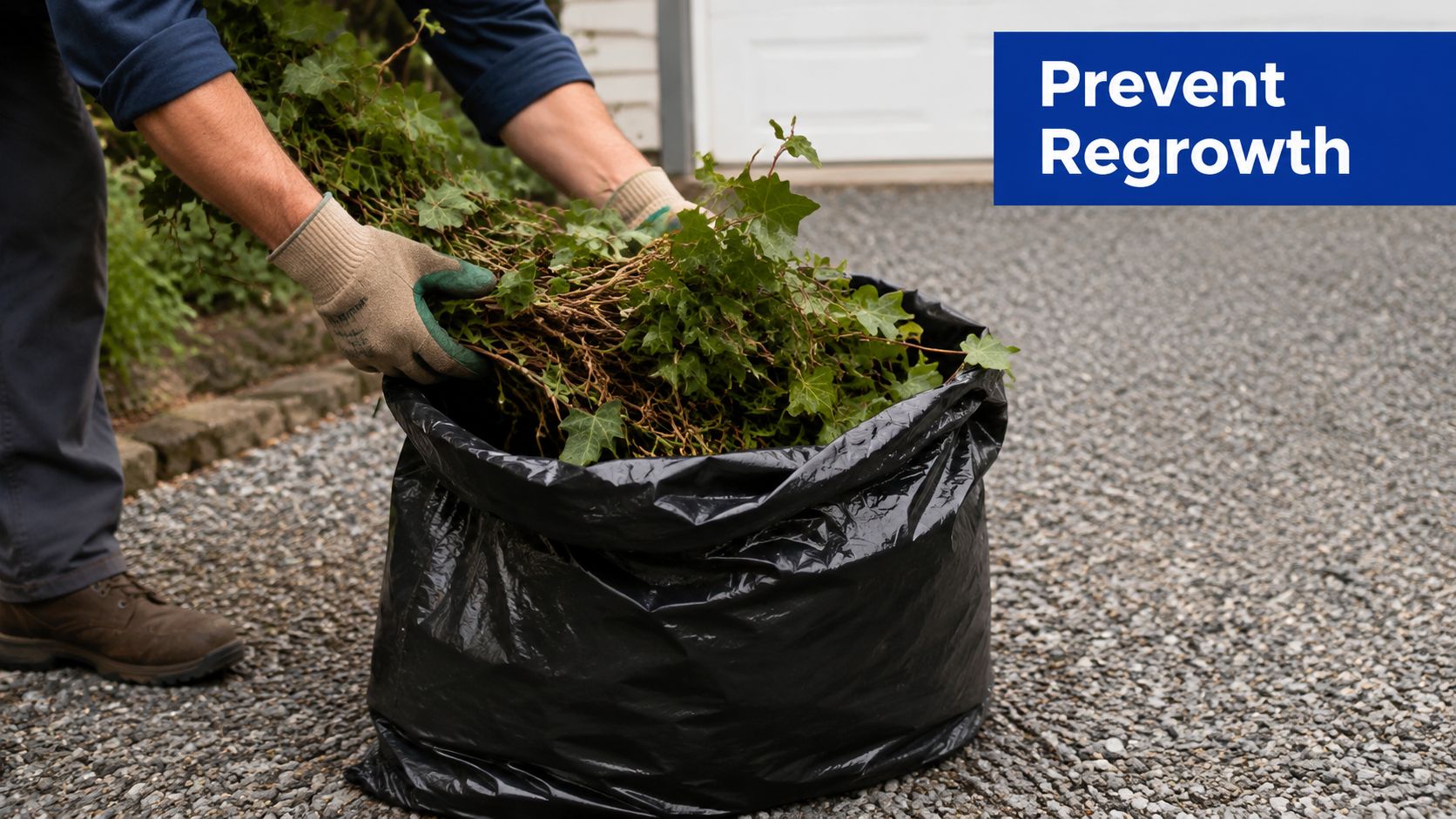
Ivy removal fails most often after the visible cleanup is finished. A runner left on damp soil can root again, and a fragment hidden beneath mulch can send up new growth. Treat every cutting as capable of creating another infestation until it has dried completely or been disposed of through an approved waste process.
Bag live cuttings rather than placing them in a loose yard pile. Keep roots, runners, leaves, and fruit contained. Composting isn't advised when viable fragments may survive and re-root, and burning may be restricted by local rules or unsafe near structures. Follow municipal green-waste requirements, and tell the disposal provider that the material is invasive plant waste if that information affects acceptance.
Block regrowth before it starts
After extracting the roots, cover the cleared soil with cardboard or another suitable barrier, then apply mulch. Independent guidance indicates that these barriers may need to remain in place for at least two growing seasons, as explained in the Columbia Gorge English ivy best-management practices. Keep the barrier from touching tree trunks, and inspect its edges regularly because surviving runners often appear beyond the original patch.
A workable maintenance schedule looks like this:
- First inspection: Search the cleared area for shoots, fragments, and missed crowns.
- Routine checks: Walk the former infestation during normal yard maintenance and remove new growth while it is small.
- Seasonal review: Inspect tree bases, wall edges, planting beds, and fence lines for re-encroachment.
- Extended monitoring: Continue follow-up for at least 24 months after the initial removal, because the first cleanup rarely proves that every rooted section is gone.
A long campaign is normal. The Stanley Park Ecology Society report documents a four-year Stanley Park program that removed English ivy from more than 8,000 accessible trees and shrubs, including 6,495 trees and 1,679 shrubs, with 80 volunteers contributing more than 1,900 hours across 176 sessions. The scale of that work shows why follow-up isn't a sign of failure. It's part of responsible control.
When to Call Professional Removal Services
Call a professional when the vine is above safe reach, tangled in electrical equipment, attached to a fragile structure, or growing through a mature tree canopy. A homeowner shouldn't climb into branches to remove ivy, and a ladder doesn't provide a safe solution for unstable ground, overhead cutting, or work that requires both hands for extended periods.
Tree-safety concerns deserve special attention after the cutting is done. Ivy can conceal decay, weak attachments, dead limbs, and bark damage. The vine's weight and wind resistance may have contributed to structural stress, but removal alone doesn't confirm that the tree is stable. An arborist should inspect trees when branches are cracked, the trunk leans, bark has been stripped, cavities are visible, or dead vines remain suspended above paths, roofs, driveways, and gathering areas.
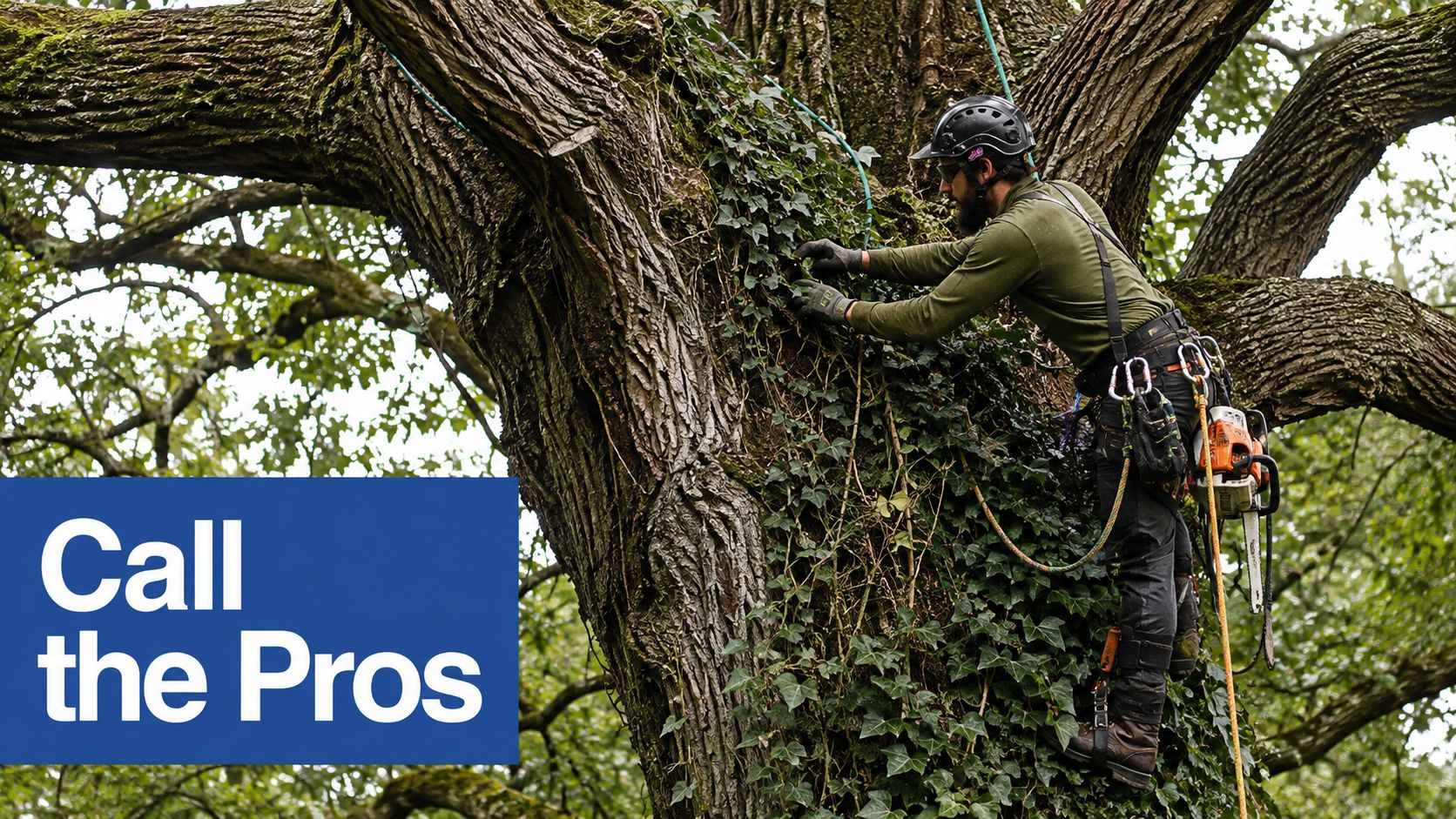
For large properties, professional help can also be the economical decision. The Forest Service English ivy management record reports that initial manual clearing of one densely established acre required about 300 to 1,000 human hours in a 2012 best-management-practices document. Pacific Northwest estimates from 2002 ranged from about $2,000 to $8,000 per acre at minimum wage. Those figures explain why serious eradication is planned as a multi-season operation rather than a single afternoon.
High-rise or commercial properties require another level of planning. OSHA permits suspended window cleaning on buildings up to 300 feet above grade, while work above that height requires the employer to show that another access method isn't feasible or would create a greater hazard, as stated in OSHA's rope-descent-system guidance. Fall protection is required at 4 feet or more in general industry and 6 feet in construction-equivalent environments, with powered platforms for high-rise maintenance governed primarily by 29 CFR 1910.66, according to window-cleaning safety guidance.
Before hiring, verify insurance, relevant licensing, equipment, rescue planning, and experience with trees or fragile exteriors. For broader property cleanup, Dublin garden clearance professionals provide a useful example of why vegetation removal and waste handling should be planned together. Building owners should also confirm that permanent rooftop anchorages are sound, rigid, and properly documented. OSHA guidance says the building owner must provide written confirmation that anchorages have been identified, tested, certified, and maintained to support 5,000 pounds in any direction for each attached worker, as detailed in its window-washing anchorage interpretation.
For exterior surfaces and difficult access areas, professional pressure-washing planning can help you separate safe cleaning from work that requires arborist, electrical, or high-access specialists.
South Mountain Window Cleaning, LLC provides residential, commercial, and high-rise window washing across Phoenix, Scottsdale, Paradise Valley, Chandler, Tempe, and Gilbert, along with exterior cleaning services that help keep ivy-affected walls, windows, and surrounding surfaces safe and presentable. For a professional assessment and a fast, free quote, visit South Mountain Window Cleaning, LLC.