
You're standing in a Phoenix parking lot before the doors open, and the concrete tells the whole story. There's gum fused into the drive-thru lane, grease at the dumpster pad, and a brown ring from irrigation overspray along the sidewalk edge. By the time the sun gets high, those marks are baked in, and the property already looks older than it is.
That's where flat surface cleaning earns its own place in a maintenance plan. It covers the horizontal spaces people walk on, drive on, and notice first, sidewalks, patios, dumpster pads, drive-thrus, garage floors, HOA paths, pool decks, and similar flatwork. In Arizona, dust, monsoon grit, and overspray turn those surfaces into recurring work, not a once-a-year cleanup.
A property manager can treat a roof and a sidewalk as different jobs for the same reason. The buildup is different, the risk is different, and the equipment is different. If you're comparing exterior maintenance tasks, it also helps to browse roof cleaning options alongside surface care so the whole property gets handled in the right order.
What Flat Surface Cleaning Actually Covers
A morning in a Phoenix strip mall makes the category obvious fast. The drive-thru lane has gum spots, the sidewalk has a greasy shadow near the trash corral, and the irrigation line has left rust-colored spray marks where water kept hitting the same patch of concrete. By 10 a.m., foot traffic and heat have already spread the mess, and simple sweeping won't touch it.
The surfaces that fall into the category
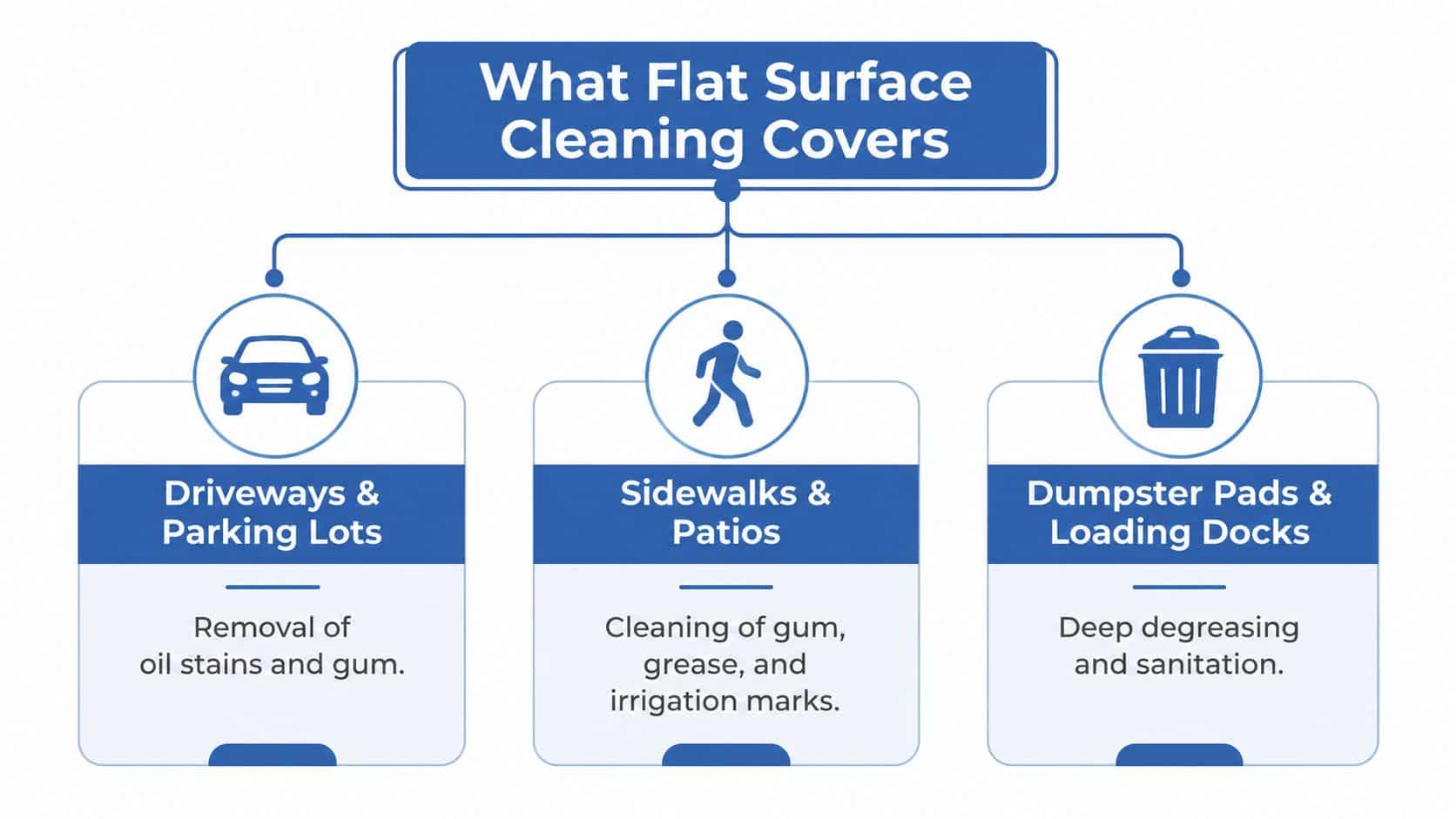
Flat surface cleaning covers broad, horizontal areas that people walk on, roll carts across, or drive over. That includes sidewalks, patios, drive-thrus, dumpster pads, loading docks, garage floors, pool decks, HOA walkways, and parking aprons. It also applies to the concrete and paver areas around storefronts where curb appeal and slip safety affect the property every day.
The job goes beyond “pressure washing” in the casual sense. A patio with a few dust lines does not need the same treatment as a restaurant pad with oil tracked by delivery carts. On the same property, one area may need chemistry, another may need heat, and another may only need a rinse and a careful rotary pass.
Practical rule: if people walk on it, roll carts across it, or drive over it, it belongs in flat surface cleaning.
Why Arizona properties need it more often
Arizona dust gets into joints, corners, and surface pores quickly. Monsoons bring mud, then the sun dries that mud into a crust, and irrigation overspray leaves mineral streaks that do not look like ordinary dirt. The result is a surface that can look dull, stained, and slippery even when it was cleaned not long ago.
That's why this service sits inside a much larger maintenance economy. The global cleaning services market was valued at USD 442.1 billion in 2025, and is projected to reach USD 470.8 billion in 2026 and, in a longer-term projection, USD 770.8 billion by 2033, with a 7.3% CAGR from 2026 to 2033, while floor care held the largest segment share at 30.7% in 2025 and North America accounted for 31.8% of revenue that year, according to Grand View Research's cleaning services market report. Flat horizontal maintenance is not a side task, it sits inside one of the biggest commercial upkeep categories.
Property managers who keep sidewalks, pads, and entrances in order usually handle other exterior tasks the same way. If you are lining up roof, gutter, and ground-level maintenance, it helps to browse roof cleaning options alongside surface care so the full exterior gets handled in the right order.
For crews that need to separate methods on concrete, this pressure washing and soft washing guide helps clarify where each approach fits.
The Four Methods Behind Every Clean Flat Surface
The right crew doesn't reach for one tool and hope for the best. It chooses between a rotary surface cleaner, straight pressure, low-pressure chemistry, and spot treatments based on what's on the slab. That matters because a dumpster pad and a sealed courtyard have almost nothing in common once the water starts moving.
Rotary surface cleaners do the heavy lifting
A rotary surface cleaner uses spinning nozzles under a shielded deck to clean large areas evenly and faster than a wand. In practical terms, it reduces striping, holds a more consistent standoff, and keeps the finish uniform on concrete, pavers, and parking areas. For large flatwork, that consistency is what separates a professional result from a patchy one.
The sizing matters. One industry rule of thumb uses a 1:4 ratio of GPM to cleaner diameter, so a 4 GPM machine pairs with about a 16-inch cleaner, while 12 to 20 inch units are commonly recommended around 4 GPM machines and 31-inch+ units for 9 GPM+ systems, according to American Pressure Systems' flat surface cleaner guidance. That same source notes that most cleaners operate around 2,000 to 4,000 PSI and up to 12 GPM, depending on design.
Pressure, soft wash, and chemistry each solve a different problem
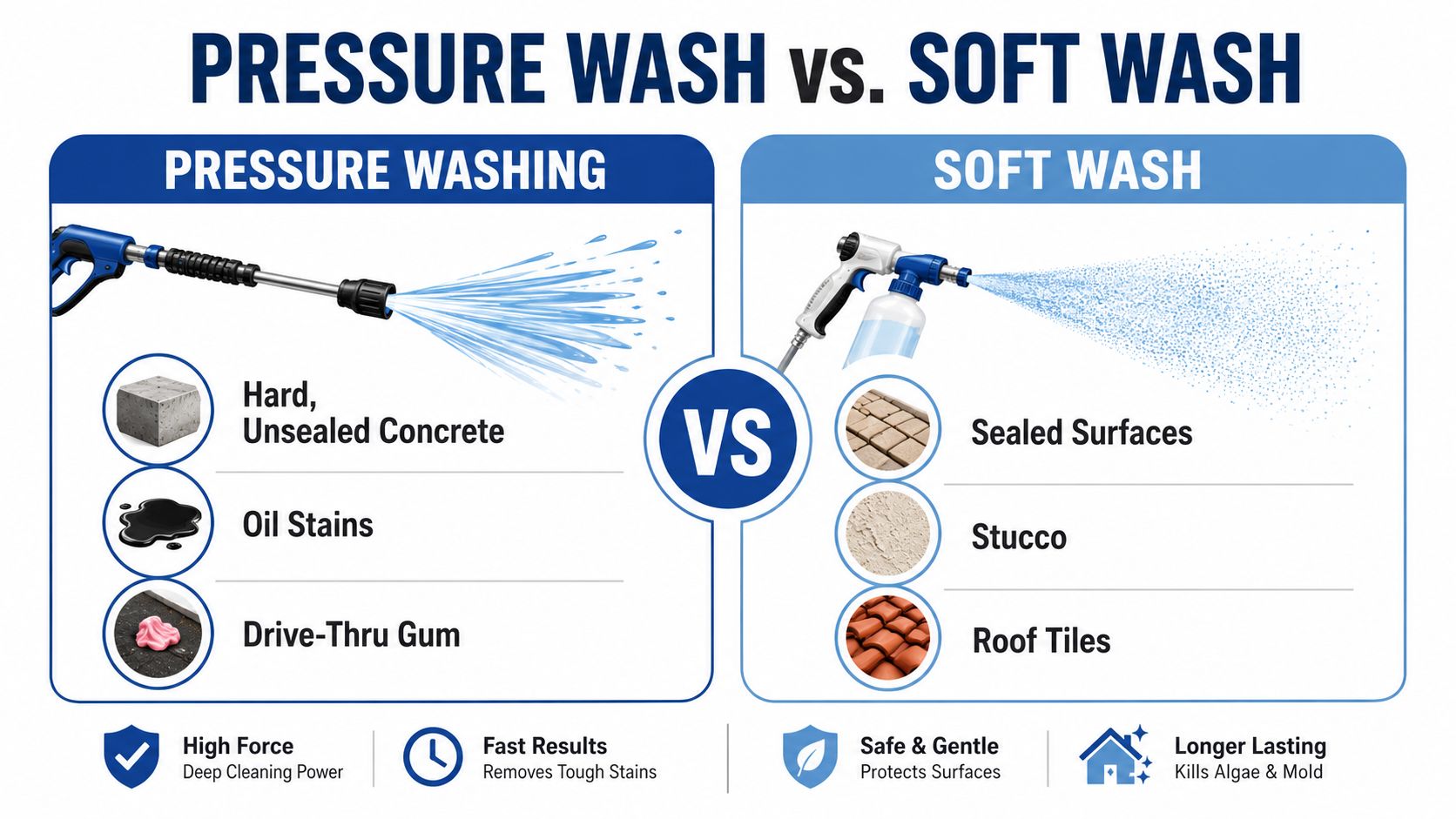
Pressure washing wins on hard, unsealed concrete, heavy gum, and oil. Soft washing wins when the goal is to clean with low pressure and chemistry instead of blasting sand out of joints or scuffing a finish. Targeted chemistry handles the stains that water alone can't lift, rust, grease, fertilizer marks, and long-set oil.
For a practical product comparison, the company's own page on the difference between power washing and pressure washing helps clarify why crews choose one method over another. On the ground, that choice usually comes down to surface hardness, stain type, and how much risk the property owner is willing to tolerate.
A good tech starts with the slab, not the machine. The method follows the surface, not the other way around.
Matching Pressure, Flow, and Heat to the Surface
A good result comes from matching the machine to the slab, not from chasing the highest PSI. Flow rate, temperature, nozzle choice, and dwell time all change how fast a surface cleans and how much risk the process carries. Two washers with the same rated pressure can behave very differently on a dumpster pad or a stained sidewalk, especially in Phoenix dust where the debris load is heavy and the margin for error is thin.
The numbers that actually change the outcome
One commercial 18-inch surface cleaner is rated for 4,000 PSI, has a minimum of 1,000 PSI, supports 3.0 to 8.0 GPM, and handles water temperatures up to 180°F, according to PressureWorks' flat surface cleaner spec. Another manufacturer notes rotary cleaners should receive at least 100 bar input pressure, with flow needs around 13.5 L/min for models up to 520 mm and 20.5 L/min for 750 mm models. The practical point is plain, adequate flow keeps the bar stable and the cleaning pattern even.
That is why a 4,000 PSI / 8 GPM commercial unit clears greasy concrete faster than a homeowner machine with lower flow. More flow moves debris out from under the deck, keeps the spray bar spinning cleanly, and helps the operator cover more ground without beating up the surface. On cured concrete, the wrong nozzle or too much pressure can still etch the slab, so raw force is not the answer.
Heat matters too. Warm water cuts grease faster on drive-thrus and dumpster pads, but it can also push costs and equipment wear higher, so the crew has to judge whether the faster clean is worth the extra setup. On jobs where dwell time matters, I use chemistry first, then let the machine rinse the surface, not the other way around. If the job also involves siding or building access, the same crew often applies the same judgment on a house pressure washing service, where heat and pressure need a different balance than bare concrete.
Pressure needs to match surface age and condition
For newer or more delicate concrete, one professional guide advises waiting at least 28 days after pouring before cleaning, starting under 2000 PSI, and using a surface cleaner or broad spray tip instead of a narrow nozzle to avoid etching, per Pressure Cleaning Equipment's concrete best practices. Another source gives a broader cured-concrete range of 2500 to 3500 PSI, but still recommends testing first. On Arizona slabs, that test patch matters because hot, dry concrete can show damage fast if the tip is too tight or the operator rides too close.
The chemistry has timing rules too. Concrete cleaning guidance notes dwell times such as 20 to 30 minutes for a baking-soda paste, 5 to 10 minutes for a vinegar solution, and 10 to 15 minutes for detergent-based oil removal, according to Mr. Handyman's concrete cleaning guide. That is the part many people miss, flat surface cleaning is as much about contact time as it is about pressure.
| Surface | Recommended Pressure | Best Method |
|---|---|---|
| New or delicate concrete | Start under 2000 PSI | Broad spray tip or surface cleaner |
| Cured standard concrete | 2500 to 3500 PSI, test first | Rotary surface cleaner |
| Heavy commercial flatwork | Match machine flow and deck size | Rotary surface cleaner with targeted chemistry |
| Stain treatment | Low pressure or manual dwell | Chemistry first, then rinse |
If a quote does not mention pressure, flow, and chemistry, it is incomplete.
Pressure Washing vs Soft Wash on Flat Surfaces
The right answer depends on the surface finish and what's stuck to it. Hard, unsealed concrete can take direct mechanical cleaning. Sealed pavers, painted walkways, and delicate finishes need a gentler approach or they lose sand, sheen, or coating integrity.
| Factor | Pressure Washing | Soft Washing |
|---|---|---|
| Best use | Hard concrete, oil stains, gum | Sealed surfaces, painted walkways, pavers |
| Risk | Higher on soft or jointed surfaces | Lower when chemistry is matched correctly |
| Finish | More aggressive, faster on heavy buildup | Cleaner look with less surface disturbance |
| Main drawback | Can stripe or etch if misused | Won't remove everything without proper chemistry |
Where each one wins
Pressure washing is the right call on drive-thru lanes, dumpster pads, and plain concrete with embedded grime. Soft washing is a better fit when the objective is to remove organic growth or soil without blasting material out of joints or roughing up a coated surface. On pavers, the difference matters because the wrong approach can move sand and leave the surface looking uneven.
The company's explanation of what soft washing is is useful background when a property has mixed surfaces. That mix is common in Arizona, where one site may have a stained concrete pad, a painted curb, and a decorative paver entry all within the same frontage.
If the surface has a finish you care about, ask how much pressure the crew plans to use before they ever start the washer.
A good contractor doesn't defend one method. It matches the method to the slab.
Where Flat Surface Cleaning Matters Most in Arizona
On a Phoenix property, the places that need attention usually announce themselves. Restaurant lanes collect gum and grease. HOA sidewalks collect irrigation stains. Retail fronts collect dust and foot traffic. A manager can ignore those marks for a while, but tenants, guests, and inspectors won't.

The places that drive most service calls
Restaurant drive-thrus usually need the most aggressive attention because of oil, gum, and constant vehicle traffic. Dumpster pads need deep degreasing and sanitation because residue and odor build up fast, especially where delivery traffic drags grime across the slab. HOA walkways and retail storefront sidewalks usually need cleaner appearance first, with slip reduction following close behind.
For a driveway or apron with heavy concrete buildup, South Mountain Window Cleaning's concrete driveway guidance fits the same logic: start with the surface type, then choose the cleaning approach. That's the same decision tree that works on patios, sidewalks, and back-of-house concrete.
What overdue cleaning looks like
- Drive-thrus: gum clusters, dark traffic lanes, and a tacky feel underfoot.
- Dumpster pads: dark runoff, odor, and residue around drains or curbs.
- HOA sidewalks: rust streaks, dusty film, and uneven brightness from one section to the next.
- Pool decks: visible buildup in grout or joints, plus a slippery feel when wet.
- Retail walkways: dull concrete and edge dirt that makes entrances look neglected.
The right cadence depends on use and exposure. Shade, irrigation overspray, and tree cover all shorten the interval between cleans because they hold moisture or drop debris onto the slab. The more visible and trafficked the surface, the less room there is to let buildup sit.
Frequency, Pricing, and What Drives Both
A clean slab is a moving target in Arizona. A restaurant lane that looked fine last month can pick up enough buildup to need attention again after a few busy weeks, while a residential patio might stay acceptable much longer if it's protected from irrigation spray and foot traffic. The property decides the cadence.
What a realistic schedule looks like
Quarterly work is common for busy restaurant drive-thrus, because grease and gum return fast. Dumpster pads often need monthly attention when the site has steady deliveries or high trash volume. HOA sidewalks usually fall into once or twice a year, while residential patios can often stay on an annual cycle unless shade, trees, or overspray make them dirty sooner.
Pricing usually follows the same logic as the schedule. Square footage matters, but so does soil level, surface type, water access, and whether the job is bundled with window, building, or house washing. A large lightly soiled slab can be faster than a small one with embedded grease, and that's why a vague per-square-foot quote can miss the actual labor involved.
Rule of thumb: the dirtiest part of the property often sets the labor, not the biggest part.
A clean surface changes more than appearance. It improves curb appeal, reduces slip concerns, and makes tenant complaints less likely. It also helps a property stay presentable when inspectors, customers, or board members show up without warning.
DIY Maintenance Between Professional Cleanings
A homeowner or site manager can do a lot without putting the slab at risk. The key is to clean the easy way first and stop before the job turns into a surface repair. Arizona dust rewards regular sweeping, not heroic scrubbing.
Safe maintenance that actually helps
Start by sweeping or blowing off loose debris before any wet work. Then use warm water and a mild cleaner for routine rinsing, because you don't need aggressive chemistry for every touch-up. For small spots, a baking-soda paste can help lift light staining if it gets enough dwell time.
For rust, small spots can often be treated with dish soap and water plus pure lemon juice, while older or larger rust stains may need oxalic-acid-based cleaners or other commercial rust removers, based on the concrete stain guidance from Brooks Construction Services. For oil, the same source warns against starting with acid wash and recommends detergent-based pretreatment or TSP instead.
Safety limits matter more than enthusiasm
- Pre-wet nearby plants before any chemical use.
- Never mix chemicals, especially acids and detergents.
- Keep narrow nozzles off young concrete that hasn't fully cured.
- Rinse until runoff runs clear after stain treatment.
- Stop and call a pro when the job needs ladders, hot water above 180°F, or commercial degreasers.
The concrete care guidance also notes that deep-cleaned concrete often needs 24 to 48 hours to fully dry before sealing, staining, or painting, and that timing matters if the slab is part of a larger project.
Once a stain needs strong chemistry, or a flat surface needs more than routine upkeep, it's no longer a weekend task. At that point, the risk of etching or spreading residue rises faster than the payoff.
Hiring South Mountain Window Cleaning for Flat Surface Work
A property manager should book flat surface work the same way they book any other exterior service, by checking credentials, equipment, and follow-through. The right contractor shows up prepared for the slab, not just the appointment. That means the crew can explain the method, the chemistry, and the cleanup plan before the first pass begins.
What to ask before you book
Ask whether the crew uses a rotary surface cleaner on concrete and large flatwork, because wand-only work is slower and less uniform. Ask what pressure they plan to use on your exact surface, and whether they'll rely on soft wash chemistry, degreaser, or rust treatment where needed. Ask how they protect landscaping runoff and handle dumpster pads, because that's where most of the mess migrates if the cleanup plan is weak.
Those questions matter because the method has to fit the site. A painted walkway, a paver courtyard, and a grease-stained pad all need different treatment, and a one-size-fits-all answer is usually a red flag. If you're also planning glass work, ask whether they can bundle window washing and house washing in the same visit so the site gets handled once instead of piecemeal.
The credentials that separate a real crew from a guesser
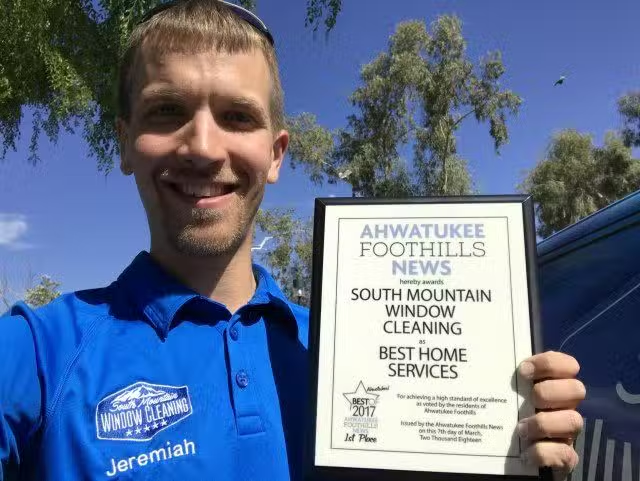
South Mountain Window Cleaning, LLC is licensed, bonded, and insured with a $2 million policy, backed by a 100% satisfaction guarantee and 400+ five-star reviews, and serves Phoenix, Scottsdale, Paradise Valley, Chandler, Tempe, and Gilbert. The company also offers residential, commercial, and high-rise window washing, plus exterior services like flat-surface cleaning, rust removal, dumpster pad sanitation, gutter cleaning, solar panel cleaning, and house washing.
That matters because flat surface work rarely stands alone. It fits into the larger exterior maintenance cycle, especially on properties where dust, overspray, and heavy traffic keep bringing dirt back. A crew with computerized scheduling and safety-trained technicians can keep that cycle predictable instead of reactive.
South Mountain Window Cleaning, LLC can also help when a property needs window washing alongside concrete care, which keeps the site on one maintenance calendar instead of three. If you're deciding what to do first, list every flat surface on the property, match each one to the right method and cadence, and separate the DIY jobs from the ones that need commercial equipment.
The takeaway is easy to remember when you call for a quote. Surface first, method second, cadence third.
South Mountain Window Cleaning, LLC handles flat surface cleaning, window washing, house washing, gutter cleaning, rust removal, and other exterior maintenance that keeps Arizona properties looking presentable between major service visits. If your concrete, walkways, or storefront slabs need the right method and a crew that knows Phoenix dust, visit South Mountain Window Cleaning, LLC to request a free quote and schedule service.