

A lot of Phoenix homeowners step onto their deck one morning and realize it no longer feels like part of the home. The boards look chalky. Dust has settled into every groove. Monsoon season left behind dark spots in shaded corners, and the finish that once shed water now seems tired and uneven.
That doesn't always mean the deck needs replacement. More often, it needs the right cleaning method. A professional deck pressure washing service can strip away the grime that Arizona piles on fast, but the word “pressure” is where many decks get into trouble. Sun-baked wood, older boards, and many composite products don't respond well to brute force. The difference between restoration and damage usually comes down to technique, nozzle choice, chemistry, and material-specific pressure settings.
Homeowners across Phoenix, Scottsdale, Paradise Valley, Chandler, Tempe, and Gilbert run into the same problem. The desert doesn't rot a deck the way a wetter climate might, but it does dry surfaces hard, pack in dust, and expose every coating to relentless UV. Cleaning has to solve those problems without creating new ones.
Reviving Your Sun-Beaten Phoenix Deck
A deck in the Valley rarely gets dirty in just one way. One week it's coated with fine dust. Then the sprinkler overspray leaves mineral traces. Then monsoon humidity feeds slick organic buildup in the spots that don't get direct sun. What starts as a cosmetic issue turns into a performance issue when the surface stops taking water evenly and the finish starts failing patch by patch.
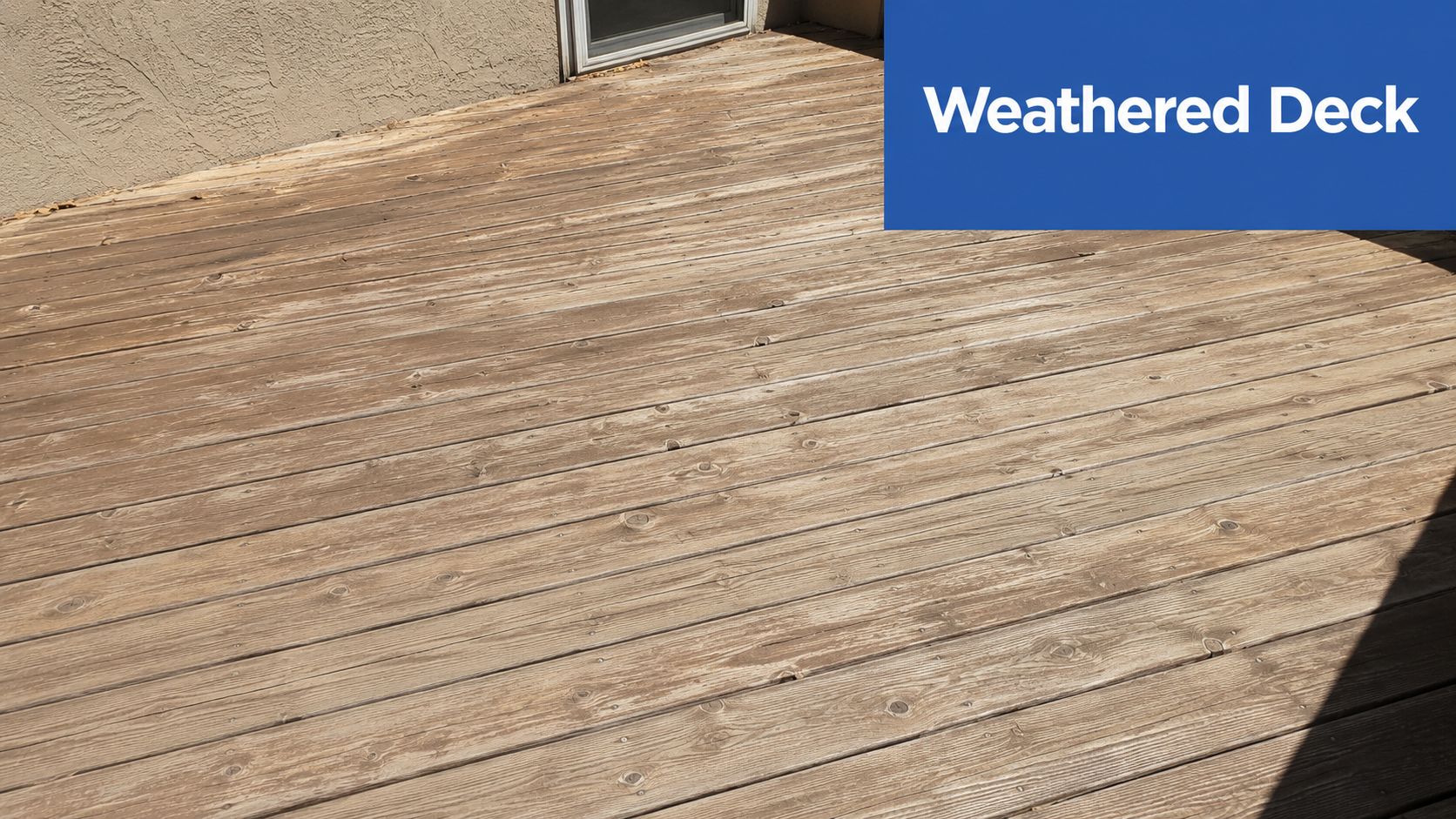
That's why a deck pressure washing service in Phoenix has to do more than “blast it clean.” In Phoenix's arid climate, decks accumulate fine Colorado River dust and salt deposits that can reduce water penetration by up to 40% if not cleaned quarterly, and that buildup calls for a 25-degree nozzle angle to dislodge compacted particles without etching the surface, according to this Phoenix climate deck cleaning reference.
What Arizona decks usually look like before cleaning
Most neglected decks in this area show the same pattern:
- Dust-packed grain: Fine desert dust settles into wood pores and textured composite surfaces.
- Uneven fading: South-facing sections bleach faster than covered areas.
- Dark organic patches: Corners near planters, walls, or shade hold onto mildew and grime.
- Poor water behavior: Water beads in some places and soaks in immediately in others.
A lot of homeowners assume stronger pressure is the answer. It usually isn't. On wood, aggressive washing often raises fibers and leaves a fuzzy surface that looks worse after it dries.
Practical rule: If the deck looks dry, brittle, or sun-fatigued before cleaning, it needs less force and more control.
Good cleaning starts by identifying the surface. Pine, cedar, composite, older stained lumber, and capped composite all respond differently. If you're planning to recoat after cleaning, proper prep matters even more. This guide on washing a deck before staining shows why prep work can't be treated as a quick rinse-and-go step.
For homeowners comparing methods, this overview of effective methods for cleaning decking is useful because it separates routine surface grime from the kind of buildup that needs a more deliberate cleaning process.
Why Professional Cleaning Matters in Arizona
Arizona is hard on exterior surfaces in a way that catches people off guard. In humid climates, deck damage often shows up as long-term moisture problems. In Phoenix, the damage is usually a combination of abrasive dust, extreme heat, mineral residue, and seasonal organic growth that gets baked into the surface.
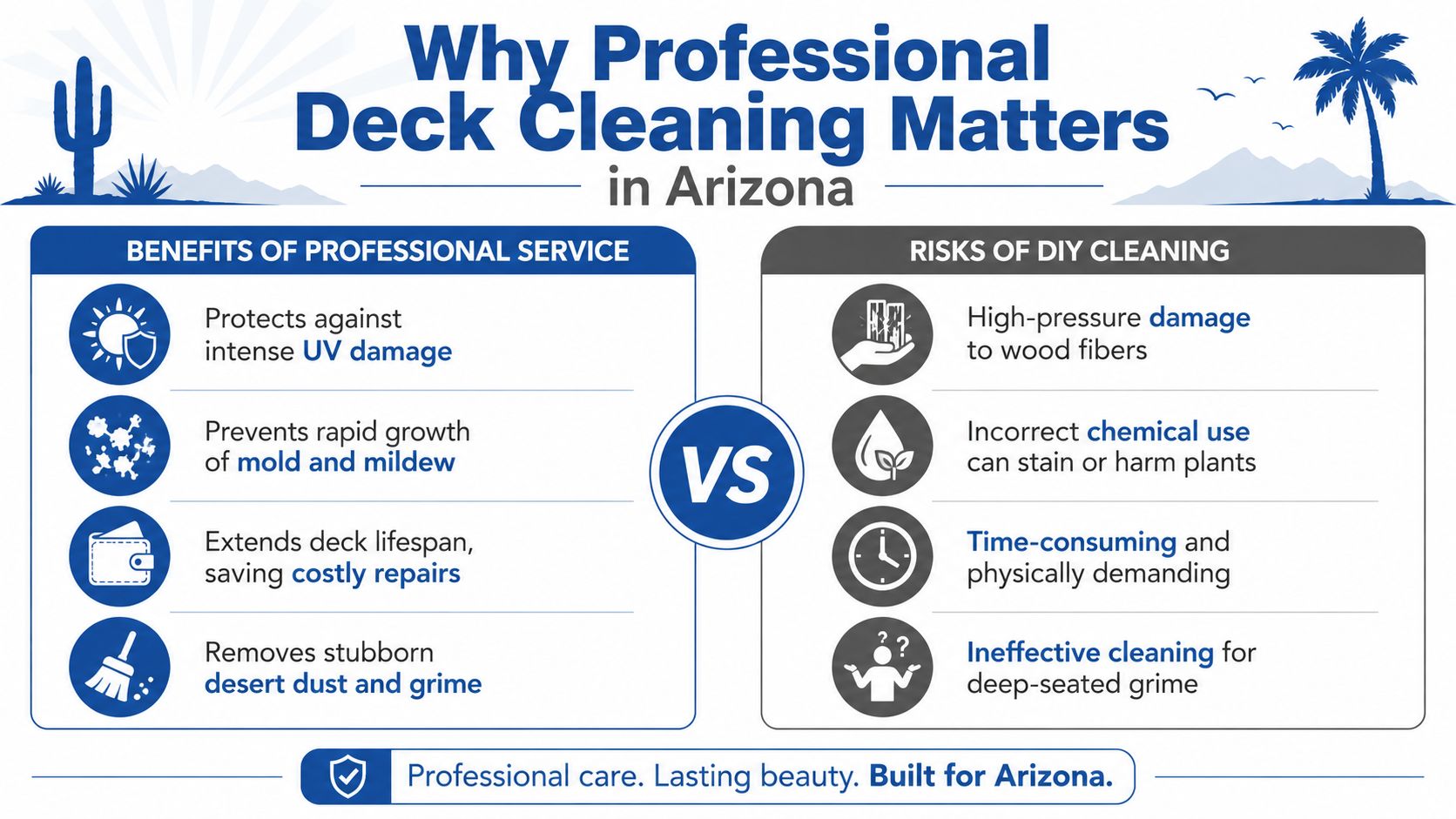
Clean decks hold finishes better
When a deck is coated in embedded dust and residue, sealers and stains don't bond evenly. Some areas absorb product too fast. Others reject it. That's when homeowners see blotchy color, premature peeling, or a finish that looks tired again far too soon.
Professional cleaning matters because it removes the contamination that keeps protective products from doing their job. That's especially important in the Valley, where UV exposure punishes any weak spot in the coating.
Safety is part of the job
Monsoon season doesn't just dirty a deck. It can create slick areas around rail posts, under planters, and in shaded transitions near stucco walls or patio covers. Those spots don't always look dramatic, but they're where slips happen.
A proper service targets the organic film and residue that make a deck feel slick under bare feet or smooth-soled shoes. Surface cleaning should improve traction, not just color.
On Arizona decks, the surface can look dry and still be holding grime, salts, and organic residue that interfere with both safety and finish performance.
Arizona decks need surface-specific treatment
The biggest mistake in deck cleaning is treating every material the same. Wood isn't composite. Newer capped boards aren't old painted lumber. A contractor who cleans concrete all day but approaches your deck with the same setup can do expensive damage fast.
Professional cleaning earns its keep in three places:
Material matching
The operator adjusts pressure, tip selection, and dwell time to the actual decking product.Chemical control
The cleaning mix has to remove buildup without leaving residue that interferes with future sealing or harms nearby landscaping.Finish preservation
On a deck that still has serviceable stain or sealer, the goal is cleaning without stripping more than necessary.
Homeowners often focus on appearance first, but the primary value is preservation. A clean deck is easier to inspect, easier to maintain, and easier to protect before the next stretch of dry heat.
Understanding Deck Pressure Washing Costs
Deck cleaning prices in Phoenix vary for one simple reason. Two decks with the same square footage can require very different work once you factor in material, sun damage, embedded dust, railing detail, and whether the surface is being cleaned for maintenance or prepped for a new finish.
In Arizona, climate adds labor. Fine desert dust settles into board texture, UV exposure dries out wood fibers, and heat can make older coatings brittle. That changes how aggressively a contractor can clean and how long the job takes.
What drives the final quote
Square footage still matters, but it is rarely the whole story. A 300 square foot ground-level composite deck with open access usually prices differently than a 300 square foot wood deck with stairs, vertical balusters, furniture to move, and worn stain that needs careful treatment.
The biggest pricing factors usually include:
- Deck material: Wood often needs lower pressure, more rinse control, and more attention to grain raise. Composite needs product-specific handling because capped boards and older uncapped products do not clean the same way. Homeowners comparing brands such as TimberTech vs Trex should know those material differences can also affect service approach.
- Condition of the surface: Light dust is one thing. Embedded grime, sunscreen residue, grease near grills, hard water deposits, and organic staining add time.
- Layout and access: Stairs, skirting, built-in seating, and tight side-yard hose access increase labor.
- Current finish: A deck with remaining sealer or stain has to be cleaned in a way that avoids uneven removal if the owner is not refinishing right away.
- Cleaning goal: Maintenance washing is different from prep for staining. Prep work usually demands more detail because missed residue can interfere with coating adhesion.
If you want broader context beyond decks alone, this guide to pressure washing costs in Phoenix helps explain how local labor, access, and surface type affect exterior cleaning estimates.
Estimated Deck Cleaning Costs in Phoenix 2026
| Deck Size | Average Cost (Wood) | Average Cost (Composite) |
|---|---|---|
| Up to 300 sq ft | $100 to $200 | $100 to $150 |
| Around 700 sq ft | $200 to $300 | $200 to $300 |
| Around 1,000 sq ft | $300 to $400 | $300 to $400 |
These ranges reflect common residential pricing benchmarks previously cited in this article. Actual quotes in Phoenix often land higher or lower based on access, buildup, and whether the deck needs a true low-pressure wash, a soft wash treatment, or careful prep ahead of sealing.
How to read a low quote
Low pricing can mean the contractor is efficient. It can also mean the bid skips the slow parts that protect the deck.
On Arizona wood decks, that usually means too much pressure, too little dwell time from the cleaning solution, and no real attention to shaded corners, rail bases, or transitions near stucco. On composite, it can mean visible wand marks or surface etching if the operator treats the boards like concrete.
A useful estimate should tell you three things clearly. What material the deck is made from. What condition the contractor observed. What cleaning method they plan to use.
If the quote says little more than "pressure wash deck," treat that as a warning sign. A real deck pressure washing service should account for the surface, the climate, and the level of finish protection the deck still has left.
The Professional Soft Wash Process Explained
The best deck cleaning work often looks less dramatic than homeowners expect. There's no need for aggressive blasting when the process is built correctly. On most residential decks, the job is part inspection, part chemistry, and part controlled rinsing.
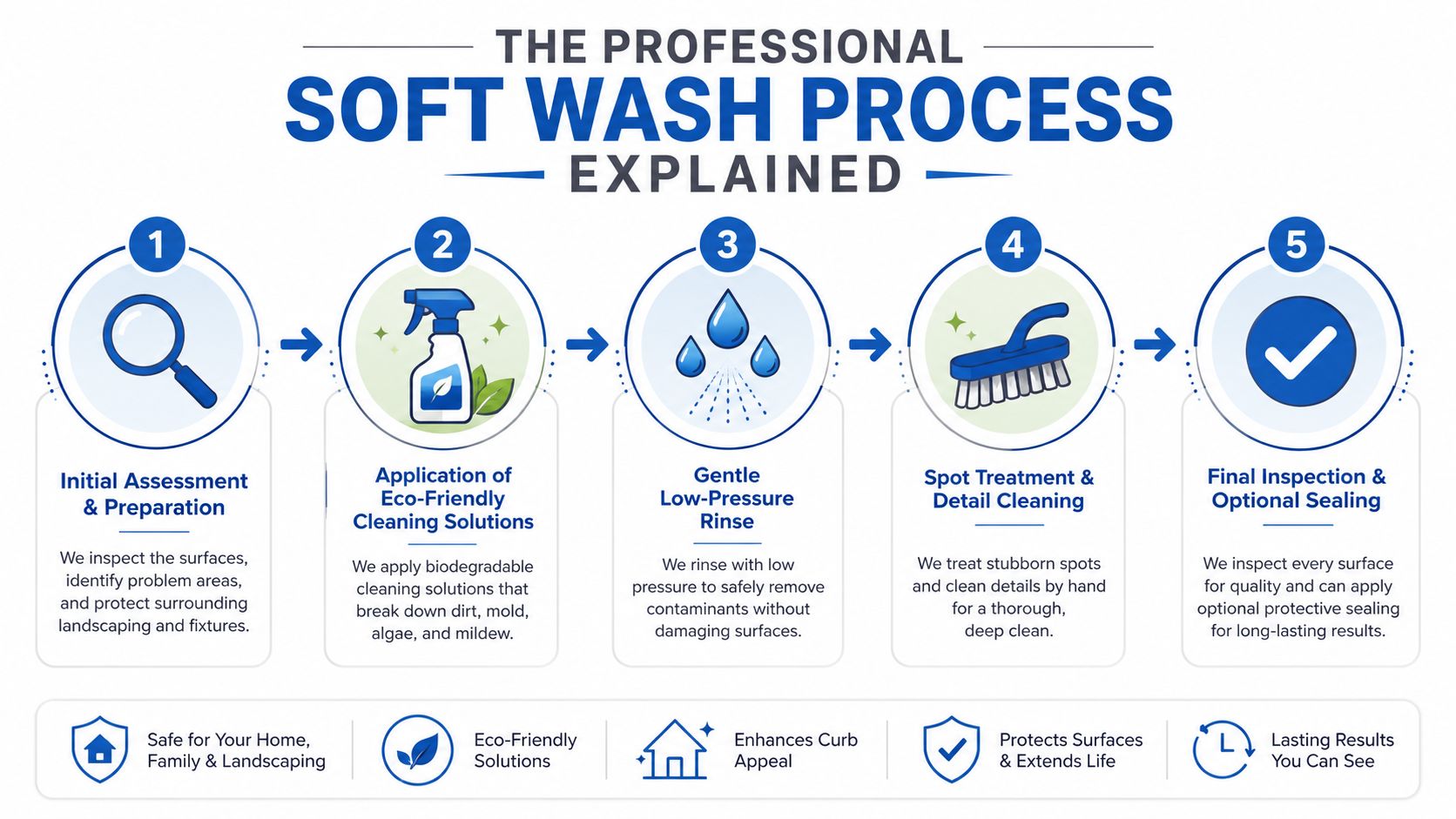
Step one starts with the deck, not the machine
A technician should inspect the deck before spraying anything. That means checking for splintering boards, popped fasteners, failing stain, sun-brittle wood, and any nearby surfaces that need protection. Composite products also need identification because some tolerate more pressure than others.
A professional decides whether the deck needs true pressure washing, a soft wash process, or a hybrid approach. For many wood decks, the safest path is a cleaning solution first and water pressure second.
Chemistry does the heavy lifting
A good soft wash process relies on cleaning agents to loosen grime, treat organic growth, and reduce how much pressure is needed. The most practical prep method for staining uses a two-stage chemical protocol, beginning with a caustic cleaner such as sodium percarbonate and then an acidic wood bleach such as oxalic acid to remove stains and neutralize the surface, as described in this deck prep discussion on chemical cleaning and neutralization.
That matters because high pressure alone tends to scar wood. Chemical cleaning lifts the contamination so the rinse can stay controlled.
Here's a useful breakdown of pressure washing vs soft washing for Phoenix homes if you want to understand why these methods shouldn't be treated as interchangeable.
Pressure settings have to match the material
For standard softwood decking, the technical benchmark for safe pressure washing is 400 to 800 PSI using a 40° fan tip, and going beyond 1000 PSI can cause irreversible fiber shredding. Non-porous composite can withstand up to 2500 PSI, according to this safe deck pressure washing guide from Tanzite.
That's the difference between cleaning and cutting. Water under pressure is still a cutting tool. On softwood, too much force tears up the surface and leaves the wood furry and scarred.
Later in the process, rinse quality matters too. The EPA minimum flow rate noted for deck washing is 2.0 gallons per minute to rinse cleaning agents effectively and reduce residue concerns around soil and plants, as referenced in this EPA-related flow-rate note.
A short visual helps if you want to see how a soft wash setup compares in practice.
The finish work is where pros separate themselves
After the main wash, detail work handles corners, rail bases, stair edges, and any remaining spots. Then comes a final inspection for residue, raised grain, and uneven drying.
If you're still deciding between decking materials, this comparison of TimberTech vs Trex is worth reading because maintenance needs start with the product installed. Composite decks are often easier to preserve, but they still need the right pressure cap and tip selection.
DIY Deck Cleaning vs Hiring a Professional
DIY deck cleaning appeals to a lot of homeowners for a simple reason. Renting a machine sounds cheaper than paying for service. Sometimes it is, at least on the invoice you see that day. The problem is that rental equipment and online advice often push people toward pressure levels and techniques that are too aggressive for deck materials.
The pressure washing industry in the United States includes about 75,000 active contractors, according to Housecall Pro's industry statistics. That tells you something important. Exterior cleaning is specialized work, not just “spray dirt off surface” labor.
Where DIY goes wrong
The most common homeowner mistakes are easy to spot afterward:
- Holding the wand too close: This creates wand marks and uneven streaking.
- Using too narrow a tip: Concentrated spray cuts wood fibers instead of rinsing them.
- Skipping pre-treatment: Dirt stays embedded, so the user compensates with more pressure.
- Overlapping badly: The deck dries with visible cleaning passes.
- Ignoring nearby surfaces: Overspray can hit windows, stucco, painted trim, and plants.
On older wood decks, the damage can be immediate. The surface gets fuzzy, rough, and harder to stain evenly. On composites, the issue is often scarring or surface wear that doesn't blend back in.
What homeowners are really paying for
Hiring a professional isn't just about convenience. You're paying for material recognition, pressure control, chemical handling, setup discipline, and a process designed to preserve the surface.
That value shows up in practical ways:
- Less risk to the deck itself
- Better protection for nearby landscaping and exterior finishes
- Faster completion
- A surface that's ready for sealing, staining, or normal use
For homeowners weighing the difference between a rental unit and a surface-specific cleaning approach, this page on professional deck power washing is a solid reference point.
A deck can survive being dirty for a while. It may not recover cleanly from one bad afternoon with the wrong pressure washer.
DIY makes sense for very light maintenance on durable surfaces when the homeowner understands nozzle selection, spray distance, and chemical compatibility. For sun-worn wood, older coatings, or premium composite decking, professional work is usually the safer and less expensive decision over time.
Choosing a Trusted Phoenix Deck Cleaning Contractor
The right contractor should make you confident before the machine ever starts. That confidence comes from how they answer questions, how specific their estimate is, and whether they understand that deck cleaning in Phoenix is about preservation, not just speed.
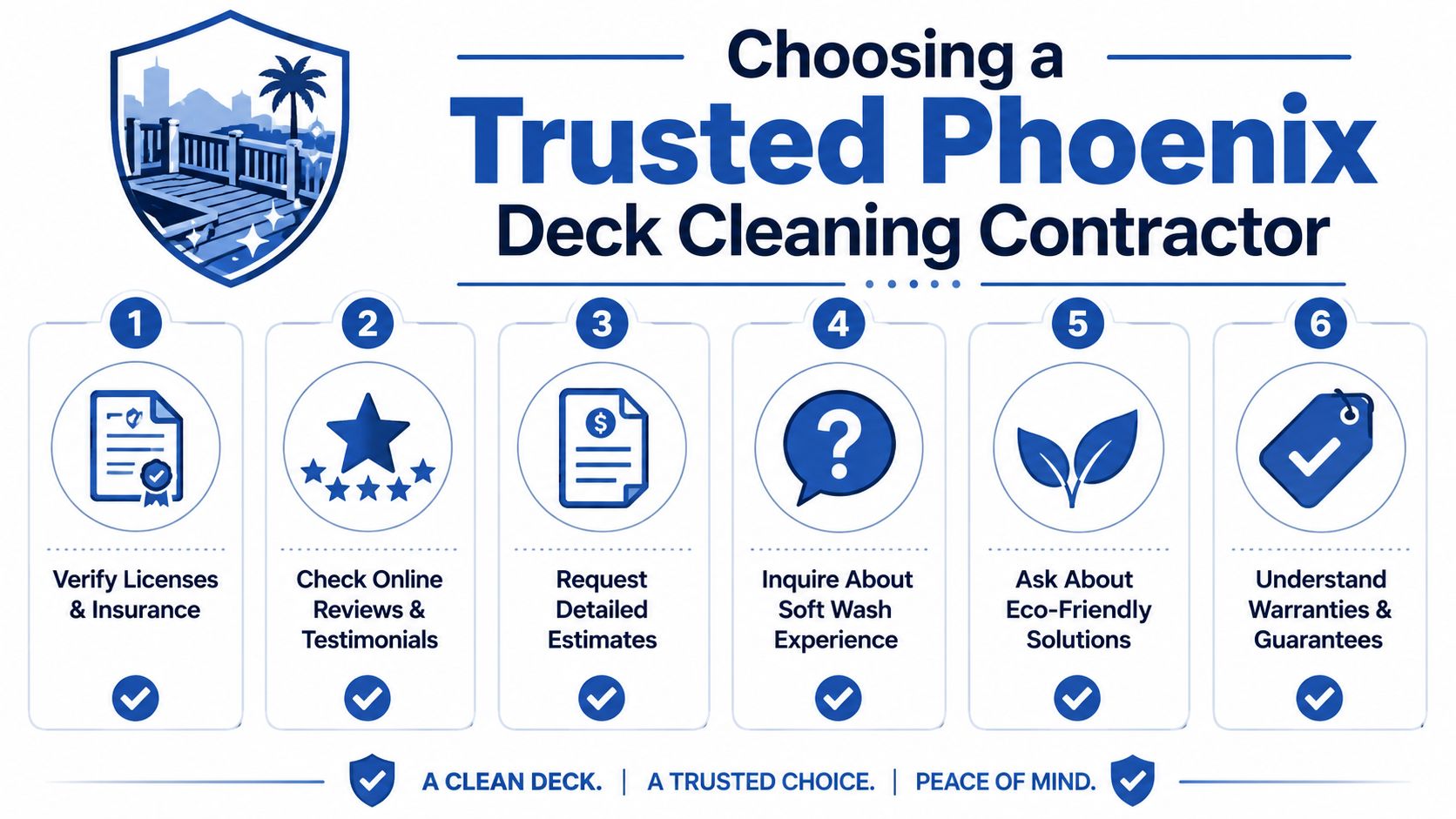
Industry data shows that 68% of deck cleaning complaints stem from surface damage caused by improper pressure settings, based on this contractor FAQ discussing deck cleaning complaints. That single point should shape how you vet companies. If they can't explain pressure by material, keep looking.
Questions worth asking before you book
A strong screening conversation should include these points:
How do you clean wood versus composite?
If the answer is vague, the process probably is too.What nozzle and pressure range do you typically use?
You don't need a lecture, but you should hear material-specific reasoning.Do you use a soft wash process when needed?
This matters on softwood, older decks, and surfaces being prepped for stain.How do you protect landscaping and adjacent surfaces?
Good contractors plan runoff, overspray, and rinse control.Are you licensed, bonded, and insured?
That's basic protection, not a bonus.
What good professionalism looks like
In Phoenix-area service work, details matter. Look for a contractor with clear communication, local project history, and enough experience to talk specifically about Valley conditions in places like Scottsdale, Chandler, and Gilbert.
A serious exterior cleaning company should also carry real insurance coverage. South Mountain Window Cleaning, for example, operates with a $2 million insurance policy according to its published company information. That's the level of protection homeowners and property managers should expect from a professional service provider.
The safest contractor usually isn't the one who promises the most power. It's the one who talks first about the surface.
Review their photos closely. A clean deck should look even, not striped. Railings should be addressed with care. The boards shouldn't appear chewed up or furry. Professional results are obvious when you know what damage looks like.
Frequently Asked Questions About Deck Washing
How often should a deck be cleaned in Phoenix
Phoenix decks usually need a maintenance cleaning at least once a year, but the right schedule depends on exposure, material, and how the space gets used.
A full-sun composite deck in Ahwatukee or Gilbert may mostly collect dust, blown grit, and sunscreen residue, so an annual wash is often enough if the homeowner rinses it down between visits. A wood deck with shade pockets, potted plants, or irrigation overspray usually needs attention more often because damp areas hold dirt, trap organic staining, and break down coatings faster. After monsoon season, I also recommend an inspection even if the deck does not look terrible from a distance. Fine dust packs into board texture and corners, then hardens on the surface.
If the deck is prepped for sealing or staining, the cleaning should be timed to that project, not just the calendar. What to watch for is simple. Fading, gray oxidation, dark runoff lines, slippery spots near planters, and a chalky film on composite boards all mean the surface is overdue.
What should I do before the crew arrives
Clear the deck completely if you can. Furniture, rugs, grills, planters, pet bowls, and lightweight decor slow down the work and leave shadowed areas uncleaned.
Homeowners in Phoenix should also point out a few things before we start. Let the crew know if any boards are cracked, if nails or screws are backing out, if there are soft spots around posts, or if the deck has already been damaged by a previous high-pressure wash. On coated wood, I also want to know whether the stain is oil-based, water-based, or unknown, because that affects how aggressively the surface can be cleaned.
Make sure we have access to a working water connection, and keep pets and kids inside until the deck dries. If there are nearby glass doors, painted trim, or delicate plants, mention them early so rinse control and protection can be handled before the equipment is set.
Can pressure washing remove old stain or paint
It can remove loose or failing coating, but that does not mean pressure washing is the right way to strip a deck.
On sun-baked Arizona wood, trying to blast off old stain or paint with too much pressure often scars the surface before the coating is fully removed. The nozzle cuts earlywood, raises fuzz, and leaves the boards uneven. That damage shows up even more once the deck dries in the heat. What looked acceptable while wet can turn into striping, lap marks, and a rough texture that takes sanding to correct.
If the old finish is peeling in some areas and still bonded in others, a professional usually combines lower-pressure washing with the right stripper or cleaner, dwell time, agitation, and a controlled rinse. That takes longer, but it preserves the boards. The thing to watch out for is any contractor who says they will remove all paint or stain with pressure alone on older wood. In this climate, that is often how expensive prep work turns into permanent surface damage.
Is composite decking cleaned the same way as wood
No. Composite decking needs its own method, and the pressure limits matter more than many homeowners realize.
Trex, TimberTech, and other composite products common around Phoenix can handle dust, food spills, and monsoon grime well, but they still scratch, stripe, or etch if cleaned like concrete or heavily weathered lumber. Heat also changes how these surfaces respond. A board that has been baking in direct sun all afternoon is not something I want to hit aggressively. We usually work with lower pressure, wider fan tips, and cleaners suited to the manufacturer guidance and the level of buildup.
Wood has a different set of concerns. Softwood can fur up quickly. Older boards may have checked grain, loose fibers, or weak coating adhesion from UV exposure. Composite does not absorb stain the way wood does, but it does hold fine desert dust in embossing and surface texture. The tip for homeowners is to identify the deck material before anyone starts cleaning. "Deck washing" is one category. The safe process is material-specific.
If your deck, windows, house exterior, or commercial property needs professional attention in the Valley, South Mountain Window Cleaning, LLC serves Phoenix, Scottsdale, Paradise Valley, Chandler, Tempe, and Gilbert with residential, commercial, and high rise window washing services, plus exterior cleaning support for Arizona properties that take a beating from dust, heat, and sun. If you want responsive scheduling, experienced technicians, and a company that understands how to protect exterior surfaces instead of just spraying them, they're a strong local choice.