
You walk outside the morning after a windy day in Phoenix, and the dust is everywhere. It's on the patio furniture, the windows, the car, and if you've got rooftop solar, it's sitting on the panels too. A lot of homeowners start searching for solar panel maintenance near me right at that moment, usually after noticing the array looks dirty and wondering whether that layer of grime is part of the reason the power bill feels higher than expected.
That question is worth taking seriously in Arizona. Solar is a long-term asset, and the Valley's mix of dust, hard water, bird activity, and monsoon mess makes panel upkeep more local than most generic solar articles admit.
Why Your Solar Panels Need Attention in Arizona
A Phoenix roof can look fine from the driveway and still have enough dust on the panels to cut into production. I see that all the time after a windy week, especially in areas closer to open desert, new construction, or busy roads where fine grit keeps settling back onto the glass.
Arizona is hard on exterior surfaces. Solar panels deal with airborne dust, bird droppings, hard water spotting, intense UV, and monsoon runoff that rarely dries clean. According to CNET's solar panel maintenance guide, panels lose some output over time from normal aging alone. When soiling gets added on top, homeowners can end up with avoidable performance loss on a system they expect to use for decades.
Dust in Phoenix is not just a visual issue
After a haboob, the problem usually is not one dramatic pile of dirt. It is a thin, even film across the whole array, plus a few heavier trouble spots where droppings, pollen, or mineral residue stick. That mix matters because light has to pass through the glass cleanly for the system to perform the way it should.
Rain does not always solve it here.
A light monsoon shower can leave behind mud specks and hard-water style spotting, especially if the panels were already dusty before the storm. If someone tries to rinse them with untreated hose water at the wrong time of day, the surface can dry with more residue than it started with. In Phoenix, panel cleaning is often less about making the array look better and more about preventing grime from baking on through weeks of heat.
Practical rule: If your windows, skylights, and patio furniture are wearing a dust film, your panels are too.
Arizona homeowners need local judgment
The search for solar panel maintenance near me matters because service needs change from one part of the Valley to another. A home in Ahwatukee near open desert gets different dust exposure than a tighter neighborhood in Central Phoenix. North Scottsdale homes often deal with blowing grit and longer dry stretches. Tempe and Mesa properties can have their own mix of traffic film, birds, and hard water spotting. Roof pitch, panel angle, tree cover, and whether the system gets hit by afternoon sun all change how buildup behaves.
That is also why generic advice misses the mark in Arizona. You need a maintenance plan that accounts for haboobs, long dry periods, and the fact that monsoon season can dirty panels as easily as it rinses them.
If you want a clearer sense of whether dirt may be affecting output, this explanation of solar panel efficiency loss gives helpful context. And if you are comparing solar-related home expenses more broadly, some Arizona homeowners are also weighing solar pool heating costs because our climate puts steady pressure on outdoor systems year-round.
How to Choose a Professional Solar Panel Cleaner
The fastest way to waste money is to hire the first company that says they “also do solar.” Panels need the right cleaning method, the right safety approach, and a technician who understands the difference between washing exterior glass and handling a rooftop power system.
A good cleaner should be comfortable answering detailed questions. If the answers are vague, move on.
What to verify before you book
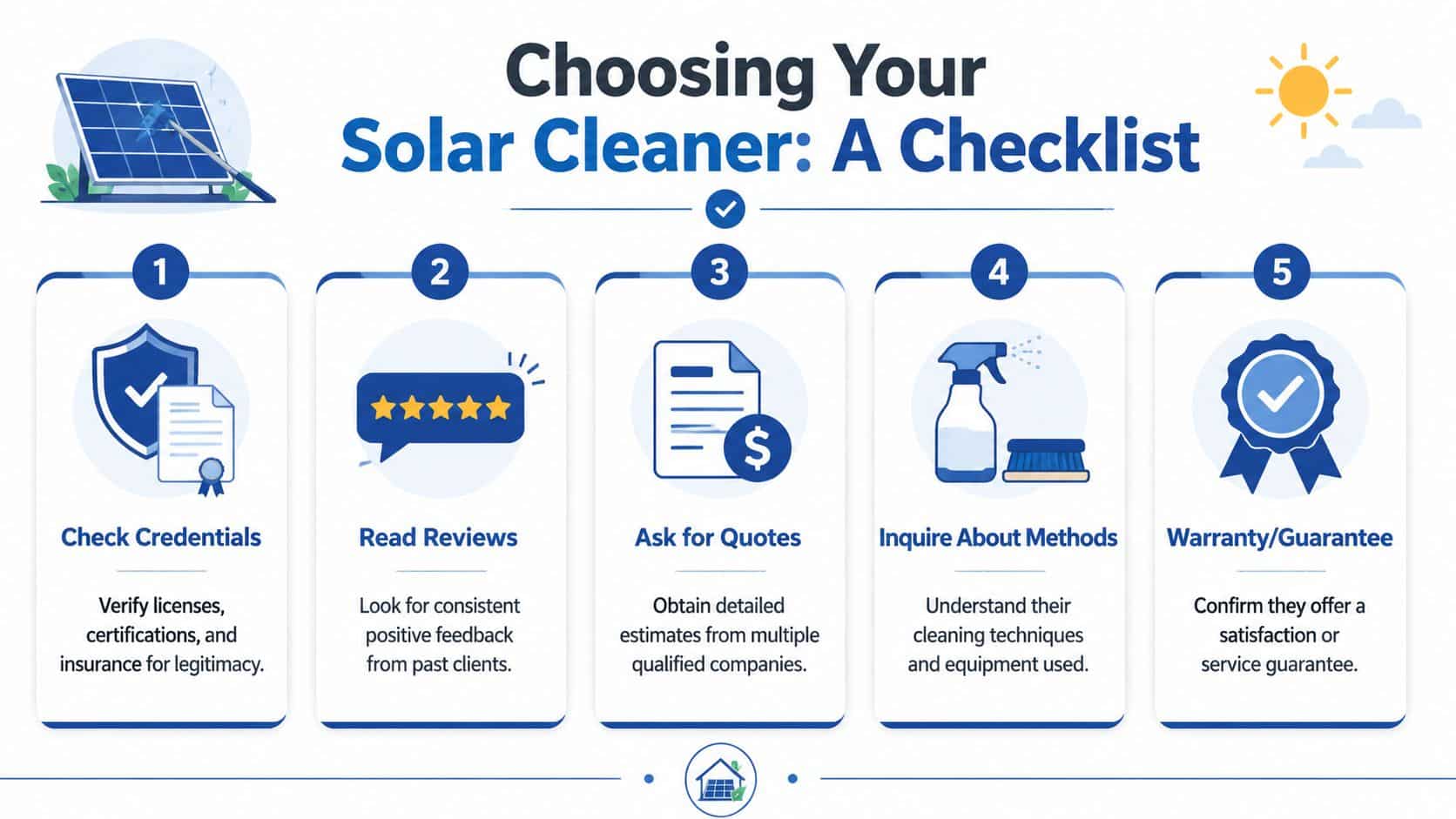
Use this short checklist when you're comparing local companies:
- Confirm insurance and business legitimacy. You want a company that's licensed where required, properly insured, and used to working on roofs. If a company can't clearly explain coverage, that's a red flag.
- Read reviews for specifics. Look for comments about punctuality, roof care, communication, and whether the panels were left spot-free. General praise is nice. Detailed praise is more useful.
- Ask how they clean. A professional should be able to explain their tools clearly. Soft-bristle equipment, controlled water use, and spotting prevention matter in Arizona.
- Request a written quote. It should describe what's included, such as visual inspection, cleaning method, and whether difficult roof access changes the price.
- Ask about a service guarantee. You want to know what happens if spotting remains or if a concern is noticed during the visit.
Questions that separate pros from pretenders
Some questions immediately tell you how experienced a company is.
Ask whether they use purified or deionized water to reduce spotting. Ask whether they walk every roof or work from safer access points when possible. Ask what they do if they see loose conduit, nesting debris, or visible panel damage. A real pro won't brush those questions aside.
If a contractor's answer is basically “we spray them off and scrub if needed,” keep looking.
If you're evaluating vendors the same way you would for another home system, this guide on finding the best HVAC company in Tucson is a good example of how to think through reviews, estimates, and service standards. The categories are different, but the hiring logic is similar.
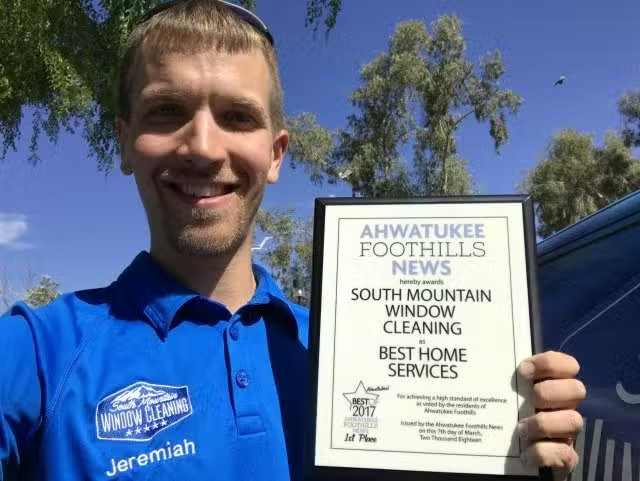
For Phoenix-area homeowners who want to compare a dedicated local option, solar panel cleaning in Phoenix, AZ gives a useful reference point for what a specialized service looks like. South Mountain Window Cleaning, LLC is one local company that offers solar panel cleaning as part of broader exterior cleaning work, using professional water-fed equipment rather than improvised DIY methods.
Red flags to watch for
A few warning signs show up over and over:
| Warning sign | Why it matters |
|---|---|
| Cash-only quote with no scope | Hard to hold anyone accountable |
| No mention of roof safety | Suggests poor training or shortcuts |
| Pressure washer language | Increases risk of damage |
| No discussion of spotting | Important in Phoenix hard-water conditions |
| No inspection component | Misses obvious issues beyond dirt |
The Professional Solar Panel Maintenance Process
A proper service call starts before any water touches the panels. The first thing a technician should do is assess access, roof condition, visible debris, and any obvious hazards. If the homeowner has monitoring, production data can help show whether the issue looks like soiling or something else.
Industry guidance supports an inspection-first workflow: monitor production if available, visually inspect for debris or damage, check inverter status, and clean only after that review. It also notes that cleaning is often needed only about twice per year in typical conditions, as outlined in this DIY solar installation and maintenance guide from GoGreenSolar.
What a good appointment looks like
On a Phoenix home, the process usually moves like this:
- Initial visual check. The technician looks for dust buildup, droppings, leaf litter, shading, and signs of cracked or shifted components.
- System review. If the inverter is accessible, they check status indicators and note whether the homeowner has seen production alerts.
- Controlled cleaning. The panels are cleaned with soft equipment and careful water application, not aggressive scrubbing.
- Final walk-through. The technician checks for missed spots, runoff concerns, and anything the homeowner should monitor.
While a panel can be dirty, dirt isn't always the sole issue. A maintenance visit can also reveal loose hardware, pest activity under the array, damaged wiring covers, or debris trapped at the edges.
Why equipment changes the result
Homeowners often assume a hose and a long brush should do the job. Sometimes that creates a bigger mess, especially in Arizona where mineral-heavy water can dry into visible spotting. Professional setups are more controlled. Soft-bristle water-fed poles, purified water, and safer access methods produce a cleaner finish without grinding grit across the panel surface.
There's also a judgment component. A trained technician knows when a panel needs cleaning and when the bigger concern is electrical or structural. If roof work is involved because the array needs to come off for repairs, resources like Hail King Professionals' solar panel guide can help homeowners understand where cleaning ends and specialized solar or roofing work begins.
A good maintenance visit should leave you with cleaner panels and a clearer picture of the system's condition.
DIY Solar Panel Care and Safety Tips
A Phoenix homeowner usually notices the problem after a haboob. The array looked fine last week, then a dust storm rolls through, the panels get coated, and now the question is whether to climb up and handle it yourself. Sometimes a little DIY care makes sense. A lot of the time, the safer choice is to stay on the ground and keep the job small.
Arizona adds a few complications that generic solar advice skips. Fine desert dust can act like grit if you scrub it. Intense afternoon heat can flash-dry water on the glass. Monsoon moisture can leave muddy residue instead of a clean rinse.
For most homeowners, DIY maintenance should mean observation first and light cleaning only if the setup is easy to reach and the risk stays low.
What you can safely do
A careful homeowner can handle a few basic tasks without turning routine upkeep into roof or panel damage:
- Watch production trends. If output drops after a dust event, that gives you a better reason to inspect than appearance alone.
- Inspect from the ground. Look for bird droppings, blown leaves, or a uniform layer of dust. Binoculars help on two-story homes.
- Clean in cool hours. Early morning works better in Phoenix because the panels and roof surface are not heat-soaked yet.
- Use gentle tools. A low-pressure hose and a soft, long-handled brush are usually the upper limit for DIY cleaning.
- Know when to stop. Steep tile roofs, second-story access, and tight rooflines are where a simple chore becomes a fall risk.
If you want a basic rundown before deciding whether to do any of this yourself, this guide on how to clean solar panels covers the fundamentals.
What not to do
The biggest DIY mistakes in Arizona usually come from trying to clean too aggressively or at the wrong time of day.
Sunrun advises homeowners to turn the system off, use a low-pressure hose and a long-handled soft-bristle brush, avoid pressure washers, and notes that professional cleaning often costs about $5 to $15 per panel, with a 20-panel system commonly landing around $100 to $300, according to the Sunrun solar panel cleaning guide.
Avoid these common errors:
- Using a pressure washer. High pressure can force water into places it should not go and can damage seals.
- Scrubbing with abrasive pads or stiff brushes. Arizona dust already contains fine grit. Hard scrubbing can grind that into the surface.
- Applying harsh cleaners. Strong chemicals can leave residue and create more cleanup problems than they solve.
- Finishing with hard tap water on a hot panel. In Phoenix, mineral spotting is common, especially in summer.
- Walking a wet, hot, or fragile roof. Concrete tile, foam roofs, and steep pitches deserve extra caution.
A cheap cleaning attempt gets expensive fast if it leads to a cracked tile, water intrusion, or damaged panel hardware.
DIY vs professional solar panel cleaning
| Factor | DIY Cleaning | Professional Service |
|---|---|---|
| Safety | Depends on roof height, pitch, and access | Better choice for steep, high, or awkward roofs |
| Cleaning tools | Usually limited to hose and soft brush | Often includes purified water and purpose-built equipment |
| Spotting risk | Higher with Phoenix tap water | Lower with water that dries cleaner |
| Inspection value | Limited to visible dirt and debris | Better for catching mounting issues, pest activity, or edge buildup |
| Time and effort | Takes your time and your ladder use | Scheduled service with less homeowner risk |
| Best use case | Light upkeep on easy-access systems | Heavy dust after haboobs, monsoon residue, bird mess, or difficult roof layouts |
Your Solar Maintenance Plan for Dust and Monsoon Season
Arizona solar maintenance works best on a seasonal rhythm, not a generic calendar copied from another state. Here, dust storms can coat panels in a single event, and monsoon rain can help in one sense while still leaving behind residue that needs proper cleaning.
What Phoenix weather does to panels
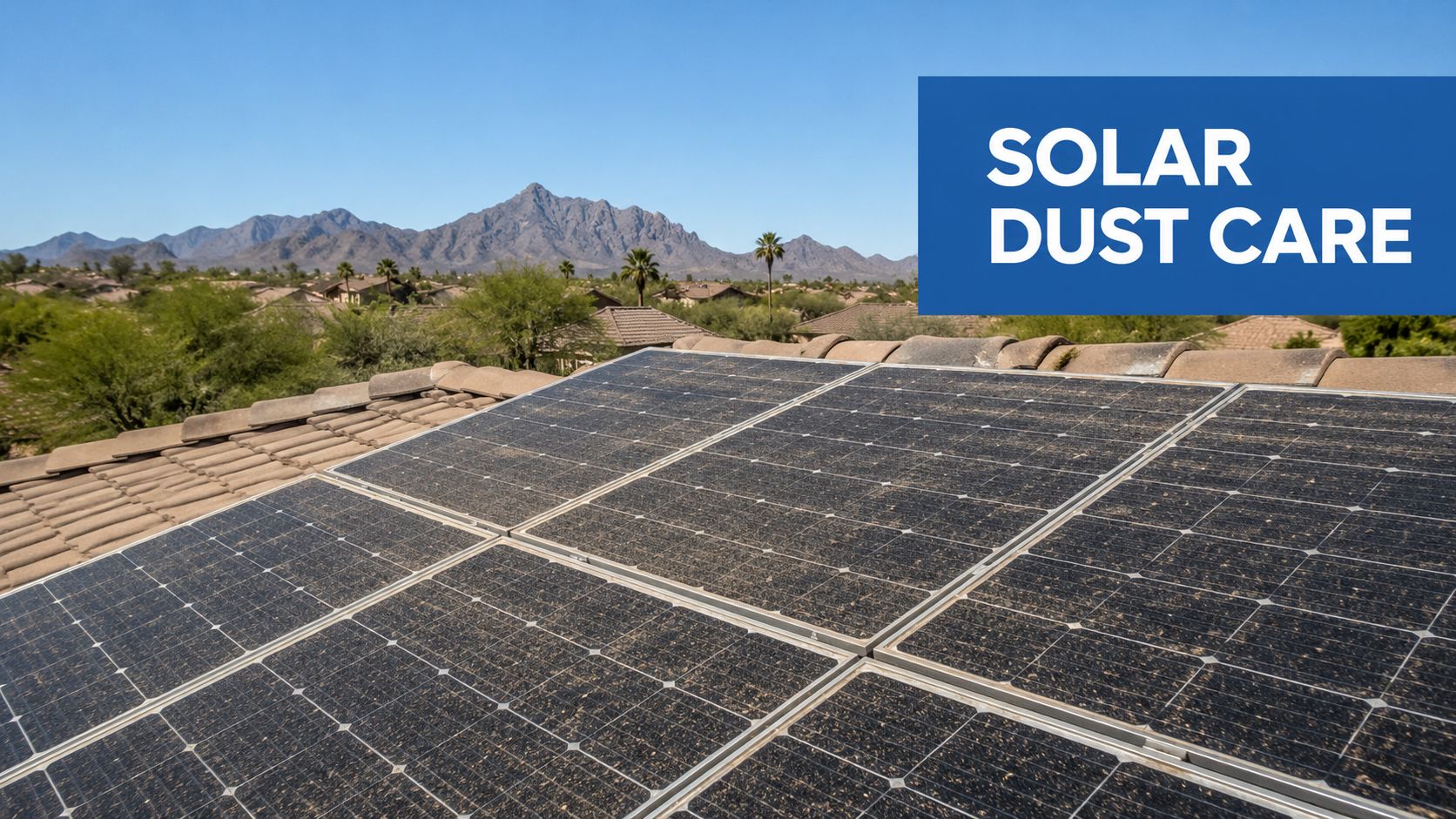
Haboobs leave fine dust across the full array, not just in corners. That dust can cling, especially if there's any moisture or oily residue already on the surface. Then monsoon season arrives, and people assume rain solved the problem. Sometimes it helps. Often it just rearranges the dirt.
Low-tilt panels are especially prone to uneven rinsing. Water can dry before it sheets off cleanly, which leaves spotting and streaking. Add hard water from an attempted hose rinse, and the panel may look worse after a well-meant cleanup.
A simple local schedule that makes sense
For most homeowners in the Valley, a practical plan looks like this:
- After major dust events. Check the array visually and compare production if your system provides monitoring.
- After monsoon season. Schedule a deeper cleaning if residue, spotting, or caked dust is visible.
- Before peak summer demand. Clean panels if they're visibly dirty and you want the system working as cleanly as possible during intense heat.
The right trigger is usually the combination of visible soiling plus output behavior, not a rigid date on the calendar.
This short video gives a helpful visual overview of how maintenance decisions connect to panel condition in actual use.
Don't let rain make the decision for you
One of the biggest mistakes Arizona homeowners make is assuming monsoon rain counts as a professional cleaning. It doesn't. Rain can loosen surface dust, but it doesn't inspect hardware, remove stubborn droppings, or address mineral residue. In Phoenix, weather creates the need for maintenance. It rarely replaces it.
Answering Your Top Solar Maintenance Questions
A common Phoenix call goes like this. The panels looked fine in May, a haboob rolled through in July, monsoon rain hit a week later, and now the homeowner is unsure whether the array is clean or just evenly dirty. In Arizona, that middle ground is common. Fine dust can leave a light film that is hard to spot from the ground, while runoff can dry into mineral residue around the lower edge of the glass.
The better question is not, “Do solar panels always need regular cleaning?” It is, “What changed on this roof since the last clear baseline?” In practice, the useful clues are sudden visible streaking after rain, a ring of buildup along the frame, fresh bird droppings on a small section of the array, or a production dip that does not match the weather. Monitoring output is often a better signal than booking service on a rigid calendar, as noted in this guide on solar maintenance and repair.
Warranty concerns usually come down to method and documentation. Arizona roofs get brutally hot, and the wrong approach can create avoidable problems, especially if someone scrubs dry grit across hot glass or uses untreated hard water that leaves spotting behind. Homeowners who want a clear sense of local pricing before they schedule anything can review this Phoenix guide on the cost to clean solar panels.
One Arizona-specific point often gets missed. Monsoon season does not just dirty panels. It can also reveal weak spots. I have seen dust pasted into corners where water does not sheet off cleanly, and that residue tends to hang on until someone cleans it properly. Haboobs, intense sun, and mineral-heavy water create a different maintenance pattern here than generic national articles assume.
If you want a straightforward opinion on whether your panels need service, South Mountain Window Cleaning, LLC can assess visible buildup and explain practical next steps for homes in Phoenix, Scottsdale, Paradise Valley, Chandler, Tempe, and Gilbert.