

For most trees, the best time to trim trees is the dormant season, especially late winter to early spring, with many guides placing that window around November through March. In Phoenix, though, that general rule needs a desert adjustment because extreme sun, monsoon weather, and common local trees don't always respond the way a generic national guide assumes.
If you're standing in your yard looking at a shaggy palo verde, a low mesquite branch over the driveway, or citrus growth crowding a walkway, you're asking the right question before making a single cut. Timing matters because pruning isn't just about making a tree look cleaner. It affects stress, structure, shade, safety, and the overall look of the property.
That matters for curb appeal more than people realize. Clean windows make a house look brighter, but the frame around the house matters too. A well-shaped tree can make an entry feel tidy and intentional. A badly timed pruning job can leave the yard looking scalped, sunburned, or uneven for months.
Matching Your Pruning Schedule to the Arizona Sun
A lot of Phoenix homeowners get caught in the same moment. The tree looks overgrown now, the weather feels decent today, and the tools are right there in the garage. That doesn't always mean now is the right time to prune.
The standard baseline is winter dormancy. A commonly recommended window for most trees is November through March, with late winter to early spring usually giving the best balance of visibility, healing, and reduced stress, according to Montana State University Extension pruning guidance.
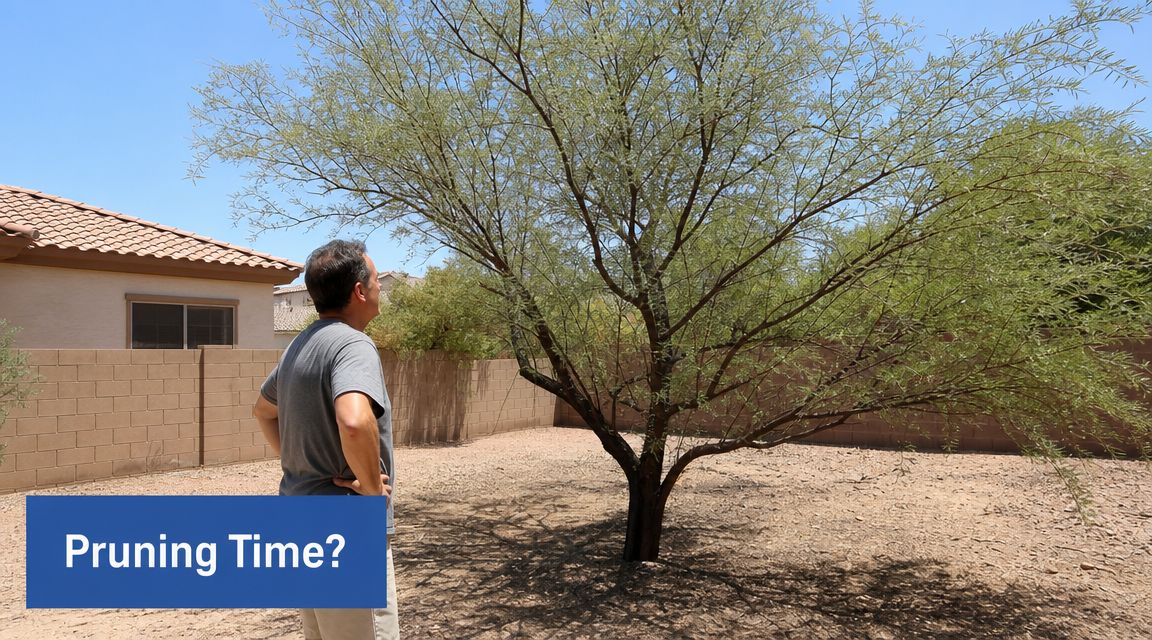
Phoenix adds a few complications. Trees here deal with long dry stretches, reflective heat from block walls and hardscape, and sudden summer storms that expose weak branch structure fast. A pruning decision isn't only about biology. It's also about how that tree will handle the next blast of heat and wind.
What makes Phoenix different
Some trees in the Valley grow fast in odd directions because they're chasing light around patios, roofs, and neighboring trees. Others develop heavy outer canopies that catch monsoon wind. If you prune too aggressively at the wrong time, you can expose interior limbs and bark to more sun than they can handle.
A simple way to think about it is this:
- Use winter for planned work. Structural shaping, deadwood removal, and branch spacing usually fit best in the cooler dormant period.
- Use summer for true necessity. If a limb is cracked, dragging, or creating a hazard, safety comes first.
- Use species-specific timing when needed. Flowering, sap-bleeding, and disease-sensitive trees don't always follow the same calendar.
Local rule of thumb: In Phoenix, the best pruning schedule is the one that respects both the tree's biology and the next round of desert weather.
If you like organizing outdoor care by season, a broader annual home maintenance checklist for Arizona homes can help you line up pruning with the rest of your exterior upkeep.
Why Pruning at the Right Time Matters for Tree Health
A fresh pruning cut asks a tree to do repair work. In Phoenix, that repair job can get a lot harder fast if the tree is also dealing with blazing sun, hot reflected surfaces, and dry air. Timing matters because the same cut can be manageable in one season and stressful in another.
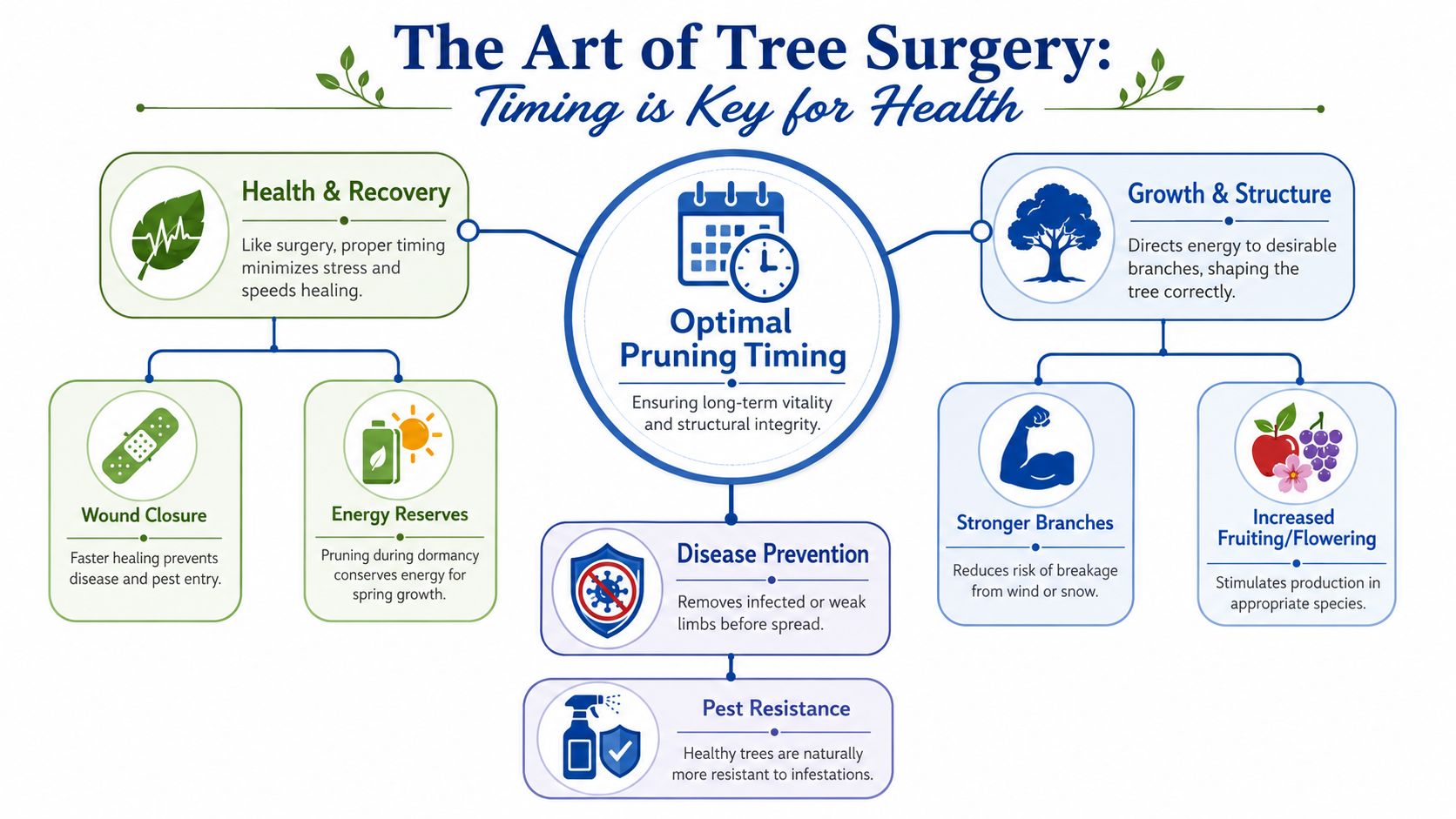
Pruning works a lot like asking someone to recover after a workout. If they are rested, hydrated, and out of the heat, recovery is smoother. If they are already worn down, every extra demand hits harder. Trees respond the same way. A Palo Verde that has to recover from heavy cuts during extreme heat may also be trying to hold moisture, protect exposed bark, and support remaining limbs at the same time.
That is why good timing is about more than appearance.
Trees recover better when stress stays low
For many trees, the best pruning window lines up with periods of lower stress and steadier growth patterns. In practical terms, that means you want to avoid piling cuts on top of harsh weather, drought strain, or active seasonal pressure.
Here is what proper timing helps you avoid:
- Excess sun exposure on inner limbs. In the desert, shaded bark can burn after sudden canopy thinning.
- Water strain after large cuts. Trees need resources to seal wounds and push healthy regrowth.
- Weak regrowth in the wrong season. Cuts made too early or too late can trigger shoots that struggle in Phoenix heat.
- Poor structure over time. Repeated random trimming can leave a tree dense at the tips and weak where branches attach.
Phoenix yards make this even more noticeable. Citrus, for example, often needs enough canopy left in place to protect fruiting wood and major limbs from sunscald. Fast-growing shade trees can push outer growth that looks full from the street but hides weak branch spacing inside. Well-timed pruning helps correct those issues before they become a curb appeal problem or a storm cleanup problem.
A tree can survive bad timing and still lose health, shape, and shade value.
For a simple plant-level explanation of how recovery slows after major cuts, this article on heavy pruning effects on plant development does a good job explaining the stress-and-repair pattern in plain language.
Good timing improves growth, not just looks
Careful pruning guides where a tree puts its energy next. That matters in a front yard, where tree shape affects how the whole property reads from the street. A canopy that is balanced, well-spaced, and suited to its spot frames the house better, lets light move where you want it, and makes the yard look cared for instead of overgrown.
That benefit is long-term. Removing rubbing branches, narrowing crowded branch unions, and correcting growth that is headed into a roofline can help a young tree mature with fewer problems later. With older trees, smart timing helps preserve the parts of the canopy that still provide shade and structure.
Here's a helpful visual overview before you grab the loppers:
A few thoughtful cuts usually do more good than a broad outer trim. The goal is a healthier canopy that fits the space, handles Phoenix conditions better, and keeps the yard looking clean and inviting.
A General Guide to Seasonal Pruning
A seasonal calendar keeps tree care from turning into a guess. Even if every tree in your yard has its own personality, the seasons still give you a useful framework.
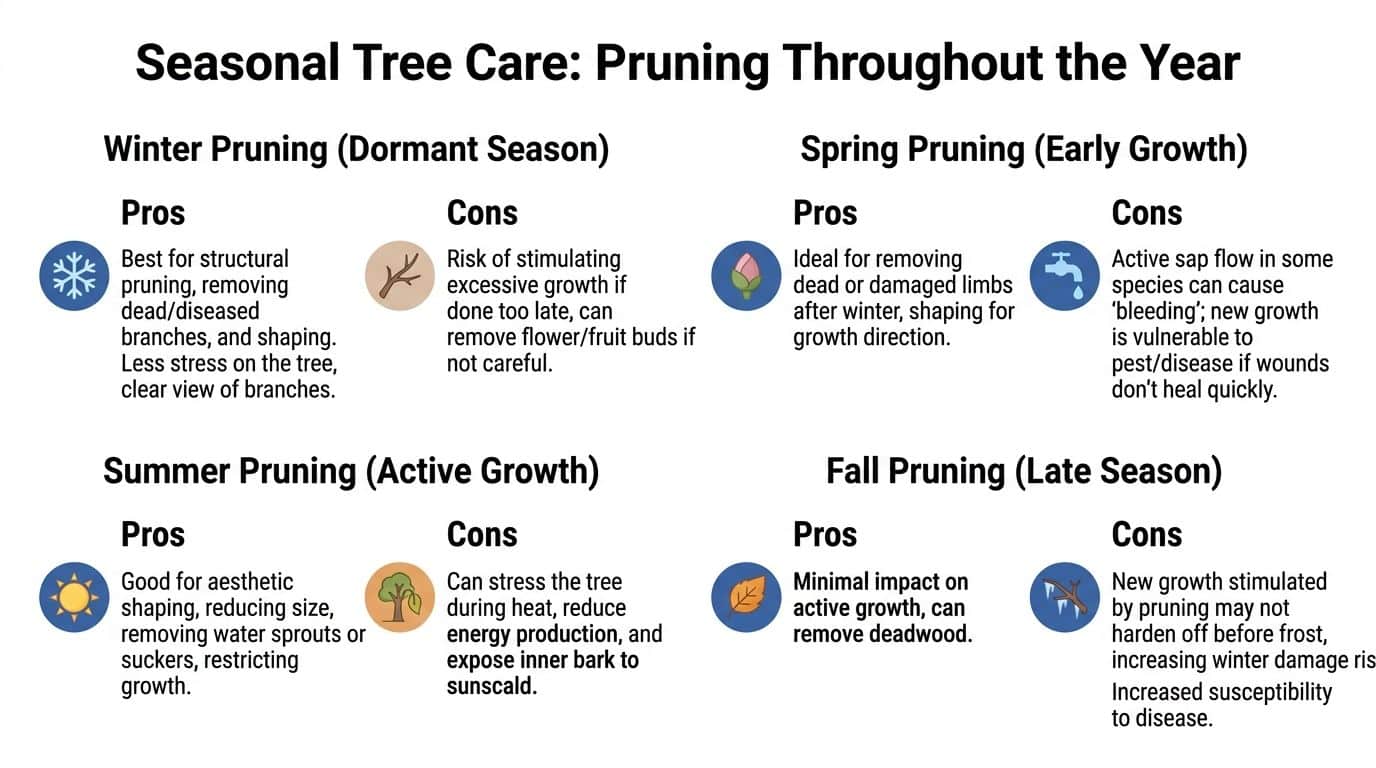
For most deciduous trees, the strongest general window is late dormancy to just before budbreak, typically February through March in many temperate settings, because leafless canopies make deadwood, structural defects, and crossing limbs easier to identify, according to Bloom A Tree's pruning timing guide. That principle is a helpful anchor even in Arizona, where local weather may shift how early or late you act.
Winter
Winter is usually the workhorse season for pruning. This is when you handle structural cuts, remove damaged limbs you've been watching, and clean up canopy problems that are harder to see once foliage fills in.
Winter is especially good for:
- Structural shaping. You can identify competing leaders, inward-growing branches, and weak crossing points.
- Deadwood removal. Bare or thinner canopies make brittle, dead material easier to locate.
- Long-term correction. Young trees benefit from careful guidance early rather than repeated heavy cuts later.
Spring
Spring is where people get themselves in trouble by treating every tree the same. Some trees are actively growing, some are blooming, and some are already under increasing heat stress in Arizona.
Spring works best for selective, lighter pruning decisions, especially after bloom on trees that flower on older wood. It's not always the season for major reshaping.
Keep in mind: If a tree is putting on tender new growth, large cuts can change how that growth develops and can leave fresh tissue more exposed than you'd like.
Summer
Summer pruning should be approached carefully in the Valley. There are valid reasons to prune in summer, but broad canopy reduction during peak heat can do more harm than good.
Summer is usually limited to jobs like these:
- Hazard response. A split limb over a driveway can't wait for ideal timing.
- Minor corrective work. Small suckers, water sprouts, or obviously broken tips may be addressed selectively.
- Post-storm cleanup. Wind damage often forces action outside the preferred calendar.
Fall
Fall looks tempting because temperatures ease up and yard work becomes more comfortable. But trees are shifting into a different phase, and that's not always the best moment to stimulate new growth with fresh cuts.
As a general calendar, fall is often the least attractive time for routine pruning. If you do anything then, keep it limited and purposeful.
Seasonal comparison at a glance
| Season | Best use | Main caution |
|---|---|---|
| Winter | Structural pruning and maintenance cuts | Don't prune blindly without considering species |
| Spring | Light cleanup and post-bloom work on some trees | Active growth can make poor timing more costly |
| Summer | Emergencies and small corrective cuts | Heat stress and sun exposure |
| Fall | Minimal routine work | Late cuts can be poorly timed for recovery |
The calendar gives you a starting point, not a command. The species in your yard still decides the final answer.
Ideal Pruning Times for Different Tree Types
The phrase "best time to trim trees" sounds singular, but the answer changes with the type of tree. A palo verde, a citrus tree, and a jacaranda shouldn't all be handled on the same weekend with the same approach.
One complicating factor is that some trees don't like spring cuts for very specific reasons. Birch Tree Care notes pruning exceptions, including restrictions in some jurisdictions from March through September to protect nesting birds, along with guidance that species prone to sap "bleeding" are often better pruned in summer or late fall. That reminder matters because local rules and tree behavior can override a generic winter schedule.
Arizona tree pruning calendar
| Tree Type | Examples | Primary Pruning Time | Reason |
|---|---|---|---|
| Deciduous shade trees | Ash, elm, sycamore | Late winter to early spring | Structure is easier to see before full leaf-out |
| Evergreen trees | Pine, cypress, some landscape evergreens | Light selective pruning as needed, heavier work during cooler periods | They usually need less shaping, and overcutting can be hard to hide |
| Flowering trees | Jacaranda, desert willow, orchid tree | Often after flowering, depending on bloom habit | Cutting too early can remove the next show of blooms |
| Citrus and many fruit trees | Orange, lemon, grapefruit | Light, careful pruning during cooler, lower-stress periods | Goal is canopy management, access, and removal of damaged growth |
| Sap-bleeding species | Certain maples and similar trees | Summer or late fall | Helps avoid messy spring sap flow |
| Oaks where relevant | Oak species | November through March | Disease prevention timing is especially important |
Deciduous trees
For most deciduous trees, late dormancy is the high-value window. That's when branch structure is easiest to read and when corrective cuts are usually more straightforward. If you've ever tried spotting crossing limbs on a fully leafed-out shade tree in May, you know how easy it is to miss the problem branch.
In Arizona yards, deciduous trees often play an important role in summer shade. That makes restraint important. You want cleaner structure, not a stripped canopy that leaves a patio or west wall exposed.
Evergreens
Evergreens tend to confuse homeowners because they don't announce dormancy the way deciduous trees do. Many need less pruning than people think. Often the best approach is light, selective cuts rather than trying to force a tight formal shape.
If an evergreen is healthy and placed well, your job may be removing damaged, rubbing, or awkwardly placed branches. Over-pruning is common and hard to disguise.
Flowering trees
Flowering trees are where timing mistakes become obvious fast. If you prune at the wrong moment, you may not hurt the tree much, but you can remove the very branches that would have carried flowers.
A practical rule is to identify whether the tree blooms on older wood or on newer seasonal growth. Homeowners who don't know the answer should pause before cutting. With flowering trees, "cleaning it up" can accidentally become "removing the reason I planted it."
Fruit trees and citrus
Fruit trees need a more deliberate hand. The aim is usually to maintain structure, manage crowding, remove damaged growth, and keep access reasonable. In Phoenix-area settings, citrus deserves extra thought because exposed bark and interior branches can suffer when too much canopy is removed.
That's why selective thinning beats aggressive opening-up in many yards. You want airflow and access, but you also want enough foliage to protect the tree.
If your property includes desert edibles and cactus beds as part of the same design, this guide to master Opuntia ficus indica care is a useful companion read. It's not about trees, but it helps homeowners think more carefully about how desert plants respond to handling, exposure, and maintenance timing.
Special Trimming Considerations for the Arizona Climate
Phoenix doesn't forgive poor timing the way milder climates sometimes do. A tree here may look fine right after pruning, then struggle once the heat intensifies or monsoon winds hit.
Heat changes the risk
In cooler climates, a summer pruning mistake may show up as modest stress. In Phoenix, the same mistake can expose bark and inner limbs to intense sun at exactly the wrong time. That's one reason many desert-adapted trees should be pruned with a lighter hand than newcomers expect.
Mesquite and palo verde often get over-thinned because people want a neat, airy look. The problem is that over-thinning can create a canopy that catches wind poorly or leaves major limbs too exposed. A tree can look "clean" and still be less resilient.
Monsoon season raises the stakes
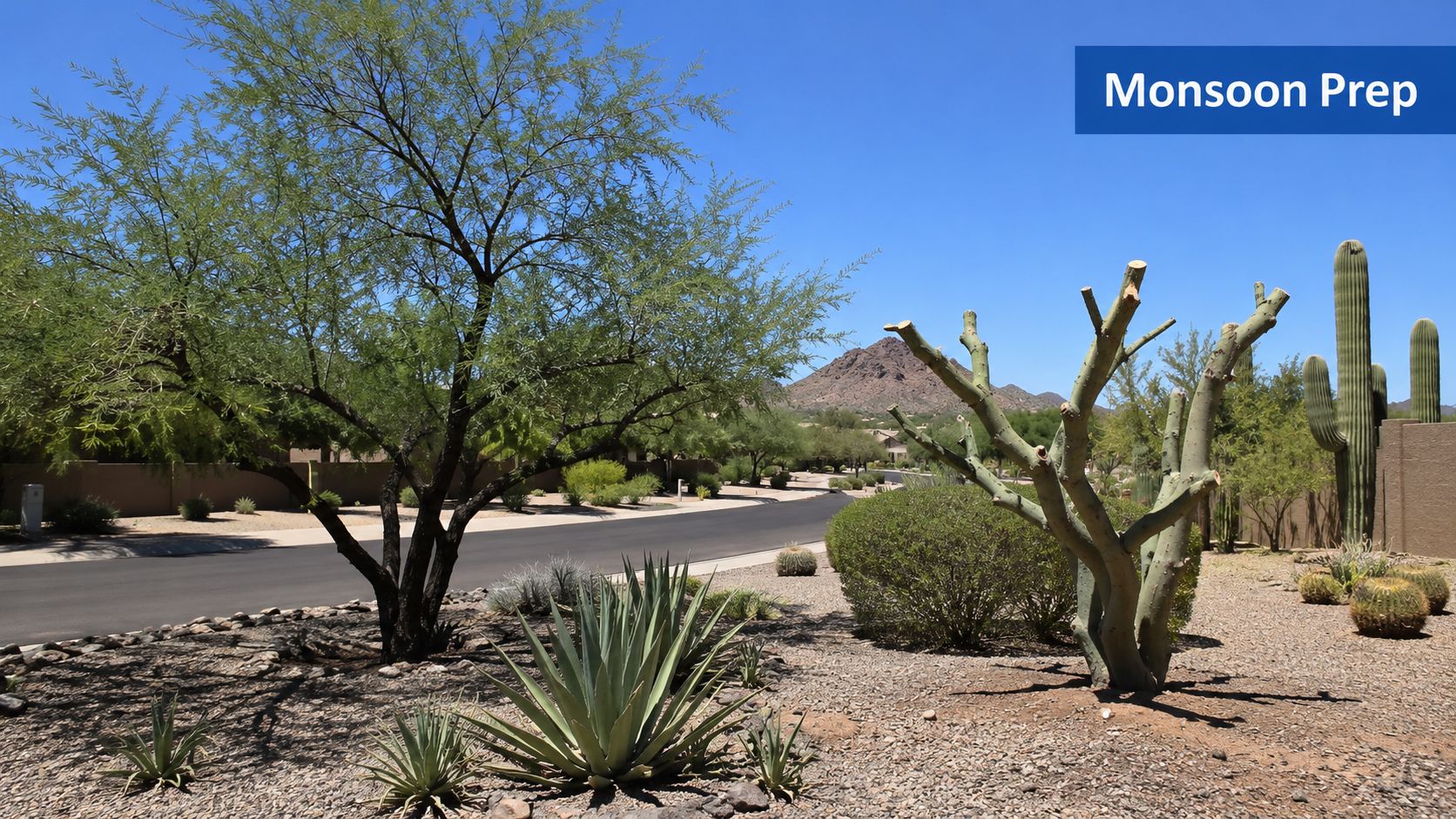
Monsoon storms punish weak branch structure. That doesn't mean you should rush into drastic pre-storm pruning. It means you should do thoughtful structural work in the right season so the tree enters storm season with better branch spacing and less dead or compromised wood.
Good pruning before storm season is not the same thing as aggressive canopy reduction. One improves structure. The other can create fresh wounds and shift weight in ways you didn't intend.
Arizona pruning is often about avoiding two extremes: don't ignore structural problems for years, and don't overcorrect right before harsh weather.
Common Phoenix-area tree situations
A few local examples show how desert timing plays out in practice:
- Palo verde: Needs careful shaping, not heavy stripping. Preserve a balanced canopy and avoid creating sudden bark exposure.
- Mesquite: Benefits from structural attention while young. Mature trees often need selective reduction and deadwood removal, not wholesale thinning.
- Citrus: Avoid turning the canopy into an open umbrella. Interior protection matters in intense sun.
- Ironwood and other desert natives: Usually respond best to conservative pruning. If the tree has a good natural form, respect it.
Rules beyond the tree itself
Homeowners also need to think beyond the plant. HOAs, neighborhood standards, and city guidance can affect what you can trim and when, especially if visibility, shared spaces, or protected nesting activity are involved. If you're uncertain, verify before you cut.
If you're syncing grounds maintenance with broader seasonal exterior care, a practical spring cleaning timeline for Arizona homes can help you group tree checks, yard cleanup, and other curb-appeal tasks into the same maintenance window.
Pruning Safety and Knowing When to Call a Professional
A small reachable branch is a homeowner job. A heavy limb over a roof, a ladder job near a driveway, or anything close to power lines is not the place to learn by trial and error.
Safety matters more than ideal timing in genuine hazard situations. Texas Tree Surgeons notes that dead, broken, or hazardous limbs should be removed whenever necessary, and that trees with recent root damage shouldn't be pruned for at least two years. That's a good reminder that tree recovery and risk management sometimes overrule the seasonal calendar.
When DIY makes sense
Homeowners can usually handle simple tasks if the branch is small, clearly visible, and reachable from the ground with the right hand tools.
A reasonable DIY zone looks like this:
- Low-risk cuts only. Small dead twigs, rubbing shoots, or minor suckers.
- Ground-based work. If you need to stand on a ladder and reach awkwardly, the job has changed.
- Clean, sharp tools. Hand pruners, loppers, and a pruning saw are very different from guessing with whatever is in the garage.
When to bring in a pro
Call a certified, insured tree professional if any of these apply:
- Large limb weight. Big branches don't fall where you hope. They twist, tear, and bounce.
- Nearby targets. Rooflines, parked cars, fences, glass, and utility lines raise the risk quickly.
- Storm damage or root stress. Trees can fail unpredictably after construction, trenching, flooding, or high winds.
For homeowners who care about appearance and sustainability at the same time, this resource on Eco-friendly garden beautification offers useful ideas for improving an outdoor space without treating every plant as a haircut project.
And if you're already evaluating outdoor chores that involve ladders and edges, this guide on how to clean gutters safely is another good reminder that exterior maintenance gets risky fast once you leave the ground.
Frequently Asked Questions About Tree Trimming
Is it ever okay to trim trees during a Phoenix summer
Yes, but only in limited cases. Summer is usually for hazard removal, storm cleanup, or very light corrective work. Heavy pruning in extreme heat can leave trees more stressed and more exposed than intended.
Do I need a permit to trim or remove a tree on my property
Sometimes. The answer depends on the city, the neighborhood, and whether an HOA or local rule applies. If the tree is near a street, in a shared area, or potentially protected by a local standard, check first instead of assuming private property means no restrictions.
How can I tell if a branch is dead or just dormant
Look for several clues together. A dead branch often feels brittle, lacks healthy buds, and stands out from the rest of the canopy in color and texture. If you're unsure, wait for seasonal growth or ask a qualified arborist before cutting.
If you're planning your full exterior maintenance calendar, this guide on the best time of year to clean windows pairs well with seasonal tree care because both affect how polished your property looks from the street.
A clean, well-kept property isn't just about one detail. It's the combination of healthy trees, tidy landscaping, and bright exterior surfaces that creates strong curb appeal. If you're ready to refresh the look of your home or commercial property, South Mountain Window Cleaning, LLC provides professional exterior cleaning across the Phoenix area, helping homes and buildings look sharp, cared for, and welcoming year-round.