
If you live in Phoenix and you've looked up at your solar panels after a wind event, you already know the problem. The glass might not look terrible from the driveway, but up close there's often a fine beige film, stuck-on bird droppings, and the kind of residue that doesn't rinse off with one quick spray.
That raises the question most solar owners really care about. Is it just dusty, or is it costing you money?
In the Valley, that's not a small distinction. Desert dust, dry air, rooftop heat, and seasonal storms create a different maintenance reality than the generic advice written for milder climates. A proper solar panel cleaning service isn't about making panels look better. It's about protecting output, avoiding damage, and cleaning them the right way for Arizona conditions.
Is Dust on Your Panels Costing You Money
A common Phoenix scenario goes like this. Your panels looked fine a few weeks ago, then a dusty stretch rolls through, maybe followed by a little wind and light rain that leaves behind mud specks instead of a real rinse. From the ground, the array still seems functional. The inverter is on. Nothing looks broken.
But “still working” and “working efficiently” are not the same thing.
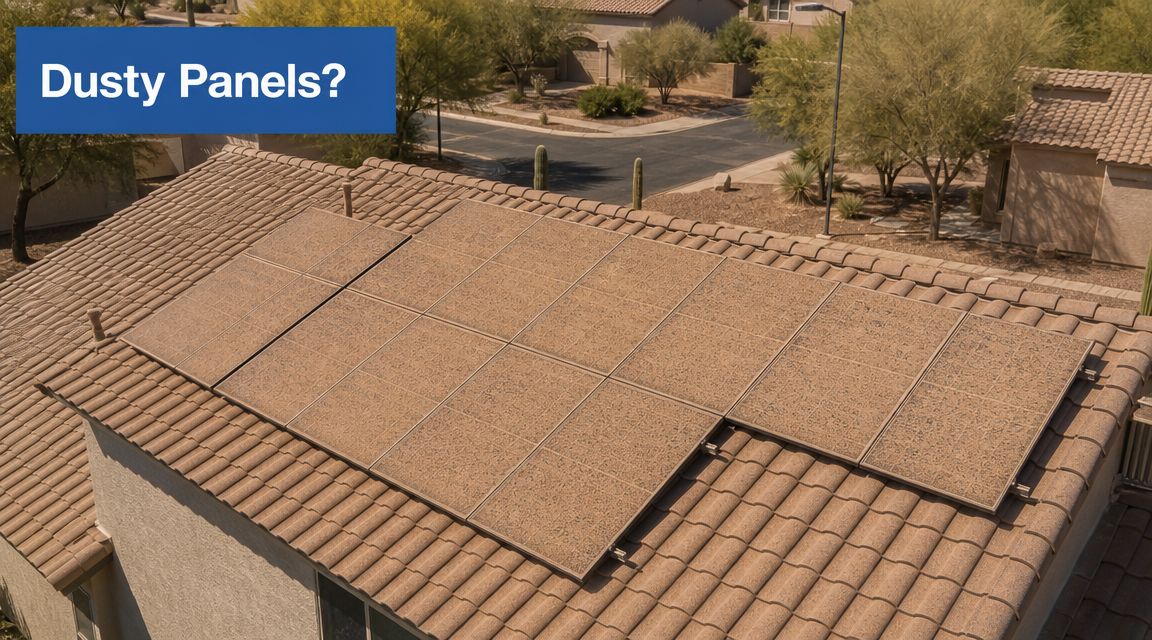
In Phoenix, homeowners and property managers usually call when they notice one of three things:
- Visible dust film: Panels look dull instead of dark and reflective.
- After storm residue: Haboobs and light rain can leave grime baked onto the surface.
- Bird mess near edges: A few concentrated spots can create bigger trouble than a uniform layer of dust.
The hard part is that the loss isn't always obvious day to day. Few individuals routinely stand outside tracking production trends against weather patterns. They just know they invested in solar to offset power costs, and they don't want the Arizona climate chipping away at that return.
A dirty array can keep producing power while quietly underperforming.
That's why cleaning should be tied to actual conditions, not guesswork. If you're trying to decide on timing, this guide on how often to clean solar panels is a useful starting point for local maintenance planning.
For Phoenix properties, the value of professional cleaning comes down to four things. Restoring light exposure, using methods that won't damage the panels, keeping technicians safe on the roof, and making sure the service cost makes sense for your site.
How Soiling Impacts Solar Efficiency
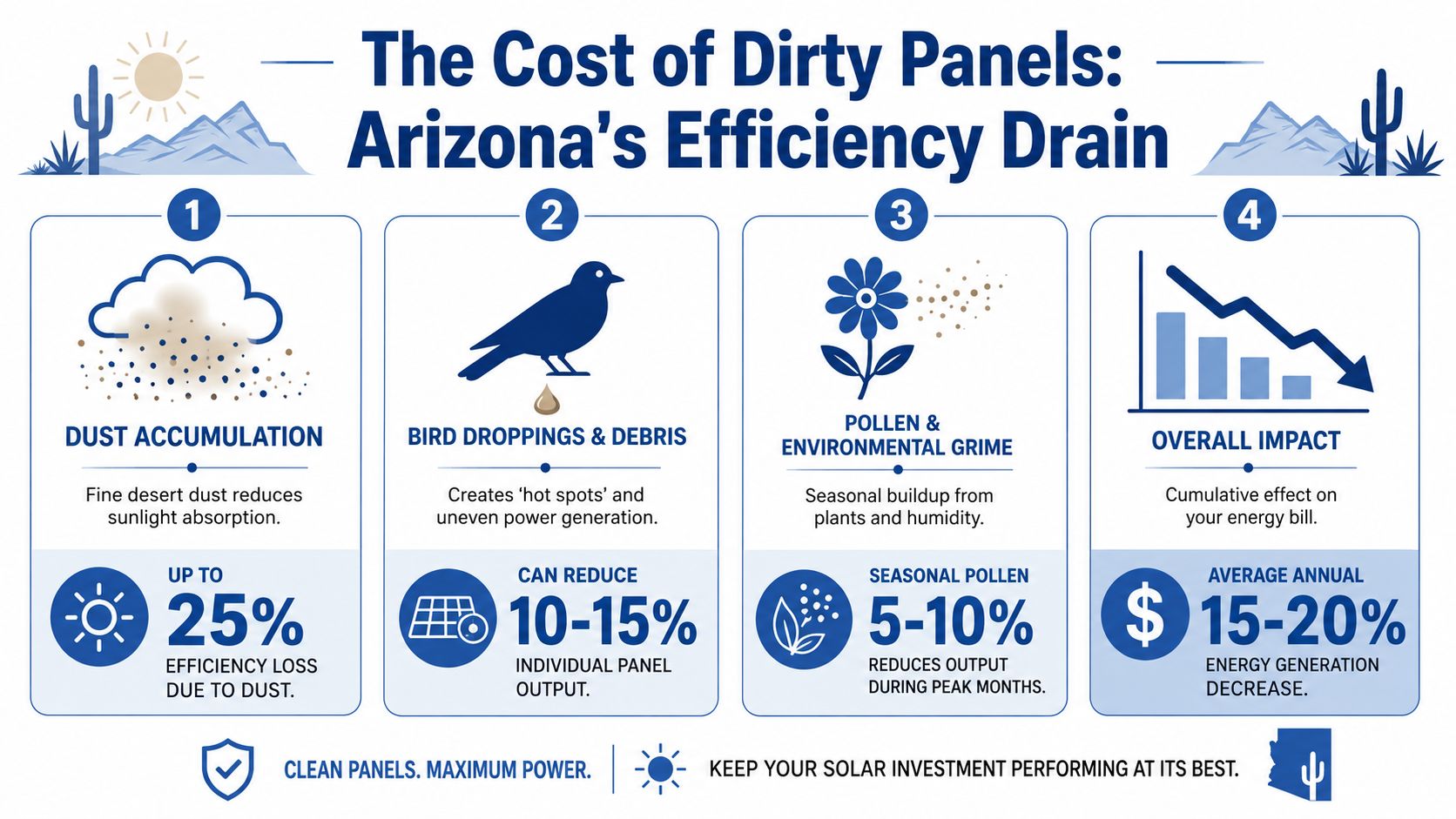
A panel can look only lightly dusty from the yard and still give up useful production. In Phoenix, that happens all the time. Fine desert dust spreads evenly across the glass, so the loss is easy to miss until a haboob, a stretch of dry weather, or a few dirty rain events turn that light film into a more stubborn layer.
Solar panels need clear light exposure across the face of the module. Dust, pollen, bird droppings, and baked-on residue reduce how much sunlight reaches the cells. Some buildup lowers output across the whole array. Some causes concentrated trouble in small areas, especially around edges and under perches where birds like to sit.
Industry guidance from Colite Technologies' solar cleaning and maintenance best practices says dirty panels can lose meaningful efficiency, especially in dusty conditions, and notes that cleaning intervals are often shorter in high-dust areas than in milder climates.
What tends to collect on Phoenix-area panels
Phoenix soiling is rarely just dust by itself. It is usually a mix that builds in layers and then bakes in the sun.
- Fine desert dust: The daily baseline problem. It settles gradually and can coat the full array.
- Bird droppings: These block light in dense spots and often need more than a quick rinse.
- Pollen, traffic film, and rooftop grime: This mix creates a dull haze that is harder to remove than loose dust.
- Monsoon residue: Wind drives dirt onto the glass, and light rain can dry into mud specks or streaks.
One dirty section can matter more than owners expect.
Why Phoenix changes the maintenance math
Rain does not reliably clean panels in the Valley. Long dry stretches let dust build. Then monsoon winds, hard water, and light showers can leave residue behind instead of washing the glass clean. Generic solar articles written for wetter states often miss that point.
Local conditions are why cleaning frequency in Phoenix should be based on what lands on the array, how the roof is positioned, and what production trends are showing. Homeowners who want a practical overview of safe methods and what residue comes off can review this guide on how to clean solar panels properly.
Why the performance loss turns into a money issue
Solar owners feel soiling through lower offset, not just a dirtier-looking array. If the system is producing less than it should, more power has to come from the grid. For a homeowner, that can mean weaker savings during long cooling months. For a commercial property, it can mean lower asset performance and more questions about utility costs.
The trade-off is straightforward. Cleaning too often wastes money. Waiting too long in Phoenix can do the same. The right schedule depends on the roof, the surrounding dust load, bird activity, and what the panels are exposed to through the year.
Why DIY Cleaning Can Be Risky and Ineffective
The idea of cleaning the panels themselves often comes to mind before calling a pro. That's reasonable. On paper, it sounds simple. Grab a hose, climb up, scrub the glass, rinse it off.
In practice, that's where a lot of damage and a lot of close calls happen.
The biggest DIY mistakes
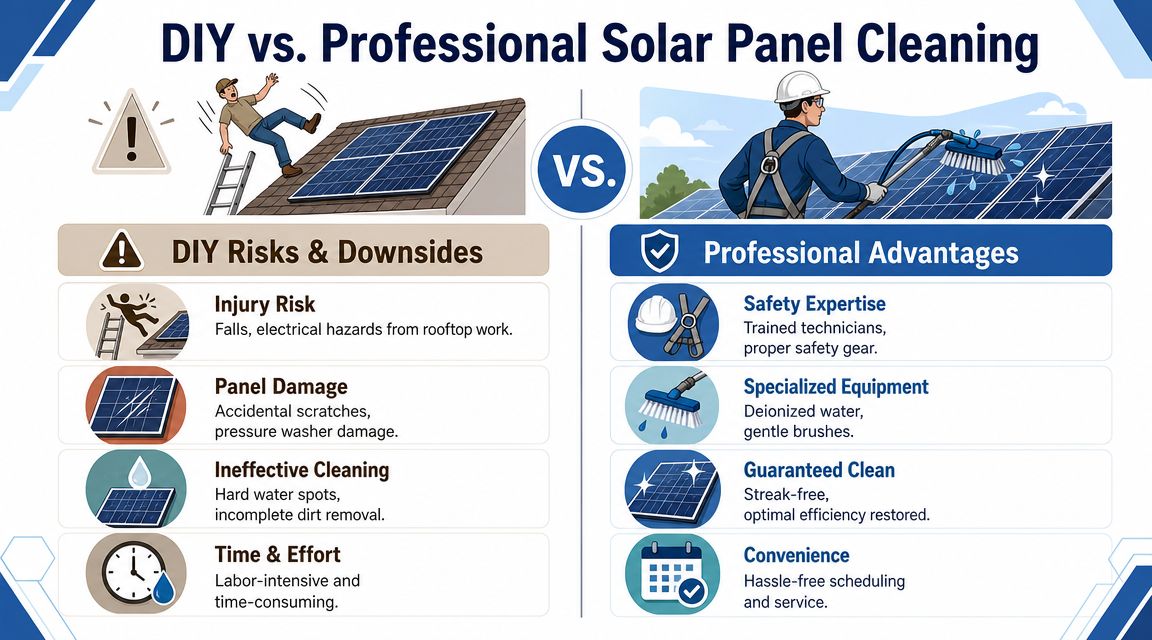
The first problem is water. In Phoenix, tap water is hard. When that water dries on hot panel glass, it can leave mineral spotting. That means you may remove loose dust only to leave residue behind that still blocks light and looks bad.
The second problem is tools. Homeowners often reach for whatever they already have. Deck brush, window mop, sponge with a scrub side, pressure washer. Those tools aren't made for solar glass and coatings.
A few common mistakes cause most of the trouble:
- Using hard tap water: This can leave mineral residue after drying.
- Using abrasive pads or stiff brushes: These can scratch the surface or wear coatings.
- Cleaning during peak heat: Water flashes off fast on hot panels and can leave spotting.
- Using pressure washers: High pressure can be rough on seals, edges, and mounting areas.
- Walking where you shouldn't: Roof movement around panels creates unnecessary risk.
Safety is the part people underestimate
Rooftop cleaning sounds manageable until you add Arizona reality. Tile roofs. Steep pitches. Heat. Glare. Water on the work surface. Electrical equipment nearby. Even a one-story home can become dangerous fast when you're carrying hose lines and trying to reach over an array.
Industry guidance increasingly emphasizes deionized water, low-residue methods, and proper safety compliance, while also warning that many consumers overlook fall protection, electrical hazards, and the possibility that improper cleaning can void warranties, as discussed in commercial solar cleaning safety guidance from Clean Solar Solutions America.
Here's a practical look at the difference:
| Issue | DIY approach | Professional approach |
|---|---|---|
| Water quality | Often standard tap water | Low-residue or deionized water methods |
| Roof access | Ladder and guesswork | Planned access and safety procedures |
| Tool choice | Household brushes and hoses | Soft-brush systems designed for glass surfaces |
| Documentation | Usually none | Service record and condition notes when needed |
A lot of homeowners also don't realize that “clean” isn't the same as “properly cleaned.” You can spend half a Saturday on the roof and still leave behind residue, edge buildup, and streaks that keep the panels from performing as they should.
For a visual walk-through of safer methods and what to avoid, this page on how to clean solar panels covers the basics well.
Later in the process, equipment matters even more than effort. This video gives a helpful look at the kind of setup and handling that separates a quick rinse from actual panel-safe cleaning.
On solar panels, aggressive cleaning is often worse than no cleaning at all.
That's the main trade-off. DIY can look cheaper upfront, but if it leaves mineral spotting, scratches a surface, creates a warranty issue, or puts someone at risk on the roof, it stops being a bargain.
The South Mountain Professional Cleaning Process
A Phoenix solar cleaning visit has to account for heat, hard water, roof type, and the kind of buildup our weather leaves behind. Fine desert dust is common. After monsoon winds, crews also run into mud residue, edge buildup, and bird droppings that bake onto the glass if they sit too long.
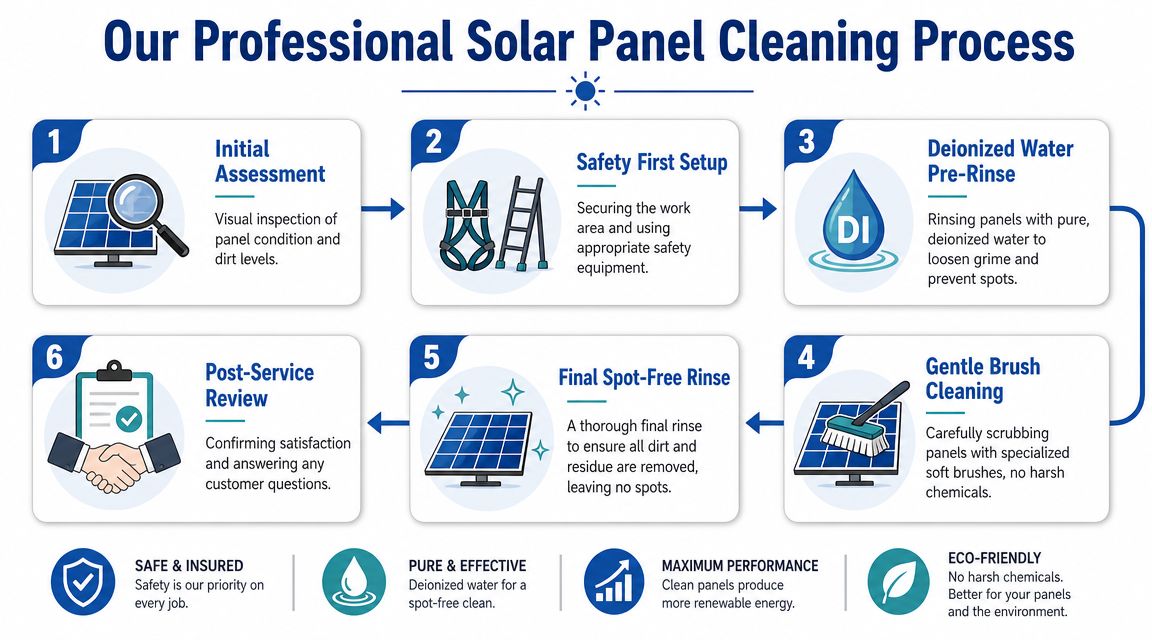
What a proper service visit looks like
A solid crew follows a repeatable process and adjusts it to the property.
On-site inspection
The technician checks the array layout, roof access, panel condition, and the type of soiling present. Dry dust cleans differently than stuck-on grime after a storm, and both are different from droppings or irrigation overspray.Safe setup before cleaning starts
Access is planned before any tools come out. On Phoenix-area homes, that can mean working around tile roofs, steep sections, brittle older materials, or limited landing areas near the array. Commercial properties bring a different set of access and coordination issues.Controlled cleaning with pure water and soft brushes
The goal is to lift dirt off the glass without grinding it across the surface. Pure-water systems help reduce mineral residue, which matters in a hard-water market like ours. Soft-brush agitation gives the crew enough contact to break loose buildup without treating the panel like a driveway.Final rinse and spot check
After the debris is removed, the panels get a final rinse and a visual check for leftover spotting, edge lines, or missed sections. That last pass is where rushed work usually shows.
Why the method matters in Phoenix
Arizona conditions punish shortcuts. If a crew uses untreated tap water, panels can dry with mineral spotting. If they clean in the wrong conditions or rush across hot glass, the result may look better from the ground but still leave residue that blocks light.
Pure water solves a big part of that problem. It rinses cleaner and reduces the chance of deposits drying back onto the panel. In many cases, that also removes the need for stronger cleaners, which is better for the glass, the frame, and nearby roof materials.
The trade-off is time. Proper cleaning is slower than a quick spray-off, especially on larger arrays or roofs with difficult access.
A professional setup usually includes:
- Soft-brush equipment made for solar glass
- Pure-water or deionized-water systems for low-residue rinsing
- Roof-specific safety planning based on pitch, height, and material
- Clear notes on panel condition if the crew sees visible trouble spots
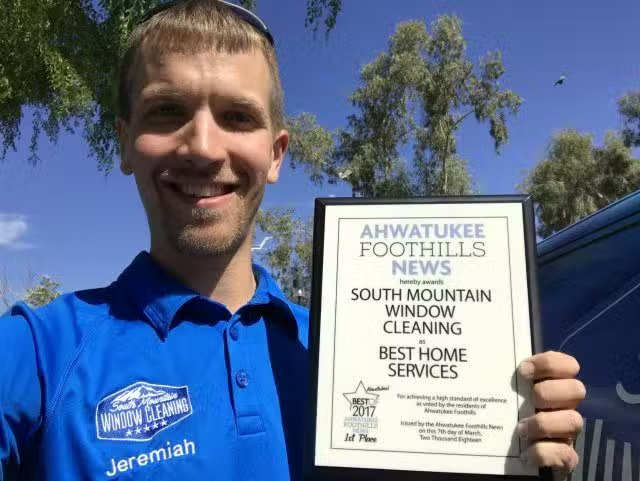
South Mountain Window Cleaning, LLC handles solar panel cleaning for residential and commercial properties across the Phoenix area using pure-water equipment and safety-trained technicians. For owners comparing providers, it helps to look at practical proof points: insurance, licensing, reviews, scheduling reliability, and whether the company has the right equipment for Arizona roofs and water conditions. If you want to see what pricing usually depends on, this local guide to the cost to clean solar panels gives a useful breakdown.
What works is consistent. Safe access, the right water, the right brush contact, and enough time to finish the job correctly.
What fails in the field is predictable too. Pressure washing, harsh chemicals, poor rinsing, and crews who treat every roof the same usually create problems. A single-story home in Ahwatukee, a tile roof in Scottsdale, and a commercial building in Tempe can all need solar cleaning, but the process on each property should be adjusted to the site.
Cost and Cleaning Frequency in the Phoenix Area
A homeowner in Phoenix often notices the problem after a windy week or the first monsoon dust event. The panels still look "mostly fine" from the ground, but output starts slipping and the glass has a dull film that rain never fully removed.
That is why pricing and timing are tied together here. In the Valley, the right cleaning schedule depends on how fast your roof picks up dust, pollen, bird mess, and storm residue, not on a generic national checklist.
What affects the price
The biggest cost drivers are straightforward:
- Panel count: More panels means more labor, more detail work, and more rinse time.
- Roof access: A simple single-story layout is faster than a steep tile roof, a multi-level home, or a commercial building with access controls.
- Soiling level: Loose dust is one thing. Baked-on grime, droppings, and residue after monsoon season take more care.
- Layout and obstructions: Multiple array sections, tight walk paths, and rooftop equipment slow the job down.
- Service timing: Routine maintenance visits are usually simpler than waiting until buildup is obvious from the street.
Flat-rate pricing can sound attractive, but it often ignores the actual labor difference between an easy Ahwatukee roof and a larger Scottsdale or Tempe property with harder access. If you want a clearer local breakdown, this guide on the cost to clean solar panels explains what usually changes the price.
How often Phoenix properties should schedule service
Phoenix is hard on solar glass. Desert dust settles quickly, and monsoon rain can leave behind mud spots instead of a clean rinse. Homes near active construction, open desert, busy roads, or regular bird perching usually need attention sooner than owners expect.
A practical schedule usually depends on site conditions:
| Property type | Common local trigger |
|---|---|
| Residential homes | Visible dust film, bird droppings, post-monsoon residue, lower production |
| Commercial rooftops | Maintenance calendar, larger exposed arrays, property management standards |
| Dust-prone locations | Windy stretches, nearby dirt lots, seasonal pollen, repeated storm debris |
For some homes, twice a year is enough. For others, especially in dustier pockets of Phoenix or on properties with frequent bird activity, a shorter interval makes better financial sense because the panels stay cleaner for more of the year.
The best schedule is the one that matches your roof, your surroundings, and your production goals.
Before hiring any rooftop service company, it also helps to review how to verify contractor licenses. That extra check matters in Phoenix, where roof type, heat, and access challenges can turn a simple cleaning into a job that requires the right insurance, training, and equipment.
Protect Your Investment with Phoenix's Trusted Experts
Solar panels are built to handle sun and weather. They're not built to stay clean on their own in a desert city. Between dust, pollen, droppings, and storm residue, Phoenix roofs put more stress on solar performance than many generic maintenance guides admit.
That's one reason this service category keeps expanding. The global solar panel cleaning market was valued at about $1.2 billion in 2024 and is projected to reach $2.5 billion by 2030, according to Strategic Market Research on the growth of the solar panel cleaning market. The bigger takeaway isn't the market size by itself. It's what the growth reflects. More property owners now treat cleaning as part of energy-yield protection, not just appearance.
What to look for before you hire anyone
For Phoenix-area owners, the right contractor should understand roof safety, panel-safe water methods, and the difference between a quick rinse and low-residue cleaning. They should also be able to show they're properly credentialed.
If you want a neutral guide before hiring any exterior service company, this resource on how to verify contractor licenses is worth reviewing. It's a smart step for solar cleaning, window cleaning, and any rooftop work.
A few good questions to ask before scheduling:
- Are they licensed, bonded, and insured?
- Do they use deionized or pure-water methods when appropriate?
- Do they work safely on your roof type?
- Can they fit the cleaning into a broader maintenance plan?
For owners who want a practical starting point, a solar panel maintenance checklist can help you track visual buildup, service timing, and when it's time to bring in a pro.
A good solar panel cleaning service should protect the equipment, protect the people doing the work, and make financial sense for the property. In Phoenix, that standard isn't optional. It's the baseline.
If your panels are collecting desert dust, bird droppings, or monsoon residue, South Mountain Window Cleaning, LLC offers fast, free quotes for solar panel cleaning in Phoenix, Scottsdale, Paradise Valley, Chandler, Tempe, and Gilbert. You can schedule online or call for a no-obligation estimate and get a clear answer on the safest, most practical way to protect your system's performance.