

That scraping, gritty sound when your patio screen door moves across the track isn't just annoying. In Phoenix, Scottsdale, Chandler, and the rest of the Valley, it's usually a sign that dust, pet hair, cottonwood fluff, and blown desert debris are grinding into the rollers and frame every time you open the door.
A screen door does a lot more work than most homeowners give it credit for. It lets fresh air move through the house, keeps bugs out, catches wind-blown debris before it gets inside, and helps the entry or patio opening look finished instead of neglected. In Arizona, where dust settles fast and sun exposure is relentless, a neglected screen door turns from helpful to frustrating in a hurry.
Your Screen Door is More Than Just a Screen
For most homeowners, the screen door only gets attention when it starts sticking, rattling, or dragging. By then, the problem usually isn't just the mesh. The track is dirty, the rollers are wearing unevenly, the frame may be slightly out of alignment, and the door is working harder than it should every single day.

Why Arizona beats up screen doors faster
Arizona is rough on exterior materials. Fine dust settles into tracks and corners. UV exposure bakes mesh, plastic parts, and weathered paint. Summer heat can dry out wood, and monsoon winds push dirt into every moving part.
That matters because screen doors can last 20 to 30 years with proper care, but in strong sun climates like Arizona, wood frames can crack and warp, while aluminum generally holds up better with less maintenance, as noted by RC Windows Doors on screen door materials and lifespan.
If your home has a patio, porch, or main entry screen, material choice matters. Aluminum handles traffic, dust, and heat better than wood in most Valley homes. Wood can still look great, but it asks for more upkeep and less neglect.
Practical rule: If a screen door sounds rough, feels heavy, or leaves black dust on the track, don't just force it harder. Clean it first, then inspect the rollers and frame.
There's also a comfort factor that gets overlooked. A clean, properly fitted screen door lets you use airflow when the weather cooperates without inviting half the desert into the house. If you're comparing mesh types and screening setups for outdoor living spaces, this guide on the best screen for porch use in Arizona is worth a look.
Gathering Your Tools and Prepping the Area
Most screen door jobs go sideways before the cleaning even starts. Homeowners grab the wrong brush, spray too much product into the track, or try to muscle a sliding door out of place and bend the frame. A little prep prevents most of that.
What to set out before you begin
Keep the setup simple. You don't need a truck full of gear, but you do need the right tools for dry dust, packed grime, and delicate mesh.
| Item | Purpose | Pro Tip |
|---|---|---|
| Vacuum with brush attachment | Removes loose dust from mesh, frame, and tracks | Start dry before adding any water |
| Soft-bristle brush | Loosens packed dirt without damaging sun-weakened screen | Use shorter strokes on corners and spline edges |
| Microfiber cloths | Wipes down frame and track without leaving lint | Keep one dry and one damp |
| Bucket with mild soap and water | Cleans frame and mesh safely | Avoid heavy residue cleaners |
| Small detail brush or old toothbrush | Gets into roller recesses and narrow track grooves | Good for caked monsoon mud |
| Flathead screwdriver | Helps adjust rollers or lift tabs carefully | Don't pry against thin frame edges |
| Utility knife | Trims replacement spline or mesh | Use a fresh blade for clean cuts |
| Silicone-based lubricant | Helps rollers and track move smoothly after cleaning | Skip greasy products that hold dust |
| Work gloves | Protects hands from sharp frame edges | Especially useful on older aluminum doors |
If you're curious how pros approach exterior glass, frames, and screens without leaving residue behind, this breakdown of what professional window cleaners use gives a good overview of the tools and chemistry side.
How to prep the doorway without damaging the door
Before you remove anything, clear the area. Move planters, shoes, patio furniture, pet bowls, and doormats away from the opening so you have room to tilt and lift the screen door safely.
Then inspect the frame and track with the door still installed:
- Look for bent metal: If the lower track lip is crushed inward, the door may not come out cleanly.
- Check for adjustment screws: Most sliding screen doors have roller adjustment screws near the bottom corners.
- Vacuum loose debris first: Dry dirt inside the track acts like sandpaper while you're trying to remove the door.
- Protect the finish: Lay down a towel or moving blanket where the door will rest once removed.
Remove a sliding screen door slowly. Lift it upward into the top channel first, then ease the bottom out. If it doesn't move with light pressure, stop and check the roller adjustment instead of forcing the frame.
That pause saves a lot of bent corners.
The Ultimate Screen and Track Cleaning Method
A screen door doesn't need fancy treatment. It needs the right sequence. Dry debris first, wet cleaning second, detail work third, and lubrication last. Reverse that order and you usually end up with muddy tracks and dirt packed deeper into the rollers.
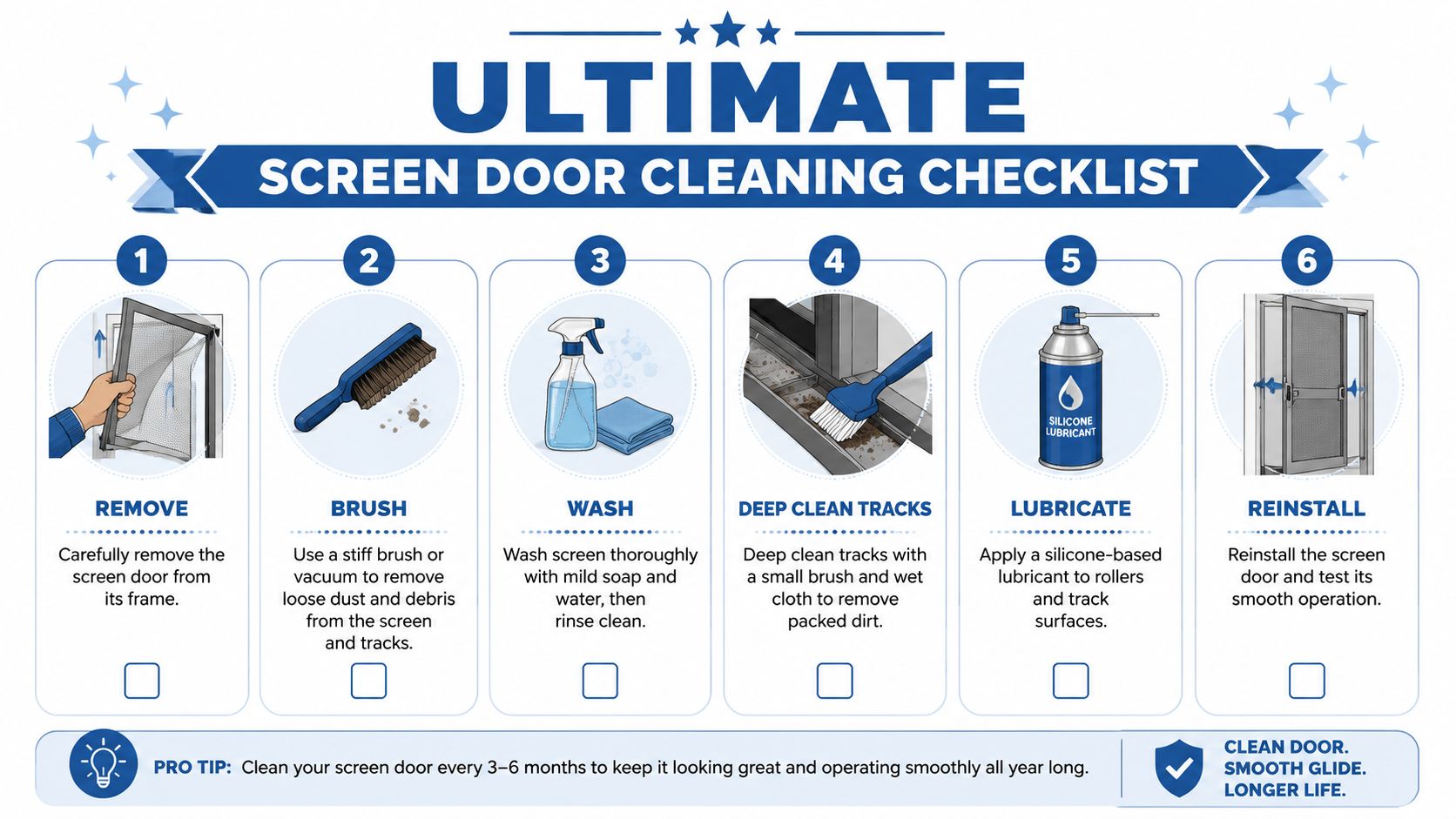
Quick clean for a screen door still in place
If the mesh looks dusty but the door still moves reasonably well, start with an on-frame cleaning.
- Vacuum the mesh lightly. Use a brush attachment and work from top to bottom.
- Brush the frame edges. Dust cakes up where the mesh meets the aluminum frame.
- Wipe the bars and pull handle. A damp microfiber cloth with mild soap is enough.
- Vacuum the track. Get the loose dirt before you add any moisture.
- Wipe the track with a damp cloth. Fold the cloth over a putty knife or flat tool if you need reach, but don't scrape aggressively.
This works well for routine maintenance between deeper cleanings. If the door still drags or makes noise, take it out and clean it properly.
Deep clean for heavy grime and rough sliding
Once the door is off, you can do the job right. Set it on a padded surface, preferably in the shade so soap doesn't dry too fast on the frame.
Use this sequence:
- Brush and vacuum first: Remove loose dust from both sides of the mesh, frame corners, and bottom rail.
- Wash the screen gently: Use mild soap and water with a soft brush or cloth. Scrub lightly so you don't stretch older mesh.
- Rinse carefully: A gentle rinse is enough. Don't blast the screen with high pressure.
- Clean the track by hand: Use a detail brush to loosen packed dirt, then wipe it out with a damp cloth until the cloth stops coming up brown.
- Inspect rollers: Spin them by hand. If they don't turn freely after cleaning, they may need replacement rather than more lubricant.
- Apply silicone sparingly: A light application on the rollers and track contact points is enough.
Most “bad rollers” are actually dirty tracks. Clean the channel completely before deciding the hardware has failed.
Packed dirt in the track also affects fit. If the door doesn't close tightly because debris is holding it out of alignment, you can end up with gaps that leak cooled air. Poorly maintained or undersized screen doors can contribute to up to 15% energy loss as air escapes, according to Window Hardware Direct's installation guidance.
For more detail on washing mesh without damaging it, this guide on how to clean window screens applies well to screen door panels too.
What not to do
A lot of avoidable damage happens during “cleaning.”
- Don't use a wire brush: It can tear mesh and scratch painted frames.
- Don't use oily lubricants: They attract dust fast in Arizona.
- Don't hose mud deeper into the track: Loosen and remove it first.
- Don't lean the door on a sharp corner: Thin frames bend more easily than people expect.
When the door goes back in, it should move smoothly and close without a shove. That's the benchmark.
Handling Common Screen Door Repairs Yourself
Cleaning often reveals the underlying issue. Once the grime is gone, you'll notice the torn corner, brittle spline, loose pull, or frame edge that has started to separate. Those are manageable repairs if the frame is still straight.
Patching a small tear
For a small puncture or short rip, a patch can buy time. Clean the area first so adhesive or patch material bonds. If the surrounding mesh feels brittle from sun exposure, skip the patch and re-screen the panel instead. A patch on failing mesh won't hold for long.
This is also where material judgment matters. If the screen is dry, faded, and crunchy to the touch, the tear isn't the main problem. The entire panel is at end of life.
Replacing the screen mesh
A full re-screen sounds intimidating, but the process is straightforward if the frame isn't bent.
- Remove the old spline with a small screwdriver or pick.
- Pull out the old mesh.
- Clean the spline groove before installing anything new.
- Lay the new mesh over the frame with extra material on all sides.
- Use a spline roller to press new spline into the groove gradually, keeping the mesh taut.
- Trim excess mesh with a sharp utility knife.
The biggest mistake is stretching one side too aggressively. That can bow the frame or leave waves in the screen. Work opposite sides evenly and keep checking tension by hand.
If you want a second visual reference before doing your own repair, the Cultivate House Detailing exterior care guide is a useful companion resource for homeowners tackling screen maintenance.
Replacing worn spline and refreshing wood doors
Old spline hardens, shrinks, and stops holding tension. If your screen looks loose around the edges or starts slipping out of the groove, replace the spline even if the mesh itself is still usable. Matching the spline size matters. Too small and it won't hold. Too large and it can distort the frame.
For wood screen doors, repairs should also include surface protection. Varnishing all six edges of a wood screen door, including the bottom edge, can give it 2 to 3 times greater longevity against dust and moisture, according to Screendoors.com installation guidance.
A quick visual walkthrough helps if you're replacing hardware or working around corners and fasteners:
For routine screen and track care where you want the debris removed without tackling the repair yourself, South Mountain Window Cleaning, LLC also handles screen and track cleaning as part of exterior cleaning work.
Proactive Care for Arizona's Sun and Dust
Most generic screen door advice assumes mild weather and ordinary dust. Phoenix isn't mild, and our dust isn't ordinary. The fine powder that settles after dry wind and monsoon activity works into tracks, rollers, corners, and latch areas much faster than many homeowners expect.

Where Arizona does the most damage
Retractable screen doors are a good example. In dusty, high-sun Arizona conditions, dust accumulation can reduce retractable screen door functionality by 40% to 60% within 6 to 12 months, leading to jamming and difficult operation, as noted by Conservatory Craftsmen's retractable screen door discussion.
That tracks with what many homeowners notice after monsoon season. The screen itself may still look fine from a distance, but the hidden moving parts start feeling sticky, uneven, or reluctant to retract fully.
If you wait until the door sticks, you've already let the debris build past the easy-clean stage.
Sun exposure is the other half of the problem. UV doesn't just fade surfaces. It dries out finishes, weakens plastics, and makes marginal parts fail sooner. On older doors, that shows up as brittle corners, cracked pulls, faded spline, and mesh that tears from light contact.
A simple Arizona maintenance rhythm
You don't need a complicated calendar. You need consistency.
- After a dust storm or monsoon: Vacuum and wipe the track before mud hardens in the channel.
- Before peak summer heat: Check mesh tension, inspect handles and rollers, and look for drying or cracking on exposed materials.
- During cooler months: Wash the full frame and screen when airflow season returns.
- Any time the door sounds different: Investigate early. Grinding noises usually mean debris or hardware wear, not a problem that fixes itself.
For the glass and screen side of exterior upkeep, this local guidance on how often to clean windows in Arizona lines up well with a realistic maintenance routine for homes in the Valley.
When to Skip the DIY and Call a Professional
Some screen door problems are worth handling yourself. Some aren't. The dividing line is usually whether the issue is isolated and accessible, or whether the door and opening have started affecting each other.
Call for professional help when you see any of these:
- The frame is bent or twisted: Re-screening a warped frame wastes time and material.
- The door keeps jumping the track: That can point to damaged rollers, a bent track, or a frame alignment issue.
- The latch side won't line up even after cleaning and adjustment: The opening itself may be out of square.
- You have widespread mesh failure: One tear is a repair. Multiple tears usually mean the material has aged out.
- You're dealing with a high-rise or commercial opening: Access, wind, and safety change the equation.
That last one matters in the Valley. For high-rise condos and commercial spaces in Phoenix-area monsoon conditions, traditional hinged screen doors can reduce tear risk by up to 50% in winds that can reach 50 mph compared with retractables, according to Best Custom Screens' hinged screen door discussion.
A screen door that fails the same way twice usually has a root cause that cleaning alone won't fix.
A good service visit should identify whether you need a track cleaning, roller replacement, frame adjustment, re-screen, or a full replacement. That saves you from throwing parts and time at the wrong problem.
If your screen door is dragging, rattling, off-track, or just loaded with Arizona dust, South Mountain Window Cleaning, LLC can help with practical exterior cleaning that includes screen and track care for homes and commercial properties across the Phoenix area.