

A lot of Phoenix decks look great for about four months of the year and then sit there baking. By early afternoon, the boards are hot, the furniture fades, the dust shows up again, and the space you paid for becomes something you look at through the back door instead of using.
That’s usually the moment homeowners start thinking about how to convert deck to sunroom instead of replacing a few boards and hoping for a different result next summer. In the Valley, that’s a practical move. You keep the footprint you already like, preserve the outdoor connection, and turn a harsh-weather zone into space you can use for coffee, work, dinner, or a quiet room that doesn’t feel cut off from the yard.
The best projects start before design choices and window packages. They start with a hard look at the deck itself, the house connection, and the long-term upkeep the finished room will need in Arizona’s sun, dust, and monsoon cycle.
From Unused Deck to Year-Round Oasis
A common Phoenix setup goes like this. The home has a deck or raised patio with a good view, decent access from the living room, and enough square footage to feel useful. Then summer arrives, and that same area becomes too bright, too hot, and too exposed to enjoy for more than a few minutes at a time.
That mismatch is why so many homeowners decide to convert deck to sunroom instead of starting from scratch elsewhere on the property. The location is already proven. The traffic flow already works. What’s missing is enclosure, shade, and climate control that make the space usable beyond a mild winter morning.
The smart way to approach it is the same way you’d approach any addition. Start with function before finishes. If you need help thinking through footprint, circulation, and how the new room should connect to the rest of the house, RBA Home Plans home planning advice is a solid planning resource. It helps homeowners think beyond “I want more space” and get specific about how the room will be lived in.
There’s also a detail many people skip at the beginning. If the existing deck has years of dirt, failing coatings, or surface wear, clean it before anyone evaluates what can stay and what needs replacement. A simple guide on washing a deck before staining gives a useful baseline for understanding what a cleaner surface reveals about board condition, fasteners, and finish failure.
A good sunroom conversion doesn’t rescue a bad deck. It starts with an honest read on whether the deck is worth building on.
In Arizona, the payoff is straightforward. You take a space that’s underused during peak heat and turn it into part of the house without losing the daylight and outdoor feel that made the deck attractive in the first place.
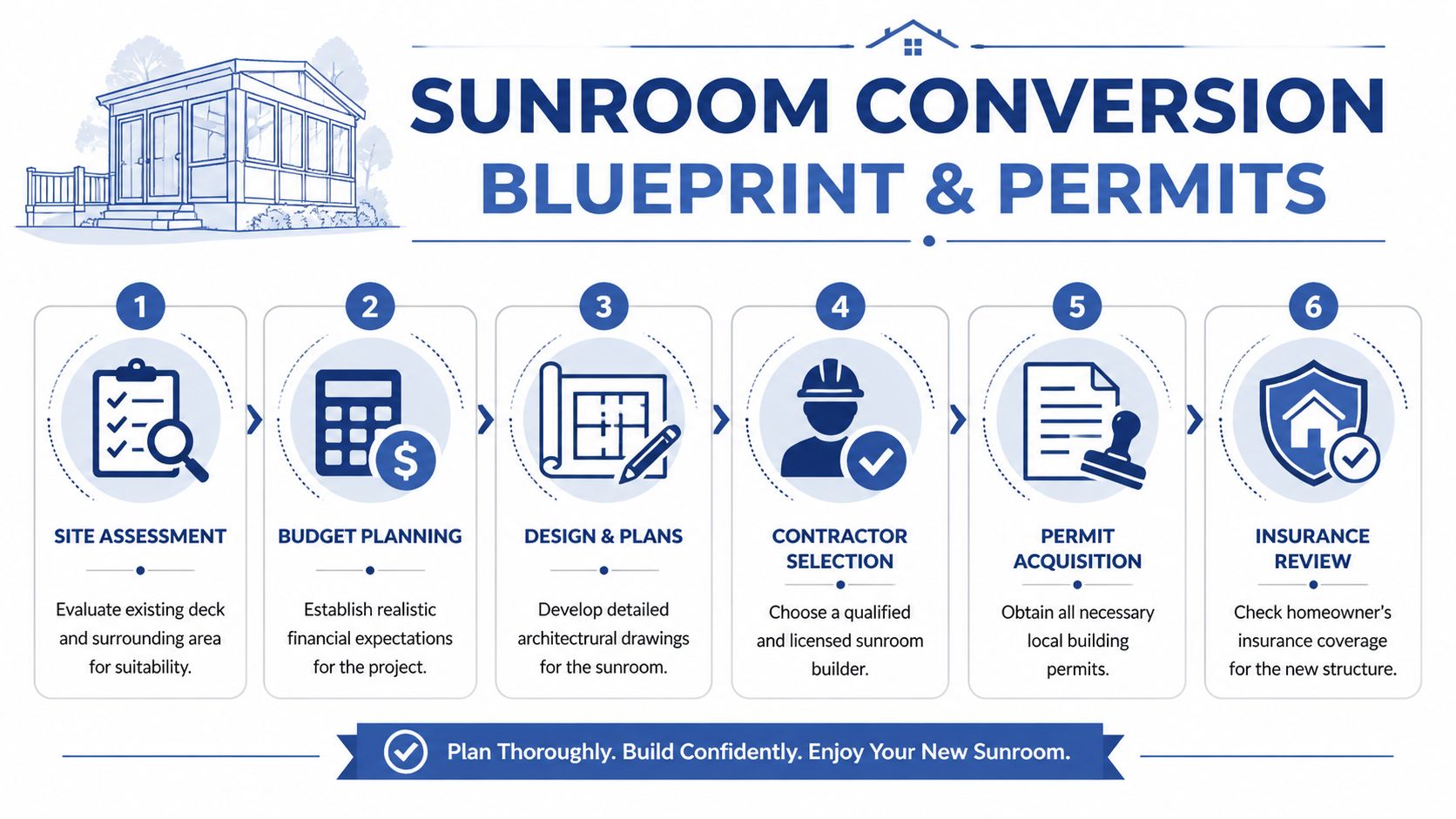
Your Sunroom Conversion Blueprint and Permits
A successful conversion is won on paper first. Homeowners usually focus on windows, roof style, and whether they want a screened room or a full four-season space. Core issues surface earlier. Is the deck structurally worth keeping. Does the floor elevation comply. Will the city approve the plans as drawn.
In Phoenix’s real estate market, deck-to-sunroom conversions build on decks’ 90% average ROI, with initial deck builds at $15 to $30 per square foot and conversions from existing structures at $10,000 to $20,000, while Maricopa County projects must meet flood elevation rules that require floors at least one foot above adjacent grade or engineer certification against 100-year flood events, according to Angi’s Phoenix deck cost guide.
Start with the existing deck
Before design fees and permit applications, inspect what’s already there. Some decks are good candidates for reinforcement. Others only look fine from the top.
Use a practical checklist:
- Surface clues matter: Look for soft spots, cracking, movement underfoot, and areas where water has sat against the house.
- Check the attachment: The ledger connection is one of the first places I want examined, because enclosure changes how the load transfers back to the house.
- Look below the deck: Posts, beam spans, metal connectors, and footing signs tell you more than the finish boards ever will.
- Study drainage patterns: Monsoon runoff and poor grading can turn a sunroom problem into a foundation problem.
- Review access for construction: Tight side yards, pool decking, and existing patio covers affect labor and sequencing even when the structure itself is sound.
Match the room type to the way you live
A screened enclosure, glass room, and four-season build solve different problems.
A screened version usually fits homeowners who want airflow, bug control, and shade without pushing the project into a full conditioned addition. A glass-heavy room feels more finished and gives stronger visual connection to the yard. A four-season room makes sense if you expect the space to function like a true extension of daily living.
That choice affects electrical planning, insulation, framing, glazing, and permit review. It also affects whether your budget stays in the conversion range or starts drifting toward full-addition territory.
Field note: The more often a homeowner says “I want it to feel like part of the house,” the less likely a light screened build will satisfy them long term.
Permit issues in Maricopa County
Phoenix-area homeowners often underestimate the permit side because the deck is already there. Once you enclose it, the local authority doesn’t see it as a simple outdoor platform anymore. It becomes habitable or semi-habitable enclosed space, and that changes the review.
You’ll typically need:
- A site plan showing the structure in relation to property lines and the house
- Construction drawings with framing, enclosure, and roof details
- Elevation information if the site triggers flood review concerns
- Electrical scope if you’re adding outlets, lighting, fans, or climate equipment
- Contractor license and insurance information when the city requests it
If you want a basic orientation to local code topics before talking with a builder, this Arizona building code tag archive is useful for seeing the kinds of compliance issues that come up around exterior work in the state.
Design choices that save trouble later
The permit set should answer practical questions, not just aesthetic ones. How will rainwater leave the roof. Where will the door swing. What happens at the threshold between old floor framing and new wall framing. How will electrical runs stay accessible and code compliant.
Homeowners get in trouble when they approve drawings that are visually appealing but thin on details. That’s where change orders start. It’s also where leaks, awkward transitions, and inspection corrections usually originate.
A good blueprint should account for:
| Planning item | Why it matters |
|---|---|
| Existing deck condition | Determines whether reinforcement or rebuild is the better path |
| Floor elevation | Affects permit approval and flood compliance |
| Roof tie-in | Controls water management and long-term leak risk |
| Window and door layout | Impacts heat gain, ventilation, and furniture placement |
| Electrical planning | Prevents exposed retrofits after enclosure is complete |
Insurance and resale perspective
Homeowners rarely think about insurance until late in the project. That’s backwards. A new enclosed room changes the home’s profile, replacement value, and in some cases how the carrier wants the addition documented.
The same goes for resale. Buyers like enclosed light-filled space, but they also ask whether it was permitted and whether it feels integrated with the original house. A room that looks improvised can hurt confidence fast. A room that looks planned, inspected, and well-finished usually lands much better.
Building a Foundation for Your Sunroom
The biggest mistake in this type of project is treating the deck like it’s already a foundation. It isn’t. A deck is usually built for people, furniture, and ordinary outdoor use. A sunroom adds walls, glass, roof loads, and a level of weather protection the original structure may never have been designed to support.

A deck must be professionally assessed before conversion because typical decks support 40 to 50 psf while a sunroom adds 15 to 20 psf or more, and 60% to 70% of existing decks require reinforcement. Skipping the engineer invites structural failure, and improper weatherproofing leads to leaks in 40% of DIY conversions, according to this deck-to-sunroom conversion guide.
What the engineer is really looking for
A proper structural review isn’t a quick walk-around. The engineer or qualified builder needs to confirm whether the footings, posts, beams, joists, ledger, and connections can handle a new enclosure. In Arizona, that includes thinking about heat movement, material fatigue, and what monsoon water does when it finds an opening.
I want answers to a few basic questions before any enclosure package gets ordered:
- Are the footings adequate: If the base support is wrong, everything above it is compromised.
- Are the spans realistic for enclosure loads: Deck framing that feels acceptable outdoors may be undersized for walls and glazing.
- Is the house connection reliable: Weak ledger attachment is one of the fastest ways to turn a conversion into a teardown.
- Is there hidden damage: Rot, corrosion, movement, and poor flashing often show up once trim and decking are removed.
Reinforce or rebuild
A lot of homeowners want reinforcement to work because it sounds cheaper and faster. Sometimes it is. Sometimes the numbers only look better until demolition starts.
If the structure is newer, well-built, and close to current requirements, reinforcement can be the right move. That may mean adding piers, increasing beam capacity, adding posts, improving connectors, or rebuilding sections while keeping part of the footprint. If major parts of the support system are undersized or deteriorated, rebuilding is cleaner and usually more durable.
Practical rule: If the lower structure makes you uneasy now, enclosing it won’t make it safer. It only makes future repairs harder.
For readers who want a plain-language primer on what footing systems do and why support below grade matters so much, this homeowner's guide to deck foundations is a helpful reference.
The upgrades that commonly matter
Most conversions that succeed structurally include some combination of these improvements.
New or enlarged footings
Existing deck supports may need replacement or supplementation so the load transfers properly into the ground.Post upgrades
Posts often need better sizing, better bases, or better connection hardware where they meet beams and foundations.Beam reinforcement
Builders may sister beams, replace them, or revise the support layout so weight isn’t concentrated where the old deck could get away with it.Joist corrections
Joist spacing and size affect floor stiffness. That matters more once walls and large glass units are installed.Ledger and flashing work
Water and structural safety are central. A poor tie-in can create movement and hidden moisture damage at the house.
Here’s a useful visual overview of the structural side before enclosure begins:
Weatherproofing is structural work too
Homeowners tend to think of flashing and waterproofing as finish details. They aren’t. In a deck conversion, water control protects framing, sheathing, thresholds, and the house connection itself.
The Arizona climate fools people here. Because we don’t deal with long wet seasons, some assume water protection is less important. Then a monsoon storm drives water sideways into a roof-to-wall intersection or under a door track, and the problem sits hidden until interior finishes stain or wood starts to deteriorate.
I’d rather see a builder over-detail flashing than under-detail it. That includes transitions at the house wall, roof edges, windows, sills, and any place where old deck framing meets new enclosed construction.
Don’t treat this like a weekend project
There’s a difference between deck maintenance and structural conversion. Cleaning, minor board replacement, and surface coating are one thing. Enclosing a deck into a room that has to stay square, dry, and stable is another.
A lot of DIY work looks acceptable for a short time. The failures show up later as cracked finishes, sticky doors, glass stress, and chronic leaks around transitions. Once glass units, insulation, and interior finishes are in place, every correction gets more expensive and more disruptive.
That’s why the foundation phase deserves the most discipline. If this part is right, the room can perform like an intentional addition. If it’s wrong, the nicest windows in the world won’t save it.
Choosing Your Sunroom Enclosure and Climate Control
Once the structure is right, the comfort of the room depends on enclosure choices. In Phoenix, that means managing sunlight, heat gain, airflow, and glare without turning the room into a dark box that defeats the whole point of a sunroom.
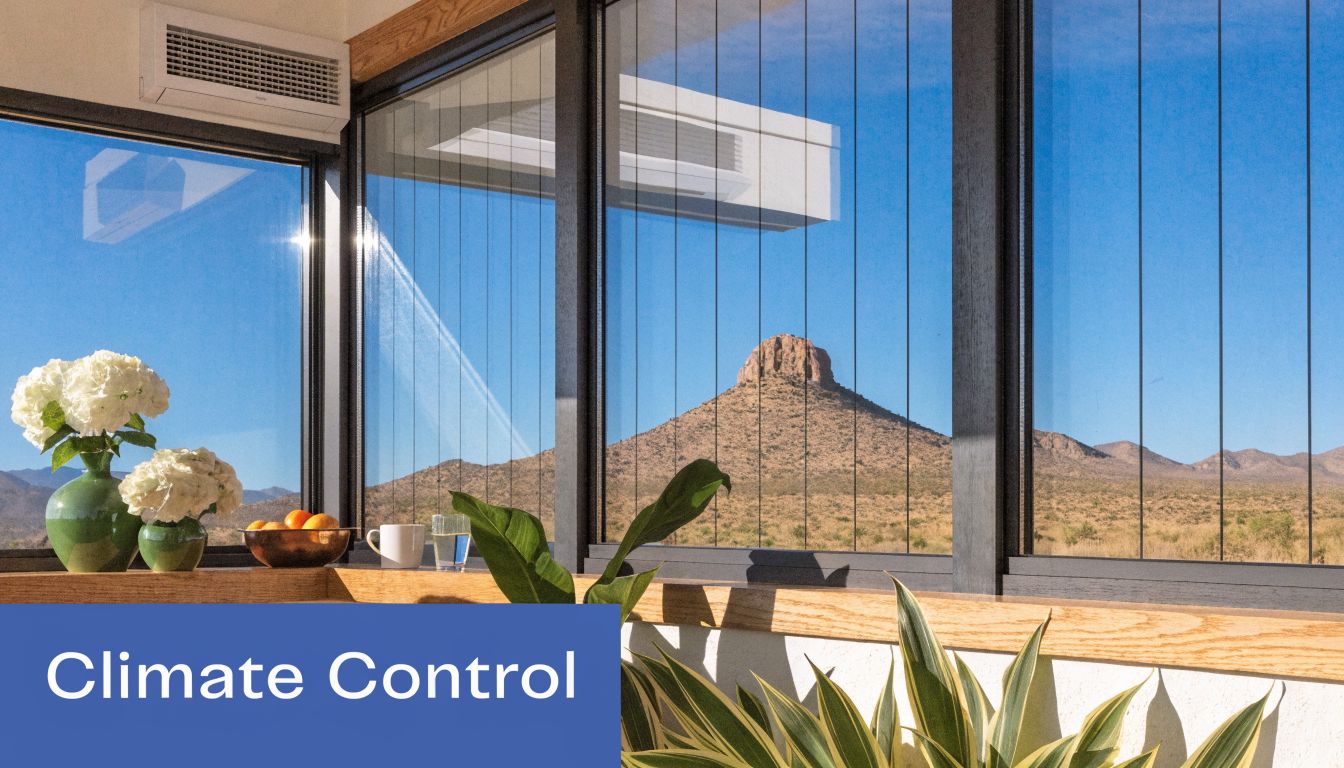
The wrong enclosure package can leave you with a room that looks sharp in listing photos and feels miserable in late afternoon. The right one balances view, shade, insulation, and ventilation.
Screened room, glass room, or four-season room
Each option has a different use case.
A screened room is the lightest and simplest direction. It gives you shade, airflow, and bug control. It does not give you the same noise control, dust control, or summer comfort as a more sealed build.
A glass-enclosed room gives stronger visual continuity with the yard and keeps out more dust and weather. It also raises the stakes on glazing quality because the glass becomes the biggest player in heat management.
A four-season room is the closest to conditioned interior living space. It’s the most demanding option in terms of framing, insulation, HVAC, and detailing, but it also gives the broadest usability.
Glazing choices matter more in Arizona
In a mild climate, homeowners can get away with average glass and still enjoy the room. In the Valley, glass selection is one of the biggest comfort decisions in the entire project.
Low-E coatings are the baseline discussion because the room needs help controlling solar heat gain and UV exposure. Beyond that, think about where the room faces, when it gets direct sun, and whether desert reflection off hardscape or pool decking is going to amplify brightness.
Use this approach when comparing windows:
| Glazing priority | Why it matters in Phoenix |
|---|---|
| Solar control | Cuts down harsh afternoon heat and glare |
| UV resistance | Helps protect flooring, furniture, and interior finishes |
| Operable panels | Improves airflow during mild weather |
| Frame quality | Supports long-term performance under intense sun |
| Ease of cleaning | Large glass areas need realistic maintenance access |
If you’re still deciding how open the room should feel, this guide to the best screen for porch is useful for understanding how screen choices affect visibility, airflow, and durability.
More glass isn’t always better in Arizona. Better-placed glass is usually the smarter answer.
Roof and wall assembly choices
Homeowners often pour their attention into windows and forget the roof is doing just as much work. Roof design controls shade depth, ceiling height, heat exposure, and drainage behavior. The roof assembly also affects whether the room feels airy or cramped.
A few trade-offs come up often:
- Solid insulated roof panels help control heat and create the most comfortable ceiling conditions.
- Glass-heavy roof sections bring in daylight but can overexpose the room if used too aggressively.
- Higher ceilings improve the feel of the space, but they need to be paired with practical cooling and shade strategy.
- Insulated wall sections can outperform all-glass layouts when afternoon sun is severe.
The best Arizona sunrooms usually mix transparency and shelter. Full exposure sounds appealing until you live with it in August.
Cooling strategy that actually works
You have several ways to cool a converted deck sunroom, but not every house should use the same approach.
Extending existing HVAC can work if the main system has capacity and the duct design makes sense. In many homes, that’s not the cleanest option because the original system wasn’t sized for the extra load.
A ductless mini-split is often the more controllable choice. It lets the room operate on its own schedule, which matters when the sunroom gets heat load at different times than the rest of the house.
For lighter enclosures, ceiling fans and natural ventilation can carry a lot of the workload during mild months. They won’t replace real cooling in summer, but they do make shoulder-season use more comfortable.
Small details that change daily comfort
The rooms that age well usually get the basics right:
- Shading at the strongest exposures through overhangs, blinds, or exterior shade elements
- Door placement that supports cross ventilation instead of trapping hot air
- Interior finishes that tolerate sunlight without fading fast
- Tracks and thresholds that can be cleaned easily because Arizona dust collects where moving parts live
Those details sound minor during design. They become major once you’re using the room every day.
Budgeting Your Project and Hiring Professionals
Sunroom pricing in Phoenix spreads out quickly because the project category sounds simple while the actual scopes vary a lot. A screened conversion on a sound deck is one thing. A fully conditioned four-season room with major structural correction is another job entirely.
In Phoenix, converting a deck to a screened-in porch typically costs $10,000 to $20,000, while a four-season room ranges from $25,000 to $45,000. Both are far less than a new 200 sq ft sunroom addition at around $94,224, and the biggest cost drivers are material choices and the existing deck’s condition, according to Phoenix Sunroom’s local cost guide.
Sunroom conversion cost comparison in Phoenix
| Sunroom Type | Estimated Cost Range | Best For | Key Considerations |
|---|---|---|---|
| Screened-in porch conversion | $10,000 to $20,000 | Shade, airflow, bug control | Lowest-cost path if the deck is in good shape |
| Four-season room | $25,000 to $45,000 | Daily living space year-round | Requires better insulation, glazing, and climate control |
| New 200 sq ft sunroom addition | Around $94,224 | Starting fresh when no usable structure exists | Highest cost because it includes full addition work |
What pushes the price up
The deck itself is the first variable. If the structure is ready for enclosure with limited correction, the project stays closer to conversion pricing. If hidden deficiencies show up, the “conversion” starts acting more like a rebuild.
Then come the specification choices:
- Framing and glazing package: Better-performing materials cost more, but they’re often worth it in Arizona.
- Roof configuration: A simple roof line is easier to build and waterproof than a complicated one.
- Electrical scope: Recessed lighting, fans, outlets, and dedicated equipment all add labor.
- HVAC and finish level: The room gets more expensive as it behaves more like conditioned interior space.
- Site constraints: Access, demolition complexity, and tie-in conditions affect labor time.
A common homeowner mistake is comparing bids as if every contractor priced the same room. They often didn’t. One builder may include structural correction and permit handling. Another may assume those become change orders later.
Hiring for this job, not just for a low number
A deck conversion sits in an awkward category. It touches structural work, exterior envelope work, glazing, roofing, electrical, and often HVAC. That means the contractor needs to understand how those parts interact, not just how to build one of them.
When vetting companies, ask specific questions. A practical checklist like Moore Construction Co. hiring tips helps homeowners move past generic “Are you licensed?” conversations and get into how the contractor manages scope, communication, and change orders.
Questions worth asking include:
- How do you determine whether the deck can be reinforced or needs rebuild?
- Who handles the permit package and inspections?
- What waterproofing details are included at the house tie-in?
- What assumptions are built into this bid, and what is excluded?
- Who installs the windows, electrical, and climate-control components?
The best bid is usually the one that exposes the most detail, not the one with the lowest total on page one.
Watch the post-construction phase too
A good contractor doesn’t just finish the room. They leave it in a condition that can be cleaned, maintained, and used without immediate headaches. That means debris control, glass protection, and a sensible final cleanup matter more than many homeowners expect.
If you want a benchmark for what proper final cleanup should include after messy exterior or renovation work, this guide on cleaning after construction is a useful standard. It helps homeowners spot the difference between a room that’s complete and a room that’s merely no longer being worked on.
How to compare bids without getting lost
Use a simple side-by-side review. Don’t just compare totals. Compare assumptions.
| Bid item | Contractor A | Contractor B | What to clarify |
|---|---|---|---|
| Structural repairs included | Yes or no | Yes or no | Are engineering corrections part of the bid? |
| Permit handling | Yes or no | Yes or no | Who submits plans and coordinates inspections? |
| Window specification | Listed or vague | Listed or vague | Are glazing and frame details spelled out? |
| Waterproofing scope | Detailed or minimal | Detailed or minimal | What flashing and seal details are included? |
| Cleanup and punch list | Defined or unclear | Defined or unclear | Who handles final touch-ups and debris removal? |
The contractor who explains more usually reduces surprises later. That’s worth real money.
Protecting Your Sunroom from the Arizona Climate
A new sunroom can look spotless on handoff day and start showing Arizona wear almost immediately. Fine dust lands on glass, tracks, and screens. Hard water spots build if sprinklers or hose rinse hit the panels. UV exposure works on seals, finishes, and frames every single day. Then monsoon season tests every detail you hoped the installer got right.
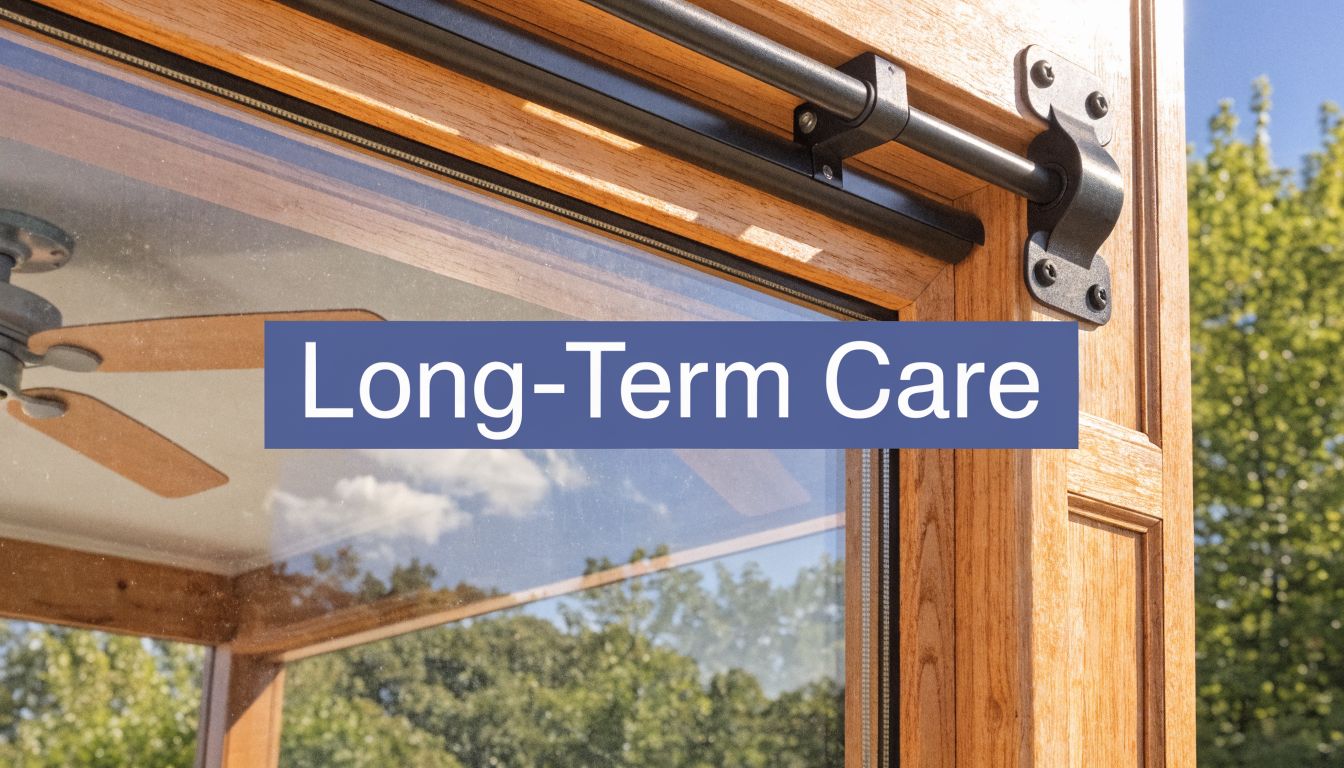
This is the part most deck-to-sunroom guides skip. They focus on getting the room built and stop there. In Arizona, maintenance is part of the build strategy because a room with this much glass only performs well if the surfaces stay clean and the moving parts stay serviceable.
Post-construction maintenance is especially important in dusty, high-sun climates like Arizona, where dust on glass can increase cooling costs by 15% annually, homeowners in Phoenix and Scottsdale report 20% to 30% higher cleaning frequency needs, and professional cleaning can extend glass lifespan by 5 to 7 years compared with DIY methods, according to this sunroom maintenance discussion.
What needs attention after the build
Sunrooms in the Valley usually need a maintenance routine that covers more than just the visible glass.
- Exterior glass cleaning: Dust film, mineral residue, and pollution dull the room fast.
- Interior glass care: Fingerprints, condensation residue, and everyday film reduce clarity.
- Screen and track cleaning: Grit in the tracks makes sliders drag and wears components down.
- Seal inspection: Look at corners, transitions, and joints before monsoon weather exposes weaknesses.
- Frame care: Metal and painted surfaces need periodic attention to keep oxidation and staining from setting in.
Why DIY often falls short
Most homeowners can wipe interior panes and keep up with obvious dirt. The trouble starts on high, wide, or sun-baked exterior glass where Arizona dust mixes with hard water and settles into a stubborn film.
A hose and store-bought spray usually leave residue behind. Paper towels and household cleaners can smear, and ladders around large sunroom panels create safety issues quickly. Pure-water systems and professional tools matter more on sunrooms because the room is built around visibility. Every streak shows.
Clean glass isn’t just cosmetic. In a sunroom, it affects light quality, heat behavior, and how expensive the room feels every day you use it.
A maintenance rhythm that makes sense
A practical maintenance plan usually looks like this:
| Maintenance area | What to watch for |
|---|---|
| Glass | Dust film, spots, streaking, and residue after storms |
| Screens | Tears, sagging, and dirt packed into mesh |
| Tracks and rollers | Grit buildup, sticking, and poor drainage |
| Seals and caulk | Shrinkage, cracking, or separation |
| Frames and hardware | Oxidation, rust staining, and loose fasteners |
After monsoon storms, inspect sooner rather than later. Wind-driven dust gets forced into corners and tracks. If the room has nearby landscaping, sprinkler overspray, or solar panels, coordinate the care of all those surfaces together so grime from one area doesn’t keep redepositing onto the glass.
The payoff of regular upkeep
A well-maintained sunroom does three things better. It stays clearer, feels cooler, and lasts longer. You also protect the value of the original conversion by keeping the room from drifting into that all-too-common state where the structure is sound but the glass looks tired and the tracks feel neglected.
That matters whether the room is attached to a Paradise Valley view home, a Scottsdale patio, or a tighter backyard footprint in Chandler or Gilbert. In every case, Arizona punishes neglect faster than homeowners expect.
If you’ve built a sunroom or you’re getting ready to convert a deck and want help protecting the finished space, South Mountain Window Cleaning, LLC provides professional window cleaning, screen and track care, and exterior cleaning services across Phoenix, Scottsdale, Paradise Valley, Chandler, Tempe, and Gilbert. For sunrooms with large glass panels, dust exposure, and hard-to-reach exterior surfaces, professional maintenance helps preserve the clarity, comfort, and curb appeal you invested in.