
A deck in Phoenix rarely gets dirty in one dramatic moment. It fades a little after each dust storm, collects grime in the corners after monsoon runoff, and starts looking tired long before most homeowners realize how much buildup is there. Then one morning the boards feel rough, the color looks chalky, and the whole space stops feeling like a place you want to use.
That’s why so many Valley homeowners end up looking for ways to power wash decks safely instead of just rinsing them off and hoping for the best. Deck washing isn’t only about appearance. It’s also about removing slick organic growth, clearing embedded dirt before it grinds into the surface, and getting wood ready for stain or sealer without chewing it up in the process.
Bringing Your Arizona Deck Back to Life
In Arizona, deck wear has a pattern. The sun cooks the surface. Fine dust settles into the grain. Hard water leaves residue if sprinklers or hose overspray hit the boards. Then a shaded corner holds moisture just long enough for mildew or algae to start forming. A deck can go from clean enough to neglected fast, especially in Phoenix, Scottsdale, and Paradise Valley where outdoor spaces get used year-round.

A proper wash brings back color and texture, but the bigger win is control. You’re removing the dirt film that makes a deck look older than it is. You’re also clearing away the slick contamination that can turn steps and shaded boards into a safety issue.
The scale of demand tells you this isn’t a niche chore. The U.S. pressure washing services industry generated $1.23 billion in revenue in 2023, and residential applications like deck cleaning account for 44% of pressure washer usage globally, according to Gitnux pressure washing industry statistics. That lines up with what exterior cleaners see every season. Homeowners don’t just want a cleaner deck. They want the outdoor space to look cared for again.
What Arizona decks usually need
Some decks only need a maintenance wash. Others need slower work because the surface is dry, sun-stressed, or already starting to fuzz. The mistake is treating every deck the same.
- Dust-loaded decks need a gentle pre-rinse and controlled passes so mud doesn’t smear into the grain.
- Older wood needs patience because aggressive pressure can scar it quickly.
- Composite boards often look easy to wash but can get etched if the machine is set too high.
- Stain-prep jobs need a cleaner finish than appearance-only washes because the next coating depends on the surface condition.
Practical rule: A deck that looks tough enough for high pressure usually isn’t. In Arizona, dry wood can be more fragile than it appears.
If you want a quick overview of what exterior washing can and can’t fix around the home, these power washing benefits are a useful starting point. The short version is simple. Washing works best when it’s part of maintenance, not a last-ditch rescue after years of neglect.
Your Deck Washing Prep and Equipment Checklist
Most bad deck washing jobs start before the trigger is pulled. Furniture stays in the way. loose debris gets ignored. The wrong nozzle gets clipped on because it’s already in the machine. That’s when stripes, gouges, and blown grain show up.
The prep work isn’t glamorous, but it decides whether the wash will look clean or patched.
Start with the deck itself
Before you think about machine settings, clear the workspace fully. Don’t work around planters, rugs, grills, or decor. Water ricochets off everything, and obstacles make it harder to keep an even stroke.
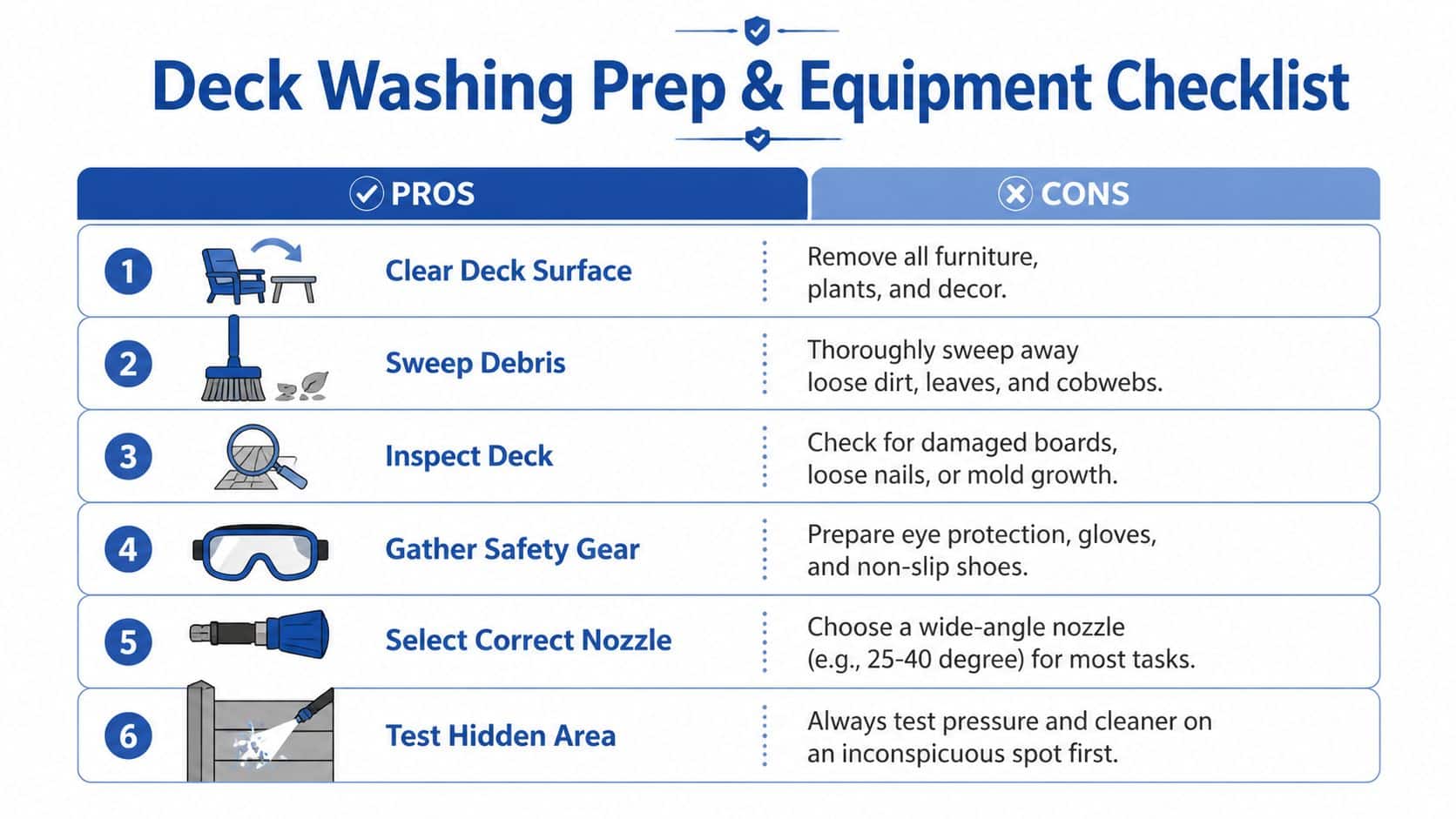
Use this checklist before washing:
- Empty the surface: Move furniture, planters, mats, and anything that traps moisture or blocks your line of travel.
- Sweep thoroughly: Remove dust, leaves, seed pods, cobwebs, and loose grit so you’re not grinding debris into the boards.
- Inspect the structure: Look for split boards, popped fasteners, rotten edges, unstable railings, and old stain that’s already failing.
- Protect nearby areas: Cover sensitive plants if you’re using cleaners, and avoid spraying directly into outlets, light fixtures, or door thresholds.
- Test drainage and overspray paths: In Arizona yards, runoff often carries mud onto adjacent pavers, stucco, or pool decking.
Power washing and pressure washing are not the same
Homeowners use the terms interchangeably, but the method matters. Power washing uses heated water, while pressure washing uses cold water. Heated water can clean grime-embedded surfaces more effectively, but on heat-stressed Arizona wood, the operator still needs to keep pressure low and use a wide nozzle. This explanation of power washing versus pressure washing for decks also notes that using the wrong method in arid conditions is a growing cause of wood deck failure.
That distinction matters in the Valley because not all dirt is equal. Dry dust is one thing. Baked-on grime near grill areas, drip lines, and shaded corners is another.
Heated water helps with stubborn grime. It does not give you permission to blast the surface harder.
Choosing the machine and setup
A homeowner-grade electric machine can handle light maintenance on a small deck if the operator is disciplined. Gas units offer more output, but they also make it easier to damage boards fast if you overshoot the setting.
A practical setup checklist looks like this:
- Pick the right cleaner first. Wood often benefits from a pre-treatment step. Composite needs a milder approach.
- Choose a wide fan tip. Narrow spray patterns are where many DIY problems begin.
- Test a hidden spot. A stair riser or board edge tells you quickly if the setup is too aggressive.
- Have a hose ready for pre-rinse and rinse-down. This matters even more when dust has settled heavily after storms.
- Wear protective gear. Goggles, gloves, and boots aren’t optional. Debris comes back at you fast.
One practical local option for property owners who want the work handled with commercial equipment is South Mountain Window Cleaning, which provides exterior power washing for residential and commercial flat surfaces in the Phoenix area.
PPE is part of the job, not an accessory
Protective gear gets skipped because deck washing looks routine. It isn’t. Debris lifts off the surface at speed, and wet boards get slick fast.
Wear:
- Eye protection: Flying grit and wood fibers are common.
- Gloves: They help with grip and reduce hand fatigue.
- Non-slip footwear: Wet wood and hose loops are a bad combination.
- Clothing you don’t mind soaking: Overspray is part of the process, especially around railings and edges.
If you prep correctly, the actual washing becomes controlled. If you rush prep, the machine magnifies every mistake.
The Right Pressure and Technique for Any Deck
A Phoenix deck can look straightforward at first glance, then punish a bad setup in seconds. Boards that have baked for years in intense sun often run drier and more brittle than similar decking in milder climates, so technique matters more here than many generic guides admit.
Start with the material in front of you, not the number printed on the pressure washer box. Wood species, age, sun exposure, and whether the deck still has failing stain all affect how much pressure the surface can take. In Arizona, I treat south- and west-facing sections more cautiously because they usually dry out faster and show wand marks sooner.
Deck Power Washing Pressure and Nozzle Guide
| Deck Material | Recommended PSI Range | Nozzle Tip (Color/Angle) | Wand Distance |
|---|---|---|---|
| Pressure-treated wood | 1800 to 2500 PSI | 25 to 40 degree fan tip | 12 to 18 inches |
| Softwood such as cedar | Use a gentler approach, often lower than pressure-treated wood | Wide fan tip | Keep extra distance and test first |
| Hardwoods such as ipe or cumaru | 1200 to 2000 PSI | 40 degree tip works well for controlled cleaning | Test and hold a steady gap |
| Composite decking | Below 1500 PSI | 40 degree tip | Start farther back and move in only as needed |
Those ranges are starting points, not guarantees. A shaded board that still holds some moisture can behave very differently from a sun-cooked board six feet away.
How to wash without leaving stripes or scars
The cleanest results come from a steady, repeatable pass. Hold the wand at a slight forward angle, keep the fan pattern consistent, and move with the grain. If you slow down over one dirty patch and speed up over the next, the deck will show that difference after it dries.
A method that works well on most decks looks like this:
- Start at the far end and work toward your exit point so you are not tracking dirt back onto wet boards.
- Follow the grain on wood decking and keep each pass aligned.
- Overlap each pass lightly to prevent tiger-striping.
- Clean one or two boards at a time on high-visibility areas.
- Rinse thoroughly before residue dries on the surface.
Arizona heat changes the rhythm of the job. Water and cleaner dry faster here, especially in direct afternoon sun, so smaller sections usually produce a more even finish than trying to blast the whole deck at once.
Material-specific judgment matters
Pressure-treated lumber can usually handle moderate cleaning pressure if the nozzle is wide and the operator keeps moving. Cedar and redwood bruise more easily, and once the fibers fuzz up, you often have to sand before sealing. Dense hardwoods can tolerate controlled washing, but they still need a test spot because surface oxidation and old oil finishes do not always release evenly.
Composite decking calls for restraint. Too much pressure can etch the cap, leave permanent lines, or force grime deeper into embossed texture. In many cases, lower pressure plus a deck-safe cleaner does better work than trying to strip the dirt out with force alone. Property owners weighing those options often benefit from understanding the difference between pressure washing and soft washing.
Hard water is another local factor that gets missed. If rinse water dries on a hot deck, mineral spotting can make a freshly cleaned section look patchy. That is one reason pros in the Phoenix area work in tighter sections and keep rinse timing under control.
For readers comparing surface-cleaning approaches across different outdoor materials, Better Boat's boat cleaning methods make the same point good deck techs follow every day. Match the method to the surface, because extra pressure does not fix a poor process.
The target is simple. Clean the deck evenly, leave the fibers intact, and set up the surface for whatever comes next, whether that is drying, sealing, or a light maintenance wash. If the boards come out rough, striped, or splintered, the pressure or technique was wrong.
Common Mistakes and Arizona-Specific Pro Tips
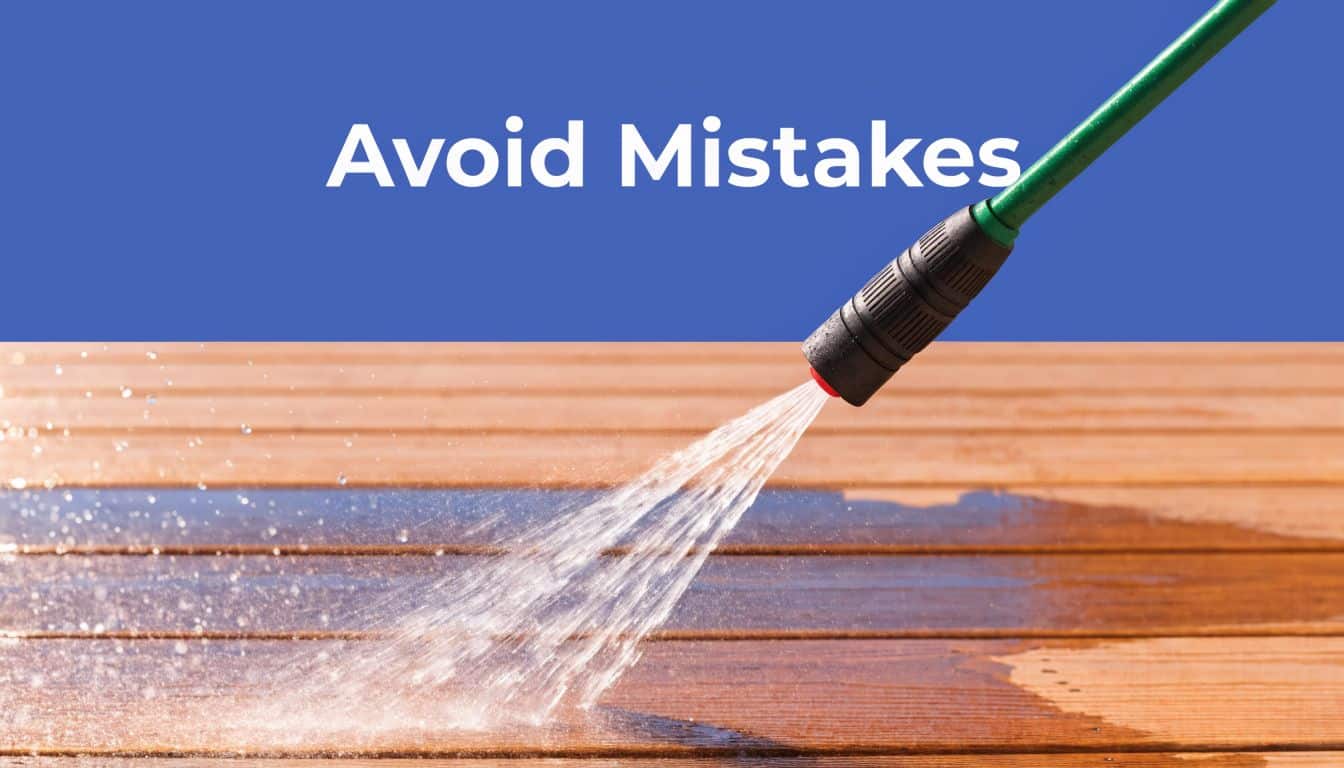
The biggest mistake is thinking deck washing is a point-and-shoot job. It isn’t. The machine only does what the operator tells it to do, and on a deck that means small errors become visible damage fast.
A few DIY habits cause most of the ugly results:
- Using too narrow a tip: Concentrated spray cuts lines into boards and leaves “zebra striping.”
- Stopping in one spot: Even a short pause can gouge soft wood.
- Ignoring board direction: Washing across grain raises fibers and roughens the surface.
- Skipping the test area: Every deck behaves differently based on age, finish, moisture level, and sun exposure.
- Cleaning in full blast midday heat without a plan: Water flashes off quickly in Arizona, which can make detergents dry unevenly and leave residue.
The dust and hard water problem
A Phoenix-area deck usually carries a fine layer of dust even when it doesn’t look filthy. After a haboob or a windy week, that dust gets into corners, fastener lines, and the grain itself. If you attack it dry with pressure alone, you can create muddy streaks and uneven cleaning.
A better approach is to pre-soak dusty surfaces, loosen contamination first, and then wash in controlled sections. On properties with hard water, don’t let rinse water sit longer than necessary. Hard water residue can dry on nearby railings, glass, and metal fixtures if overspray isn’t managed.
Arizona decks don’t just get dirty. They get coated in mineral-heavy, wind-driven residue that changes how you need to wash them.
The underside gets ignored too often
Raised decks and balcony-style decks are common in parts of Scottsdale and Paradise Valley, and the underside often gets neglected for years. That’s a problem because trapped grime and moisture under the framing can contribute to mold and rot.
A commonly overlooked professional method is using extension lances up to 79 inches to keep distance while cleaning from the bottom up. This underside deck cleaning demonstration shows why the job is messy, why multiple passes are often needed, and why it’s rarely covered well in DIY guides.
Here’s a helpful visual on related washing technique before getting into the underside issue further.
What experienced cleaners do differently
Experienced deck cleaners usually slow down where DIY users speed up. They pay attention to how the board reacts after the first pass. They adjust distance before changing pressure. They also think about everything around the deck, including stucco walls, patio furniture, window glass, planters, and lower-level surfaces that catch runoff.
A few Arizona-specific habits help:
- Wash earlier in the day when possible. That gives cleaners more control over dwell time and drying.
- Keep overspray off adjacent glass and metal. Mineral-rich water can leave marks as it dries.
- Inspect shaded areas separately. They often need different treatment than fully exposed boards.
- Don’t skip support framing on raised decks. If the top looks clean and the underside is neglected, the job isn’t really complete.
The deck should finish cleaner, not rougher. If you can feel torn grain, deep lines, or new splinters after washing, the method failed even if the dirt is gone.
Post-Wash Care to Protect Your Deck from the Sun
By midafternoon in Phoenix, a deck can look bone dry and still hold moisture below the surface. That fools a lot of homeowners into sealing too early. In Arizona, post-wash care is where a clean deck either holds up well or starts breaking down faster.
Give the deck time to dry fully before you apply any stain or sealer. In the Valley, the surface often dries fast because of low humidity and heat, but that top layer can dry well before the wood underneath. If you coat it too soon, you can trap moisture, shorten the life of the finish, and end up with blotchy absorption.
Inspect before you seal
Wait until the boards are fully dry, then check them in direct and angled light. I like to look across the deck early in the morning or late in the day because defects show up faster that way. Wet wood hides problems. Dry wood tells the truth.
Check for:
- Fuzzing or raised fibers: Light spot sanding may be needed before finishing.
- Streaks or lap marks: Fix them now, because stain will make them more obvious.
- Loose screws or movement: Washing often exposes fastener and board issues that dust had been hiding.
- Slow-drying areas: Step corners, rail posts, and transitions usually stay damp longer.
Arizona hard water adds another layer to this. If rinse water dried on the surface, you may see faint mineral spotting, especially near metal rails, glass, or edges where runoff collected. That residue can interfere with a uniform finish, so wipe it down or rinse and dry it properly before sealing.
The finish matters in desert heat
A washed deck with no protection takes a beating from Phoenix sun, blowing dust, and wide temperature swings. Wood dries out faster here. Surface checking, fading, and uneven color show up sooner than they do in milder climates.
Use a quality exterior stain or sealer with UV protection that fits the deck material and exposure level. Fully exposed decks need more protection than shaded ones, and covered decks usually hold their appearance longer. If you are planning shade as part of the long-term fix, these premium covered patio designs can reduce direct sun on the boards and slow future wear.
If the deck is being prepped for stain, this guide on why to wash a deck before staining lays out the prep sequence clearly. Clean wood accepts finish better. Dirty wood locks contamination under the coating, and Arizona sun makes those mistakes show up fast.
DIY Deck Care vs Hiring a Phoenix Pro
DIY deck washing can work on a small, lightly soiled surface if you already understand nozzle selection, pressure control, wood behavior, and post-wash prep. The problem is that many people underestimate the time and risk involved, especially on older Arizona decks.
Professional data reflects that gap. Deck jobs average 6 to 10 hours, and professionals report 20 to 30% fewer callbacks than DIY attempts because they use GPM-balanced units and proper technique, according to this professional deck pressure washing reference. The same source notes that computerized scheduling and a $2 million insurance policy can cover 99% of liability, which matters on both residential and high-rise commercial properties.
What DIY really involves
A homeowner has to account for more than the machine.
- Equipment setup: Washer, hoses, nozzles, cleaning solution, extension cords or fuel, and cleanup tools.
- Surface judgment: Knowing when to back off pressure instead of pushing harder.
- Time on site: Prep, testing, washing, touch-ups, rinsing adjacent areas, and post-clean inspection.
- Risk exposure: Damage to boards, railings, siding, windows, plants, and your own safety.
If you get the technique wrong, you may create a bigger project than the one you started with. Fuzzed wood often means sanding. Visible striping means reworking. Damaged boards mean repair before sealing.
When hiring a pro makes more sense
A professional crew makes the most sense when the deck is raised, heavily soiled, attached to sensitive finishes, or being prepared for stain. The value isn’t just labor. It’s judgment, equipment control, workflow, and insurance.
For Valley property owners comparing options, local power washing services near you give a clearer picture of what’s included on a professional job. That matters if you want the deck cleaned without turning the surrounding property into a second cleanup project.
Some jobs are fine for DIY. Others are expensive lessons waiting to happen. Deck washing in Arizona gets unforgiving fast because heat, dust, and dry wood leave less room for error than most online tutorials admit.
If your deck in Phoenix, Scottsdale, Paradise Valley, Chandler, Tempe, or Gilbert needs a careful wash before it gets worse, South Mountain Window Cleaning, LLC can help with professional exterior cleaning for residential and commercial properties across the Valley. Reach out for a free quote if you want the deck cleaned safely, evenly, and with the surrounding surfaces protected.