
A lot of Phoenix-area homeowners start in the same place. The porch looks great in the morning, the mountain view is still there, and the idea of coffee outside sounds perfect. By midday, the heat is pushing in, dust is collecting on every ledge, and bugs show up right when you want to sit down.
That’s usually when the question changes from “Should we screen this porch?” to “What’s the best screen for porch use in Arizona?” That second question matters more. In the Valley, the wrong screen can look tired fast, trap grime, tear during wind, or make your view feel darker than it should.
The right screen does more than keep insects out. It has to handle hard sun, monsoon dust, regular cleaning, and the way people use outdoor spaces in Phoenix, Scottsdale, Paradise Valley, Chandler, Tempe, and Gilbert. It also has to make sense for the property. A family patio, a luxury view lot, and a high-rise balcony don’t need the same solution.
Enjoying Your Porch Year-Round in the Valley of the Sun
A screened porch sounds simple until you live with one through an Arizona summer. A west-facing porch in Chandler might feel comfortable in the morning, then become a bright, dusty heat box by late afternoon. A patio in Scottsdale may look open and clean one week, then pick up a fresh layer of fine dust after the next wind event.
That’s why screen choice changes how often you use the space. A basic mesh may be enough if your main goal is bug control and airflow. If your porch takes direct afternoon sun, the best screen for porch comfort usually needs to help with glare and heat too.
Some homeowners start by gathering layout inspiration first, then match the screen system to the design. If you're still shaping the overall project, these deck enclosure ideas are useful for seeing how enclosure style affects openness, privacy, and day-to-day function.
A porch also doesn’t live on its own. It’s part of the exterior maintenance cycle of the house. Screens collect dust, tracks trap debris, and shaded corners hold cobwebs longer than generally expected. That’s one reason it helps to think about screen choice alongside a broader annual home maintenance checklist, especially in a climate where sun and dust work year-round.
What usually gets in the way
Three things make porch screening in Phoenix more complicated than a generic buying guide suggests:
- Sun exposure: West and south exposures punish low-UV materials faster.
- Dust load: Fine desert dust settles into mesh, frames, and tracks.
- Pests and airflow: People still want breeze, but they don’t want to invite mosquitoes, gnats, or general backyard insects in with it.
The best porch screen in Arizona isn’t the one with the longest feature list. It’s the one that still looks good, cleans up well, and performs the same after a long summer.
A lot of bad screen choices look fine on install day. The difference shows up later, when the mesh starts fading, visibility drops from dust buildup, or the porch becomes harder to maintain than expected.
Understanding Porch Screen Fundamentals
Before comparing materials, it helps to understand what you’re buying. Most porch screens are judged on the same basics: mesh, material, visibility, airflow, and UV resistance. Once those terms make sense, the trade-offs become a lot easier to spot.
Mesh count and what it changes
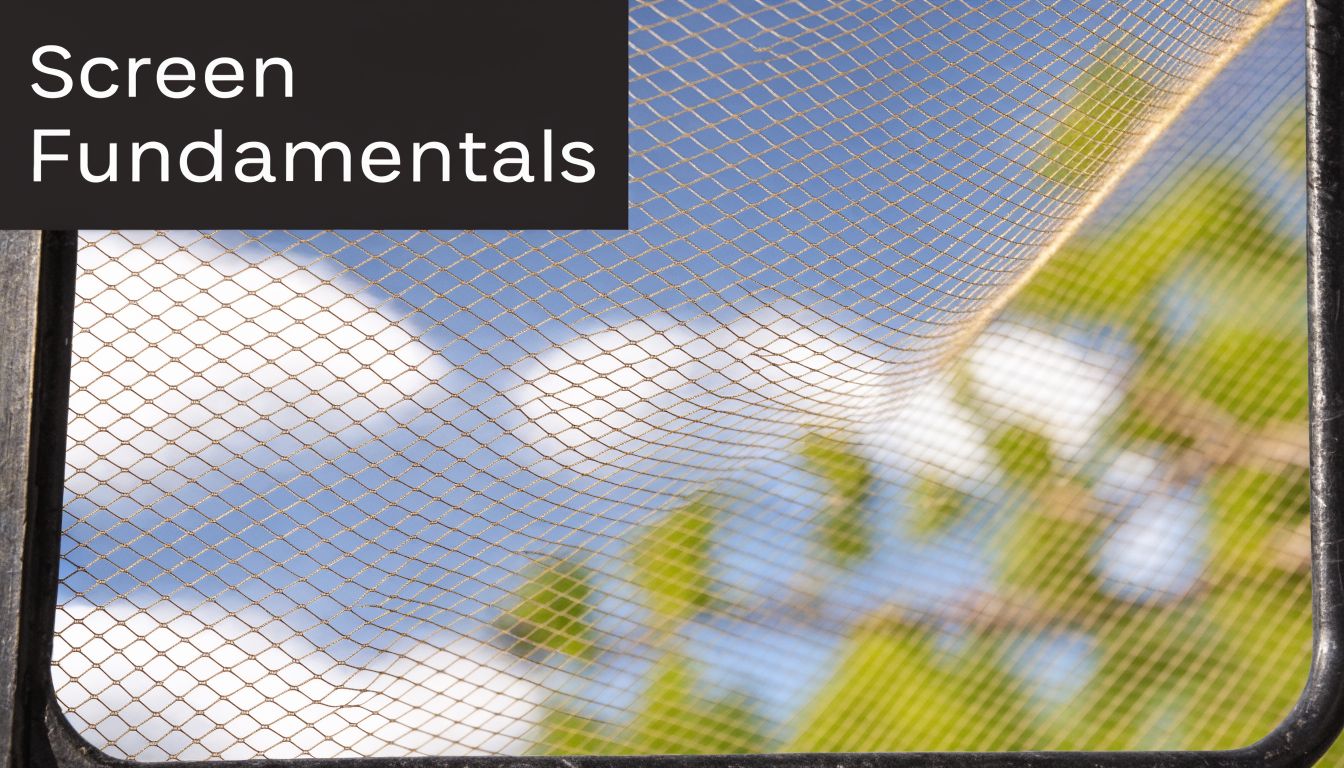
Mesh count tells you how tight the weave is. In plain terms, it affects three things at once:
- Bug protection
- Airflow
- How open the view feels
A standard 18×14 mesh is the common all-around choice. It balances insect control with decent airflow and visibility. A tighter 20×20 no-see-um mesh blocks smaller pests, but it also trims airflow and light transmission. According to Rescreen Rescue’s porch screen overview, no-see-um variants trade off 10–15% airflow and light transmission.
That trade-off matters in Arizona. If your porch already runs hot, a denser mesh can make the space feel more closed in. If tiny flying pests are your main complaint, that tighter weave may be worth it.
Material matters more than people think
Two screens can look similar from a few feet away and behave very differently over time. Material decides how the screen handles tension, cleaning, impact, and exposure.
Fiberglass is the workhorse. It’s flexible, forgiving during installation, and widely used because it’s affordable. According to Affordable Window Screens, fiberglass screens are the most common and affordable choice for porch enclosures at $0.20–$0.35 per square foot, and a 100-foot roll of 48-inch standard fiberglass screen costs around $75. The same source notes that fiberglass holds over 70% market preference in moderate climates because of its rust and corrosion resistance, while premium options climb sharply in price, including TuffScreen at $250 and stainless steel at $700–$1,000 per comparable roll.
Visibility and glare
Visibility isn’t just about how “see-through” a screen is. It also includes glare. In bright desert light, some screens feel more noticeable because the weave catches the sun.
Affordable Window Screens notes that fiberglass became the residential favorite over aluminum starting in the 1950s, and that its charcoal color can reduce glare by up to 30% in sunny conditions. That’s one reason standard charcoal fiberglass often looks better outside than a brighter, more reflective screen.
Practical rule: If preserving the view is your top priority, don’t look at screen samples indoors only. Hold them in direct sun.
How to think about airflow and cleaning
A screen with a tighter weave or heavier strand usually gives up something. It may block more sun, resist pets better, or handle wind exposure better, but the porch can feel slightly less open.
For maintenance, dust tells the truth fast. Fine mesh holds onto desert dust more than many homeowners expect. Heavier screens can also show surface buildup differently. That doesn’t make them bad. It just means screen choice should match how much upkeep you’re willing to do, especially on porches that face open desert, active roads, or frequent wind.
A Side-by-Side Comparison of Porch Screen Materials
If you’re trying to choose the best screen for porch use in Phoenix, start with performance, not marketing language. The material has to fit the exposure, how often the space gets used, and how much visibility you want to keep.
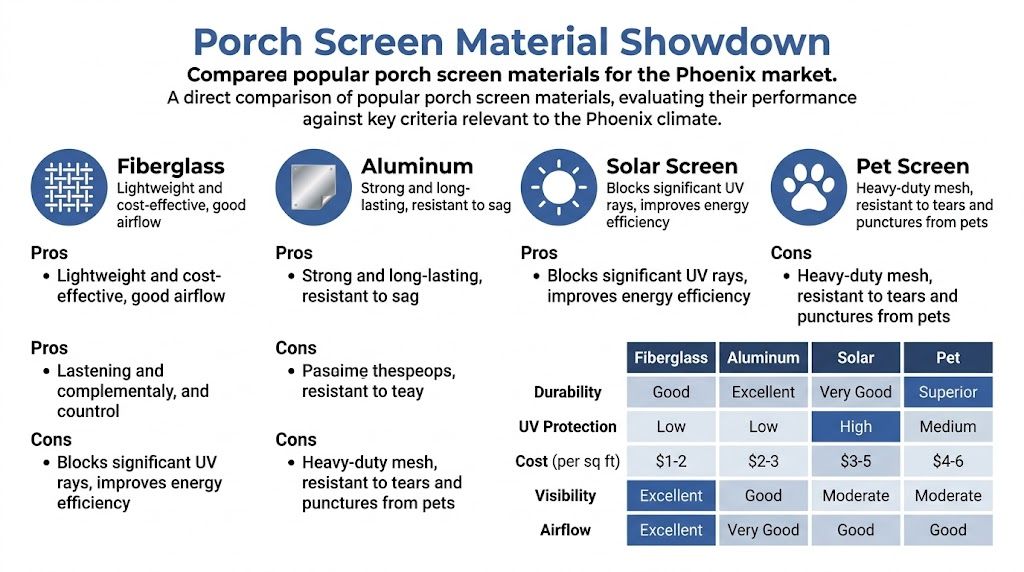
Here’s a quick comparison first.
| Material | Cost (Sq. Ft.) | Visibility | Airflow | UV/Heat Block | Durability | Best For |
|---|---|---|---|---|---|---|
| Fiberglass | $0.20–$0.35 | Good to very good | Good | Low | Moderate | Budget-friendly everyday porch screening |
| Aluminum | Qualitatively higher than fiberglass | Good | Good | Low | Good | Owners who want a firmer screen feel |
| Solar Screen | Qualitatively higher than standard fiberglass | Moderate | Good | 80% or more | Strong in high UV | Hot, sun-exposed porches |
| Pet-Resistant Screen | Qualitatively premium | Moderate | Good | Moderate | High | Homes with pets, active doors, rough use |
Fiberglass for value and easy use
Fiberglass remains the default for a reason. It’s flexible, easy to install, and gives a comfortable balance of price, bug control, and visibility. For a standard patio enclosure where the porch gets moderate use and you don’t need specialized performance, it’s often the sensible starting point.
In practice, fiberglass works well on many residential porches across the Valley, especially when the owner wants a straightforward screen that doesn’t fight the installer and doesn’t carry premium material cost. It also has good visibility, which matters when the goal is to enjoy a yard, pool area, or mountain backdrop without feeling boxed in.
The downside is durability under harder use. Fiberglass can tear more easily in homes with dogs, kids pushing furniture around, or doors that get bumped often. It also isn’t the best long-term answer for the harshest direct sun exposure.
Fiberglass gives you the best value baseline. It doesn’t win every category, but it avoids major compromises for many standard porches.
Aluminum for a firmer traditional feel
Aluminum has a more rigid character than fiberglass. Some property owners like that because it resists sagging and holds a straighter appearance. On certain framed installations, that firmer feel can look cleaner.
The trade-off is that aluminum can crease. Once it bends sharply, it doesn’t recover the way fiberglass can. In a busy residential setting, that matters. If a chair clips the panel or someone leans a ladder in the wrong spot, the damage is often more visible.
For Phoenix-area conditions, aluminum can still be a fit when the owner wants a classic screen look and values structure over flexibility. It’s just not usually my first recommendation for families or for porches that see a lot of casual wear.
Solar screen for Arizona sun control
On sun-heavy porches, solar screen moves from “upgrade” to “smart decision” quickly. According to Rescreen Rescue, solar screens block 80% or more of heat and UV rays, can reduce indoor temperatures by 10–20°F, and may cut air conditioning costs by up to 30%. The same source notes that solar screens have seen 25% adoption growth in Sun Belt states, while basic fiberglass can degrade 2–3 times faster under similar UV exposure.
That’s the Arizona case in one paragraph. If your porch gets hammered by afternoon sun, solar screen does something standard mesh does not do. It filters light, lowers glare, and makes the porch feel more usable at the times when people otherwise avoid it.
There is a trade-off. Solar mesh darkens the view more than standard fiberglass. You keep insect protection and still get airflow, but the look becomes more filtered. On a west-facing patio in Phoenix, many people find that worthwhile. On a shaded porch with a premium view, maybe not.
Pet-resistant screen for rough use
Pet-resistant screen solves a different problem. It’s for homes where standard mesh won’t survive normal life. Dogs paw at lower panels. Cats test corners. Moving traffic through a screened door puts strain on the same areas over and over.
The verified data describes vinyl-coated polyester alternatives as having 5x tear strength over fiberglass in the hot-climate source material. That lines up with what many installers and property owners expect from heavier-duty mesh. You get stronger resistance to punctures and tears, but the screen usually looks thicker and less invisible.
Best fit by Arizona priority
If you want the fastest way to narrow the field, match the screen to the problem:
- Budget and everyday use: Fiberglass
- Direct sun and heat control: Solar screen
- Pets and impact resistance: Pet-resistant screen
- A firmer, older-school screen feel: Aluminum
Where people usually choose wrong
The most common mistake is choosing based on first look alone. A screen sample held inside a store or garage won’t tell you what the porch will feel like during a bright Phoenix afternoon after a week of dust.
Another mistake is solving only one problem. Some owners focus only on visibility and ignore UV exposure. Others buy the heaviest screen they can find, then dislike how enclosed the porch feels. The best screen for porch use in Arizona usually comes from balancing three questions:
- How much direct sun does the porch get?
- How much abuse will the screen take?
- How much view are you willing to trade for durability or shade?
A porch can be bug-free and still not feel comfortable. In Phoenix, comfort usually depends on how well the screen handles sunlight, not just insects.
What works and what doesn’t
What works is matching the material to the exposure. Solar screen on a brutally sunny porch works. Fiberglass on a moderate-use patio works. Pet screen at the bottom panels of a family porch works.
What doesn’t work is using standard light-duty mesh in places where UV, pets, or regular impact will beat it up fast. That decision often looks cheaper only at the start.
Beyond the Basics Specialty Screen Systems
Material is only part of the decision. The system holding that screen matters too. On larger porches, luxury homes, and commercial properties, the frame design often changes the whole result.
Retractable and motorized systems
Retractable screens appeal to owners who want flexibility. Open when the weather is pleasant, closed when bugs or late-day sun show up. In Paradise Valley and parts of Scottsdale, that feature often matters as much as the mesh itself because the porch is part of the architecture, not just a utility enclosure.
These systems make the most sense when aesthetics are high on the list. They let the opening feel clean when the screen is up, and that helps on patios designed around views, outdoor kitchens, or sliding wall systems.
The catch is maintenance and installation precision. Tracks need to stay clean. Moving parts need proper adjustment. A poorly installed retractable system becomes annoying fast.
Wide-opening fixed systems
Some owners don’t want retractable hardware but do want fewer visual interruptions. Large-span systems such as SCREENEZE® are attractive because they reduce the chopped-up look of multiple narrow panels. That can make a big difference on porches that face golf courses, washes, or mountain views.
A cleaner, wider opening can also simplify day-to-day sightlines from inside the home. Instead of looking through a grid of vertical breaks, you get larger fields of view. For porches that already use overhead shade structures, ideas from awnings for decks can pair well with this approach because the shading and screening strategy work together.
Best use cases for specialty systems
These systems usually make sense in a few specific situations:
- Luxury residential projects: Clean lines matter as much as function.
- Commercial patios: Restaurants and hospitality spaces need flexibility and a polished look.
- Large-span porches: Wide views suffer when too many frame breaks get added.
- High-value outdoor living spaces: The porch acts like another room, so hardware quality becomes more important.
Specialty systems are worth it when the porch is a featured living space. They’re usually overkill when the goal is simply basic insect control on a small patio.
Some people overbuy here. A simple patio doesn’t always need motorization or a premium frame package. But when the opening is large, the view is important, or the owner wants an integrated finished look, the system can matter just as much as the mesh.
Our Recommendations for Your Phoenix-Area Property
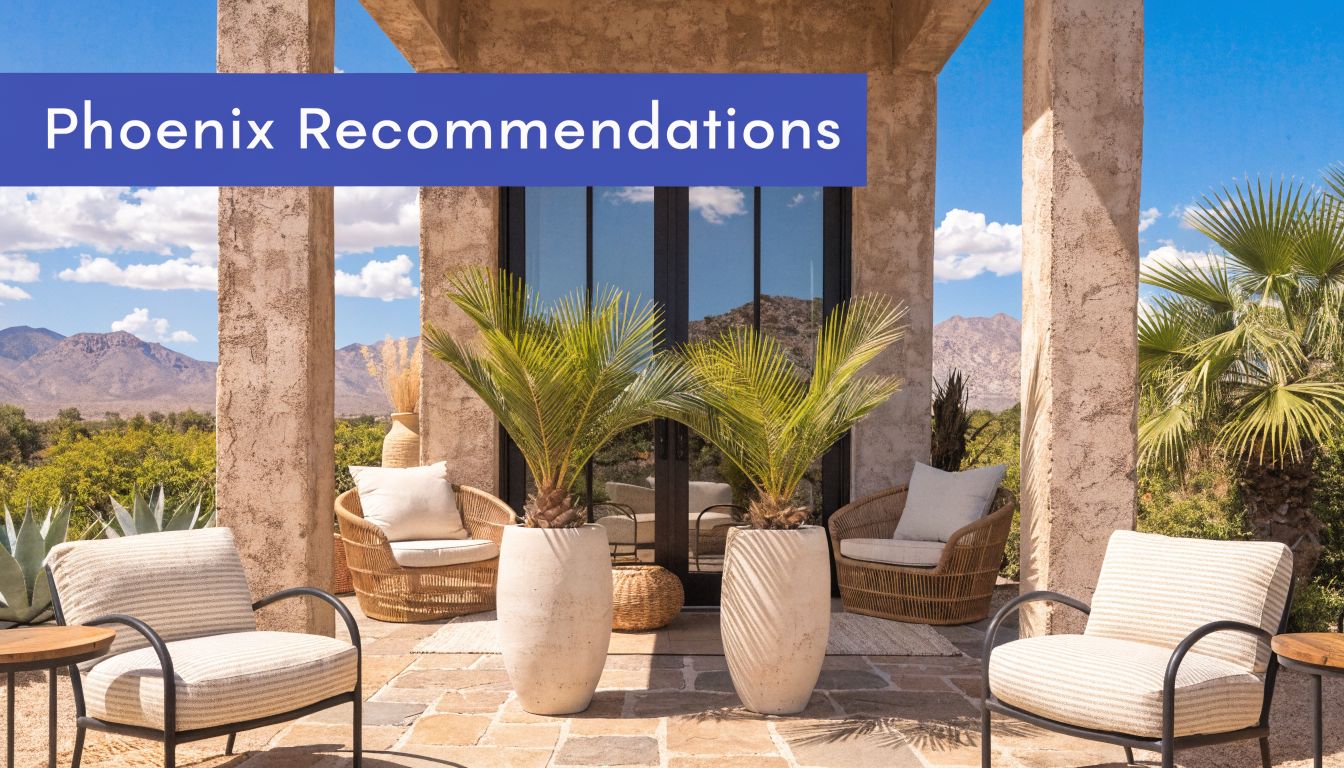
The best screen for porch projects in the Valley depends on how the space fails now. Too hot. Too fragile. Too dark. Too exposed to wind. Once that’s clear, the recommendation gets simpler.
For maximum sun protection
If the porch faces west or southwest and gets punished in the afternoon, solar screen is the strongest fit. That’s especially true in Chandler, Ahwatukee, Mesa-adjacent areas, and open neighborhoods where there’s little shade from mature trees.
This is the choice for people who say they love their porch but avoid it after lunch. You’ll give up some crispness in the view, but the comfort improvement is usually worth it when glare is the prevailing problem.
For families with pets and kids
For active households in Gilbert, Tempe, and many Phoenix suburbs, pet-resistant screen makes more sense than replacing torn standard mesh again and again. It isn’t as visually light as fiberglass, but it handles rough use better.
If the porch has a main traffic door and lower panels that constantly get touched, kicked, bumped, or scratched, durability should outrank perfect visibility. That’s one of the clearest trade-offs where heavier mesh wins.
For the cleanest view
If the property has a strong view line and the porch isn’t taking constant abuse, fiberglass still earns its place. It keeps the enclosure feeling open and remains the easiest value choice for many standard patios.
This works well for homeowners who care most about seeing out and who don’t need specialty performance. It’s also easier to live with when the porch is mostly used for quiet seating rather than heavy traffic.
For high-rise condos and commercial properties
This category needs a different mindset. On raised porches and exposed balcony conditions, the screen has to answer to wind, safety, and replacement frequency, not just appearance. According to Screen Tight’s guidance on choosing a porch screening system, recent IRC updates require child-resistant meshes and wind-load ratings, including up to 90mph in some Arizona zones. The same source notes that heavy-duty screens such as TuffScreen or Super Screen can show 40% fewer replacements in tests for wind-exposed porches.
That matters for downtown Phoenix condos, Scottsdale multifamily properties, and commercial patios on upper levels. Visibility isn’t the only factor anymore. Compliance, occupant safety, and maintenance cycles become part of the decision.
For elevated and high-traffic properties, the best screen isn’t the least visible one. It’s the one that holds up, stays compliant, and avoids frequent replacement.
A short visual example helps when narrowing options:
The shortest honest recommendation
If you want the direct version, here it is:
- Choose fiberglass for budget-minded standard porches with moderate use.
- Choose solar screen for hard sun exposure and better daytime comfort.
- Choose pet-resistant mesh when durability is more important than a near-invisible look.
- Choose heavy-duty screened systems for raised, code-sensitive, or wind-exposed properties.
That’s the practical answer most property owners need.
Pro Tips for Screen Installation and Maintenance
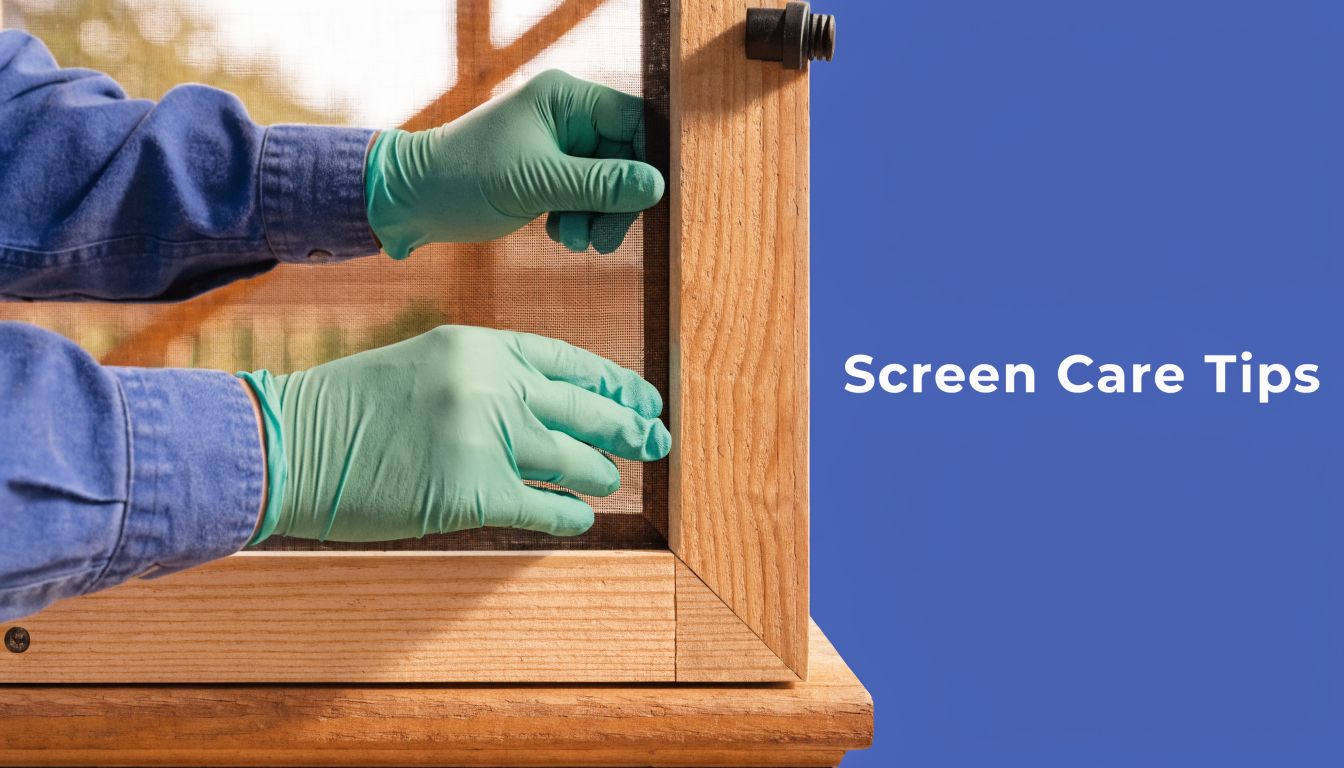
The screen you choose only performs as well as the install and the upkeep behind it. In Phoenix, that matters because dust exposes sloppy work fast. Loose corners, poor spline tension, dirty tracks, and neglected frames all show up sooner here than they do in milder climates.
When DIY is fine and when it isn’t
Small repairs and simple re-screen jobs can be manageable if the frame is square and the material is forgiving. Fiberglass is the easiest material for that. It flexes well and is less frustrating for basic replacement work.
DIY starts to break down when the porch has large spans, specialty systems, or premium mesh that needs even tension. On those projects, installation errors usually show up as sagging, pull-out, ripples, or early wear at stress points.
Cleaning screens without grinding dust in
Arizona dust is fine enough to cling to mesh and settle into tracks. The mistake people make is using too much pressure too quickly. That can drive grit deeper into corners or stress older screen material.
A safer routine looks like this:
- Dry-remove loose debris first: Use a soft brush or vacuum with a brush attachment.
- Wash gently: Mild soap and water are safer than harsh chemicals.
- Rinse without blasting: A hard spray can damage weaker mesh or loosen aging spline.
- Clean tracks and frames too: A clean screen next to filthy tracks still looks neglected.
For a more detailed process, this guide on how to clean window screens covers the practical basics well.
Maintenance habits that extend screen life
A porch screen doesn’t need constant attention, but it does need regular attention.
- Inspect corners and edges: That’s where tension problems begin.
- Check after wind events: Monsoon season can loosen sections you won’t notice at first glance.
- Don’t let dust cake on: Built-up grime cuts visibility and makes later cleaning harder.
- Watch lower panels: Pets, foot traffic, planters, and furniture do most of the damage there.
Clean screens aren’t only about appearance. Dirt buildup changes how much light comes through and makes good mesh look cheaper than it is.
What owners overlook most
People often clean the visible glass and ignore the screens. Then the porch still feels dull, even after the windows look great. On enclosed patios and covered outdoor spaces, the screen is often the surface that controls how bright and open the whole area feels.
Another common miss is forgetting the tracks and surrounding frames. If retractable or sliding components are part of the system, dirt in those channels creates avoidable wear and poor operation.
Frequently Asked Questions About Porch Screens in Arizona
How do I protect porch screens during a monsoon or haboob
Start with inspection before the season gets active. Look at corners, spline hold, frame attachment, and any loose sections. If the screen already has weak spots, wind and airborne dust will find them.
For retractable systems, keep tracks clear and follow the manufacturer’s storm guidance. For fixed screens, remove objects that can strike the mesh and check panels after major dust events.
Can solar screens really help that much with heat
For hard sun exposure, yes. The benefit is most noticeable on porches that get direct afternoon light and on nearby interior spaces that heat up through large openings. The effect is practical, not theoretical, because the screen is reducing the solar load before it reaches the porch.
What’s the best way to repair a small tear in fiberglass screen
A small tear can often be patched if the surrounding mesh is still sound. That’s a temporary answer for minor damage. If the screen is brittle, faded, loose, or tearing in multiple spots, replacing the panel usually makes more sense than stacking repairs.
How often should porch screens be professionally cleaned in Phoenix
That depends on exposure. Homes near open desert, busy roads, construction, or frequent wind usually need more attention than sheltered properties. If the porch starts looking hazy, the view feels muted, or tracks are loading up with dust, it’s time.
For owners comparing upkeep options, this page about sun screen cleaning in Phoenix Arizona is a useful reference point for local conditions.
Is fiberglass still a good choice in Arizona
Yes, when the porch has moderate use and doesn’t demand specialty performance. It remains a practical, affordable standard choice. It just isn’t the best fit for every exposure or every household.
What’s the best screen for porch projects with a view
If the view is the priority, standard fiberglass usually gives the cleanest, most open look among common options. If the porch also gets heavy sun, then the decision becomes a balance between visibility and comfort.
If your porch screens, windows, tracks, or exterior surfaces need professional care, South Mountain Window Cleaning, LLC serves Phoenix, Scottsdale, Paradise Valley, Chandler, Tempe, Gilbert, and surrounding Valley communities with residential, commercial, and high-rise exterior cleaning services. Whether you need routine window washing, screen cleaning, track detailing, or broader exterior maintenance, their team helps keep Arizona properties clear, clean, and easier to enjoy year-round.