
By late morning in Phoenix, a deck can stop being usable and start feeling like a griddle. The boards are hot, the railing throws almost no meaningful shade, and furniture fades faster than anticipated. A lot of homeowners in Scottsdale, Chandler, Gilbert, and Paradise Valley reach the same conclusion. They like their outdoor space, but they can’t enjoy it for very long without cover.
That’s where awnings for decks earn their keep. The right awning doesn’t just make a deck more comfortable. It changes how often you use the space, how much direct sun hits nearby windows and doors, and how much abuse your exterior surfaces take through another Arizona summer. For restaurants, retail patios, and commercial properties, that same shade can make an outdoor area more inviting while also helping manage solar heat gain on the building.
Reclaim Your Deck from the Arizona Sun
A deck without shade in the Valley often becomes wasted square footage. It looks good from inside the house, but it doesn’t function well once the sun shifts.
A well-chosen awning fixes that problem in a practical way. It creates a usable zone for outdoor dining, morning coffee, or customer seating. It also reduces direct exposure on deck boards, railings, outdoor furniture, and glass near the deck.
Why shade matters beyond comfort
For commercial properties, shade isn’t only about guest comfort. It can also support building efficiency. The relationship between deck awnings and energy efficiency for commercial properties is often overlooked, but motorized retractable awnings can reduce cooling costs for commercial buildings, restaurants, and retail storefronts by mitigating solar heat gain, positioning the investment as a practical operations decision rather than a cosmetic one.
For homeowners, the value shows up differently. You get a deck you’ll use, less glare through adjacent windows, and a stronger visual finish on the back of the home.
Practical rule: In Arizona, the awning itself is only half the decision. The other half is how well it holds up after months of UV, wind, dust, and monsoon grime.
A lot of property owners already understand the broader advantages of installing a shade structure, especially when a yard or deck gets hard afternoon exposure. What usually gets missed is the long-term maintenance side. Dust doesn’t just land on the deck. It settles into the awning fabric, coats the frame, and works into moving parts.
Your deck and awning work as one system
People often shop for an awning as if it’s a separate accessory. In practice, your deck, surrounding walls, windows, and drainage all work together.
If your deck already needs washing, sealing prep, or regular surface care, the awning becomes part of that same exterior maintenance cycle. That’s especially true around pools and entertainment areas, where splash, sunscreen residue, leaves, and dust all collect in one place. The same pattern shows up in outdoor hardscapes discussed in this guide to pool deck cleaning.
For Arizona properties, the best results come from thinking long term. Buy the right awning first. Then plan from day one for cleaning, inspection, and seasonal care.
Choosing Your Shade A Guide to Awning Types
The biggest mistake buyers make is shopping by appearance first. Start with function instead.
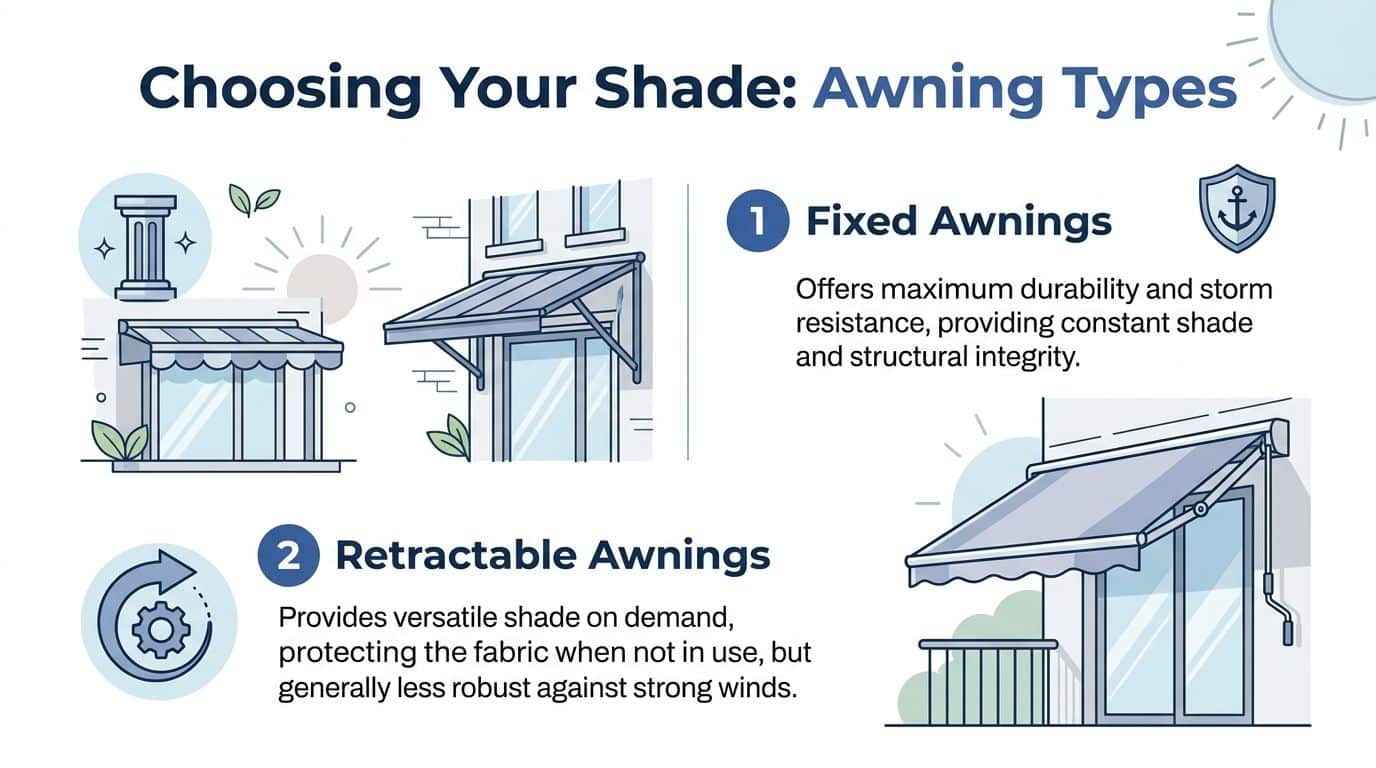
At a basic level, most awnings for decks fall into three useful categories. Fixed awnings, retractable awnings, and pergola-style canopy systems. Each solves a different problem.
Fixed awnings stay ready
A fixed awning is like a carport. It’s always there.
That constant coverage is the biggest advantage. You don’t have to think about extending it, retracting it, or whether someone remembered to close it before leaving. For certain homes and many commercial patios, that simplicity matters.
The trade-off is flexibility. You’re committing to permanent shade in that location, whether you want full sun in winter or not. Fixed systems also change the look of the structure all the time, not just when needed.
Fixed awnings make the most sense when:
- You want constant coverage: Good for doors, small decks, restaurant seating, and areas that need predictable shade every day.
- Your layout is simple: Straightforward wall lines and consistent sun exposure favor a fixed setup.
- You’d rather avoid moving parts: Fewer operational components can mean fewer things to service.
Retractable awnings give you control
A retractable awning is closer to a convertible roof. Open it when you need shade. Close it when you want sun or when weather turns.
That flexibility is why retractables are so popular on residential decks. They let you adapt to changing light during the day, and they protect the fabric when the awning is retracted.
Motorized systems are the easiest to live with, especially on larger decks. Standard dimensions for motorized retractable deck awnings range from 9 feet 6 inches to 40 feet in width, with projections of 8, 10, or 12 feet, and they’re engineered to handle wind loads up to 25 mph while reducing solar heat gain by 65% to 77% in high-UV environments like Phoenix, according to SunPro Products.
That said, “retractable” doesn’t mean “storm proof.” In Phoenix, sudden wind is the main issue. A retractable unit gives you a chance to protect the system by closing it, but only if you use it correctly.
Manual versus motorized
This choice usually comes down to convenience, deck size, and how disciplined you are about daily use.
| Type | Best fit | Main advantage | Main drawback |
|---|---|---|---|
| Manual crank | Smaller decks, tighter budgets | Simple operation, fewer electrical components | Less convenient, especially with frequent adjustment |
| Motorized | Larger decks, frequent use, commercial settings | Fast operation and easier day-to-day use | Higher upfront cost and more components |
If your deck gets harsh afternoon sun and you’ll open and close the awning often, motorized is usually the better fit. If the shaded area is modest and you don’t mind a crank, manual can still work well.
A retractable awning works best when the owner will actually use the retract function. If it stays open all season no matter the weather, you’re giving up one of its biggest benefits.
Pergola canopy systems fit a different situation
Pergola covers work well when you already have a structure or want something more architectural than a standard wall-mounted awning. They can define an outdoor room nicely, especially on deep decks or detached entertaining areas.
They aren’t automatically the best answer for every house. Pergola systems typically ask for more structure, more planning, and more attention to how dust and debris collect in tracks, seams, and overhead framing.
Choose them when you want the structure to be part of the design, not just the shade.
Built to Last Awning Materials for the Desert Climate
In Arizona, material quality isn’t a luxury upgrade. It determines whether your awning still looks good after a few summers.
Heat, UV, dust, and sudden rain punish cheap fabrics fast. A fabric might look similar in a showroom, then behave very differently once it has months of direct sun and airborne grit on it.
Fabric matters more than most buyers expect
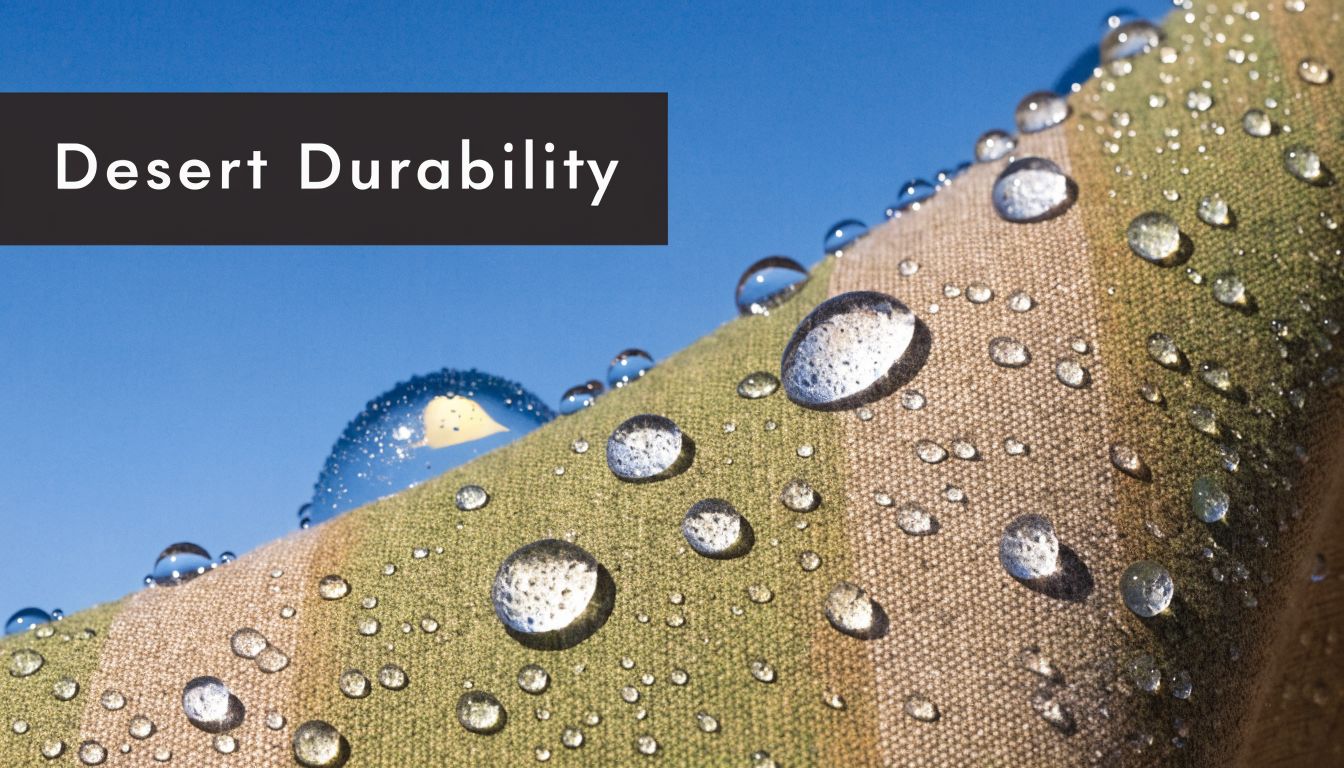
The biggest historical material shift came in the 1960s, when canvas was widely replaced by acrylic and polyester fabrics. Acrylic offers stronger resistance to fading, mildew, and water than traditional cotton duck, which is why it became the better fit for harsh climates, as noted by Eclipse Shading.
That shift still matters today because many buyers compare fabrics based on color or price first. In Phoenix, start with durability.
What to look for in deck awning fabric
If you’re comparing options, focus on how the material ages, not how it looks on day one.
- Solution-dyed acrylic: The standard I’d steer most Arizona buyers toward. The color is built into the fiber itself, so it holds appearance better under strong sun.
- Vinyl: It offers wear resistance and can work in some applications, but it may not be the look every homeowner wants on a residential deck.
- Basic canvas or lower-grade fabric: With these, people often save money upfront, then regret it once fading, dirt retention, and cleaning difficulty show up.
A practical question to ask the seller is simple: how easy is this exact fabric to clean after dust buildup, pollen, bird droppings, and hard water exposure? If the answer is vague, keep digging.
Frame choices also affect lifespan
Fabric gets most of the attention, but the frame carries the load and takes the weather.
For most homes, powder-coated aluminum is the smart choice. It’s lightweight, durable, and well suited to exterior use. On larger or more specialized installations, steel may come into play, but that usually means more weight and more demand on the mounting surface.
Ask these questions before you buy
- What fabric is being quoted? Don’t accept “premium outdoor fabric” as the full answer.
- What frame finish is included? Surface finish affects appearance and long-term cleanup.
- How exposed is the fabric when retracted? Protection in the closed position matters in dusty conditions.
- What does the underside look like when dirty? Some colors and patterns hide dust much better than others.
Some fabrics clean up well with gentle methods. Others seem to trap fine desert dust in a way that never quite looks fresh again. That difference becomes obvious after the first big wind event.
Color choice matters too. Very light solids can show every streak and drip. Very dark fabrics can highlight dust, bird activity, and water spotting. Mid-tone patterns often age more gracefully from a maintenance standpoint.
Perfect Placement Sizing and Installing Your Deck Awning
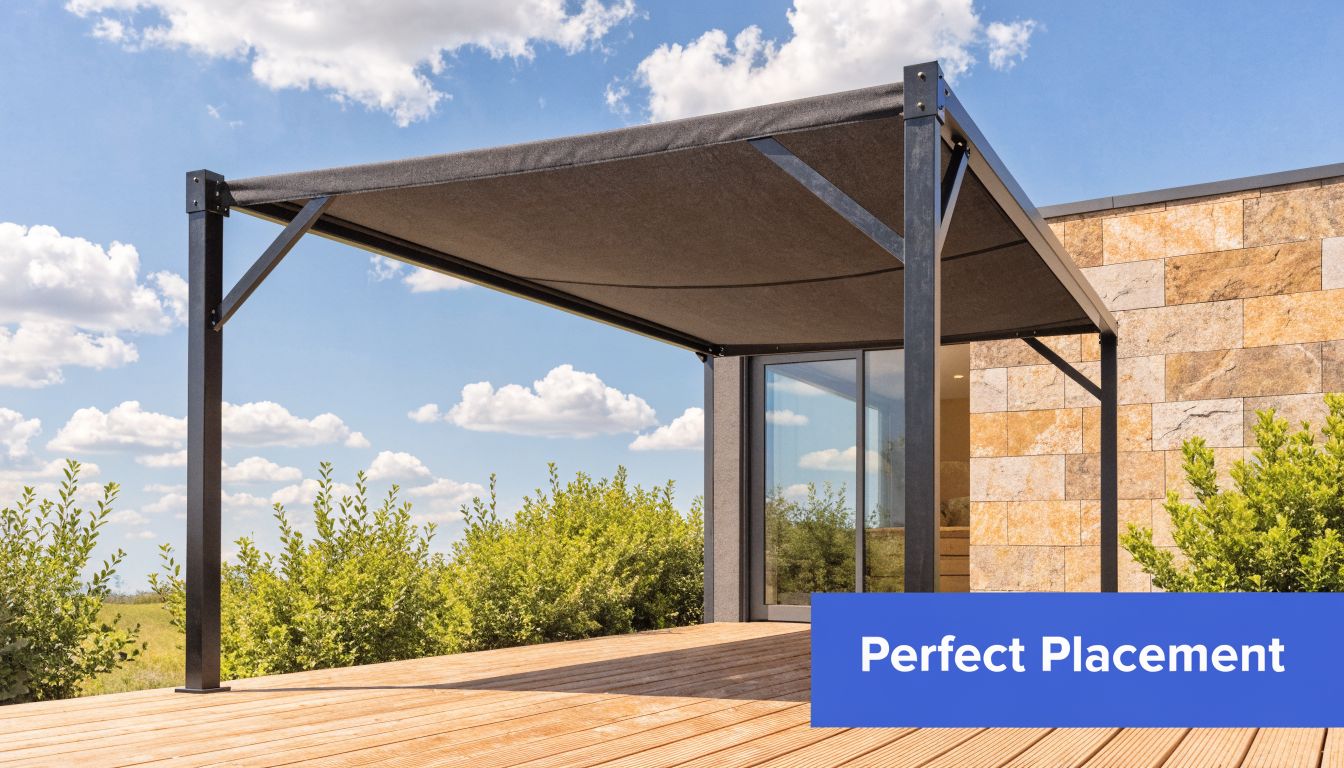
A good awning can still disappoint if it’s too shallow, too narrow, or mounted too high. Placement is where comfort, drainage, and appearance all meet.
Most sizing problems come from buying for the wall instead of buying for the shaded area. The wall is where the unit mounts. The deck is where the awning has to perform.
Measure the part of the deck you actually use
Start with furniture and traffic, not just deck dimensions.
If your dining set sits near the house, you may not need the deepest projection available. If your seating area reaches well out into the deck, a shallow projection won’t help much during the hottest hours.
A few field rules make this easier:
- Mark your seating zone first: Measure the table, chairs, or lounge arrangement in the position you use.
- Allow for edge coverage: Light slips in from the sides faster than many buyers expect.
- Watch the sun path: West-facing decks usually need more thoughtful projection and optional valance protection than mild morning exposure.
Width and projection should work together
Manufacturers commonly offer deck awning projections from 8 to 14 feet, and many deck-focused retractables are sized around 8, 10, or 12 feet of projection. Bigger isn’t always better.
An awning that’s too narrow leaves awkward sun gaps. One that projects too far without the right pitch can create runoff and performance problems.
For some deck projects, surface prep matters before the awning is ever installed. If the boards are weathered, stained unevenly, or packed with grime, clean them before you build shade over the area. This article on when to wash a deck before staining explains why timing that prep work correctly matters.
Pitch is not optional
Many installations go wrong because the awning needs to shed water and maintain usable clearance.
Manufacturers recommend the 3/12 pitch rule. For a 10-foot projection awning, that means the mounting height should allow for a 30-inch drop from the roller to the front bar, giving about 7 feet of clearance when extended and helping prevent fabric stress and pooling, according to Sunair Direct.
That sounds technical, but the takeaway is simple. A flat-looking awning may look clean in a photo and perform poorly in real weather.
If a retractable awning can’t shed light rain properly, the fabric takes the punishment. Pooling stretches material and puts stress on the frame.
Here’s a quick visual walkthrough of installation factors and layout considerations:
When to call a professional installer
A straightforward wall mount on solid framing is one thing. Roof mounts, masonry, unusual overhangs, and second-story applications are another.
Bring in a qualified installer when:
- Mounting conditions are complicated: Stucco, masonry, roof brackets, and limited backing need careful evaluation.
- The unit is large: Bigger awnings place more demand on hardware and structure.
- You want motorization or sensors: Electrical coordination and setup should be clean and reliable.
- Local approvals may apply: Some municipalities and HOAs may require review before installation.
For Paradise Valley, Gilbert, and similar communities, don’t assume your project is too small for permit or HOA scrutiny. Check first. It’s easier than correcting a finished installation later.
Budgeting for Your Awning and Arizona Climate Factors
The complete budget for awnings for decks isn’t just the purchase price. It’s the purchase price plus the cost of making a smart choice for Phoenix weather.
That means some upgrades are optional, and some aren’t.
What changes the final price
The biggest pricing variables are type, size, material quality, frame design, and how the awning operates. A manual retractable unit will generally cost less than a motorized one. A basic fabric will generally cost less than a premium acrylic. A simple wall mount is usually easier than a more complex install.
Those are ordinary pricing differences. Arizona climate adds another layer.
A bargain awning can turn expensive if it struggles with intense UV, traps dust, or takes damage the first time strong wind catches it open. That’s why buyers should budget around risk, not just around the initial quote.
Features that deserve priority in Phoenix
For many Arizona properties, these are the features worth protecting in the budget:
- Better fabric quality: Easier cleaning and better appearance retention matter after repeated dust exposure.
- Strong frame and hardware: Monsoon season doesn’t care that you chose the cheaper arms.
- Motorized operation for larger systems: Convenience increases the odds that owners will retract the awning when needed.
- Wind-responsive protection: If available for the system you’re buying, this isn’t fluff in a storm-prone market.
Awnings also affect the materials below them. Shade can help preserve deck surfaces, but only if the deck itself is in good condition and maintained properly. If you’re comparing long-term exterior upkeep, this discussion of a deck's lifespan in harsh climates is useful context.
Don’t separate the awning budget from the cleaning budget
This is the part buyers often skip. They budget for the product, then treat maintenance as an afterthought.
That works poorly in the desert. Dust from a haboob doesn’t politely rinse off every fabric. Some materials hold grime, some show every stain, and some clean up far better with the right process. If your property already needs regular washing for walkways, walls, or hardscape, include the awning in that exterior care planning from the start.
If you’re trying to map out overall exterior maintenance costs for a home or commercial property, this guide on the cost of pressure washing helps frame how surface cleaning fits into the bigger picture.
A good awning budget is realistic. It accounts for sun, dust, wind, cleaning, and the fact that cheap materials usually become expensive through frustration.
Protecting Your Investment Awning Cleaning and Maintenance
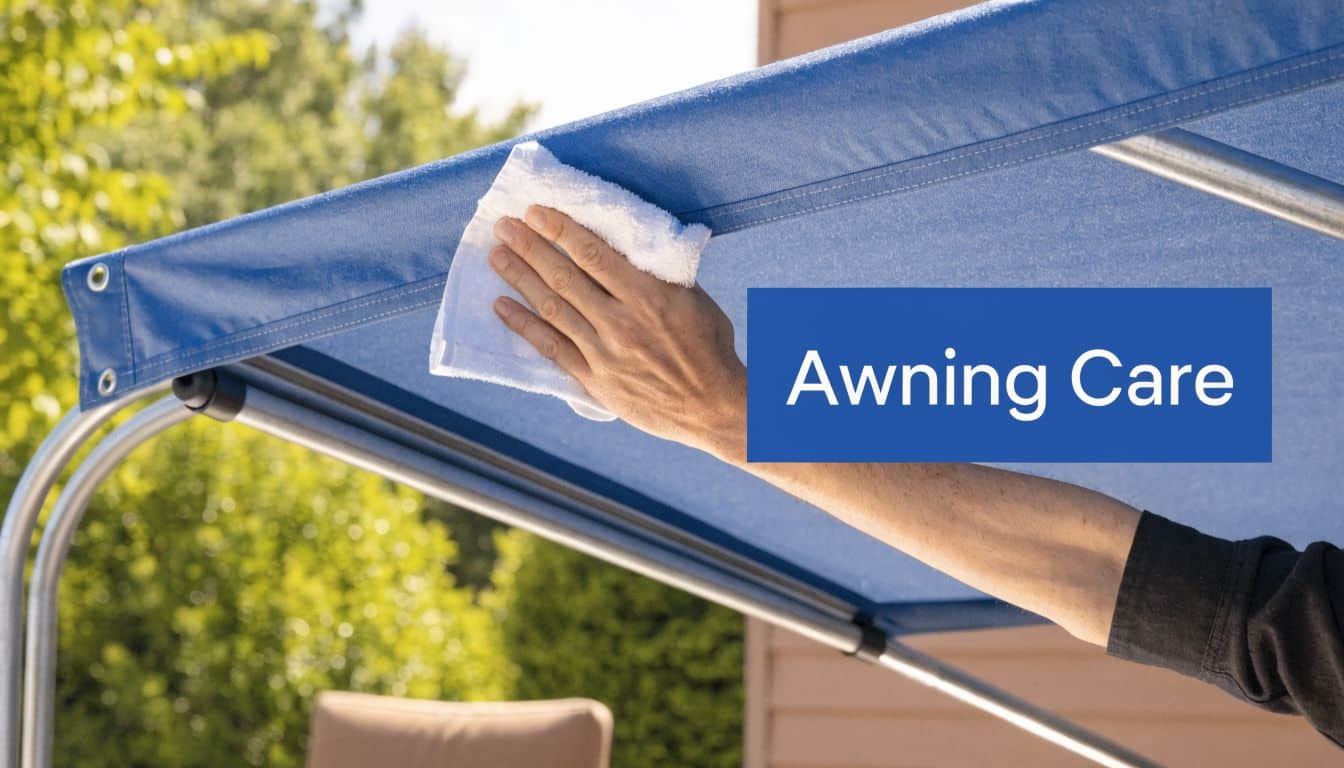
Most awning guides stop at selection and installation. That’s a problem in Arizona, because maintenance is where owners either protect the investment or slowly lose it.
Existing online content covers awning types and installation far more than ongoing care in dusty, sun-intense climates like ours. Homeowners and property managers get very little practical guidance on maintenance, even though that’s one of the biggest factors affecting appearance and service life.
What homeowners can handle themselves
Routine upkeep does help. The key is keeping it gentle and consistent.
A simple DIY approach includes:
- Rinse off loose dust: A gentle hose rinse can remove surface dust before it works deeper into the fabric.
- Clear leaves and debris: Don’t let organic material sit in folds, corners, or cassette areas.
- Check moving parts: Look for anything binding, rubbing, or not closing evenly.
- Open a damp awning to dry when conditions allow: Storing moisture inside a closed unit is asking for trouble.
- Watch for bird droppings early: These are easier to address when fresh than after they bake into the fabric.
That’s the maintenance equivalent of sweeping your floors. It’s necessary, but it isn’t deep cleaning.
What doesn’t work well
Arizona dirt is fine, dry, and persistent. After wind events, you often get a layer of grime that isn’t just sitting on top. It settles into weave, seams, and hardware. Add pollen, bird mess, nearby tree residue, and splash from hard water, and a quick rinse stops being enough.
Common mistakes include:
| Mistake | Why it causes trouble |
|---|---|
| Using harsh chemicals | They can strip finishes or damage fabric performance |
| Scrubbing aggressively | This can distort fibers or leave visible wear patterns |
| Pressure washing too hard | Fabric and stitching can be damaged by overly aggressive pressure |
| Ignoring the frame | Dirty arms, housings, and joints affect operation and appearance |
Desert dust isn’t just cosmetic. Once it builds up, it can hold grime against the fabric and make the whole system look older than it is.
When professional cleaning makes sense
There’s a clear point where DIY cleaning stops being effective. If the awning has widespread staining, embedded dust, bird droppings, traffic grime from a commercial setting, or residue near seams and joints, a professional cleaning is the safer route.
Professional exterior cleaners can approach the awning as part of the whole envelope of the property. That matters because awning cleaning often overlaps with nearby windows, screens, stucco, decking, and railings. The job isn’t just getting the fabric wet. It’s using the right pressure, the right tools, and fabric-safe cleaning methods so you improve the awning without shortening its life.
The same principle applies to related shade products around the house. If you’ve seen how quickly mesh and screening collect dust, this guide to sun screen cleaning in Phoenix, Arizona shows why specialized cleaning methods matter.
A practical maintenance rhythm
You don’t need a complicated spreadsheet. You do need consistency.
Try this approach:
- After major dust events: Inspect the top surface, front bar, and frame as soon as it’s safe.
- During heavy-use seasons: Do light cleaning and visual checks more often.
- Before and after monsoon season: Look for looseness, staining, pooling signs, and operational issues.
- Before hosting or peak business periods: Clean for appearance, not just preservation.
Commercial properties should be especially disciplined. A dirty awning over a storefront or patio sends the wrong signal fast. Residential owners feel the same thing when they look out the back windows and see stained fabric hanging over an otherwise clean deck.
Awning care is part appearance, part protection, and part prevention. In Phoenix, neglect shows up quickly.
Enjoy Your Outdoor Oasis for Years to Come
A good deck awning earns its place fast in Arizona. It turns harsh, exposed space into an area you can use. For homes, that means more comfortable outdoor living. For commercial properties, it means a more functional exterior area that supports comfort and curb appeal.
The best results come from making solid decisions at every stage. Choose the right awning type for how you’ll use the space. Buy materials that can handle desert sun. Install it at the right width, projection, and pitch. Budget for performance, not just for the sticker price.
The part many buyers miss is what happens after installation. Dust, UV, debris, and seasonal weather keep working on the awning long after the sales process is over. Regular inspection and proper cleaning are what protect the appearance of the fabric, the operation of the hardware, and the overall value of the investment.
That’s especially true in Phoenix, Scottsdale, Tempe, Chandler, Gilbert, and Paradise Valley, where exterior surfaces never stay clean for long without a plan. Awnings for decks aren’t set-it-and-forget-it products here. They’re part of the same exterior system as windows, screens, hardscape, stucco, and deck surfaces.
When owners treat them that way, awnings last better, look better, and keep doing the job they were bought to do.
If your deck awning, windows, screens, hardscape, or exterior surfaces need professional care, South Mountain Window Cleaning, LLC can help. The company serves Phoenix, Scottsdale, Paradise Valley, Chandler, Tempe, Gilbert, and surrounding communities with expert exterior cleaning for homes, commercial properties, and high-rise buildings, helping your entire property stay cleaner, sharper, and easier to enjoy in Arizona’s demanding climate.