
A lot of Phoenix properties look clean at first glance and still feel unfinished. The glass may be clear, but the window tracks are packed with desert dust, the screens are dull, and the corners around frames still show mineral staining. From the street or from a lobby entrance, those details change the whole impression.
That gap is where above and beyond cleaning starts to matter. It isn’t about adding fluff to a work order. It’s about handling the parts of the property that affect appearance, wear, maintenance, and how long the result lasts in Arizona heat, dust, and hard water conditions.
Your Property is Clean But Is It Truly Finished
Most property owners have seen the same disappointing result. A crew finishes the windows, steps back, and the glass looks better. Then the sun shifts.
You notice dust trapped in the tracks. The screens still mute the view. Hard water around the edges catches the light. The job was completed, but it doesn’t look complete.
That happens because standard cleaning often targets the most visible surface and skips the system around it. On a Phoenix home, that usually means the pane gets attention while the frame, sill, screen, and track carry the grime that built up through wind, irrigation overspray, and months of dry air.
For commercial buildings, the issue is even more obvious. Storefront glass can be clean at eye level, yet the entry still looks neglected if the lower frames are chalky, the corners are dusty, or traffic areas nearby are stained. Customers don’t separate those details. They read the whole entrance at once.
A better standard treats the finished look as the goal, not just the completed task.
- Glass alone isn’t the full job: If debris stays in the tracks, the opening still looks dirty.
- Arizona dust settles everywhere: Screens, frames, ledges, and seals collect what the glass doesn’t show.
- Missed details shorten the result: Residue around the edges makes a property look tired again faster.
One of the easiest ways to see the difference is screen care. Dirty screens can make freshly cleaned windows look hazy from inside the room. Property owners who want a clearer view between appointments should understand proper maintenance and cleaning methods, especially on homes exposed to regular dust. This practical guide on how to clean window screens explains why that step is often underestimated.
Clean should hold up in daylight, at angles, and from the curb. If it only looks good when you stand directly in front of the glass, the work wasn’t finished.
Defining the "Above and Beyond" Cleaning Philosophy
A standard car wash removes obvious dirt. A high-end vehicle detail restores the surfaces people touch, see, and judge up close. That same difference applies to property care.
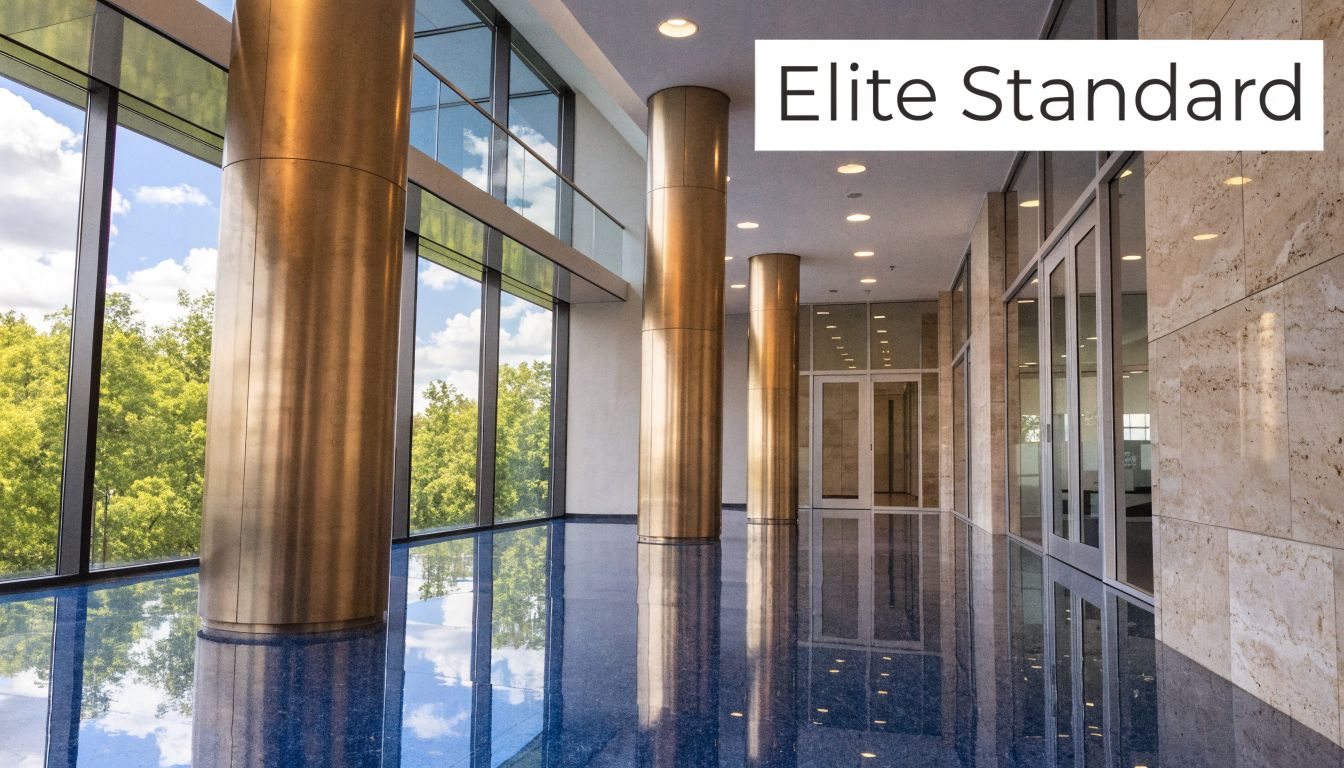
Above and beyond cleaning means treating the building as a complete visual and functional system. The glass matters, but so do the tracks, frames, screens, sills, pressure-washed approaches, and problem areas that age the property faster than owners expect.
It starts with a wider standard
When crews think only in terms of “window cleaning,” they often stop at visible soil. When professionals think in terms of asset care, they look for what will affect the next month, the next season, and the next inspection.
That shift changes the work:
First principle: Clean the components around the surface, not just the surface itself.
Tracks that stay loaded with grit keep spreading debris. Frames with mineral residue make good glass look average. Entry concrete with grease, gum, and runoff stains lowers the impact of an otherwise polished building.
Good cleaning is preventive
Property owners usually pay more when they wait too long. Not always in the invoice, but in restoration time, cosmetic wear, and recurring frustration.
Above and beyond cleaning favors maintenance over rescue work. That means removing buildup before it bonds harder, addressing runoff stains before they become permanent-looking, and keeping high-traffic surfaces on a schedule instead of reacting once they already look rough.
A similar mindset shows up in adjacent maintenance categories too. If you want a simple example of how “beyond clean” thinking applies to surfaces people use every day, this Beyond Clean Guide is a useful reminder that proper cleaning standards depend on the setting, the material, and the end use.
The result should improve appearance and longevity
A better cleaning philosophy has three practical goals:
| Focus | What it means on site |
|---|---|
| Presentation | The property looks finished from curb to threshold |
| Protection | Debris, minerals, and grime are removed before they wear surfaces down |
| Consistency | Results hold up better between service visits |
A premium result isn’t about doing more random tasks. It’s about doing the right details that change the final appearance and protect the surface.
That’s what separates a checklist service from professional care.
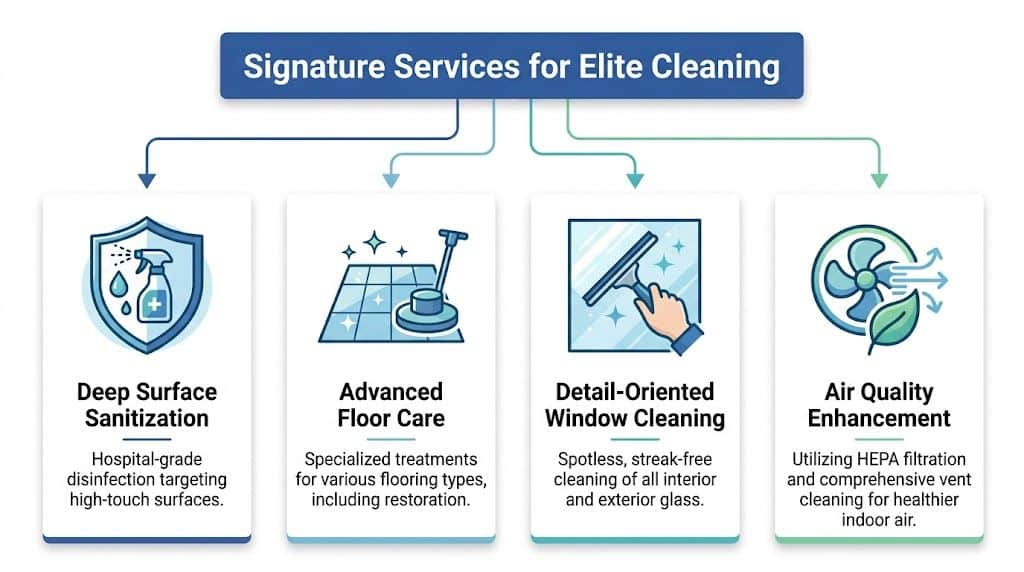
Signature Services of an Elite Cleaning Standard
An elite standard becomes obvious when you look at the work that most crews skip. These aren’t vanity add-ons. In Phoenix, they solve common problems that affect appearance, maintenance, and long-term condition.
Screen and track care that actually changes the view
Dirty screens can make clean glass look cloudy from indoors. Packed window tracks do the same thing to the edges and corners of the opening.
In Arizona, this buildup comes fast. Wind carries fine grit into the channel. Landscaping dust settles into corners. Monsoon residue sticks where moisture briefly hits and then dries.
A serious cleaning standard deals with all of it.
- Screens need separate handling: They collect dust differently than glass and need more than a quick brush-off.
- Tracks need extraction, not just wiping: Loose grit has to be removed before final detailing, or it smears into muddy residue.
- Frames finish the look: Even clear panes look incomplete next to dusty borders.
That’s one reason exterior maintenance often has to be approached as a package rather than as isolated chores. Property owners comparing exterior upkeep options can see how these services fit together in a broader house exterior cleaning service plan.
Hard water and rust removal require judgment
Phoenix properties deal with mineral deposits constantly. Irrigation overspray, sprinkler drift, hose runoff, and neglected dripping lines leave marks that ordinary soap and a squeegee won’t fix.
Inexperienced work can lead to damage. Aggressive scraping, incorrect chemical application, or insufficient dwell-time control can result in scratching, hazing, or frame discoloration. Good technicians know when a stain is removable, when it needs specialty chemistry, and when the safer choice is to improve the appearance without overpromising a full restoration.
The main trade-off is simple:
| Approach | What happens |
|---|---|
| Quick wash only | The glass improves, but bonded spotting stays |
| Improper stain attack | Surface risk goes up |
| Controlled restoration | Appearance improves with less risk to glass and surrounding materials |
Field rule: If hard water has baked into the glass or trim for a long time, removal is a restoration task, not a routine cleaning task.
That distinction matters because it sets expectations and protects the property.
Dumpster pads and high-traffic sanitation protect first impressions
Many commercial properties spend money on visible façade cleaning while neglecting the ugliest operational areas. Dumpster pads, loading zones, drive-thrus, breezeways, and service entries often carry the odors, grease, staining, and residue that create complaints first.
Those areas affect more than appearance. They influence tenant satisfaction, employee perception, and how the entire property feels to vendors and visitors.
For property managers, these zones deserve routine attention because they tend to collect:
- Food and liquid residue
- Grease transfer from carts, bins, or vehicles
- Organic buildup that creates odor
- Dark staining that makes the whole site look unmanaged
A polished storefront loses impact fast when the route to the side entrance looks neglected.
Solar panel cleaning supports performance and upkeep
Solar panels are easy to ignore because they sit out of direct sight. That’s exactly why many owners leave them too long.
In the Valley, dust film, bird droppings, and grime reduce the amount of light reaching the panel surface. Even when the panels still look acceptable from the ground, production can be affected by residue that a close inspection reveals right away. The key is using methods that clean effectively without adding scratch risk or leaving mineral residue behind.
This service is part of the same above and beyond cleaning mindset. The point isn’t just to make panels look better. The point is to maintain a productive surface with the right tools, soft contact, and purified rinse methods where appropriate.
The common thread
Each of these services solves a specific problem. Together, they create a cleaner, sharper, better-maintained property.
Standard service usually answers the question, “Was the main task done?” Elite service answers a different one: “Did the property leave a finished impression when the crew left?”
The Technology and Training Behind a Flawless Finish
Good results don’t come from effort alone. They come from the right water, the right tools, and technicians who know when one method is safer than another.
That matters in Phoenix because local conditions punish shortcuts. Hard water leaves residue. Dry air bakes deposits in place. Dust sticks to anything left behind on the surface.
Why pure water changes the result
One of the biggest upgrades in professional exterior cleaning is the pure-water system. Pure-water systems use deionized water at 0-10 ppm TDS to eliminate mineral deposits, reducing re-soiling rates by up to 95% compared to traditional methods. That matters in Arizona, where tap water can measure 150-400 ppm TDS, leaving residue that attracts dust and creates spots, as noted by Above and Beyond Clean LLC.
The science is straightforward. If the rinse water contains dissolved minerals, those minerals stay behind when the water evaporates. In bright sun, they show up fast. If the rinse water is properly purified, it dries without leaving that mineral film.
For exterior glass, that means fewer spots and a cleaner finish that holds up better.
Tools matter, but only when the method matches the surface
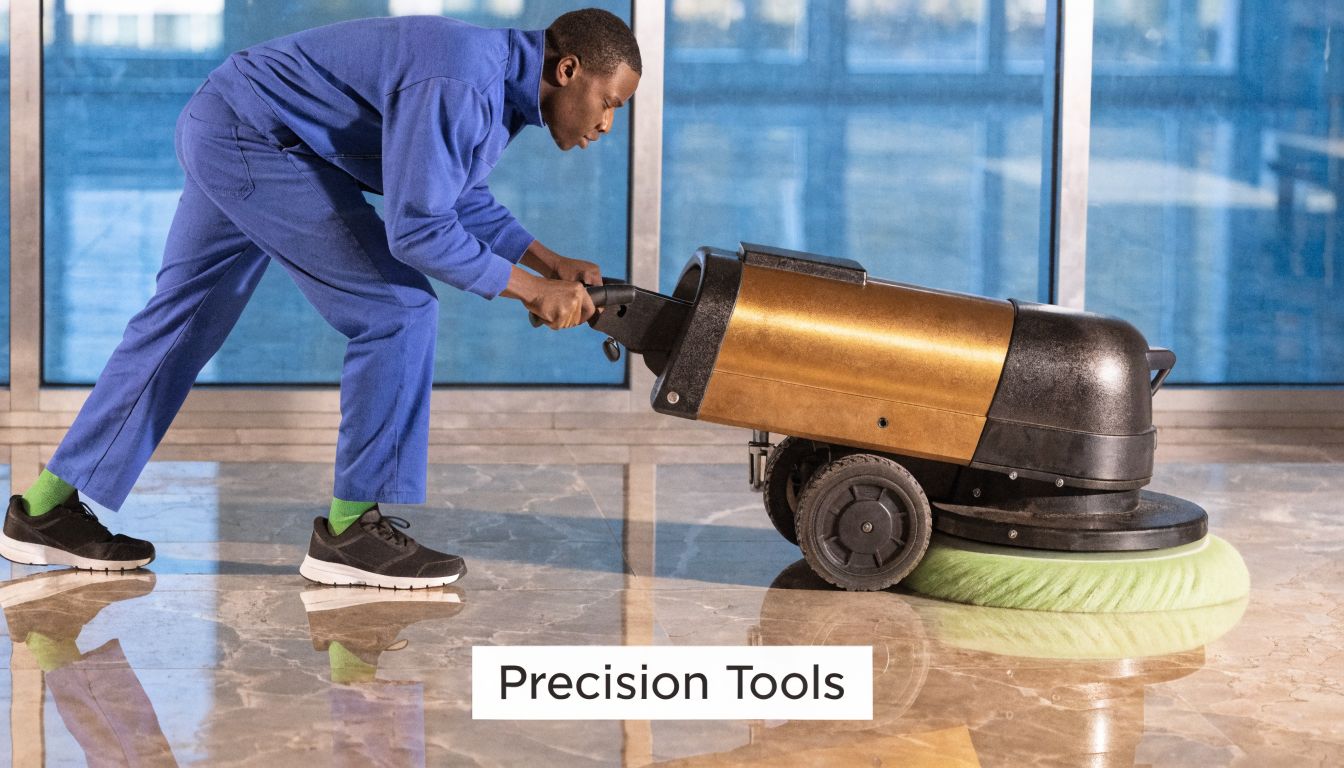
A quality crew doesn’t use one approach for every job. They switch between pure-water poles, professional squeegees, soft-bristle brushes, detailing towels, and restoration tools based on the surface, access, and contamination.
The wrong match creates problems.
- Too much pressure on delicate surfaces: Finish damage becomes a risk.
- The wrong brush material: Coatings and trim can suffer.
- Soap-heavy shortcuts: Residue stays behind and attracts dirt.
- Poor towel work around edges: Drips and corner marks show up after drying.
Homeowners often ask what separates store-bought tools from professional setups. This overview of what professional window cleaners use gives a clear sense of why equipment choice affects the finish.
Purified water is only as good as the technician using it. If the brush work is sloppy or the frames are ignored, the final result still looks weak.
Safety training is part of quality
For commercial and high-rise work, safety isn’t separate from service quality. It is part of the service.
A well-trained technician protects glass, frames, surrounding finishes, pedestrians, and the building itself. On larger properties, teams need clear site procedures, controlled work zones, and disciplined tool handling. If that discipline is missing, small mistakes become expensive ones.
That’s also why reputable companies invest in repeatable process. On complex buildings, consistency matters more than speed. A crew that knows how to work methodically will usually deliver the better result.
Proof of Performance Why Trust Is Non-Negotiable
Property owners don’t just hire for a clean result. They hire for reliability, judgment, communication, and risk control. In residential work that protects the home. In commercial and high-rise work, it protects the asset, the schedule, and everyone around the jobsite.
Reviews show consistency
One good review doesn’t tell you much. Consistent feedback over time does.
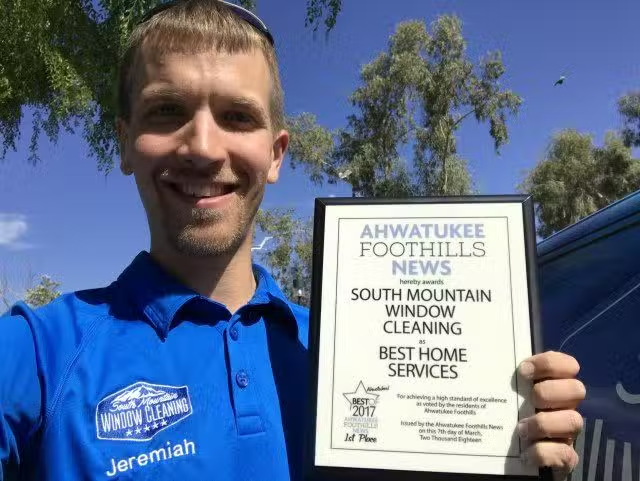
South Mountain Window Cleaning has over 400 five-star reviews, showing a strong record of customer satisfaction across Valley homes and businesses, according to South Mountain Window Cleaning. That kind of review history matters because it usually reflects repeatable habits: showing up on time, communicating clearly, and delivering work that matches what was promised.
A professional cleaning company should also make it easy for clients to understand service scope, scheduling, and follow-up. If you’re evaluating providers, a strong starting point is to review the standards and positioning of an established window cleaning company.
Insurance is not a footnote
Insurance often gets mentioned quickly and then ignored. That’s a mistake.
South Mountain Window Cleaning is backed by a $2 million general liability insurance policy, which provides protection for residential, commercial, and high-rise properties in the Phoenix area, according to the same company source linked above.
For homeowners, that means peace of mind. For property managers, it means the vendor understands that risk management is part of professional service.
Trust also comes from operational maturity
When a company handles demanding work, you can usually tell by the way it runs jobs. The signs are practical:
- Clear scheduling and communication
- Defined scope of work
- Attention to access and safety
- Professional appearance on site
- Consistency across residential and commercial settings
Those are the traits that support an above and beyond cleaning standard. Without them, even good tools and strong intentions won’t carry the job.
The best cleaning companies don’t ask clients to gamble on effort. They reduce uncertainty before the work starts.
Your Phoenix Property Deserves the Best
Phoenix properties take a beating. Dust settles fast. Sun exposes every streak. Hard water leaves visible residue. Busy commercial sites collect grime in all the places customers notice first.
That’s why “good enough” cleaning usually isn’t good enough for long.
Homeowners in Phoenix, Scottsdale, Paradise Valley, Gilbert, Chandler, and Tempe benefit from a service standard that protects curb appeal and reduces the cycle of quick deterioration. Property managers need the same thing for storefront glass, common areas, entrances, walkways, and exterior surfaces that shape tenant and visitor perception every day.
The practical value is clear:
- A sharper appearance: The property looks finished, not partially cleaned.
- Less avoidable wear: Dust, minerals, and buildup are handled before they become bigger problems.
- Better long-term upkeep: Routine detail work is easier than recurring restoration work.
- More confidence in the asset: Clean, well-maintained exteriors support value and presentation.
The same principle applies to how local service businesses present themselves online. Owners who want to strengthen visibility along with on-site presentation may find these digital marketing strategies for local businesses useful, especially if they manage customer-facing properties where first impressions matter both online and in person.
If you’re responsible for a luxury home, a retail center, a restaurant patio, an office building, or a high-rise, the standard should be simple. The work should look complete. It should be safe. And it should hold up in the Arizona climate.
Settling for surface-level cleaning usually means paying for the same disappointment again later.
Frequently Asked Questions About Premium Cleaning
How often should a property get premium cleaning service
It depends on location, exposure, and use.
A home near active roads, open desert, or heavy irrigation overspray will usually need more frequent attention than a protected property. Commercial storefronts and high-traffic buildings often need routine service because glass, entries, and surrounding surfaces affect customer perception every day.
The best schedule is based on how quickly the property loses its finished look, not on an arbitrary calendar.
Is premium service worth it compared to a basic cleaning
If the job only needs a quick improvement before a short-term event, a basic service may be enough. If you want the property to look finished, stay cleaner longer, and avoid preventable buildup, premium service is usually the better value.
What you’re paying for is not “extra stuff.” You’re paying for better process, more complete detailing, safer methods, and fewer missed problem areas.
How do large homes, commercial sites, or high-rises get quoted
A proper quote should reflect access, scope, surface condition, safety requirements, and the exact services needed. Large or complex properties usually require a site review so the company can identify problem areas, staging needs, and any restoration work beyond routine cleaning.
That protects both sides. The client gets a realistic scope, and the crew arrives prepared.
How can I judge whether a provider is dependable
Look for consistency, not slogans. Review quality matters. Insurance matters. Communication matters.
South Mountain Window Cleaning has over 400 five-star reviews, which signals a strong pattern of customer satisfaction across the Valley, based on the company’s published information. That kind of track record usually tells you more than marketing language does.
What’s the biggest mistake property owners make
Waiting until the property looks obviously dirty.
By that point, the work often shifts from maintenance to correction. Routine care is easier on surfaces, easier on scheduling, and usually delivers a better overall result.
For a fast, free, no-obligation quote on residential, commercial, or high-rise exterior cleaning, contact South Mountain Window Cleaning, LLC. If you want a property that looks finished, protected, and professionally maintained in Phoenix-area conditions, their team serves homeowners and businesses across the Valley with responsive scheduling and experienced service.