
It happens to the best of us. A weekend DIY project, a quick touch-up, and suddenly you’ve got paint splatters all over your window glass. It’s a common headache that turns a perfectly good view into a messy eyesore.
The real challenge in window paint removal is getting those stubborn specks and overspray off without scratching the glass or, even worse, damaging the window frames. At South Mountain Window Cleaning, we've helped countless homeowners and businesses across Phoenix, Scottsdale, and Paradise Valley restore their windows to a pristine condition. The right way to tackle it all comes down to what kind of paint you’re dealing with and the surface it’s stuck on.
Your Guide to Tackling Paint on Windows
That stray paint might look permanent, but we promise you, with a little know-how, it’s a problem you can solve. Whether it’s from a recent paint job or something the last homeowner left behind, the first step is always figuring out what you’re up against. This one thing—knowing the paint type—determines everything that comes next: the tools, the technique, and how much elbow grease you’ll need.
Here in Phoenix and across the Valley, that intense Arizona sun can bake paint right onto the glass, making it a real nightmare to remove. This is especially true for older, oil-based paints that get brittle and hard over time. Latex paint is usually more forgiving since it's water-based, but even it can put up a fight once it has fully cured.
Identifying the Paint Type
Before you reach for a scraper or a bottle of chemicals, you need to identify the enemy. Most of the time, you'll be dealing with either latex or oil-based paint, and they require completely different battle plans.
- Latex Paint: This is what most people use for painting their homes, inside and out. Because it’s water-based, it’s generally easier to soften up and scrape off, particularly if you get to it before it’s been there for years.
- Oil-Based Paint: This stuff is built for durability, which is great on your walls but not so great on your windows. It sticks tight and usually requires something more aggressive, like a specific solvent or even a heat gun, to break its bond.
To make it simple, think of it like this:
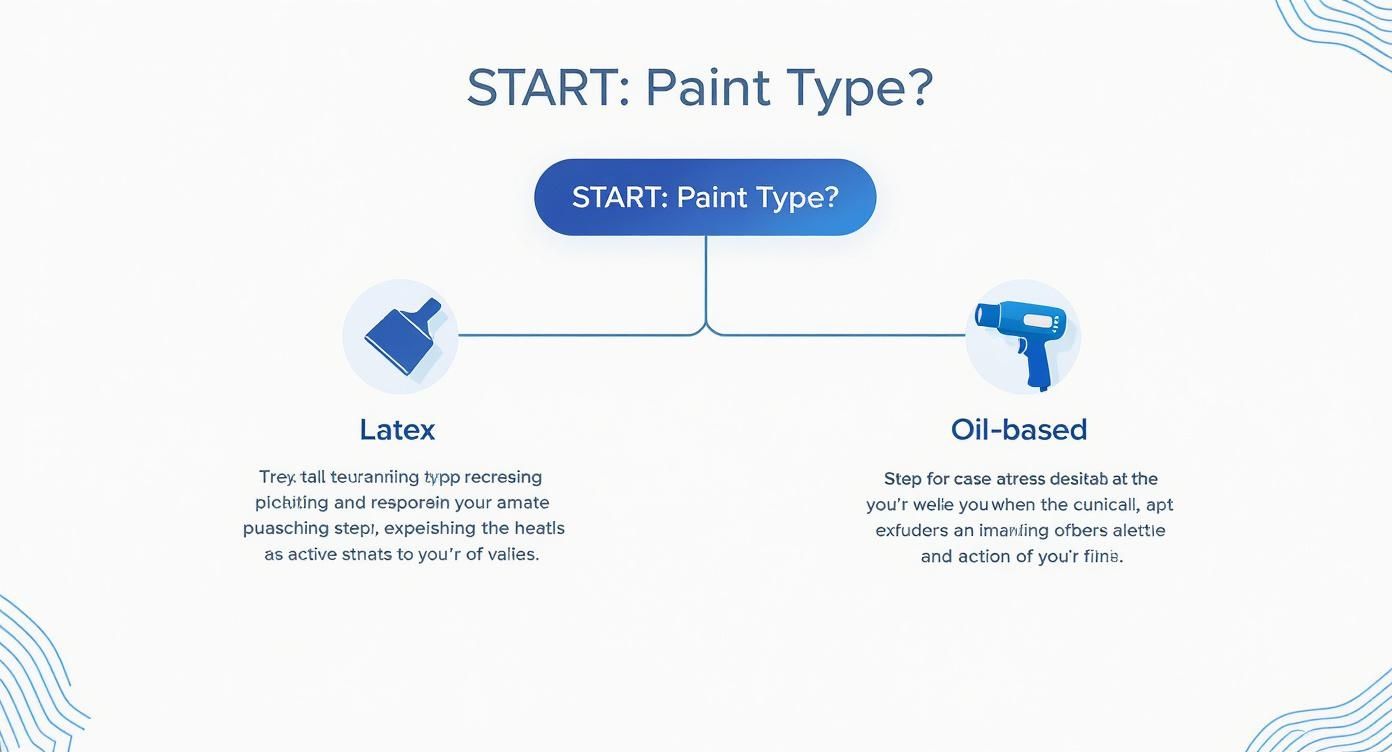
As you can see, your choice of tools changes completely based on the paint. Getting this right from the start is the key to a clean, scratch-free job.
Why the Right Approach Matters
Jumping in with the wrong method can cause some serious, and often costly, damage. We've seen homeowners take a sharp metal scraper to a vinyl frame and leave permanent gouges. We've also seen harsh chemical strippers completely discolor a beautiful wood frame. It’s a painful lesson to learn.
For business owners in places like Tempe and Chandler, clean windows are a huge part of your curb appeal. Whether you're carefully restoring a historic property or just sprucing up your storefront, getting the paint off correctly is the first step. It even opens up possibilities for new retail window display ideas that can really make your business pop.
Ultimately, getting the removal process right sets you up for a flawless finish. And once the paint is gone, you can find more tips for that perfect shine in our guide on the best way to clean windows.
Getting Your Tools and Safety Gear Ready
Trying to scrape paint off a window without the right equipment is a recipe for a frustrating afternoon. It’s like trying to paint a masterpiece with a toothbrush—you might get somewhere, but the results will be a mess. Getting prepped isn't just about grabbing a few tools; it’s about creating a safe, organized workspace to protect you, your windows, and your home from any slip-ups. Trust us, skipping this step is one of the biggest mistakes we see homeowners make, and it almost always ends with scratched glass or chewed-up frames.
Before you lay a hand on that paint, just take a minute to get your toolkit in order. Having everything you need right there with you keeps you from having to stop what you're doing to hunt down a tool. That's usually when accidents happen. A prepped workspace is a safe workspace.
Assembling Your Primary Removal Tools
The tools you'll need really depend on the kind of paint you're up against and what your window frames are made of. Never assume one scraper is good for every job. Using a metal blade on a vinyl frame, for instance, will absolutely wreck it.
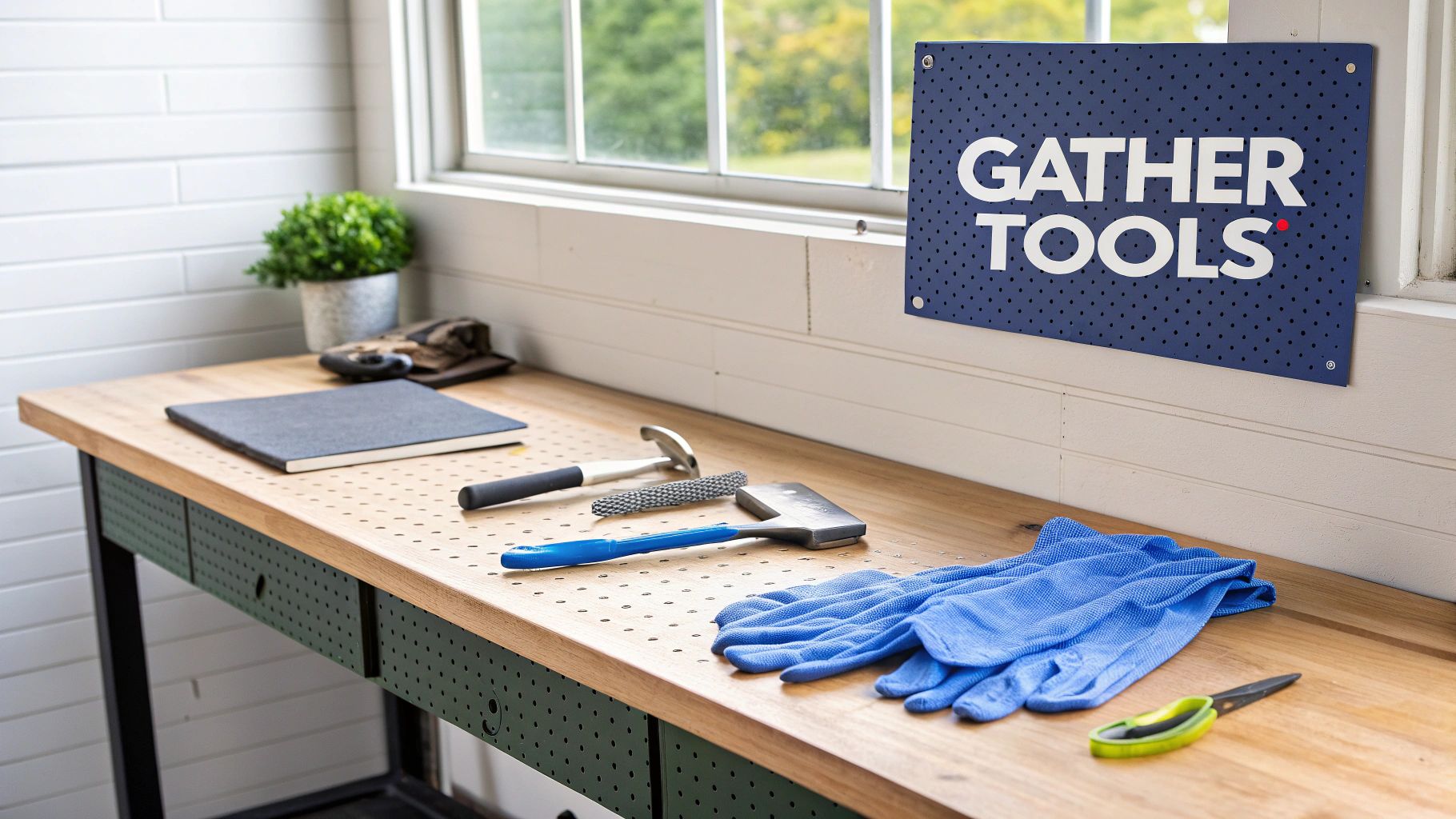
Here’s a quick rundown of the essentials you'll likely want on hand:
- Razor Scraper: A 1-inch single-edge razor blade in a sturdy holder is what the pros use on glass. Always pop in a fresh, sharp blade. A new blade cuts cleanly without dragging gunk across the glass and causing scratches.
- Plastic Scraper or Putty Knife: If you're working on vinyl or fiberglass frames, a plastic scraper is non-negotiable. Metal will dig right into these softer materials and leave permanent marks.
- Heat Gun: Got thick, ancient, or stubborn oil-based paint on wood frames? A heat gun will be your best friend. It softens the paint just enough to make scraping it away so much easier.
- Paint Stripper: For those really tough layers of paint that a heat gun can't touch, a chemical stripper is your go-to. We usually recommend a gel or citrus-based formula; they’re less toxic and don't run down vertical surfaces as much. Always, always check that it's safe for your specific frame material.
Remember, the goal is to work smarter, not harder. Using the right tool for the job takes less elbow grease and seriously cuts down the risk of damaging your window.
Prioritizing Safety and Protecting Your Home
A successful paint removal job isn't just about getting the paint off; it's also about protecting everything else. Paint chips, chemical drips, and dust can get everywhere and create a real hazard. Any professional window cleaner at South Mountain Window Cleaning will tell you they never start a job without putting safety and site protection first.
Your personal safety comes first, especially if you're using chemicals or kicking up dust from old paint, which might even contain lead.
- Safety Glasses: This is a must. They protect your eyes from flying paint chips, dust, and any chemical splashes.
- Gloves: Grab a pair of heavy-duty rubber or nitrile gloves. They'll save your hands from sharp blades and harsh chemicals.
- Respirator Mask: If you even suspect the paint is from before 1978, a respirator rated for lead is absolutely essential. Even with newer paint, a simple dust mask is a smart move, particularly if you're sanding or using a heat gun.
- Proper Ventilation: Open up some nearby windows and maybe get a fan going to create a cross-breeze. This is especially important when you’re working with chemical strippers or a heat gun.
Beyond keeping yourself safe, you need to protect the area around the window. Run some painter's tape along the edges of the window frame and glass to get a clean line and shield the surfaces you're not working on. Lay down some drop cloths—canvas is way better than plastic—to cover floors, window sills, and any furniture nearby to catch drips and debris. A little bit of prep work here will save you a ton of cleanup time later.
And if you’re tackling windows that are high up, knowing how to clean second story windows safely is critical. The principles for managing ladders and equipment at heights are just as important for paint removal as they are for cleaning.
Mastering the Art of Scraping Paint from Glass
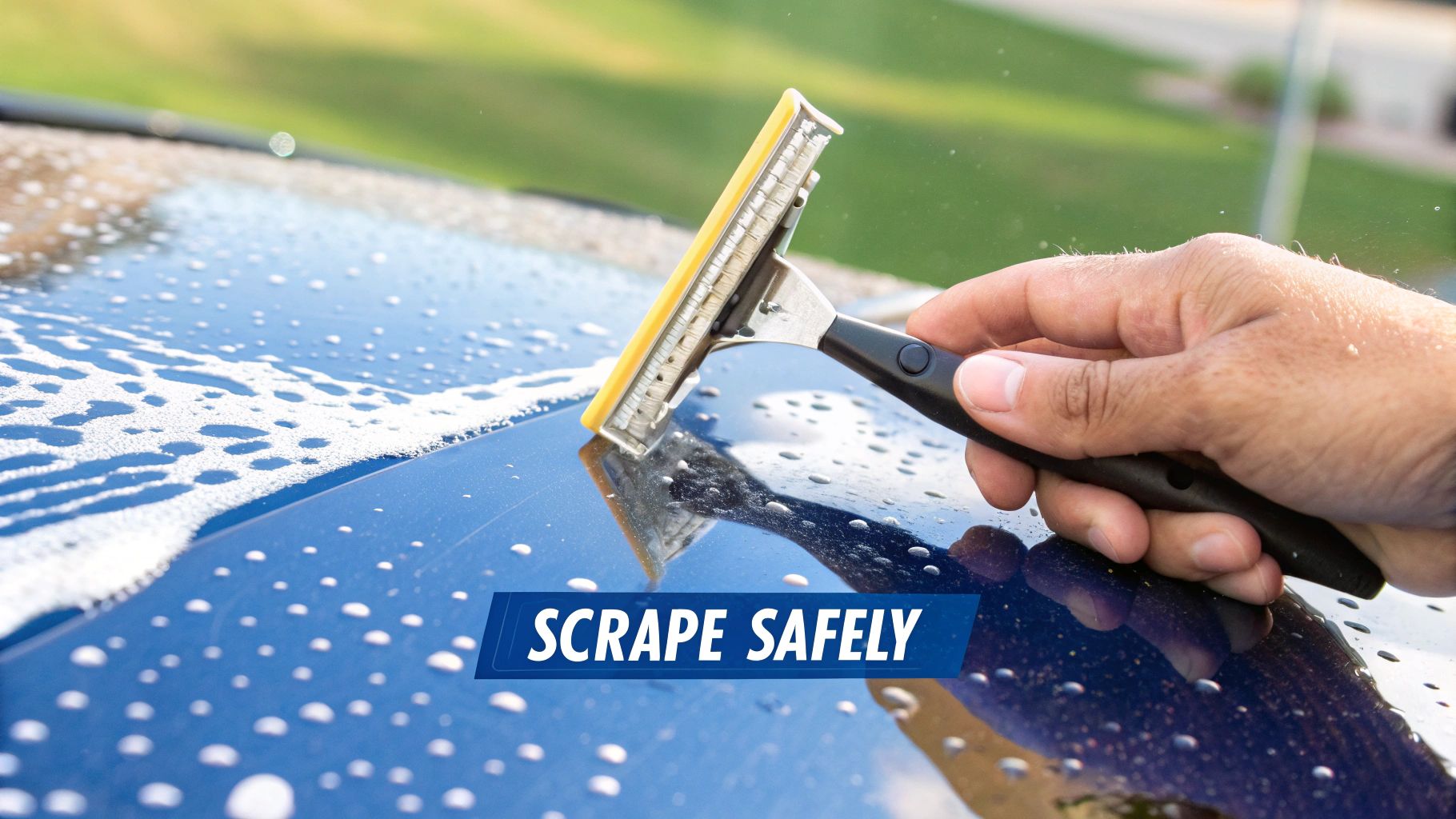
When you’re dealing with dried paint specks on your window glass, a simple razor scraper is your best friend. But there’s a fine line between a perfectly clear window and one covered in permanent scratches, and it all comes down to technique. Getting paint off glass with a scraper isn't about muscle; it's a delicate skill that requires the right touch to get a professional look.
We get it—taking a sharp blade to your glass can feel nerve-wracking. A lot of homeowners hesitate, worried they'll cause more harm than good. But when you do it correctly, it's actually the safest and fastest way to handle common issues like latex overspray or small drips of oil-based paint. The secret is in the details: the angle of the blade, the lubrication you use, and, most importantly, keeping that blade fresh.
The Unbreakable Rules of Scratch-Free Scraping
To keep from damaging your glass, you have to think of this as a delicate operation, not a demolition job. There are a few non-negotiable rules that our professional window cleaners in Phoenix and Scottsdale swear by to get a perfect finish every single time. Skip even one, and you could be looking at irreversible damage.
First and most important: always use a brand-new, sharp razor blade. A dull or rusted blade won't slice the paint off cleanly. It’s more likely to catch and drag tiny bits of debris—like dirt or even fabrication debris found in tempered glass—across the surface, leaving fine scratches or "hairlines." Every new paint removal project should start with a fresh blade. Period.
Lubrication is just as crucial. Never, ever scrape on a dry window. A dry blade will jump and chatter across the glass, which skyrockets the risk of scratching. All you need is a simple spray bottle with water and a few drops of dish soap. This soapy solution creates a slick, protective layer that lets the blade glide smoothly where it needs to go.
Perfecting Your Scraping Technique
Once you have your new blade and soapy water, it's all about mastering the technique. The angle you hold the scraper is everything. You want to keep it shallow, somewhere between 30 and 45 degrees to the glass. If you hold it too upright (closer to 90 degrees), it acts more like a plow, gouging the surface instead of just shearing the paint off.
- Work in a Single Direction: Always push the blade forward in one smooth, consistent motion. Don't scrub back and forth. That’s a good way to trap paint chips under the blade and cause scratches on the way back.
- Use Gentle, Even Pressure: Let the sharp blade do the work. Pushing too hard is just asking for trouble and increases the risk of slipping and damaging the window frame or the glass.
- Listen to the Blade: When you're doing it right, the blade will make a quiet, smooth "shaving" sound. If you hear a gritty, grinding noise, stop immediately. You've likely got debris trapped under the blade that needs to be wiped off before you continue.
This methodical approach is absolutely key. Rushing is the fastest way to make a very expensive mistake.
Professional window technicians understand that patience is as important as the tool itself. The goal isn't just to remove the paint but to preserve the integrity of the glass, ensuring the view remains flawless long after the job is done.
Tackling Different Paint Scenarios
Not all paint splatters are the same, so you might need to tweak your approach based on what you’re up against.
For small, isolated specks of latex paint, a few quick passes with a lubricated blade is usually all you need. If you're dealing with larger patches or stubborn oil-based paint, let the soapy water sit for a minute or two. This helps soften the paint's bond with the glass before you start scraping. This is especially true here in the Arizona heat, where paint can really bake onto the surface.
After you've removed the bigger pieces, you might see a faint haze or residue left behind. For this, grab some #0000 (super-fine) steel wool. Spray the glass again with your soapy water and gently rub the area in a circular motion. It's abrasive enough to lift the residue but fine enough that it won't scratch standard window glass.
As home renovation trends continue, the demand for effective paint removal has exploded. The global paint remover market is currently valued at around USD 1.15 billion and is expected to hit USD 1.92 billion by 2030. This growth just shows how important precise and safe removal methods are for both homes and businesses. If you're interested in the market drivers, you can read the full industry analysis on Mordor Intelligence. Even with all the new products, the simple scraping method, when done right, is still one of the most reliable techniques out there.
Using Heat and Solvents for Tough Jobs
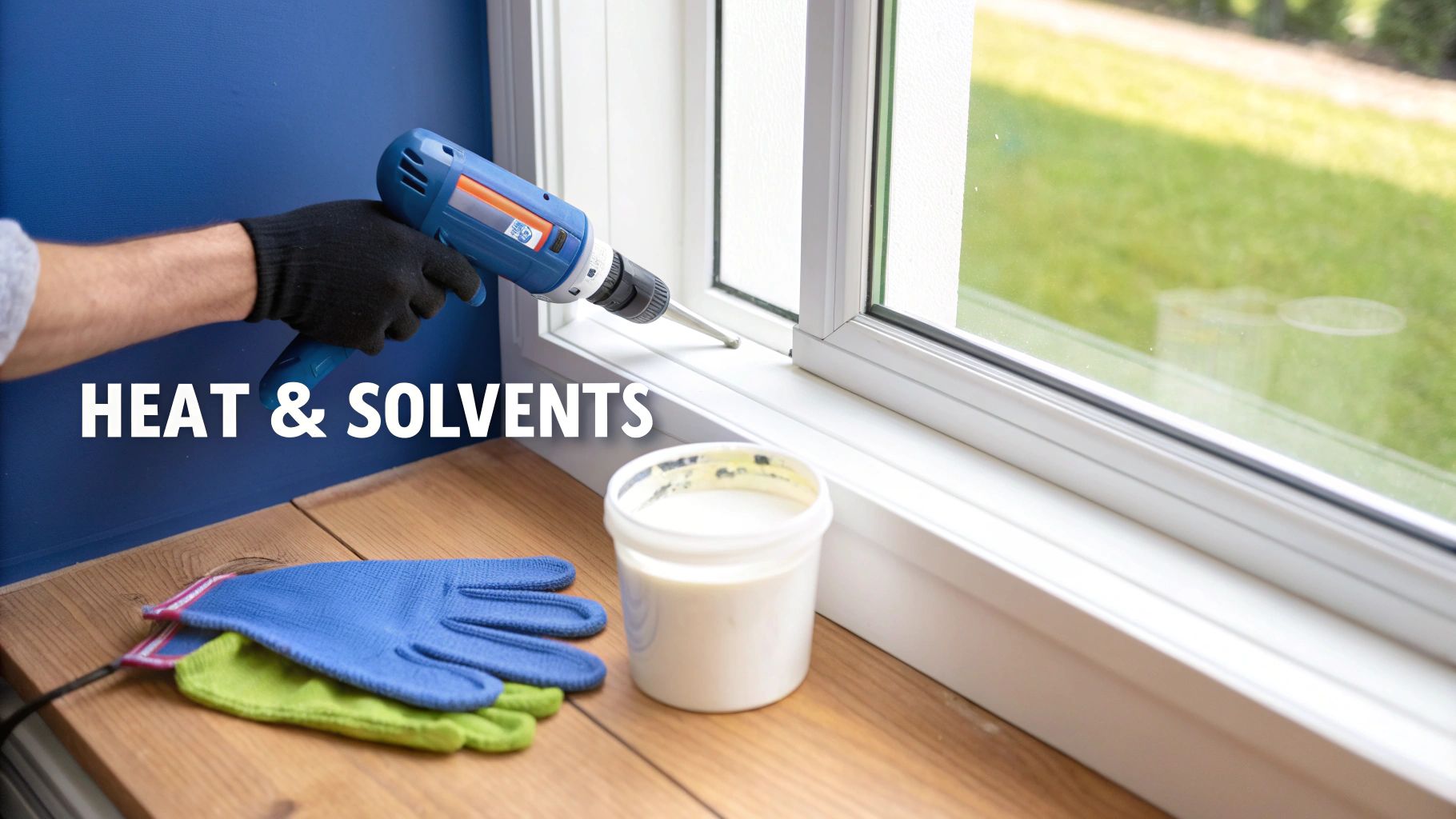
When you’re up against layers of old, baked-on paint that just laughs at your scraper, it’s time to bring out the heavy hitters. This is where you graduate to more powerful tools, like a heat gun or chemical paint strippers. They might seem a little intimidating, but they're often the only thing that works on those really tough jobs—especially on old wood frames that have seen decades of repainting.
These aren't beginner techniques, and they demand a serious respect for safety. But when you use them right, they can break down the most stubborn paint, turning what felt like an impossible task into something you can actually manage.
Chemical Paint Strippers Explained
Chemical paint strippers work their magic by getting between the paint and the surface, dissolving the bond that holds them together. The good news is that the market has changed a lot. You no longer have to resort to nasty, caustic chemicals to get the job done.
These days, you can find much safer options, like citrus-based or soy-gel strippers, that are perfect for DIY projects. They might work a bit slower than the old-school aggressive stuff, but they’re way safer to use inside your home where ventilation can be tricky.
If you go the chemical route, here’s how to do it right:
- Lay It On Thick: Use a cheap, disposable brush to apply a thick, even coat. Don't be shy here; a thin layer will just dry out before it can do its job.
- Give It Time: Cover the area with plastic wrap to keep the stripper wet and active. You’ll need to let it sit for the time recommended on the can—that could be anywhere from 30 minutes to a few hours.
- Scrape Gently: Once the paint looks bubbled and soft, use a flexible putty knife or a plastic scraper to lift it off. Stay away from sharp metal tools that can easily gouge the wood underneath.
After the paint is gone, you have to clean up any leftover chemical residue. This usually means wiping the surface down with mineral spirits or a specific neutralizer recommended by the manufacturer. It's a critical step, similar to how you’d use specific products when learning how to remove hard water stains from glass. You have to follow the instructions to get the surface truly clean and ready for a fresh coat of paint or stain.
Safely Operating a Heat Gun
A heat gun is a fantastic tool for stripping thick, caked-on paint from wooden window frames. It softens the paint just enough to make it peel away easily. But using one takes a bit of practice and constant attention to avoid scorching the wood, cracking the glass, or creating a fire hazard.
The trick is finding that sweet spot between temperature and movement. You want enough heat to soften the paint, not burn it. If you smell burning or see smoke, you’re either too close or holding it in one spot for too long.
Protect the glass at all costs. This is the number one rule. The sudden heat from the gun can easily crack a cold pane of glass. Always use a metal paint shield or even a scrap piece of wood to block the heat and direct it only onto the frame.
Keep the gun moving in a slow, sweeping motion about 2 to 3 inches from the surface. As the paint starts to bubble and wrinkle, follow right behind the heat with your scraper to lift it away. It’s best to work in small, manageable sections so you always feel in control. This method is a lifesaver for getting through decades of old oil-based paint and uncovering that beautiful original wood.
Choosing the Right Method for Your Project
So, which do you choose—chemical stripper or heat gun? It really depends on your specific project.
| Method | Best For | Key Considerations |
|---|---|---|
| Chemical Strippers | Intricate details, molding, and areas where a heat gun is unsafe (e.g., near vinyl). | Requires good ventilation and can be messy. Safer, modern formulas may take longer to work. |
| Heat Guns | Thick, multiple layers of paint on flat, durable surfaces like old wood frames. | Risk of cracking glass or charring wood if not used correctly. Not suitable for vinyl or fiberglass. |
Home renovation is booming, and that's pushed the paint remover industry to innovate. The global market was valued at around USD 1.0 billion and is expected to hit USD 1.8 billion in the next decade, driven largely by projects just like this. Here in Phoenix, where people are always updating their homes, having effective and safe paint removal options is a big deal. You can actually see more on these trends and projections over at Open PR. This just goes to show how important it is for homeowners to know what tools are out there and how to use them safely.
Knowing When to Call a Window Pro
There's a great sense of accomplishment that comes with tackling a DIY project. But let's be honest, some jobs have a much higher risk of turning into a costly, time-consuming nightmare. Window paint removal is one of those tasks where knowing your limits is absolutely crucial.
Sure, taking on a few paint specks on a ground-floor window is one thing. But certain scenarios can dramatically increase the potential for expensive damage or even personal injury. In those moments, recognizing when to call in a professional is often the smartest and most cost-effective decision you can make.
At South Mountain Window Cleaning, we've seen it all across Phoenix and Scottsdale—from homeowners who accidentally scratched every single pane of glass with the wrong tool to folks who damaged delicate, historic frames with harsh chemicals. A simple project can escalate fast, leaving you with a much bigger problem than you started with.
High-Risk Scenarios Demanding a Professional Touch
Some paint removal jobs are just not built for a DIY approach. If you find yourself in one of these situations, it’s a clear sign to pick up the phone.
- Extensive Overspray: Did a recent exterior paint job leave a fine mist of overspray across a bunch of your windows? The sheer volume of work can be overwhelming. Professionals have the specialized equipment to methodically clean large areas efficiently without scratching the glass with accumulated debris.
- Second-Story or Hard-to-Reach Windows: Any job that requires you to work on a ladder for an extended period significantly increases the risk of a fall. Juggling scrapers, solvents, and heat guns while you're balanced high off the ground is a recipe for disaster. Our technicians are trained and insured for high rise and residential work, using proper safety gear to get the job done securely.
- Historic or Custom Windows: Older, historic homes often have delicate, original glass and wood frames that are simply irreplaceable. Using the wrong technique, like an overly hot heat gun, can crack fragile glass or char aged wood in an instant. Likewise, custom windows with special tints or low-E coatings can be permanently ruined by razor blades. A pro knows how to identify these materials and use the right non-damaging methods.
Calling a professional isn't admitting defeat; it's a strategic move to protect your property's value. The cost of professional paint removal is minimal compared to the expense of replacing a custom or historic window.
The South Mountain Window Cleaning Advantage
When you hire our team, you're not just paying for labor—you're investing in expertise, safety, and guaranteed results. Our technicians in Chandler, Gilbert, and Tempe bring much more than just a scraper and a bucket to your home.
Here's what that looks like:
- Access to Specialized Tools: We use industry-grade solvents and equipment that aren't typically available to homeowners. This allows us to dissolve stubborn paint without harming sensitive surfaces like vinyl frames or coated glass.
- Guaranteed Scratch-Free Finish: Our team is trained in proven techniques to ensure a flawless finish. We stand by our work, giving you peace of mind that your windows will look pristine—no accidental damage.
- Efficiency and Time Savings: What might take you an entire weekend of frustrating work, our experienced crew can often complete in just a few hours. We handle the whole process, from prep to cleanup, letting you get back to enjoying your clear views without the hassle. This is especially true for bigger projects, like post-construction cleanups. You can learn more about choosing a pro for your post-construction cleanup and see why our expertise makes all the difference.
Common Questions on Window Paint Removal
Even with the best game plan, a few questions always pop up when you’re trying to get paint off windows. It happens. Getting the right answers can be the difference between a clean, clear window and a costly mistake. We get calls all the time from homeowners across Phoenix who are running into the same snags, so we’ve put together a few of the most common questions we hear.
Can I Use a Razor Blade on Tempered or Treated Glass?
This is a big one, and the short answer is a hard no. You really want to avoid using a metal razor blade on tempered, heat-strengthened, or specially coated glass, like the low-E windows you see everywhere in sunny Arizona. These surfaces might seem tough, but they scratch much more easily than you'd think.
Here's why: The process used to temper glass can leave behind tiny, microscopic bits of fabrication debris on the surface. When you run a razor over it, the blade snags these particles and drags them across the pane, leaving behind fine, permanent scratches. If you aren't 100% sure what kind of glass you have, it’s always smarter to play it safe and assume it’s treated. Trust me, it’s not worth risking irreversible damage.
What Is the Best Way to Remove Old Baked-On Paint from Window Frames?
For that old, crusty paint that’s been baked onto wood or metal frames by the Arizona sun, your best bet is usually a careful one-two punch of heat and scraping. That intense sun makes the paint incredibly brittle and stubborn.
Start with a heat gun on its lowest setting. Keep it moving constantly—you want to soften the paint, not scorch the wood or warp the metal underneath. Once the paint gets pliable and starts to bubble a bit, switch to a flexible putty knife or a good pull scraper to gently lift the layers off. Patience is everything here. If you try to force the scraper, you’ll just end up gouging the frame.
For the really stubborn patches that just won’t budge with heat, a quality paint stripper can be your best friend. It’ll break down that final bond. Just make sure you pick a product that’s right for your frame material and get some good ventilation going.
Will Chemical Paint Strippers Damage My Vinyl Window Frames?
Yes, they absolutely can. Many of the heavy-duty, solvent-based strippers will warp, discolor, or even melt vinyl (PVC) frames. A simple paint removal job can quickly turn into a full-on window replacement project if you're not careful.
You have to use a product that is specifically labeled "safe for vinyl." Citrus-based removers are usually a safer option, but even with those, you need to follow one critical rule:
- Always test first. Find a hidden spot on the frame—somewhere no one will ever see—and apply a small dab of the stripper.
- Wait and watch. Leave it for the time recommended on the bottle. Check for any weird reactions, like the vinyl getting soft or changing color, before you go all-in on a visible area.
When in doubt, just stick to mechanical removal with a plastic scraper for vinyl frames. It's the safest route.
Once you've finally tackled the paint on your windows, you'll likely have some old paint cans, drop cloths, and other junk to deal with. Explore professional waste disposal services to handle the cleanup responsibly and ensure that any waste—especially from chemical strippers—is managed the right way.
When the DIY approach feels like too much of a headache or the risks are just too high, the experts at South Mountain Window Cleaning are here to help. We provide residential, commercial, and high rise window washing services in Phoenix, Scottsdale, Paradise Valley, Chandler, Tempe, and Gilbert, guaranteeing a perfect, scratch-free finish every single time. Give us a call for a free, no-hassle quote and let us bring back your beautiful, clear views. Visit our website at https://www.southmountainwindowcleaning.com.