

You've spent the afternoon cleaning the sliding doors and picture windows at your Paradise Valley home. The glass looks clear while it's wet, but as the Arizona sun drops, streaks and pale water spots appear across the view. By evening, the windows seem dirtier than they did before you started.
That result usually has less to do with the glass than with the window cleaning solution, the amount applied, the wiping technique, and the local environment. Phoenix dust, hard water, intense sunlight, sensitive coatings, aluminum frames, and silicone seals all change what works. A product that performs well in a shaded kitchen may leave residue on a sun-facing low-E window.
Why Your Windows Streak Even After You Clean Them
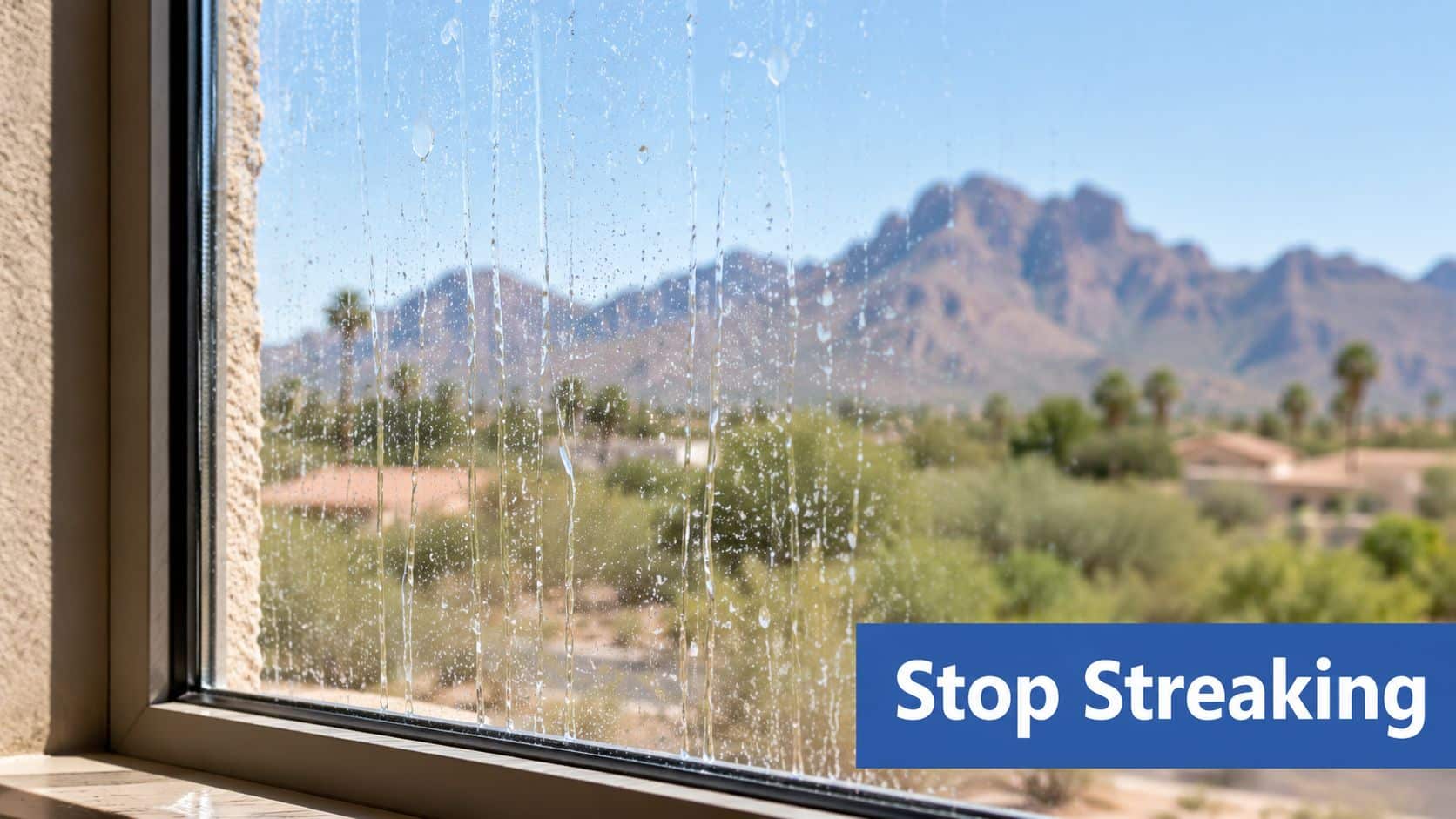
The most common mistake is treating every window as though it were ordinary glass. In desert conditions, water evaporates quickly, and dissolved minerals can remain behind as spots or a cloudy film. If a cleaner also contains too much soap, non-volatile additive, or residue-forming builder, the pane may dry with visible marks even when the cloth was clean.
The timing matters. A homeowner in Paradise Valley might spray a large picture window, walk away to fill a bucket, and return to find that part of the solution has already dried. Wiping that half-dry film spreads residue instead of removing it. Guidance on window water spots is especially relevant in the Valley, where hard-water deposits can become more noticeable after repeated cleaning.
What creates the haze
A good glass cleaner contains mostly water, volatile solvents, and a controlled amount of surfactant. The solvents help the product dry cleanly, while the surfactants loosen oils and dust. If too many solids remain after evaporation, they can crystallize into white streaks on hydrophobic glass, as described in this technical glass-cleaner formulation guide.
The frame and seal deserve equal attention. Strongly acidic or alkaline mixtures may be unsuitable for certain aluminum finishes, silicone seals, and coated glass. A low-E coating can improve energy performance, but it also gives you another surface compatibility issue to consider before reaching for a household recipe.
Practical rule: Clean smaller sections, keep the solution wet long enough to wipe, and never let a heavy application dry on the pane.
A streak-free result is therefore a system, not a bottle. The solution must match the surface, the applicator must remove rather than redistribute soil, and the final pass must happen before the desert heat takes over.
Commercial Formulas vs Common DIY Recipes
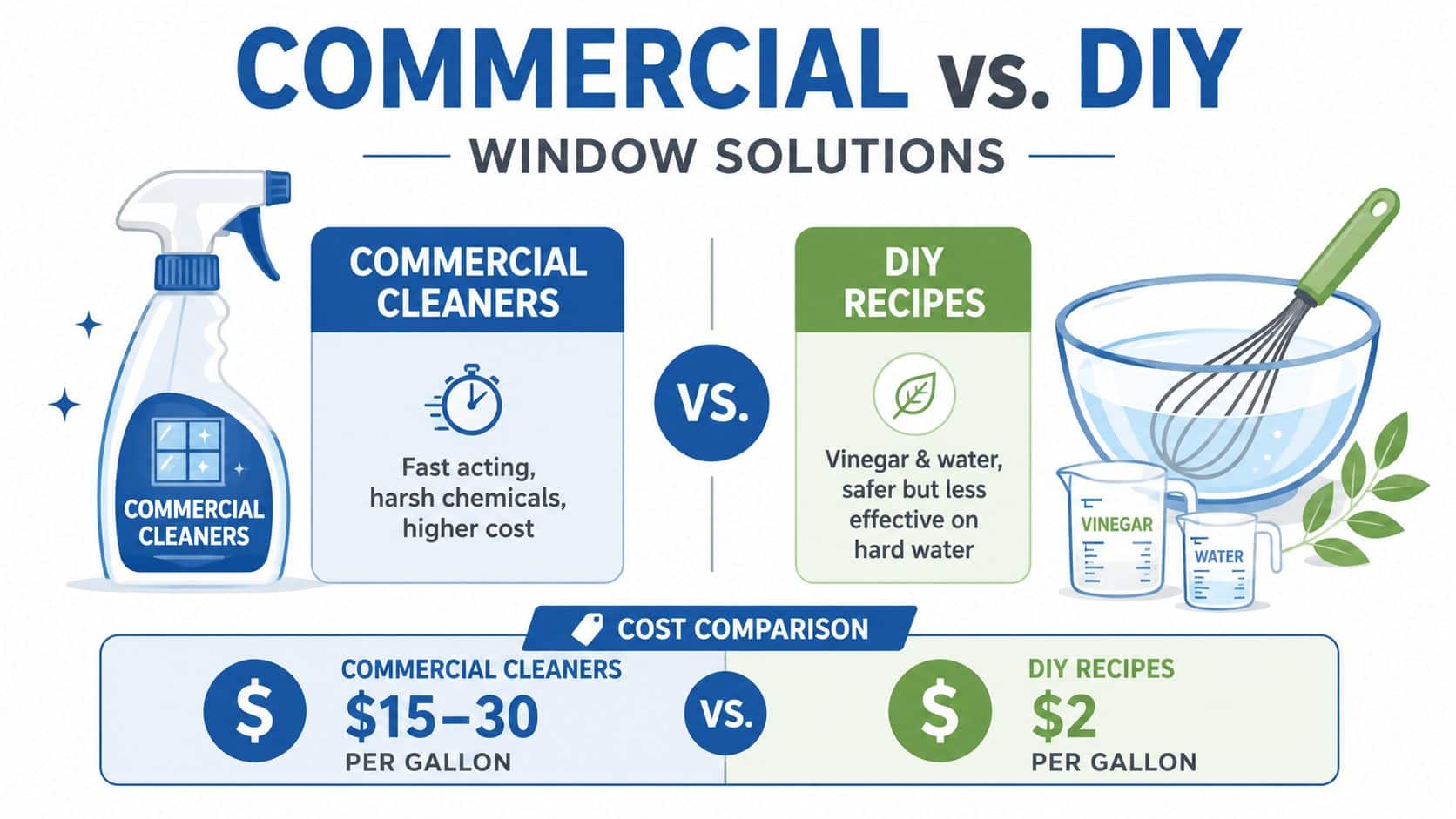
Commercial glass cleaners and DIY mixtures can both produce a bright result, but they solve different problems. A ready-to-use product is normally formulated for predictable evaporation, controlled foaming, and low residue. A vinegar, ammonia, or dish-soap mixture is inexpensive and accessible, yet its performance depends heavily on water quality, concentration, temperature, and the condition of the window.
| Option | Where it can work | Main concern |
|---|---|---|
| Ready-to-use glass cleaner | Routine interior glass, light grease, and quick touch-ups | Some formulas may be too aggressive for sensitive materials |
| Vinegar and water | Limited use on compatible, uncoated surfaces | Acidity and mineral residue require careful handling |
| Ammonia-based mixture | Cutting certain greasy soils | Can be unsuitable for coatings, seals, and finishes |
| Dish soap and water | Light soil when tightly controlled | Excess soap leaves a film and slows clean drying |
Vinegar may loosen mineral deposits, but that doesn't make it a universal choice. Acidic cleaners can be problematic around silicone sealants and some metal finishes over repeated exposure. Ammonia can cut grease effectively, yet it may be a poor match for low-E coatings and nearby materials. Never combine ammonia with bleach or other incompatible chemicals.
A commercial formula isn't automatically safer. The useful question is whether its pH, solvent package, and surfactant load suit the glass and frame. Professional products generally aim to flash off cleanly, but a cleaner still fails if the user sprays too much or allows it to dry in direct sun.
Choose compatibility over tradition
Many older homes have plain glass that tolerates a wider range of mild cleaning methods. Newer homes may contain low-E glass, coated surfaces, insulated units, painted frames, and flexible seals. Test any unfamiliar window cleaning solution in a small, inconspicuous area first, and keep the mixture away from natural stone sills and porous finishes.
For homeowners considering a homemade approach, this guide to a baking soda and vinegar cleaner can provide useful background. The recipe isn't the deciding factor by itself. The surface, the water, and the application method determine whether the result remains clear after drying.
How to Mix and Apply a DIY Window Cleaner Properly
A DIY window cleaning solution can be reasonable for older, uncoated glass with light soil. It becomes a poor choice when the pane has a delicate coating, heavy hard-water buildup, or a finish that needs consistent repeatable care.
Start with clean water and a clean spray bottle. A mild mixture should contain mostly water and only enough cleaning ingredient to loosen the soil. If you use vinegar, don't assume that a stronger mixture will work better. Excess acidity can create compatibility problems, and excess soap can leave the film you were trying to remove.
Use less liquid than you expect
Professional guidance identifies over-saturation as a leading cause of streaks. For a standard 36-by-60-inch window, a validated benchmark uses only 8 to 10 milliliters of solution, followed by an overlapping S-pattern and an immediate dry-wiper pass, according to this window-cleaning application guide.
Use this process:
- Inspect first. Remove loose grit with a dry, soft tool so you don't drag abrasive dust across the glass.
- Test a corner. Check the glass, frame, seal, and nearby finish before treating the full pane.
- Mist lightly. Apply a thin, even layer rather than soaking the surface.
- Work in an S-pattern. Overlap each pass so soil isn't left in narrow bands.
- Dry immediately. Follow with a clean, dry wiper or lint-free microfiber cloth.
- Change cloths when loaded. A dirty towel transfers solution and dust back onto the pane.
Don't clean a sun-heated window if you can avoid it. Shade improves working time and gives the solution a better chance to be removed before evaporation. If spots remain after a careful light application, the issue may be mineral scale rather than ordinary dirt. That calls for a different process, not more spray.
When Pure-Water Systems Are the Right Choice
Phoenix's hard water can leave mineral spots on exterior glass soon after a conventional cleaning. Intense sun speeds evaporation, making residue more visible and shortening the time available to remove it. A deionized system addresses that problem at the water source by filtering dissolved solids before technicians apply the water through a water-fed pole.
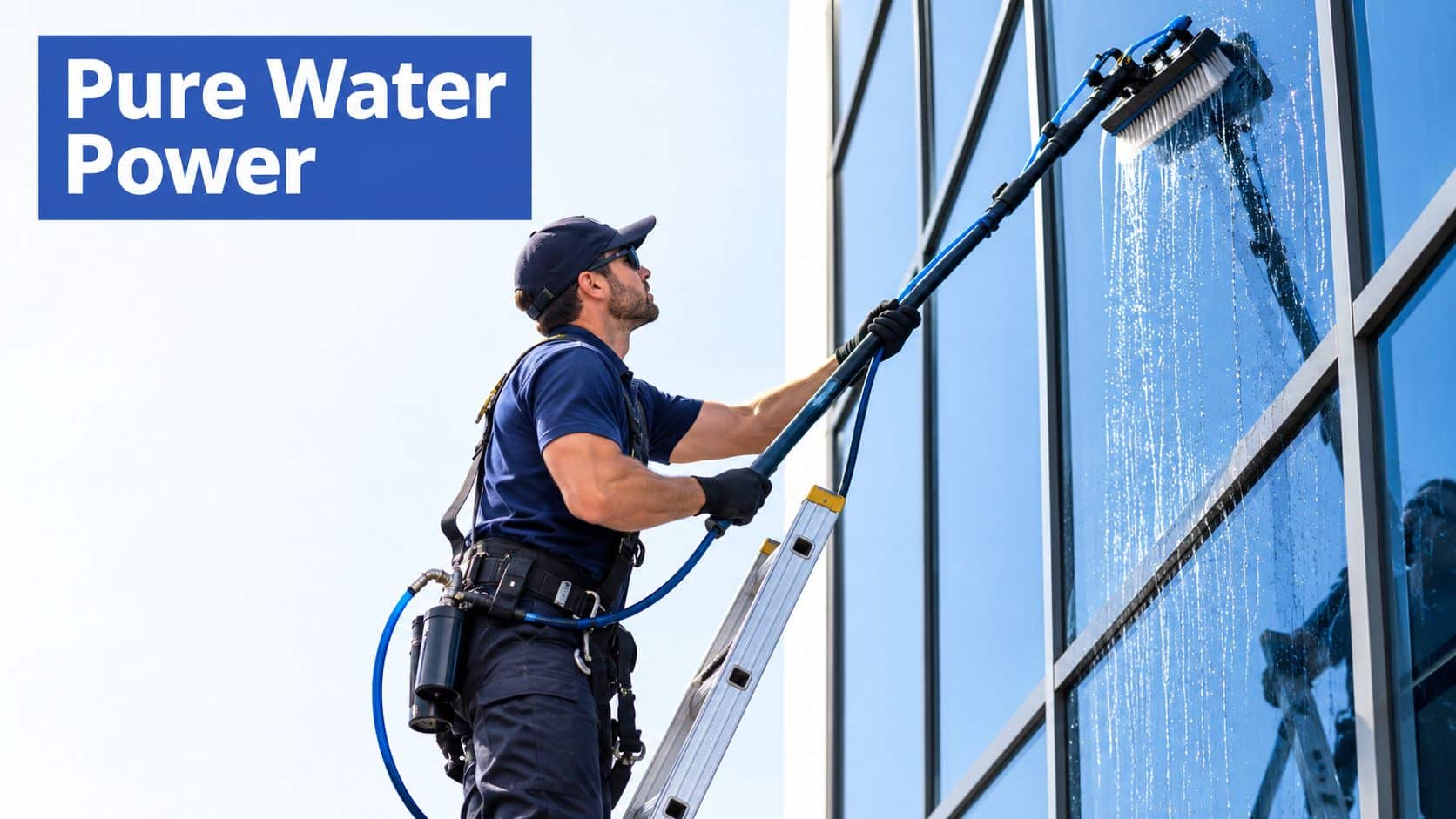
The result is exterior glass that can dry without the usual mineral residue. Pure water also avoids leaving detergent film on many compatible panes, frames, and raised surfaces. Choose this method when exterior glass develops recurring spotting after conventional cleaning, when low-E coatings or aluminum frames limit chemical choices, or when height and access make repeated ladder work unsafe. Test compatibility first, especially around painted finishes and aging silicone seals.
Safety controls the method
Commercial cleaning decisions depend on access as much as chemistry. Height, wind, traffic, tenant activity, and rescue planning determine whether technicians can work responsibly. OSHA states that rope-descent systems are generally limited to 300 feet above grade. Above that height, the employer must show that other access methods are not feasible or would create a greater hazard, as outlined in this OSHA rope-descent guidance.
A separate OSHA window-washer citation documents a fall of four stories and highlights interior cleaning where feasible, along with proper restraint and training near window openings. Those requirements make an access plan part of the cleaning method, not an afterthought.
For Phoenix commercial properties, pure-water window cleaning systems can reduce residue while creating a repeatable exterior workflow. They suit dusty façades, recurring mineral spotting, and architectural glass that cannot be reached safely from inside. They do not remove every hazard or replace trained technicians, but they can reduce chemical exposure and avoid adding detergent film to each pane.
The video below shows the water-fed approach used for exterior window washing.
How to Decide What Method Fits Your Property
Start with the window, not the product label. A simple property assessment usually answers the question faster than trying several bottles.
Glass and coating: Plain, older glass may tolerate a carefully controlled mild cleaner. Low-E glass and other treated surfaces deserve a conservative formula and a small-area test. If you don't know what coating is present, avoid aggressive DIY chemistry until the manufacturer or a qualified cleaner confirms compatibility.
Frame and seal condition: Oxidized aluminum, painted frames, and aging silicone seals can react differently from the pane. Keep the solution on the glass, control the amount, and don't let it pool in corners or sit along the perimeter.
Water and exposure: Phoenix-area hard water and strong sun make residue more visible. A commercial pH-balanced formula may suit interior maintenance, while deionized water is often the more practical exterior choice where mineral spotting keeps returning.
Height and access: A garden-level window with safe interior access is different from a Scottsdale tower or a Chandler storefront beside active traffic. Elevated work needs an access plan, trained personnel, and appropriate restraint or equipment, not just a longer ladder.
Cleaning frequency: Occasional residential cleaning can justify a carefully tested DIY method on compatible glass. Retail, restaurant, office, and hospitality properties usually need a repeatable process that produces the same result across many panes.
Ask a provider which water treatment they use, how they protect low-E glass and frames, how they handle hard-water deposits, and what access and safety controls apply to your building.
For commercial properties, consistency usually matters more than the lowest product cost. For a single home, careful technique may be enough. If the windows repeatedly spot, the frames show damage, or access creates risk, the right answer is a professional system rather than a stronger recipe.
What Eco-Friendly Window Cleaning Actually Means
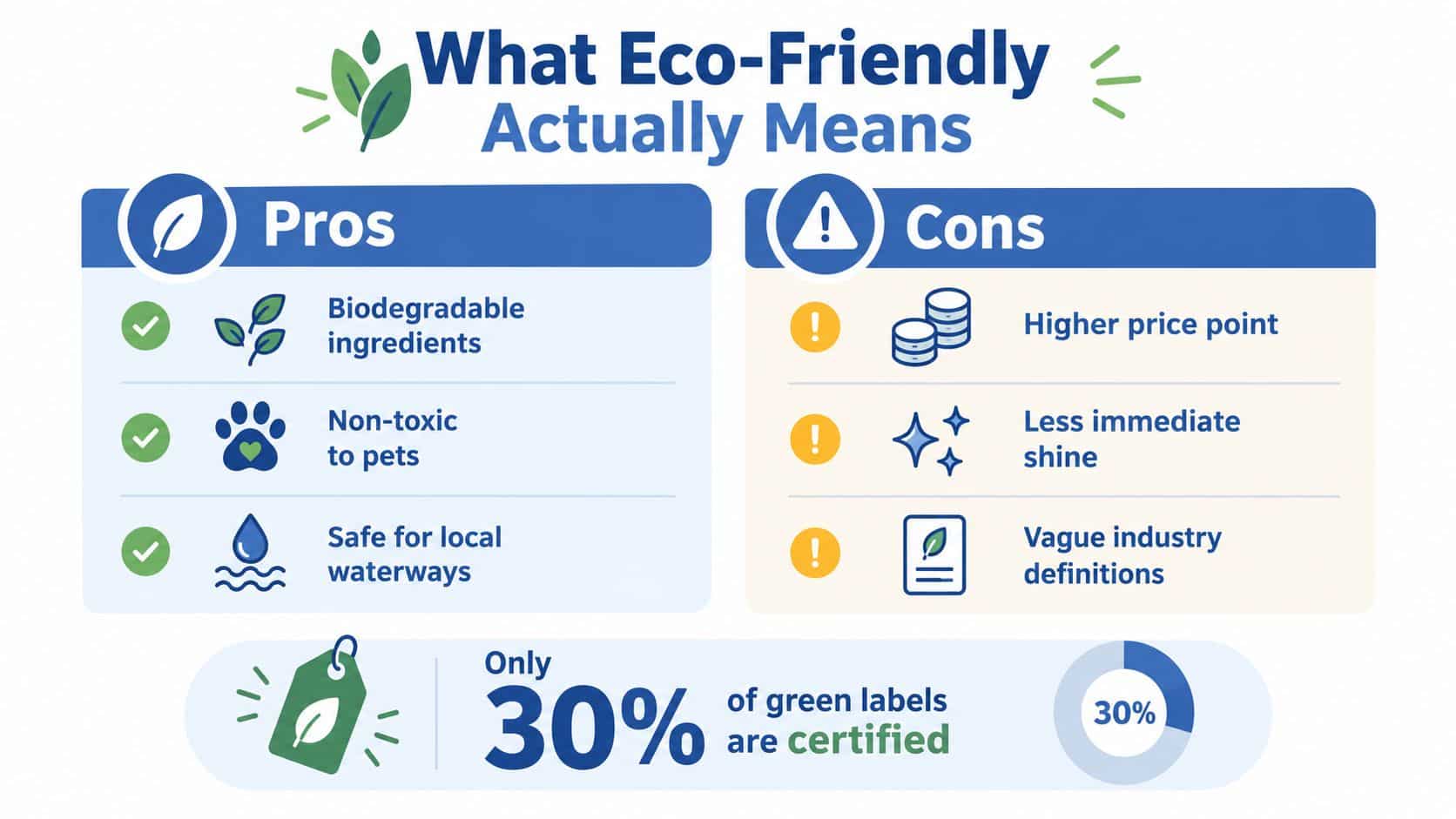
“Eco-friendly” can describe several different things, and those claims aren't interchangeable. A product may use biodegradable ingredients but still require repeated rinsing. Another may contain fewer volatile compounds yet leave a film that demands extra wiping. A third may reduce chemical use while consuming more water than a well-managed pure-water process.
A practical assessment should examine three areas:
- Chemistry: Look for a controlled pH, biodegradable ingredients, and a low-residue formulation. “Natural” alone doesn't explain how a product behaves on glass, seals, aluminum, or nearby stone.
- Water use: A method that relies on heavy rinsing may create more runoff than a light, controlled application. Water-fed systems still need responsible management, especially in a desert market.
- Waste: Reusable microfiber tools can reduce disposable wipes, while durable refill systems can limit packaging. The full process matters more than the front label.
Low toxicity isn't the whole definition
A safer ingredient profile doesn't guarantee a clear pane. Residue control affects how often a property must be cleaned, how much wiping is required, and whether mineral deposits remain visible. For facility managers, those operational details belong in the sustainability conversation.
Refill programs offer one practical example of reducing packaging without changing the cleaning task itself. Fillaree's account of celebrating a year of refills illustrates how refill habits can become part of a broader purchasing routine.
The strongest approach matches chemistry with method. Use only as much product as the pane requires, choose reusable tools where they perform well, and ask vendors to explain residue, runoff, and water treatment rather than accepting a generic green label. A product can be biodegradable and still be the wrong window cleaning solution for a coated surface or a high-volume commercial route.
Getting Professional Results Without the Guesswork
A clean window should stay clear after it dries, not only look good while it's wet. Reaching that result across Phoenix homes and commercial properties requires more than selecting a spray bottle. Technicians need the right applicator, clean rubber, controlled water, suitable towels, and a process that accounts for dust, heat, coatings, frames, and access.
Homeowners in Paradise Valley, Gilbert, Chandler, and Tempe often need different service details from facility managers in Phoenix or Scottsdale. A residence may need interior glass, screens, tracks, and difficult picture windows. A retail or office property may need scheduled storefront maintenance, exterior access planning, and a method that doesn't interrupt tenants or customers.
What a professional process adds
Professional cleaners typically evaluate the surface before applying a product. They can identify when a mark is ordinary soil, hard-water buildup, construction residue, oxidation, or a coating concern. That diagnosis prevents the common mistake of using a more aggressive window cleaning solution just because the first one was applied incorrectly.
For readers comparing tools and chemistry, this guide to what professional window cleaners use offers useful context on squeegees, water-fed equipment, and application choices. The same principles apply whether the job involves a single home or a multi-tenant building: limit residue, protect adjacent materials, and plan access before work begins.
South Mountain Window Cleaning, LLC serves residential, commercial, and high-rise properties in Phoenix, Scottsdale, Paradise Valley, Chandler, Tempe, and Gilbert. Its technicians use pure-water systems and professional squeegees, with scheduling and safety practices suited to both homes and business properties.
South Mountain Window Cleaning, LLC provides residential, commercial, and high-rise window washing with pure-water systems, professional tools, and safety-trained technicians across the Valley. If hard-water spots, sensitive coatings, sun-baked residue, or difficult access are affecting your glass, visit South Mountain Window Cleaning, LLC to request a fast, free quote.