
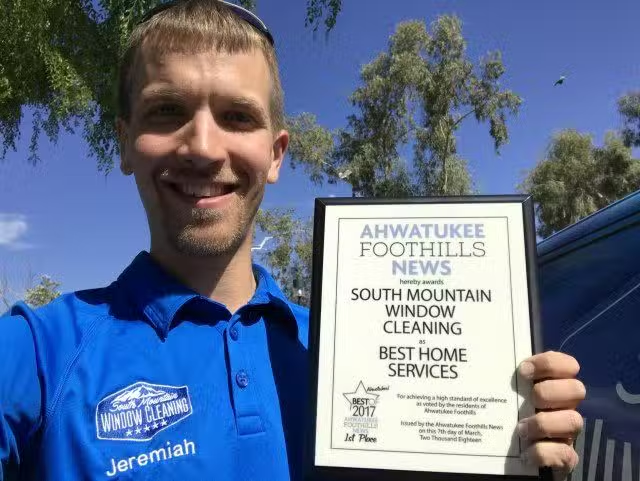
A clean window tells the truth fast. If you're standing in your driveway in Phoenix or looking at a storefront in Scottsdale, you can usually tell within a few seconds whether the glass was cleaned by someone who understands Arizona conditions or by someone who just wiped the surface and moved on.
That’s why window cleaning photos matter so much here. Dust, sprinkler overspray, baked-on residue, and sharp afternoon sun expose shortcuts immediately. A vague promise about “sparkling results” doesn’t mean much when the light hits the pane and every missed edge, screen line, and hard water mark shows up.
Good photos do more than show clean glass. They show access methods, safety practices, detail work, and whether the company knows how to solve the actual problem in front of them. They also help property owners compare routine maintenance against restoration work, which are two very different jobs.
For service companies, photos have become part of how trust gets built online. There are more than 2,500 professional window cleaning visuals available across major stock libraries, including over 2,353 on iStock’s professional window cleaning photo collection and 221 on Getty Images, which tells you how central visual proof has become in this trade.
If you're managing a building, selling a retail experience, or just trying to get your home back to looking sharp, these window cleaning photos should answer the central question. What did the glass look like before, what was done, and why did the result last?
If you run a service business and want to turn field photos into consistent content, a social media scheduler for window cleaning businesses can help organize that side of the work.
1. Case Study #1 The High-Reach Transformation in Scottsdale
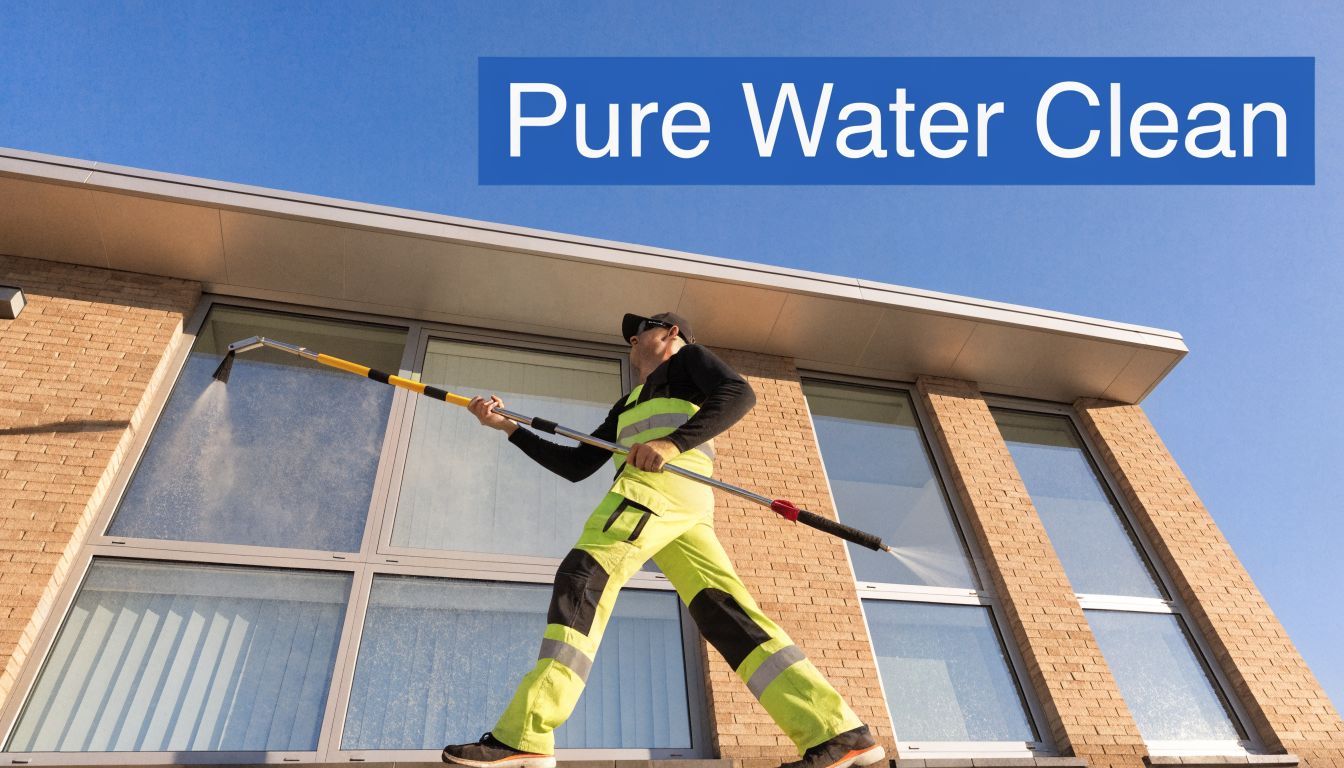
This is the kind of photo commercial clients pay attention to because it shows two things at once. First, the technician can reach upper glass safely from the ground. Second, the result comes from a system, not from luck.
On multi-story buildings in Scottsdale, Paradise Valley, Chandler, and Gilbert, the usual problem isn’t just height. It’s height plus dust buildup plus mineral spotting on glass that standard hose water tends to make worse. A water-fed pole setup solves that when it’s used correctly, because purified water lifts dirt and dries without the spotting you get from mineral-rich tap water.
Why this photo matters
The before side of a job like this usually shows that dull, gray film Arizona leaves on upper glass. It’s common on office buildings, condo complexes, and retail strips along busy roads where exhaust and fine dust settle together. Ladders often aren't practical for those upper panes, and sending a technician up just to do routine maintenance can be slower and more disruptive than it needs to be.
The after photo proves the glass was cleaned in a way that fits the property. Ground-based work with a water-fed pole is often the right choice for recurring service because it handles reach, reduces setup, and leaves less footprint around entrances and walkways.
Practical rule: Water-fed pole cleaning works best when the frames, seals, and glass are rinsed thoroughly. Rushing the rinse is what causes callbacks.
A strong photo also shows whether the cleaner paid attention to the top frame and edges. That’s where a lot of bad jobs give themselves away. The center of the pane might look fine, but the corners still carry runoff lines or dust that drips back down once the glass dries.
Where this method works best
- High office glass: Upper-story windows that are too high for simple ladder work but don't require full suspended access.
- Condo maintenance: Repeating service on multi-story residential buildings where consistency matters more than one dramatic restoration.
- Retail exteriors: Stores that need glass cleaned with minimal disruption during early business hours.
- Bundled exterior care: Properties where window cleaning is scheduled alongside gutter or facade maintenance.
For photography, early morning and late afternoon usually show the finish best because the glare is lower and residue is easier to spot. Midday sun can hide streaks in the camera even when the glass still needs work.
2. Case Study #2 Boosting Chandler Retail Curb Appeal
A storefront photo has to do more than show clean glass. It needs to show the entire first impression. That means the entry, the signage, the reflection quality, and whether customers can readily see into the business without looking through a layer of dust.
In Chandler, retail glass gets hit hard by roadside dust, fingerprints, splash marks near entry doors, and the dull film left after a windy week. After a dust storm, the difference between neglected and maintained glass is obvious from the parking lot. The best before-and-after window cleaning photos catch that contrast before any tools come out.
What the camera sees better than the owner does
A business owner sees the storefront every day, so gradual decline is easy to miss. The camera doesn’t get used to dirty glass. It records haze, smudges around the pull handles, drip marks under mullions, and the dead look that dirty display windows give to merchandise.
That’s why I always value a wider angle on retail jobs. Tight shots prove the glass was cleaned. Wide shots prove the business looks more open, brighter, and better cared for.
A useful set of images often includes:
- Arrival condition: Dust on the lower panes, traffic film, and handprints at the main entrance.
- Mid-job context: Equipment off to the side, not blocking the storefront, so the client can see how the work was managed.
- Finished curb appeal: Clean glass, visible displays, and a sharper entry sequence from sidewalk to door.
Clean storefront glass doesn't just remove dirt. It removes friction from the first impression.
What works and what doesn’t in retail photos
What works is consistency. Take the before photo right away, before the cone placement, towels, ladders, or buckets change the scene. Keep the same angle for the after. If the light changes too much, the comparison gets weaker even if the cleaning was excellent.
What doesn’t work is shooting only the cleanest pane. Owners want proof that the whole front presentation improved. Restaurants, salons, boutiques, and hospitality properties benefit most when the photo includes surrounding details like door glass, sidelights, and visible branding.
These are some of the easiest window cleaning photos to reuse in online marketing because the value is immediate. Anyone looking at them understands the result without needing a technical explanation.
3. Case Study #3 High-Rise Safety in Downtown Phoenix
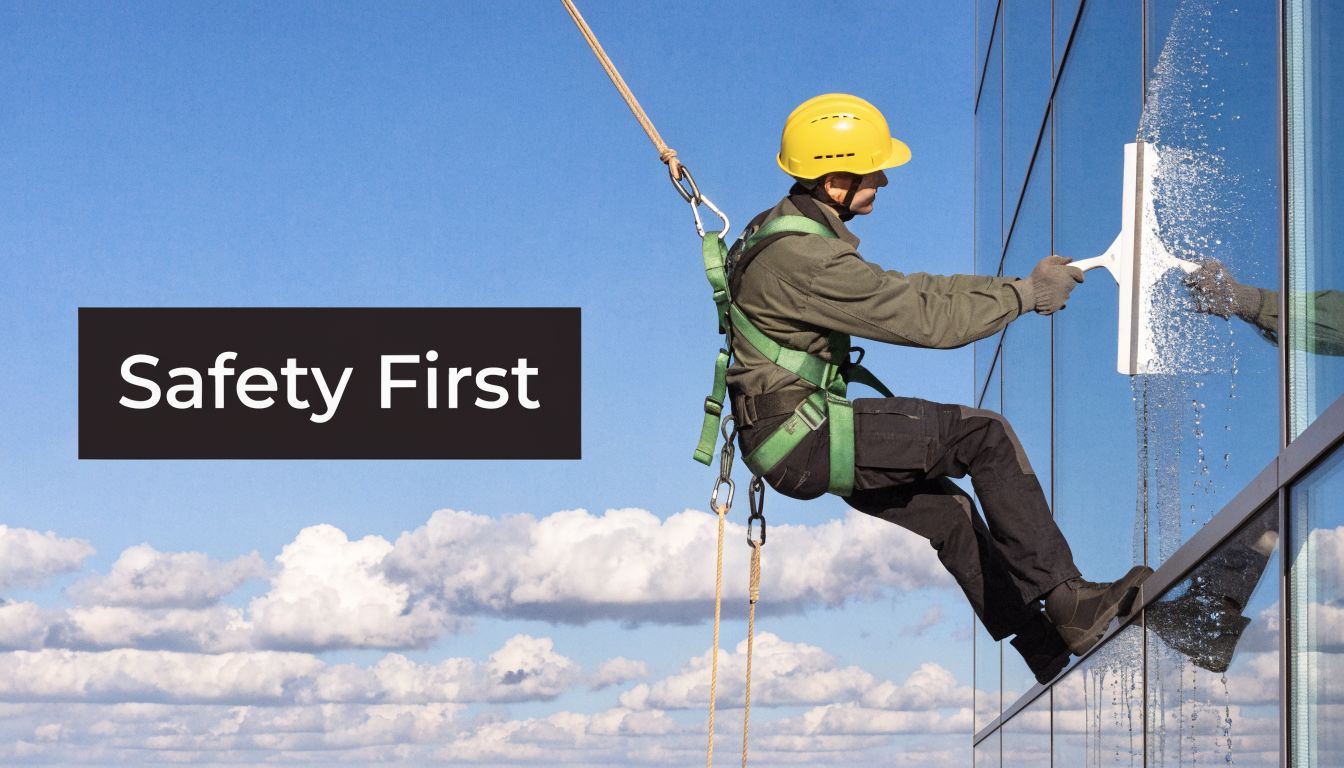
A property manager standing at street level usually cannot inspect every pane. They can inspect the crew. That is why this photo matters. It shows controlled suspended work on a downtown Phoenix tower, with the technician tied in, positioned close to the glass, and actively cleaning instead of posing for a marketing shot.
This case study earns its place in the gallery because the result is bigger than clear glass. High-rise clients want visual proof that the job was planned correctly, that the access method fits the building, and that the crew works with discipline at height. On jobs like this, the photo answers those questions before anyone reads the full scope of work.
Why this photo builds confidence
A strong high-rise image gives a commercial client several things at once:
- Proof of access: The viewer can see suspended access in use, not guess how the crew reached the glass.
- Proof of control: Rope lines, body position, and tool handling show whether the technician is working steadily or fighting the setup.
- Proof of professionalism: Clean gear, organized presentation, and proper tie-in points tell the client this is routine work for the crew.
- Proof the crew fits the property: A downtown tower needs a different approach than a storefront or one-story office.
At South Mountain Window Cleaning, we use photos like this as case-study evidence, not filler. The image needs to show the method, the risk controls, and the finished standard of work. If you want more context on the tools and access systems involved, this guide on window washing equipment for high rise buildings covers the setup in practical terms.
What the best high-rise photos actually show
The camera angle decides whether the photo is useful. Too tight, and the client cannot evaluate the rope setup or the technician's position on the facade. Too wide, and the worker turns into a small figure with no readable detail.
The strongest version usually shows three things in one frame. The worker. The glass surface. The relationship between the two.
I prefer action shots for this type of documentation. A hand on the squeegee, a detail pass along the edge, or a controlled descent tells the client this was real field work on a live building. That is more convincing than a still pose against the skyline.
On high-rise work, clients judge the process before they judge the shine.
For mixed-use towers, office buildings, and luxury residential properties in downtown Phoenix, that kind of photo reduces uncertainty. It shows how the work gets done, why the crew can handle the building safely, and what kind of standards the client can expect once service begins.
4. Case Study #4 Maximizing Solar Panel Output in Paradise Valley
Solar panel photos need a different eye than window cleaning photos, even though the cleaning tools overlap. With windows, you’re often trying to show clarity and reflection. With panels, you’re trying to show surface contamination removal without making the glassy finish unreadable in direct sun.
That matters in Paradise Valley, where homeowners have real money invested in rooftop arrays and expect maintenance to protect that investment. Dust, pollen, and bird droppings don't just look bad on panels. They block light and create uneven surface conditions that owners can often see clearly in before-and-after photos.
What a convincing panel photo shows
A useful before photo catches the buildup at a low enough angle to reveal the residue but not so low that the panel turns into pure glare. The after photo should match that angle closely. Otherwise, clients can’t tell whether they’re seeing a cleaner surface or just a different reflection.
In field practice, the strongest photo sets usually show:
- Surface dust film: Common after dry stretches and windy conditions.
- Localized droppings or pollen buildup: Especially along lower edges and corners.
- Uniform finish after cleaning: No streak trails, no mineral spotting, no obvious missed sections.
The forum discussion on before-and-after job photos also notes that some contractors connect this documentation to rebooking reminders and to solar cleaning conversations, including references to output gains after cleaning in the right conditions. That discussion also mentions pure-water systems and high-resolution image capture during service in a way that’s useful for homeowners reviewing the work later. You can read that in the window cleaning community conversation about before-and-after pics.
If you're deciding on service frequency, this page on how often to clean solar panels is the practical next step.
Common mistakes in solar photo marketing
The biggest mistake is making the photo all about “shine.” Solar panels can look shiny and still be dirty. What matters is whether the image shows contamination removal across the working surface.
The second mistake is using pressure where purified water and proper brushes should be doing the work. The photo may look dramatic for a minute, but if the method is wrong, the image is selling the wrong service.
For Arizona homeowners, the best panel photos are simple. Dirty surface. Correct method. Even finish. No hype needed.
5. Case Study #5 Full Exterior Restoration via Power Washing
A lot of the best window cleaning photos aren’t only about windows. They show what happens when the glass is cleaned as part of a full exterior reset.
That’s especially true on commercial properties in Tempe. Walkways, drive-thru lanes, entry pads, and facade surfaces all affect how clean the windows feel. If the glass is spotless but the concrete is dark with traffic buildup, the property still reads neglected.
The power of an in-progress photo
For flatwork and exterior surfaces, the most convincing image is often the in-progress shot with a clear cleaning line. One side is dark, dusty, or stained. The other looks restored. That kind of photo explains the service faster than any paragraph can.
Property managers respond well to those images because they show scope control. They can see exactly what the vendor touched and how visible the difference is from a customer’s point of view.
A strong exterior restoration set often includes:
- Walkway contrast: A split between cleaned and uncleaned concrete.
- Entry sequence: Doors, lower glass, and approach areas shown together.
- Problem area detail: Grease, gum residue, or dark buildup where foot traffic is heaviest.
If you’re evaluating bundled maintenance, this guide on how to clean house exterior helps frame where power washing fits and where softer methods make more sense.
Why these photos win commercial work
Commercial clients don’t want five vendors if one crew can handle the visible exterior maintenance properly. A before-and-after power washing photo next to finished windows tells them they can tighten scheduling and simplify vendor coordination.
It also keeps expectations realistic. Some staining lifts completely. Some old discoloration only improves. Good photos help honest companies show the difference between cleaning and permanent surface damage.
Field note: If a company only shows finished shots and never shows the dirty starting point, you learn less about the quality of their work.
This type of image works well for shopping centers, restaurant pads, school entries, and office walkways because the impact is broad. Even people who never notice a window edge notice clean concrete leading to a clean front door.
6. Case Study #6 Enhancing Residential Curb Appeal in Gilbert
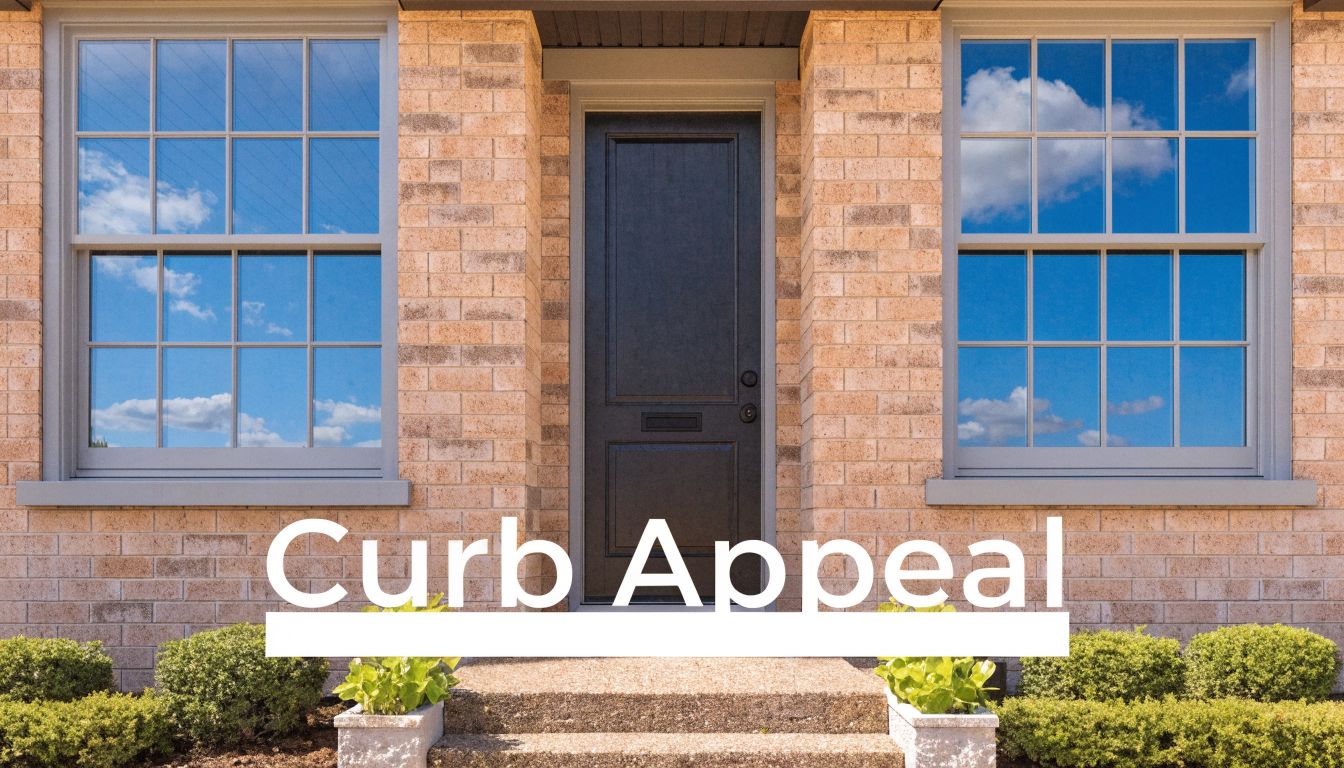
Residential window cleaning photos are subtler than commercial ones. The goal usually isn’t to show dramatic grime. It’s to show how the whole home looks sharper when the glass, frames, and screens are handled correctly.
That’s why this kind of Gilbert home photo works. The windows don't scream for attention. They almost disappear, which is exactly what clean residential glass should do. You see the symmetry of the house, the landscaping, the entry door, and the reflections without that dusty veil sitting over everything.
The small details that make the photo believable
Homeowners notice the total finish. Not just the center of the pane. If the frames still have dust, the screens look tired, or the tracks are holding debris, the photo never feels complete.
The most effective residential images usually reveal:
- Invisible-looking glass: Minimal haze, with reflections reading clean and sharp.
- Balanced exterior presentation: Landscaping, trim, and windows all working together.
- Detail care: No obvious buildup in corners, lower tracks, or screen lines.
Window cleaning photos become trust signals for neighborhood marketing. A homeowner in Chandler or Tempe can look at a finished Gilbert property and immediately decide whether the crew’s standard matches what they want at their own home.
Why wide residential shots matter
Tight close-ups can be useful, especially for hard water or screen cleaning, but wide shots are what sell residential curb appeal. They show what homeowners are really paying for. Not just cleaner glass, but a cleaner-looking property.
Golden-hour photography often helps because the softer light reveals the home without washing out the windows in glare. It also captures reflections cleanly, which is important on dark-framed modern homes where every smear shows.
For residential work, these photos carry a quiet message. The crew respected the property, cleaned carefully, and left the home looking finished instead of just serviced. That’s what most homeowners want to buy.
7. Case Study #7 Defeating Arizona’s Extreme Weather Challenges
Arizona leaves its fingerprints on glass. You see it after monsoon winds, after sprinkler overspray, after pollen season, and after months of full sun baking residue onto the pane. Good window cleaning photos in this category don’t just show dirt. They identify the type of dirt.
That distinction matters because different contamination needs different methods. Dust film is one job. Hard water minerals are another. Sticky residue in corners and old debris along edges can turn into restoration work instead of standard maintenance.
The photo that educates the customer
One of the most useful educational images is a close-up of mineral staining. It helps homeowners understand why spray cleaner and paper towels didn’t solve the problem. In one detailed gallery case, technicians removed severe contamination including hard water mineral deposits, oily residue causing ghosting, spider webs, and adhered debris by using an acid wash with a 50/50 white vinegar-water solution, letting it dwell for 2 to 3 minutes, then scrubbing with microfiber or non-scratch pads. For more stubborn buildup, the process also included dry #0000 steel wool on dry glass and a sharp safety razor blade at a 45-degree angle on wet soapy glass, as described in PopUp CleanUp’s window washing case study.
That kind of information changes how people read a photo. They stop seeing “dirty window” as one category and start seeing a technician diagnosing specific problems.
What works in Arizona and what usually fails
What works is matching the method to the residue. Pure-water cleaning handles routine dust and maintenance glass well. It doesn’t replace restoration techniques for baked-on mineral deposits. Likewise, harsh scraping on the wrong surface can create problems if the glass has coatings or other limitations.
What usually fails is treating every dirty window the same way. Homeowners often try basic spray cleaner on hard water and end up frustrated because the stain isn’t sitting on the glass like normal dirt. It’s bonded mineral residue.
A good Arizona problem photo should show one of these conditions clearly:
- Dust storm film: Fine, even residue across the whole pane.
- Sprinkler spotting: Concentrated mineral marks in a repeating spray pattern.
- Corner buildup: Webs, debris, and gunk where standard wiping misses.
- Sun-baked grime: Residue that looks fused to the glass until it’s restored correctly.
These images do more than market the service. They teach the client why the right process matters.
8. Case Study #8 The People Behind the Polish
The last category is the one many companies skip, and it’s a mistake. Customers don’t just hire a result. They hire the person who shows up at the gate, walks around the property, handles the equipment, and speaks to them at the front door.
The best people-focused window cleaning photos show a technician who looks prepared, respectful, and comfortable on site. Not stiff. Not overly staged. Just professional in the way property owners care about.
Why human photos matter
Through photos, branding either feels real or falls apart. If the work photos are strong but the people photos feel careless, clients start wondering what the service experience is like.
For residential jobs in Phoenix and Scottsdale, a good people image usually captures a short handoff moment. The technician is reviewing the work, answering a question, or walking the client through what was cleaned. On commercial properties, it might be a crew member speaking with a manager near the service entrance or storefront.
If you want to understand the tools and methods that usually sit behind those finished results, this page on what professional window cleaners use gives a solid overview.
The cleaner in the photo is part of the proof. Clients judge care, trust, and professionalism before they judge technique.
What to capture and what to avoid
What to capture is simple:
- Real interaction: A technician speaking with a homeowner or manager naturally.
- Professional presentation: Uniform, clean equipment, and good posture on site.
- Respect for property: Shoe care, organized tools, and calm body language.
What to avoid is anything that feels forced. Fake handshakes, exaggerated thumbs-up poses, or overly polished stock-style smiles usually weaken the message. The strongest service photos look like they were taken in the middle of a normal, well-run job.
For a company serving homes, retail spaces, and high-rise properties, these photos matter because they answer the final question customers always have. Who exactly is coming to my property? If the image answers that well, the rest of the gallery becomes more believable.
Window Cleaning Photos: 8-Case Comparison
| Case Study | Implementation Complexity | Resource Requirements | Expected Outcomes | Ideal Use Cases | Key Advantages |
|---|---|---|---|---|---|
| Case Study #1: The High-Reach Transformation in Scottsdale | Medium–High (specialized pole systems, trained crew) | Deionized water system, telescoping poles, certified technicians | Spot‑free, streak‑free upper‑story glass; faster commercial jobs | Multi‑story commercial buildings and routine high‑rise maintenance | Safer ground‑based access, eliminates mineral spots, long‑lasting results |
| Case Study #2: Boosting Chandler Retail Curb Appeal | Low–Medium (coordination + photography) | Professional photography, consistent lighting, scheduling | Visually persuasive before/after assets that attract foot traffic | Retail storefronts, restaurants, hospitality businesses | Strong marketing proof, builds customer confidence, highly shareable |
| Case Study #3: High-Rise Safety in Downtown Phoenix | High (rope access, strict safety protocols) | OSHA‑compliant harnesses/ropes, certified high‑rise techs, insurance | Demonstrated compliance and liability protection for clients | High‑rise offices, luxury condos, complex commercial towers | Differentiates on safety and insurance; required for big contracts |
| Case Study #4: Maximizing Solar Panel Output in Paradise Valley | Medium (careful techniques, electrical awareness) | Non‑abrasive cleaning tools, trained staff, access to monitoring data | Improved panel efficiency and demonstrated ROI potential | Residential and commercial solar arrays | Shows measurable energy benefits; targets growing solar market |
| Case Study #5: Full Exterior Restoration via Power Washing | Medium–High (equipment control, runoff management) | Commercial power washers, certified operators, water management plans | Dramatic exterior transformation and restored surfaces | Walkways, facades, drive‑thrus, large property restorations | Enables upsells; positions company as full‑service exterior provider |
| Case Study #6: Enhancing Residential Curb Appeal in Gilbert | Low (residential service + staged photography) | Residential cleaning tools, professional photography, homeowner permission | Subtle but noticeable curb appeal and perceived property value gain | Premium single‑family homes, neighborhood marketing campaigns | Emotional appeal, attracts premium homeowners, community shareability |
| Case Study #7: Defeating Arizona's Extreme Weather Challenges | Low–Medium (seasonal documentation and targeted cleaning) | Problem‑focused photography, pure‑water system, seasonal scheduling | Educational content that justifies maintenance and solutions | Post‑monsoon cleanup, hard‑water and dust‑prone properties | Positions regional expertise; builds credibility for local issues |
| Case Study #8: The People Behind the Polish | Low (authentic customer interactions) | Trained staff, signed photo releases, professional photography | Builds trust and emotional connection with prospects | About pages, recruitment, trust‑building marketing materials | Humanizes the brand; reinforces professionalism and guarantees |
See the Difference for Yourself Your Property Is Next
You pull up a quote request page, open a company’s photo gallery, and start looking for one thing. Proof. Not polished marketing shots, but clear evidence that the crew can handle a property like yours in Arizona conditions.
That is what these window cleaning photos are meant to show. This section is the close of eight visual case studies across Phoenix and Scottsdale, each tied to a specific job type, access challenge, surface issue, or result. The point is not to show pretty glass. The point is to show what was cleaned, how it was cleaned, and whether the result holds up under real scrutiny.
A useful photo set answers practical questions fast. Can the crew reach third-story exterior glass without leaving runoff or brush marks? Do storefront panes look clean from the parking lot, not only in a tight crop? Are high-rise jobs documented in a way that shows controlled access and safe work practices? Do solar panel photos show clean, even surfaces instead of streaks that cut performance? Good images make those answers visible.
Residential clients usually care about finish quality. Glass should look clear from inside and outside. Screens, frames, and tracks should not be left behind as an afterthought. On houses in Gilbert, Scottsdale, and Paradise Valley, the best before-and-after photos show the whole elevation looking sharper, because that is how curb appeal is judged generally.
Commercial clients look for something different. They need signs of consistency, job planning, and scale. A property manager reviewing window cleaning photos wants to know whether a company can service a storefront route, a multi-tenant office, or a high-rise schedule without gaps in quality from one side of the building to the next.
As noted earlier, the window cleaning market is growing. That means more companies competing for the same homes and commercial accounts. In a crowded field, photos matter because they help you sort real field experience from generic claims.
The photos also need to be honest. Wide shots matter. Detail shots matter. Before-and-after pairs matter most when they show difficult glass, direct sun, mineral buildup, or awkward access points instead of only the easiest pane on the property. If a gallery avoids the hard work, that usually tells you something.
South Mountain Window Cleaning, LLC serves residential and commercial properties across Phoenix, Scottsdale, Paradise Valley, Gilbert, Chandler, and nearby Valley communities. The company is licensed, bonded, and insured, and the team handles residential window cleaning, commercial work, high-rise projects, power washing, and solar panel cleaning in Arizona conditions.
If you are comparing providers, ask to see recent window cleaning photos that match your building type and your service needs. That is usually where the true answer is. A clean result shows up in the glass, the edges, the frames, and the way the whole property presents after the crew leaves.
If you want your own before-and-after results instead of another generic promise, contact South Mountain Window Cleaning, LLC for a fast, free, no-obligation quote and schedule service for your home, storefront, office building, or high-rise property in the Valley.