
House washing is a low-pressure, chemistry-led exterior clean of siding or walls, trim, soffits, fascia, gutters, and exterior window frames. It's different from pressure washing driveways or cleaning windows, because the process is designed to remove organic growth and surface film without forcing water behind the exterior.
You may notice the problem after a dusty week in Phoenix. The stucco looks gray instead of its original color, cobwebs collect beneath the eaves, and a dark mark appears near an irrigation drip line. The house may not look severely dirty, but that thin layer of dust, pollen, algae, and mildew can make the entire property look neglected.
The confusion usually starts with the word “washing.” A house wash isn't one powerful spray applied everywhere. It's a material-specific cleaning process that considers the exterior surface, the type of contamination, nearby plants, drainage, access, and the risk of water intrusion.
What House Washing Actually Means
House washing cleans the exterior shell of a home. A standard service commonly includes the main exterior walls, siding or stucco, visible trim, soffits, fascia, outside gutters, and exterior window frames. The intent is to remove the film sitting on the surface, not to strip paint, repair damaged materials, or restore every stain.
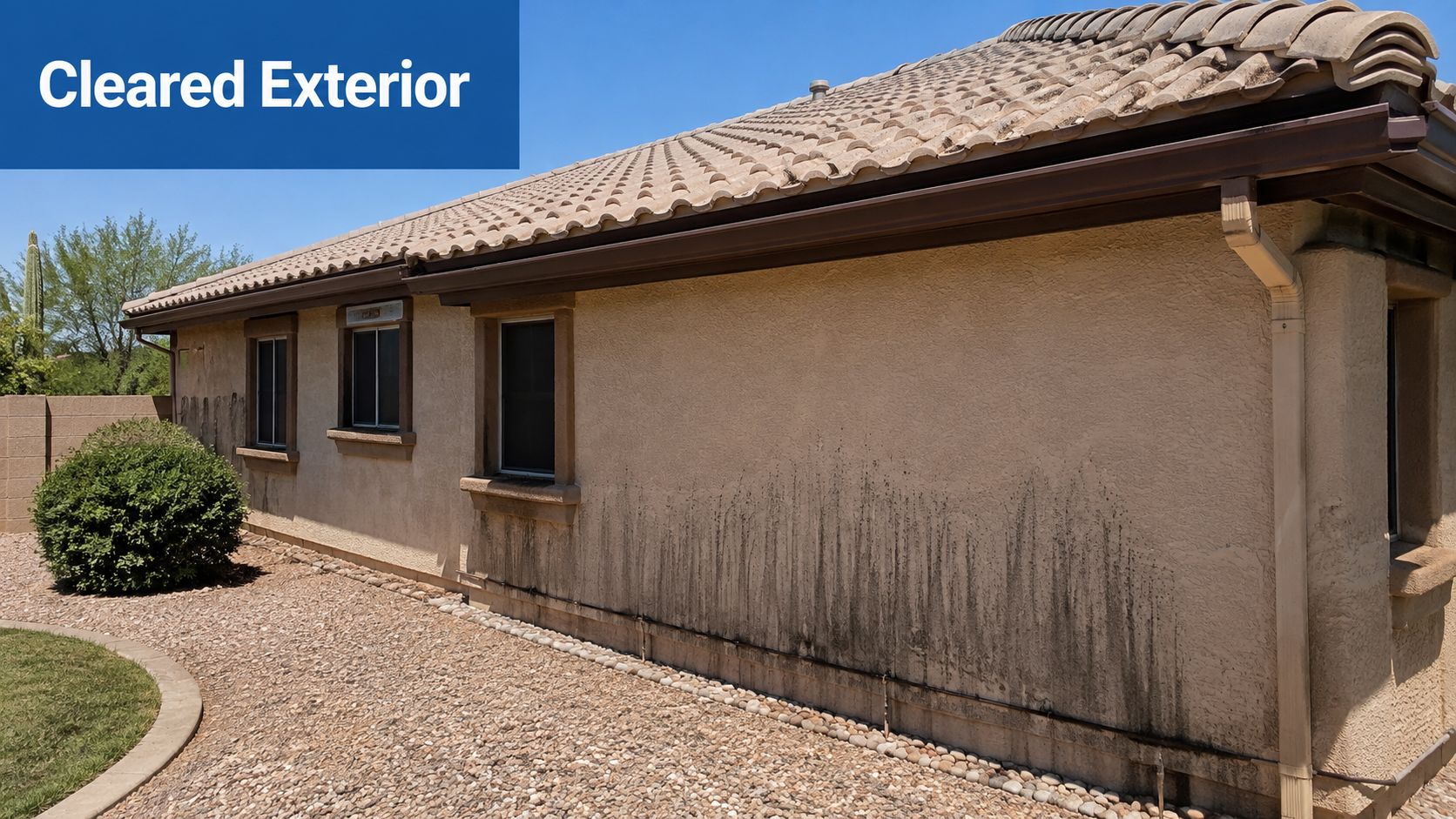
In Arizona, that film often comes from airborne dust, pollen, webbing, sprinkler overspray, and organic growth that develops where moisture lingers. Low rainfall leaves dust on walls and eaves, while monsoon humidity can briefly create conditions that activate algae or mildew, especially in shaded areas and around irrigation.
The exterior shell, not every outdoor surface
A house wash usually stops at the boundary of the home's vertical exterior. It isn't driveway cleaning, roof washing, interior window cleaning, or a restoration project for failed paint, etched glass, cracked stucco, or embedded rust.
That boundary matters when you compare quotes. One company may describe a broad exterior clean that includes eaves and gutter exteriors, while another may define house washing as siding only. A clear scope prevents a homeowner from assuming that windows, screens, solar panels, or a driveway are included when they're separate services.
For a practical look at treating organic growth safely, this guide to the best way to remove algae is useful because it highlights why treatment matters more than striking the surface with force.
Why low pressure changes the result
The cleaning solution does the heavy work. It loosens and breaks down organic film, then a controlled rinse carries away the residue. This approach helps protect paint and reduces the chance of pushing water behind siding laps, trim joints, or small openings.
Professional guidance places typical soft-wash working pressure around 60 to 300 PSI for siding and similar exterior cladding, as explained by Cleaner Times' soft-washing guidance. In plain terms, the spray should look broad and controlled, not like a concentrated cutting jet.
You can review how this service is scoped for local homes through South Mountain Window Cleaning's house washing service, then compare the listed surfaces with your own exterior.
Soft Wash vs Pressure Washing Explained
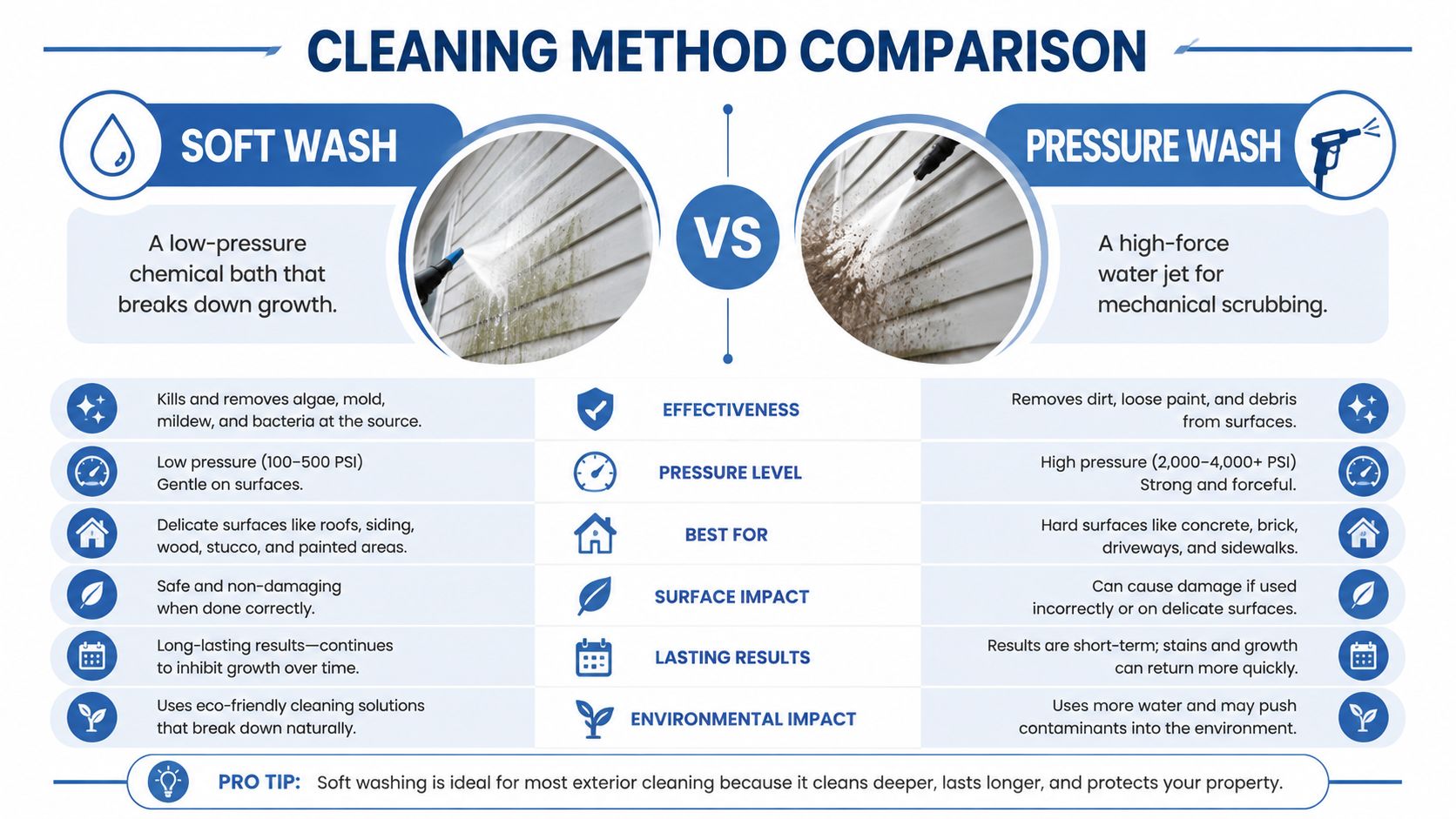
Soft washing and pressure washing both use water, but they solve different problems. Soft washing is a gentle chemical bath, while pressure washing is a mechanical scrub powered by a concentrated water stream.
For siding, stucco, painted wood, and stone veneer, the safer default is usually soft washing. The operator applies a purpose-formulated solution at low pressure, allows it to dwell, and rinses with a wide fan pattern. The surface doesn't need to be struck hard if the contamination can be chemically loosened first.
What the numbers look like on a wall
A soft wash is often described with low-pressure settings, but the exact number depends on the equipment, nozzle, distance, material, and rinse technique. Published professional guidance places siding work around 60 to 300 PSI, not the much higher force used for hard-surface cleaning.
Pressure washing, by contrast, relies on force. Equipment may operate in the 2,500 to 4,000 PSI range for demanding hard-surface work, although the machine's rating doesn't tell you what pressure reaches the wall. The nozzle, distance, angle, and operator control all affect the impact.
A narrow high-pressure stream can scar paint, damage soft materials, and drive water behind vinyl siding or exterior joints. It can also create a misleading result by removing the visible mark while leaving moisture or surface damage behind.
Match the method to the material
Concrete, pavers, and some hardy masonry surfaces can benefit from mechanical pressure because embedded soil and vehicle residue may need agitation. The same approach doesn't automatically belong on a stucco elevation or an older painted façade.
For an Arizona stucco home, most professional house washes default to soft washing because stucco, trim, sealants, and painted surfaces need controlled chemistry and a gentle rinse. Sodium hypochlorite guidance for residential siding commonly falls around 0.5% to 1.5%, with many routine recommendations clustering near 1%, as outlined in J. Racenstein's siding mix guidance. The operator should adjust the mix for the material and the amount of organic growth rather than assume that stronger is always better.
South Mountain Window Cleaning explains the distinction between these approaches in its guide to pressure washing versus soft washing. The useful question isn't which method sounds more powerful. It's which method removes the contamination while preserving the surface.
What a Standard House Wash Covers
A well-written quote should let you identify the home's exterior surfaces line by line. If a proposal only says “house wash” without defining the work area, ask for clarification before scheduling.
Included surfaces
Most standard house-wash scopes include the exterior walls of the main structure, visible trim, soffits, fascia, and the outside of gutters. Exterior window frames and sills may also be included, but the glass itself, screens, and interior surfaces often require a separate window-cleaning scope.
Access can change the work even when the surface list stays the same. A two-story wall, narrow side yard, decorative shutters, delicate landscaping, or a hose bib located far from the work area may require additional setup and protection.
| Surface or Service | Typical Status |
|---|---|
| Main exterior walls or siding | Included |
| Visible trim | Included |
| Soffits and fascia | Included |
| Exterior gutter surfaces | Often included |
| Exterior window frames and sills | Often included, confirm in writing |
| Interior windows | Add-on |
| Screens and tracks | Add-on |
| Solar panels | Add-on |
| Roof washing | Add-on |
| Driveways and walkways | Add-on |
| Heavy rust or hard-water stains | Add-on |
| Garage doors with specialty finishes | Usually separate |
| Oil, paint oxidation, or specialty pretreatment | Add-on |
Read the exclusions carefully
A house wash can improve the appearance of a wall without correcting failing paint, oxidized coatings, cracked stucco, or permanent mineral staining. If you're considering repainting, cleaning should be discussed with the painter because the costs for painting a home exterior can depend on preparation, surface condition, and the amount of repair required.
A proposal should also explain whether the provider is rinsing ordinary dust or applying a chemical soft wash. Water-efficient machines often use around 8 to 15 litres per minute, according to UK exterior-cleaning industry pricing and equipment guidance. That figure describes flow, not the total water used on your property, because job duration and rinse requirements vary.
Ask whether windows, gutters, roofs, solar panels, and stain removal are included. Matching those answers across competing quotes is more useful than comparing a single headline price.
How Often to Wash in the Arizona Climate
A home beside an unpaved road may show a dusty film soon after cleaning, while a shaded wall can develop dark marks even when the sunny side still looks bright. Arizona homes do not follow one fixed washing calendar. Dust events, intense sun, irrigation overspray, shade, and monsoon humidity affect each exterior differently.
Inspect the outside every 6 to 12 months. Schedule a wash when you see a visible film, dark irrigation marks, cobwebs, algae, or mildew. This interval helps with planning, but the surface condition should determine the actual timing.
Match the cycle to the surface
Stucco often suits an annual low-pressure treatment, especially on north-facing or shaded walls where growth remains damp longer. The goal is to loosen contamination without forcing water behind the finish.
Vinyl siding can use a similar inspection cycle, although aged or sun-damaged panels need gentler handling. Painted wood may remain presentable for 1 to 3 years between cleanings. Chalking, mildew, failing caulk, and exposed joints can shorten that period because cleaning cannot correct coating failure or open seams.
Stone veneer should be evaluated instead of placed on an automatic schedule. Its texture and porosity can make cleaners absorb unevenly. Test a small, less visible area first and observe the result before treating the full elevation.
Use the seasons as inspection points
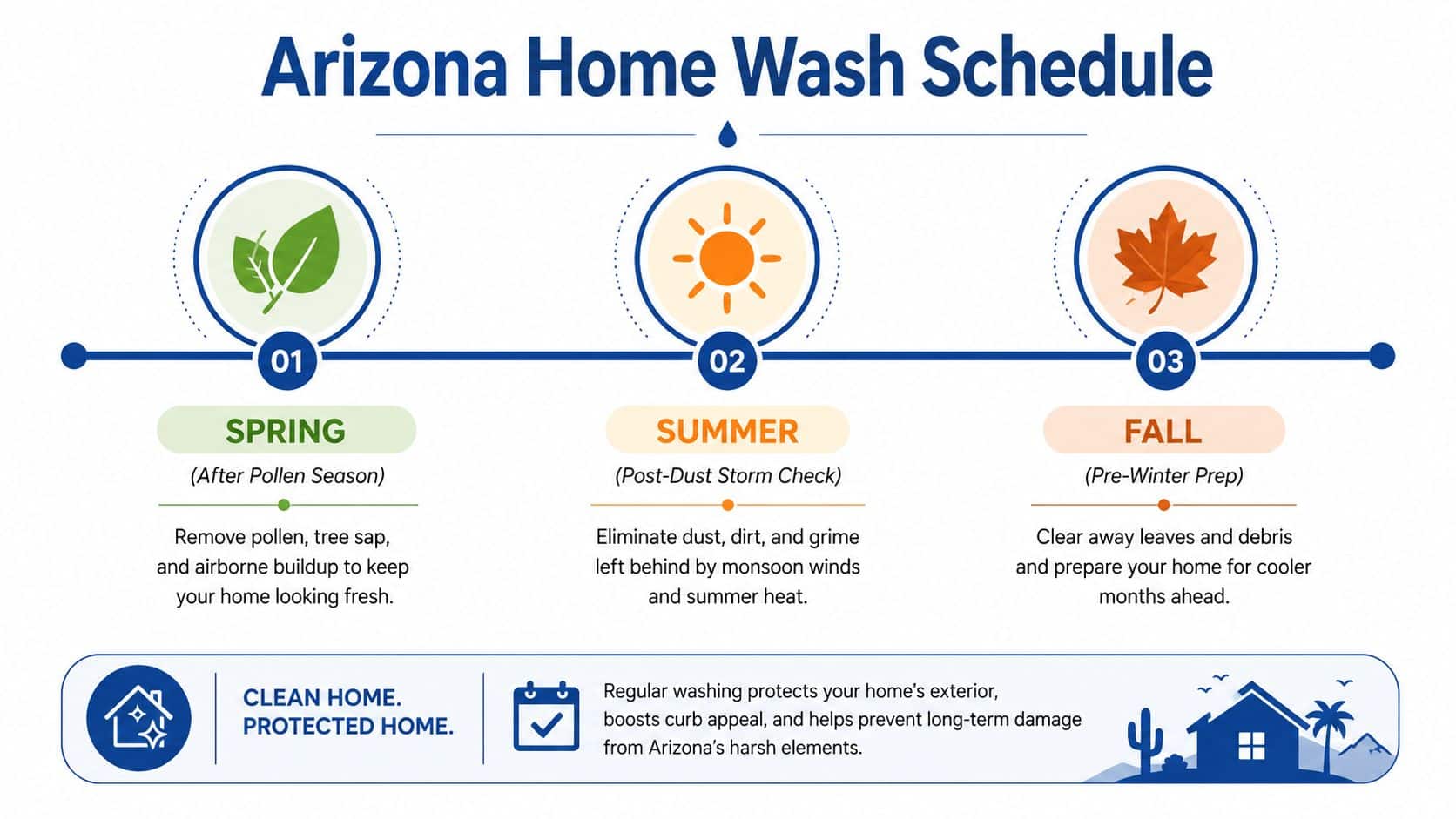
Inspect after winter for accumulated dust and pollen. Check again after summer dust storms and monsoon moisture, then review the property in fall before cooler weather. These checkpoints help reveal whether the next wash should cover the whole exterior or only a problem elevation.
Homes near construction, unpaved roads, desert landscaping, or busy Phoenix and Scottsdale routes may need more frequent attention because airborne material settles quickly. Irrigation overspray can also leave repeated marks around lower walls. A shaded side may need spot cleaning while the sunny side remains acceptable.
Practical rule: Schedule from what the exterior shows, not from a rigid promise about how long a wash will last.
The method should follow the material and the contamination. A light dust film may need a controlled rinse, while organic growth calls for a carefully selected cleaning solution and thorough plant protection. If the first application does not lift the growth, reassess the surface, dwell time, and mix strength rather than repeatedly spraying the same area.
For more scheduling context, compare South Mountain Window Cleaning's guide to how often you should power wash your home, then adjust the timing for your exterior material, shade, irrigation exposure, and nearby dust sources.
DIY House Washing Basics and Safety
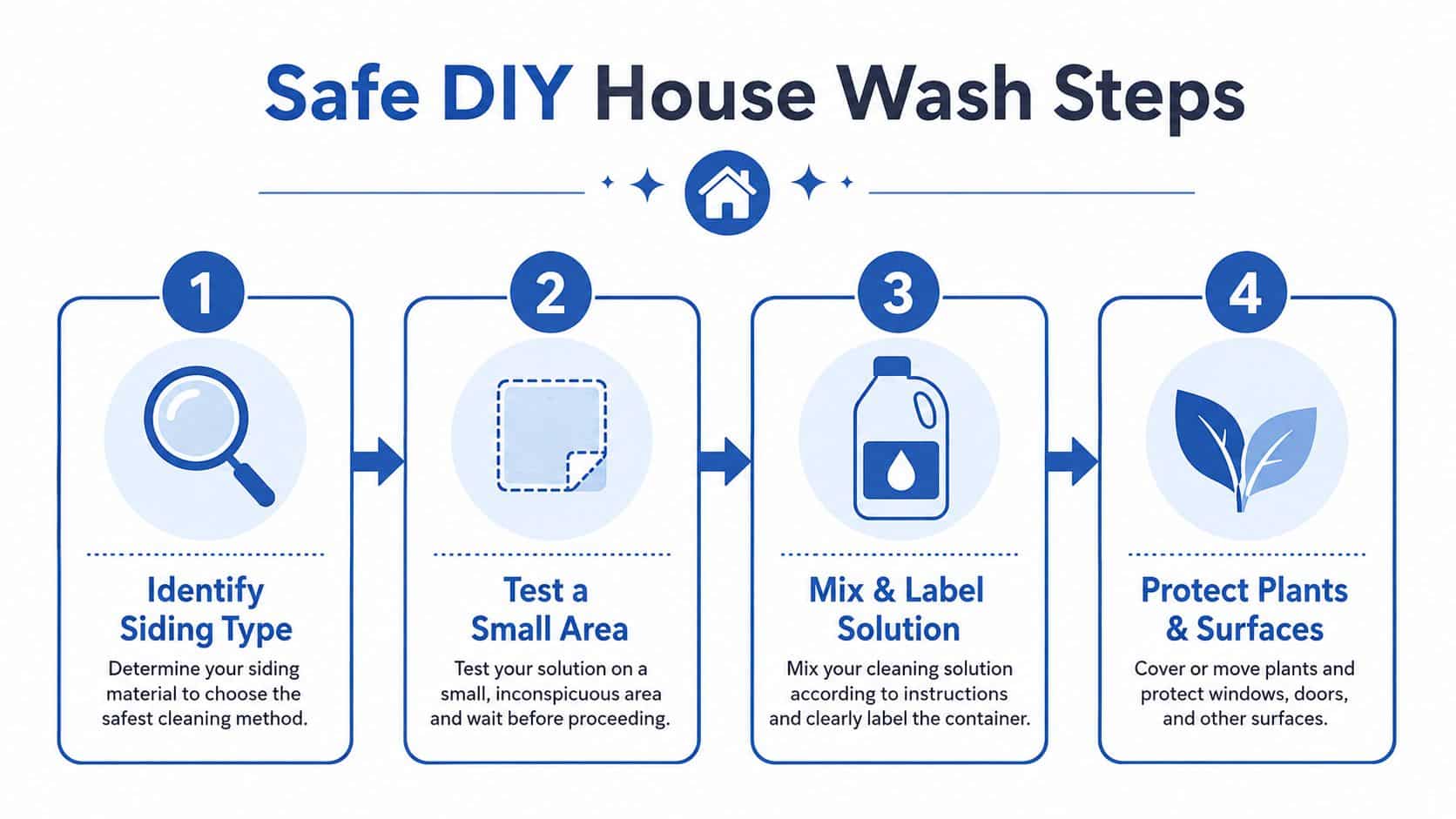
A safe DIY wash begins with identification, not equipment. Find out whether the wall is stucco, vinyl, painted wood, or stone veneer, because the least aggressive method that works is usually the right starting point.
Test the cleaner on a small, less visible area. Watch for color change, streaking, softening, oxidation, or uneven absorption before treating a broad wall.
A controlled setup
Mix and label the solution. Use a labeled container and follow the product directions. Residential siding guidance commonly places sodium hypochlorite around 0.5% to 1.5%, with routine work often near 1%, but the appropriate strength depends on the surface and contamination. Never mix cleaning chemicals casually.
Protect plants and nearby finishes. Thoroughly pre-rinse vegetation, cover or remove vulnerable items, and keep an eye on wind. Controlled chemistry reduces risk, but it doesn't eliminate the need for plant protection.
Apply from the bottom upward. This helps reduce uneven streaking while the solution is being applied. Work in shaded sections so the product doesn't dry prematurely.
Rinse from the top downward. Allow the solution to dwell according to its label, then use a broad, gentle rinse that carries loosened material toward the ground.
Know when the hose should stay in the shed
A garden hose or low-pressure washer is generally more appropriate for painted surfaces, stucco, and aged siding than a concentrated pressure stream. Water forced behind cladding can create hidden moisture problems, while excessive force can etch masonry, break glass, or strip paint.
Wear eye protection, chemical-resistant gloves, long sleeves, and non-slip footwear. Keep ladders on stable ground, don't work alone on a ladder, and never use a pressure washer while standing on one.
Avoid spraying toward outlets, electrical fixtures, power lines, roof edges, or open joints. Skip DIY work when the house is taller than one story, the stucco is loose, the stone is delicate, the mildew is extensive, or drainage could carry dirty or chemical water toward the foundation.
When to Hire a Professional
Professional house washing makes sense when the cost of a mistake is greater than the service price. A two-story elevation, steep access, loose stucco, oxidized paint, delicate stone veneer, heavy mildew, or a roofline near the work area can turn a simple-looking task into a property and safety problem.
A professional should also be considered when ordinary rinsing hasn't lifted the stain, nearby plants are sensitive, painted surfaces are fragile, or water can't drain safely away from the foundation. Raising the pressure isn't a substitute for better surface assessment.
Questions to ask before booking
Ask the provider to explain the method for each material. A capable crew should be able to tell you how it will approach stucco, painted wood, vinyl, stone veneer, trim, windows, and gutters.
Request written answers to these questions:
- What surfaces are included?
- Are windows, screens, gutters, roofs, driveways, and solar panels separate?
- How will plants and outdoor fixtures be protected?
- What cleaning mix will be used?
- How will the solution be rinsed and contained?
- Does the company carry liability insurance and worker coverage?
- Is the guarantee written and specific?
For properties where gutter buildup is part of the concern, it can help to compare the house-wash scope with specialized professional gutter cleaning services rather than assume the two services are identical.
Why local conditions matter
South Mountain Window Cleaning serves Phoenix and Scottsdale with residential, commercial, and high-rise window washing alongside exterior cleaning services. Its house-washing approach uses controlled cleaning matched to the home rather than applying one high-pressure setting everywhere.
That distinction matters in Arizona, where sun-baked dust, irrigation marks, monsoon residue, shaded walls, and uneven stucco can appear on the same property. A written quote should itemize siding, trim, soffits, fascia, and any add-ons, so you can compare the total scope instead of choosing based only on the headline price.
The same safety principle applies to high-rise work. OSHA limits rope-descent systems to 300 feet above grade, with use above that height allowed only when an employer demonstrates that other access methods aren't feasible or create a greater hazard, as stated in OSHA's rope-descent rule. For suspended window cleaning, OSHA guidance also requires written confirmation that each anchorage has been identified, tested, certified, and maintained to support 5,000 pounds in any direction for each attached worker, according to this window-washing anchorage compliance guidance.
Choosing the Right Service for Your Home
The right provider should make the method easy to understand before work begins. Start with the surface, then check the cleaning plan, protection steps, scope, insurance, and guarantee.
Run these checkpoints
Soft-wash capability: Confirm that the crew can clean stucco, vinyl, painted wood, and stone veneer with low pressure and suitable chemistry rather than treating every surface like concrete.
Water and runoff practices: Ask how the crew handles downstreaming, plant rinsing, and recovery or drainage practices in Phoenix and Scottsdale, where water use and runoff require practical attention.
Insurance and protection: Verify general liability and workers' compensation coverage. For commercial properties, request documentation before the crew arrives.
Comparable work: Ask for before-and-after photos of similar Arizona exteriors, especially if your home has textured stucco, fragile paint, decorative trim, or stone veneer.
Written scope: Clarify whether exterior window frames, glass, gutters, screens, solar panels, roofs, and driveways are included or priced separately.
South Mountain Window Cleaning, LLC offers soft-wash chemistry for Arizona exteriors, licensed and insured crews, a written satisfaction guarantee, and service coverage across Phoenix, Scottsdale, Tempe, Mesa, Chandler, and Gilbert. Those details give homeowners and property managers a practical basis for comparing service proposals.
For glass, pure-water cleaning removes dissolved minerals and impurities so the water can dry without residue, and it can reduce the need for detergents on many large or high surfaces, according to Streamline's explanation of pure-water cleaning. That process belongs in a window-cleaning scope, not automatically inside a basic house wash.
Request a written quote, compare it line by line with the checklist above, and choose a spring or post-monsoon appointment that fits your home's exterior material and exposure.
South Mountain Window Cleaning, LLC offers residential, commercial, and high-rise window washing, house washing, gutter cleaning, solar panel cleaning, and power washing across Phoenix, Scottsdale, Paradise Valley, Chandler, Tempe, and Gilbert. Visit South Mountain Window Cleaning, LLC to request a clear quote that separates house-wash surfaces from windows, roofs, gutters, and other add-ons.