
A rusting railing outside a Phoenix home, orange streaks beneath a commercial window frame, or corrosion on a parking structure component can look like a routine cleaning issue. It may not be. The right treatment depends on how deep the corrosion runs, how sensitive the surface is, how much area needs work, what cleanup the method creates, and whether the metal is still structurally sound.
This guide compares eight rust removal methods, from targeted chemical treatment and hand tools to industrial blasting, prevention, and component replacement. You'll find practical steps, suitable applications, trade-offs, safety considerations, and clear signals for bringing in a professional. Arizona's intense sun, blowing dust, and occasional monsoon moisture make exterior maintenance especially important. Dust can settle on Phoenix glass, and rain can turn that buildup into residue that dries onto the surface, as described in this Phoenix monsoon exterior-cleaning guide.
South Mountain Window Cleaning, LLC serves residential, commercial, and high-rise properties in Phoenix, Scottsdale, Paradise Valley, Chandler, Tempe, Gilbert, and nearby Valley communities. Rust removal can be coordinated with window cleaning, power washing, and broader exterior maintenance when the surrounding glass, concrete, frames, or walkways also need attention. For general corrosion prevention context, see this vehicle rust protection advice.
Rust removal is only successful when the cleaned surface is properly sealed, coated, repaired, or replaced afterward.
1. Chemical Rust Converters
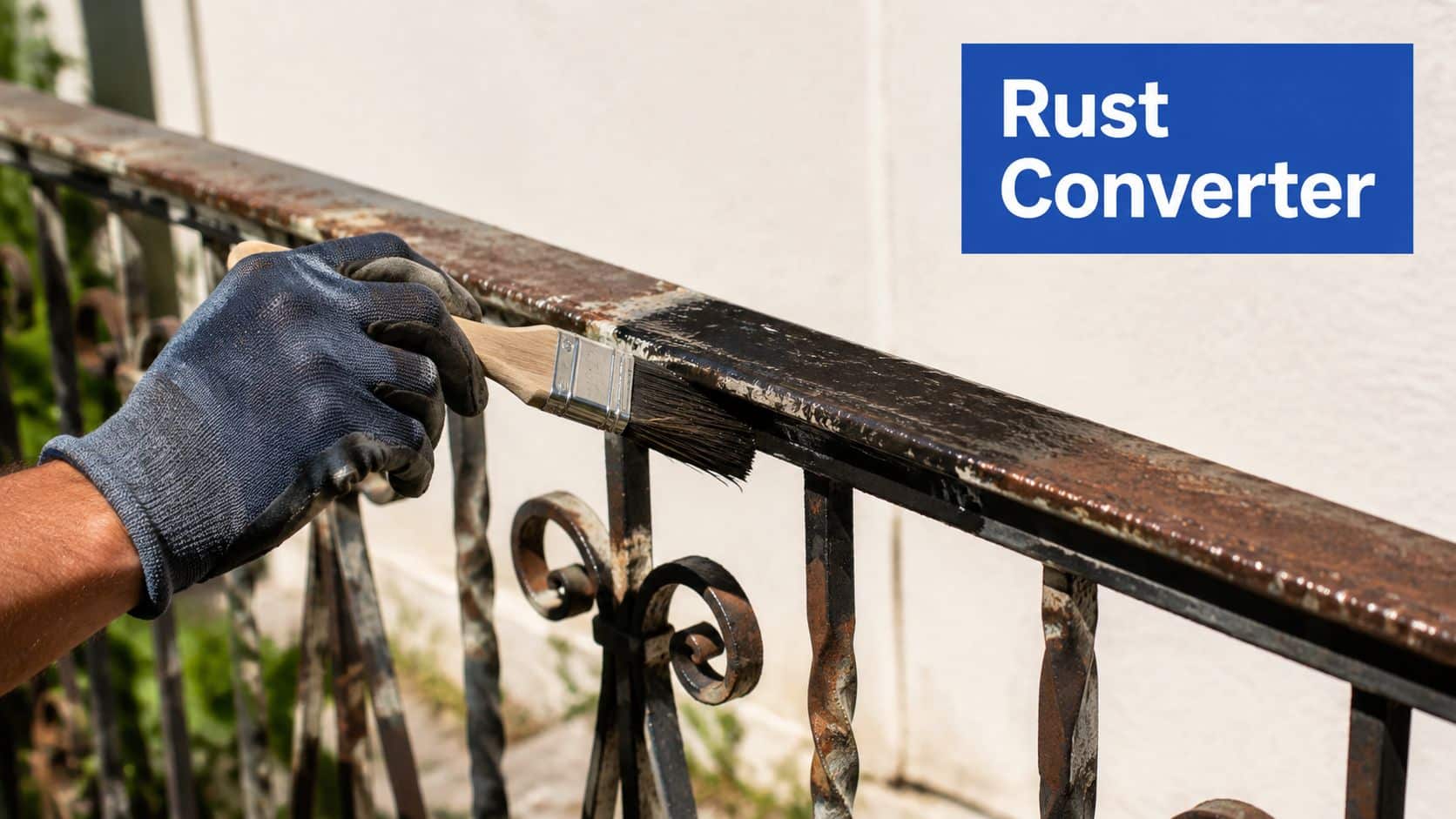
Chemical rust converters suit surface corrosion on sound metal. Instead of relying entirely on abrasion, a converter reacts with iron oxide and changes the treated rust into a more stable compound that can support a paint or coating system. Products such as Rust-Oleum Rust Converter are commonly considered for ornamental wrought-iron gates, railings, and exposed fixtures. A phosphoric-acid gel such as Naval Jelly may be used for localized treatment, but the product label and substrate compatibility should guide the decision.
This method makes sense when the railing or frame has orange surface rust but no perforation, severe pitting, or obvious loss of section. It can also reduce the amount of sound metal removed compared with aggressive grinding. The Canada Conservation Institute's guidance on mechanical rust removal explains the broader principle. Traditional abrasion can be fast, while finer tools are selected when preservation matters.
Application details that affect the result
Remove loose scale, dirt, and flaking coating with a hand wire brush. The converter needs contact with the remaining oxidation, not a thick layer of debris. Apply it in cool, shaded conditions rather than on metal heated by direct Arizona sunlight, and allow the product to cure fully before priming or painting.
A converter won't rebuild metal that corrosion has already consumed. It also won't replace a proper repair where water enters through a failed joint or unsealed fastener.
- Good fit: Surface rust on railings, gates, fixtures, and window-frame areas.
- Poor fit: Load-bearing damage, deep pits, perforations, and loose structural components.
- Safety point: Wear chemical-resistant gloves, eye protection, suitable clothing, and follow the product's ventilation and disposal directions.
For commercial parking structures, a converter may be part of a maintenance sequence, but the steel should be inspected before treatment. If the finish fails again, the source may be trapped moisture, a failed coating, or a joint that needs repair rather than another application.
2. Mechanical Wire Brushing and Grinding
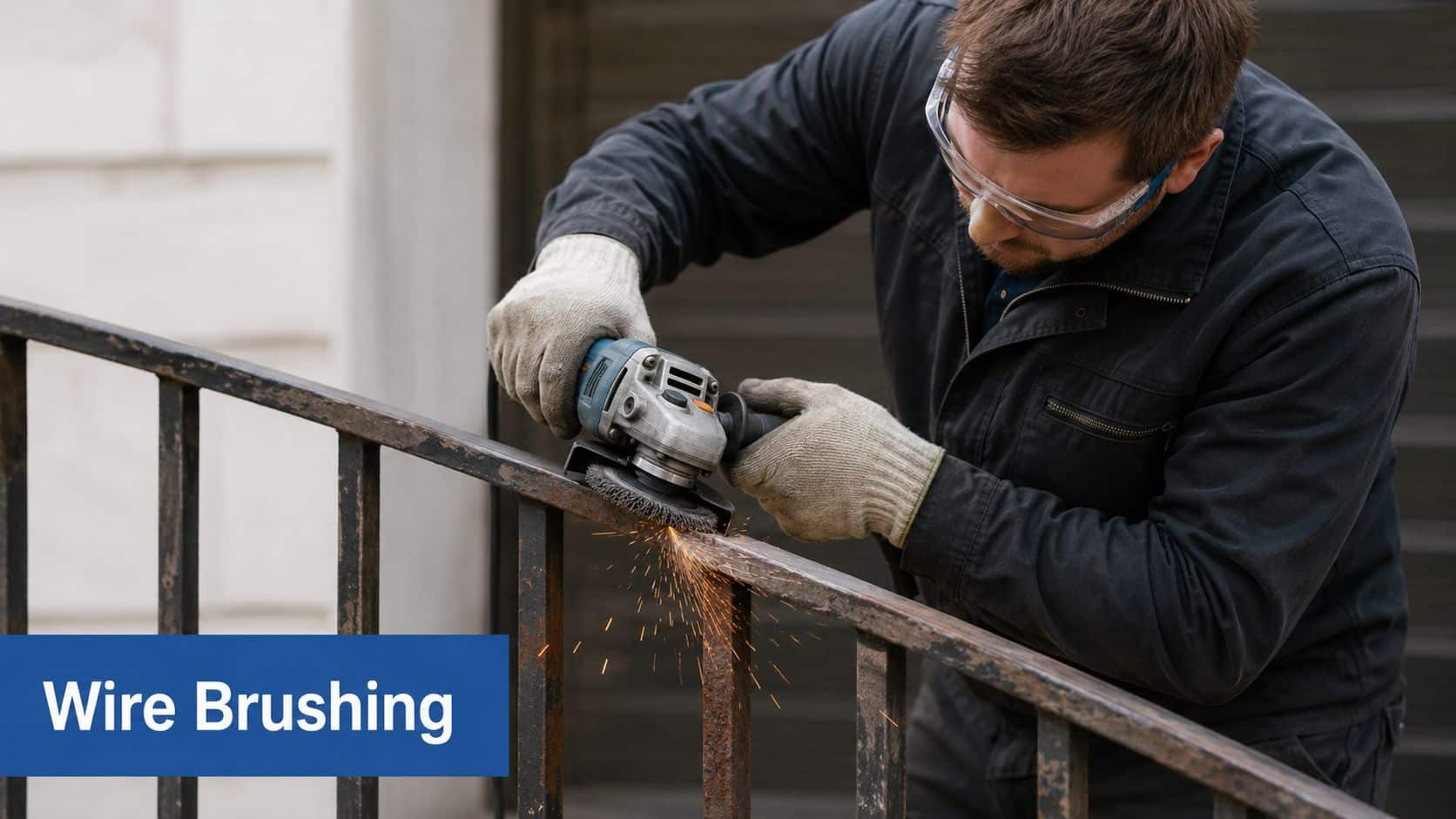
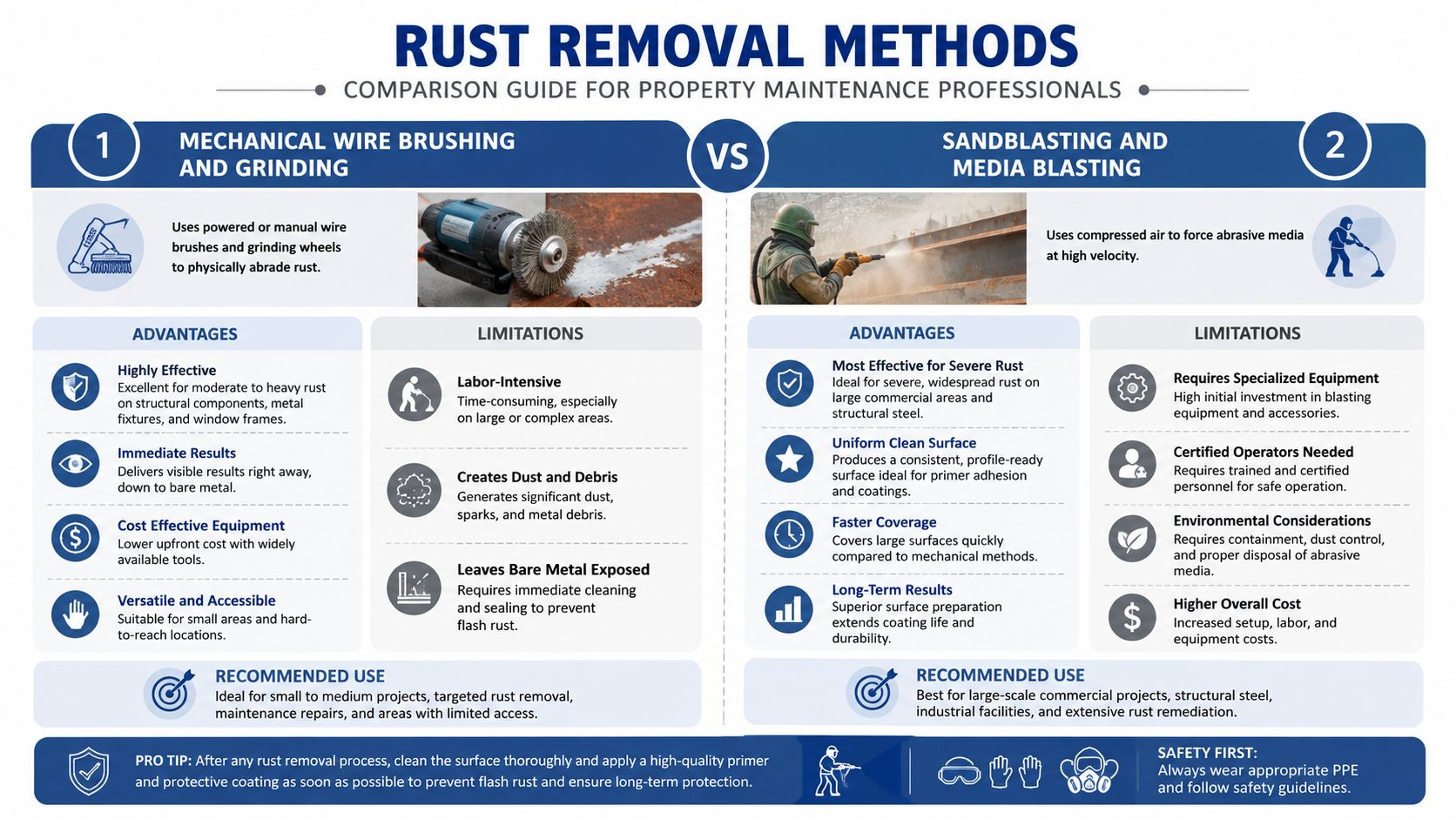
Mechanical abrasion is the practical choice for moderate to heavy rust on accessible metal. A hand wire brush can clean a small railing section, while a wire wheel or grinding attachment can remove thicker scale from a commercial frame, parking structure beam, gate, or exposed fixture. The Canada Conservation Institute lists sand blasting, wire cup wheels, radial brushes, and emery paper among traditional methods, while also describing finer options for delicate conservation work.
The advantage is control and speed. A technician can see the surface change as loose rust and failing coating come away. The drawback is equally important. A powered wheel can remove sound base metal if the operator presses too hard, stays in one place, or uses an unnecessarily aggressive abrasive.
A residential gate being prepared for repainting usually needs a different touch from a flat structural plate. Use a hand brush around ornamental details, welds, corners, and fasteners. Use a powered wire wheel on broader, accessible areas, but keep the tool moving in even passes.
Control dust, heat, and surrounding surfaces
Work in a ventilated area and protect nearby glass, painted walls, vehicles, landscaping, and finished concrete from metal dust and debris. Eye protection is essential, and a suitable respirator or dust mask should be selected for the work environment. Gloves, hearing protection, and protective clothing also matter when using powered equipment.
The rust removal service from South Mountain Window Cleaning can be relevant when rust stains or affected exterior areas need coordinated cleaning rather than an isolated DIY pass.
Practical rule: The faster the wheel removes corrosion, the easier it is to remove metal you meant to keep.
After abrasion, remove residue, inspect for pits, and prime or seal exposed metal promptly. Bare steel can develop flash rust when moisture reaches it, even if the surrounding air feels dry. Schedule this work before repainting, not after a new finish has been installed.
A powered brush is useful, but it isn't automatically appropriate for every frame or façade. High-rise access, falling debris, fragile coatings, and nearby occupied spaces can turn a straightforward tool job into a safety and containment project.
3. Sandblasting and Media Blasting
Sandblasting and media blasting belong on the large-scale, heavily corroded end of the spectrum. Compressed air propels abrasive media against the surface, stripping rust, old paint, and scale quickly. Alternatives such as glass beads, plastic media, or walnut shells can provide more controlled cleaning for substrates that could be damaged by harsher media.
This approach works well for structural steel, industrial equipment, large commercial frames, and metal components that need complete preparation before recoating. It can also be considered for bridge or overpass maintenance and historic architectural details, but historic work requires careful testing and preservation judgment.
Blasting doesn't just remove rust. It removes everything in the blast path. That means a contractor must choose the media, pressure, nozzle technique, and containment plan based on the substrate and the desired profile for the new coating.
The job includes containment and immediate protection
Tarping, dust control, collection, and cleanup are part of the work, not optional extras. Blast media can spread into occupied areas, enter mechanical systems, damage adjacent glass, and create disposal concerns. Commercial properties may also need scheduling around tenants, pedestrians, vehicles, and active loading zones.
The rust-stain causes affecting concrete matter here because blasting or coating a metal source without addressing nearby staining can leave the property looking unfinished.
- Choose gentler media: When the substrate, historic finish, or adjacent surface is sensitive.
- Choose aggressive media carefully: When thick corrosion and failed coatings require substantial preparation.
- Prime promptly: Exposed metal should be protected after cleaning and inspection.
- Verify requirements: Environmental, workplace-safety, waste-handling, and property rules should be reviewed before work begins.
Blasting is rarely a casual residential repair. It can be efficient for a controlled commercial project, but the final cost includes access, containment, labor, cleanup, recoating, and coordination with building operations.
4. Electrolytic Rust Removal
Electrolytic rust removal is a precision method for delicate, intricate, or valuable metal. It uses an electrical current, an electrolyte solution, and a sacrificial electrode to help separate corrosion from the underlying metal. Unlike grinding or blasting, the process doesn't depend on forceful abrasion, making it useful for ornamental wrought iron, historic metal details, decorative fixtures, and removable antique components.
The method is usually better suited to parts that can be detached and placed in a controlled setup than to a fixed high-rise frame or a large parking structure beam. A technician must control the electrical connections, solution, electrode placement, and process time. The objective isn't merely to make the surface look cleaner. It is to remove corrosion while preserving shape, texture, and detail.
Why this method needs specialist judgment
Electrolytic treatment isn't a universal substitute for mechanical work. The wrong setup can produce uneven results, affect coatings, or create a new cleanup and waste-handling problem. The substrate, fasteners, plating, paint remnants, and electrical behavior all need consideration before treatment begins.
Use distilled water and an appropriate electrolyte solution when the process calls for them, and monitor the current rather than leaving the system unattended. Keep records of the setup and process parameters if the same type of component will be treated again.
A practical workflow includes:
- Photograph the component: Record its condition, finish, and vulnerable details before treatment.
- Test compatibility: Confirm that the metal and any remaining coating can tolerate the process.
- Monitor continuously: Check connections, solution condition, and progress during treatment.
- Finish immediately: Dry, inspect, and seal the cleaned metal before new oxidation begins.
- Use specialist support: Historic, valuable, or architecturally significant pieces deserve conservation input.
Electrolytic removal can preserve more detail than aggressive abrasion, but its slower, controlled nature makes it a poor choice for broad exterior surfaces where access and production speed dominate.
5. Rust-Removal Wheel Attachments and Wire Wheels
Small rust spots don't always justify industrial equipment. Wire wheels, wire cup brushes, and composite abrasive wheels attach to drills, angle grinders, and rotary tools, giving property owners and maintenance teams a practical way to treat localized corrosion on gates, railings, fixtures, and exposed hardware.
This method sits between hand brushing and full mechanical restoration. A drill-mounted brush can reach a small fastener or railing joint, while an angle-grinder cup brush can cover a broader flat area. The tool is accessible, but accessibility shouldn't be confused with low risk. A spinning wheel can throw wires, catch an edge, damage a nearby coating, or polish the surface without removing corrosion from a pit.
Use the attachment for the actual condition
Start at a lower speed and use light, overlapping passes. Let the wheel do the work instead of forcing it into the metal. A worn wheel may produce heat, uneven contact, and poor removal, so inspect and replace attachments when they no longer perform consistently.
Protect glass, stucco, painted surfaces, vehicles, and landscaping before work begins. Eye protection is mandatory, and dust protection, gloves, hearing protection, and appropriate clothing should match the tool and environment.
For a Phoenix homeowner treating a rust spot on a railing before seasonal repainting, the sequence is straightforward:
- Clean away surface dirt and loose scale.
- Test the wheel on an inconspicuous area.
- Remove corrosion with controlled, overlapping passes.
- Brush or vacuum away residue.
- Inspect for pitting and exposed bare metal.
- Prime and paint without leaving the cleaned area unprotected.
The method works best when rust is localized and the metal remains sound. It doesn't solve water intrusion, failed welds, deep section loss, or corrosion hidden behind trim. If rust keeps returning at the same joint, maintenance should address the source rather than repeatedly polishing the symptom.
6. Acid Pickling and Phosphating
Acid pickling is an industrial chemical treatment for rust and mill scale on steel components. Acid dissolves oxidation, and a subsequent phosphating step can create a chemically bonded layer that supports paint adhesion and corrosion protection. Phosphoric acid is often selected when a part will be primed and painted because it can convert rust into an iron-phosphate layer suitable for coating preparation, according to industrial rust-removal guidance from Future Market Insights.
This method can be appropriate for structural steel, manufacturing components, large frames, machinery, and factory-scale preparation. It isn't a casual treatment for a window frame beside occupied space. Strong acids can attack more than rust, and the process creates chemical exposure, runoff, neutralization, and disposal concerns.
Chemistry changes the risk profile
Industry guidance distinguishes strong acids such as hydrochloric acid from weaker acids such as oxalic acid or EDTA, while water-based acid-free products chemically lift rust without attacking the underlying metal in the same way. The industrial comparison of acids and water-based rust removers also describes the basic trade-off. Faster chemistry generally demands tighter control, while gentler chemistry may require more dwell time.
Muriatic acid is a brute-force option that requires immediate neutralization and corrosion protection afterward. It should never be selected only because it is available.
- Ventilation: Prevent dangerous vapor accumulation.
- PPE: Use chemical-resistant gloves, eye and face protection, protective clothing, and equipment appropriate to the product.
- Containment: Keep chemicals and rinse water away from glass, masonry, landscaping, drains, and occupied areas.
- Waste handling: Neutralize and dispose of chemical waste according to applicable requirements.
- Coating timing: Inspect, dry, phosphate where specified, and prime promptly.
The related guidance on cleaning brick with muriatic acid reinforces why acid work requires surface-specific judgment. A treatment that works on one metal assembly can stain or damage adjacent masonry.
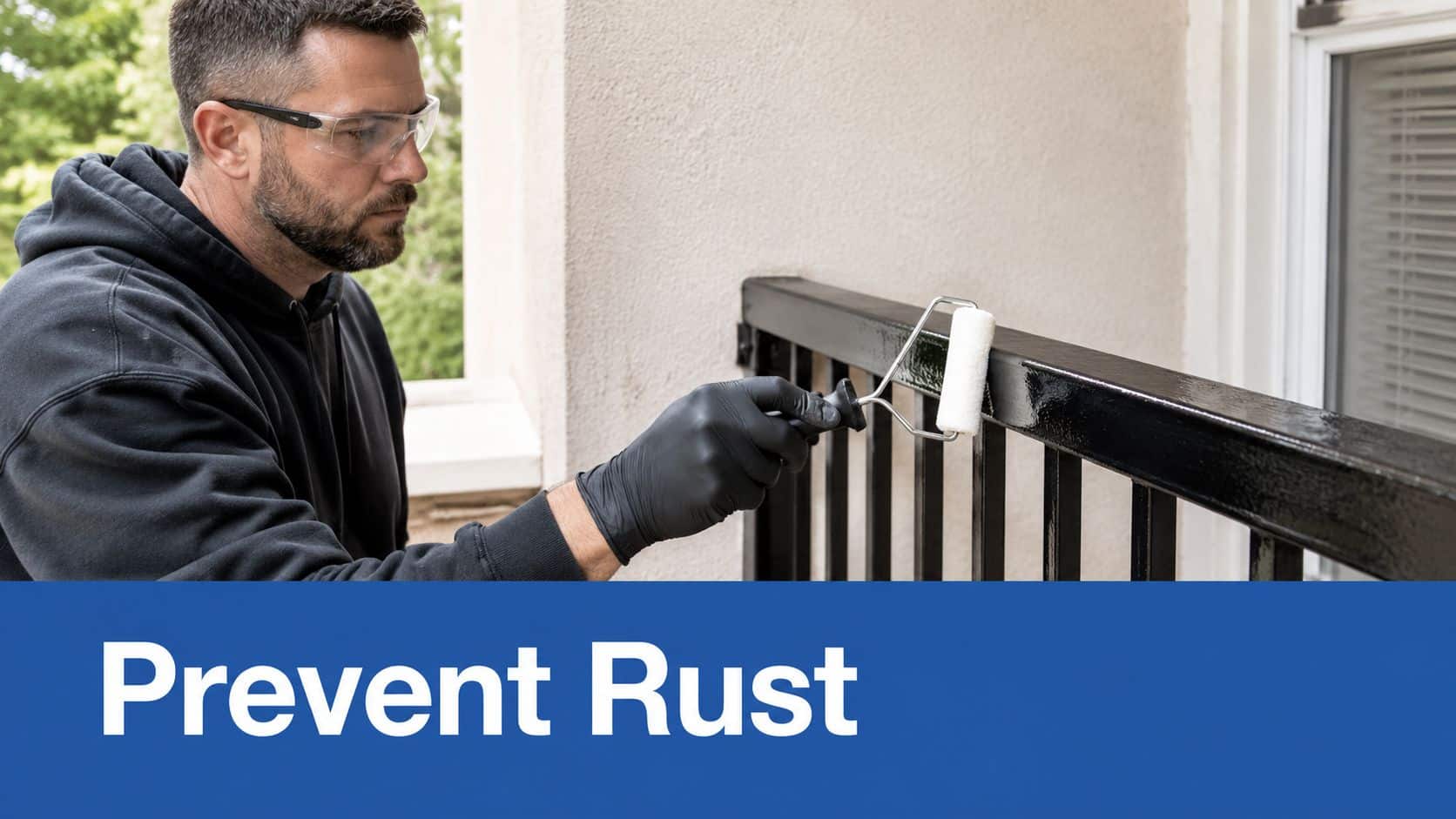
7. Rust Inhibitor Coatings and Preventative Sealers
A clean metal surface still needs protection. Rust inhibitor coatings and preventative sealers limit contact with moisture and oxygen, helping slow the return of corrosion after treatment. Options range from thin oil-based inhibitors to thicker epoxy and polyurethane systems. The correct product depends on the metal, the existing coating, sun exposure, abrasion, water contact, and the finish expected by the property owner.
Arizona's dry climate can make corrosion seem slow, but exterior metal still encounters irrigation overspray, condensation, monsoon rain, roof leaks, dirty joints, and trapped moisture. Dust also holds contamination against a surface. Routine cleaning and inspection help reveal coating failure before rust spreads under the finish.
Build protection into the maintenance plan
Apply coatings only after the metal is clean, dry, and properly prepared. Painting over loose scale or damp residue traps problems beneath the finish. A commercial window frame may need a compatible coating system, while a gate may require a different primer and topcoat because it experiences frequent contact and impact.
The rust prevention service information from South Mountain Window Cleaning can help property owners connect treatment with ongoing exterior maintenance.
- Match the system: Confirm compatibility with the substrate and existing finish.
- Seal vulnerable details: Pay attention to seams, fasteners, welds, and drain paths.
- Inspect routinely: Look for blistering, cracking, peeling, exposed edges, and renewed orange staining.
- Document work: Record the product, location, preparation, and maintenance observations.
- Clean carefully: Remove dust and residue without damaging the protective coating.
A sealer won't correct structural corrosion, and it won't perform well over a contaminated surface. It can, however, reduce repeat work when paired with sound metal preparation and a realistic inspection schedule.
8. Replacement of Severely Corroded Components
Some metal shouldn't be cleaned and coated. Deep pitting, perforation, severe section loss, or structural weakness can make replacement safer and more economical than repeated restoration. A corroded window-frame assembly, railing system, parking-structure column component, roof flashing section, or metal trim may have reached the point where cosmetic treatment only hides the remaining problem.
Start by determining whether the affected part carries a load, protects an opening, supports a guardrail, directs water, or contributes to a building envelope. A rust stain on a decorative trim piece is not evaluated the same way as corrosion on a balcony railing connection or structural column.
Compare repair scope with replacement scope
A replacement decision should account for removal, fabrication, access, traffic control, adjacent finishes, fastening, waterproofing, coating, and final cleanup. A new component may also allow the owner to correct the reason the original rusted, such as a failed drain path, unsealed joint, incompatible fastener, or damaged protective coating.
- Window frames: Replace assemblies when corrosion affects fit, weather resistance, or attachment.
- Railings: Treat load-bearing or guardrail damage as a safety issue, not a cosmetic project.
- Parking structures: Coordinate inspection and repair with the property's structural professionals.
- Roof flashing and trim: Replace sections that no longer shed water or hold a reliable seal.
- Commercial work: Schedule removal during a low-traffic period and coordinate with tenants and building operations.
Specify corrosion-resistant materials such as stainless steel, galvanized steel, or properly coated components when appropriate for the location. Document the old condition before removal, bundle related exterior work where practical, and verify that the new installation is sealed and finished.
Replacement can cost more at the start, but coating a compromised component over and over can leave the owner paying for maintenance without restoring safety or service life.
8-Method Rust Removal Comparison
| Method | Implementation complexity | Resource requirements | Expected outcomes | Ideal use cases | Key advantages |
|---|---|---|---|---|---|
| Chemical Rust Converters | Low, simple application, minimal skill | Rust-converter product, basic PPE, light cleaning tools | Converts surface rust to a primer-like, paintable layer; stabilizes rust short-term | Light–medium surface rust on ornamental metal, window frames, railings | Economical, fast, minimal prep; preserves detail |
| Mechanical Wire Brushing & Grinding | Moderate, power-tool operation and control required | Angle grinders/wire wheels, PPE, dust control | Abrades rust to bare metal with immediate results; exposes substrate condition | Moderate–heavy rust on structural components and large surfaces | Highly effective on heavy rust; quick for broad areas; inspects metal |
| Sandblasting & Media Blasting | High, specialized operators and containment | Blasting equipment, abrasive media, containment, trained crew, permits | Complete removal to bare metal with uniform surface profile ready for coating | Severe, widespread corrosion on commercial/industrial structures | Most effective for severe rust; uniform professional-grade finish |
| Electrolytic Rust Removal | High, technical setup and monitoring | Electrolytic tank/system, power source, electrolyte, trained operator | Reverses oxidation without abrasion; preserves thin/delicate metal; clean finish | Delicate, ornate, historic or valuable metal pieces | Non‑abrasive, substrate-preserving, low environmental dust |
| Rust-Removal Wheel Attachments & Wire Wheels | Low–Moderate, basic tool use and technique | Standard power tools (drill/grinder), wheel attachments, PPE | Effective spot removal for small–medium areas; yields bare metal needing sealant | Spot treatments, routine maintenance, residential railings and fixtures | Affordable, accessible, versatile for localized work |
| Acid Pickling & Phosphating | High, industrial process with strict safety | Acid baths, phosphating chemicals, specialized facility, waste handling | Removes rust/mill scale and deposits phosphate conversion coating for superior adhesion | Large structural steel, batch processing, factory-scale components | Excellent surface prep and long-term corrosion resistance for large projects |
| Rust Inhibitor Coatings & Preventative Sealers | Low, straightforward application with prep | Coating/sealer products, applicators (roller/spray), surface prep tools | Creates moisture‑resistant barrier on clean or lightly rusted metal; extends service life | Preventative maintenance, new installations, seasonal protection | Cost‑effective long‑term prevention; easy application; aesthetic options |
| Replacement of Severely Corroded Components | High, planning, fabrication, skilled installation | New materials (stainless/galvanized), installers, disposal/logistics | Permanent restoration of structural integrity and appearance | Deep pitting, perforation, or structural failure where repair is insufficient | Definitive solution; eliminates recurring failure; allows material upgrades |
Protect the Surface After Rust Removal
Rust treatment should end with a protected surface, not a freshly exposed one. Choose converters or wheel attachments for manageable surface rust, mechanical removal for accessible moderate corrosion, blasting or chemical treatment for controlled large commercial work, and electrolytic treatment for delicate or valuable components. Use inhibitor coatings as part of prevention, and replace metal when corrosion has compromised its structural or functional role.
A sound post-treatment sequence is simple, but skipping a step causes repeat problems:
- Remove debris: Brush, vacuum, rinse, or collect residue using a method suitable for the substrate.
- Dry thoroughly: Check joints, seams, fasteners, and shaded areas where moisture remains.
- Inspect the metal: Look for pits, cracks, perforation, loose connections, and remaining scale.
- Prime or seal: Protect exposed metal with a compatible corrosion-control product.
- Apply the finish coat: Use the specified paint, epoxy, polyurethane, or other coating system.
- Schedule checks: Inspect for peeling, blistering, renewed staining, leaks, and failed seals.
The finish won't last if water continues to enter behind a frame or settle at a railing connection. In Arizona, exterior inspections should also account for dust accumulation, irrigation spray, monsoon moisture, and intense sun that can accelerate coating breakdown. Window cleaning and power washing can support this process, but high-pressure water shouldn't be aimed at loose coatings, fragile seals, or suspected structural defects.
Treat PPE as part of the method. Mechanical work may require eye protection, gloves, hearing protection, ventilation, and respiratory protection. Chemical work adds product-specific chemical-resistant protection, containment, neutralization, and disposal requirements. Blasting adds dust containment, access control, and cleanup. Pure-water window-cleaning guidance from Unger explains why water quality matters for a spot-free glass finish, but pure water doesn't replace proper rust treatment or coating repair.
Escalate the project when you see deep pitting, perforation, load-bearing components, high-rise access, hazardous chemicals, uncontrolled dust, fragile historic details, or uncertainty about the substrate. High-rise work needs more than a cleaning method. OSHA-related guidance calls for a written safety program covering hazard identification, fall protection, equipment inspection, training records, and a rescue plan for suspended workers, as summarized in this high-rise window-cleaning safety guidance. Rope-descent systems also involve documented anchorage requirements, inspection, certification, and maintenance obligations described in this OSHA anchorage guidance.
Homeowners, property managers, and businesses in Phoenix, Scottsdale, Paradise Valley, Chandler, Tempe, Gilbert, and nearby Valley communities can request a fast, free quote from South Mountain Window Cleaning for rust removal coordination and complementary exterior cleaning. The team can help evaluate the surrounding glass, concrete, frames, walkways, and building surfaces so the finished property receives a coordinated maintenance plan rather than an isolated patch.
South Mountain Window Cleaning, LLC provides residential, commercial, and high-rise window cleaning, power washing, rust removal coordination, and related exterior maintenance throughout the Valley. Visit South Mountain Window Cleaning, LLC to request a fast, free quote for your rust-affected exterior and the surrounding surfaces that need professional care.