
You're looking at a filthy tile floor, a stained concrete utility room, or a commercial surface covered in grease, and a pressure washer seems like the fastest answer. The machine is already available, the spray looks powerful, and the dirt appears ready to come off in seconds.
That assumption causes many indoor cleaning failures. Power washing indoors is rarely a pressure problem first. It's a containment, drainage, electrical, and drying problem. A controlled wet-cleaning method may work on selected hard, nonporous surfaces, but high-pressure spraying inside a home or business can send water into walls, flooring, fixtures, and electrical systems where you won't see the damage immediately.
For Phoenix-area properties, the practical question isn't whether a pressure washer can remove soil. The better question is whether the surface, building assembly, drainage plan, and drying conditions can tolerate the water. A lower-pressure rinse, soft washing, steam, or scrub-and-extract process often produces a safer result with less overspray.
Introduction to Power Washing Indoors and What It Really Means
The phrase power washing indoors often describes several different cleaning needs. A homeowner may want to remove grime from bathroom tile. A restaurant manager may need to clean a greasy back-of-house floor. A property manager may be dealing with dusty concrete, mildew staining, or buildup around a service area. Those jobs don't automatically call for the same equipment or pressure.
Traditional power washing uses a pump to deliver water through a narrow nozzle at high force. That force is useful on suitable exterior surfaces, where runoff can be directed away from walls, doors, landscaping, and electrical fixtures. Indoors, the same force can turn a manageable cleaning task into a moisture-control problem.
The difference between power washing and pressure washing matters less than the method selected for the actual surface. High-pressure cleaning prioritizes mechanical force. Soft washing uses a wider, gentler spray and cleaning chemistry to loosen contamination. Steam cleaning relies on heat and limited moisture. Scrub-and-extract methods agitate soil, then recover the liquid rather than allowing it to spread across the room.
Practical rule: If the room can't safely receive, contain, recover, and dry the water, it isn't ready for indoor wet cleaning.
The trade-off is straightforward. High pressure may remove stubborn soil quickly, but it also increases overspray, surface impact, water intrusion, slip exposure, and cleanup demands. A slower low-pressure or extraction method may take more preparation, yet it gives the operator better control over where moisture goes.
Indoor wet cleaning can make sense on selected hard, nonporous surfaces when the work area is isolated, electrical hazards are controlled, runoff is captured, and drying begins immediately. It's a poor choice for porous drywall, unfinished wood, absorbent insulation, delicate finishes, or flooring assemblies with seams that can admit water.
A professional also needs to distinguish visible dirt from deeper contamination. A wall may look clean after spraying while moisture remains behind it. A floor may appear dry on top while water sits beneath a plank, along a baseboard, or inside a wall cavity. The safest indoor method removes soil while limiting the amount of water introduced into the building.
Why Power Washing Indoors Carries Serious Risks
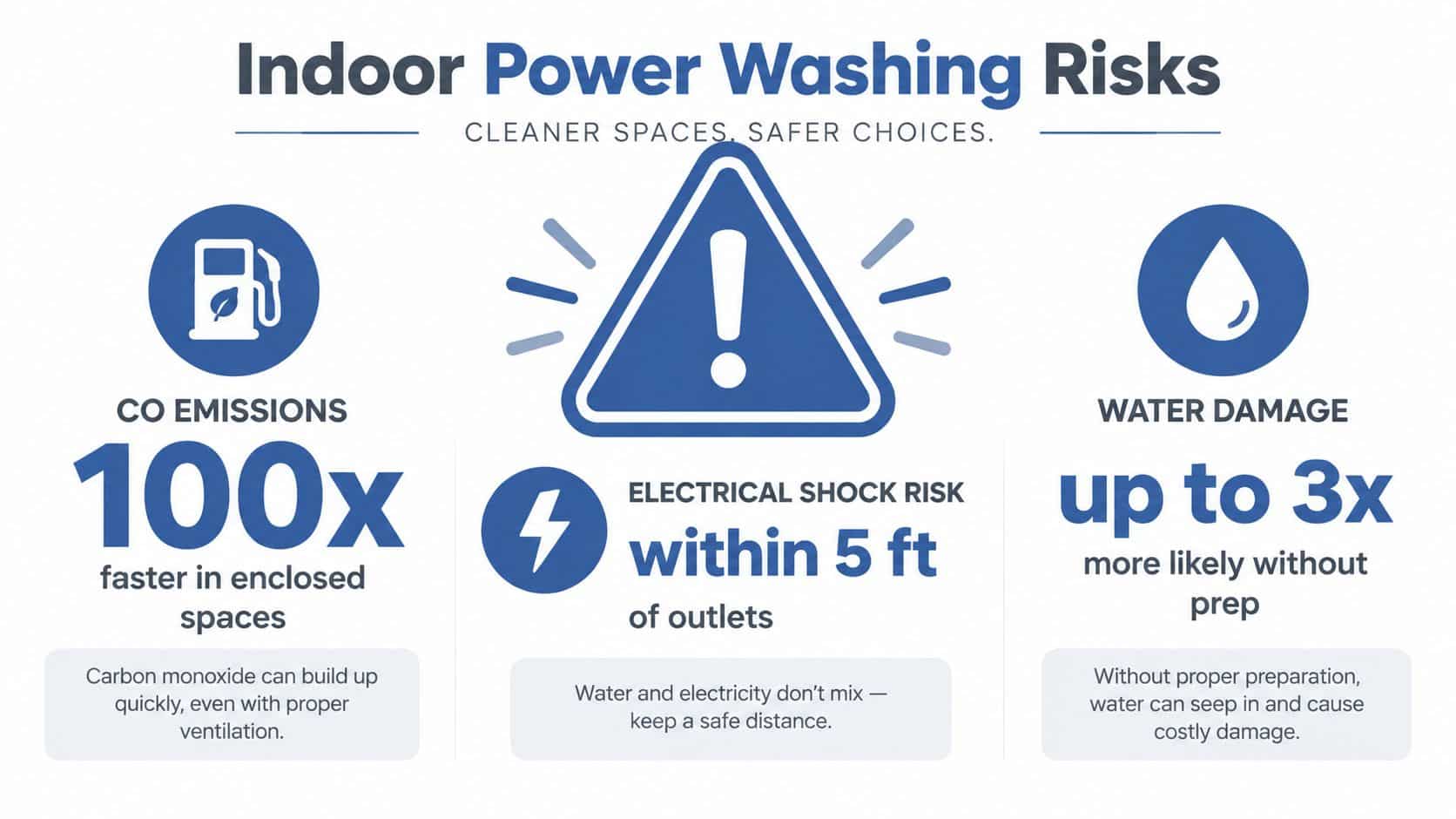
Enclosed spaces amplify hazards that are easier to manage outdoors. The most severe example involves gasoline-powered equipment. Gasoline-powered pressure washers should never be used inside buildings, because carbon monoxide can accumulate rapidly in enclosed areas. The gas is odorless and colorless, so people may not receive a warning before exposure becomes dangerous. NIOSH guidance and documented Iowa incidents connect indoor pressure-washer use with one death and four nonfatal carbon monoxide poisoning cases during incidents from January 1992 to January 1993.
An open garage door or a few windows doesn't make a gasoline unit safe indoors. Air movement can be unpredictable, and carbon monoxide can remain concentrated near the work area. The pump and engine should stay outdoors, while only the high-pressure wash line enters the building when a controlled setup requires it.
Water and electricity create a second hazard
Electric equipment avoids engine exhaust, but it doesn't remove the risk of shock. Water can reach outlets, extension-cord connections, light fixtures, appliances, switches, and damaged cable jackets. GFCI protection, proper grounding, protected connections, and a deliberate cord path are essential controls, not optional accessories.
High-pressure spray also creates physical injury risks. A jet can cut skin, injure eyes, drive debris into the face, and knock someone off balance. A safety summary citing Consumer Product Safety Commission data reports about 6,057 emergency-room visits related to pressure-washer use in 2017, with 14% requiring hospitalization. The same summary reports that more than 6,000 people were treated in emergency rooms in 2014, with about 15% hospitalized. The University of Iowa safety summary places those injuries in the context of slips, spray wounds, and electrical exposure.
The damage you can't see is often the expensive part
Runoff on the floor is obvious. Moisture migration isn't. Water can move under flooring, behind baseboards, into drywall seams, through grout gaps, and into wall cavities. Those areas may stay damp long after the visible surface looks acceptable, creating conditions for mold and finish failure.
The CDC pressure-washer safety guidance supports using electric equipment indoors, isolating the work zone, protecting fixtures, reducing pressure with a wider spray, and controlling water intrusion. Those measures address the full hazard chain rather than focusing only on the spray nozzle.
How to Prepare Your Space for Safe Indoor Wet Cleaning
Preparation determines whether indoor wet cleaning stays controlled. Before connecting a hose or turning on an electric unit, identify where water will go, what can be damaged, how people will move through the area, and how the surfaces will dry.
Build the work zone before bringing in water
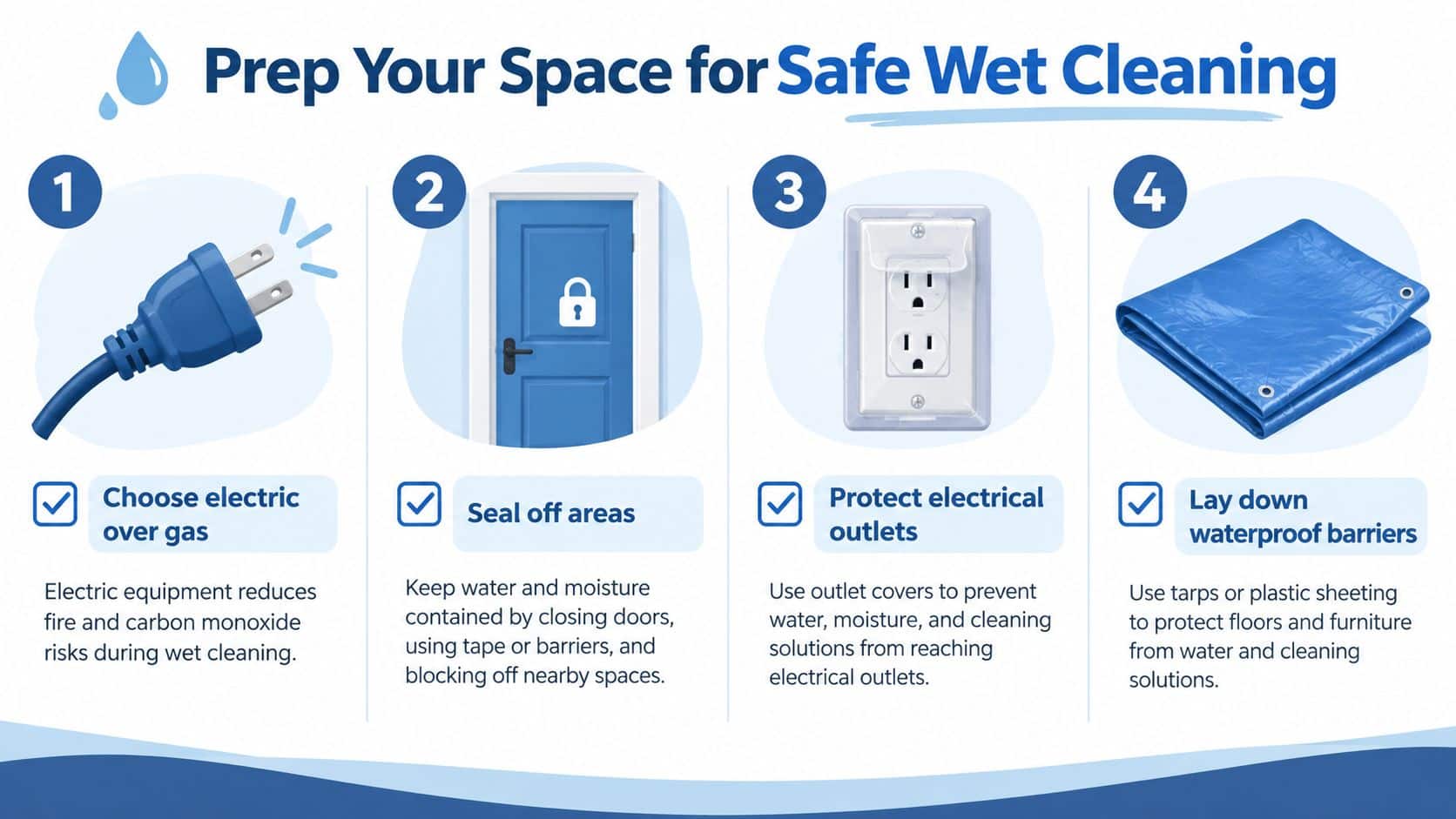
Start with the equipment choice. Use an electric unit rather than a gasoline model indoors, and keep the power source and connections away from wet areas. Confirm GFCI protection and grounding, inspect cords for damage, and position cords where they won't cross the spray path or create a trip hazard.
Isolate the work zone with heavy tarps or plastic sheeting. Seal edges where practical, but don't create a completely stagnant enclosure that traps humidity. Cover outlets, switches, fixtures, appliances, stored materials, and anything that can't tolerate spray. Remove loose furniture, rugs, paper goods, and absorbent items instead of assuming plastic will protect everything.
Solve drainage before spraying
A wet floor without a recovery plan is an accident waiting to happen. Use berms, floor protection, wet vacuums, drain covers, and collection points appropriate to the room. Don't direct dirty water toward a doorway, floor drain that can't accept the flow, or a low spot beneath cabinets.
Pre-wet only where it helps prevent rapid soil absorption, then apply the minimum water needed. A wider spray pattern reduces impact and overspray. Test a small inconspicuous area before treating the full surface, especially when the finish, grout, paint, or flooring material is unknown.
Ventilation should run continuously during the work and through the drying period. Use air movers and dehumidification where appropriate, but don't blow contaminated mist into occupied areas. Keep bystanders and pets outside the mist zone, and use eye protection, waterproof footwear with slip-resistant soles, gloves, and clothing that covers exposed skin.
For textile areas, preparation has different requirements because excess water can remain in fibers and padding. A separate resource on how to prep for rug cleaning can help when the project involves rugs or carpet rather than hard surfaces.
If the job includes nearby glass, protect the frames and seals instead of blasting them. For a controlled approach to interior panes, see this guide to cleaning inside windows for a streak-free shine.
Use a stop condition
Stop immediately if water reaches an outlet, enters a seam, pools under flooring, penetrates a wall joint, or begins moving outside the containment area. Drying isn't an afterthought. Extract standing water, inspect adjacent materials, keep air moving, and check concealed edges before returning the space to normal use.
Surface by Surface Guide to Cleaning Walls Floors Ceilings and Grout
Surface material determines the acceptable cleaning method. A glazed tile floor and a painted gypsum wall may both look dirty, but they don't tolerate water or pressure in the same way.
Painted walls and finished surfaces
Avoid high-pressure spray on painted drywall, plaster, wallpaper, wood paneling, and porous masonry. Water can soften the finish, mark the paint, swell the substrate, and migrate through seams. Use a damp microfiber pad, controlled low-pressure application, or carefully selected steam method after testing the coating.
Keep the tool moving and work in small areas. Don't soak the lower portion of a wall, where water naturally collects at trim, baseboards, and flooring transitions. Dry as you go rather than leaving the entire wall wet.
Tile and grout
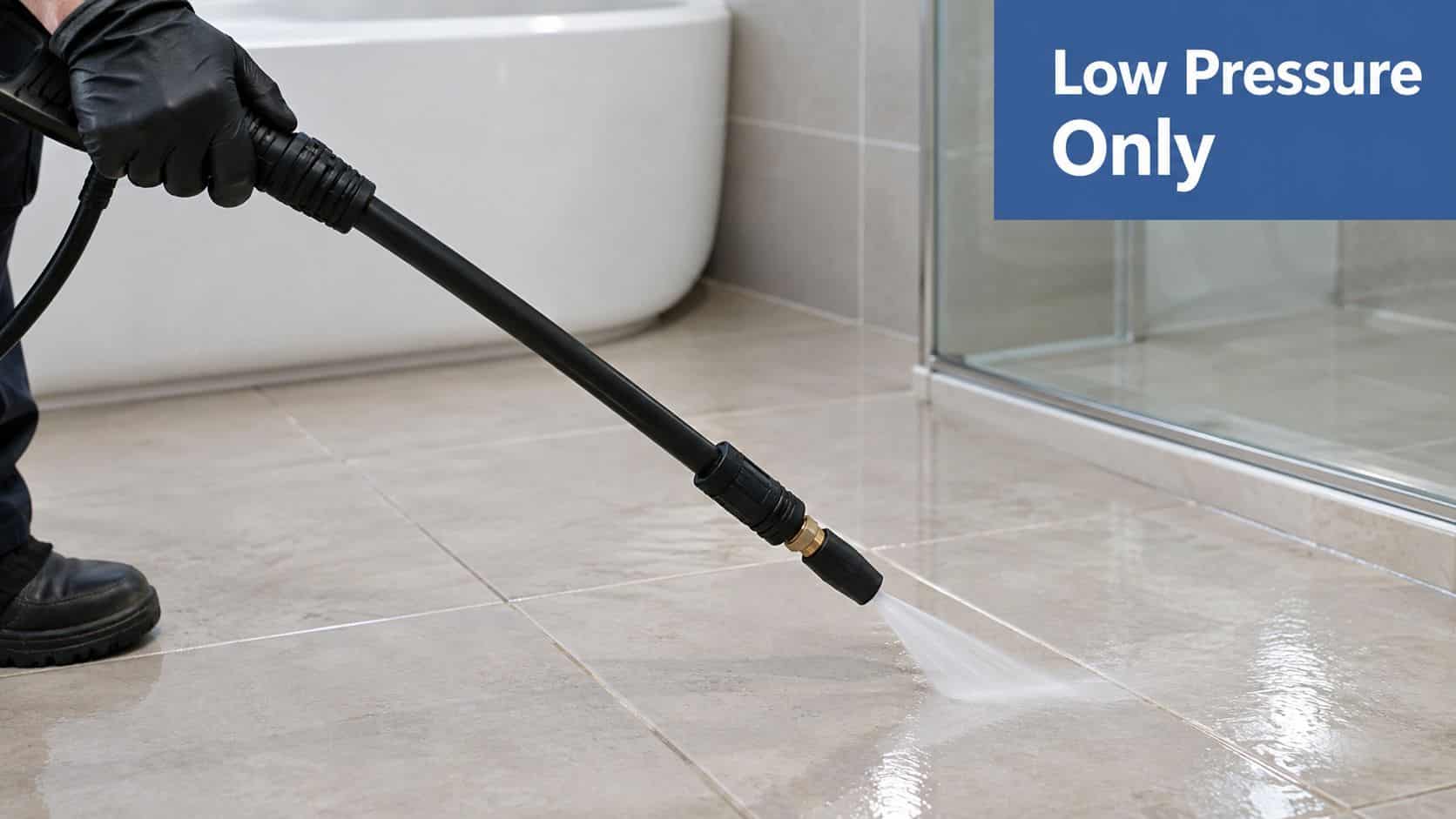
Glazed ceramic and porcelain tile can often handle controlled wet cleaning, but grout is more absorbent and the joints are vulnerable to erosion. Use a wide spray pattern, low pressure, and a suitable tile cleaner. Allow chemistry to dwell long enough to loosen soil, then rinse narrowly and recover the water instead of flooding the floor.
Check caulk lines, failed grout, cracked tiles, and penetrations around plumbing before starting. Water entering a damaged joint can travel beneath the tile assembly. For additional tile and grout care considerations, review these Savera Wood Floor Refinishing tips, especially when the room includes flooring materials that shouldn't receive aggressive water.
Concrete floors and service areas
Sound, sealed concrete is one of the more practical indoor candidates for controlled wet cleaning. It still needs a drainage and recovery plan because concrete can contain cracks, joints, porous edges, and unsealed sections. Pre-treat greasy soil, use a broad spray, recover wastewater continuously, and inspect expansion joints before releasing the area.
Industrial surfaces such as dumpster pads and drive-thrus are often better suited to exterior hot-water power washing, where runoff can be contained and the operator has room to work. Soap-assisted sidewalk washing may require blocking storm drains, containing runoff, screening solids, routing wastewater to the sanitary sewer, and keeping pH between 6 and 10, according to the University of North Carolina power-washing guidelines. Requirements vary by location, so don't assume an indoor drain or outdoor inlet is automatically approved.
Ceilings and overhead areas
Ceilings are poor candidates for pressure washing. Water can run into light fixtures, vents, insulation, ceiling panels, and concealed framing. Use dry methods, low-moisture cleaning, controlled steam, or a professional process designed for the specific ceiling material.
Before any wet treatment, check for staining caused by a leak. Cleaning the mark without correcting the source only hides the evidence and leaves the assembly vulnerable.
Across every surface, the safest sequence is test, treat, recover, ventilate, and inspect. If the material is porous, damaged, laminated, or attached to a concealed cavity, choose a lower-moisture method or bring in a professional before introducing pressurized water.
Safer Alternatives to High Pressure Indoors and How to Choose
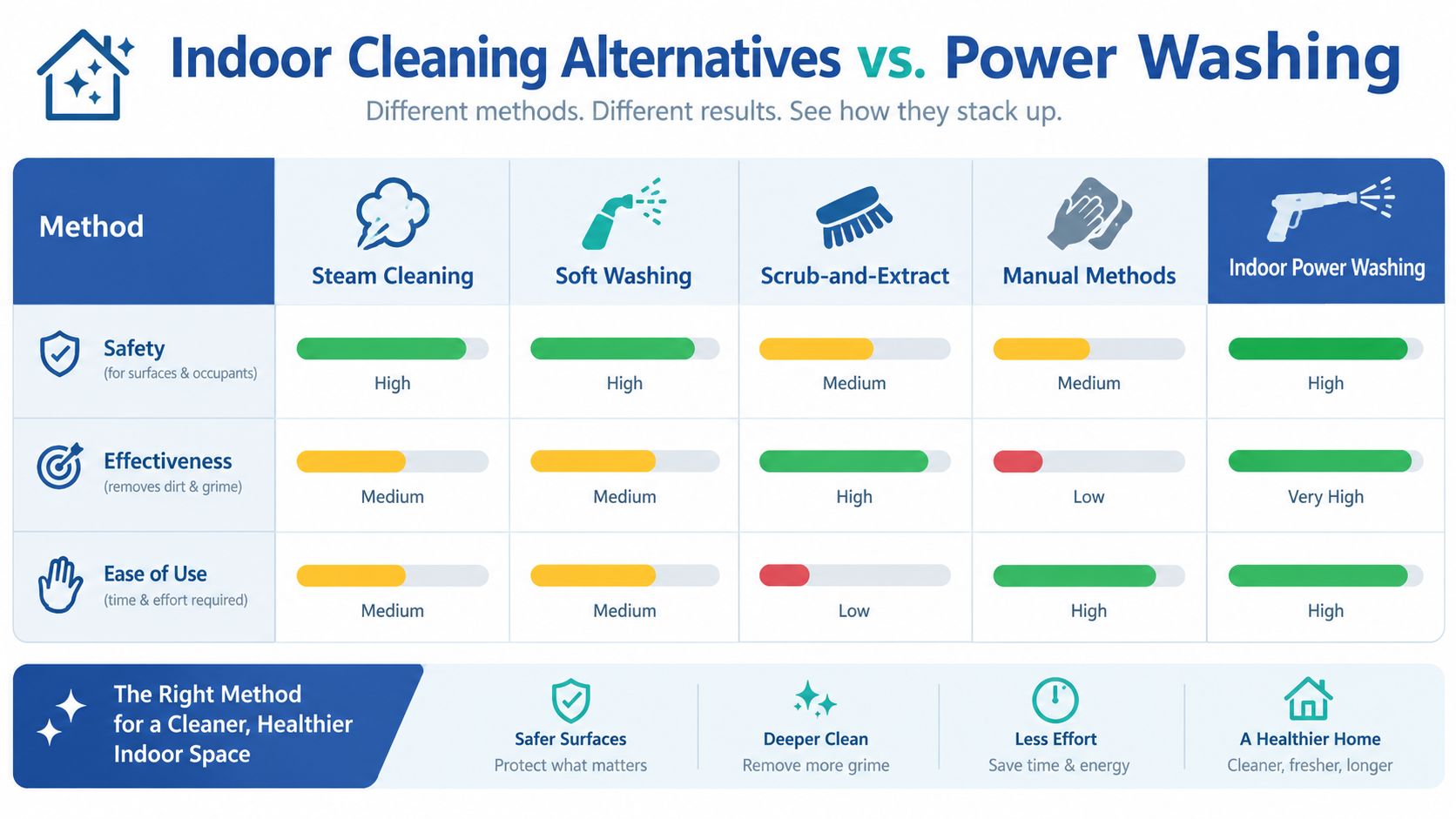
Indoor cleaning should use the least aggressive method that can remove the soil. High pressure is one option, not the default. Steam, soft washing, scrub-and-extract, and manual cleaning each trade speed, water volume, dwell time, and labor differently.
Match the method to the soil
Steam can work well on localized grease, bathroom buildup, and some hard surfaces when the operator controls contact time and captures loosened soil. Soft washing uses low pressure with cleaning agents, which can reduce impact on finishes but demands careful chemical selection, ventilation, and residue removal.
Scrub-and-extract is often the more responsible choice for floors, rugs, upholstery, and other areas where recovery matters. Manual methods remain useful for delicate ceilings, painted surfaces, trim, and small spots where bringing in a spray machine would introduce unnecessary water.
| Method | Pressure and Water Use | Best For | Watch Out For |
|---|---|---|---|
| Steam cleaning | Low liquid volume, heat-based cleaning | Localized hard-surface soil and some grease | Heat-sensitive finishes, burns, and trapped moisture |
| Soft washing | Low pressure with controlled solution | Suitable nonporous surfaces and organic buildup | Chemical compatibility, ventilation, and runoff |
| Scrub-and-extract | Moderate moisture with active recovery | Floors, rugs, and absorbent materials | Slow drying if extraction is incomplete |
| Manual methods | Minimal water and maximum control | Painted surfaces, trim, small areas, and delicate finishes | More labor and limited productivity on large areas |
| Indoor power washing | High water delivery and force | Select hard, nonporous surfaces with engineered containment | Overspray, injury, electrical exposure, and hidden moisture |
Arizona properties also deserve careful water planning. A professional cleaning source gives a practical example of a 4 GPM machine running for 45 minutes using about 180 gallons for a driveway, illustrating why pressure washing can be efficient for large exterior areas when water is controlled. That water-use example doesn't justify flooding an interior. It reinforces the need to use the right amount of water for the right surface.
Phoenix's outdoor water-conservation guidance also makes seasonal water management an ongoing concern. For Valley properties, precision cleaning, scheduled maintenance, and runoff control are more practical than indiscriminate rinsing.
For glass and sensitive exterior surfaces, pure-water systems can reduce spotting without the same approach used for floor washing. Learn how pure-water window cleaning systems fit into a controlled window-care program.
When to Hire a Professional and What South Mountain Window Cleaning Offers
DIY indoor wet cleaning may be reasonable for a small, isolated area of sound tile or sealed concrete when you understand the surface and can recover every drop. Don't take the job on yourself when it involves large areas, high ceilings, complex electrical exposure, suspected mold, porous assemblies, uncertain drainage, or wastewater that must be contained and disposed of properly.
A qualified crew brings more than a pressure washer. The work should include surface assessment, protected equipment placement, controlled spray, runoff management, appropriate PPE, and a drying plan. High-rise window cleaning adds another layer. OSHA's rope-descent-system requirements cover employers performing window cleaning at height and address documented training, equipment inspection, and certified rooftop anchor systems. Industry guidance commonly pairs those requirements with ANSI and IWCA expectations for training and redundancy, so high-rise work is a regulated specialty, not ordinary janitorial work.
South Mountain Window Cleaning provides residential, commercial, and high rise window washing services in Phoenix, Scottsdale, Paradise Valley, Chandler, Tempe, and Gilbert, Arizona. Its exterior cleaning work includes drive-thrus, walkways, building exteriors, dumpster pads, flat surfaces, and concrete, while window services include interior and exterior glass, screens, tracks, mirrors, ceiling fans, solar panels, and high-rise properties. The team uses pure-water systems and professional squeegees for window work, with scheduling support for recurring commercial needs.
For broader exterior maintenance planning, property managers can also review Arelli Cleaning exterior maintenance. When you're ready to discuss a controlled exterior or window project, review power washing services near you.
Before calling a job complete, verify that:
- Containment held: No runoff reached unprotected rooms, walls, fixtures, or drainage points.
- Electrical areas stayed dry: Outlets, cords, switches, and equipment connections remain safe.
- Materials were inspected: Check seams, baseboards, grout, flooring edges, and concealed transitions.
- Water was recovered: Standing water and dirty wastewater were removed appropriately.
- Drying is underway: Air movement and dehumidification continue until the affected materials are dry.
South Mountain Window Cleaning, LLC offers residential and commercial window washing, high-rise service, exterior power washing, walkway and building cleaning, and related surface care across the Phoenix Valley. Visit South Mountain Window Cleaning, LLC to request a fast, free quote and discuss the safest way to handle your cleaning project without turning indoor moisture into a restoration problem.