
You're staring at a strip of exterior trim where the paint has curled away in brittle flakes. The surface underneath might be sound wood, weathered metal, stucco, or an older coating that needs careful handling. The tempting choices are familiar, scrape it yourself, pressure wash it, or hire the first contractor who offers the lowest price. The right choice depends less on removing every visible chip and more on protecting the substrate, controlling debris, and preparing the surface for its next finish.
A professional paint removal service evaluates the coating history, surface condition, access, containment needs, and disposal requirements before choosing equipment. That matters in Phoenix-area properties, where intense sun, heat, and airborne dust can accelerate coating failure and complicate preparation. This guide explains what works, what can go wrong, and how to select a contractor for residential, commercial, or high-rise work.
When Paint Becomes a Problem You Can't Ignore
A homeowner may first notice the problem on a sun-baked fascia board or window trim. One section has lost adhesion, another has multiple visible layers, and a third looks chalky but remains firmly attached. Scraping the loose paint seems reasonable until the scraper catches, the wood fibers lift, and the repair becomes larger than expected.
Commercial properties develop similar problems on a different scale. A storefront awning may carry several old logos, colors, and touch-up coats. A warehouse façade may look tired even though the masonry is structurally sound. During a sale, renovation, or rebrand, owners often discover that the existing coating is too unstable to paint over and too extensive to remove casually.
What usually triggers a professional call
Several situations make professional evaluation worthwhile:
- A failed DIY attempt: Paint has been scraped unevenly, gouged, spread onto adjacent surfaces, or loosened without a plan for cleanup.
- An older property: Homes and child-occupied facilities built before 1978 can fall under the EPA Renovation, Repair and Painting requirements, including certified lead-safe work practices and owner notifications. The EPA lead-based paint laws and regulations explain the rule's scope and current enforcement context.
- A property transaction: Sellers and buyers often need a clean, stable surface before repair, repainting, or inspection work proceeds.
- A commercial changeover: Rebranding requires more than covering an old sign. The removal method must avoid damaging aluminum, steel, concrete, or masonry beneath the previous finish.
The coating itself tells only part of the story. A peeling acrylic layer over stable wood presents a different problem from hardened oil-based paint on a metal gate. Stucco can fracture under aggressive impact, brick can lose its fired outer skin, and thin aluminum can warp or show permanent abrasion marks.
Practical rule: A contractor who recommends equipment before inspecting the substrate is choosing a tool first and solving the property problem second.
Paint removal is therefore a recurring maintenance and renovation service, not merely a weekend chore. The global paint remover market was estimated at about USD 1.0 billion in 2022 and projected to reach USD 1.5 billion by 2032, while another forecast placed the market at USD 1.97 billion in 2025 and projected USD 2.99 billion by 2032. These different forecasts, reported by GlobeNewswire's paint remover market overview, point in the same practical direction: renovation, maintenance, automotive refinishing, and surface preparation continue to create demand.
The Four Main Methods Professionals Use
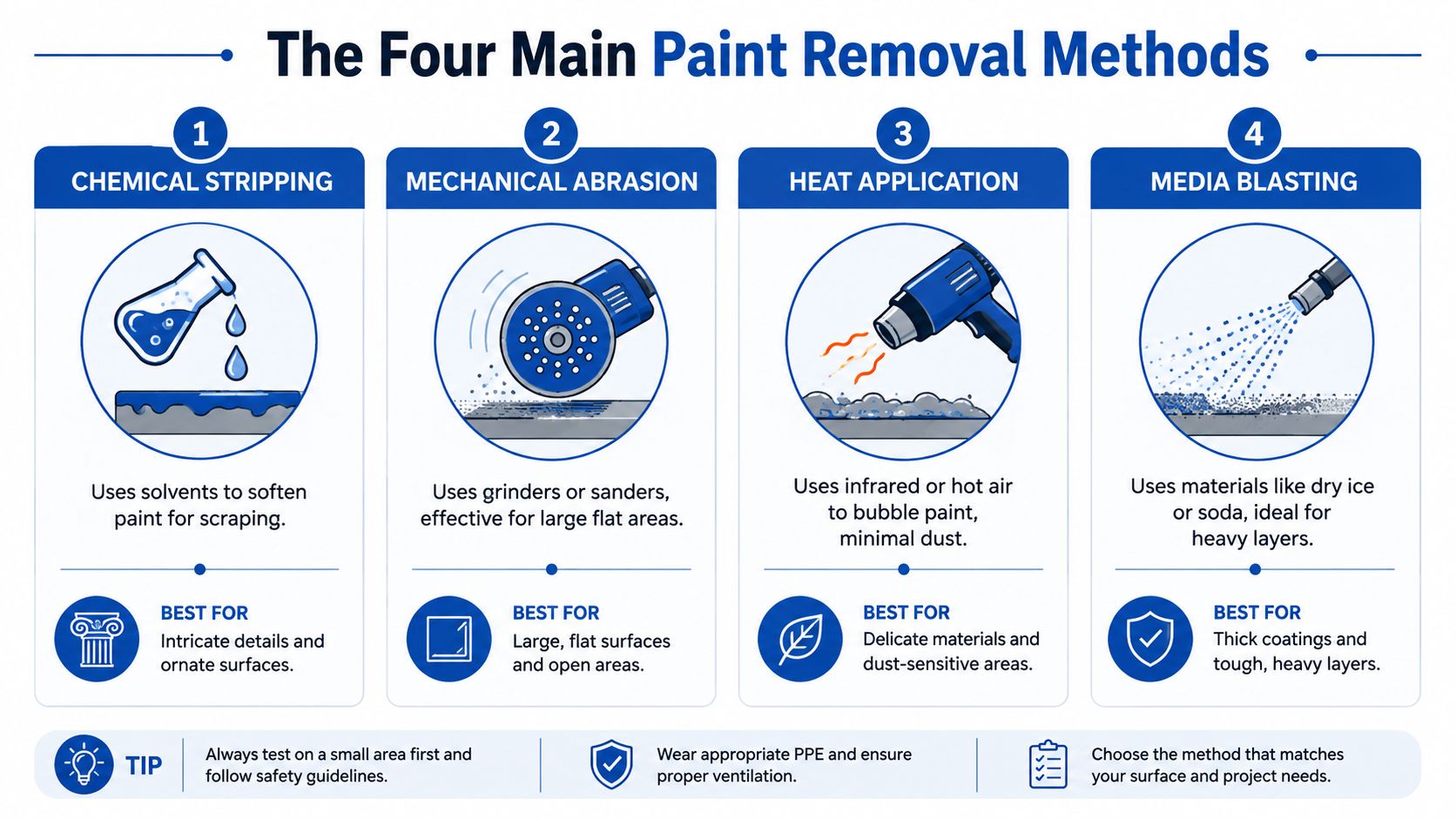
There isn't one universal paint removal technique. A wood-sided craftsman bungalow, a concrete-block warehouse, a wrought-iron gate, and an aluminum storefront each require a different balance of speed, control, mess, and surface protection.
Pressure washing and soft washing
Pressure washing can lift loose, blistered, or poorly bonded exterior paint, especially from durable masonry and concrete. It also removes dirt, chalk, and residue that can hide coating defects. The advantage is speed across broad exterior areas, but water pressure can drive moisture into joints, damage soft wood, or force paint chips and runoff into landscaping.
Soft washing uses lower pressure with a cleaning solution and controlled rinsing. It's better suited to delicate exterior surfaces where the goal is cleaning and limited coating release rather than aggressive stripping. South Mountain Window Cleaning explains the distinction in its guide to soft washing methods. Pressure washing isn't a substitute for lead-safe containment, and it shouldn't be used as an uncontained removal method on suspect lead-painted surfaces.
Chemical stripping
Chemical strippers soften paint so a technician can lift it with scrapers and detail tools. Methylene chloride-free and lower-VOC formulations are often considered when the work requires more control around profiles, trim, carved details, or sensitive metal. Chemical removal can preserve intricate shapes better than blasting, but it creates spent product, softened coating, and rinse water that must be contained and handled properly.
The technician also needs a test patch. A stripper that works on one layer may struggle with another, and a product that softens paint can stain porous masonry or affect a vulnerable finish beneath it.
Abrasive and media blasting
Media blasting can remove heavy layers quickly from sturdy surfaces. Soda, glass bead, and other media offer different levels of aggression and surface profile. Dry ice and soda can be useful in specialized applications, but “fast” doesn't mean “safe for every substrate.”
Blasting can scar wood, pit metal, remove mortar, and spread contaminated dust if the setup is inadequate. For exterior regulated work, guidance allows abrasive blasting only with controls such as wet misting or simultaneous vacuum systems. The Massachusetts surface-preparation regulation illustrates why containment engineering can matter more than raw removal speed.
For isolated transfer marks or residue after a coating-related incident, these surface scuff removal tips offer a useful distinction between targeted cleaning and full coating removal.
Heat and careful scraping
Infrared equipment and controlled hot air can soften paint with relatively little airborne dust. A technician then scrapes the coating away by hand. This approach suits certain wood trim and detailed surfaces, but heat can scorch wood, ignite nearby materials, release fumes, or damage a substrate that can't tolerate high temperatures.
Heat guns above 1,100°F are identified as high-risk in lead-safe paint work, and open-flame burning or torching is prohibited or dangerous in those circumstances. The method only works when the operator controls temperature, protects adjacent materials, and understands what lies beneath the paint.
Matching the Method to Your Surface
The substrate should determine the method, not the contractor's favorite machine. Cedar siding, stucco, brick, metal, and concrete respond differently to impact, moisture, solvents, and heat. A good estimate identifies the surface before discussing production speed.
| Surface | Best-Fit Method | Avoid |
|---|---|---|
| Wood siding | Wet scraping, controlled chemical stripping, or HEPA-equipped sanding | Aggressive blasting and uncontrolled high pressure |
| Stucco | Gentle cleaning, spot scraping, and compatible chemical testing | Forceful impact that fractures the finish |
| Brick and masonry | Carefully selected media, chemical testing, or controlled washing | Removing the fired face or eroding mortar |
| Metal railings and doors | Chemical stripping, hand tools, or carefully chosen media | Warping thin aluminum or excessive abrasive pressure |
| Concrete floors | Mechanical abrasion, grinding with HEPA capture, or compatible chemical treatment | Uncontained dust and residue left in pores |
Porous surfaces need restraint
Wood and stucco can look solid while remaining vulnerable beneath the coating. A hard blast may remove paint but also shred wood fibers or open cracks in stucco. Wet scraping and localized chemical work usually give the operator more control, particularly where only loose or failed coating needs removal.
Brick requires a similar judgment. Dense masonry may tolerate selected media, but old brick can lose its fired exterior when treated too aggressively. Once that face is gone, the surface becomes more absorbent and difficult to protect.
Dense surfaces still need testing
Concrete and sound masonry provide more tolerance than cedar, but they aren't indestructible. Mechanical grinding can create dust and alter the surface profile. Chemical products can leave residue in pores, which may interfere with primer or sealer adhesion.
Metal brings a different concern. A wrought-iron gate may accept careful abrasive work, while a thin aluminum storefront can dent, warp, or show an unwanted texture. The contractor should test a concealed area and explain whether the objective is full removal, feathering, stabilization, or preparation for a new finish.
Vehicle and recreational-vehicle panels show why substrate matching matters. If your project involves a damaged coated panel rather than architectural siding, the discussion may overlap with specialized RV side wall repair, where preserving the panel and underlying structure is more important than removing visible material.
For stucco, owners should ask how the contractor will control pressure and protect the finish. This guide to pressure washing stucco safely provides useful context for that conversation. The key question is simple: What will this method remove besides the paint?
What Professional Paint Removal Typically Costs
A paint removal quote should follow an inspection, not replace one. Square footage matters, but it doesn't tell the whole story. Two walls with the same area can require very different labor if one has a single failing coat on concrete and the other has multiple layers on delicate wood trim.
A responsible estimate accounts for:
- Coating depth: Several old layers take more time to soften, scrape, or abrade than one unstable coat.
- Substrate condition: Rot, cracks, corrosion, weak mortar, and prior gouging can turn removal into repair and preparation.
- Access: Height, roof edges, narrow courtyards, landscaping, and occupied commercial spaces affect setup and production.
- Method: Chemical work may involve dwell time and residue control. Blasting may require media, containment, and cleanup. Hand scraping takes labor but can protect details.
- Waste handling: Paint chips, spent stripper, rinse water, and contaminated debris may require specific handling rather than ordinary disposal.
- Follow-up preparation: A surface may need washing, drying, sanding, feathering, priming, or repairs before repainting.
Why local conditions affect the bid
Arizona exteriors often carry a heavy dust load, and intense ultraviolet exposure can leave paint chalky, brittle, or unevenly bonded. That doesn't create a universal price, but it can change how much cleaning and testing the crew needs before removal begins. A dusty surface may conceal failed areas, while sun damage can make a coating release in patches instead of uniformly.
For broader exterior cleaning comparisons, South Mountain Window Cleaning's discussion of pressure washing costs helps explain why access, surface type, labor, and preparation influence estimates.
How to compare quotes fairly
Don't compare only the final total. Compare what each contractor includes.
A low quote may cover scraping but exclude containment, detailed cleanup, disposal, repairs, or primer preparation. A higher quote may reflect slower work on fragile surfaces and better protection for windows, plants, walkways, tenants, and neighboring property.
Ask whether the bid identifies the method, test patches, protection plan, cleanup standard, disposal responsibility, and treatment of unexpected substrate damage. If someone gives a firm price without seeing the surface, treat it as a preliminary conversation rather than a complete proposal.
Safety, Lead Rules, and Environmental Trade-Offs
The cheapest paint removal bid can create the most expensive problem if it ignores lead, dust, runoff, or worker protection. A property owner isn't only purchasing labor. They're hiring someone to disturb a coating that may contain hazardous material and to control where the resulting debris goes.
The EPA issued a final rule on January 9, 2008, covering paint stripping and miscellaneous surface coating operations. The agency identified methylene chloride paint stripping used on dried paint from wood, metal, plastic, and other substrates as an area source of hazardous air pollutants. The standards were designed to reduce emissions by 6,900 tons per year of hazardous air pollutants, about 2,900 tons per year of particulate matter, and approximately 20,900 tons per year of volatile organic compounds, as described in the EPA rule history.
Lead-safe work is a separate responsibility
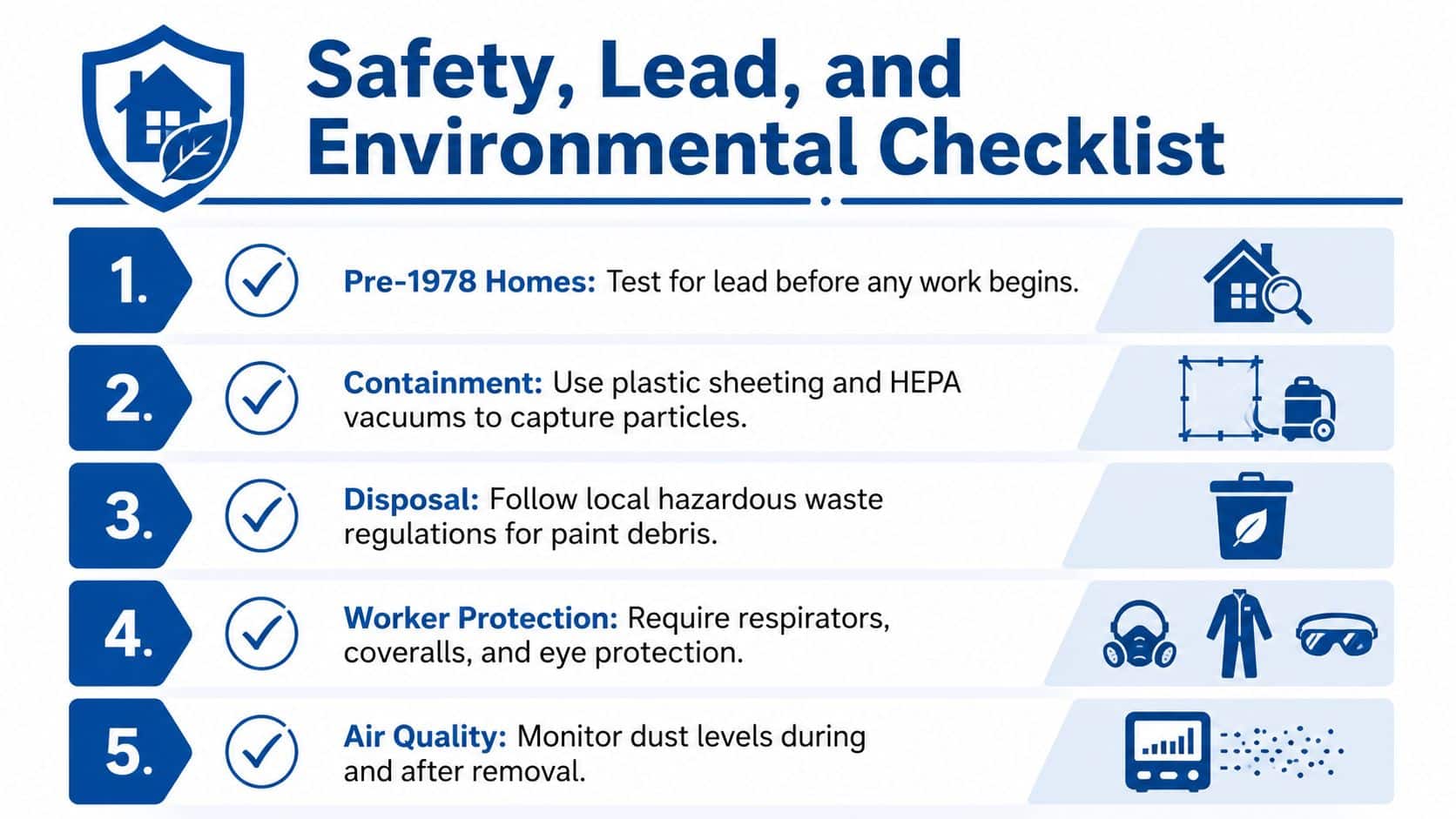
The EPA RRP Rule covers homes and child-occupied facilities built before 1978. Contractors working on covered properties may need certification, lead-safe procedures, and owner notifications. The question isn't whether a contractor can scrape old paint. It's whether the team can prevent contamination and document the work appropriately.
High-risk or prohibited techniques include:
- Open-flame burning: Torching can create toxic emissions and ignite surrounding materials.
- Uncaptured sanding or grinding: Mechanical disturbance without HEPA vacuum extraction can spread fine dust.
- Uncontained hydroblasting: High-pressure water can distribute contaminated chips and runoff.
- Uncontrolled abrasive blasting: Blasting without HEPA capture or equivalent containment spreads hazardous particles.
- Excessive heat: Heat guns above 1,100°F are a high-risk method for lead-painted surfaces.
For lead-safe disturbance, the control sequence is HEPA vacuuming, wet cleaning, then HEPA vacuuming again. The technical guidance on lead dust control explains why the sequence matters after disturbing a painted surface.
Height adds another layer of risk
A two-story exterior, commercial parapet, or high-rise setting requires more than a tall ladder. OSHA guidance for window cleaning at height calls for proper planning, supervision, and competent workers under the Work at Height Regulations 2005, as stated by the UK Health and Safety Executive. Fall protection standards cited for general industry address exposure at 4 feet or more above a lower level, while rooftop window-cleaning anchor points are described as supporting at least 5,000 pounds per worker in the cited guidance from Shine On Anchors.
Greener, lower-VOC stripping products can reduce some chemical concerns, but they don't eliminate the need for ventilation, PPE, containment, and proper waste handling. Ask who manages debris and runoff before the job starts. For masonry cleaning decisions, owners should also understand the hazards of strong acids, including the considerations outlined in this guide to cleaning brick with muriatic acid.
Timeline, Prep, and What a Real Job Day Looks Like
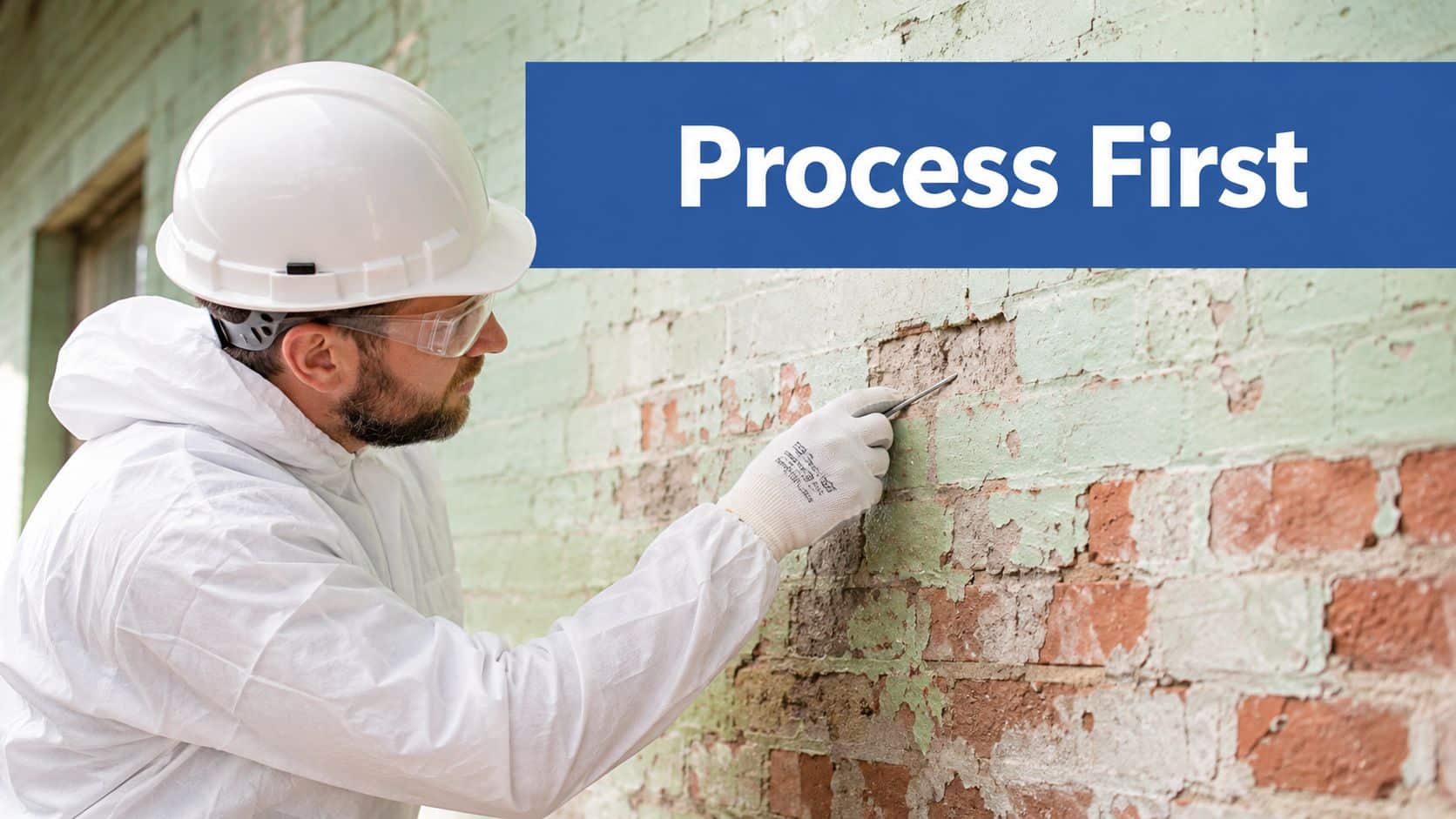
A professional crew begins with a site walk. They inspect the coating, identify the substrate, check access, and perform a test patch in a concealed location. The test reveals whether the paint releases cleanly, whether the surface reacts to the product or equipment, and how much containment the job requires.
The normal sequence looks like this:
- Inspect and test: Confirm the surface and select a workable method.
- Protect the site: Cover windows, doors, plants, furniture, paving, vehicles, and nearby equipment.
- Contain debris: Set up sheeting, collection areas, vacuum systems, or runoff controls suited to the method.
- Remove the coating: Work in manageable sections rather than attacking the entire façade at once.
- Clean and prepare: Remove residue, allow appropriate drying, feather edges, and identify repairs before recoating.
A small trim project may be completed in hours, while a full exterior can take one to three working days. A commercial façade may run a week or more, depending on access, coating layers, weather, containment, and repairs discovered beneath the paint.
Owners can help by moving patio furniture, identifying plants that need special protection, clearing access to hose connections, and telling the crew about delicate surfaces or restricted areas. Delays aren't automatically a warning sign, but unexplained shortcuts in setup and cleanup deserve immediate discussion.
Hiring Smart and Where South Mountain Window Cleaning Fits In
A paint removal contractor should explain the work in terms you can understand. You don't need a favorite brand of stripper or a catalog of blasting media, but you do need to know why the proposed method suits your surface and how the crew will control the mess.
Warning signs in a proposal
Send a bid to the bottom of the pile if it includes:
- A vague scope: “Remove paint” doesn't say whether the contractor will scrape, strip, blast, wash, prime, or repair.
- No containment plan: The proposal should address dust, chips, runoff, neighboring property, plants, windows, and occupied areas.
- No insurance information: Commercial and elevated work needs clear protection for people and property.
- Pressure to skip testing: A test patch is a small step compared with repairing damaged wood, brick, stucco, or metal.
- No disposal responsibility: Ask where debris, spent chemicals, and contaminated materials go.
- No lead discussion: For a pre-1978 property, ask about EPA RRP certification and lead-safe practices.
A good contractor should also explain what happens if the coating hides rot, corrosion, cracked stucco, deteriorated mortar, or previous tool damage. The removal phase can reveal conditions that weren't visible during the initial inspection, and your contract should say how those changes are approved.
Questions worth asking before signing
Ask these questions directly:
- What method are you recommending, and what surface test supports it?
- How will you protect windows, landscaping, vehicles, tenants, and adjacent buildings?
- Who supplies containment, HEPA equipment, PPE, and cleanup?
- Who handles disposal, and what documentation will I receive?
- What happens if the substrate is damaged beneath the coating?
- If the property was built before 1978, is the crew EPA RRP certified?
- Does the quote include final washing and preparation for the next coating?
- How will the crew manage ladders, lifts, roof edges, or other high-access work?
South Mountain Window Cleaning provides residential, commercial, and high-rise window washing services in Phoenix, Scottsdale, Paradise Valley, Chandler, Tempe, Gilbert, and across Arizona. Its broader exterior services include screen and track care, power washing, house washing, gutter cleaning, rust removal, flat-surface cleaning, dumpster pad sanitation, and solar panel cleaning, so owners can coordinate related exterior work instead of managing several vendors. The company is licensed, bonded, and insured, and commercial customers can ask about its computerized scheduling and $2 million insurance policy.
South Mountain Window Cleaning, LLC can help coordinate the exterior cleaning and surface-preparation work surrounding a paint removal project, from windows and screens to building exteriors, walkways, gutters, and solar panels. Visit South Mountain Window Cleaning, LLC to request a fast, free quote and get the proposed scope in writing before work begins.