
Professional roof moss removal for a typical 1,500-square-foot home usually runs about $300 to $900, and many jobs in the broader market fall between $150 and $1,000 depending on roof size, material, access, and labor demands. In square-foot terms, a common benchmark sits around $0.28 to $0.35 per square foot, which is a useful baseline before roof-specific factors push the number up or down.
A lot of Phoenix-area owners are surprised when they spot green buildup on a roof after monsoon season and realize they're searching for moss removal roof cost in a desert city. It feels backward until you look at the roof itself, not the regional map. Shade, trapped moisture, clogged valleys, and porous surfaces can create small wet zones that behave very differently from the rest of the property.
That's where cost gets real. Roof moss removal isn't just about washing off a stain. The method matters, the roof condition matters, and on commercial or high-rise properties, safety and insurance matter just as much as the cleaning itself. A cheap bid can become the expensive option if the contractor uses the wrong process on fragile tile, works without proper coverage, or turns a maintenance job into a repair issue.
Understanding Why Moss Appears on Arizona Roofs
Phoenix doesn't have the year-round damp climate people usually associate with moss, but roofs don't live in averages. They live in microclimates. A north-facing slope, a section shaded by parapets or mature trees, or an area that stays damp after monsoon rain can hold enough moisture for organic growth to establish itself.
Dark streaks and green patches often show up first on tile roofs, low-sun sections, and spots where debris slows drainage. That growth may start as a cosmetic problem, but it rarely stays there. Moss holds moisture against the surface, and that changes how roofing materials age.
Why the growth matters
Moss doesn't need to cover the whole roof to become a problem. It can sit in joints, edges, and water paths where it keeps surfaces damp longer than they should be. On roofs with aging underlayment or brittle tile, that extra moisture exposure can make existing weakness worse.
Common trouble spots include:
- Valleys and transitions: Water already concentrates there, so organic buildup tends to linger.
- Shaded slopes: These areas dry more slowly after rain or overnight condensation.
- Debris pockets: Leaves, dust, and sediment create a base where moss can anchor more easily.
- Older roof sections: Fragile materials don't tolerate aggressive cleaning methods well.
Practical rule: If moss is visible from the ground, the roof usually needs more than a cosmetic rinse. It needs the right removal method for the material underneath.
Why cost questions come up fast
Once moss takes hold, owners aren't just thinking about appearance. They're trying to answer a more practical question: is this a simple maintenance job, or the start of a larger roof problem? That's why moss removal roof cost isn't only about price per square foot. It's also about whether the cleaning method protects the roof or puts it at risk.
In Arizona, that distinction matters even more because intense sun can bake organic residue onto tile and shingles after moisture events. What looks like a quick wash from the driveway often needs a controlled approach on the roof.
Average Moss Removal Roof Cost in 2026
A Phoenix property manager usually asks the cost question after spotting moss on a tile section that stays shaded longer than the rest of the roof. At that point, the useful answer is a budget range tied to real field conditions, not a generic national average with no mention of access, fall protection, or roof type.
A common baseline for 2026 puts roof moss removal at $0.28 to $0.35 per square foot, up slightly from $0.27 to $0.34 per square foot in late 2025, based on Homewyse roof moss removal cost data. That is a starting point only. In Phoenix, actual pricing often shifts once a contractor inspects heat-stressed tile, brittle underlayment, parapet access, or insurance requirements on larger buildings.
2026 Roof Moss Removal Cost Estimates
| Pricing Model | Average Cost Range |
|---|---|
| Per square foot benchmark | $0.28 to $0.35 per square foot |
| Small project band | $150 to $1,000 |
| Typical 1,500-square-foot roof | $300 to $900 |
| Typical 2,000-square-foot roof | $400 to $1,200 |
As noted earlier from the same Homewyse benchmark, a 1,000-square-foot roof runs about $280 to $350 and a 2,000-square-foot roof runs about $560 to $700 before site-specific adjustments. Those baseline numbers are useful for quick budgeting, but they do not account for the parts of the job that drive real labor in Arizona, especially on commercial properties.
Broader market pricing runs wider. Angi reports an average roof cleaning cost of $460, with typical project ranges of $150 to $1,000, and says a 1,500-square-foot roof commonly costs $300 to $900 while a 2,000-square-foot roof can run $400 to $1,200. Angi also says labor can make up as much as 90% of the total and that roof cleaning often takes two to five hours, according to Angi roof cleaning cost guidance.
That labor share makes sense on the roof. Crews are paying for setup time, laddering, tie-off points, hose management, careful foot traffic, cleanup, and the slower wash methods that protect tile and shingles instead of scarring them. On a single-story home, that may be manageable. On a multi-tenant commercial building or a high-rise with controlled access, documentation and safety planning can add real cost before cleaning starts.
Phoenix adds another pricing wrinkle. Moss is less common here than in wetter climates, so heavy growth often shows up in isolated but awkward areas, around drainage paths, shaded sections, rooftop equipment, or elevations with limited access. Those jobs can price above a simple square-foot estimate because the work is concentrated, technical, and risk-sensitive.
If you are comparing bids, use a local benchmark for roof pressure cleaning cost and pair it with a free roofing estimate when roof condition may be part of the problem.
Low bids on roof moss removal usually mean limited safety measures, the wrong cleaning method, or a contractor who has not priced the access risk correctly.
Key Factors That Influence Your Final Price
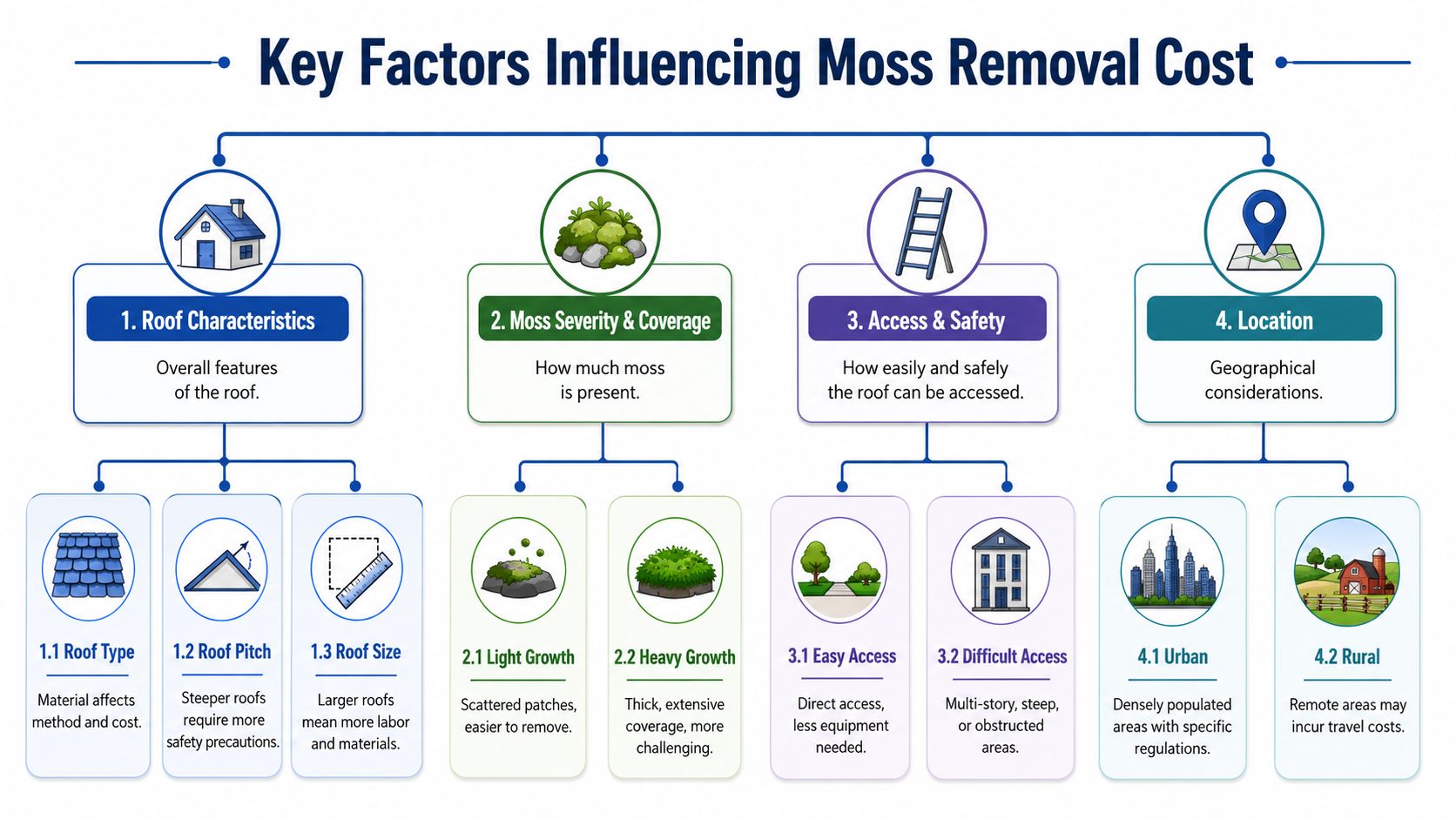
A roof with a small patch of moss near a shaded drain can cost less to clean than a larger roof with scattered growth around parapet edges, HVAC curbs, and hard-to-reach corners. Square footage matters, but it does not control the whole bid. In Phoenix, the final number usually comes down to how the roof is built, where the moss is holding moisture, how safely a crew can reach it, and how much risk sits under the work area.
Roof type and cleaning method
Roof material changes the job immediately. Concrete tile, foam roofs, aging shingles, coated flat roofs, and metal panels all respond differently to moisture, foot traffic, and cleaning chemistry. A method that is acceptable on one surface can shorten the life of another.
EcoWatch reports that high-pressure power washing averages $0.15 to $0.60 per square foot, while soft washing averages $0.30 to $0.80 per square foot. The same source notes that lighter moss growth on a 1,000-square-foot roof may run $200 to $600, while heavier growth on a 2,000-square-foot roof can reach $400 to $1,200, based on their EcoWatch roof cleaning cost data.
That price spread makes sense in the field. Higher pressure can look cheaper on paper, but on tile roofs and older systems it can crack edges, disturb laps, strip coatings, or drive water into places it should never reach. A safer process often takes longer, uses different equipment, and needs technicians who know the roof assembly. That is why method choice changes price so much. If you want a second opinion on factors influencing roof moss removal price, compare that overview with this breakdown of pressure washing vs soft washing for roof cleaning.
Moss density and where it is growing
Light surface spotting is one job. Thick moss packed into laps, tile channels, drain paths, or shaded transitions is another.
Density affects more than cleaning time. It changes how much solution the crew needs, how much hand work is required, how much debris has to be collected before it clogs drainage, and how carefully technicians need to move around softened or weathered areas. In Arizona, moss often shows up in concentrated sections instead of covering the whole roof evenly, which can make the work slower than the square footage suggests.
Access, fall protection, and site restrictions
Access often decides whether a bid stays routine or moves into a higher-risk category. A single-story home with open ladder placement is simpler than a property with tight alleys, brittle perimeter landscaping, overhead lines, limited staging, or roof sections broken up by solar, mechanical units, and architectural setbacks.
This matters even more on commercial and high-rise properties. Once pedestrian control, tenant access, lift coordination, tie-off planning, insurance documentation, and restricted work hours enter the job, price goes up because labor hours go up and the risk profile changes. For Phoenix commercial buildings, heat exposure also affects scheduling. Crews may need earlier start times, shorter roof cycles, and more setup planning to work safely without rushing.
A roof moss bid covers cleaning, but it also covers access planning, surface protection, drainage cleanup, and the safety steps needed to finish the job without damaging the roof or creating liability below.
Roof condition and repair risk
Older roofs cost more to clean carefully. That is the plain version.
If the roof already has loose tile, worn underlayment, failing sealant, brittle caps, or ponding areas around drains, the crew has to slow down and adjust the process. In some cases, the right recommendation is partial treatment, limited access, or cleaning after repairs are made. A good contractor will say that upfront. On commercial properties, that judgment also helps protect warranty status and reduces the chance of an insurance dispute if a pre-existing issue shows up after the work is done.
DIY Dangers vs Professional Service Guarantees
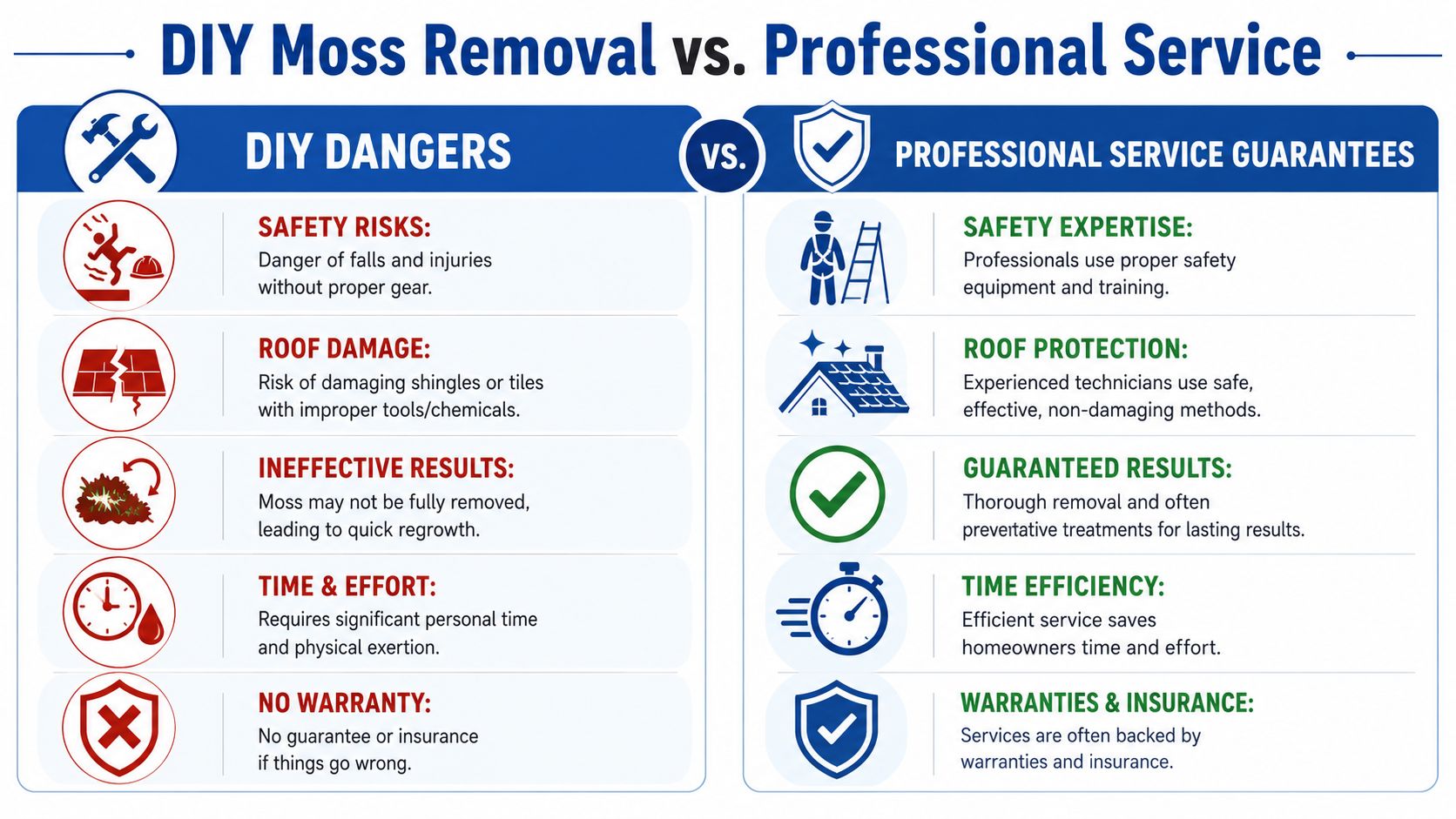
The appeal of DIY is obvious. You see moss, you own a ladder, and buying a few supplies looks cheaper than hiring a crew. The problem is that roof work punishes mistakes fast. A bad decision on the ground can cost money. A bad decision on a roof can injure someone or damage the structure.
To make that difference easier to see, here's the side-by-side view.
Where DIY goes wrong
Most DIY failures come from one of three issues: too much pressure, the wrong chemical choice, or poor footing. Roofs with tile, weathered shingles, or aging components don't forgive aggressive cleaning.
Checkatrade highlights a critical point many cost pages skip. On an aging or fragile roof, the wrong cleaning method, especially high-pressure washing, can dislodge tiles or damage materials, creating repair costs that can exceed the price of professional cleaning, as noted in Checkatrade's roof cleaning cost guide.
Typical DIY risks include:
- Fall exposure: Wet growth and roof pitch make footing unreliable.
- Surface damage: A pressure washer can strip, crack, or loosen roofing components.
- Water intrusion: Forcing water uphill or under laps can create hidden problems.
- Incomplete removal: Surface cleaning may leave roots or spores behind.
- No recourse: If something goes wrong, there's no warranty and no contractor insurance backing the loss.
A lot of owners also underestimate cleanup. Moss doesn't vanish after it comes off the roof. It drops into gutters, collects in valleys, and can make walkways slick below the work area.
What professional service actually buys you
Professional roof cleaning isn't valuable just because someone else does the labor. It's valuable because the service should include process control. That means the crew matches the method to the roof, protects surrounding surfaces, works with proper safety gear, and carries insurance that matters if there's property damage or injury.
If you're evaluating the difference in scope, a local page on roof cleaning services is useful because it shows how roof work is packaged as a real service, not just a rinse.
Later in the process, this kind of field video helps owners understand why roof cleaning should be planned, not improvised.
If a contractor can't explain the cleaning method in plain language, don't let that contractor on the roof.
The Phoenix Factor Moss Removal in an Arid Climate
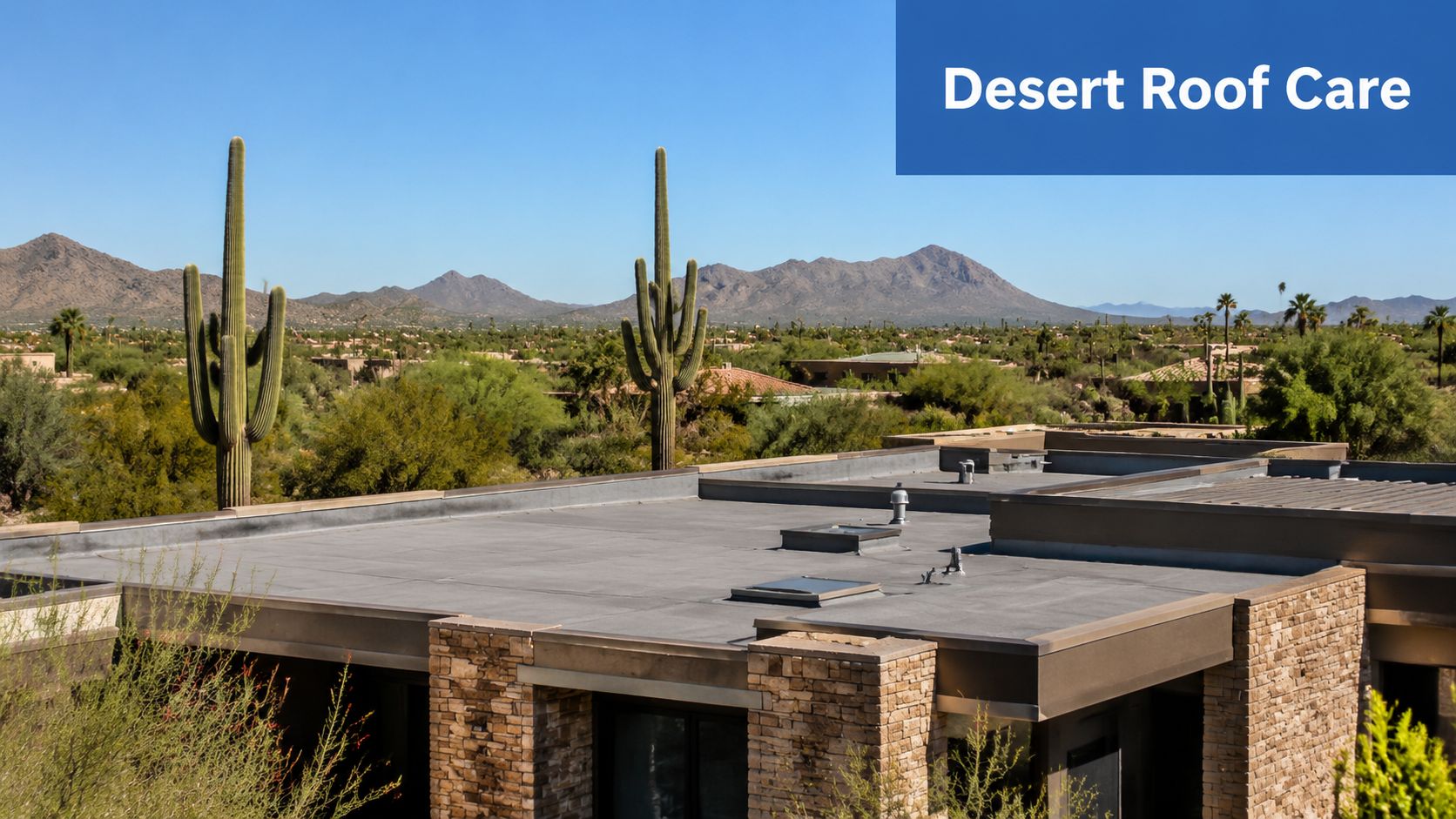
Phoenix creates a strange roof-cleaning problem. The region is dry overall, but roofs don't stay uniformly dry all year. Monsoon storms, overnight humidity pockets, shaded slopes, and debris buildup can create moisture retention in very specific sections. That's enough for moss and algae to show up where owners least expect it.
Why desert roofs still grow moss
The common pattern is localized moisture, not regional dampness. A north-facing roof plane may stay cooler. A tile profile may trap fine dust and organic debris. A section near scuppers or drainage transitions may hold damp residue longer after a storm.
Once growth starts, Arizona sun adds another wrinkle. Organic staining can bake onto surfaces, which means the roof may need more careful treatment than a simple visual inspection suggests. Homeowners often think the roof is just dirty when part of the problem is bonded growth embedded in rough or porous material.
Why local experience matters
A generic national bid won't always reflect what happens on roofs in Phoenix, Scottsdale, Paradise Valley, Chandler, Tempe, and Gilbert. Local contractors tend to recognize the patterns faster. They know where monsoon runoff leaves residue, how desert dust affects drainage paths, and which surfaces are more likely to show growth on the shaded side.
That matters because roof cleaning in Arizona often sits at the intersection of stain removal, material preservation, and heat exposure. The right process isn't only about getting the roof clean today. It's about avoiding avoidable stress on materials that already deal with intense UV and extreme summer temperatures.
Beyond Removal The True Cost of Long-Term Prevention
One-time removal is only part of the financial picture. If moss returns, the full moss removal roof cost becomes the total of repeat cleanings, not the price of the first one. That's why prevention deserves its own line item in the decision.
This Old House notes that a preventative treatment may add $150 to $250 to the initial job, and that this detail is often treated like a side note even though it can shape the lifetime cost of maintenance, according to This Old House roof cleaning cost guidance.
What prevention changes
Prevention doesn't guarantee a roof will never need attention again. What it does is shift the economics. Instead of waiting until visible moss is established, you reduce the chance that the next visit turns into another full removal job.
That matters more on buildings where roof access itself is a cost driver. If a crew already has to manage setup, perimeter protection, and access complexity, it often makes sense to think beyond the immediate cleanup.
A prevention-minded approach usually includes:
- Post-removal treatment that targets remaining organic residue.
- Drainage attention so wet debris doesn't sit in valleys or edges.
- Scheduled inspection of shaded or slow-drying sections.
- A maintenance interval based on roof condition and exposure, not guesswork.
Prevention works best when it's part of exterior maintenance
Roofs don't operate in isolation. Dust, debris, clogged gutters, nearby overhangs, and even dirty solar panels can all be signs that the property needs a broader maintenance plan. If a building owner is already budgeting for exterior care, it helps to compare roof work with adjacent services such as the cost to clean solar panels, because both are affected by access, roof traffic, and surface protection.
The cheapest moss job is often the one you don't have to repeat soon.
When prevention is worth paying for
Prevention tends to make the most sense when the roof has one or more of these conditions:
- Persistent shade
- History of regrowth
- Complex access
- Fragile material where aggressive repeat cleaning isn't ideal
- Commercial scheduling concerns, where roof work disrupts operations
For those roofs, the extra upfront cost may be easier to justify than another reactive cleanup later.
Commercial and High-Rise Properties A Focus on Safety
A moss job on a one-story house is one thing. A moss job above tenant entrances, loading areas, parked cars, or a condo courtyard is a different risk category entirely. On commercial and high-rise properties, the price on the quote matters less than how the contractor plans to control the site, protect the roof, and keep the public out of harm's way.
Cheap bids can get expensive fast.
What property managers should vet first
Start with access, safety controls, and insurance. Ask how the crew will reach the roof, what fall protection they use, how they will block off pedestrian areas, and who is responsible if slurry, tools, or debris come off the roof edge. Ask for proof of coverage that fits the property, not a vague assurance that the company is insured.
For Phoenix properties, I also look at heat planning and job timing. Crews working on hot commercial roofs face faster fatigue, softer sealants, and tighter work windows, especially on taller buildings where setup takes longer and shade is limited. A contractor who ignores those conditions may still give a low number, but the risk stays with the owner or manager.
South Mountain Window Cleaning states that it is licensed, bonded, and insured, and that it works on residential, commercial, and high-rise exterior cleaning projects. Its business materials also reference a $2 million insurance policy for business clients.
Why commercial moss removal costs more than the roof area suggests
Square footage only tells part of the story. On a commercial building, the crew may need roof access approvals, lift coordination, restricted work hours, tenant notices, and extra protection around HVAC equipment, signage, skylights, solar infrastructure, or delicate membrane details.
High-rise work adds another layer of cost because the setup is slower and the exposure is higher. A proper quote often reflects:
- Access planning for roofs that cannot be reached with a standard ladder setup
- Public protection measures around sidewalks, entries, and parking areas
- Insurance verification that matches the building's risk level
- Written scope and scheduling details for facility teams, engineers, or property managers
- Crew procedures for runoff control and debris containment
If those items are missing, the bid is not thorough enough to judge fairly.
Why Phoenix commercial properties need a different standard
Arizona's dry climate causes owners to underestimate moss risk. On commercial roofs, moss often shows up where irrigation overspray, rooftop equipment condensation, shaded parapets, or poor drainage keep small areas damp. Those patches can sit on roofs that otherwise look dry and clean from the ground.
That matters on flat and low-slope commercial systems. Moss removal done carelessly can scar coatings, loosen granules, force water under seams, or create slip hazards for other trades that use the roof later. On high-rise properties, one mistake also becomes a public safety problem.
The real value in a qualified contractor
Commercial moss removal roof cost is partly a cleaning expense and partly a risk management decision. The right company documents the scope, uses the right access method, protects foot traffic, and avoids turning routine maintenance into a claim, shutdown, or repair bill.
For Phoenix managers, that local experience has real value. A contractor who understands Arizona heat, dust, roof coatings, and commercial scheduling can usually spot the issues that change the job from simple cleaning to controlled site work.
If you need a quote from a team that understands Arizona roofs, commercial access challenges, and high-rise safety requirements, contact South Mountain Window Cleaning, LLC. They serve Phoenix-area homes, businesses, and high-rise properties with licensed, bonded, and insured exterior cleaning, and they can help you assess roof cleaning needs with safety and property protection first.