
You're standing in the driveway after a monsoon roll-through, and the garage is either leaving a dark stain along the trim or refusing to close because the opener light is blinking at you. Those are two very different problems, but they get searched under the same phrase, garage door flashing, which is why a lot of homeowners end up chasing the wrong fix first.
In Arizona, that confusion wastes more than time. The heat, dust, and strong sun can stress opener sensors, while wind-driven rain can expose weak flashing around the opening, so both the building envelope and the opener deserve attention. The good news is that once you know which kind of flashing you're dealing with, the next move gets much simpler.
Two Meanings of Garage Door Flashing Every Homeowner Should Know
A Scottsdale homeowner can look at one garage door and think about water, while a Chandler homeowner can look at another and think about a blinking opener light. Both are right. Garage door flashing can mean the weatherproofing material around the opening, or it can mean the diagnostic blink pattern on the opener itself.
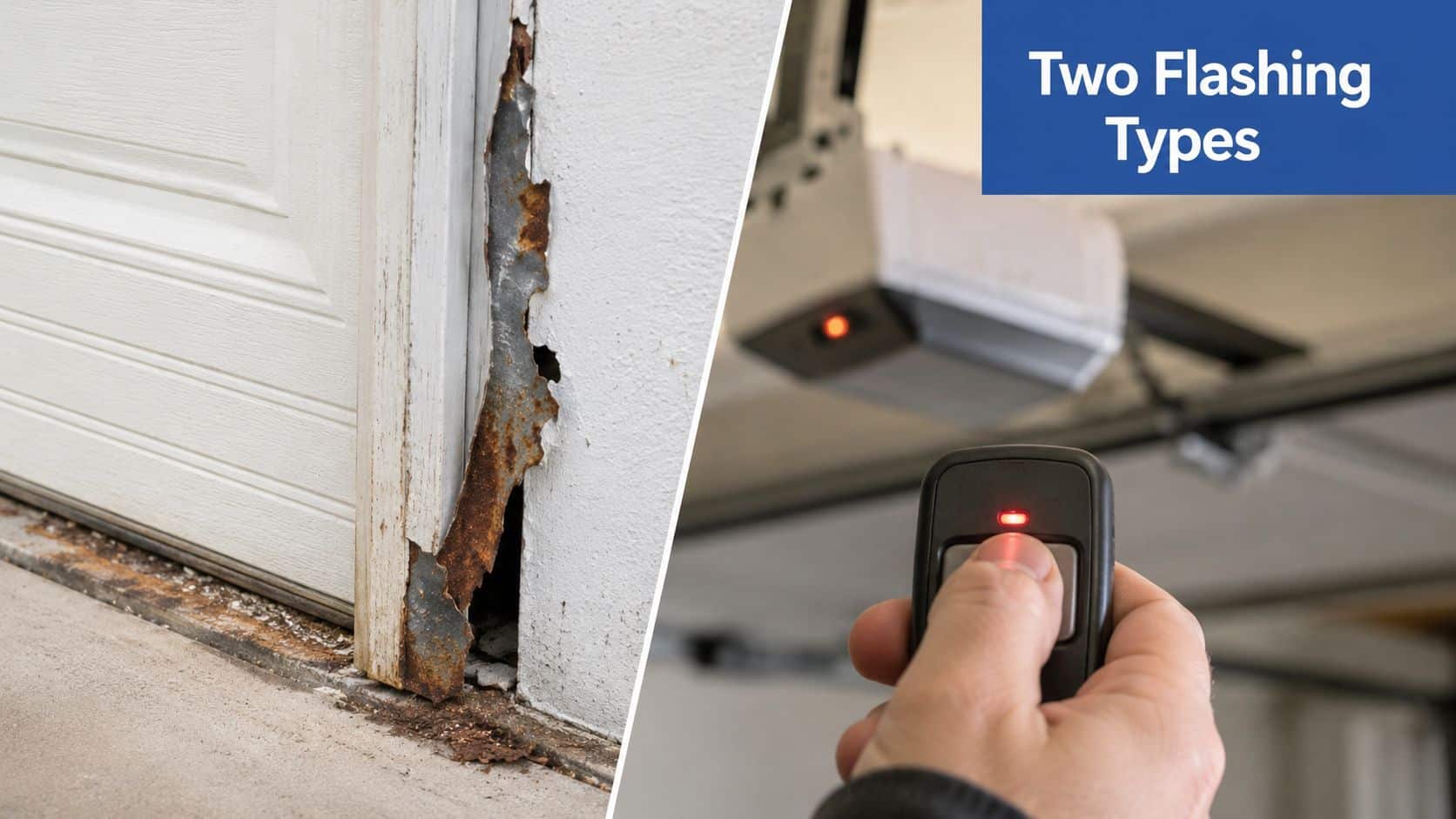
The two problems look similar until you inspect them closely
Water stains, swollen trim, and rust point to a flashing problem at the opening. A blinking light on the motor head points to a fault inside the opener system, often a sensor, wire, or motor issue. Mixing them up leads people to clean a sensor when the problem is a failed lap detail around the jamb, or to call for flashing repair when the opener is reporting a wiring fault.
Arizona makes both issues more visible. Dust settles fast, sun exposure is relentless, and monsoon storms find weak spots that sat hidden all winter. If you want a practical way to think about it, treat the opening like part of the wall system and the opener light like a warning label from the machine.
Practical rule: If the issue leaves a stain, a gap, or soft trim, think weatherproofing. If the opener light is blinking and the door won't close, think diagnostics.
Homeowners who also keep an eye on exterior cleaning usually spot these problems sooner, especially after stucco washing or trim maintenance. A useful companion reference is this closed cell foam weatherstrip guide, because perimeter sealing and flashing often get discussed together even though they solve different problems.
Weatherproofing Flashing Around the Garage Door Opening
A garage door opening fails in two places at once, the wall system and the trim line. The flashing has to move water out and away before it can soak the jambs, the header, or the stucco edge. In Arizona, that detail gets tested hard. Sun cooks sealants, dust fills small gaps, and monsoon water finds every weak lap.
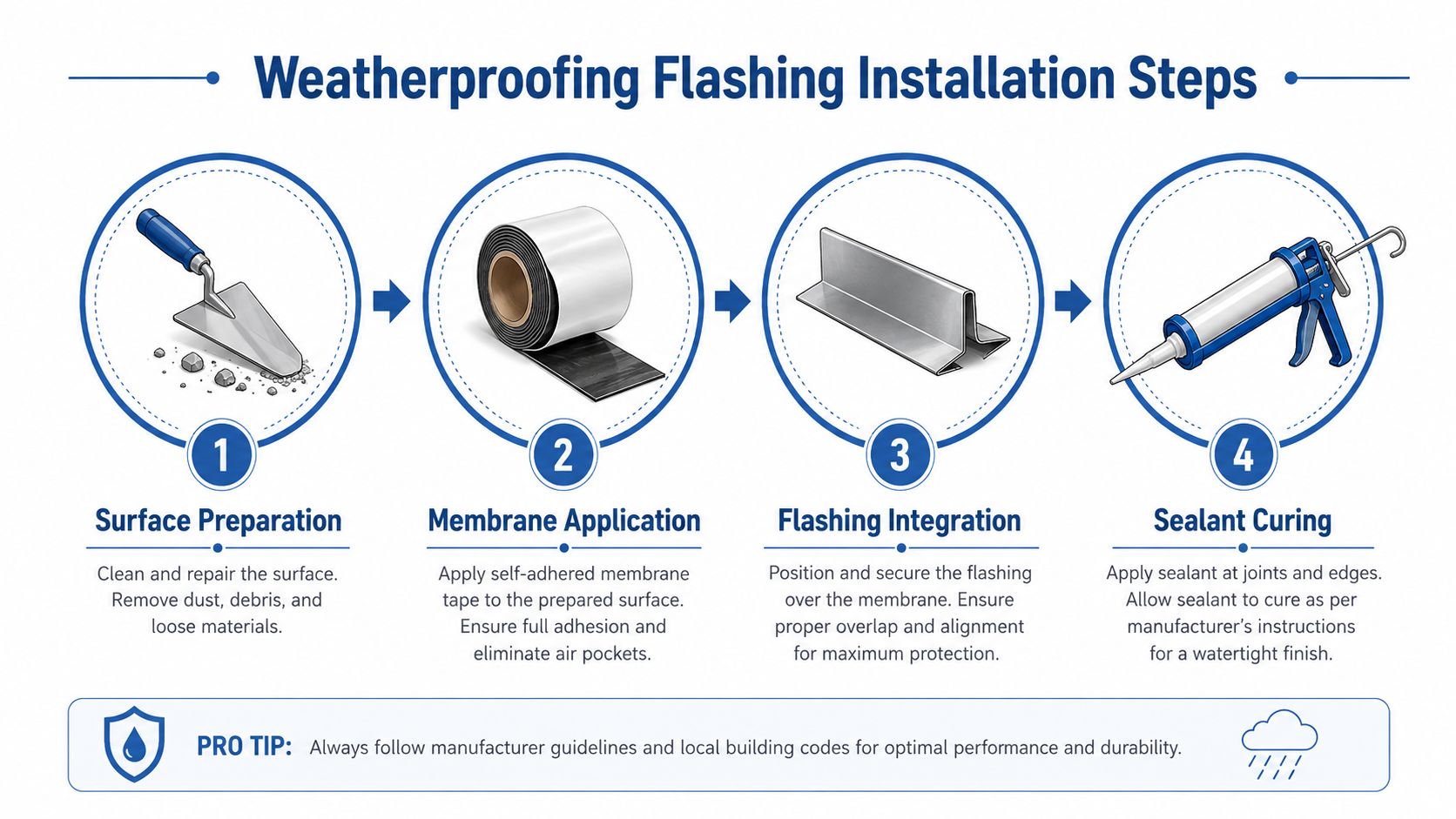
What the laps have to do
Door opening flashing only works if each layer sheds water onto the one below it. The sill pan needs to extend at least 6 in (152 mm) up each jamb and 2 in (51 mm) onto the wall surface, and the head flashing needs to overlap the jamb flashing by at least 2 in (51 mm) on each side. NAHB's window and door flashing guidance says to keep the sequence in shingle style, because that is what gives water a clear drainage path.
Reverse laps cause trouble fast. Water can follow the wrong edge, then track behind trim, insulation, and framing. At a garage opening, the head joint takes the most punishment, so a metal drip cap or properly integrated head flashing belongs there, not just sealant.
What works in the field
Self-adhered flashing has to connect to the water-resistive barrier and lap onto it by at least 2 inches. ICC guidance on window and door flashing treats that overlap as part of the drainage route, and that is the part many repairs miss when someone tries to patch only the visible edge.
Caulk helps at small joints, but it does not replace the flashing sequence. A bead of sealant over a bad lap usually hides the problem until the next storm. That is why trim work and stucco maintenance need to be coordinated with the opening detail, especially after stucco maintenance and exterior cleaning exposes old cracks or failed sealant lines.
If the perimeter is still leaking air, the closed cell foam weatherstrip guide is useful for the seal between the door and the frame. It solves a different problem from flashing, but homeowners often inspect both at the same time because the symptoms show up in the same area.
Water should always be forced to the exterior by the layers above it. If the layers fight gravity, the wall usually loses.
Garage openings are treated like other exterior openings in building-envelope work. The details are ordinary, but the order has to be right, and that is where a lot of DIY repairs fall apart.
Decoding Garage Door Opener Flash Codes
A blinking opener light is not random. On many residential openers, the flash count is a coded diagnostic that points to a specific fault, and that's a major improvement over the old generic warning light. The useful part is speed, because you can often narrow the problem before touching a panel or removing a cover.
DASMA reports that the average residential garage door opens and closes 3 to 5 times per day, or about 1,500 cycles per year in the same widely cited industry context, so a flash code isn't a cosmetic annoyance. Precision Door's opener guide lays out common meanings used by many North American opener brands, even though exact codes can vary by manufacturer.
| Flash Count | Fault Indication | Common Cause |
|---|---|---|
| 1 flash | Open or disconnected sensor wire | Broken or unplugged sensor wire |
| 2 flashes | Shorted or reversed wire | Wiring fault at the sensor or control line |
| 3 flashes | Short in the door control or wire | Damaged wall control wiring |
| 4 flashes | Misaligned safety sensors | Photo-eye alignment problem |
| 5 flashes | Motor overheating or RPM sensor failure | Heat stress or motor sensing fault |
| 6 flashes | Motor-circuit failure | Control or power circuit issue |
Why the flash count matters
The difference between 4 flashes and 6 flashes changes the entire repair plan. One points you toward alignment and wiring checks, while the other usually means the opener needs professional diagnosis. That's why a blinking light is part of the maintenance language of modern garage doors, not just a nuisance signal.
If you want another plain-language walk-through, diagnose opener warning lights is a useful consumer-level reference for comparing blink patterns with the symptom you're seeing. The key is to count carefully and match the pattern before swapping parts.
Hidden Causes of Flashing Lights Beyond Sensor Problems
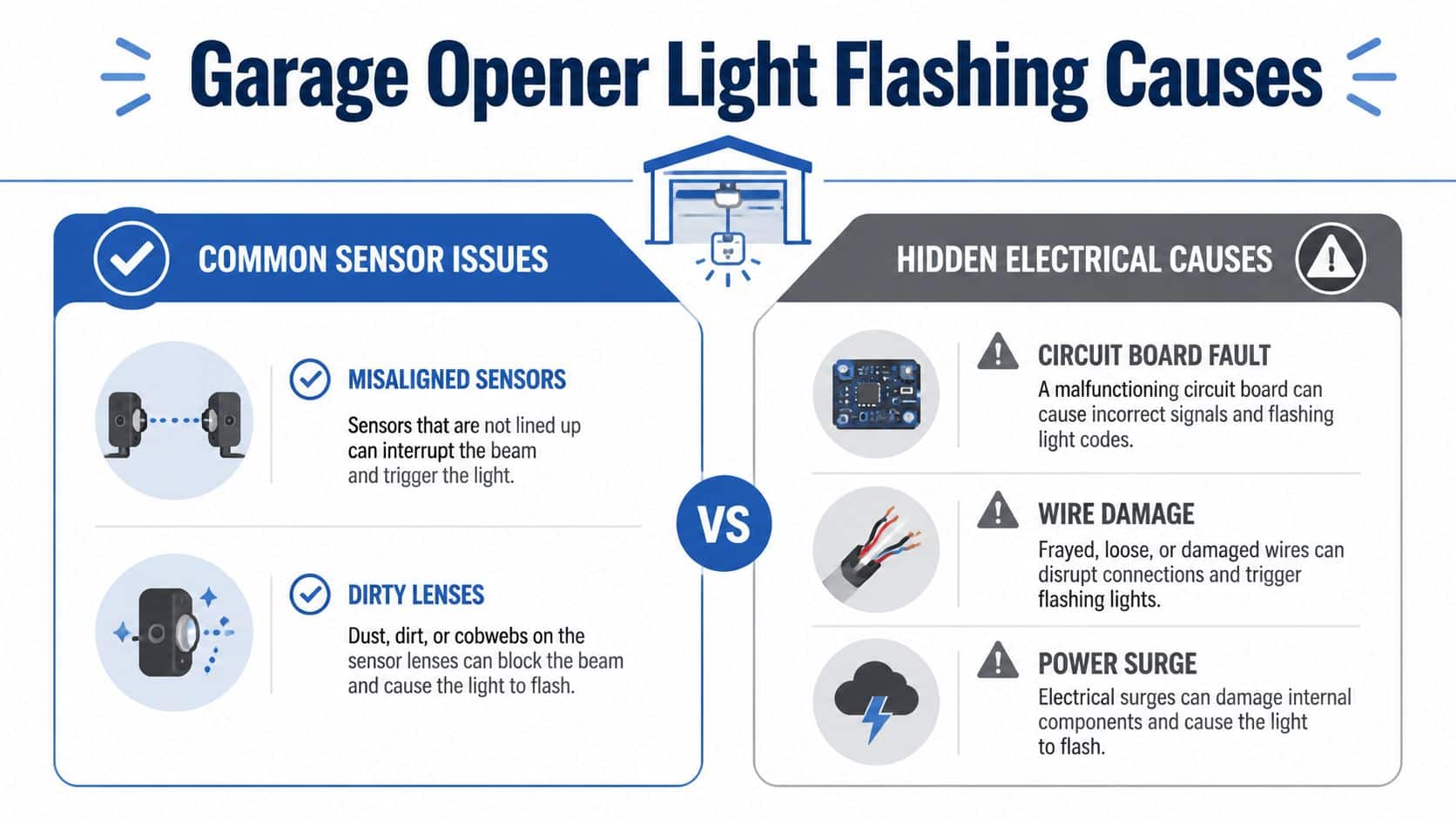
Most homeowners hear “blinking opener light” and immediately clean the photo-eyes. That's not wrong, but it's incomplete. In Arizona, the more useful question is whether the opener is reacting to a real fault, or to sunlight, a lock feature, or a component that's starting to fail under heat.
Sunlight can trigger a false sensor fault
Bright sun can interfere with sensor beams and make a door act like something is in the way. That problem tends to show up at certain times of day, especially on the same driveway or the same side of the garage. Reolink's garage door flashing guide notes this sunlight interference as a troubleshooting factor, and that's a real-world issue in sun-intense markets like Phoenix and Gilbert.
The fix is often simple, but not always obvious. Shade can help, and sometimes the sensors need to be relocated or tested in a different light condition to confirm whether glare is the trigger. If the door closes normally at dawn and fails at noon, the issue may be ambient light rather than a bad sensor.
The non-sensor causes people miss
The opener may also flash because the LOCK feature is engaged, the manual lock is set, the motor is overheating, the wiring is shorted, the RPM sensor is failing, or the logic board has a fault. Overhead Door Erie's warning-light guidance is useful here because it reflects what technicians keep seeing, a blinking light doesn't always mean photo-eyes.
That distinction changes the troubleshooting priority. A locked opener or an overheated motor needs a different response than a dirty lens. If the door moves intermittently or only fails when it's under load, that's a strong sign you're outside the sensor-only playbook.
If the blink code and the door behavior don't match a simple alignment issue, stop assuming it's just the eyes. The opener may be telling you something deeper.
Inspection and Maintenance for Arizona Garage Doors
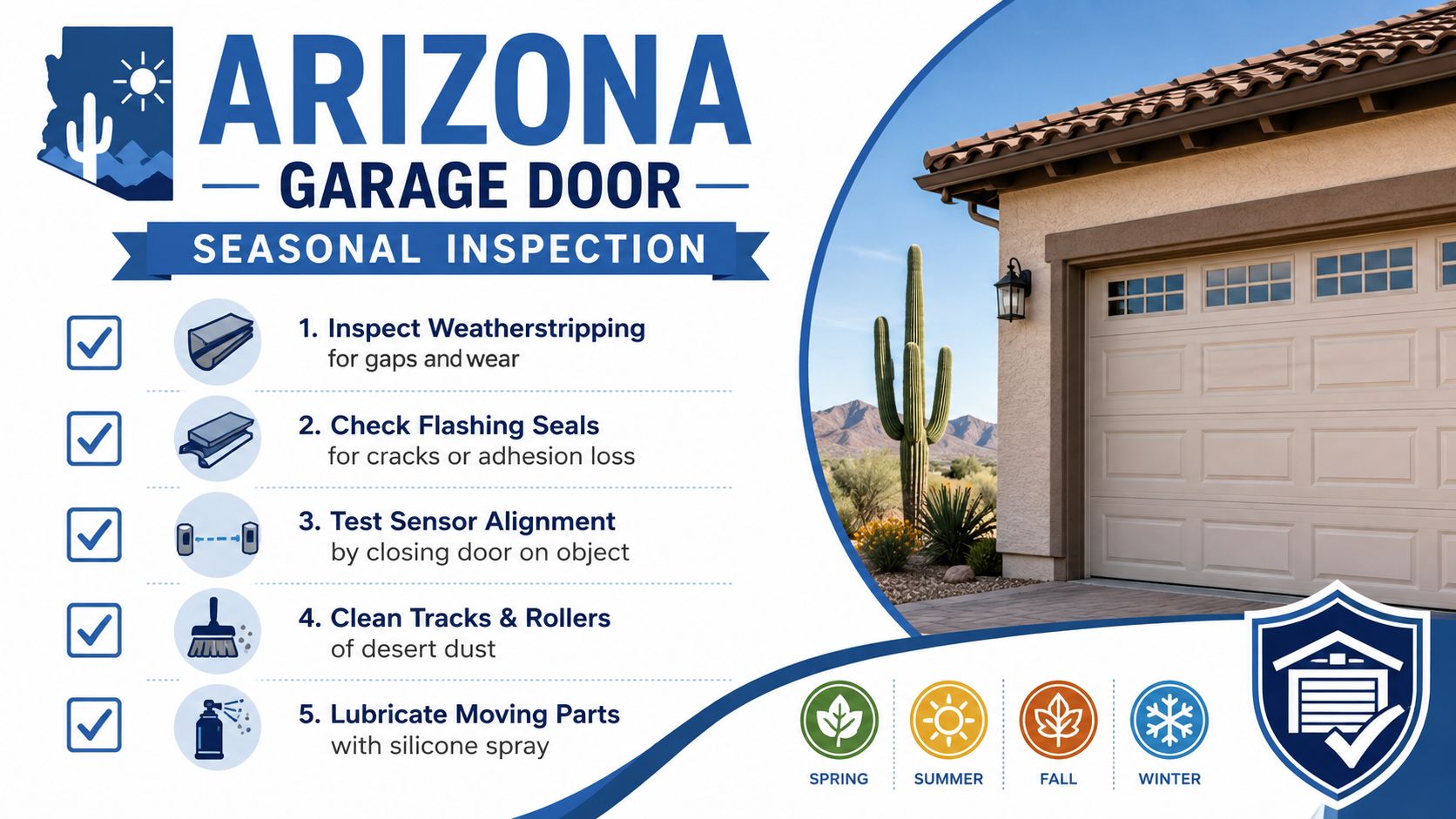
A good inspection routine catches most flashing problems before they turn into locked-out mornings. For Arizona homes, the best cadence is twice a year, once before monsoon season and once before winter. Dust, heat, and storm water all test different parts of the system.
What to check outside
Start with the opening itself. Look for gaps between the door and the frame, especially in wildfire-prone settings where exterior garage doors are expected to keep gaps to no more than 1/8 inch, or 3.2 mm under California's code framework. That number matters because perimeter gaps affect both ember intrusion and water entry.
Then inspect the flashing line for punctures, lifted edges, or adhesive failure. Self-adhered membranes can look fine from a distance and still fail at a corner or seam. Water stains, soft trim, or mold near the head of the opening usually mean reverse drainage has already happened.
What to check on the opener
Clean the photo-eye sensors with a soft cloth, not abrasive paper towels. Test the LOCK feature so you know whether a button press is being blocked on purpose. If the opener has been running hard through summer heat, listen for signs of motor strain and check the wiring connections for looseness or visible damage.
For seasonal home care, this kind of perimeter and hardware inspection fits naturally into a broader exterior checklist, including the kind of upkeep outlined in this annual home maintenance checklist. In dusty neighborhoods, sensor lenses and door tracks deserve more frequent attention than owners in milder climates usually expect.
A clean sensor doesn't fix a bad lap detail, and a perfect flashing detail won't save a failing opener. You need both sides of the system working.
DIY Fixes Versus Calling a Professional
A garage door problem that flashes can turn into a simple afternoon fix or a repair that needs trained hands fast. In Arizona, sun, dust, and monsoon moisture make the difference more obvious, because a sensor that acts up in shade is one thing, while water intrusion, damaged wiring, or hardware stress is another.
What's reasonable to handle yourself
Start with the basics. Clean the photo eyes with a soft cloth, check that both sensors point straight at each other, clear anything blocking the beam, and confirm the LOCK button is not active. If glare is part of the problem, add shade or a small sun shield where the sensors get hit by direct light, then retest the opener.
You can also reset the opener after a power surge and watch whether the flashing stops on its own. A level helps confirm sensor alignment, and a steady mounting surface matters more than people expect. If the unit returns to normal after those checks, the issue was probably a sensor, a control setting, or bright light interference rather than a mechanical failure.
What belongs with a pro
Motor trouble, circuit-board faults, and repeated 5 or 6 flash codes should go to a technician. So should persistent wiring shorts, cracked or failed flashing that has to be replaced, and any issue tied to springs, cables, or tracks. Garage door parts hold enough stored force to make a small error expensive, and in a hot climate the margin for sloppy repair gets smaller.
A professional roof inspection is a useful model for judgment here, because some problems are obvious from the surface and others only show up when someone checks the assembly carefully. Garage openings deserve that same level of scrutiny when the trouble points to structure, moisture entry, or a fault that keeps returning after a reset.
For broader exterior care, many homeowners combine garage checks with a professional pressure washing service for your property so dirt, rust streaks, and drainage problems are handled in the same season. That makes sense as long as the garage door itself is not treated like a pressure-wash target, since the opener, seals, and flashing details need a different approach than open concrete or siding.
Protecting Your Arizona Home with Proper Garage Door Maintenance
The two meanings of garage door flashing point to the same habit, pay attention before a small fault becomes a bigger one. Weatherproofing flashing protects the opening from monsoon water and dust, while opener flash codes tell you when a sensor, wire, or motor needs attention. Both affect safety, curb appeal, and how reliably the house works day to day.
For Arizona homeowners, the biggest misses are usually simple. People ignore sun interference, trust a bad lap detail, or keep resetting an opener that's reporting a real fault. A clean exterior and a properly detailed opening go a long way, especially when the monsoon season starts testing every weak seam.
If you also care about the look of the home, this kind of upkeep pairs naturally with how to improve curb appeal, because a healthy exterior starts with surfaces that shed water and hardware that works when you need it. That's the maintenance mindset that keeps a garage from becoming a surprise repair.
South Mountain Window Cleaning, LLC helps homeowners and property managers keep exterior surfaces, trim, and glass looking right while supporting the kind of upkeep that protects curb appeal and function in Arizona's harsh climate. If you're dealing with garage-door-area staining, dust buildup, or other exterior maintenance issues in Phoenix, Scottsdale, Paradise Valley, Chandler, Tempe, or Gilbert, visit South Mountain Window Cleaning, LLC to request service and keep the outside of your home in better shape year-round.