

You wake up to a sink that was fine yesterday, then this morning it gurgles, slows, and stops. The faucet is running, the tub is backing up, and the basement floor drain sounds wrong. That's the moment you start blaming a clog, then reach for heat too fast and make a mess of it.
A frozen drain pipe is different from a routine blockage, and it needs a cleaner diagnosis. If you thaw the wrong thing, you waste time. If you force the wrong fix, you can turn a simple winter problem into a cracked pipe, a wet crawl space, or a full backup.
What a Frozen Drain Pipe Looks Like in Real Life
A homeowner usually notices it first at the sink, the shower, or a basement drain on a bitter morning. The fixture doesn't drain normally, it gives a weak gulp, or it sends up a gurgle that sounds like the pipe is arguing with itself. Sometimes the rest of the house seems fine, which is exactly why people assume it's just a local clog.
What makes a drain freeze instead of a supply line
Drain lines freeze differently because they're not pressurized supply lines. They hold standing water in traps and horizontal runs, and that water can sit long enough to freeze in cold zones. The weak spots are predictable, unheated garages, exterior wall cavities, crawl spaces, and older buried lines that never got much protection in the first place. The Red Cross points to unheated areas like basements, garages, and cabinets next to exterior walls as common freeze points, and Wirecutter notes that plumbing in unheated spaces and on the north side of the house is vulnerable. Red Cross frozen pipes guidance
A frozen drain also doesn't always behave like a hard stop. It can start as a slow drain, get worse through the day, and then back up once enough water builds behind the ice. That's different from a grease clog, which usually gets steadily worse after repeated use, or a sewer issue, which tends to affect multiple fixtures at once.
| Symptom | Frozen Drain | Grease Clog | Sewer Main Backup |
|---|---|---|---|
| One sink or tub slows after a cold snap | Common | Possible | Less common |
| Gurgling sounds | Common | Possible | Common |
| Multiple fixtures slow at once | Possible, but more serious | Unlikely | Very likely |
| Backups from the lowest drain | Possible, but warning sign | Unlikely | Very likely |
| Problem appears in a cold, exposed wall or crawl space | Common | Less common | Not the main clue |
A drain that fails only after freezing weather deserves suspicion. A drain that fails everywhere at once deserves caution.
Diagnose Before You Thaw
Start with the fixtures that behave normally and the ones that don't. If one sink is slow but the bathroom across the hall works fine, you're probably dealing with a branch line problem. If several fixtures are sluggish, gurgling, or backing up from the lowest drain in the house, stop assuming it's a simple freeze and start thinking main line.

Read the symptoms before you add heat
Listen before you touch anything. Gurgling, suction sounds, and water rising in one fixture when another drains are classic signs that the problem may involve the vent or a larger blockage rather than one frozen branch. If you see frost on a visible section of pipe, or ice at a cleanout, that's a strong clue you're dealing with a freeze, not a grease plug.
Run a small amount of water briefly, then stop. If the line is only partially frozen, flow may improve a little and then slow again as ice shifts or water refreezes. If nothing changes, don't keep forcing water through it. That just loads pressure into a blocked line.
A quick visual check matters too. Look under the sink, around the trap, and along any pipe that runs through a cold wall or unheated space. A bulge, frost, or dampness at a joint is a red flag that the pipe has already been stressed.
For drain maintenance in exposed systems, the same logic applies to other winter-prone exterior drainage paths, including French drain maintenance, because standing water and cold exposure are a bad mix in any line that can hold water.
Practical rule: if more than one fixture is acting up, slow down. That usually means the problem is bigger than a single frozen branch.
Safe Methods to Thaw a Frozen Drain
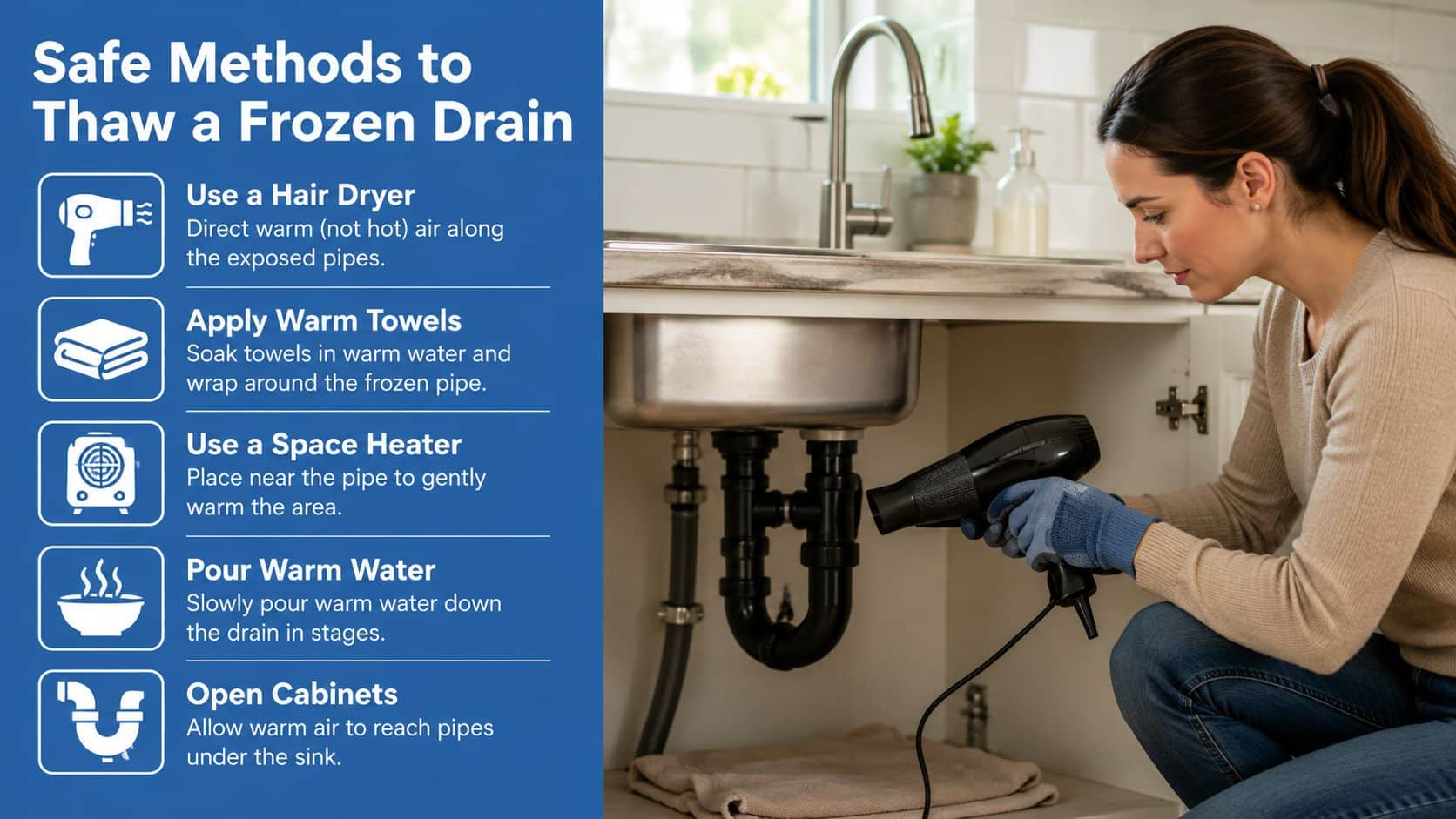
Start with the least aggressive option. Open cabinet doors under sinks, raise the heat in the home, and let warm indoor air wash the pipe area first. On a mild freeze, that may be enough within a short period. It's the lowest-risk move, and it beats rushing heat into a pipe you haven't checked yet.
Use controlled heat, not panic heat
A hair dryer is the first tool I'd reach for on an accessible pipe. Keep it moving, start low, and work from the warm side of the pipe toward the cold section. You're not trying to roast the pipe. You're trying to melt the ice plug evenly. A heat lamp or electric heating pad can also work on exposed runs, but only if the pipe is dry and you can keep the device away from flammables.
Do not use an open flame, a propane torch, or boiling water on a cracked or split pipe. That's how people turn a freeze into a burst. If the pipe is metal and the section is clearly intact, controlled warm water through the trap can help, but keep it warm, not scalding. The goal is steady thawing, not thermal shock.
For sink and tub drains, remove the trap cleanout plug only if it's designed for that and you can do it without forcing anything. Place a bucket underneath, crack it loose carefully, and send warm water through the drain path in small amounts. If water starts moving steadily instead of just gurgling, you've likely cleared the ice. If it still stops at the same point, the blockage may be farther down the line.
For longer horizontal runs, a plumber's snake can tell you whether the pipe is clear enough to pass water, and a thermal camera can help locate the cold spot if you're dealing with a hidden run. If the pipe is buried in a wall or crawl space and you can't see what's happening, stop before you guess.
For a cabin or vacant property, the most useful companion reading is winterize pipes in seasonal cabins, because the same basic rule applies, keep heat controlled and pressure under control.
If you can't see the pipe, don't get aggressive with the heat.
Temporary Fixes and Permanent Repairs After the Thaw
Once water starts moving again, don't celebrate and walk away. Run the tap for several minutes to flush out loose ice chips, then inspect the frozen section for cracks, bulges, and wet joints. If the line froze once, it can fail later when the pressure changes again.
Patch the leak only if the damage is minor
Small, reachable leaks sometimes buy you time. A pipe repair clamp can stop a pinhole or a narrow split on an accessible section. Epoxy putty can help with a tiny seep on a dry pipe surface, and a rubber sleeve with hose clamps can hold on a small, temporary leak until the proper repair is done. These are stopgaps, not permanent solutions.
If the pipe split, if it froze in the same place before, or if you see corrosion or repeated weeping at one joint, replace the section. A plumber will usually cut out the bad segment and install new copper or PEX, or reroute the line so it doesn't sit against an exterior wall again. That reroute is often the smarter fix in older homes where the same spot keeps freezing.
Keep an eye on the area for the next 24 to 48 hours. That's when slow leaks show up under sinks, behind access panels, or in the crawl space. If you had visible damage, document it with clear photos before you clean up. That record matters if you need to file an insurance claim.
For homeowners trying to keep related cleanup from turning into a bigger plumbing mistake, the advice in bleach down drain is worth reading before you pour chemicals into a line that's already been stressed.
Preventing the Next Freeze in Gutters, Walls, and Crawl Spaces
Prevention starts where the cold gets in. If a drain line crosses an unheated space, insulate it. If a pipe runs through an exterior wall cavity, seal the draft path around it. If the garage gets cold enough to threaten plumbing, keep the door closed during cold snaps and stop treating that space like a conditioned room.
Rank the fixes by impact, not by excitement
Foam pipe insulation is cheap and useful, but it's not a magic shield. Heat trace cable on vulnerable runs does more, especially where the pipe sits against a north-facing wall or in a crawl space that never stays warm. Rerouting a line away from exterior sheathing costs more, but it solves the problem instead of decorating it.
Outside the walls, drainage details matter. Clogged gutters can contribute to ice dams and cold water intrusion near the siding. Poor crawl-space drainage lets cold air linger where plumbing shouldn't have to fight it. Missing or disconnected vent-stack covers can also let cold air move straight into the drain system, which is a problem homeowners miss until the line freezes again.
| Upgrade | Approx. Cost | DIY or Pro | Freeze Risk Reduction |
|---|---|---|---|
| Foam pipe insulation | Low | DIY | Good for exposed runs |
| Draft sealing around pipe penetrations | Low | DIY | Good in wall cavities |
| Closed garage habit during cold snaps | Low | DIY | Helps exposed utility areas |
| Heat trace cable | Moderate | DIY or Pro | Strong on vulnerable runs |
| Reroute line away from exterior wall | Higher | Pro | Strongest long-term fix |
For exterior upkeep that affects freeze risk, the checklist in gutter cleaning and maintenance is a smart companion because roof runoff and freeze risk travel together more often than people admit. If you want a broader seasonal rhythm, avoid frozen pipes this winter is useful context for the same cold-weather mindset.
Best habit: inspect in late fall, check again after the first hard freeze, then walk the property in spring before you forget what winter did.
When to Stop DIY and Call a Licensed Plumber
If the pipe is already split, stop. If water stains are showing up, if you hear running water with every fixture off, or if the house suddenly loses pressure, you're no longer in simple thaw territory. Shut off the main water if a burst is suspected and get professional help.
Electrical risk matters too. Thawing around wet crawl spaces, damaged wiring, or damp insulation is not a casual DIY job. Water and improvised heat do not mix well, and the better move is to get the line made safe before you try anything else.
Know when the problem is bigger than one pipe
Multiple fixtures affected at once, repeated freezes in the same spot, or backups from the lowest drain usually point to a frozen or blocked main. That's a call for a licensed plumber, not a second round of household tools. If you need a reminder of why that credential matters, the category page for l3 is a decent place to see how professional plumbing work is framed in the trade.
Tell the plumber three things when you call, where the problem is, what you already tried, and whether the water is still on. Those details save time and help them bring the right tools. While you wait, don't keep thawing, don't keep opening valves, and don't keep guessing.
Arizona homeowners should take this seriously even though freezes are less common here. Uninsulated garages, north-side hose bibbs, and vacant homes without winterized plumbing can still freeze hard enough to cause damage. For seasonal planning, the annual home maintenance checklist is the right habit to build before the next cold snap arrives.
South Mountain Window Cleaning, LLC helps Phoenix-area homeowners and property managers keep the outside of the building clean, visible, and easier to maintain, including gutters and exterior surfaces that matter when winter weather hits. If you want a local team that understands curb appeal, seasonal upkeep, and careful service across homes and commercial properties, visit South Mountain Window Cleaning, LLC and book a quote.