
Dust settles quickly on Arizona commercial glass. Mineral-heavy water leaves spotting, high-traffic doors collect fingerprints, and a building with high windows can turn an ordinary cleaning visit into a safety and budgeting decision. A storefront may look acceptable from the parking lot while its entry glass, frames, tracks, and upper panes tell a different story.
The right commercial window cleaning tips start with a maintenance plan, not a last-minute call. Frequency, pure-water equipment, high-rise access, hard-water treatment, vendor contracts, seasonal dust, and solar-panel coordination all affect the value you get from each service visit. South Mountain Window Cleaning serves Phoenix, Scottsdale, Paradise Valley, Chandler, Tempe, Gilbert, and nearby Valley communities with residential, commercial, and high-rise window washing, along with related exterior cleaning services.
1. Schedule Regular Maintenance Cleaning on a Consistent Cycle
A recurring schedule keeps window care from becoming an appearance emergency. Office buildings often fit a monthly-to-quarterly pattern, while high-rise properties commonly need service two to four times per year because access requires specialized crews. Retail and restaurant properties usually need tighter cycles, from weekly to monthly, because doors and street-level glass collect fingerprints, dust, and contact marks quickly. These planning benchmarks are outlined in commercial window scheduling guidance.
Arizona properties should adjust that baseline for exposure. A building near construction, an open lot, or a busy roadway may need more frequent visits than a comparable property in a protected setting. After a significant dust event, inspect the glass before waiting for the next routine appointment.
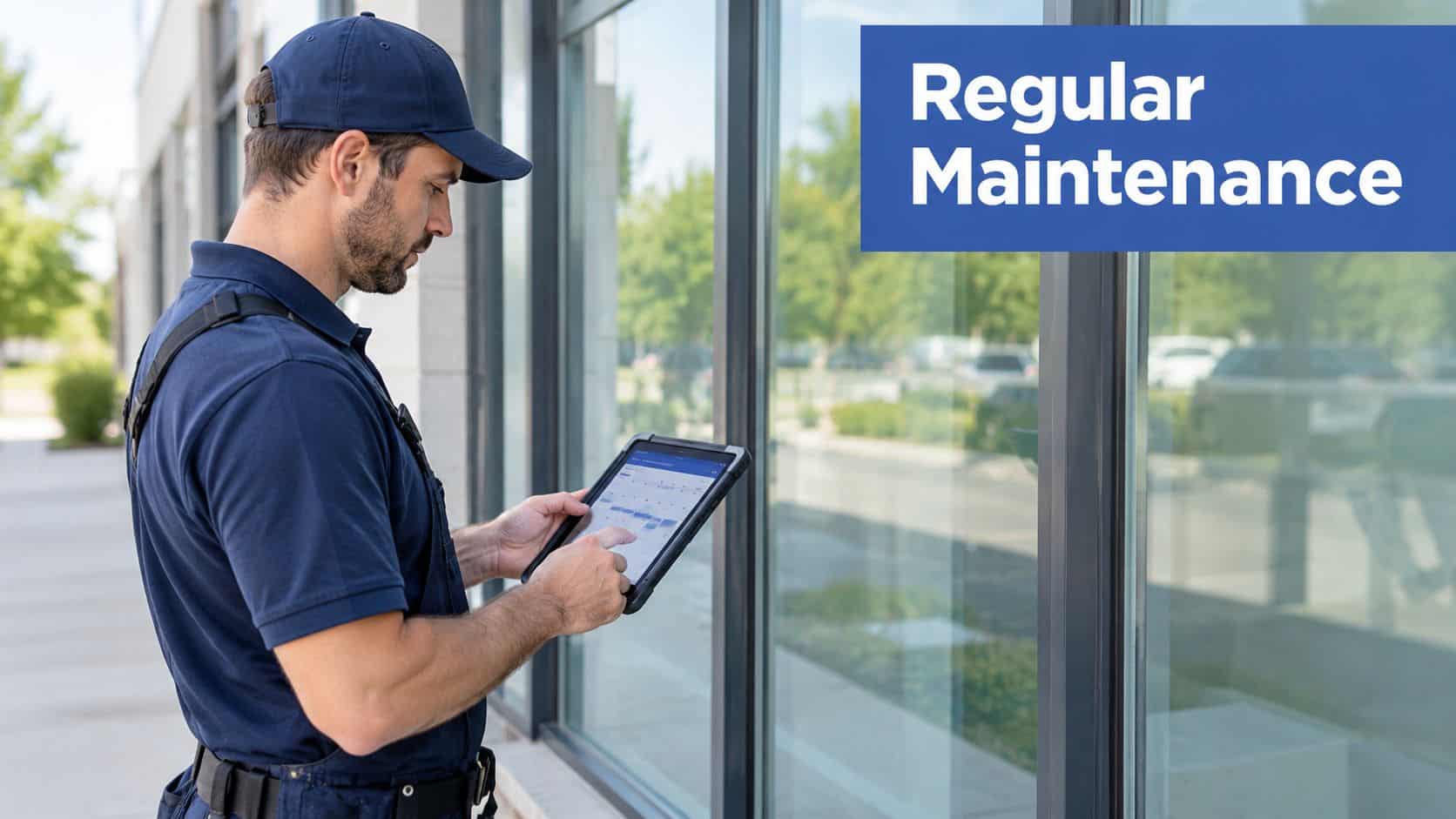
Use a facility calendar rather than relying on memory:
- Match frequency to exposure: Give storefronts, entrances, and customer-facing glass priority over rarely viewed upper panes.
- Schedule off-hours: Early morning, evening, or closed-day service reduces interference with tenants, shoppers, and employees.
- Coordinate with inspections: Pair washing with checks of seals, weep holes, drainage channels, frames, and tracks.
- Review after dust events: Construction, wind, and seasonal buildup can justify a temporary service change.
Routine cleaning is preventive maintenance, not just cosmetic work. One commercial maintenance reference estimates that a failed curtain-wall sealant joint costing about $200 to repair at the joint can contribute to $8,000 to $25,000 in water-related interior damage if ignored for two years, before HVAC losses are counted. The same guidance recommends annual inspection of structural silicone sealants and quarterly checks of weep holes and drainage channels, as described in this commercial glass-system maintenance checklist.
2. Use Pure-Water Systems for Cleaner, More Consistent Glass
Arizona water can leave a residue even after a window appears clean. A pure-water system filters dissolved minerals from the water, allowing technicians to agitate the glass with a water-fed brush and rinse away soil without adding another mineral film during the final pass.
That method works especially well on exterior panes, upper elevations, and expansive glass where ladders or lifts would slow the work. It also reduces the temptation to use strong chemical mixtures on every surface. Traditional squeegee work still has a place, particularly around edges, frames, interior panes, and detailed storefront areas. The best method depends on the glass, access, soil type, and weather at the time of service.

Ask a provider how it controls water quality, not just whether it owns a water-fed pole. Filters need maintenance, and a system that isn't producing sufficiently purified water can leave spotting behind. A practical specification should address:
- Water quality checks: Confirm that the provider tests or monitors the output of its purification equipment.
- Equipment fit: Use carbon-fiber poles and portable purification units where reach and ground access make them appropriate.
- Method selection: Combine water-fed work with professional squeegee technique for interiors, edges, and detailed areas.
- Surface protection: Keep frames, seals, screens, and adjacent finishes compatible with the chosen process.
Modern water-fed poles can reach approximately 60 to 70 feet when paired with carbon-fiber poles and portable purification units, reducing the need for some ladder work, lift rental, or rope descent. That operational benefit is one reason the water-fed pole market estimate describes these systems as widely used on building facades, glass, and solar panels.
For a closer look at the equipment and process, review pure-water window cleaning systems. The key trade-off is simple. Pure water is efficient for suitable exterior work, but it doesn't replace surface inspection, stain treatment, or careful interior detailing.
3. Apply Documented Safety Protocols to Elevated and High-Rise Work
High-rise cleaning is an access operation first and a glass-cleaning operation second. Before a crew arrives, the property manager and contractor should identify roof anchors, tie-off points, suspended-access equipment, pedestrian areas, wind exposure, fragile surfaces, tenant activity, and emergency procedures.
A ladder isn't a universal solution. Commercial guidance says a grade-supported ladder shouldn't be used to clean a window whose top is more than 45 feet above the floor, adjoining ground, or flat roof. Workers also shouldn't place body weight on windows, skylights, or atrium glass. Excessive wind is a reason to suspend work, and public areas may require danger signs and barricades. These points appear in the International Window Cleaning Association safety guidance.
Practical rule: If the access plan is vague, the cleaning proposal is incomplete.
Request written evidence of training, insurance, equipment inspection, and the work method before approving high-level work. For suspended access in Washington, for example, rules require a pre-cleaning inspection of building surfaces, rope with a minimum breaking strength of 5,000 pounds, and belts and anchors conforming to ANSI/IWCA 1-14.1-2001 requirements. Those requirements are detailed in the Washington suspended-access safety rules, and local requirements should always be confirmed for the property's jurisdiction.
A sound vendor review should cover:
- Fall protection: Confirm a primary suspension system and an independent fall-arrest lifeline on separate certified anchors.
- Public protection: Require barricades, signage, spotters, or adjusted work hours where pedestrians could enter the drop zone.
- Weather decisions: Establish who can stop work when wind or other conditions make access unsafe.
- Documentation: Keep the site-specific plan, insurance information, inspection records, and incident contacts with the service agreement.
Read the company's approach to high-rise window cleaning safety and compare it with this safe work method for working at heights. A lower quote isn't a saving if it shifts access, liability, or disruption risk onto the building owner.
4. Combine Window Cleaning with Exterior Maintenance
A window visit is often the most convenient time to inspect the rest of the exterior. Technicians already need to consider access, runoff, screens, frames, sills, and surrounding surfaces. Combining compatible services can reduce vendor coordination and give the property manager one accountable schedule.
That doesn't mean every task belongs in one undifferentiated package. Power washing requires different pressure controls than glass cleaning. Gutter work may require separate access planning. Screen and track care may be included in some service levels but excluded from a basic pane-only visit. Ask the provider to state the scope for each surface.
A useful proposal should identify:
- Glass coverage: Specify interior panes, exterior panes, upper elevations, doors, frames, sills, and accessible tracks.
- Exterior surfaces: Separate building facades, walkways, drive-thrus, dumpster pads, and other pressure-washing areas.
- Specialty work: List screens, gutters, solar panels, rust removal, and other tasks as distinct line items.
- Scheduling: Show whether services occur together, in stages, or during different seasonal visits.
For a Chandler storefront, a coordinated visit might include glass, entry doors, surrounding concrete, and a façade rinse before a major sales period. An office complex in Gilbert may prefer quarterly window, gutter, and exterior inspections aligned with its facilities calendar. A Tempe property may use one vendor for windows and power washing while keeping electrical or roofing work with separate specialists.
The benefit is operational clarity, not automatic savings. Bundling can be efficient when the provider has the right equipment and trained crews. It can be a poor choice when a company treats every surface with the same pressure, chemical, or brush. Review the scope in commercial building exterior cleaning services and compare the proposed work with the building's materials and warranties.
5. Give Storefronts and Entry Glass Priority
Customers see doors and storefront panes before they speak with an employee. Smudged handles, dusty lower glass, streaks across a display window, and dirty surrounding frames can make a well-run business look neglected. Retailers, restaurants, medical offices, hotels, and professional practices should treat entry glass as a high-frequency zone rather than waiting for the full building wash.
Start with a walk from the parking area and sidewalk. Note what a customer sees first, where hands touch the glass, whether direct sun reveals streaks, and whether displays are obscured by residue. Then give those areas their own service frequency. A building may need only periodic upper-elevation cleaning while its entrances receive weekly or monthly attention.

The work should cover more than the center of the pane:
- Entry doors: Clean both sides, handles, push bars, and the glass around contact points.
- Frames and sills: Remove dust that can run back onto freshly cleaned glass.
- Display areas: Check reflections and direct-sun angles before approving the result.
- Adjacent surfaces: Include thresholds and nearby surfaces when they visibly affect the entrance.
A restaurant in Phoenix may schedule more frequent entry cleaning than upper-floor office glass because food service, traffic, and fingerprints create faster visible buildup. A Scottsdale retailer may increase visits around a busy sales period. A professional office in Paradise Valley may choose monthly storefront maintenance while reserving broader exterior service for a quarterly visit.
Off-hours scheduling protects the customer experience, but the right window may depend on the building's exposure. Early morning can avoid shoppers, although direct sunlight may make some techniques harder on hot glass. Ask the crew how it manages heat, drying, access, and visible residue rather than assuming a generic appointment window will work.
6. Select Providers Through Credentials, Insurance, and Reviews
Price is only one part of a commercial window contract. A property manager is also buying access planning, communication, consistency, damage prevention, and a clear response if the work falls short. A provider should be able to show current licensing, bonding, insurance, relevant training, and references for similar properties.
Verify the information instead of accepting a badge or verbal assurance. Check business registration with the Arizona Corporation Commission, request current certificates of insurance, and ask whether the policy applies to the type of elevated or commercial work being proposed. If a vendor claims platform verification or trusted-vendor status, confirm what that status covers.
A practical screening conversation includes these questions:
- Who will perform the work? Ask about employee training, subcontractors, supervision, and high-rise experience.
- What is included? Confirm panes, frames, sills, tracks, screens, doors, water-fed work, and access equipment.
- How is damage handled? Ask about pre-existing conditions, breakage reporting, scratched-glass procedures, and incident contacts.
- How is quality checked? Require a completion record, supervisor review, or documented customer signoff.
- Can the vendor scale? Confirm whether it can service multiple locations or respond to a property-wide need.
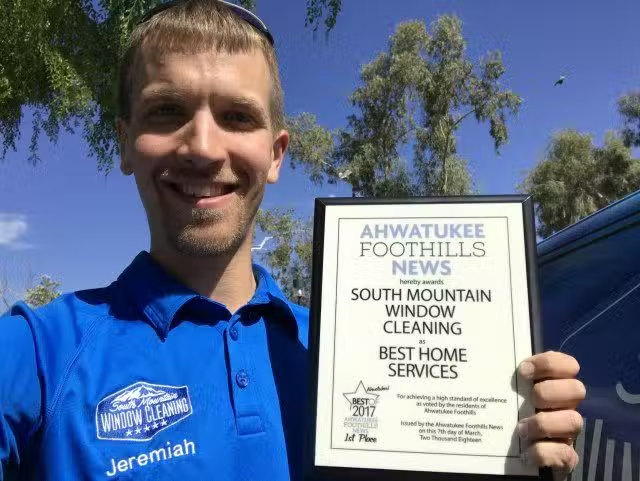
South Mountain Window Cleaning is described by the publisher as licensed, bonded, and insured, with 400+ five-star reviews, a $2 million insurance policy, and vendor relationships with Amazon and Google Home Services. Treat those as items to verify during procurement, just as you would with any contractor. A written proposal and references from comparable Phoenix-area properties are more useful than a general promise of quality.
A trustworthy bid makes exclusions visible. If the proposal doesn't say who handles tracks, screens, access equipment, water spots, and re-cleaning, ask before signing.
Compare total operating value. A slightly higher bid may include safer access, better documentation, more reliable scheduling, or a broader scope. A cheaper bid may omit those controls and leave the owner managing the gap.
7. Treat Hard-Water Stains Before They Become Etching
A normal wash removes loose dust and surface grime. It doesn't necessarily remove mineral deposits bonded to glass. Arizona properties can develop white spotting, cloudy rings, and rough mineral buildup when water dries repeatedly on panes, frames, ledges, or nearby masonry.
Start with diagnosis. The deposit may come from irrigation, sprinklers, construction runoff, roof drainage, pressure washing, or a leaking fixture. If the source remains active, a treatment only provides temporary relief. A technician should inspect the affected glass, determine whether the damage is residue or permanent etching, and select a product that won't harm coatings, seals, frames, or adjacent finishes.
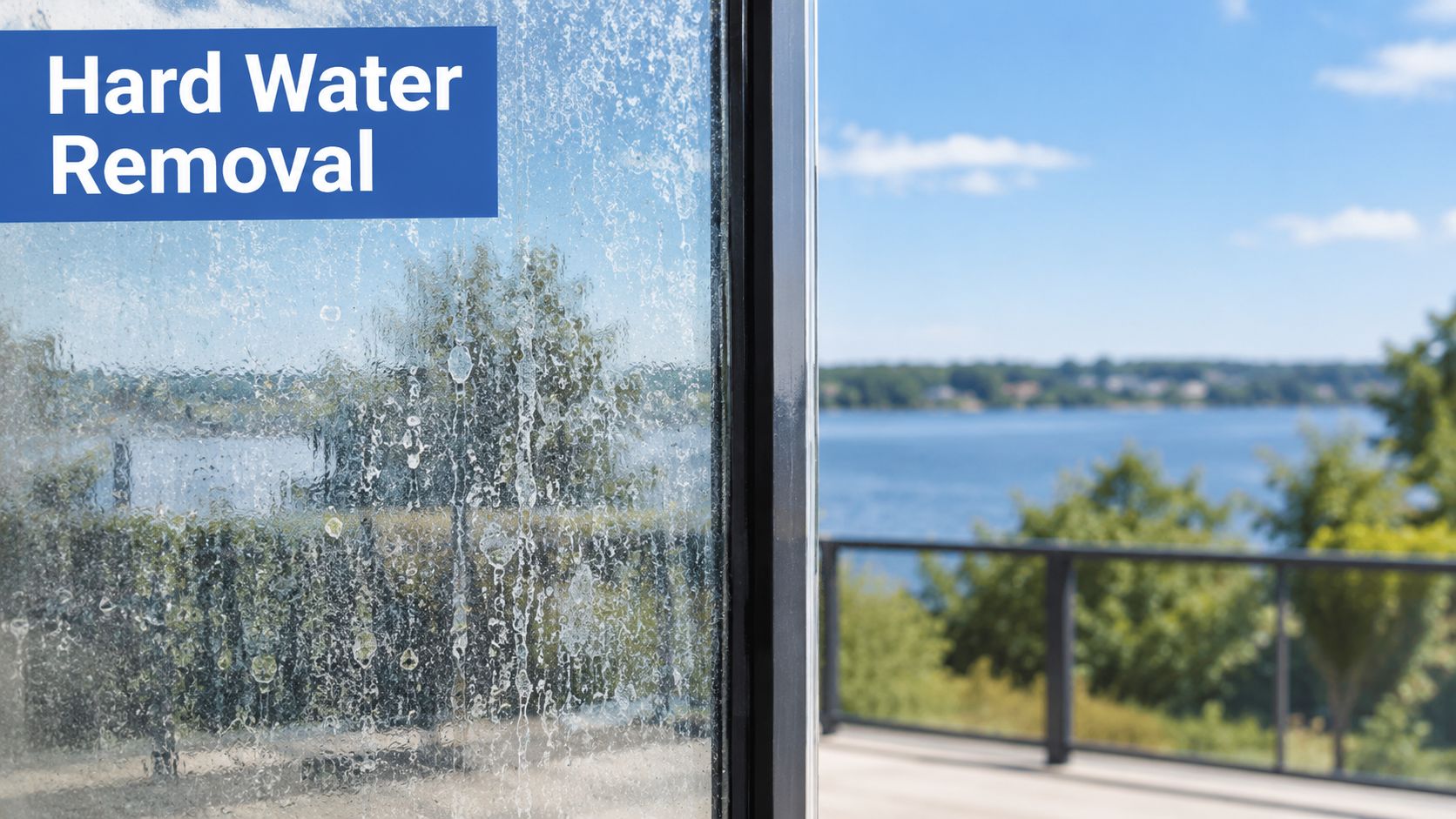
Specialized treatments may use chelating agents, carefully controlled acidic solutions, abrasion, or improved filtration, depending on the deposit and glass condition. The aggressive option isn't automatically the best option. A test area helps establish dwell time, agitation, rinsing, and the likely finish before the crew treats an entire elevation.
Use this sequence for a commercial property:
- Find the source: Correct irrigation overspray or other recurring contamination where possible.
- Test the glass: Distinguish removable mineral residue from etching or coating damage.
- Choose the least aggressive method: Protect seals, frames, films, and nearby surfaces.
- Rinse with purified water: Avoid putting dissolved minerals straight back onto the pane.
- Set prevention visits: Inspect the area after cleaning and adjust frequency if spotting returns.
A Phoenix office may need restoration work on older panes, while a Tempe or Chandler property may prevent heavier buildup by correcting sprinkler direction and using a suitable maintenance cycle. Protective coatings can be considered after treatment, but they should be compatible with the glass and applied by a provider that explains preparation and maintenance requirements.
For the cleaning and restoration decision, see how to remove hard-water stains from windows. Treating deposits early is usually easier than asking a routine cleaner to erase years of neglect.
8. Put Service Standards and Response Times in Writing
A recurring vendor relationship works better when both sides can point to the same agreement. A service-level agreement should identify the property areas, cleaning frequency, appointment windows, access responsibilities, quality standard, response process, and remedy if the result doesn't meet the specification.
Avoid vague language such as “clean windows as needed.” Define whether the contract includes interior and exterior panes, doors, frames, sills, tracks, screens, high-rise glass, stain treatment, and post-construction residue. State what “complete” means for a building with restricted tenant access. If some panes can't be reached during a visit, the crew should record them instead of assuming the job is finished.
Include these operating details:
- Visit schedule: List recurring dates or service windows, with a process for weather or tenant conflicts.
- Quality standard: Define acceptable results, including streak-free glass, complete coverage, and reporting of defects.
- Response commitment: Set a documented process for urgent requests, complaints, access problems, and re-cleaning.
- Communication: Name the property contact, escalation contact, preferred channel, and completion-report format.
- Guarantee terms: State whether the provider will return to address missed areas and how quickly it will respond.
A corporate office might need a written emergency-response target, while a retail chain may prioritize consistent monthly visits across locations. Those are different operating needs, so the SLA should reflect the site rather than copy a generic contract.
South Mountain Window Cleaning's publisher information describes computerized scheduling, online or phone booking, responsive service, a 100% satisfaction guarantee, and fast, free quotes. Ask for the actual terms before relying on any guarantee. The contract should explain exclusions, weather delays, access limitations, stain restoration, and what the customer must do to request a correction.
9. Build an Arizona Seasonal Plan for Glass and Solar Panels
Seasonal maintenance should account for dust, intense sun, mineral residue, tenant schedules, and the property's solar equipment. A single calendar can coordinate recurring visits, but the work orders should distinguish window cleaning from solar-panel cleaning. They involve different surfaces, access considerations, inspection points, and performance expectations.
After a dust-heavy period or nearby construction activity, review the glass and panels rather than waiting for a preset date. Check exterior panes, screens, tracks, ledges, frames, and hard-to-reach elevations. For solar panels, ask the provider to specify the array sections, access method, rinse process, and whether the visit includes a visual condition check. Don't assume a window-cleaning specification covers panels automatically.
Glass cleaning is primarily about clarity, condition, and presentation. Solar-panel cleaning needs its own scope, access plan, and completion record.
A Phoenix office may add a dust-focused visit after seasonal buildup, while a Scottsdale property may coordinate panels and windows in one calendar to reduce tenant disruption. A retail facility may schedule entrance glass, screens, tracks, and solar-panel work outside customer hours. The best frequency depends on exposure, shading, surrounding construction, panel angle, and the operating calendar.
Build the schedule around property conditions:
- After major dust events: Inspect before the next ordinary visit and add service where buildup is visible.
- Before high-traffic periods: Clean entrances and display glass before customer-facing campaigns or busy seasons.
- Around tenant access: Reserve interior work for approved windows and document rooms that couldn't be entered.
- By surface type: Separate glass, frames, screens, tracks, façades, and solar panels in the checklist.
- With local knowledge: Use a provider familiar with Phoenix, Scottsdale, Paradise Valley, Chandler, Tempe, and Gilbert exposure patterns.
A computerized schedule can assign recurring tasks, flag missed access, and keep seasonal work from competing with daily operations. South Mountain Window Cleaning offers window, solar-panel, power-washing, and related exterior services, so a property manager can ask for one coordinated plan while keeping each service specification clear.
9-Point Commercial Window Cleaning Comparison
| Item | Implementation Complexity | Resource Requirements | Expected Outcomes | Ideal Use Cases | Key Advantages |
|---|---|---|---|---|---|
| Schedule Regular Maintenance Cleaning on a Consistent Cycle | Low–Medium, set recurring schedule and adjustments | Recurring labor, scheduling software, budget allocation | Consistent cleanliness, reduced reactive costs, extended window life | Retail storefronts, office complexes, high-traffic commercial sites | Preventive cost savings, steady curb appeal, improved light/efficiency |
| Utilize Pure Water Cleaning Systems for Streak-Free Results | Medium, equipment setup and calibration required | Deionized/RO systems, filters, trained operators, maintenance | Truly streak-free glass, reduced redeposition, eco-friendly cleaning | High‑rise, retail displays, properties with hard water | Superior clarity, fewer repeat cleans, safer for occupants/environment |
| Implement Safety Protocols for High-Rise and Elevated Window Access | High, stringent compliance, trained crews, complex planning | Certified technicians, fall-protection gear, aerial lifts, $2M+ insurance, audits | Reduced incidents/liability, regulatory compliance, safer operations | High‑rise towers, complex facades, elevated access buildings | Worker safety, legal protection, reliable high-elevation access |
| Combine Window Cleaning with Comprehensive Facility Exterior Maintenance | Medium, coordinate multiple services and schedules | Multi-service crews or vetted vendors, bundled contracts, scheduling tools | Unified exterior appearance, fewer vendors, potential cost savings | Large commercial campuses, retail centers, facility-managed properties | Simplified vendor management, package pricing, consistent standards |
| Focus on Storefront and Entry Point Cleaning for Maximum Customer Impact | Low, targeted, frequent cleaning focused on visible areas | Frequent visits, attention to frames/doors, detail cleaning supplies | Strong first impressions, increased foot traffic, clearer displays | Retail, restaurants, hospitality, high-footfall entrances | Direct impact on sales, improved brand presentation, high visibility |
| Invest in Professional Service Providers with Verified Credentials and Reviews | Low–Medium, vendor vetting and credential checks | Time for verification, potentially higher fees, written contracts | Reliable service delivery, financial/legal protection, accountability | Property managers, corporate portfolios, clients requiring proof of competency | Reduced risk, verified quality, peace of mind via reviews and insurance |
| Address Hard Water Stains and Mineral Deposits with Specialized Treatment | High, technical chemical treatments and repeat work may be needed | Chelating agents/pH‑balanced solutions, skilled applicators, protective coatings | Removal of mineral stains, restored clarity, prevention of etching | Properties in Arizona or with mineral-heavy water, long-neglected glass | Restores glass, prevents long-term damage, extends asset life |
| Establish Service Level Agreements with Guaranteed Response Times and Satisfaction Guarantees | Medium, contract negotiation and performance metrics setup | Legal/administrative effort, provider capacity, monitoring and reporting tools | Clear expectations, faster issue resolution, contractual recourse | Corporate chains, portfolios, facilities requiring accountability | Predictability, enforceable standards, guaranteed responsiveness |
| Use Arizona-Specific Seasonal Maintenance for Glass and Solar Panels | Medium, seasonal planning and coordination across systems | Seasonal inspections, solar-safe cleaning methods, computerized scheduling | Optimized curb appeal and solar performance, timely dust removal | Arizona commercial properties, sites with solar arrays, dust-prone locations | Localized effectiveness, coordinated solar/window care, reduced seasonal impact |
Turn Window Cleaning into a Predictable Facility Investment
Commercial window cleaning works best when the property manager treats it as part of the facility system rather than an isolated appearance task. Start with exposure and use. A street-level restaurant, a retail entrance, a medical lobby, a low-rise office, and a high-rise façade won't soil at the same rate or require the same access method. Set the recurring cycle around customer traffic, dust, construction, irrigation, mineral residue, tenant access, and the visibility of each glass area.
Use tools that fit the building. Pure-water systems can make exterior glass efficient to maintain and can reduce some ladder and lift work, but they don't remove the need for inspection, edge detailing, stain assessment, or interior technique. Water-fed poles aren't a substitute for a competent access plan. Squeegees, brushes, purification equipment, lifts, rope systems, and stain treatments each have a place, and the provider should explain why it selected one method over another.
Safety deserves written evidence. For work at height, ask about anchors, fall protection, weather limits, barricades, equipment inspection, training, insurance, and emergency procedures. Don't approve a high-rise proposal that lists only “exterior windows” without explaining how technicians will reach them and how the building will protect occupants, pedestrians, and property.
Arizona mineral buildup also deserves early attention. Correct irrigation or runoff sources, test deposits before treatment, use suitable chemicals or filtration, and schedule preventive service before residue becomes difficult to remove. Pair glass maintenance with façade, screen, track, gutter, or power-washing work when the combined scope improves coordination, but keep each surface and method clearly defined.
Vendor comparison should go beyond the lowest price. Review:
- Credentials and coverage: Confirm licensing, bonding, insurance, training, and relevant commercial experience.
- Scope: Identify panes, doors, frames, sills, tracks, screens, high-rise access, stain work, panels, and exterior surfaces.
- Scheduling: Look for computerized calendars, off-hours options, tenant coordination, and documented completion reports.
- Guarantees: Read the satisfaction and re-cleaning terms rather than relying on a verbal promise.
- Total value: Consider disruption, missed visits, damage risk, communication, and the cost of managing multiple vendors.
Your next step can be practical. Create a property checklist that separates customer-facing glass, upper elevations, interiors, access systems, mineral stains, solar panels, and related exterior surfaces. Request a written quote and service agreement that matches that checklist, then ask South Mountain Window Cleaning for a fast, free quote if its commercial, high-rise, solar-panel, power-washing, or seasonal services fit the site.
South Mountain Window Cleaning, LLC provides residential, commercial, and high-rise window cleaning across Phoenix and nearby Valley communities, along with pure-water cleaning, solar-panel cleaning, power washing, and seasonal exterior maintenance. Visit South Mountain Window Cleaning, LLC to discuss a property-specific schedule, request a written scope, and arrange a fast, free quote.