

As the team at South Mountain Window Cleaning, we get this question all the time from homeowners across Phoenix, Scottsdale, and the surrounding communities. The short answer is yes, you can pressure wash stucco, but it's a risky move that we rarely recommend. Blasting stucco with high pressure can easily crack, chip, or—worst of all—force water behind the surface. That leads to some seriously costly damage, especially on homes that have been baked by the intense Arizona sun for years.
Understanding the Risks of Pressure Washing Stucco
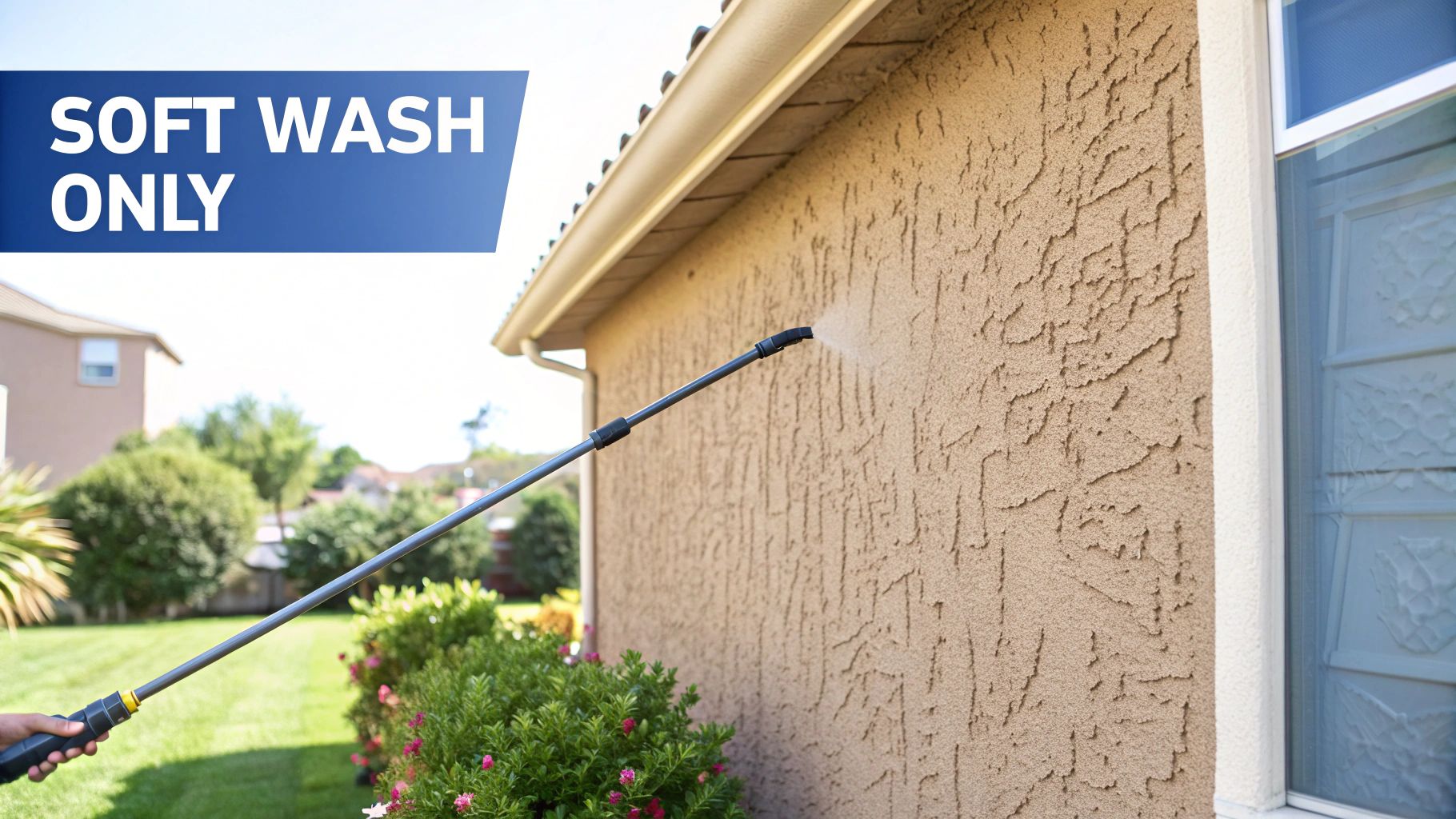
Many homeowners in Phoenix and Scottsdale see those layers of haboob dust and think a pressure washer is the only answer. But stucco isn't like your concrete driveway; it's a porous, cement-based siding that needs a much more delicate touch. Using high-pressure water on it is like taking a hammer to clean glass—it's just the wrong tool for the job and often ends in disaster.
Instead of relying on brute force, experienced technicians use a method called soft washing. This technique uses very low pressure, similar to a regular garden hose, but combines it with specialized, eco-friendly cleaning solutions. It’s the detergents that do all the heavy lifting, breaking down the dirt, dust, and algae, which can then be gently rinsed away.
Soft washing is the industry standard for cleaning delicate surfaces like stucco because it cleans deeply without the risk of causing permanent damage. It gets to the root cause of the grime, rather than just blasting the surface layer off.
A Quick Comparison of Methods
For anyone thinking about their options, it’s crucial to understand the real differences between these cleaning approaches. A typical DIY attempt often lands in a dangerous middle ground—you rent powerful equipment without the proper training, and that can quickly lead to expensive repairs. Choosing the right method is the first and most important step in protecting your home's exterior while boosting its curb appeal safely.
To make it easier, we've put together a simple table to help you see the differences at a glance.
Stucco Cleaning Methods At a Glance
Here’s a simple breakdown of the most common methods, their pressure levels, and where they fit in. This should help clarify why we always lean towards the gentlest approach for stucco.
| Method | Pressure (PSI) | Risk Level | Best For |
|---|---|---|---|
| High-Pressure Washing | 2000+ PSI | High | Hard surfaces like concrete driveways; not recommended for stucco. |
| Soft Washing | Under 500 PSI | Low | Safely cleaning stucco, vinyl siding, and painted surfaces. |
| Typical DIY Attempt | 1200–2000 PSI | Very High | High risk of chipping stucco, stripping paint, and forcing water intrusion. |
As you can see, the pressure levels make all the difference. While a DIY rental might seem like a good idea, the equipment is often too powerful for stucco and can cause more harm than good in inexperienced hands.
Why Your Stucco Needs a Gentle Touch

Before you even think about how to clean your stucco, you need to understand what you're dealing with. Stucco isn't just a thick coat of paint; it's a specific mix of cement, sand, and lime that forms a hard but surprisingly porous shell. We like to think of it as a tough sponge—it can soak up water, which is exactly why blasting it with a high-pressure stream is a recipe for disaster.
Here in Phoenix, Scottsdale, and all over Arizona, stucco is king for its durability and amazing insulating properties. It's a huge part of the exterior finishes market, which was valued globally between $11.94 billion to $13.55 billion in 2024. Residential homes like ours make up more than half of that. If you're interested in the market data, Grand View Research has some detailed reports.
The Impact of Arizona's Climate
Living in places like Paradise Valley or Gilbert means your stucco is in a constant battle with our intense desert sun. Year after year of that UV exposure literally bakes the material, making it brittle and prone to hairline cracks. These tiny fractures might look like nothing, but they're the perfect entry points for a high-pressure jet of water to cause some serious damage.
When you hit a brittle stucco wall with too much force, you can easily chip the surface, knock off whole chunks, and force water deep into those hidden cracks. Once moisture gets trapped, you're looking at much bigger problems down the road, like mold growth and even damage to your home’s frame.
The whole point of cleaning is to wash away surface dirt, not to see how much of your siding you can blast off. A gentle approach respects the material and keeps small cleaning jobs from turning into major, expensive repairs.
Different Finishes Mean Different Risks
Not all stucco is created equal. The specific finish on your home plays a huge role in how it needs to be cleaned. Around the Valley, you'll see a few common styles:
- Dash Finish: This is that super rough, gravelly texture. It looks tough, but high pressure can easily blast the aggregate right off the wall.
- Lace and Skip Trowel: A very common Southwestern style with a varied texture. A powerful, direct spray will clean it unevenly and can easily cause damage.
- Smooth Finish: While it seems like the most durable, a smooth stucco finish is notorious for showing "etching" or wand marks from a pressure washer. Those marks are permanent scars.
Each of these finishes has its own weak spots. Knowing what you have is the first step in figuring out the best way to clean your house exterior. Aggressive, one-size-fits-all cleaning just doesn't work for stucco. A professional, gentle wash, on the other hand, is tailored to your home’s specific finish and condition, giving you a clean result without the damage.
Introducing Soft Washing: The Pro-Grade Solution
If blasting your stucco with high pressure is the wrong move, what's the right one? The answer is a technique we rely on every single day here at South Mountain Window Cleaning: soft washing. It's the industry's secret for getting a deep, long-lasting clean without destroying your home's exterior.
Soft washing completely flips the script on exterior cleaning. Instead of using raw, brute force to strip away dirt, it uses specialized, eco-friendly cleaning solutions to do the heavy lifting. Think of it as a low-pressure method that relies on smart chemistry, not sheer power.
How Soft Washing Works
The process is fundamentally different and much safer for delicate surfaces like stucco. It all starts with applying carefully chosen detergents that soak into the porous surface of the stucco. These aren't just soaps; they're designed to break down the molecular bonds of dirt, dissolve that stubborn haboob dust, and—most importantly—kill organic growth like mold and algae right at the root.
After the cleaning agents have had a few minutes to work their magic, we gently rinse everything away with a low-pressure stream of water. We’re often talking about pressure that’s no stronger than what you'd get from a regular garden hose. This means no chipping, no cracking, and zero risk of forcing water into hidden crevices where it can cause rot and serious structural damage.
Soft washing is all about working smarter, not harder. It gets to the cause of the grime, like algae and mildew, giving you a clean that lasts way longer than a surface-level blast from a pressure washer.
High Pressure vs. Soft Wash: A Clear Winner for Stucco
The difference between soft washing and traditional high-pressure washing couldn't be more obvious. High pressure just shears off the top layer of dirt and organic growth, often leaving the roots behind to grow back almost immediately. It’s a temporary fix that can easily cause permanent damage.
Soft washing, on the other hand, is about protecting your investment. It ensures the unique texture and color of your stucco stay intact while delivering a uniform, deep clean. For a more detailed look into this method, you can learn more about what soft wash house cleaning entails in our comprehensive guide.
The equipment we use reflects this smarter approach. The entire industry has seen a massive shift toward tools that offer more control. In fact, the electric pressure washer market alone was valued at USD 1.08 billion in 2024, a trend driven by homeowners demanding safer, more effective cleaning solutions. This just proves there's a growing understanding that precision and control beat raw power every time. You can see more insights about this market shift on gminsights.com.
Ultimately, when you ask, "can you pressure wash stucco," the professional answer is to choose the method that cleans without destroying. For homes in Phoenix, Scottsdale, and across the Valley, soft washing is the definitive, pro-grade solution.
A Practical Guide to Cleaning Stucco Safely
If you’re set on cleaning your stucco yourself, you absolutely have to approach it with the right technique. This isn't a quick Saturday morning chore. It’s more like a careful restoration project where patience and low pressure are your best friends. The whole point is to clean the surface, not create a bunch of costly repairs down the road.
Before you even think about renting a pressure washer, do a thorough walk-around of your home. Get up close and inspect the stucco. You’re looking for hairline cracks, any crumbling sections, or spots where the finish feels soft or chalky. Hitting those weak areas with a high-pressure stream of water is a guaranteed way to make them worse and force moisture right behind the wall.
Choosing the Right Tools for the Job
Your equipment choices will make or break this project. Don't just grab the most powerful pressure washer you can find; you need one that has adjustable pressure settings. For stucco, you should never go above 1,200 to 1,500 PSI. Anything higher risks etching, chipping, or straight-up blasting chunks off the surface.
The nozzles are just as important. Seriously, using the wrong tip is one of the fastest ways to cause damage you can't undo.
- Avoid the Red Nozzle (0-degree): This thing creates a pinpoint jet of water that will drill a hole right into your stucco. It has no business being used on any kind of siding, ever.
- Use Wide-Angle Nozzles: Start with the white (40-degree) or green (25-degree) nozzle. These spread the water out over a wider, gentler area, which is exactly what stucco needs.
Your cleaning solution is the final piece of the puzzle. Plain water isn't going to cut through the layers of Arizona dust or kill the mildew that can pop up. You'll want to find a mild, biodegradable detergent made specifically for house washing. This will help you avoid staining or damaging the delicate stucco finish.
Mastering the Correct Cleaning Technique
Alright, once you're geared up and ready to go, remember that technique is everything.
Start by pre-wetting a large section of the stucco with plain water. This helps the cleaning solution go on more evenly and prevents it from drying too fast in the sun. Next, apply your detergent mix, working from the bottom up. This simple trick prevents clean streaks from forming as the solution runs down the wall.
Now, let the solution sit for about 5-10 minutes. This "dwell time" is what does the heavy lifting, breaking down all the dirt and grime.
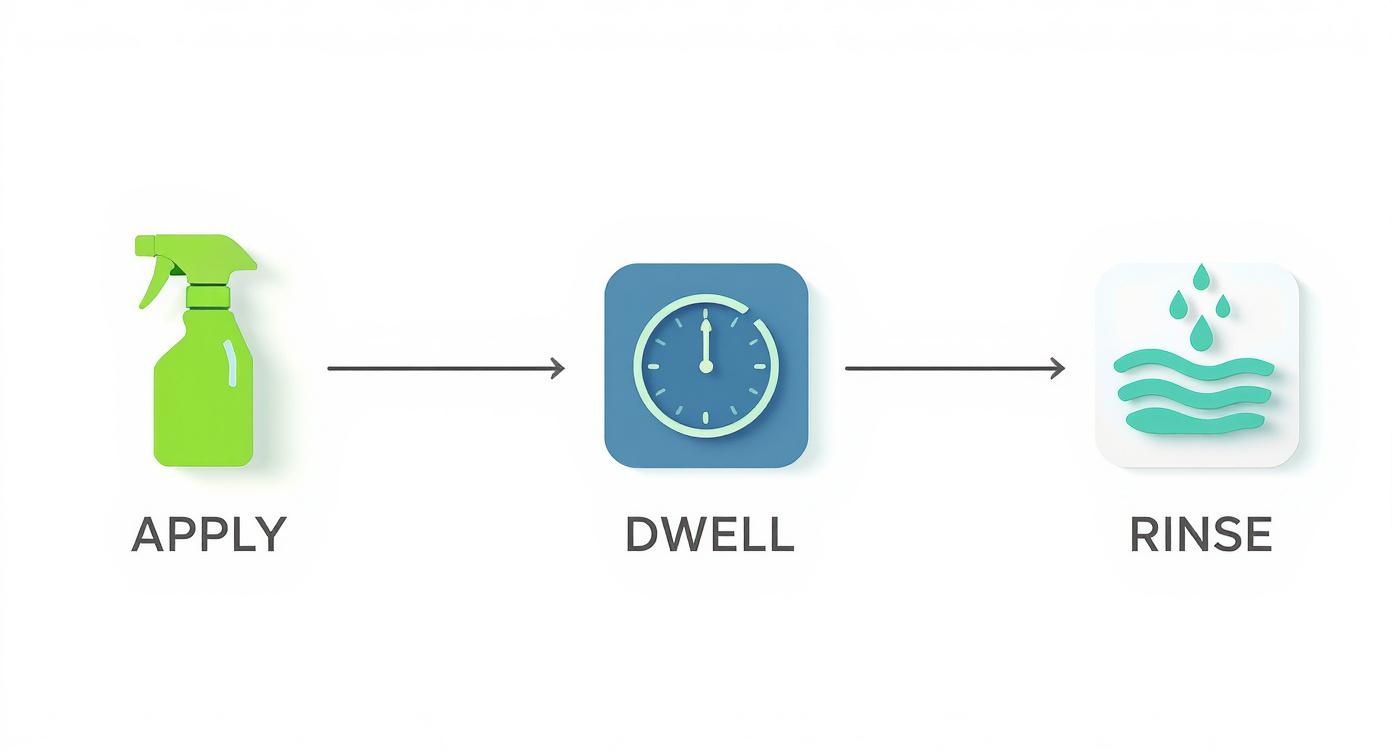
This graphic really shows that the cleaning power comes from the solution and giving it time to work, not from brute force.
When you're ready to rinse, switch your direction and work from the top down. Keep a consistent distance of at least 18 to 24 inches between the nozzle and the wall. Use smooth, sweeping motions like you're spray painting. Never, ever hold the wand still in one spot—that's how you get permanent marks or "etching" on the stucco.
Critical Warning: Never spray upward at an angle into soffits, vents, or under the edges of your windows. This is a classic DIY mistake that forces water behind the stucco, leading to hidden moisture, mold, and even rot.
Following these cautious steps is the only safe way to tackle a DIY stucco cleaning. For a more comprehensive look at exterior cleaning, our complete guide on how to pressure wash a house safely has even more tips to help protect your entire home.
When to Call a Professional Instead of DIY
We get it, the DIY spirit is strong. Tackling a home project on your own can be really satisfying. But when it comes to pressure washing stucco, knowing when to call in a professional is the smartest move you can make to protect your home’s value.
This isn't just about getting a better clean. Using a high-pressure washer on compromised stucco is a recipe for disaster. What starts as a weekend project can quickly turn into a nightmare of costly repairs. Certain warning signs are your cue to put down the rental equipment and call in someone who does this for a living.
If your stucco already has some damage, you’re gambling with your home's integrity. Even small issues can hint at much bigger problems hiding just under the surface. Blasting these spots with water is one of the fastest ways to force moisture behind the exterior, leading to wood rot, stubborn mold growth, and even structural damage.
Red Flags That Demand Professional Attention
Before you even think about pulling the trigger on a pressure washer, take a slow walk around your home and give the exterior a thorough inspection. If you spot any of these warning signs, it’s a clear signal to call a professional cleaning service that really understands stucco.
- Visible Cracks: Don't dismiss those hairline cracks. They might look minor, but they’re open doors for water to get in. A pro knows how to clean these areas gently without making a small crack a huge problem.
- Crumbling or Soft Spots: Go ahead and touch it. If any part of your stucco feels chalky, soft, or crumbles under your fingers, it’s far too fragile to handle any amount of water pressure.
- Significant Mold or Algae: Widespread dark streaks or green patches aren't just ugly. They often point to a deeper moisture issue that a simple surface spray won't solve.
- Previous Patch Jobs: Can you see where old repairs were made? Mismatched textures or colors often signal weak points. An experienced cleaner will know to assess these patches carefully to ensure a safe, uniform clean.
Trying to pressure wash a home with these issues is like putting a bandage on a broken arm—it ignores the real problem and will almost certainly make things worse. This is where investing in a professional service really pays for itself.
Choosing the Right Pro in the Phoenix Area
Once you decide to hire an expert, don’t just pick the first name you find. You need a team with real, hands-on experience cleaning stucco in our unique Arizona climate. Understanding the different local power washing services available can also help you make a more informed choice.
Look for a company like South Mountain Window Cleaning that is fully licensed and insured. Insurance is absolutely non-negotiable—it protects you from liability if anything goes wrong. Ask them about their experience with soft washing; if they know what they’re talking about, it proves they understand stucco is delicate.
A true professional will walk you through their entire process and give you a clear, detailed quote. For more tips on what to look for, check out our guide on why you should hire a professional to pressure wash your property.
Common Questions About Cleaning Stucco
After walking homeowners through the process, a few key questions always seem to come up. People want to know the specifics for their home here in Phoenix, Scottsdale, or elsewhere in the Valley. To wrap things up, here are some quick answers to the most common questions we get.
How Often Should I Clean My Stucco Home in Arizona?
Living in our dry, dusty environment means grime, dust, and pollutants build up faster than in other parts of the country. For most homes around here, we recommend a professional soft wash every 1 to 3 years.
If your house sits in a shadier spot or has a lot of landscaping right up against the walls, you'll probably see algae or mildew pop up. In that situation, an annual cleaning is a smart investment. It stops that organic growth in its tracks before it can cause permanent stains or damage your stucco finish.
Will Pressure Washing Strip the Paint from My Stucco?
Absolutely. Hitting your stucco with high-pressure water is one of the fastest ways to blast the paint right off, especially if the paint job is a few years old or wasn't prepped perfectly. It’s a costly mistake we see people make all the time when they try to DIY it.
This is precisely why soft washing is the only method we trust. It uses pressure that’s about as gentle as a garden hose, letting the cleaning solutions do the heavy lifting. This technique is completely safe for painted stucco—no chipping, no peeling, just a clean finish.
A professional cleaning shouldn't force you into an unexpected paint job. The right technique cleans the surface without damaging the paint, saving you time, money, and a major headache.
Can I Just Use a Garden Hose and Brush on My Stucco?
You might be tempted to tackle a small spot with a garden hose and a soft brush, and for a very fresh, minor stain, it might work. But for cleaning an entire house? It's just not practical. It’s an incredible amount of work and rarely gets rid of the deep-seated dirt, algae, or stubborn mildew stains that love our shaded corners.
Worse, you run a real risk of damaging the delicate texture of your stucco if you scrub too hard, leaving behind ugly scuff marks. For a truly deep, uniform clean that actually kills the algae and mildew at its root without harming the surface, a professional soft wash is really the only way to go.
Ready to see your stucco home look its best without risking any damage? The team at South Mountain Window Cleaning specializes in safe, effective soft washing for homes all over Phoenix and the surrounding areas. Schedule your free, no-obligation quote online today!