
Here’s the thing about getting a professional, crystal-clear finish on your windows: it’s way easier than you think. It's not about some secret formula or complicated process. Those frustrating streaks and smudges that show up after all your hard work? They usually come down to a few simple mistakes, especially out here under the intense Arizona sun.
For anyone trying to clean windows in Phoenix, Scottsdale, or anywhere in the valley, the heat is your biggest enemy. Direct sunlight can make your cleaning solution evaporate in seconds, leaving behind all the soap and mineral gunk before you even have a chance to wipe it off. This is the exact problem we’re going to solve.
The secret to a streak-free shine is just this: get the dirt and the cleaning solution completely off the glass before it dries. That’s it. It’s why the technique you use is so much more important than the brand of cleaner you buy.
At South Mountain Window Cleaning, we provide residential, commercial, and high-rise window washing services across Phoenix and the surrounding areas. We're going to walk through the exact, practical methods we use every single day. Let’s break it down so you can nail that perfect shine every time.
Why Do Streaks Happen in the First Place?
First, you have to know what you’re up against. Streaks are simply leftover residue. If you know where that residue is coming from, you can stop it before it starts.
Here are the usual suspects:
- Rapid Evaporation: That classic Arizona problem. The sun in places like Tempe and Gilbert literally bakes the cleaner onto your windows before you can squeegee it away.
- Too Much Soap: A common mistake is thinking more soap means more cleaning power. It doesn't. It just leaves behind a sticky, soapy film that dries into a hazy mess. A tiny bit is all you need.
- Dirty Tools: If you’re using dirty water or a grimy rag, you're not cleaning—you're just pushing dirt around.
- Hard Water: Our tap water in Arizona is loaded with minerals. When that water evaporates, it leaves behind ugly white spots and streaks.
Tackle these core issues, and you'll go from fighting streaks to preventing them altogether. The rest of this guide will give you real, actionable steps built for the unique challenges we face here in the Phoenix area, making sure your hard work pays off with a perfectly clear view.
Assembling Your Professional Window Cleaning Toolkit
If you want truly streak-free windows, you need to start thinking like a professional. The first step is ditching the paper towels and that bottle of all-purpose spray. Seriously. They're notorious for creating static that attracts more dust, and they often leave behind lint and a sticky chemical film.
Building a proper window cleaning kit is a small, one-time investment that will pay for itself over and over again with every crystal-clear pane you clean.
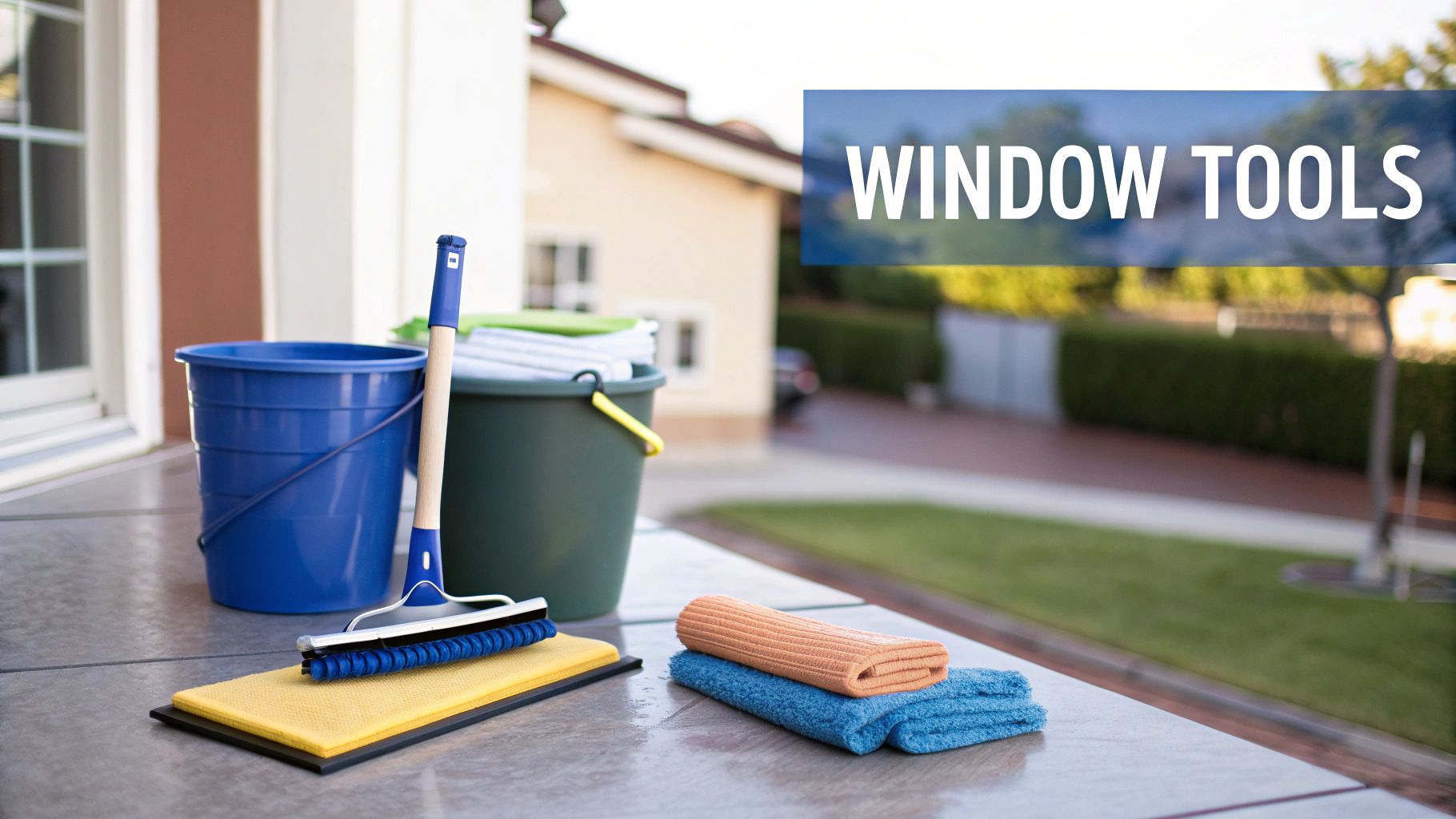
The single most important tool in your arsenal is a high-quality squeegee. This is not the place to cut corners. Look for one with a sharp, replaceable rubber blade. In our professional experience at South Mountain Window Cleaning, rubber offers much better flexibility and gives a cleaner sweep than silicone, especially on hot Arizona glass. Make sure the handle is comfortable and the size is practical—a 10-to-14-inch squeegee is the sweet spot for most residential windows.
Beyond the Squeegee: Essential Gear
While the squeegee gets all the glory, a few other items are absolutely non-negotiable for a professional result. These supporting players make sure you're actually removing dirt, not just pushing it around the glass.
-
A Strip Applicator (or T-Bar Scrubber): This looks like a squeegee covered in a thick, absorbent microfiber sleeve. Its job is to apply your cleaning solution and scrub away all the grime, bird droppings, and caked-on dust. It holds a lot of soapy water, letting you get the entire glass surface perfectly prepped.
-
High-Quality Microfiber Cloths: You'll need a small stack of these. Use one for wiping down dusty frames and sills before you start, and keep a couple of fresh, clean ones handy for detailing the corners and edges after you squeegee. Unlike paper towels, microfiber grabs water without leaving any lint behind.
-
Two Buckets: This is a simple but critical pro secret. One bucket is for your soapy cleaning solution, and the other holds clean rinse water for your T-bar. This two-bucket method is the key to preventing you from reapplying gritty, dirty water back onto the glass, which is one of the biggest causes of streaks.
Remember, the whole point is to remove contaminants from the glass completely. If your tools are dirty, you're just moving grime from your bucket back to the window. Clean tools are the foundation of a streak-free finish.
Upgrading Your Toolkit for Arizona Conditions
Living in Phoenix, Gilbert, or Chandler throws some unique challenges our way, namely fine dust and intense, baking sun. A great addition to your kit is a small scraper with a sharp, fresh blade. It’s invaluable for carefully lifting off stubborn paint flecks or stuck-on gunk without scratching the glass.
We’d also recommend a sturdy five-gallon bucket over a small household one. It’s less likely to tip over and holds more than enough water to tackle a whole side of the house. For a deeper dive into the specific brands and equipment that can really stand up to our desert climate, check out our detailed guide on what professional window cleaners use.
Getting the right gear is the first real step toward transforming your windows from smudged and dusty to perfectly transparent. With these tools in hand, you’re ready to clean with confidence.
Mixing the Perfect Window Cleaning Solution
You might think a flawless, streak-free finish comes from some expensive, secret formula. The truth? The best way to get your windows sparkling often starts with a surprisingly simple solution you can mix up right in your own kitchen. While the global window cleaners market hit a staggering USD 2.68 billion in 2023, many seasoned pros, including our teams at South Mountain Window Cleaning, still rely on a basic, powerful mix that cuts through grime without leaving that sticky film behind.
So, what's the secret weapon? Just plain water and a few drops of a high-quality liquid dish soap. That’s it. A good dish soap is engineered to cut through grease and oils, which is exactly what you need to break down everything from fingerprints to kitchen splatter. The real key, though, is to use it sparingly. Going overboard with the soap is one of the most common reasons people end up with streaks.
Tackling Phoenix’s Hard Water Problem
If you're cleaning windows in Chandler, Tempe, or anywhere else across the Valley, you know our hard water is a huge headache. The tap water here is loaded with minerals like calcium and magnesium. When that water evaporates under the intense Arizona sun, it leaves behind those chalky, white mineral deposits that are impossible to miss.
This is where one simple change makes all the difference: use distilled water instead of tap water for your cleaning solution.
Distilled water is basically pure H2O. All the minerals and junk have been removed. When it dries, it leaves absolutely nothing behind, giving you a massive advantage in the fight for a spotless, mineral-free shine.
DIY Solutions The Pros Actually Use
Forget all those complicated recipes you see online. The most effective homemade window cleaning solution is also the easiest one to make.
-
The Classic Pro Mix: Just add a few drops of a good degreasing dish soap (think half a teaspoon) to a gallon of distilled water. Give it a gentle stir—you don't want to create a bubble bath. This simple mix has just enough "slip" for your squeegee to glide smoothly and enough cleaning power to lift dirt without leaving any residue.
-
The Vinegar Question: You’ll often hear white vinegar recommended for its ability to cut through mineral deposits. While it can work, it's also acidic. Over time, that acid can potentially damage the seals around your windows or even certain types of frames. If you decide to try it, dilute it heavily (one part vinegar to ten parts water) and be careful. Honestly, for most regular cleanings, the simple soap solution is safer and just as effective.
Let's take a quick look at how these options stack up.
Comparing DIY and Commercial Window Cleaning Solutions
Choosing between mixing your own solution and grabbing a bottle off the shelf can be tricky. Each has its place depending on the job, your budget, and what you're trying to clean. This table breaks down the key differences.
| Solution Type | Key Ingredients | Best For | Pros | Cons |
|---|---|---|---|---|
| DIY Soap & Water | Distilled water, degreasing dish soap | Routine interior and exterior cleaning; general grime and dust. | Extremely cost-effective, readily available ingredients, no harsh chemicals. | Can leave streaks if too much soap is used; less effective on severe buildup. |
| DIY Vinegar Mix | Distilled water, white vinegar | Removing hard water spots and mineral deposits. | Natural and inexpensive; effective at dissolving mineral stains. | Can damage window seals/frames over time; strong odor; not a great degreaser. |
| Commercial Cleaner | Isopropyl alcohol, ammonia, surfactants, dyes. | Heavily soiled windows, greasy films, or when convenience is key. | Very effective and fast-drying; formulated to prevent streaks. | More expensive; can contain harsh chemicals and strong fumes. |
Ultimately, the goal is always the same: lift the dirt and then get the solution completely off the glass. While many top commercial formulas use ingredients like isopropyl alcohol to help with evaporation, using 99.9% pure distilled water is a pro DIY trick that tackles the root of our local problem—the minerals in our tap water. It's the cornerstone of any effective homemade solution here in Arizona. You can discover more insights about the window cleaner market to see what goes into the commercial stuff.
Mastering Professional Squeegee Techniques
Once you've mixed your solution, it's time to get into the real art of achieving streak-free windows. A squeegee is a pro's most trusted tool, but it's the technique—not the tool itself—that delivers that invisible glass finish. Using it the right way transforms a frustrating chore into a deeply satisfying process.
The secret is all about maintaining constant, even pressure. You want the rubber blade to glide smoothly across the surface, pulling all the dirty water down with it in one clean sweep. The angle is critical here. Aim for about a 30 to 45-degree angle between the blade and the glass. If it's too steep, the blade will chatter and skip. Too shallow, and you'll just be pushing water around instead of removing it.
The Two Core Squeegee Methods
Your approach will depend on the size of the window you're tackling. For most standard windows in a home, a simple top-down method is perfect. But for those big picture windows, you'll need a more advanced technique to avoid leaving ugly lines right in the middle of your view.
- The Top-to-Bottom Pull: This is your go-to for smaller or vertically divided panes. Start at a top corner, pull the squeegee straight down in one smooth, continuous motion. Then, wipe the blade clean with a microfiber cloth before you start the next pull.
- The 'S' Pattern (or Fan Method): This is the signature move you see the pros use, and it's the absolute key to cleaning large glass surfaces without a single streak. It involves moving the squeegee back and forth across the glass in a fluid "S" motion, working your way from top to bottom.
No matter which technique you use, the goal is to make sure every stroke slightly overlaps the previous one by about an inch. This overlap is crucial because it picks up the water left behind by the edge of your last pass, which is what prevents those vertical streaks from forming.
Cutting the Edge for a Flawless Finish
Here’s a small step that makes a huge difference: preparing the window for your first pass. Before you start pulling the squeegee, take a microfiber cloth and wipe a clean, one-inch strip down one side of the window (the side where you plan to start). This is what we call "cutting the edge."
This little dry strip gives your squeegee a perfect place to start without leaving a thick line of dirty water against the frame. That water would otherwise just seep back onto your clean glass and create drips. And don't forget to wipe your squeegee blade with a clean, dry cloth after every single pass. It’s a tiny detail, but it stops you from dragging dirt right back onto the window.
This handy visual shows just how simple it is to prepare an effective DIY window cleaner before you start practicing your technique.
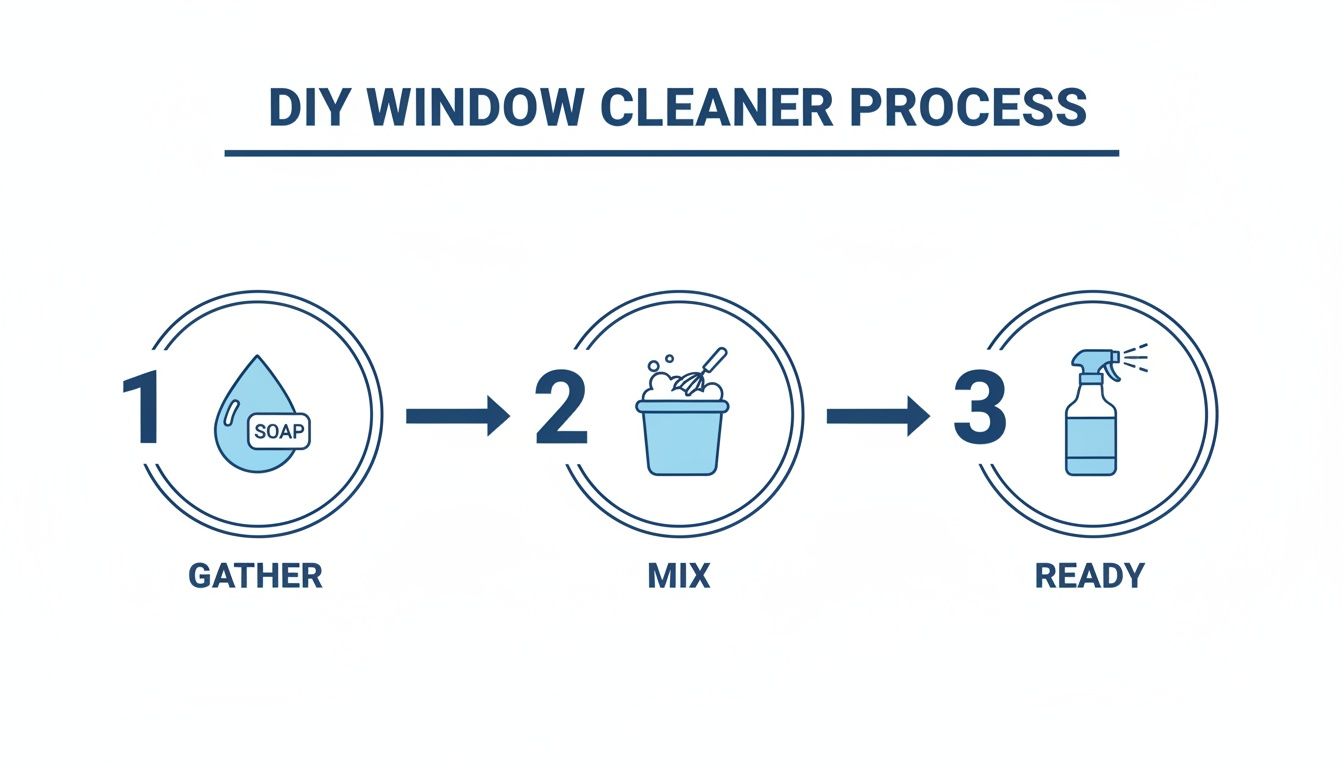
As the infographic shows, the best cleaning solutions are often the simplest ones, which lets you focus your energy on what really matters: perfecting your squeegee method. Mastering these professional moves is what truly separates an amateur job from a pristine result. For an even deeper dive into these methods, check out our complete guide on how to clean windows like a pro.
Troubleshooting Common Window Cleaning Problems
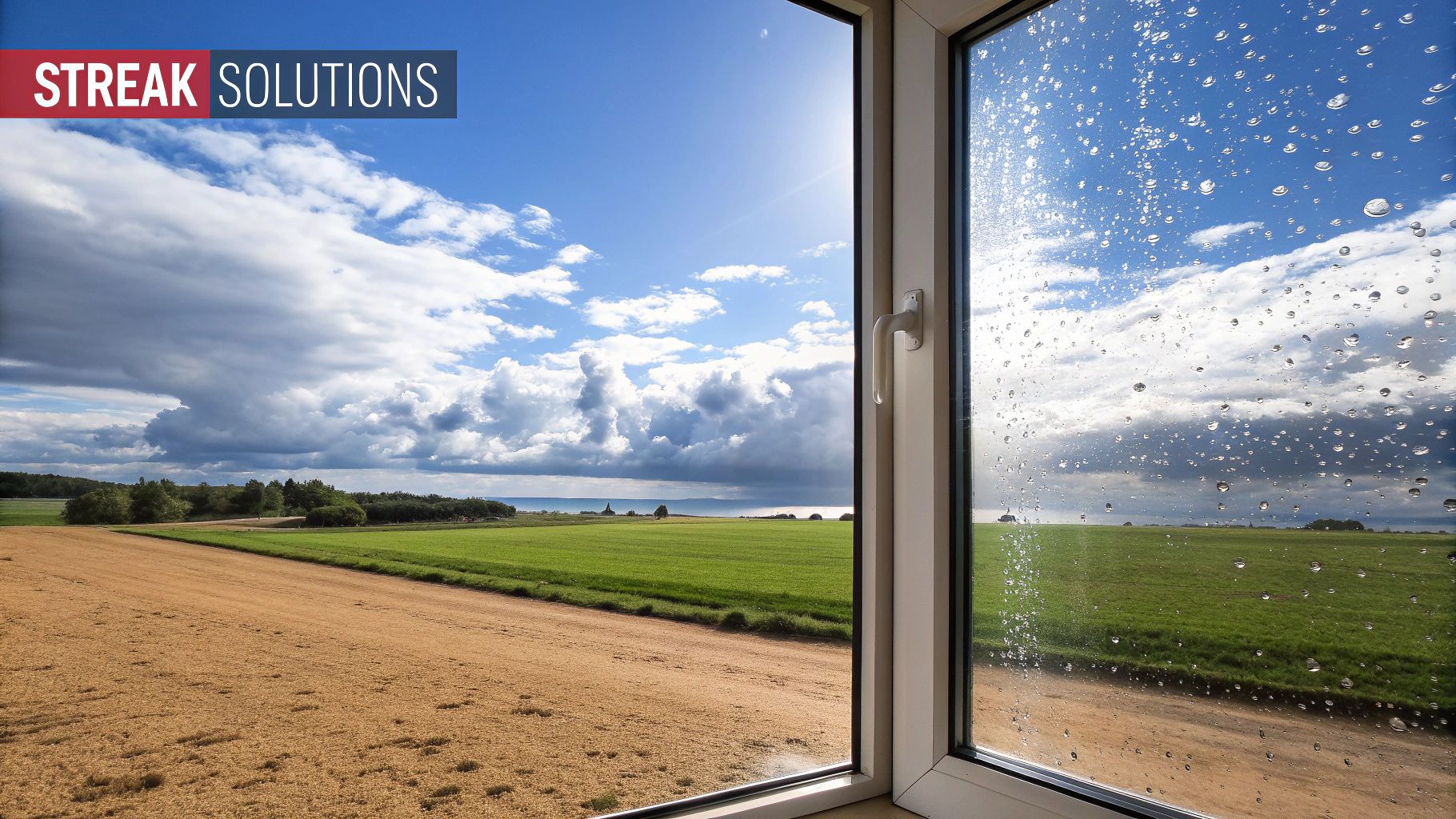
Even when you follow all the right steps, some frustrating problems can pop up. Knowing how to handle these common roadblocks is what really separates an amateur from a pro, making sure you get that perfect shine no matter what your windows throw at you.
One of the biggest complaints we hear, especially from homeowners in Gilbert and Scottsdale, is about tough hard water stains. Those milky-white mineral spots are left behind by our local water and can feel impossible to get off with just a regular wash. They need a more specific game plan.
The secret to stubborn spots is targeted treatment. You wouldn't use a pressure washer on a fine painting, right? It's the same idea here—you need the right tool for specific blemishes like hard water stains or paint overspray.
For light or medium hard water buildup, a specialized cleaner made to dissolve mineral deposits is your best bet. If you're dealing with more severe cases, you can gently use a piece of #0000 steel wool on the wet, soapy glass to buff the stains away without scratching. We have a complete guide that walks you through this in more detail on how to remove hard water stains from windows.
Handling Pesky Residues and Grime
Besides hard water, you might run into other sticky situations that mess up your streak-free finish. Each one requires a slightly different trick to solve without damaging the glass.
- Paint Overspray: A fresh plastic razor blade is perfect for this. Just hold it at a low angle on wet, soapy glass and you can carefully lift off those little paint specks.
- Sticker Adhesive: After you peel off a sticker, that gummy residue left behind is a magnet for dirt. Dab a little rubbing alcohol or a citrus-based cleaner on a microfiber cloth and gently rub the spot until it dissolves.
- Dirty Window Tracks: Don't forget the tracks! Use a vacuum with a crevice tool to get the loose dirt out first. Then, spray with your cleaning solution and use an old toothbrush to scrub away the built-up grime.
Avoiding Streaks from the Sun
One of the biggest reasons for streaks is cleaning in direct sunlight, which is pretty much a constant issue here in the Phoenix area. When the sun beats down on the glass, it heats up and makes your cleaning solution evaporate almost instantly. This leaves behind a streaky film before you even have a chance to squeegee it off.
While technology is getting better—the robotic window cleaner market is expected to grow by USD 4.34 billion between 2025-2029—even bots with 98% dirt detection accuracy can't beat basic physics. The old-school professional wisdom still holds true: UV rays can cause up to 75% of streaks by flash-drying your solution.
The easy fix? Clean early in the morning, late in the evening, or on an overcast day. You can learn more about trends in automated cleaning technology and see for yourself why human experience still makes all the difference.
When to Call a Professional Window Cleaner
While getting that perfect streak-free shine on your own is incredibly satisfying, some jobs are just better, safer, and faster when you call in a pro. Knowing when to put down the squeegee and pick up the phone can save you a ton of time, prevent accidental damage, and most importantly, keep you safely on the ground.
One of the biggest red flags? Height. If your home has second or third-story windows, or even just vaulted ceilings with those hard-to-reach panes, safety becomes the number one concern. Teetering on a wobbly ladder while trying to pull off a perfect squeegee stroke is a recipe for disaster. Professional crews like ours have the right training, insurance, and safety gear to handle these jobs without any risk.
Challenges Best Left to the Experts
Beyond just tall windows, certain homes and conditions here in Scottsdale and Paradise Valley present some unique challenges. Hiring a professional service is a smart move when you're up against any of these.
- Large or Complicated Properties: Cleaning every single window on a big home can eat up your entire weekend. A professional team can often knock out the same job in just a few hours.
- Specialized Glass: If you have tinted, coated, or older historic glass, using the wrong solution or technique could cause permanent damage. Experts know exactly what to use.
- Stubborn Buildup: Windows that haven't been touched in years often have serious hard water stains or leftover construction debris that a simple DIY wash won't even begin to fix.
The real game-changer with a professional service isn't just their technique; it's the specialized equipment they bring. Companies like South Mountain Window Cleaning use pure water-fed pole systems that can safely reach high windows from the ground, leaving a spotless finish that’s almost impossible to get on your own.
These advanced systems use deionized water, which acts like a magnet for dirt and grime. It’s not only the safest way to clean high windows but also ensures a truly streak-free result. The finish even tends to last longer because there's no sticky soap residue left behind to attract new dust. This is especially critical after a remodel; you can find out more about why a professional is a must for managing your post-construction window cleanup in our other guide.
To stay focused on delivering top-notch service, pros often use expert tips to block spam calls, which keeps their lines clear for customers like you. When you hire a professional, you’re not just paying for clean windows—you’re investing in their expertise, their efficiency, and their total focus on getting a flawless result.
Common Window Cleaning Questions We Hear All the Time
Even when you have the right tools and a solid game plan, a few tricky situations can pop up. We get calls and questions from homeowners all over the Phoenix area, so we’ve put together some straight-up answers to the problems we hear about most.
Why Are My Windows Still Streaky After I Squeegee Them?
This is, without a doubt, the number one frustration we hear about. If you’re left with streaks, it almost always boils down to one of three things, especially here in the Arizona sun.
The most common reason is your cleaning solution drying too fast on the hot glass. You have to work out of direct sunlight. Try tackling your windows first thing in the morning, later in the evening, or save the job for a rare overcast day.
Another big one is a dirty or worn-out squeegee blade. You absolutely have to wipe the rubber blade clean with a microfiber cloth after every single pass. If that blade has tiny nicks or has gone hard and brittle, it can't form a perfect seal, leaving behind those annoying little lines of dirty water.
Lastly, going overboard with the soap is a guaranteed recipe for a hazy film. A few drops in a gallon of water is really all you need. Any more than that and you're just creating residue.
Is It Really Okay to Just Use Dish Soap and Water?
Yes, absolutely. To be honest, it’s what our professional crews at South Mountain Window Cleaning use on most residential and commercial jobs. A good quality liquid dish soap is a fantastic degreaser that's made to cut through oils and everyday grime.
Just make sure you grab a simple formula. You want to avoid anything with added lotions, moisturizers, or fancy scents, as those extras are what can leave a film on the glass.
This simple mix is so effective because it gives you just enough "slip" for the squeegee to glide perfectly, but it still has the power to lift away all the dirt. It’s hands-down the most reliable and budget-friendly way to get that perfect, streak-free clean on your windows.
What’s the Best Way to Clean the Screens and Tracks?
You can do a perfect job on the glass, but if you skip the screens and tracks, the whole job feels incomplete. Plus, a dirty screen will just blow a fresh layer of dust right back onto your clean window the next time the wind picks up.
Here’s how we handle them:
- For the Screens: Pop them out carefully and lay them down on a clean, flat spot like your driveway. Use a soft-bristled brush and your soapy water to gently scrub both sides. Give them a good rinse with a hose and let them air dry completely before you put them back in.
- For the Tracks: The first step is to grab a vacuum with a crevice tool and get all the loose dirt, bugs, and dust bunnies out of there. Next, spray a little bit of your cleaning solution in the track and use an old toothbrush to scrub out all the caked-on gunk. A final wipe with a clean microfiber cloth makes them look brand new.
For those high, hard-to-reach windows, or when you just want a flawless finish without all the work, the pros at South Mountain Window Cleaning are ready to step in. Schedule your free, no-obligation quote online and let our team bring that crystal-clear view back to your Phoenix-area home.