
You're staring at an Arizona patio that looked manageable until you noticed how the monsoon dust has settled into the pavers. Irrigation has left rusty shadows across the concrete, and a garden hose barely moves the grime while a scrub brush forces you to work the same square foot over and over. A pressure washer can change that job quickly, but speed isn't the same as control.
The safest approach to cleaning a patio with a pressure washer isn't to chase the highest PSI. It's to match pressure, nozzle angle, distance, detergent, and rinsing technique to the surface in front of you. Concrete usually tolerates more aggressive cleaning than decorative stone, while pavers can lose joint sand or sealant long before the damage looks dramatic. This guide follows the method that works in the field: let chemistry and dwell time loosen the buildup, then use controlled water pressure to remove it.
Why Pressure Washing a Patio Feels So Tricky
A typical Phoenix patio collects several kinds of contamination at once. Windblown dust settles into texture and joints, irrigation can leave mineral or rust-colored marks, and organic buildup darkens shaded areas. A hose may rinse away loose dust, but it doesn't provide the focused force needed to release grime embedded in concrete pores or packed between pavers.
That's why homeowners often move from “one more pass with the brush” to shopping for a stronger machine. The leap feels intimidating because the washer appears simple, yet the spray can damage a surface in seconds when the nozzle is too narrow or the lance is too close.
Practical rule: A pressure washer is a matching tool, not a power contest.
Concrete, sealed pavers, unsealed pavers, sandstone, limestone, and decorative finishes each respond differently. A durable concrete slab generally gives you more room to work, while softer stone can show etching, feathering, or surface loss when the spray concentrates in one place. Sealer adds another variable. A strong jet can remove it unevenly, leaving a patchy appearance and a surface that's more exposed to later staining and weathering, as described in this patio pressure-washing damage guide.
The same technique that looks impressive in a short cleaning video can hollow out joints or strip protective coatings. A zero-degree stream may cut through a stain, but it can also cut into the patio itself. A turbo nozzle can speed work on hard concrete, yet its rotating impact makes it a poor choice for many soft or decorative materials.
For homeowners comparing service types, the distinction between equipment and technique matters. This explanation of the difference between power washing and pressure washing is useful because the label matters less than the actual process, including temperature, detergent, pressure, and surface control. Before pulling the trigger, identify the material, inspect its condition, and decide whether the stain needs water force or chemical help.
Prep the Patio Before You Pull the Trigger
Preparation determines whether dirty water leaves the patio or moves from one section to another. Start by removing furniture, planters, grills, doormats, toys, and loose decorations. Items left in place create shadow lines, trap moisture, and may catch grit or overspray.
Protect nearby glass, painted doors, outdoor outlets, outdoor lighting, and delicate plants with light plastic sheeting where appropriate. Pre-wet vegetation around the work area so detergent that drifts onto leaves is diluted and easier to rinse away. Don't seal plants under plastic in hot sun for longer than necessary.

Remove grit before adding pressure
Dry-sweep or blow loose sand, leaves, seed pods, and gravel from the surface. Pay particular attention to expansion joints, paver gaps, and the edges where walls meet the patio. Loose grit caught in a high-pressure stream behaves like an abrasive and can scratch adjacent finishes or accelerate joint washout.
Mark oil, grease, rust, irrigation stains, and heavy organic spots before wetting the area. Those locations may need a separate treatment and longer dwell time, rather than repeated pressure passes. A quick test in an inconspicuous corner will show whether the surface changes color, sheds coating, or loses joint material.
Drainage deserves the same attention. Identify where runoff will travel, clear nearby drains, and prevent muddy water from flooding a neighbor's yard or carrying detergent into a street drain. The amount of water used depends on the machine and patio condition, so check the washer's flow rate and plan the runoff path before work begins. A flat-surface cleaning service can also help when the patio connects to walkways, driveways, or other areas that make containment more difficult.
Before the first trigger pull, confirm four things:
- The surface is exposed: Furniture and décor are out of the spray zone.
- The surroundings are protected: Glass, doors, plants, and fixtures can tolerate the planned rinse.
- The debris is removed: Loose grit won't be driven across the finish.
- The runoff has somewhere to go: Water won't collect against walls or leave the property uncontrolled.
Matching Pressure, Nozzle, and Distance to Your Surface
PSI describes water pressure, while GPM describes water volume. In practical terms, pressure does the cutting and flow does the rinsing. A machine with impressive PSI but limited flow may break grime loose without moving the slurry efficiently, while higher flow can improve rinsing when the pressure remains appropriate for the material.
The nozzle changes how that force reaches the patio. A narrow fan concentrates energy into a smaller area. A wider fan spreads it across more surface and lowers the chance of leaving stripes or gouges. Distance matters just as much. Moving the nozzle closer increases impact, even when the machine setting hasn't changed.
For durable concrete, concrete-focused guidance commonly places the practical cleaning range around 2,000 to 3,000 PSI with a 25-degree fan nozzle, while older, cracked, or decorative concrete should be treated closer to 1,500 to 2,000 PSI and tested first. The nozzle should generally remain about 6 to 12 inches from the surface, with continuous movement, according to concrete patio pressure-washing guidance.
Use the table as a starting point
| Surface | Pressure (PSI) | Nozzle | Standoff Distance |
|---|---|---|---|
| Durable concrete | 2,000 to 3,000 | 25° fan | 6 to 12 inches |
| Older, cracked, or decorative concrete | 1,500 to 2,000 | 25° or 40° fan | Start farther back and test |
| Pavers | Conservative setting within the material's tolerance | 25° or 40° fan | Wider distance, especially near joints |
| Soft or decorative stone | Lower pressure, often near the low end of the machine | 40° fan | Farther back, with test passes |
A zero-degree nozzle is almost never the right answer for a patio. It places a tiny, intense stream against the surface and can etch concrete, scar stone, or remove joint material. Turbo nozzles trade safety for speed and should be reserved for suitable hard surfaces after testing, not used as a default setting.
Controlled pressure-washing research on brick and concrete found that increasing nozzle pressure from 4,000 to 7,000 PSI produced less than a 10% increase in contaminant removal, while the highest pressures still produced decontamination efficacy of about 50% to 80% with minimal surface degradation under the tested conditions. The practical lesson is simple: after a certain point, more pressure brings diminishing returns. Detergent dwell, nozzle geometry, and even coverage usually matter more.
If the surface begins to fizz, feather, pit, or release joint sand, stop the pass. Back off pressure and increase distance before changing anything else. A similar matching principle applies to power washing decks, where the finish and substrate can react very differently from a solid concrete slab.
The Actual Wash Sequence From Start to Rinse
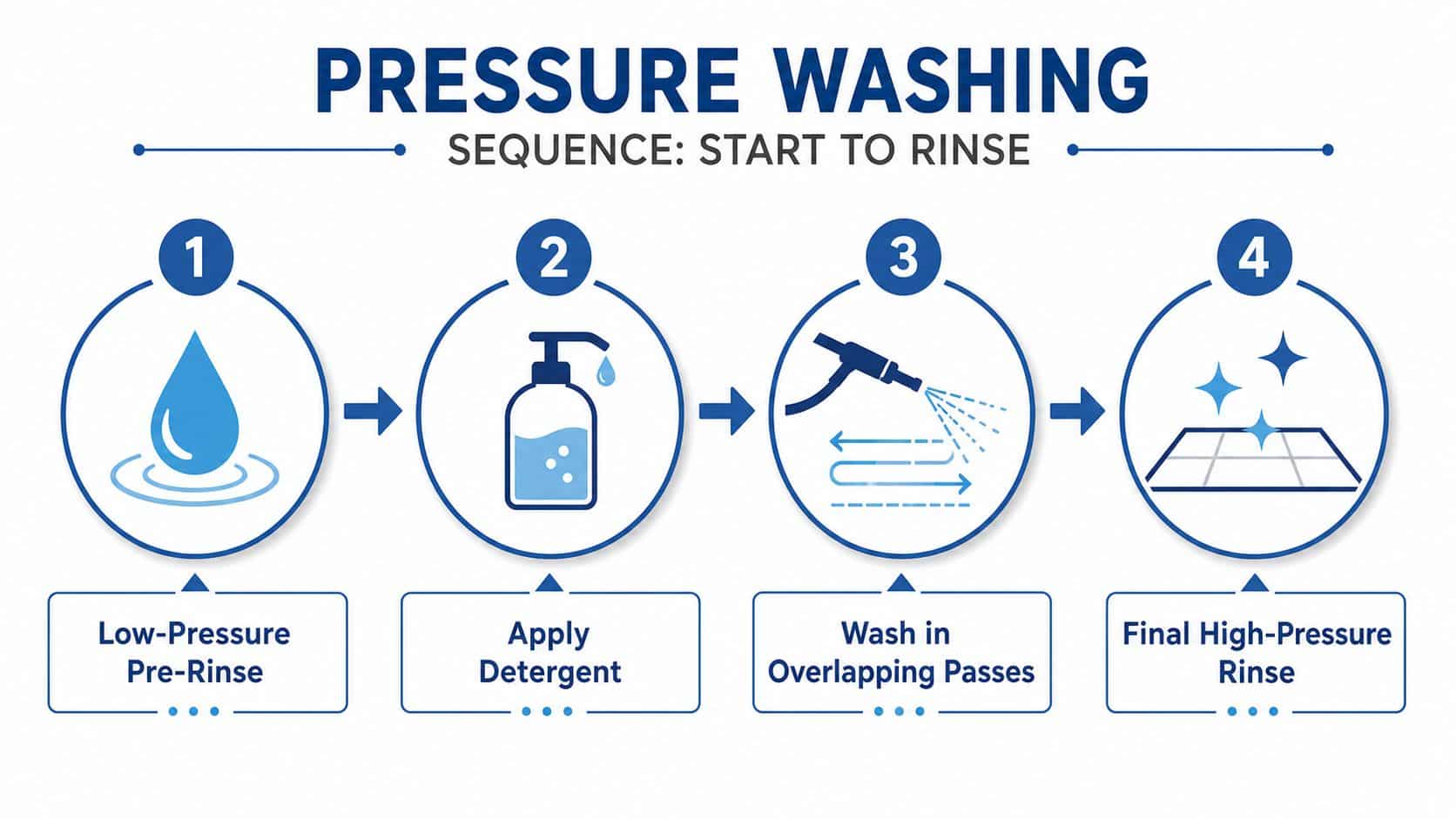
A good pass has a deliberate rhythm. The operator loosens debris, gives the detergent time to work, washes in controlled lanes, and rinses before residue dries. Skipping the dwell stage often leads to the exact mistake homeowners want to avoid, holding the nozzle too close and trying to force a stain away with pressure alone.
Pre-rinse gently. Use low pressure to cool the surface and remove loose dust and grit. Work from the high side toward the drainage route, but don't drive water into open joints or against walls.
Apply detergent. Use the washer's siphon or downstream injector with a 65-degree black nozzle, keeping the lance about two feet from the stone. Apply enough solution to wet the area evenly without creating uncontrolled runoff.
Allow dwell time. Let the detergent work for about five to ten minutes, keeping the surface wet. Re-wet hot spots in direct Arizona sun rather than allowing the chemical to dry into a film.
Wash in overlapping passes. Change to a 25-degree or 40-degree tip. Keep the nozzle about 8 to 12 inches from concrete and slightly farther back over pavers. Move continuously in even strokes, overlapping the fan width so you don't leave stripes.
Rinse with control. Follow the patio's slope and carry dirty water away from clean sections. Use the same disciplined angle and steady motion during the final rinse so detergent residue doesn't haze as it dries.
Sealed and unsealed patios need different handling
On a sealed patio, use a wider fan, avoid dwelling in one spot, and test whether the coating becomes cloudy or patchy. A sealed surface may release dirt easily, so maximum pressure is rarely necessary. On an unsealed patio, focus on even cleaning and protect joints from direct impact. If the job includes nearby outdoor flooring, material-specific guidance such as this resource on vinyl decking in Guelph reinforces the same principle: the substrate and finish determine the cleaning method.
A surface cleaner or rotary attachment can improve coverage on suitable flat concrete because it distributes the spray more evenly than a narrow wand pass. Keep the attachment moving, maintain consistent pace, and avoid stopping over one section while the jets are engaged.
Safety, Surface Damage, and Drought Rules
The most visible failure is a gouge, but cumulative damage often costs more to correct. Repeated cleaning can remove joint sand, strip sealer in patches, and expose softer areas that then absorb more moisture and staining. On natural stone, excessive force can erode the surface itself. On pavers, a clean-looking patio may still be structurally less stable if the joints have been emptied.
Historical safety data cited in industry summaries reported 6,057 emergency-room visits related to pressure-washer injuries in 2017, with 14% requiring hospitalization. Another cited figure found more than 6,000 emergency-room admissions in 2014, with nearly 15% leading to hospitalization. These figures are reported in this pressure-washing water-use and safety summary. The CDC also warns that improper use around wet outdoor surfaces can result in electric shock, so electrical connections, cords, and outlets need careful protection.
Wear eye protection, closed-toe shoes with reliable traction, and hearing protection when using a loud gas unit. Never use a patio chair, ladder, or unstable furniture as a spray platform. Keep the wand pointed away from people, pets, windows, painted finishes, and exposed electrical equipment.
Conservative settings protect the asset
| Material | Max PSI | Recommended Nozzle | Standoff Distance |
|---|---|---|---|
| Sound concrete | About 3,000 | 25° fan | Around 6 to 12 inches |
| Older or decorative concrete | About 2,000 | 25° or 40° fan | Start farther back |
| Pavers with vulnerable joints | Use the lowest effective setting | 25° or 40° fan | Wider distance near joints |
| Soft sandstone, limestone, or decorative stone | About 1,500 to 1,800 | 40° fan | Farther back, with testing |
Pressure above 3,500 PSI significantly increases etching risk on patios and pavers, according to the concrete cleaning guidance cited earlier. Start below the maximum, test a hidden area, and raise intensity only if the surface accepts it.
Water planning matters in Arizona. A pressure washer typically uses 2 to 4 gallons per minute, or about 120 to 240 gallons per hour, while heavier-duty machines can reach 8 to 10 GPM, or as much as 600 gallons per hour. Patio jobs may use roughly 50 to 200 gallons, depending on buildup and material, as outlined in this pressure-washer water-use reference.
Check current local restrictions, capture wastewater when required, and avoid washing when extreme heat will evaporate water before it can perform useful cleaning. Some UK water providers restrict pressure-washer use during hosepipe bans, illustrating why access rules can change by location, as reported in this hosepipe-ban pressure-washer coverage. Arizona homeowners should verify their own city, utility, and drainage requirements rather than assuming outdoor washing is unrestricted.
What to Do When the Patio Still Looks Off
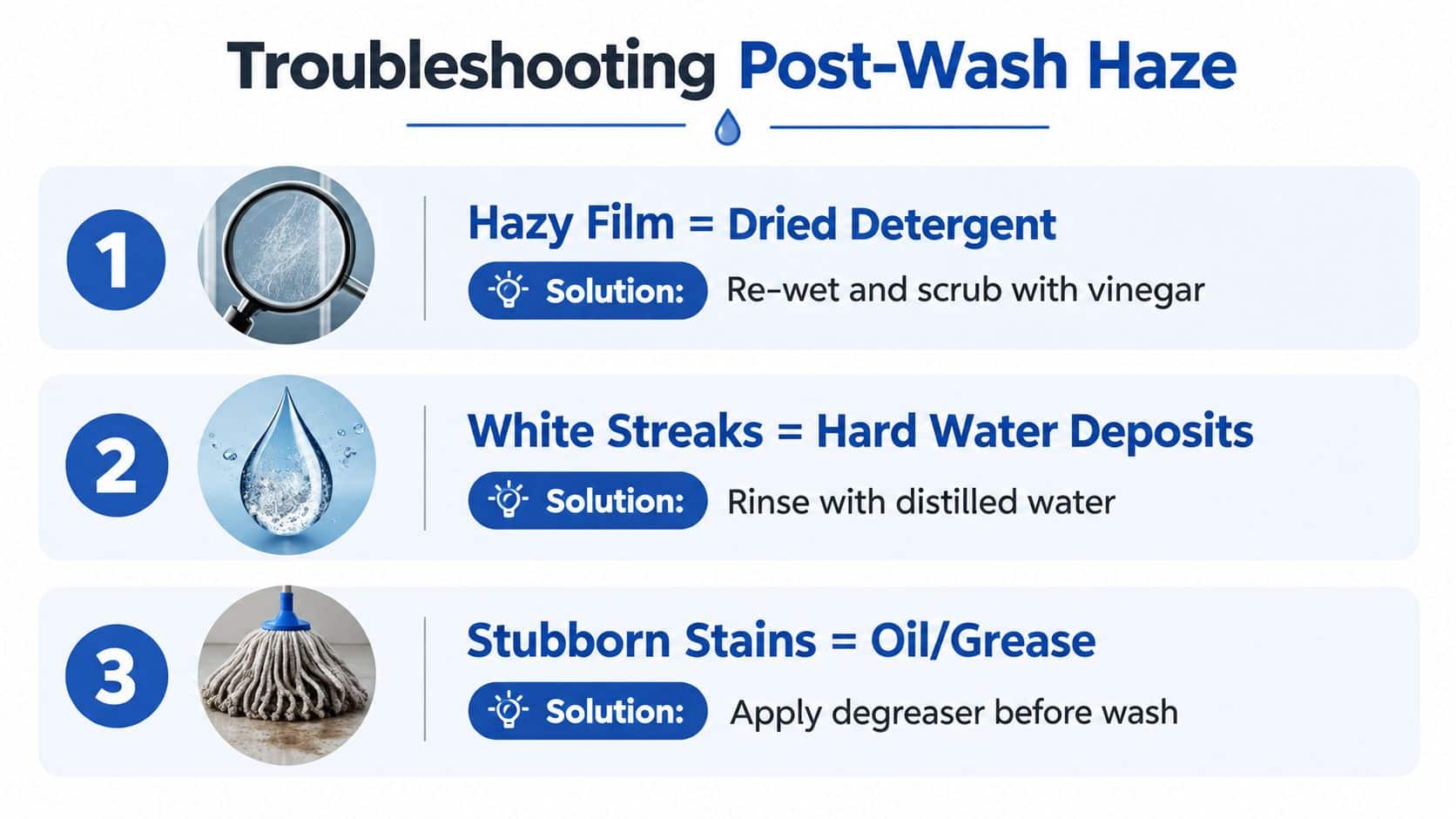
A patio can look worse immediately after washing because wet surfaces reveal uneven cleaning, displaced residue, and stains that water alone didn't address. Diagnose the symptom before reaching for more pressure.
Hazy white film usually comes from detergent drying on the surface or hard-water minerals redepositing during evaporation. Re-wet the slab, perform a plain-water rinse, and use a microfiber pass on accessible areas while the surface remains wet. If the haze persists, stop escalating pressure and identify the residue.
Hollow-looking joints point to sand washout. A narrow nozzle held too close can empty the gaps even when the pavers themselves appear clean. Let the area dry, sweep in compatible joint sand or polymeric sand, and reactivate it according to the product directions. If the joints continue to open, stop washing and assess drainage or settling.
Dark shadows below a grill or patio furniture usually need chemistry, not a tighter spray. Apply a suitable degreaser, allow it to dwell, then rinse with a controlled fan. Rust and irrigation stains may require an oxalic-based product or dedicated rust remover after the general wash. More PSI can spread the stain or mark the surface without removing the discoloration.
Efflorescence is different again. Brush the dry salts away rather than blasting them deeper into the material, then consider sealing only when the surface and joints are appropriate for it. For commercial sites, a broader commercial property curb appeal audit can help separate a patio-cleaning issue from drainage, landscaping, façade, and maintenance problems.
Post-Wash Care and When to Call a Pro
Let the patio drain and dry naturally before judging the final appearance. Inspect the surface in direct and angled light, check whether joints remain filled, and look for patchy sealer, streaks, or areas that stayed dark. Don't put furniture back until runoff has cleared and the surface no longer holds standing moisture.
A practical post-wash checklist is short:
- Inspect the finish: Look for etching, feathering, pitting, or coating loss.
- Check the joints: Replace displaced sand before gaps collect weeds and debris.
- Review the drainage: Confirm dirty water didn't settle against walls or cross property lines.
- Treat remaining stains: Use the appropriate chemical rather than increasing pressure.
- Protect the result: Follow the sealer manufacturer's preparation and curing requirements if sealing is suitable.
Call a professional when the patio contains fragile stone, extensive cracks, failing joints, uncertain sealant, heavy rust, oil contamination, or drainage that you can't control. Professional work also makes sense when the same property includes windows, painted doors, walkways, or façade surfaces that could be damaged by overspray. South Mountain Window Cleaning, LLC offers residential and commercial exterior cleaning, including flat-surface pressure washing, while its technicians also handle window and related exterior-cleaning needs.
The right decision isn't always to pressure wash. If local water restrictions, surface condition, or lifecycle risk make the method unsuitable, low-pressure cleaning, spot treatment, or manual methods may preserve the patio better. When pressure washing is appropriate, controlled technique will outperform brute force.
South Mountain Window Cleaning, LLC provides patio and flat-surface pressure washing alongside residential, commercial, and high-rise window cleaning in Phoenix, Scottsdale, Paradise Valley, Chandler, Tempe, Gilbert, and nearby Arizona communities. For a surface-safe assessment and a fast, free quote, visit South Mountain Window Cleaning, LLC and schedule the service that fits your patio material and condition.