
You walk outside, look at a metal gate, fence, door frame, or balcony railing, and think the Arizona climate should be helping it last. There's barely any rain. The air feels dry most of the year. Rust should be a coastal problem.
That assumption causes a lot of expensive damage.
In Phoenix, Scottsdale, Paradise Valley, Chandler, Tempe, and Gilbert, metal usually doesn't fail because it sits in constant humidity. It fails because dust, sprinkler overspray, hard water deposits, and neglected joints keep creating small corrosion zones in places people don't notice until paint lifts, orange streaks show up, or hardware starts to weaken. Good rust prevention for metal in Arizona means dealing with the environment you have, not the one generic DIY articles describe.
South Mountain Window Cleaning provides residential, commercial, and high rise window washing services in Phoenix, Scottsdale, Paradise Valley, Chandler, Tempe, Gilbert, Arizona.
Why Metal Rusts Faster in the Arizona Desert
Rust is an electrochemical reaction. Iron reacts with oxygen and water to form iron oxide, and moisture is what keeps that reaction moving. Corrosion also isn't a small issue at scale. The National Association of Corrosion Engineers estimates that corrosion costs the global economy about $2.5 trillion annually, or roughly 3.4% of global GDP according to this corrosion overview.
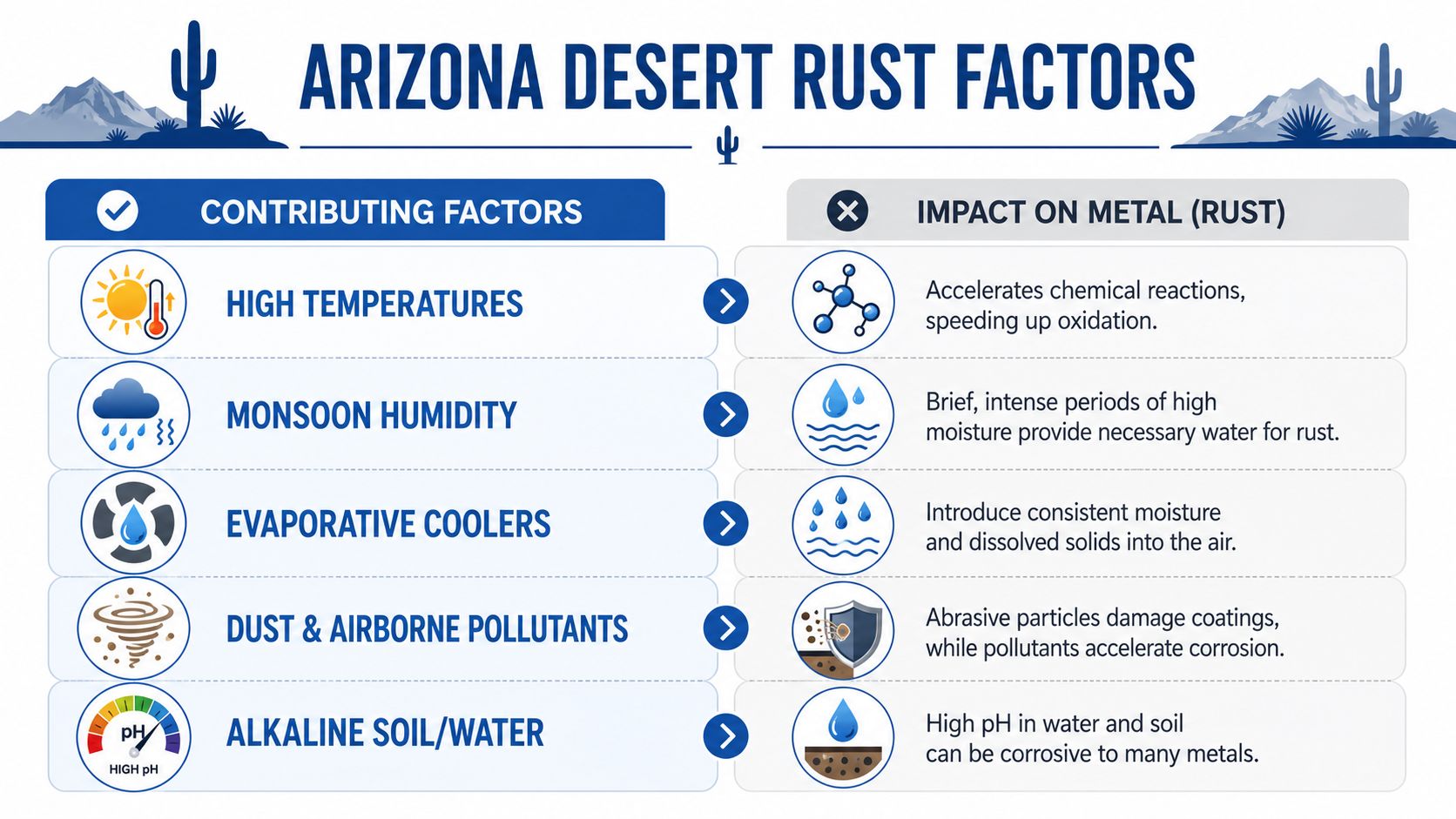
Arizona homeowners often hear “dry climate” and assume the moisture piece is missing. It isn't. In the desert, water shows up differently. Morning condensation, monsoon humidity, evaporative cooling, sprinkler mist, and pool splash create repeated wetting cycles on metal surfaces.
Dust holds moisture where you can't see it
Fine desert dust is one of the biggest local problems. It settles into fastener heads, decorative scrollwork, fence joints, window frames, and the bottom edges of metal doors. Once it cakes up, it stops being just dirt. It becomes a layer that holds moisture against the surface longer than generally expected.
Recent industry data from the American Society for Metallics shows that silica-rich dust in the Southwest US increases corrosion rates by 28% more than in humid coastal areas when dust remains on metal for over 72 hours, as reported in this discussion of dust-related rust risk. That finding matters in Arizona because dust sits on outdoor metal constantly.
If you've been focused on stucco, siding, and trim but ignored metal details, regular exterior washing matters more than it seems. A full-house cleaning plan like this house exterior cleaning guide helps reduce the buildup that starts these hidden corrosion spots.
Practical rule: If dust collects in a seam, rust can start there long before the flat painted surface looks damaged.
Sprinklers and hard water leave more than spots
The next problem is irrigation. In the Valley, sprinkler overspray hits steel doors, wrought iron gates, bollards, light poles, and fence bases every week. The water evaporates fast, but the minerals stay behind. Those deposits build up around edges, welds, and low points. They also make routine inspection harder because the metal looks dirty instead of damaged.
This is why rust shows up on the same side of a gate or door over and over. It's not random. It follows the water pattern.
Pools and monsoon cycles speed up failures
Pool areas are rough on metal. Splash-out, chemical residue, and constant wet-dry cycling wear down coatings faster than owners expect. Then monsoon season arrives and gives every weak spot a fresh dose of moisture.
Three local rust accelerators deserve attention:
- Dust-packed crevices: Fine particles settle into corners and hold moisture against the metal.
- Sprinkler contact: Repeated overspray leaves mineral residue and keeps coatings under stress.
- Pool exposure: Wet surfaces near chlorine-treated water lose protection faster, especially at fasteners and joints.
Arizona doesn't eliminate rust. It changes its pattern. That's why rust prevention for metal here has to start with cleaning, inspection, and design awareness, not just a can of paint.
Surface Preparation for Lasting Protection
Most coating failures start before the coating goes on. People blame the paint, primer, or sealant but the problem is poor prep. If dust, chalk, grease, loose rust, or mineral buildup stays on the surface, the new finish won't bond well and the repair won't last.
For Arizona metal, prep work decides the result.
Start with a real clean surface
Expert-level rust prevention requires a strict four-step methodology: surface pre-clean, chemical treatment with phosphoric acid, neutralization with a baking soda rinse, and immediate drying to prevent flash rusting, as outlined in this professional rust treatment guide.
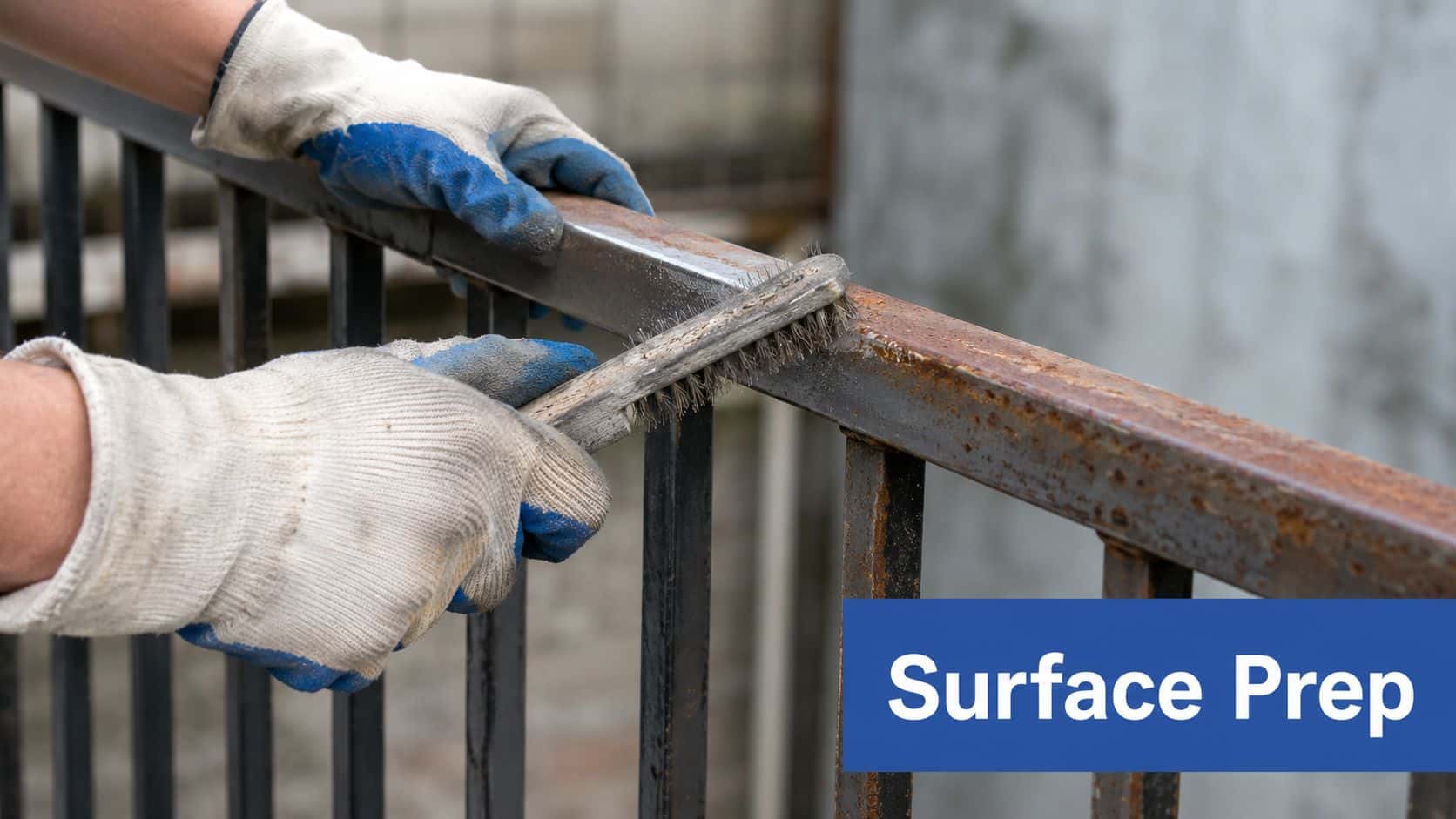
The first stage is simple in theory and often rushed in practice. Remove dirt, grease, loose oxidation, and any failed coating. On a wrought iron gate, that may mean a wire brush and degreaser. On a steel security door, it often means extra attention around handle sets, bottom rails, and weather-exposed corners. On galvanized fencing, you need to be more controlled so you don't unnecessarily damage the protective zinc layer.
A few common prep tools do most of the work:
- Wire brushes: Best for flaky rust, weld areas, and decorative iron details.
- Scrapers and abrasive pads: Useful for lifting peeling paint and smoothing edges.
- Chemical degreasers: Necessary when sunscreen, oils, air pollution, or kitchen exhaust residue has settled on exterior metal.
- Compressed air or clean cloths: Good for clearing out joints after brushing.
If rust runoff has already stained adjacent surfaces, this guide to removing rust stains from concrete is worth reviewing before you start, because the cleanup around the metal matters too.
Treat rust, then neutralize it
After the surface is cleaned, treat active rust with phosphoric acid. The verified method calls for a diluted application and a dwell time based on how heavy the rust is. The big mistake is letting the acid dry on the surface. When that happens, performance drops and you may have to repeat the step.
Neutralizing is what many DIY jobs skip. It shouldn't be skipped. The recommended baking soda rinse stops the acid reaction so the metal isn't left with active chemical residue under the next coating.
Leaving acid active under primer is one of the fastest ways to turn a repair into a callback.
Here's a quick field guide for common Arizona exterior metals:
| Metal surface | What to watch for | Better prep approach |
|---|---|---|
| Wrought iron gates | Rust in scrollwork, joints, and bottom rails | Wire brush thoroughly, degrease, treat pits carefully |
| Steel security doors | Rust near handles, corners, and sprinkler side | Remove mineral residue first, then address exposed steel |
| Galvanized fences | White residue, scratches, worn spots | Clean gently, avoid over-grinding, repair damaged areas selectively |
A visual walkthrough helps if you haven't handled a full rust-prep sequence before.
Drying isn't optional
Moisture is the primary driver of rust formation, so drying matters just as much as cleaning. The Harbor Freight rust guide notes that wiping down metal surfaces after use helps stop corrosion before it begins by reducing exposure to water.
In practice, that means no coating should go onto damp metal. Not “mostly dry.” Dry. Use clean towels, compressed air, or low heat where appropriate. Pay extra attention to screw pockets, seams, ornamental recesses, and horizontal ledges where rinse water hides.
Good prep feels slow. That's why it works.
Choosing the Right Protective Coating for Your Metal
Once the surface is ready, the next decision is the barrier itself. Not every coating fits every piece of metal, and Arizona exposure punishes the wrong choice fast. Sun, blowing grit, irrigation, and thermal expansion all test the finish in different ways.
The best rust prevention for metal is usually the one that matches the location, traffic, and maintenance reality of the property.
Paint, clear sealers, and powder coating
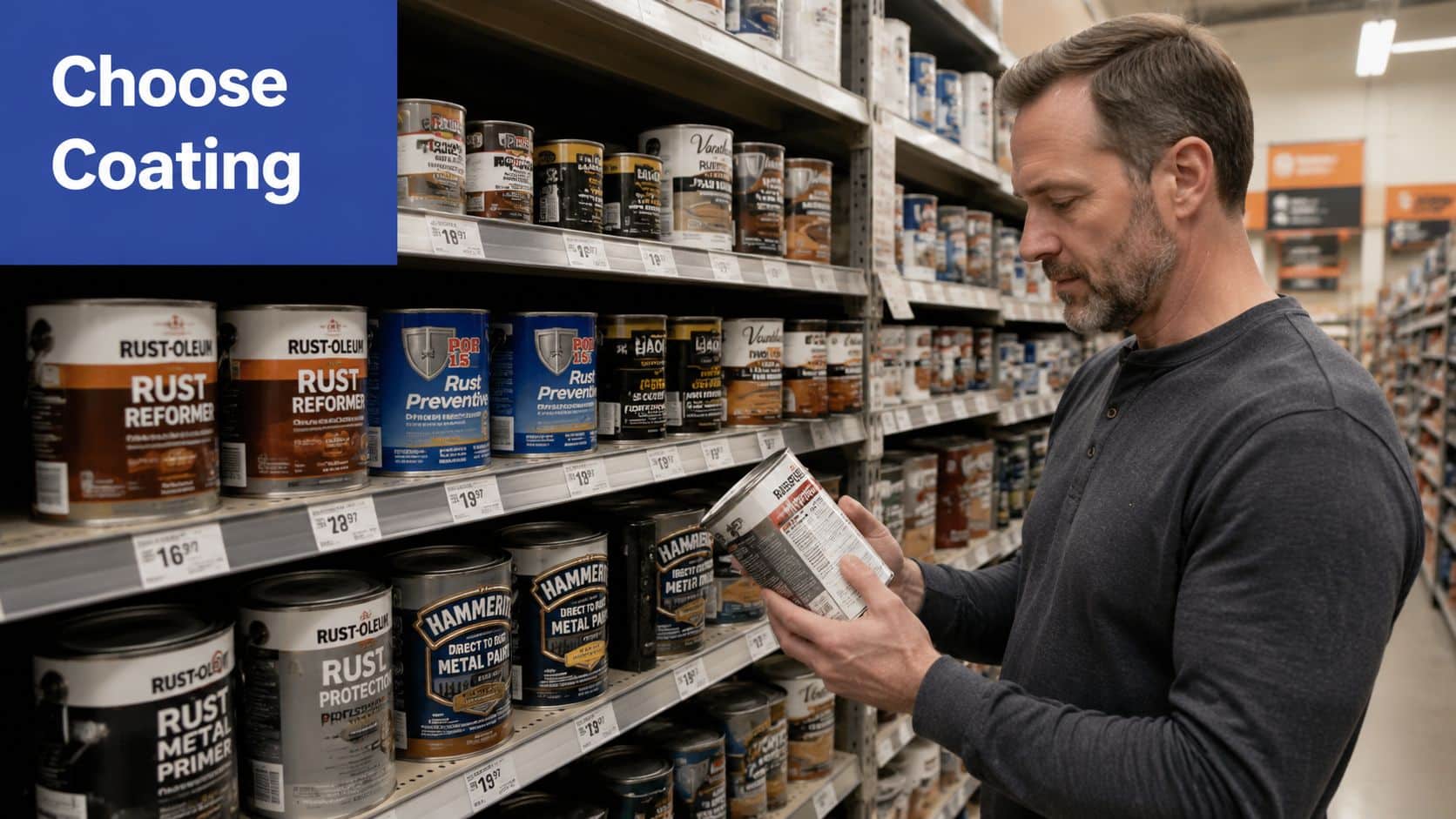
Rust-inhibiting primer plus exterior paint is still a solid choice for gates, railings, and security doors. It's practical because touch-ups are possible after chips and scratches. The trade-off is maintenance. Painted metal needs monitoring, especially at corners, latch points, and lower edges that take abuse.
Clear sealants work when you want to preserve a raw or decorative look, but they're less forgiving. Surface flaws show through, and if the product starts failing, the repair can be more obvious than a standard painted touch-up.
Powder coating gives a tougher factory-style finish and often looks cleaner longer on decorative metalwork. It's a good fit for pieces that take frequent handling or regular sun exposure. If you're comparing finish strategies for fencing, this guide to lasting fence finishes gives a useful overview of when powder coating makes sense and where it can still need upkeep.
Why galvanized steel holds up so well
Galvanization is different from paint because the protection is built into the metal coating itself. In the hot-dip galvanizing process, steel is immersed in molten zinc at approximately 450°C (842°F), creating a metallurgical bond that can extend the lifespan of structural steel by 50 to 100 years in normal atmospheric conditions, according to this galvanizing explanation.
That zinc acts as a sacrificial layer. Even if the surface gets scratched, nearby zinc continues helping protect the exposed steel. That makes galvanized steel a strong choice for fences, structural supports, utility components, and exterior hardware that lives outdoors year-round.
Galvanized steel is hard to beat when you want durability first and the design allows for it.
Match the coating to the job
A simple comparison helps:
- Paint systems: Best when future touch-up matters and color flexibility is important.
- Clear protective coatings: Best for decorative metal where appearance matters more than heavy-duty abuse resistance.
- Powder coating: Best for a cleaner, more durable finish on fabricated pieces that can be coated properly off-site.
- Galvanized steel: Best when long-term corrosion resistance matters more than a custom finish alone.
Preparation method matters too. Aggressive cleaning can be helpful on bare steel but too harsh for some coated metals. That's one reason property owners should understand the difference between cleaning methods before maintenance starts. This pressure washing vs soft washing comparison is useful when you're deciding how to clean coated or delicate exterior surfaces without stripping protection you still need.
The wrong coating usually fails in predictable places first. Hinges. Fasteners. Bottom rails. Sun-beaten top edges. Choose with those stress points in mind, not just with the color chip in hand.
Your Proactive Metal Maintenance Schedule
A good finish won't stay good on neglect alone. Metal lasts when someone checks it before visible rust turns into coating failure, staining, or replacement work. In Arizona, the schedule should follow the environment. Dust season, monsoon season, sprinkler patterns, and pool use all matter.
For exterior steel doors, cleaning should increase to twice per month near a body of water or in a humid climate, compared with once a month in less aggressive environments, based on this steel door maintenance guidance. Arizona isn't a humid region overall, but doors and gates near pools, water features, shaded irrigation zones, or enclosed courtyards often behave like localized wet environments. That's the practical takeaway.
Quarterly checks that catch problems early
Every few months, do a walk-around with intent. Don't just glance at the surface. Look at the edges, underside, and hardware.
Use this checklist:
- Check lower sections: Look for rust bloom near the ground, especially where sprinklers hit.
- Inspect joints and fasteners: Bolted areas collect dust and hold moisture longer than open flat surfaces.
- Look for coating failure: Peeling paint, bubbling, lifting edges, or dull worn spots mean the barrier is breaking.
- Scan nearby surfaces: Rust streaks on stucco, block, or concrete often show up before deep metal damage is obvious.
Semiannual cleaning that resets the surface
Twice a year, give outdoor metal a deeper cleaning. In most Arizona settings, one cleaning before monsoon season and one after heavy dust periods makes sense. Pool fencing, courtyard railings, and west-facing gates may need more frequent attention.
Cleaning should focus on residue removal, not just appearance. Dust film, sprinkler minerals, and caked grime all interfere with inspection. If you manage larger properties, this guide on rust prevention for metal buildings offers a useful maintenance mindset for broader exterior metal systems.
If you can't clearly see the coating, you can't accurately judge the condition.
Annual touch-up and decision review
Once a year, step back and decide whether the system still fits the exposure. A decorative clear coat near a pool may need to become a painted system. A painted steel fixture that constantly gets hit by irrigation may need physical irrigation adjustment, not another cosmetic touch-up.
A useful annual review asks four questions:
| Inspection question | Why it matters |
|---|---|
| Has the cleaning frequency been enough? | Persistent buildup means the schedule is too light |
| Are the same rust spots returning? | Repeated failure usually points to a water source or prep issue |
| Has nearby landscaping changed? | New irrigation or plant growth can trap moisture against metal |
| Is the coating still appropriate? | Exposure conditions may now require a tougher finish |
Good maintenance is repetitive. That's the point. Repetition is cheaper than replacement.
DIY Rust Treatment vs Calling an Exterior Cleaning Pro
Some rust jobs are absolutely manageable with basic tools and patience. Others eat weekends, damage coatings, and still leave the root cause untouched. Knowing the difference saves money.
If the issue is a small chip on a gate, a light rust spot on an exposed hinge, or a dusty railing you can safely reach from the ground, a DIY approach can work. Clean it well, prep it correctly, treat active rust, let it dry fully, and apply the right repair coating.
Jobs that usually fit DIY
A homeowner can often handle these without much trouble:
- Small isolated rust spots: One scratch, one chip, one localized area with early surface oxidation.
- Accessible metal surfaces: Low fences, gates, patio furniture, or hardware you can reach safely.
- Routine dust removal: Light maintenance before buildup hardens into a crust.
- Touch-up painting: Small repairs where the existing coating system is still mostly intact.
The problem starts when owners confuse “visible rust” with “total rust problem.” What you can see is often the easy part. What sits under mineral scale, behind trim, inside joints, or across upper-story metal is where DIY work gets inefficient.
When pro help is the smarter call
Large-scale exterior metal cleaning is less about labor and more about method. The surface has to be cleaned thoroughly enough that treatment or recoating will hold. On Arizona properties, that usually means removing packed dust, irrigation residue, and oxidation stains without damaging adjacent glass, stucco, paint, or landscaping.
Call a pro when any of these apply:
- The rust is widespread: Multiple sections are failing, not just one isolated spot.
- The buildup is heavy: Dust and hard water deposits are thick enough that hand cleaning becomes inconsistent.
- The metal is hard to access: Second-story trim, commercial storefront framing, balcony rails, awnings, and high-rise elements need safe access and proper equipment.
- You're preparing for repainting: Surface contamination left behind will ruin the next coating job.
- Adjacent materials are sensitive: Overspray and runoff can stain concrete, etch glass, or mark painted walls.
A professional exterior cleaning crew can also solve the upstream issue, which is often more important than the rust spot itself. If a gate keeps getting blasted by overspray, if storefront framing stays dusty because traffic throws grit against it, or if mineral deposits are bonding to the surface, the cleaning process has to address the whole exposure pattern.
What pros bring that DIY often misses
The biggest difference isn't just speed. It's consistency. Large surfaces need even cleaning, safe access, proper rinse control, and the judgment to know when pressure is too aggressive or not aggressive enough.
That matters on commercial properties and multi-story homes where one bad cleaning pass can create more finish damage than the original rust ever did.
Professional cleaning makes the treatment stage more reliable because it removes the contamination that keeps causing the failure.
If you're dealing with visible oxidation, runoff stains, or corrosion-prone exterior metal that needs more than a quick scrub, it helps to review a service built specifically for those conditions. This local rust removal service page shows the kind of situations where dedicated exterior cleaning and rust-removal support make more sense than trial-and-error DIY work.
For Arizona property owners, that's usually the line. If the task is small, reachable, and isolated, DIY is fine. If the surface is extensive, high up, heavily soiled, or tied to a larger maintenance issue, professional help is the better value.
Protect Your Property's Value with Smart Maintenance
A lot of Arizona metal looks fine until you get close. Then you see the sprinkler line on the gate, the chalky hard-water crust on the fence, and the small rust bleed at a fastener or weld. That is how property value starts slipping. Not from one dramatic failure, but from a series of small issues that were cheap to fix early and expensive to ignore later.
Rust prevention for metal is straightforward on paper. Keep surfaces clean. Stop water from hitting the same area over and over. Repair coating failure before bare metal sits exposed through a monsoon cycle. In Arizona, the catch is that dry conditions fool owners into waiting too long. Dust holds moisture against the finish, hard-water deposits break down coatings, and repeated overspray creates the same wet zone day after day.
Good maintenance protects more than appearance. It helps gates swing properly, railings stay sound, rooftop equipment last longer, and storefront metal keep a clean, cared-for look. On residential properties, that supports curb appeal. On commercial sites, it affects how tenants, customers, and inspectors read the condition of the whole building.
The practical approach is steady attention tied to the way the metal is exposed. Clean exterior metal before dust and minerals harden into a bonded layer. Fix the irrigation pattern if one section keeps spotting or rusting. Treat small corrosion at joints, fasteners, and edges while it is still localized.
Some jobs stay in DIY territory. A reachable patio fixture with a small failed spot is one thing. Multi-story metal, decorative gates with detailed finishes, restaurant patios with heavy mineral buildup, and storefront framing with years of runoff staining usually need a more controlled process to avoid surface damage and missed contamination.
If you want help protecting exterior metal, glass, concrete, and other exposed surfaces around your property, South Mountain Window Cleaning, LLC is a practical local partner. The team handles residential, commercial, and high rise exterior cleaning across Phoenix, Scottsdale, Paradise Valley, Chandler, Tempe, and Gilbert, with services that help remove the dust, mineral buildup, and rust-related grime that shorten the life of exterior finishes. Reach out for a free quote if you need power washing, rust removal, or routine exterior maintenance that fits Arizona conditions.