
If you live in the Phoenix area, you've probably looked up at your solar panels after a stretch of dry weather and seen the problem right away. Fine dust, pollen, bird mess, and hard-water spotting don't take long to show up here.
That matters more in Arizona than in a lot of other places. We get intense sun, long dry periods, and regular dust events. When grime sits on a panel surface, you're not just dealing with something cosmetic. You're dealing with lost production on equipment that's supposed to work every day.
Why Clean Solar Panels in Arizona's Climate
Arizona is rough on exterior surfaces. Solar panels take the full hit from desert dust, monsoon residue, traffic pollution, bird activity, and heat. Rain helps sometimes, but it doesn't reliably wash panels clean here. In many cases, it just shifts grime around or leaves residue behind.
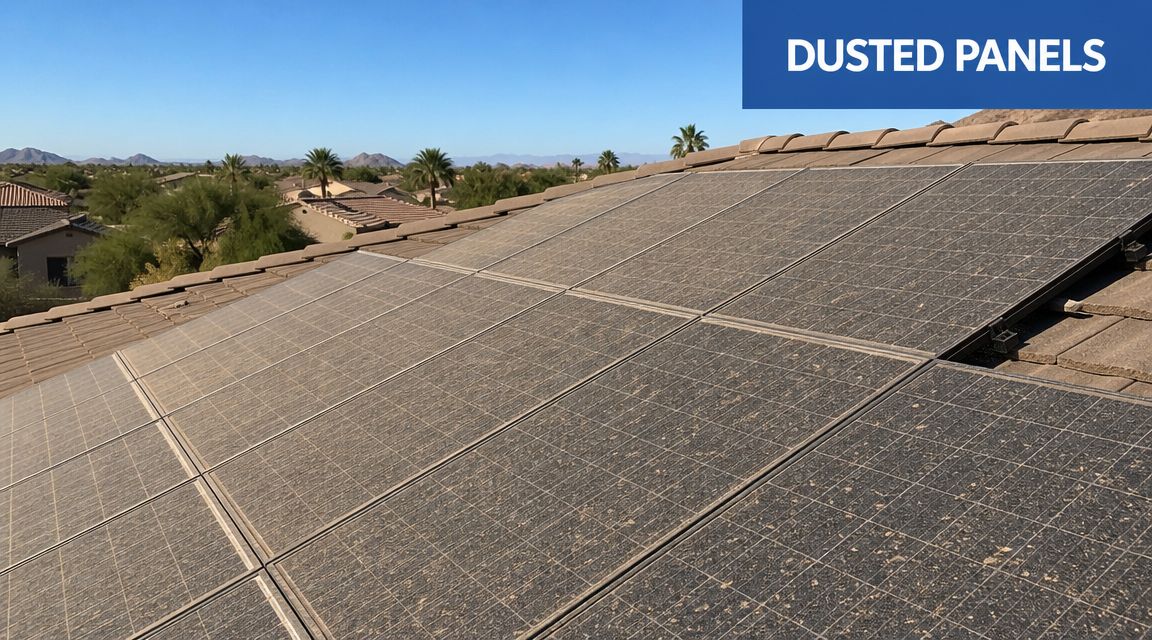
Nexamp notes that dirty panels can be 15% to 25% less efficient than clean ones, while lower-soiling locations may see much smaller losses. That gap is exactly why local conditions matter so much in Arizona, where dust load and rainfall patterns are very different from cleaner, wetter regions. You can read more about that in this guide on preventing solar panel efficiency loss in Arizona and in Nexamp's discussion of solar panel cleaning and maintenance.
Why Arizona changes the equation
A homeowner in a rainy climate can sometimes get away with treating solar cleaning as occasional upkeep. In the Valley, that advice often falls apart. Haboobs coat roofs fast. Spring pollen sticks. Bird droppings bake onto hot glass. Hard water can leave mineral spotting if the wrong rinse method is used.
Even a small efficiency drop matters when a system is exposed to strong sun for much of the year. A little production loss, spread across a full array and a long cooling season, becomes noticeable.
Local reality: In Arizona, “it rained recently” is not the same thing as “the panels are clean.”
What clean panels are really protecting
Clean panels aren't about appearances. They're about preserving output, reducing avoidable drag on the system, and keeping buildup from becoming harder to remove later.
The main warning signs are usually easy to spot:
- Visible dust film: The panels look dull instead of clear and reflective.
- Edge buildup: Dirt collects along the lower frame or corners after light rain.
- Bird mess or nesting activity: Small concentrated spots can block light more aggressively than general dust.
- Output concerns: If your monitoring app shows a dip and nothing else has changed, soiling is one of the first things to check.
The best solar panel cleaning approach in Arizona starts with one simple idea. Don't use generic advice written for mild climates. Desert conditions need desert-specific maintenance.
A Safe DIY Guide to Cleaning Your Panels
If you're going to clean your own panels, the method matters as much as the effort. Arizona homeowners run into two extra problems right away. Roof access is risky, and standard tap water often leaves mineral residue.
A sound process starts with safety first. Solar Tech advises turning the array off, cleaning in cool conditions, using soft tools, and relying on deionized or other low-residue water rather than harsh cleaners or pressure washing. Their guide on solar cleaning efficiency tips is consistent with what works in the field.
What to gather before you start
You don't need a pile of specialty gear, but you do need the right kind.
- Soft brush or non-abrasive sponge: Nothing stiff, nothing gritty.
- Squeegee or drying tool: Helpful if you're working on a reachable ground-mounted setup or low roof edge.
- Deionized water if possible: This is a big one in Arizona because hard water can leave spotting.
- Stable ladder and proper footing: Only if you already know how to work safely on a roof.
- A plan for bird mess: Dried droppings need patience, not scraping. If that's your issue, this page on how to clean bird poop is worth reviewing.
A simple DIY cleaning sequence
Start early. Cool morning conditions are better for both safety and results. Hot glass can dry water too fast, leave streaks, and increase the chance of thermal stress.
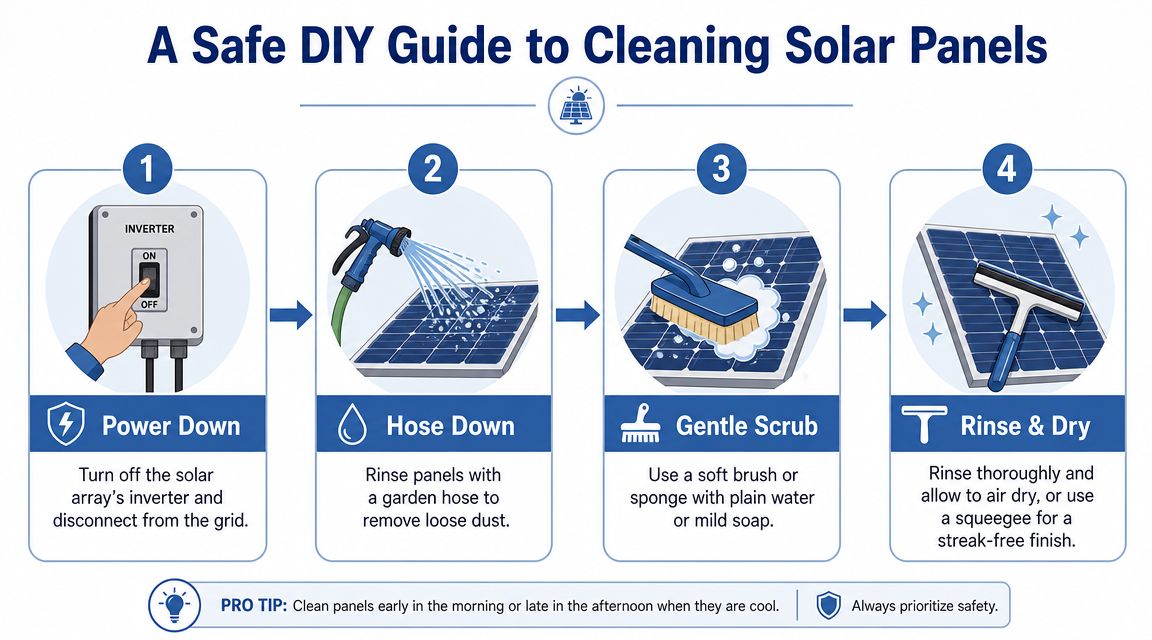
- Shut the system down. Follow the manufacturer or installer instructions for powering the array off.
- Rinse loose debris first. A gentle flow helps remove dust before you touch the surface.
- Use light contact only. Work with a soft brush or sponge and let the water do most of the work.
- Focus on stuck areas carefully. Bird droppings or grime bands near the lower edge may need repeated soaking.
- Rinse thoroughly with low-residue water. This is what helps prevent the white spotting people often mistake for dirt coming back.
- Let the panels dry naturally, or finish with a clean squeegee where safe and practical.
Here's a visual overview of the process:
What usually goes wrong with DIY
Most DIY solar cleaning problems come from rushing. People clean at the hottest part of the day, use whatever soap is under the sink, or assume a pressure washer will save time.
Clean in cool conditions, use soft contact, and avoid leaving residue behind. That's what separates a helpful rinse from a cleanup that creates more problems.
If your panels are steep, hard to reach, heavily soiled, or surrounded by fragile tile roofing, stopping at the safety line is the right call. DIY only makes sense when you can do it without risking a fall or damaging the system.
Common Mistakes That Can Damage Your Panels
A lot of bad solar cleaning advice sounds practical until you look at what it does to the panel surface. The damage usually doesn't happen all at once. It starts with small scratches, residue, or avoidable stress.
Don't use pressure washers
Pressure sounds efficient, but it's the wrong tool for this job. High pressure can damage the panel surface and create problems around edges and seals. It's one of the fastest ways to turn routine maintenance into an avoidable repair issue.
Don't scrub with abrasive pads or stiff brushes
Solar panels need a gentle touch. Scouring pads, stiff deck brushes, and scraping tools can mark the glass or affect the surface coating. Once that happens, you can't undo it with a better rinse.
Don't clean hot panels in direct sun
This is a common Arizona mistake. Water flashes off too quickly on hot glass, leaves uneven drying patterns, and makes streaking worse. Rapid temperature change also isn't something you want to force onto a hot panel.
Hot roof, hot glass, and fast evaporation are a bad combination.
Don't rely on household soap
Dish soap seems harmless, but residue is the issue. Soap films can attract more dirt, which means the panel can start looking dusty again sooner than expected. You also end up chasing streaks.
Don't use hard water and assume it will dry clean
In Arizona, mineral-heavy water leaves evidence. Those deposits can create spotting and haze that reduce the quality of the clean. Many homeowners think the panel is still dirty, but the problem is rinse residue.
Don't treat bird droppings like ordinary dust
Dust usually lifts with a rinse and light brushing. Baked-on droppings are different. Scraping them aggressively is where people often scratch the surface. They need soaking, patience, and the right tool.
The best solar panel cleaning methods are gentle by design. If a technique sounds aggressive, fast, or “good enough for windows and siding,” it usually doesn't belong on solar.
The Professional Advantage for Peak Performance
Most homeowners can understand the basic cleaning steps. The main decision is whether doing it yourself is worth the time, safety risk, and chance of leaving residue or missing heavy buildup. That's especially true on Arizona roofs where access, heat, and hard water all work against you.
Solar.com makes a useful point that often gets skipped in generic advice. The better question isn't only how to clean panels. It's when cleaning is worth the cost. In high-soiling environments, contamination can reduce yield by up to 30%, and cleaning frequency can range from 2 to 4 times per year in dusty regions to once every few years in cleaner places, according to Solar.com's solar panel cleaning guidance.
DIY vs. professional solar panel cleaning
| Factor | DIY Approach | Professional Service (South Mountain) |
|---|---|---|
| Roof safety | Depends on your ladder skills, roof pitch, and comfort level | Better suited for difficult access and rooftop work |
| Water quality | Often uses hose water that can leave mineral spotting | Typically uses purified or low-residue water systems |
| Tool selection | Easy to choose the wrong brush, soap, or rinse method | Uses tools intended for delicate exterior surfaces |
| Cleaning consistency | Can be uneven, especially on large arrays | More uniform results across the whole array |
| Time involved | Takes planning, setup, roof access, cleaning, and rinse work | Frees up homeowner time |
| Heavy soiling | Tougher to handle without repeated passes | Better for baked-on grime, dust film, and stubborn residue |
| When it makes sense | Small, easy-to-reach systems with light buildup | Steep roofs, large systems, visible buildup, or recurring dust issues |
Where professional service usually makes more sense
Arizona homes often have one or more complicating factors. Tile roofs get slick. Panels sit high above awkward roof lines. Buildup isn't always loose dust. Sometimes it's hard-water spotting, bird mess, or grime that settled after wind and light rain.
For owners managing broader property risk, it also helps to think beyond cleaning alone. Resources like Coverage Axis Ohio solar solutions can be useful for understanding the insurance side of solar work and contractor exposure, even if your property is outside Ohio.
If you want a local service option, South Mountain Window Cleaning's Phoenix solar panel cleaning service is one example of a company handling this as a dedicated exterior cleaning task rather than as an afterthought.
Worth measuring: The right time to schedule service is when visible buildup and performance monitoring point to a real problem, not because a generic calendar says every home needs the same schedule.
Your Solar Panel Inspection and Maintenance Schedule
Most panels don't need constant attention. They do need regular observation. That's the difference between catching buildup early and discovering months later that dust, birds, or residue have been dragging down performance.
Benchmark data discussed by an expert-reviewed source puts average soiling losses at about 4% to 7%, which is a good reminder that not every cleaning produces dramatic recovery. It supports a data-driven routine based on local dust and output monitoring rather than a one-size-fits-all schedule. That comes from this discussion of solar panel soiling and cleaning performance.
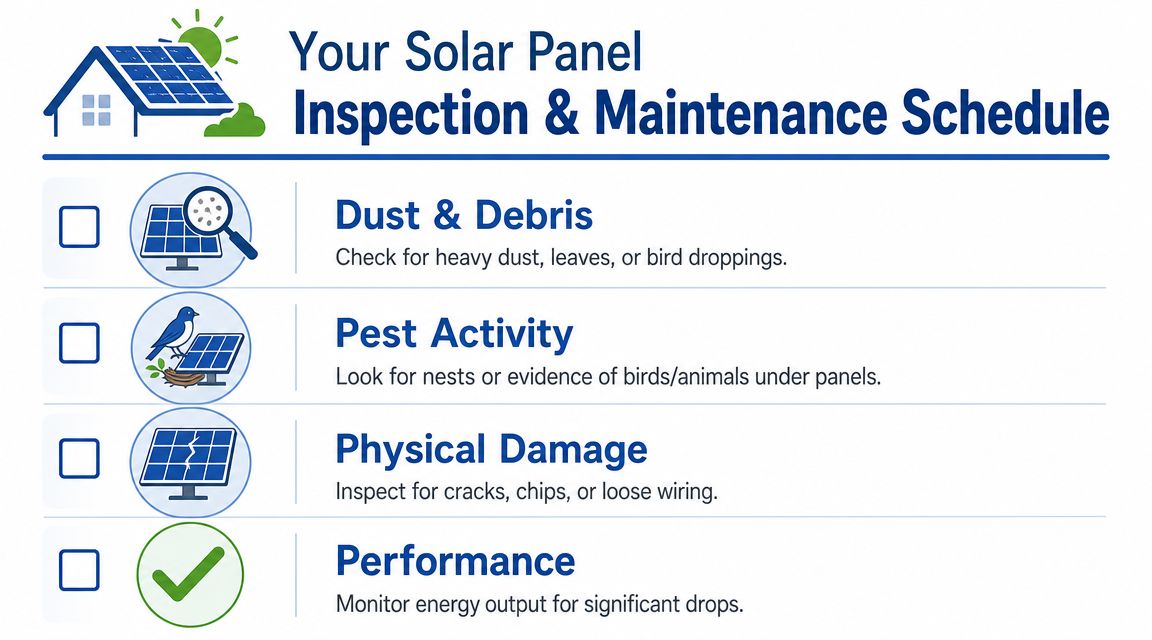
A simple monthly inspection routine
Take a quick look from the ground or from a safe vantage point. You're not doing a technical audit. You're checking for obvious issues.
- Dust and debris: Look for a dull film, leaf buildup, or dirty bands along the lower edge.
- Bird activity: Check for droppings, nesting, or repeated perching near the array.
- Physical problems: Watch for cracked glass, shifted components, or anything that looks out of place.
- Performance changes: Compare current output trends with what your system usually does under similar conditions.
If you like keeping maintenance organized, a broader electrical system upkeep template can help you think through seasonal inspection habits around the home.
A practical Arizona schedule
Arizona panels usually benefit from a seasonal rhythm rather than a random once-in-a-while wash.
- After major dust events: If a haboob leaves a visible layer, inspect soon after conditions settle.
- After pollen season: Fine buildup can cling even when the panels don't look heavily dirty from the street.
- After monsoon residue: Rain mixed with dust often leaves grime lines rather than a true rinse.
- Any time output drops noticeably and other causes are ruled out: Monitoring should drive the decision.
For a local planning tool, this solar panel maintenance checklist is a practical reference.
The best solar panel cleaning schedule is the one that matches your roof, your neighborhood, and your actual soiling pattern. Some Arizona homes need more attention. Others only need action after specific events.
Frequently Asked Questions About Solar Panel Care
Will cleaning void my solar panel warranty
It can if the wrong method damages the panel or goes against manufacturer guidance. That's why aggressive tools, pressure washing, and abrasive materials are bad bets. If you're unsure, check your panel documentation before touching the system.
How do you remove stubborn bird droppings
Don't scrape them dry. Let them soften with water first, then use a soft non-abrasive tool. Bird mess is one of the easiest ways to scratch a panel if you get impatient.
Is rain enough to clean solar panels in Arizona
Usually not when there's meaningful dust, pollen, or baked-on residue. Light rain often leaves grime settled at the lower edge instead of fully removing it.
Can cleaning really make a noticeable difference
Yes, when panels are visibly dirty. A demonstration of a five-minute cleaning on a soiled panel showed an immediate 26% increase in power output, which is why badly soiled arrays can recover quickly after proper cleaning, as shown in this solar cleaning demonstration video.
How do I know whether to DIY or hire it out
If the panels are easy to reach from the ground, lightly soiled, and you can use the right tools safely, DIY may be reasonable. If you're dealing with roof risk, hard-water spotting, heavy buildup, or delicate roofing, professional service is usually the safer choice.
If your panels are coated with Arizona dust, bird mess, or mineral spotting, South Mountain Window Cleaning, LLC can help you decide whether a professional cleaning makes sense for your system and your roof. The company serves homeowners and properties across the Valley, including Phoenix, Scottsdale, Paradise Valley, Chandler, Tempe, and Gilbert.