
By the time most Phoenix property owners notice the dirt, it’s already been there for weeks. Fine dust settles on stucco, pool decks pick up a dingy film, storefront concrete darkens, and hard water leaves mineral staining that doesn’t rinse away with a garden hose. Add intense sun, baked-on grime, and delicate desert building materials, and exterior cleaning becomes less about blasting surfaces and more about knowing exactly how to clean without causing damage.
That’s where people often start searching for a1 pressure washing. Sometimes they mean a company name. More often, they mean a result. They want the job done right the first time, with clean surfaces, no streaking, no etched concrete, no shredded stucco, and no runoff problems left behind.
What A1 Pressure Washing Means for Your Phoenix Property
At 7 a.m. in Phoenix, a wall can already be warm to the touch, dust is sitting in every low spot, and last night’s irrigation overspray has started drying into mineral haze. On that kind of property, A1 pressure washing means the cleaner adjusts for desert conditions before the trigger is ever pulled.
In practice, that standard has very little to do with raw PSI. It means knowing how dust behaves on textured stucco, how hard water leaves deposits on block walls and flatwork, and how fast detergents can dry out in direct sun. It also means recognizing which surfaces can take strong mechanical cleaning and which ones need lower pressure, better chemistry, and a controlled rinse.
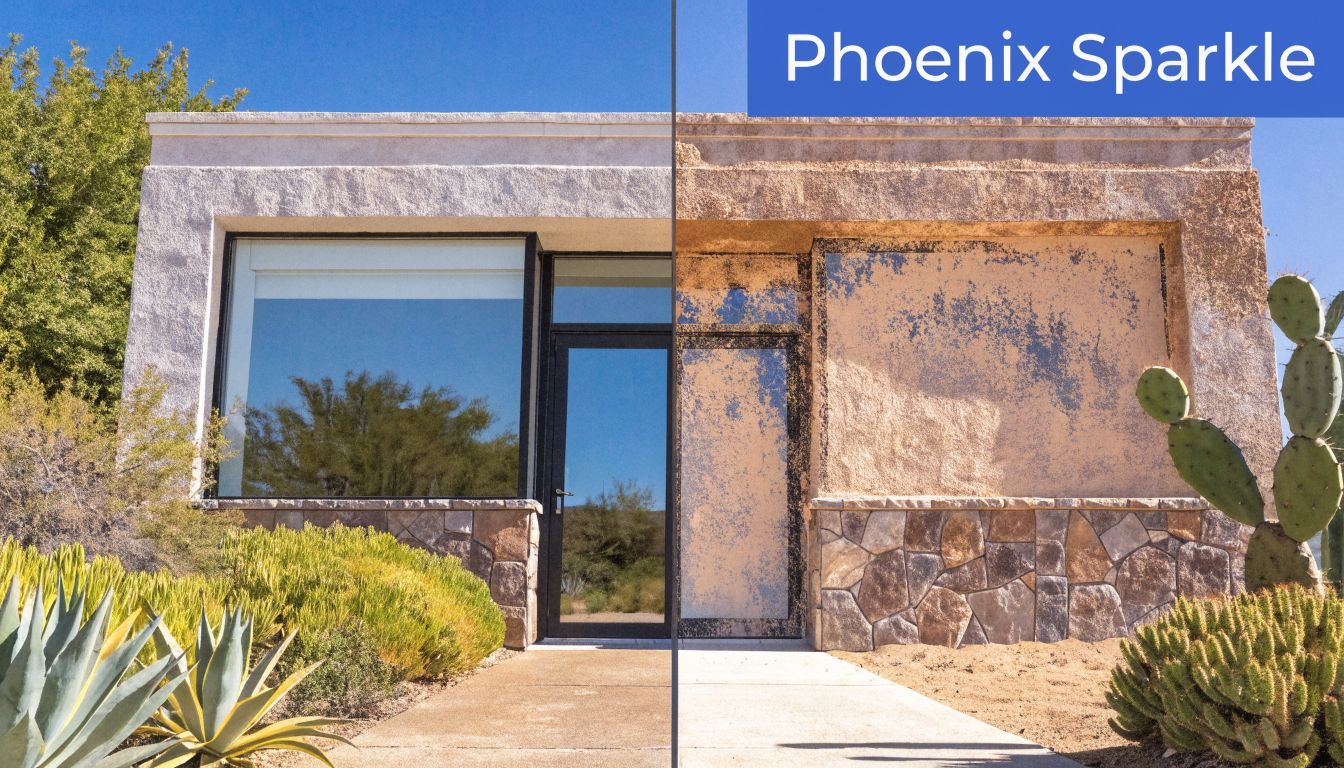
Top-tier service starts with surface identification and job planning. A good technician checks whether the finish is painted stucco, bare concrete, pavers, EIFS, cool deck, sealed stone, or metal. Each one responds differently to pressure, dwell time, and rinsing. On Phoenix properties, that matters because the wrong approach can leave tiger striping on concrete, blown-out stucco texture, oxidation streaks on painted surfaces, or white mineral residue that looks worse after the job than before.
The gap between average work and A1 work usually comes down to judgment under real conditions.
A lower-skill operator often tries to solve every problem with more force. A professional chooses the method based on the contamination, surface age, drainage path, nearby plants, and how quickly the sun will dry the area. If grease is present, the approach changes. If hard water staining is the issue, pressure alone is rarely the answer. If the surface is delicate, restraint protects the finish and lowers the risk of expensive repairs.
One practical standard applies on every job. Clean the surface fully, leave the material intact, and do not create a new problem with runoff, streaking, or damage.
A1-level service also includes the contractor side of the work. Clear scheduling, proof of insurance, trained technicians, and equipment that matches the property are part of the job, not extras. Phoenix owners should expect a company to explain why a surface is being soft washed, pressure washed, or treated first with specialty chemistry. If you want a clearer breakdown of those methods, this pressure washing versus power washing explanation gives the terminology property owners usually ask about.
Arizona conditions raise the bar. The cleaner has to handle:
- Fine desert dust that settles into stucco texture, expansion joints, and rough concrete
- Hard water spotting and mineral buildup that need targeted treatment instead of more pressure
- Fast evaporation in direct sun that changes dwell times and can cause detergents to dry too soon
- Common Valley materials like stucco, painted block, pavers, and cool deck coatings that can be damaged by poor technique
That is what A1 should mean for a Phoenix property. Careful method selection, controlled pressure, local experience, and work that protects the surface for the long haul.
Pressure Washing vs Power Washing Explained
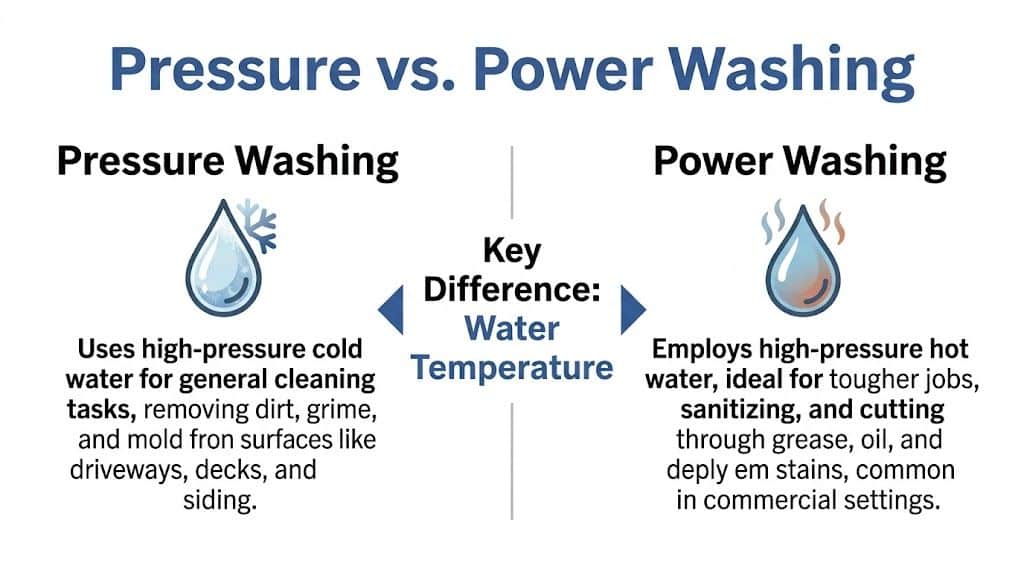
A lot of property owners use the terms interchangeably, but they’re not the same. The easiest way to understand the difference is to think about washing greasy dishes. Cold water can move loose debris. Hot water cuts through grease much faster.
Pressure washing uses high-pressure cold water. Power washing uses high-pressure heated water.
Where cold water works well
Cold-water pressure washing is a good fit for a lot of routine Phoenix cleaning. Think patio dust, general soil on walkways, loose debris on pool decking, and standard exterior rinse-downs where the surface isn’t holding oil or heavily bonded residue.
For many residential jobs, cold water gives enough cleaning force without introducing more complexity than the surface requires. If the operator also controls pressure correctly, this approach is often the safer choice on decorative exterior materials.
If you want a clearer breakdown of the terminology, this explanation of pressure washing versus power washing lines up with what technicians see in the field.
Where heated water earns its keep
Heated water changes the job. Professional hot water machines such as the Cleanwell HS can reach 150°C at 1450 PSI, and that heat can increase detergent efficacy by 30-50% while reducing cleaning passes by up to 40%, according to the Cleanwell HS equipment specifications.
That matters most on commercial work where grease, oil, food waste, gum shadowing, and hydrocarbon residue collect. A restaurant drive-thru is a perfect example. So is a dumpster pad behind a retail center. Those surfaces don’t usually need more force. They need heat, chemistry, dwell time, and proper recovery.
Hot water isn’t a luxury on greasy commercial concrete. It’s often the difference between surface cleaning and actual contaminant removal.
A simple way to choose
Here’s the practical version:
| Cleaning need | Better fit | Why |
|---|---|---|
| Dusty patio or walkway | Pressure washing | Cold water handles loose soil and general buildup well |
| Greasy drive-thru lane | Power washing | Heat cuts oil and food residue faster |
| Dumpster pad sanitation | Power washing | Heated water improves breakdown of stubborn organic buildup |
| Delicate residential exterior | Controlled pressure washing or soft washing | Protects finishes while removing surface contamination |
The mistake is assuming hotter and stronger are always better. They aren’t. The right method depends on what’s stuck to the surface and how much punishment the material can take.
Key Benefits of Professional Washing in Arizona
A Phoenix patio can look clean at 7 a.m. and still feel chalky by noon. Dust settles fast here, hard water leaves its mark, and intense sun cooks stains into concrete, stucco, and pavers much faster than owners expect. Professional washing solves that problem when the crew matches pressure, chemistry, and rinse method to the surface instead of treating every job like dirty concrete.
That matters because Arizona grime is different. It is usually a mix of windblown dust, irrigation overspray, oxidation, bird droppings, and mineral staining. On stucco homes, that buildup gets trapped in texture. On commercial storefronts, it dulls paint, glass lines, and entry concrete until the whole property looks tired.

Cleaner surfaces improve first impressions
Clean exterior surfaces change how a property reads from the street. On a house, that means better curb appeal and a finish that looks cared for instead of weathered. On a business, it affects customer confidence before anyone reaches the front door.
Owners across the Valley keep washing on the maintenance calendar for a simple reason. Buildup in Phoenix does not stay light for long. It bonds to hot surfaces, collects in textured finishes, and becomes harder to remove if it sits through a few heat cycles. For a practical homeowner-focused overview, these benefits of power washing for exterior upkeep line up with what we see on local properties every week.
Surface protection is the bigger payoff
Appearance gets the call scheduled. Surface protection is what makes the service worth paying for.
Desert dust acts like fine abrasive material. Mineral deposits from irrigation can etch glass and leave crusty lines on stucco, block walls, and flatwork. Shaded areas near pools, planters, and north-facing walkways can also develop organic growth and slick spots, even in a dry climate. Left alone, those problems turn a routine wash into stain treatment, paint correction, or surface repair.
Professional washing helps by:
- removing bonded dirt, minerals, and residue before they set deeper into the surface
- exposing cracks, failed caulk, coating breakdown, and water intrusion points that were hidden under grime
- reducing slip risk on pool decks, entries, and walkways where algae or residue starts to build
A clean surface shows the real condition underneath. That is how you catch wear early on stucco, concrete, painted trim, and coated masonry.
The benefit changes by property type
A homeowner may care most about a back patio, driveway, or dusty stucco wall looking right again. A restaurant manager is usually focused on grease, foot traffic, sanitation, and keeping the property presentable during business hours. An apartment manager may be trying to clean breezeways and common areas without damaging paint, forcing water behind fixtures, or creating runoff problems.
A1-level service accounts for those differences. It is not just strong equipment. It is knowing when to soft wash painted stucco, when to treat rust separately, when hot water makes sense on commercial concrete, and when high pressure would do more harm than good.
Here’s a short example that shows the difference in mindset:
Why DIY work often misses the mark
Homeowner machines can rinse loose dust. They usually struggle with Arizona’s real troublemakers, especially mineral staining, embedded dirt in textured surfaces, and oily residue on high-use concrete. The common mistake is compensating with a tighter spray angle and less stand-off distance. That is how people stripe concrete, scar wood, or leave wand marks on stucco.
Professional crews get better results because they control the variables that matter. Pressure is only one of them. Nozzle choice, dwell time, water temperature, detergent selection, runoff control, and surface sensitivity all affect the outcome. In Phoenix, good judgment protects the finish as much as the cleaning itself.
Common Uses for Phoenix Homes and Businesses
The most useful way to understand a1 pressure washing is to look at how the work changes from one property to another. A homeowner in Chandler doesn’t need the same process as a restaurant manager in Tempe. The surfaces are different, the contaminants are different, and the consequences of getting it wrong are different.
A stucco home with dust and mineral buildup
A common residential call starts with a house that looks dull even after the owner sprays it down. The issue usually isn’t just loose dirt. It’s dust packed into texture, hard water spotting near irrigation lines, and light staining under windows, scuppers, or roof edges.
For delicate Arizona surfaces like stucco and solar panels, equipment in the 1300-1650 PSI range is critical because it can remove dust and mineral deposits while staying below the ~2000 PSI threshold associated with etching or micro-fractures. That same pressure range can help reduce re-soiling rates by 25-35% over six months, based on the Binford 1650 operating specifications and related guidance.
That doesn’t mean every wall should be washed at that setting. Skilled crews still adjust nozzles, stand-off distance, and detergents to suit the finish. The key point is that controlled pressure matters more than aggressive pressure.
Residential jobs that need restraint
Around Phoenix homes, the most common pressure washing requests include:
- Stucco exterior cleaning: Enough force to lift soil from texture, not enough to scar the finish.
- Cool deck and patio cleaning: Removing grime without stripping coatings or opening up weak areas.
- Pool surround washing: Improving appearance and traction while protecting decorative surfaces.
- Solar panel cleaning support: Using methods suitable for fragile surfaces affected by dust and mineral residue.
- Rust and hard water stain treatment: Matching the chemistry to the stain before rinsing.
Commercial building pressure washing services often get more attention online, but many of the same principles start at the residential level: identify the surface first, then select the method.
On stucco, the wrong nozzle can do more damage in a few minutes than the dirt did in a year.
A restaurant drive-thru with grease and traffic film
Commercial work changes the whole approach. A restaurant manager usually isn’t calling because of dust alone. They’re dealing with tire tracking, grease drift, drink spills, gum shadowing, and corners that hold dark organic residue. In that environment, brute force without heat often leaves the concrete looking only slightly better.
A proper process on commercial flatwork starts with identifying what’s on the slab. Oil and food residue need a different plan than dust and sand. The technician may pre-treat, use heated water where appropriate, and work the area in sections so contaminants don’t just move from one end of the pad to the other.
Commercial applications that benefit from professional washing
These are the jobs where expertise shows up fast:
- Drive-thrus and storefront approaches: High visibility areas where appearance affects customer perception.
- Dumpster pads: Areas that need focused cleaning and sanitation-minded methods.
- Walkways and entry concrete: Traffic zones where grime buildup makes a property look neglected.
- Building exteriors: Especially where dust, runoff, or pollution film collect on façade materials.
- Service corridors and loading zones: Utility areas that still shape how a property is judged by staff, tenants, and vendors.
Commercial managers also care about reliability. They need crews who can work around operating hours, document scheduling, and leave the site usable when they’re done. That’s why the technical side and the service side can’t be separated in this business.
How to Choose a Truly Professional Provider
A clean result matters. So does everything behind it. If you’re hiring for a house wash, storefront concrete cleaning, or a multi-site service schedule, you’re not just comparing prices. You’re comparing risk, process, and consistency.
Start with proof of reliability
A national franchise can put up impressive revenue. One example, A1 Pressure Washing, reports an estimated annual revenue of $1.5 million, but that same industry profile also points to the differentiators Phoenix clients should care about more directly: trusted vendor status with companies like Amazon, computerized scheduling, and full coverage insurance.
That’s the right lens. Revenue doesn’t clean your property. Systems do.
When you evaluate a provider, ask for specifics:
- Insurance coverage: Especially for commercial sites, high-value homes, and work at height.
- Scheduling systems: Missed visits and vague arrival windows create problems fast on occupied properties.
- Vendor readiness: Larger sites often need crews who understand access, documentation, and site rules.
- Safety training: This matters on ladders, roofs, high-rise access, and active business locations.
Ask how they clean, not just what they clean
A weak contractor talks in service labels. A good one talks in methods.
Ask what equipment they use on stucco versus concrete. Ask whether they adjust pressure by material. Ask how they handle rust, hard water residue, and runoff control. Ask whether they use pure-water systems where spot-free rinsing matters. If the answer to every problem is “we just pressure wash it,” keep looking.
For owners and managers overseeing larger residences or premium properties, it also helps to look beyond single visits and think in terms of property preservation. This outside perspective on understanding estate care services is useful because it frames exterior maintenance as part of protecting the whole asset, not just making one surface look better for a week.
The right contractor should be able to explain why they’re using a method. If they can’t explain it, they probably shouldn’t be doing it.
Reputation only counts if it reflects consistency
Reviews matter, but only when they point to repeatable service habits. Look for comments about professionalism, communication, care around landscaping and finishes, and whether the crew solved the actual problem instead of just spraying water around.
A practical hiring checklist looks like this:
- Verify insurance and business legitimacy. Don’t assume. Ask.
- Check whether the company handles your surface type regularly. Stucco, solar, painted masonry, and restaurant concrete all require different handling.
- Listen for method-specific answers. Good contractors talk about pressure control, heat, detergents, and finish protection.
- Confirm service process. Arrival windows, quoting, follow-up, and scheduling matter more than most owners expect.
- Review reputation in context. A strong review profile is useful when it matches the kind of property you manage.
If you want a local benchmark for what that vetting process should look like, this guide on hiring a professional pressure washing provider covers the same fundamentals clients should ask about before approving any work order.
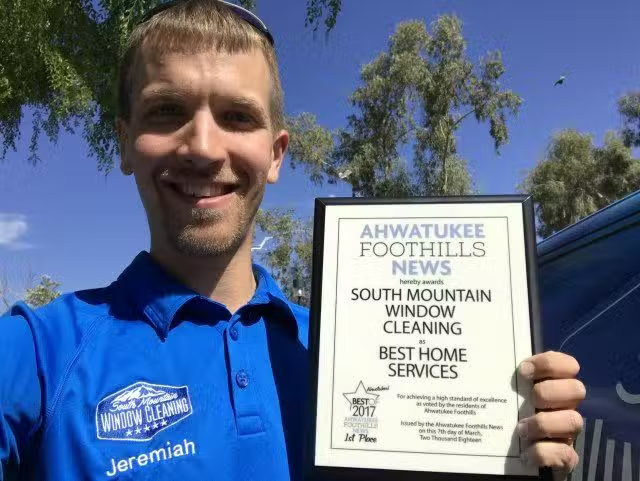
For context, one Valley option that fits this framework is South Mountain Window Cleaning, LLC. The company provides residential, commercial, and high-rise exterior cleaning, including pressure washing for walkways, building exteriors, drive-thrus, and dumpster pads, with computerized scheduling, pure-water systems, safety-trained technicians, and a $2 million insurance policy.
Your A1 Choice for Exterior Cleaning in The Valley
In Phoenix, an a1 pressure washing result doesn’t come from chasing maximum force. It comes from matching the right method to the surface, understanding how desert dust and hard water affect materials, and cleaning in a way that protects the property instead of punishing it.
That matters even more now because water use is part of the decision. Arizona’s restrictions have tightened, and reporting tied to eco-friendly pressure washing demand in Phoenix notes a 40% spike in searches for “eco-friendly pressure washing Phoenix” in the last year, along with the value of modern pure-water systems that can recycle up to 80% of water. Property owners are paying attention, and they should.
What good service looks like in the Valley
The standard is clear:
- Protect delicate surfaces instead of overcleaning them.
- Use the right process for dust, grease, mineral staining, and high-traffic grime.
- Respect water efficiency in a drought-sensitive market.
- Show up professionally with scheduling, safety practices, and real insurance behind the work.
For owners in Phoenix, Scottsdale, Paradise Valley, Chandler, Tempe, and Gilbert, those details make the difference between a surface that looks clean for a few days and one that stays in better condition over time.
The best exterior cleaning crews in Arizona don’t just remove dirt. They reduce the chances that today’s cleaning creates tomorrow’s damage.
If you’re comparing providers, keep the standard high. Ask how they clean. Ask how they protect stucco, concrete, glass, and surrounding finishes. Ask how they manage water. Ask what happens if something goes wrong. The answers will tell you whether you’re getting basic labor or professional exterior care.
If you need help from South Mountain Window Cleaning, LLC, you can request a fast, free quote online or by phone for residential, commercial, or high-rise exterior cleaning across the Valley.