
If you really want to know the best way to clean windows at home, forget the paper towels and spray bottle. The secret is simple: a quality squeegee, a microfiber applicator, and a basic cleaning solution. This is the exact method the pros at South Mountain Window Cleaning use, and it’s the only way to get a truly crystal-clear finish without the lint and streaks that drive everyone crazy. For those of us in dusty Phoenix, this technique is a game-changer for cutting through that layer of grime.
Your Guide to a Professional Streak-Free Shine

Getting that flawless, streak-free shine can feel downright impossible, especially with the Arizona sun highlighting every single mistake. We get it. The frustration of watching streaks, dust, and hard water spots reappear just moments after you've finished is a common headache for homeowners all across Phoenix, Scottsdale, and Paradise Valley.
This guide is designed to cut through all the noise and bad advice. We’re going to show you the exact tools and techniques we use at South Mountain Window Cleaning to get perfect results on every job, whether it's a home in Chandler, a commercial building in Tempe, or a high-rise in Phoenix.
Beyond the Basics of Window Cleaning
You're about to learn the real method for making your windows practically disappear. It’s not about scrubbing harder; it’s about working smarter. A professional finish comes from mastering a few key ideas, not from buying some gimmicky new product.
Here’s what really makes the difference:
- Technique Over Tools: A fancy gadget is useless if you don't know how to use it properly. We focus on the method first and foremost.
- Local Knowledge: Cleaning windows in Gilbert is a whole different ballgame than in a wetter climate. Our team knows how to tackle our unique challenges with intense sun and constant dust.
- Consistency: Having a repeatable process means you get the same great results every single time you clean.
Once you’ve achieved that sparkling finish, it's amazing how much it can elevate your home's appearance. It can even be a key part of creating captivating window displays if you have a small business.
The desire for these flawless results has created a massive industry. The global window cleaning services market was valued at USD 93.16 billion and is expected to keep growing, which just goes to show how many people see the value in professionally cleaned glass.
At its core, cleaning windows perfectly is all about controlling the water on the glass. The goal is simple: apply your cleaning solution, loosen all the dirt, and then get every bit of it—and the water—off the glass in one smooth motion before it can dry and leave spots behind.
This guide will break that process down into simple, actionable advice. If you're ready to dive deeper, you can also check out our detailed post on how to clean windows without streaks for even more tips.
Assembling Your Professional Window Cleaning Kit
Let’s be honest, the secret to that perfect, streak-free shine isn't in a bottle of mystery blue liquid and a roll of paper towels. The best way to get your windows truly clean starts with putting together a simple, effective toolkit—the same kind of gear our professionals at South Mountain Window Cleaning rely on every single day across Phoenix and Scottsdale. Using the right equipment is what separates a frustrating, streaky mess from a crystal-clear view you can be proud of.
Forget about flimsy paper towels that just fall apart and leave lint all over the glass. To get professional results, you need tools built for the job. This isn't about spending a ton of money on fancy gadgets; it's about investing in a few key items that will last for years and make the whole process faster and way more effective.
The Non-Negotiable Core Tools
The heart of any real window cleaning kit is a high-quality squeegee. This is your most important tool, hands down. Look for one with a comfortable handle and—this is critical—a fresh, sharp rubber blade. A worn-out or nicked blade is the #1 cause of streaks, so always give it a quick check before you start.
Next up, you'll need a strip applicator, which you might also hear called a wand or a washer. This thing looks like a T-bar covered in a thick microfiber sleeve, and it’s designed to hold a ton of cleaning solution. It lets you scrub the glass thoroughly and apply the perfect amount of soapy water without it dripping all over your walls and window sills.
To round out your core setup, grab these essentials:
- A Two-Bucket System: It sounds simple, but it's a game-changer. Use one bucket for your cleaning solution and a second one for clean rinse water. This keeps you from wiping dirty water right back onto the glass you just cleaned.
- Lint-Free Microfiber Towels: You need at least two of these. One is for wiping your squeegee blade clean after every single pass (don't skip this step!), and the other is for detailing the edges and corners of the pane for that perfect, crisp finish.
- A Sturdy Scraper: A small, simple razor blade scraper is a lifesaver for getting off stubborn gunk like paint flecks, bug residue, or sun-baked grime without scratching the glass.
A professional-grade squeegee and a strip applicator are the foundation of your kit. They work as a team to apply solution evenly and then whisk it all away before it has a chance to dry. That’s the whole secret to a streak-free shine, especially under that intense Arizona sun.
Building Your Cleaning Solution
You really don't need harsh, aggressive chemicals to get your windows sparkling. In fact, a simple homemade solution is what most pros, including our team at South Mountain Window Cleaning, use. All you really need is a bucket of cool water and a few drops of a quality dish soap. You just want enough to create some "slip" for your squeegee, but not so much that you're dealing with a mountain of suds.
For those of us here in the Valley, from Chandler to Tempe, we're constantly fighting fine dust and hard water. A great trick is to add a little bit of white vinegar to your mix. It acts as a mild acid that helps dissolve the mineral deposits that plain soap can't always cut through.
DIY Cleaning Solution Recipes for Arizona Windows
While a little dish soap and water is our go-to, here are a few simple DIY recipes perfect for tackling the unique challenges of Arizona's climate.
| Solution Type | Ingredients | Best For | Pro Tip |
|---|---|---|---|
| The Classic Pro Mix | 1 gallon cool water + 1-2 tsp dish soap | Everyday dust, fingerprints, and general grime. | Use a high-quality dish soap like Dawn. Cheaper soaps can leave a film behind. |
| Hard Water Buster | 1 gallon cool water + 1 cup white vinegar + 1 tsp dish soap | Cutting through stubborn hard water spots and mineral buildup. | The vinegar smell dissipates quickly once it dries. Don't use this mix on tinted windows without checking the manufacturer's care instructions first. |
| Eco-Friendly Degreaser | 1 gallon warm water + 2 tbsp cornstarch + 1/2 cup white vinegar | Greasy films, kitchen windows, or post-construction cleanup. | Mix well to dissolve the cornstarch completely to avoid a gritty residue. |
These simple recipes prove you don't need to buy expensive, pre-mixed chemicals to get fantastic results.
With the market for cleaning products growing—projected to hit USD 5.34 billion by 2031 according to Verified Market Research—it's easy to get overwhelmed by options. But for home use, the simplest solutions often work the best.
Once you have your gear and solution ready, you're well on your way. To get an even deeper look at the specific brands and tools the pros trust, check out our guide on what professional window cleaners use. This small investment in the right tools will pay for itself in time saved and frustration avoided.
Mastering the Professional Squeegee Method
Alright, you’ve got your professional gear ready to go. Now it’s time to learn the technique that really separates the amateurs from the pros. Getting the hang of the squeegee is, without a doubt, the most important part of learning the best way to clean your windows. It's less about moving fast and more about being precise, staying in control, and finding a consistent rhythm.
This method is the heart and soul of what we do at South Mountain Window Cleaning, whether we're on a big commercial job in Paradise Valley or a residential home in Tempe. It all boils down to a system that gets every last drop of dirty water off the glass before it can dry and turn into a streak.
The Crucial Preparation Stage
Before any water touches that glass, you have to deal with the dust. Seriously, this step is non-negotiable here in Arizona. That fine desert dust turns into a muddy paste the second it gets wet, making your job ten times harder than it needs to be.
First, grab a dry, soft-bristled brush or a dedicated microfiber cloth and wipe down the entire window frame, the sill, and the very edges of the glass. We call this "dry brushing," and it gets rid of all that loose grit. That way, you’re just cleaning the windowpane, not a slurry of mud. This quick five-minute prep will save you fifteen minutes of frustration later on.
Once everything is prepped, it's time to get your cleaning solution on the glass. Dunk your strip applicator into the bucket and give it a gentle squeeze. You want it fully saturated, but not sopping wet and dripping everywhere.
Work the solution onto the entire surface of the glass, going from top to bottom with overlapping strokes. You want to make sure you have complete, even coverage. The goal here is to scrub away all the fingerprints, smudges, and dirt, leaving a perfectly wet surface ready for the squeegee.
The Art of the Squeegee Stroke
Here we go—the main event. The secret to a perfect, streak-free finish is all about maintaining the right angle and consistent pressure. You want to hold your squeegee so the blade is at roughly a 30-degree angle to the glass. This is the sweet spot that lets the rubber edge shear the water away cleanly without skipping or chattering across the surface.
To get started, create what we call a "dry edge." Take a clean microfiber and wipe a thin, one-inch strip straight down one side of the windowpane. This little dry zone gives your squeegee a clean place to start so you don’t leave a fat line of water at the edge when you finish a stroke.
For most standard home windows, a series of straight, overlapping downward pulls is your best bet.
- Set your squeegee blade in that dry zone you just made at the top of the window.
- In one smooth, continuous motion, pull the squeegee straight down to the bottom of the pane.
- Wipe your squeegee blade clean with a microfiber cloth after every single pass. This is critical.
- For your next stroke, overlap the one you just did by about an inch. This overlap is what stops those annoying little vertical streaks from showing up.
This infographic lays out the simple, yet essential, tools that get the job done right.
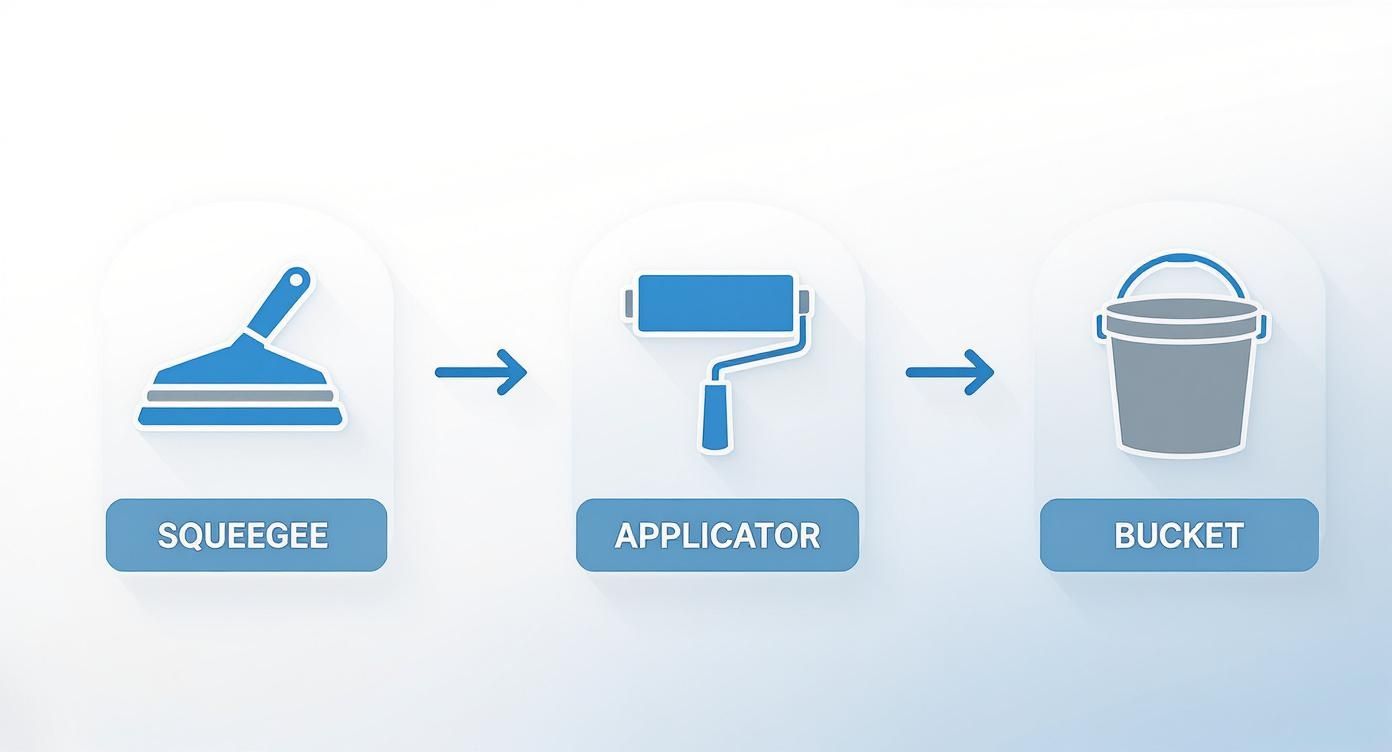
Each tool has its job: the bucket holds your solution, the applicator does the scrubbing, and the squeegee gives you that flawless, clear finish.
The single most important habit for preventing streaks is wiping your blade clean after every single pass. Any trapped dirt or water left on the blade will just get smeared right back onto the glass with your next pull, undoing all your hard work.
Advanced Techniques for Larger Windows
When you’re up against big picture windows or sliding glass doors, doing a bunch of vertical strokes can feel slow and inefficient. This is where a more advanced move, the "S-stroke" (sometimes called the snake or fan method), really shines. It lets you clean a huge area in one continuous motion, but fair warning, it takes some practice to get right.
The S-stroke is a fluid motion where you turn your squeegee as you move across and down the glass, making a sort of looping "S" pattern. The key is to always keep the leading edge of the squeegee angled slightly down, pushing the water in front of the blade. It requires a light but firm touch. If you want a better visual on this, we break it down in our guide on how to clean windows like a pro.
Final Detailing for a Perfect Finish
Once the squeegee work is done, you're not quite finished. You'll probably see a tiny bit of water or soap residue left along the edges and in the corners where the squeegee couldn't quite reach.
This is where your clean, dry detailing cloth comes in. Carefully wipe around the perimeter of the glass, using a light touch just to soak up that leftover moisture without smudging the clean pane. A final quick wipe of the window sill to catch any drips, and you're golden.
This last step, which we call "edging" or "detailing," is what gives you that sharp, professionally cleaned look. It’s the small stuff that makes all the difference, leaving you with nothing but a crystal-clear, unobstructed view.
Solving Arizona's Toughest Window Problems
Living anywhere in the Valley—from Phoenix to Scottsdale—means you're up against window problems most of the country never sees. We’ve got the intense sun, the dusty monsoons, and our notoriously mineral-rich water. It's a triple-threat that leaves glass looking cloudy and neglected, sometimes minutes after you’ve cleaned it.
This isn’t your average grime. We're talking about baked-on dust and stubborn mineral deposits that need a specific game plan. As local experts in residential and commercial window cleaning, South Mountain Window Cleaning has seen it all.
Conquering Hard Water Spots
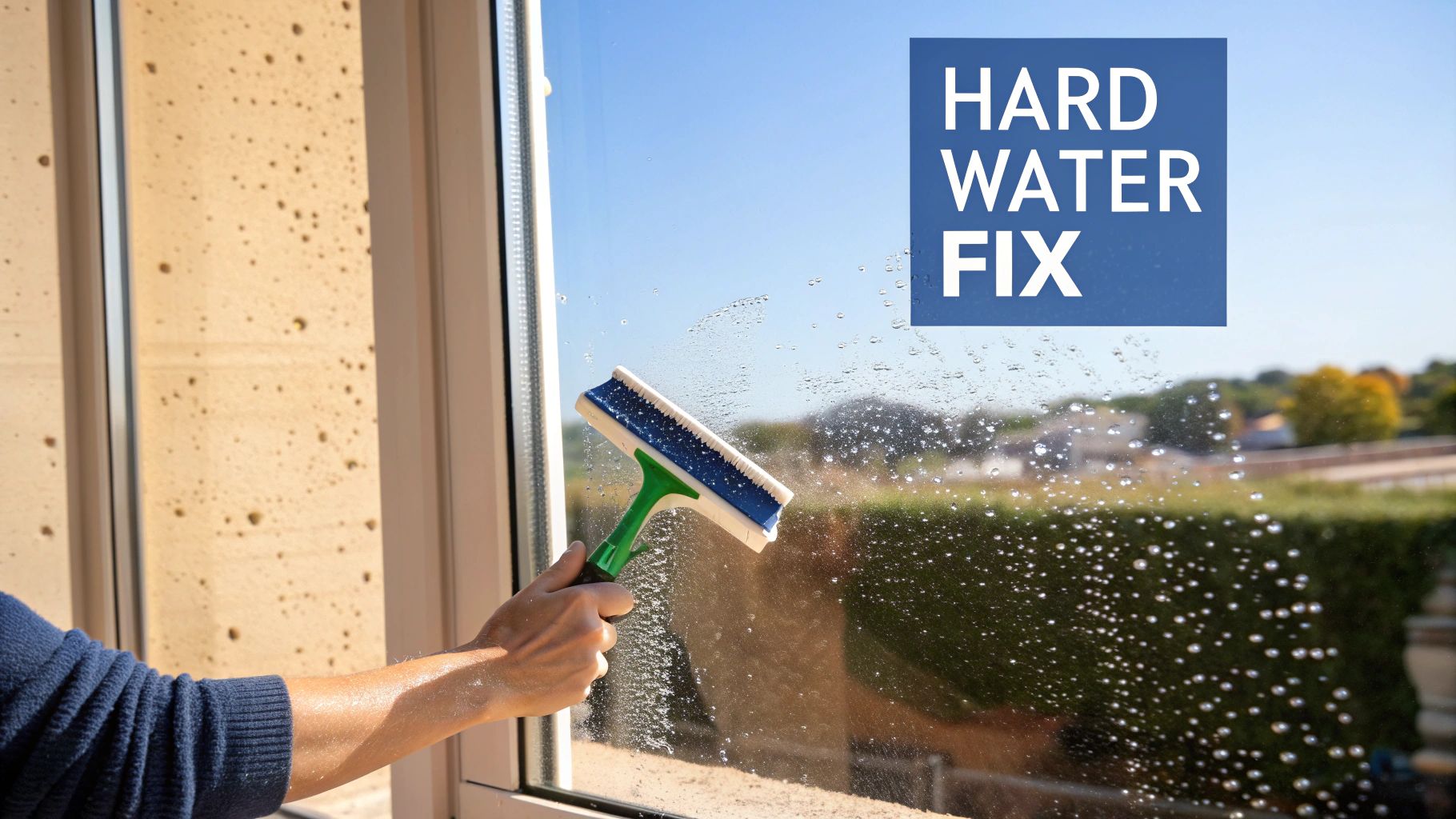
One of the biggest frustrations for homeowners in Chandler and Gilbert are those milky, chalk-like spots that just won't budge. Those are hard water stains, and they’re a signature Arizona problem. They're left behind when water from a sprinkler or hose evaporates in the sun, leaving a crust of calcium and magnesium on your glass.
If you ignore them, those minerals can actually etch themselves into the glass, causing permanent damage. A regular wash won’t cut it. You need something with a little acidic kick to dissolve the alkaline minerals.
For a light buildup, a simple 50/50 mix of white vinegar and water can work wonders. Just spray it on, let it sit for a minute or two, and give it a light scrub with a non-abrasive pad before you squeegee. If you're facing a more serious case, you might need a commercial-grade remover or even some ultra-fine #0000 steel wool to gently buff the stains out.
The worst thing you can do is let hard water spots bake on your glass for months. The longer they sit under that Arizona sun, the tougher they are to get off and the greater the risk of permanent etching. Speed is your friend here.
Handling Post-Monsoon Mayhem
After a big monsoon blows through, it often looks like your windows got hit with a mud pie. The absolute worst move you can make is grabbing a wet rag and trying to wipe it down. You’ll just end up with a smeared, muddy mess.
Always start dry. Get a soft-bristled brush or a dry microfiber cloth and sweep away all the loose grit from the glass, screens, and tracks. Once the heavy stuff is gone, then you can break out your cleaning solution and squeegee. It prevents scratches and honestly makes the job go way faster.
Cleaning Dusty Window Screens and Tracks
Sparkling glass looks terrible when it's framed by filthy screens and tracks. In our climate, these spots are magnets for an incredible amount of dirt and pollen, which just gets blown right back onto your clean windows.
For screens, the process is pretty straightforward:
- Pop them out carefully. Most modern screens come out easily, but take your time with older, more brittle ones.
- Give them a dry brush first. Use a soft brush to knock off all the loose dust and cobwebs from both sides.
- Wash gently. A little soapy water and a soft brush are all you need. Don't use a pressure washer—it can easily stretch or tear the mesh.
- Rinse everything off. A gentle spray from the hose is perfect for washing away any soap residue.
- Let them dry completely. Make sure your screens are totally dry before you put them back in to avoid mildew or water spots.
For the tracks, a vacuum with a crevice tool is your best friend. Suck out all the loose debris first. Then, a quick spray with an all-purpose cleaner, an old toothbrush, and some paper towels will get the corners looking brand new. It's a small detail that makes a massive difference.
To get a deeper dive into one of our most common issues, check out our guide on how to remove hard water stains from windows. Of course, if the stains are severe or you’re looking at second-story windows, the smartest and safest move is to let the pros at South Mountain Window Cleaning handle it.
Common Arizona Window Problems and Solutions
Here in the Valley of the Sun, our windows face a unique set of challenges. This table is a quick guide to help you identify what you're dealing with and how to fix it.
| Problem | Cause | DIY Solution | When to Call a Pro |
|---|---|---|---|
| White, Chalky Spots | Hard water from sprinklers or hoses evaporating on glass. | Spray a 50/50 vinegar-water mix, let sit, then scrub gently. | Stains are widespread, on high windows, or won't come off with DIY methods. |
| Muddy Film/Streaks | Dust from a haboob or monsoon mixing with rain. | Brush off ALL dry dust first, then clean with soapy water. | When dirt is caked on multiple stories or you want a perfect, streak-free finish. |
| Scratched Glass | Wiping gritty dust on dry glass; improper scraping. | Minor scuffs can sometimes be buffed with specific polishing compounds. | Deep scratches that catch a fingernail require professional assessment. |
| Fog Between Panes | The seal on a double-pane window has failed, letting moisture in. | Unfortunately, this isn't a cleaning issue and can't be fixed with DIY methods. | The window pane or entire window needs to be replaced by a glass specialist. |
Knowing what you're up against is half the battle. For anything that seems too stubborn or too high up, remember that a quick call can save you a ton of frustration and potential damage.
When to Tackle It and When to Call a Pro
Knowing how to clean your own windows is a great skill, but the real mark of a savvy homeowner is knowing when not to. Safety has to be the number one priority, every single time. Cleaning your ground-floor windows is a perfectly good weekend project. But the moment a ladder gets involved, especially for high-rise or multi-story buildings, the risk goes up with every single foot.
Honestly assessing the job is the most important step. For many of us, saving a few bucks is a huge motivator. We get it. But a single slip on a ladder can lead to injuries and medical bills that make the cost of hiring a pro look tiny in comparison. The most critical lesson in any home project is knowing when to put your hands in your pockets and pick up the phone instead.
Evaluating the DIY Approach
Before you even think about pulling out the ladder, stop and really look at the situation. Is the ground beneath those high windows perfectly level and solid? Are you dealing with bushes, flower beds, or a sloped yard that makes a stable ladder placement a total nightmare? These aren't just details; they're critical safety factors that can make or break the job.
Even with a good extension pole, some windows are just plain awkward. That window high up in the stairwell, the one over the bathtub on the second floor, or any skylight—these are the jobs that can go from manageable to dangerous in a heartbeat.
A DIY approach makes perfect sense for:
- All ground-floor windows: These are your bread and butter—safe and easy to access.
- Walk-out basement windows: Just like the ground floor, these are usually straightforward.
- Most interior windows: As long as you can reach them from the floor, it's a great DIY task.
Clear Signs You Need a Professional
Sometimes, the choice is pretty obvious. Hiring an insured, experienced professional isn't giving up; it's making a smart decision to protect yourself, your family, and your home. For the tricky, multi-story homes you see around Paradise Valley or Scottsdale, calling a team like South Mountain Window Cleaning is just the right move.
It's time to call a pro for:
- Any and all second-story (or higher) exterior windows.
- High-rise residential or commercial buildings.
- Windows located over sloped, uneven, or soft ground.
- Skylights or any glass that's incredibly hard to get to.
- Tough hard water stains that your DIY solutions can't touch.
A professional window cleaning service brings more to the table than just a squeegee. Our South Mountain Window Cleaning technicians have years of experience, the right safety gear for any situation, and full insurance coverage. That protects you from any liability and guarantees the job gets done right, with zero risk to you or your property.
This focus on safety and efficiency is even changing the industry on a global scale. The market for robotic window cleaners is projected to grow by USD 4.34 billion between 2025 and 2029. It’s a clear sign that homeowners and businesses are looking for automated, safe solutions. North America is a big part of that, making up about 35% of the market.
Once you have those sparkling clean windows, you might get inspired to tackle other projects. For instance, a good guide to vinyl windows paint can be a huge help for your next home improvement task.
In the end, the decision to DIY or hire out comes down to one simple question: Can I do this 100% safely? If there's even a shadow of a doubt, making the call is always the best decision you can make.
Got Questions? We’ve Got Answers.
Even after you've got the right gear and a solid plan, a few questions always seem to pop up. Let's run through some of the most common ones we hear from homeowners around Phoenix and Scottsdale.
Think of this as your personal troubleshooting guide. Getting that perfect, invisible-glass look often comes down to knowing the little things, especially with the unique challenges our Arizona climate throws at us.
How Often Should I Really Be Cleaning My Windows Here In Arizona?
Living in the Valley means dust, sun, and hard water are just part of the deal. To keep your glass crystal clear and prevent minerals from permanently etching the surface, a full interior and exterior cleaning at least twice a year is what we recommend at South Mountain Window Cleaning.
But if you want to keep your place looking sharp year-round, washing the exterior windows quarterly is the way to go. This is especially true after a big monsoon storm rolls through and covers everything in a fresh layer of dirt. Keep an eye on windows that get hit by sprinklers, too—they'll need more frequent attention to fight off those stubborn hard water spots.
Is It Really That Bad To Clean Windows In The Sun?
Yep, it's a big deal here in Phoenix. You definitely want to avoid washing windows when the sun is beating down on them. That intense heat makes your cleaning solution evaporate in seconds, long before you get a chance to squeegee it off.
This is the #1 cause of streaks and that hazy soap film you're trying to avoid. The simple solution? Always work on the shady side of the house. Or, plan your cleaning for the cooler parts of the day—think early morning or later in the afternoon when the sun isn't so intense.
I'm Using A Squeegee, So Why Am I Still Seeing Streaks?
Streaks are the worst, but don't get frustrated! It almost always comes down to one of a few simple, easy-to-fix issues. If you're squeegeeing and still seeing lines, just run through this quick checklist in your head.
Nine times out of ten, one of these is your culprit:
- Your Blade is Worn Out: The rubber edge of your squeegee needs to be perfectly sharp and smooth. Any nicks, dings, or rounded edges will absolutely leave streaks behind.
- You're Not Wiping the Blade: Are you wiping the blade with a clean microfiber cloth after every single pull? If you skip this, you’re just dragging grime from the last pass right back onto the clean glass.
- You Went Overboard on the Soap: A couple of drops of dish soap is all you need. Too much creates a mountain of suds that are nearly impossible to fully remove, leaving a streaky residue.
- The Glass is Drying Too Fast: If you're working too slowly in the Arizona heat, the water will start to evaporate before you can squeegee it away, causing spots and streaks to form right before your eyes.
The real secret to a perfect finish is just being consistent. Use a sharp blade, go easy on the soap, overlap each stroke by about an inch, and get all the water off the glass before it has a chance to dry.
Can I Just Use Newspaper Instead Of A Microfiber Cloth?
This is an old-timer's trick we hear all the time, but we really advise against it. Your grandparents might have sworn by it, but the newspaper they used is a world away from what we have today.
Modern newsprint ink bleeds like crazy when it gets wet. You'll end up with black, greasy smudges all over the glass, not to mention on your hands and your nice white window frames. Stick with a quality, lint-free microfiber cloth. They're way more absorbent and are designed to polish the edges and sop up drips without leaving a trace of anything behind.
Sometimes, even with the best intentions, a window cleaning job is just too big, too high, or too frustrating. When you want a guaranteed-perfect shine without lifting a finger, South Mountain Window Cleaning has your back. Our licensed, bonded, and insured pros provide residential, commercial, and high-rise services for the entire Valley, from Chandler to Paradise Valley, and we deliver streak-free results every time. Schedule your fast, free quote online today!