

For light hard water spots on glass, a simple mix of equal parts white vinegar and water often does the trick. But for that stubborn, caked-on mineral buildup common in the Phoenix area, you'll likely need a more serious approach—and maybe even professional help from South Mountain Window Cleaning—to get your glass crystal clear again.
What Causes Hard Water Stains on Your Glass
If you live anywhere around Phoenix, Scottsdale, or Tempe, you're all too familiar with those frustrating, milky spots that haunt windows, shower doors, and glass pool fences. These cloudy blemishes are hard water stains, and they have a reputation for being incredibly stubborn. But what are they, really? And why are they so tough to get rid of?
The problem begins with our local water supply. Arizona is known for having some of the hardest water in the country, which means it’s packed with dissolved minerals like calcium and magnesium. When a stray sprinkler or a splash from the hose hits your glass and evaporates under that intense sun, all those minerals get left behind. Over time, they build up layer by layer, creating that noticeable and unsightly white film.
The Science Behind the Stains
At their core, hard water stains are just mineral deposits. When they're fresh, they sit right on the surface and are pretty easy to clean off. The cleaning industry calls these Level 1 stains, and you can usually tackle them with a simple acidic solution, like that 50/50 vinegar and water spray. Just let it sit for a few minutes and wipe away.
But here’s the catch: the longer those stains sit, the more they begin to chemically bond with the glass itself. They progress to more severe levels that can permanently etch the surface. This is why a stain that’s been baking on your window for a month is a completely different beast than one that just appeared yesterday. The minerals literally start to become part of the glass structure, which is why your average spray-and-scrub method just won't cut it.
For a deeper dive into this process, you can check out our other resources on effective hard water stain removal techniques.
This decision tree gives you a quick visual to help figure out if your stains are a simple DIY job or if they'll need a more powerful solution.

The main takeaway here is simple: knowing how bad the stain is tells you exactly where to start.
Not sure how to classify your stains? This quick guide breaks it down based on what we see in the field every day across Phoenix and Paradise Valley.
Quick Guide to Hard Water Stain Severity
| Stain Level | What It Looks Like | Best Starting Method | Professional Help Needed |
|---|---|---|---|
| Light | Faint, cloudy spots; looks like dried water droplets. Disappears when wet. | DIY vinegar & water solution. | Unlikely. |
| Moderate | Obvious white spots that are rough to the touch. Still visible when wet. | Commercial hard water cleaner or fine steel wool. | Possibly, if DIY fails. |
| Severe | Thick, crusty white buildup. Glass looks milky or opaque. | Abrasive paste and orbital polisher. | Almost certainly. |
| Etched | Stains are gone, but glass feels rough and looks hazy or distorted. | Professional glass polishing & restoration. | Definitely. This is physical damage. |
Use this table to match what you're seeing on your glass. Starting with the right method saves a ton of time and frustration.
Why Early Action Matters
Getting to hard water stains quickly is absolutely crucial. What begins as a simple cleaning task can rapidly escalate into a full-blown restoration project.
- Preventing Permanent Damage: The longer those minerals sit, the greater the risk of etching. Etching is real, physical damage to the glass that you can't just wash away. It often requires professional polishing to even have a chance at fixing it.
- Maintaining Curb Appeal: For homeowners and businesses in places like Paradise Valley or Chandler, clean windows are a must for curb appeal. Hazy, stained glass can make an otherwise beautiful property look rundown and neglected.
- Easier Maintenance: Honestly, tackling stains when they’re fresh just saves you a ton of time and elbow grease compared to battling months or even years of buildup.
The most common mistake we see is people letting stains bake in the Arizona sun for way too long. A simple 10-minute fix with vinegar can turn into a job that requires specialized compounds and professional equipment.
Tackling Light Stains with Pantry Ingredients
Before you run out and buy a heavy-duty, specialized cleaner, you might want to check your kitchen pantry first. For those light, hazy hard water spots that are all too common in places like Phoenix and Scottsdale, the solution is often sitting right on your shelf—and it's surprisingly simple and gentle.
Natural, acid-based ingredients are fantastic for dissolving fresh mineral deposits without resorting to harsh chemicals.
The most classic and effective method? A simple mix of white vinegar and water. This isn't just an old wives' tale; the acetic acid in vinegar is a champ at breaking down the calcium and magnesium that cause hard water stains. For most jobs, a 50/50 mix of white vinegar and distilled water in a spray bottle is the perfect starting point.
The Vinegar and Water Method
To get started, you only need a few basic supplies. This approach works wonders for windows that get hit by sprinklers or for shower doors that have a light film building up.
Your Toolkit:
- A clean, empty spray bottle
- Distilled white vinegar
- Distilled water (using distilled prevents adding more minerals to the glass)
- Two microfiber cloths
- A non-abrasive sponge (optional, for a bit of extra elbow grease)
Spray your solution generously onto the stained glass, making sure you've covered the entire affected area. Now, let it sit for at least 10-15 minutes. This dwell time is critical—it gives the acid a real chance to get to work and dissolve those mineral bonds. On a vertical surface like a window, you may need to re-spray it a couple of times to keep it from drying out.
Once the solution has had time to work, grab your non-abrasive sponge or a microfiber cloth and gently scrub the area in a circular motion. You should start to feel the roughness of the mineral deposits smoothing out. Finish up by rinsing the glass with clean distilled water and drying it completely with a fresh, dry microfiber cloth. This last step is key to preventing new spots from forming right away.
Pro Tip: For stubborn spots on a shower door, try soaking a towel in the vinegar solution and pressing it directly against the glass. This keeps the vinegar concentrated on the problem area without it all running down the drain. Let it sit for up to an hour before scrubbing.
Using Lemon Juice for Citric Acid Power
If you're out of vinegar or just prefer a different approach, lemon juice is another fantastic option. The citric acid in lemons works a lot like the acetic acid in vinegar, effectively breaking down that mineral buildup. It's especially great for smaller areas or a quick touch-up, and it leaves behind a fresh, clean scent.
You can apply fresh lemon juice directly to the stains. Just squeeze some onto a cloth or sponge and wipe it over the glass. Let it sit for about 10 minutes, then give it a gentle scrub and rinse. For a little more oomph, you can even dip half a lemon in salt or baking soda to create a natural, gentle scrubber.
Creating a Gentle Abrasive Paste with Baking Soda
Sometimes an acid just needs a little help from a mild abrasive to really lift away stubborn spots. That's where baking soda comes into play. It provides just enough grit to scrub away deposits without scratching your glass.
Mix baking soda with a small amount of water until you have a thick paste—think toothpaste consistency. Apply this paste directly to the hard water stains, spreading it evenly over the trouble spots.
Let the paste sit for a few minutes, then use a damp microfiber cloth or soft sponge to gently scrub. The baking soda will act as a soft abrasive, physically clearing away the minerals the acid has already loosened. This technique is a lifesaver on shower doors where soap scum and mineral deposits have teamed up.
After you're done scrubbing, rinse the glass thoroughly to get rid of all the paste residue. A final wipe-down with a clean, dry cloth will leave you with a sparkling, clear surface. Learning these basic cleaning techniques is a great first step, and you can find more professional tips in our guide on how to clean windows like a pro.
Upgrading to Commercial Hard Water Stain Removers
So you’ve tried the vinegar solution and scrubbed with baking soda, but those stubborn, chalky stains just won’t budge. It’s a common story. At this point, it’s time to bring in the bigger guns: a commercial-grade hard water stain remover.
For the kind of tough mineral buildup we see here in places like Gilbert and Tempe, household remedies sometimes just don't have the muscle. This is especially true for stains that have been baking in the Arizona sun for months or even years.
Commercial products are formulated specifically to dissolve the dense layers of calcium and magnesium that DIY solutions can't touch. Think of them as your next line of defense before you have to call in a professional for a full restoration.

What to Look for on the Label
Walking down the cleaning aisle can be overwhelming. The key is knowing which ingredients to look for—and which to avoid—to pick a product that’s effective without causing permanent damage like scratching or etching.
Here’s a quick guide to reading the labels:
- Mild Acids: Look for products containing gentle acids like sulfamic acid or phosphoric acid. These are designed to break down mineral deposits without being overly harsh on the glass itself.
- Peroxide-Based Formulas: Some of the most effective modern cleaners use hydrogen peroxide as an active ingredient. It’s excellent for lifting stains and brightening glass without the risks of more aggressive chemicals.
- Words to Avoid: Steer clear of products with harsh, abrasive compounds or strong, unspecified acids not meant for glass. These can easily scratch the surface, creating an even bigger headache than you started with.
The goal is to dissolve the minerals, not scrub them away with brute force. A good commercial cleaner does the heavy lifting, breaking down the chemical bonds of the stain so you can just wipe it away.
Safe Application Techniques for Potent Cleaners
Because these products pack more punch, using them correctly is non-negotiable. If you skip steps or ignore the safety warnings, you could end up with damaged glass or irritated skin. Always start by reading the manufacturer's instructions, front to back.
Safety First Checklist:
- Wear Protective Gear: At a minimum, wear a good pair of rubber gloves. Safety glasses are also a smart move to protect your eyes from any accidental splashes.
- Ensure Good Ventilation: Always work in a well-ventilated space. Open up some windows and doors or turn on an exhaust fan, especially if you're cleaning a shower door in a small bathroom.
- Test in an Inconspicuous Area: Before you go all-in on a big, visible window, test the cleaner on a small, hidden spot first. This quick check ensures the product won’t react badly with your particular type of glass.
Apply the product exactly as directed—some are sprays, others are thick pastes. Let it sit for the recommended time so the active ingredients can work their magic, then gently agitate with a non-abrasive pad before rinsing it off completely.
Real-World Scenarios Where Commercial Cleaners Shine
Picture a set of exterior windows in Chandler that get hit by a misaligned sprinkler day after day. For months, that hard water has evaporated in the sun, leaving behind thick, crusty white layers that vinegar barely even dents. This is the perfect job for a commercial remover.
The specially formulated acids can penetrate and dissolve years of buildup that a simple pantry solution could never handle. A quality remover can restore that sparkling finish without damaging the glass.
For the most extreme cases, you might even look at products from other industries. For instance, some specialized hard water spot removers for automotive surfaces contain potent ingredients that can also work on residential glass—just be sure to test them carefully first. These products are engineered to tackle serious mineral deposits, making them a potential last resort for the absolute toughest stains on your home's windows.
Mastering the Tools for a Streak-Free Finish
Getting the hard water stains off is only half the battle. Once those mineral deposits are gone, the real prize is that perfectly clear, streak-free shine that makes your glass look brand new. This is where using the right tools and techniques—the same ones the pros at South Mountain Window Cleaning rely on—really makes a difference.
Just wiping the glass down after cleaning is a recipe for frustration. It almost always leaves behind lint, streaks, and even new water spots, undoing all your hard work. To get it right, you need to have the proper equipment ready to go. It’s not about buying the most expensive gear; it’s about using the correct tool for each stage of the job.
Choosing the Right Scrubbing Tools
When you’re up against stubborn mineral residue, you need a tool that can provide some gentle agitation without damaging the glass. The last thing you want is to trade hard water stains for a web of fine scratches.
Your best bet here is a good non-abrasive scrub pad. These are made specifically to provide scrubbing power without being harsh. Look for the kind labeled "safe for non-stick pans" or "for delicate surfaces." They have just enough texture to help lift away those loosened mineral particles after your cleaning solution has broken them down.
For those really tough, concentrated spots that just won't budge with a chemical cleaner, you can step up your game, but you have to be extremely careful.
A Pro-Level Tool for Stubborn Spots:
- #0000 Steel Wool: This is the finest grade of steel wool you can buy. Professionals often use it to knock out tough deposits without scratching the glass.
- Critical Warning: You always need to test #0000 steel wool on a small, hidden corner of the glass first. Make sure you use it with a lubricant like your cleaning solution or some soapy water, and apply only light, gentle pressure. Never, ever use a coarser grade of steel wool—it will absolutely scratch your windows.
The Squeegee: Your Secret to a Flawless Finish
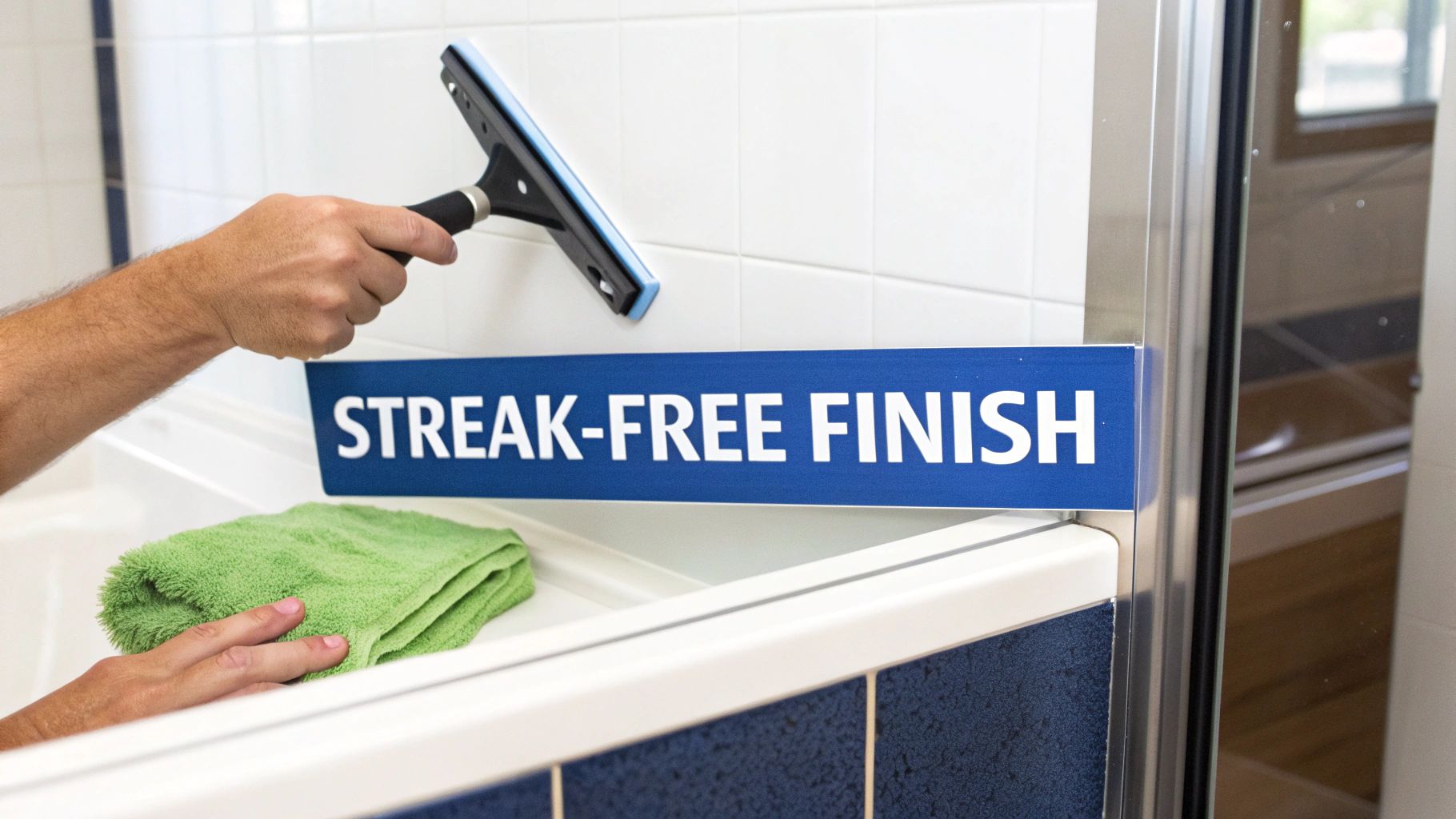
Honestly, there is no better tool for getting a perfectly streak-free window than a high-quality squeegee. The cheap ones from the dollar store just won’t cut it. You need to invest in a professional-grade squeegee with a sharp, flexible rubber blade. This is the single most important tool you'll use for a flawless result.
Of course, the technique is just as important as the tool. A lot of people just drag the squeegee straight from top to bottom, which often leaves vertical lines where each pass overlaps. To avoid this, the pros use a technique called the "S-method" or "fanning."
The S-method involves moving the squeegee in a continuous, flowing S-shaped pattern from top to bottom, slightly overlapping each stroke. This technique pulls all the water down and to one side, preventing drips and leaving no lines behind.
Mastering the S-method takes a little practice, but it's a total game-changer. Just keep the blade angled at about 30 degrees to the glass and maintain consistent, light pressure. After each full pass, wipe the rubber blade with a clean, lint-free cloth to stop dirt from getting dragged across the next section. For more pro tips, check out our complete guide on the best way to clean windows.
The Final Rinse and Polish
After all that scrubbing and squeegeeing, there’s one last step that can make a massive difference, especially in hard-water areas like Phoenix. Rinsing your glass with regular tap water can just re-deposit a fresh layer of minerals, creating new spots as it dries.
The trick is to do a final rinse or wipe-down using distilled water. Because distilled water is demineralized, it leaves absolutely nothing behind when it evaporates. You can put it in a spray bottle, give the glass a final mist, and then do one last quick pass with your squeegee.
For the final touch-up, a lint-free microfiber cloth is your best friend. Use it to wipe any leftover drips from the edges and corners of the glass and the window frame. A high-quality microfiber cloth soaks up water without leaving any fuzz or streaks behind, giving your window that final, polished look. This last detail is what separates a pretty good result from a perfect one.
Preventing Future Hard Water Buildup
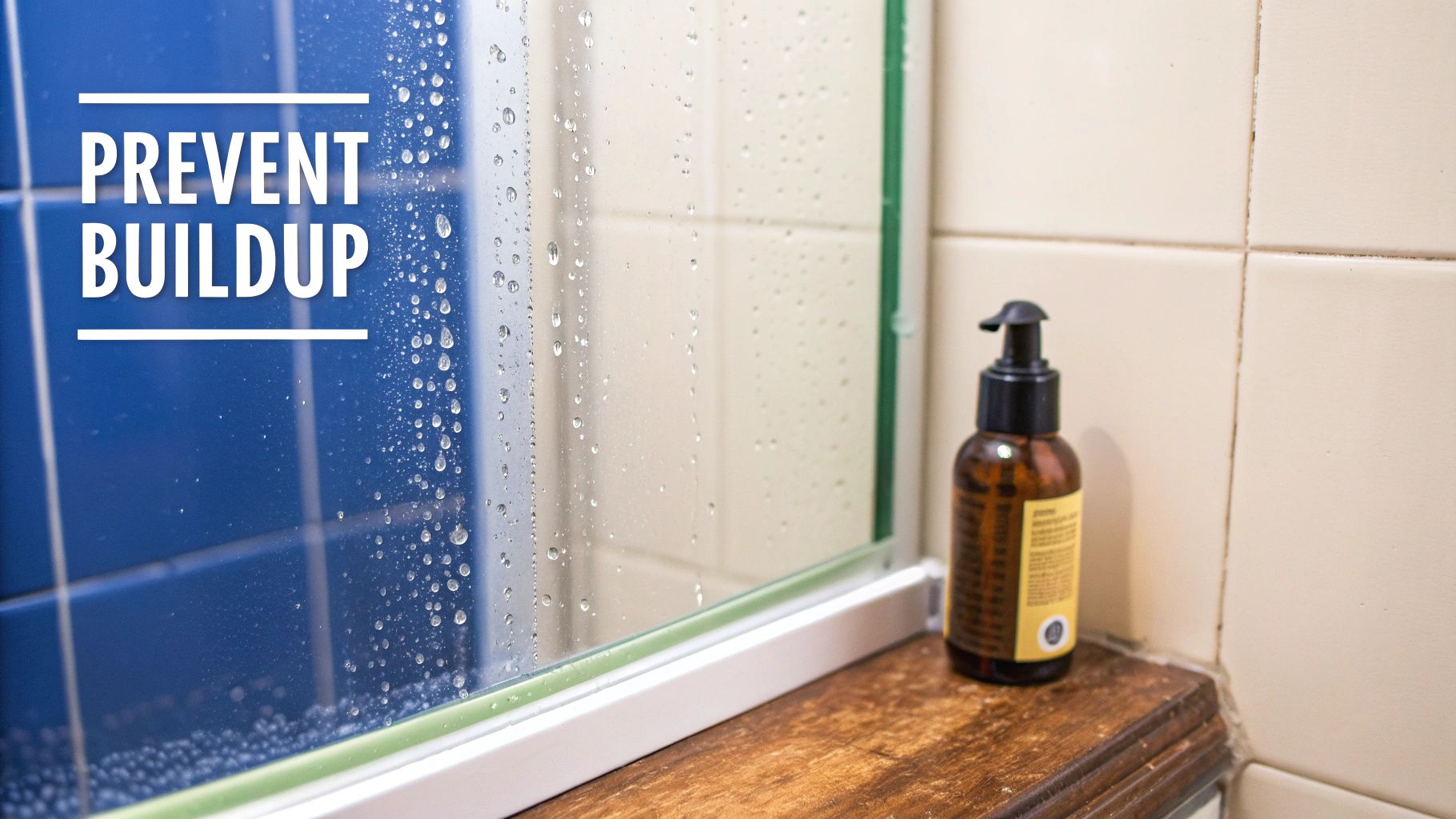
After you’ve won the battle against those stubborn hard water stains, the last thing you want is a rematch. Honestly, the easiest way to deal with mineral buildup is to stop it from ever forming. A little proactive maintenance goes a long way, especially in hard-water hotspots like Phoenix, and it’s the key to keeping your glass pristine.
The whole game plan is simple: don't let water sit on your glass and evaporate. This just means building a few simple habits that eventually become second nature. Think of these small daily and weekly tasks as your first line of defense against the mineral deposits that plague homes all over the Valley.
Developing Simple Maintenance Habits
Consistent, small actions will always beat the occasional deep clean. By working a few quick tasks into your regular routine, you can shut down stains before they even get a chance to bond with the glass.
- Squeegee Shower Doors Daily: Right after you shower, take 30 seconds to run a squeegee over the glass door. This simple move pulls the water droplets off before they can dry up and leave their mineral mess behind. Keep a squeegee hanging right in the shower so it's always ready to go.
- Wipe Down Windows After Rain or Sprinklers: If your windows in Scottsdale or Gilbert get hit by the sprinklers, get in the habit of wiping them down with a clean, dry microfiber cloth. A quick weekly wipe prevents the sun from baking those minerals right onto the surface.
- Adjust Your Sprinkler System: Take a quick look at your sprinkler heads. Often, a small adjustment is all it takes to keep them from spraying directly onto your windows and glass doors, cutting off the problem at its source.
The most effective strategy is just being consistent. A quick wipe-down today prevents a two-hour scrubbing marathon next month. It’s those small, regular efforts that keep glass looking its best all year.
Exploring More Permanent Solutions
While daily habits are great, you can also set up more durable barriers against hard water. These options take a little more effort upfront but give you long-term protection that seriously cuts down your cleaning time.
One of the best long-term moves is to apply a hydrophobic glass sealant. These protective coatings create an invisible, super-smooth surface on your glass that repels water. Instead of clinging to the window, water just beads up and rolls right off, taking all those dissolved minerals with it.
It's just like waxing your car—the sealant forms a protective shield. You can find different types, from spray-on formulas that last a few months to tougher ceramic coatings that can protect your glass for years. Applying it is usually pretty easy: just clean the glass really well, apply the sealant, and buff it out until it’s crystal clear.
Considering a Whole-Home Solution
If you're looking for the ultimate, comprehensive fix, you have to tackle the problem where it starts: the water itself. Installing a whole-home water softening system strips out hard minerals like calcium and magnesium before the water ever gets to your faucets, showerheads, or sprinklers.
This doesn't just solve the problem for your windows and shower doors—it fixes it for your entire home. A water softener can help your appliances last longer, stop scale from building up in your pipes, and even make your soaps and detergents work better. It’s definitely a significant investment, but it's the most surefire way to win the war against hard water stains for good. To proactively address the root cause and prevent future hard water buildup, you might find valuable insights in this resource offering additional advice on water quality and preventing hard water issues. For homeowners in Arizona tired of the constant fight against mineral deposits, a system like this is a total game-changer.
When to Call a Professional Window Cleaner
You've tried it all. The vinegar solutions, the store-bought sprays, and you’ve even gotten pretty decent with a squeegee. But sometimes, those chalky, hazy stains just refuse to disappear. It’s a common frustration here in Phoenix, where our notoriously hard water and relentless sun team up to bake mineral deposits right onto the glass.
While DIY is great for light touch-ups, there's a point where you can actually do more harm than good. Knowing when you’ve hit that wall is the key to protecting your windows from permanent damage.
Some jobs are just better left to the pros. This is especially true when hard water stains have been setting in for years, bonding so tightly to the glass that they’ve caused physical damage. If you've scrubbed and scrubbed but the glass still looks cloudy or feels rough, you're probably looking at etching. That’s when the minerals have literally corroded the surface of the glass—a problem no amount of spray or elbow grease can fix.
Signs It's Time for Professional Help
Knowing when to throw in the towel and pick up the phone can save you a lot of time and prevent a costly mistake. Using chemicals that are too harsh or the wrong kind of abrasive pad can permanently scratch or haze your glass, turning a fixable issue into a permanent one.
Watch for these tell-tale signs:
- The Glass is Etched: After cleaning, can you still see the ghost of the stain? Does the surface feel gritty or pitted? That’s likely etching, and it means the minerals have dug in deep.
- Stains Won’t Budge: You’ve run the gamut from home remedies to the strongest cleaners at the hardware store, and the stains haven't faded one bit.
- High or Hard-to-Reach Windows: Tackling second-story windows, skylights, or massive picture windows in homes in Paradise Valley or Chandler isn't just tricky—it's a safety risk. A pro has the right gear and training to handle it safely.
- You Just Don’t Have the Time: Let’s be real. Restoring badly stained windows is a tough, time-consuming job. Sometimes the best solution is to hand it off to a team that can knock it out efficiently.
A professional window cleaner can usually tell in minutes how severe the damage is. We can spot the difference between surface deposits and deep etching, which completely changes how we approach the restoration.
The Professional Difference: Specialized Tools and Techniques
When you hire a service like South Mountain Window Cleaning, you aren't just paying someone to clean. You're investing in professional restoration. We have equipment and compounds that simply aren't sold on store shelves. For severe hard water damage, we often use a multi-step process involving specialized polishing compounds and professional-grade orbital polishers.
This equipment allows us to carefully buff away the mineral layer—and even polish out light etching—without harming the glass itself. It's a delicate process that takes a skilled hand to apply just the right pressure with the right compound. It's how we're able to save glass that many people would assume is ruined for good. You can learn more about what professional window cleaning includes in our detailed guide.
Why Choosing a Pro Saves You Money in the Long Run
It might sound backward, but hiring a professional can actually be the more affordable choice. Think about the cost of replacing a large window or a custom shower door that was accidentally scratched beyond repair. A professional service takes that risk completely off the table.
Plus, we get the job done right the first time, ensuring a flawless and long-lasting result. By completely removing the mineral buildup and often applying a protective sealant, we not only restore your glass but also make it much easier for you to maintain moving forward. For home and business owners in the Phoenix area, that means clearer views, better curb appeal, and the peace of mind that comes with a job done right.